Home from Home: Quiberon in Brittany

St Piran's crab in Concarneau, France

Things have been quiet on this page the last couple of months. Cornish Rock Pools Junior, Other Half and I took an extended holiday to visit the towns and beaches of Brittany. As always our travels had a bit of a marine theme…

Est-ce que c’est un anémone?” the eager child in the dark-rimmed spectacles asks. We explain what a ‘stalked jellyfish’ is to the class of seven-year-olds. “Jellyfish!” they chant.
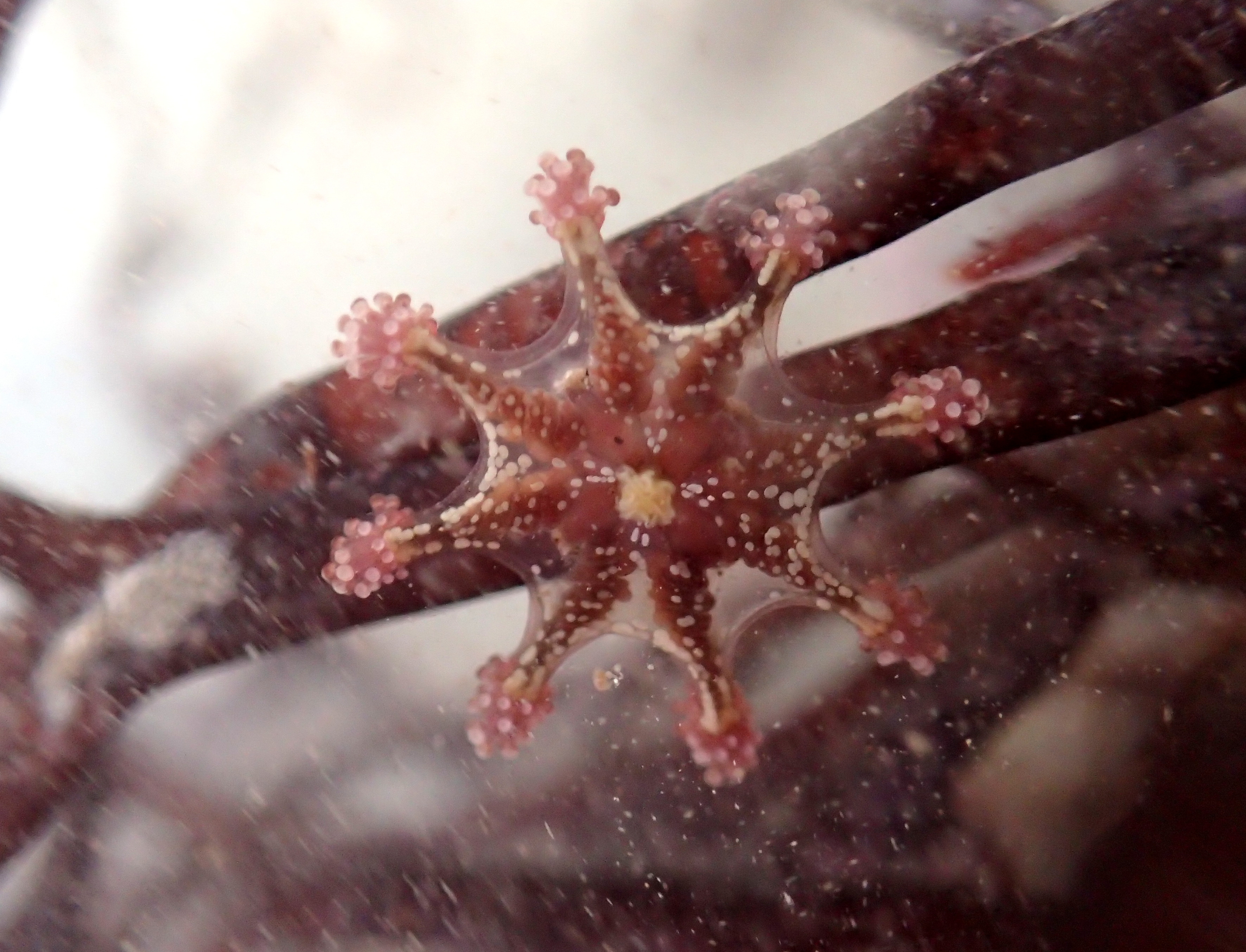
 

Stalked jellyfish - a Lucernariopsis cruxmelitensis.
Stalked jellyfish – a Lucernariopsis cruxmelitensis.

Between fascinating excursions to the fire station and the sardine factory, we are giving impromptu English lessons to a class of primary school students during our twinning visit to Quiberon in Brittany.


We have covered the words goby, crab, jellyfish and shark so far and there’s still a sea of raised hands. The children seem desperate to tell us about their finds around the shores of Quiberon. It’s easy to see why our home town of Looe was matched 40 years ago with this fishing town surrounded by beaches and thriving rock pools.


We move on to a frenzied rendition of Heads, shoulders, knees and toes and finish up with If you’re happy and you know it, culminating in shouts of “Hooray” loud enough to blow the pants off the school inspectors who are visiting that day. Our work here is done.

img_20161013_115332_1cs
Snapped by the paparazzi of Ouest France: Cornish Rock Pools visits the Fire and Rescue Centre in Quiberon.


Twinning seems something of a relic from the past, an innovation from post-war times when it was hoped that creating human ties between communities would increase understanding, heal rifts and reduce the chances of future conflict. It may seem redundant in our modern, online world, but the very real friendships and cultural experiences a twinning visit offers seem especially meaningful at a time when conversations regularly turn to ‘Le Brexit’. Of course, we don’t talk politics for long. I’m eager to get down to the rock pools to see just how much we have in common.


If you follow this page you’ll be aware that there’s been a lot of excitement about the reappearance on Cornish shores of a species of hermit crab not recorded for 30 years: the newly names St Piran’s Crab, (or Clibanarius erythropus to the linguistically gifted). Having spent many hours scouring the shores of my local beaches this summer looking for this little creature, I’m slightly taken aback to find that the warmer Breton shores are crawling with them.

A St Piran's crab in a dog whelk shell. The common species in southern Brittany but a rarity in Cornwall. This one was taken in Concarneau,.
A St Piran’s crab in a dog whelk shell. The common species in southern Brittany but a rarity in Cornwall. This one was taken in Concarneau,.


With their equal sized claws and white-flecked eyes, these crabs are unmistakeable. The full-grown crabs are easier to spot and identify than the minute specimens I’ve seen so far in Cornwall.


Many of the species in the Breton pools are the same as the ones I see in Looe – as the schoolchildren have already told me. There are topshells, shore crabs, blennies and all the usual creatures. Oysters are far more common though, as they probably used to be around Cornwall. Unfortunately the proliferation of oyster farms has resulted in most of them being Pacific rather than native oysters.

A cuttlefish shows off its camouflage skills in the IFREMER visitor centre, Concarneau, Brittany.


We take a trip further north to Concarneau and pop into the IFREMER marine biological research station’s visitor centre. Similar to the Marine Biological Association in Plymouth, this is an active scientific centre full of tanks and microscopes. In the basement there are displays and an aquarium. I take a photo of something that has always fascinated me – the cuttlefish’s eye.

Cuttlefish eyes evolved separately from ours and the pupil shape is completely different.


Before I know it, I’m back in Looe and into the cycle of rockpooling events for half-term. All the hermit crabs I see are our common species, not the St Piran’s crab, but there are plenty of little gems to be found.


An elysia viridis sea slug.

An Elysia viridis - this sea slug is known for absorbing green chloroplasts from the algae it eats - but this one is a dull brown colour. This time of year the seaweeds are dying back.
An Elysia viridis in Looe – this sea slug is known for absorbing green chloroplasts from the algae it eats – but this one is a dull brown colour. This time of year the seaweeds are dying back.


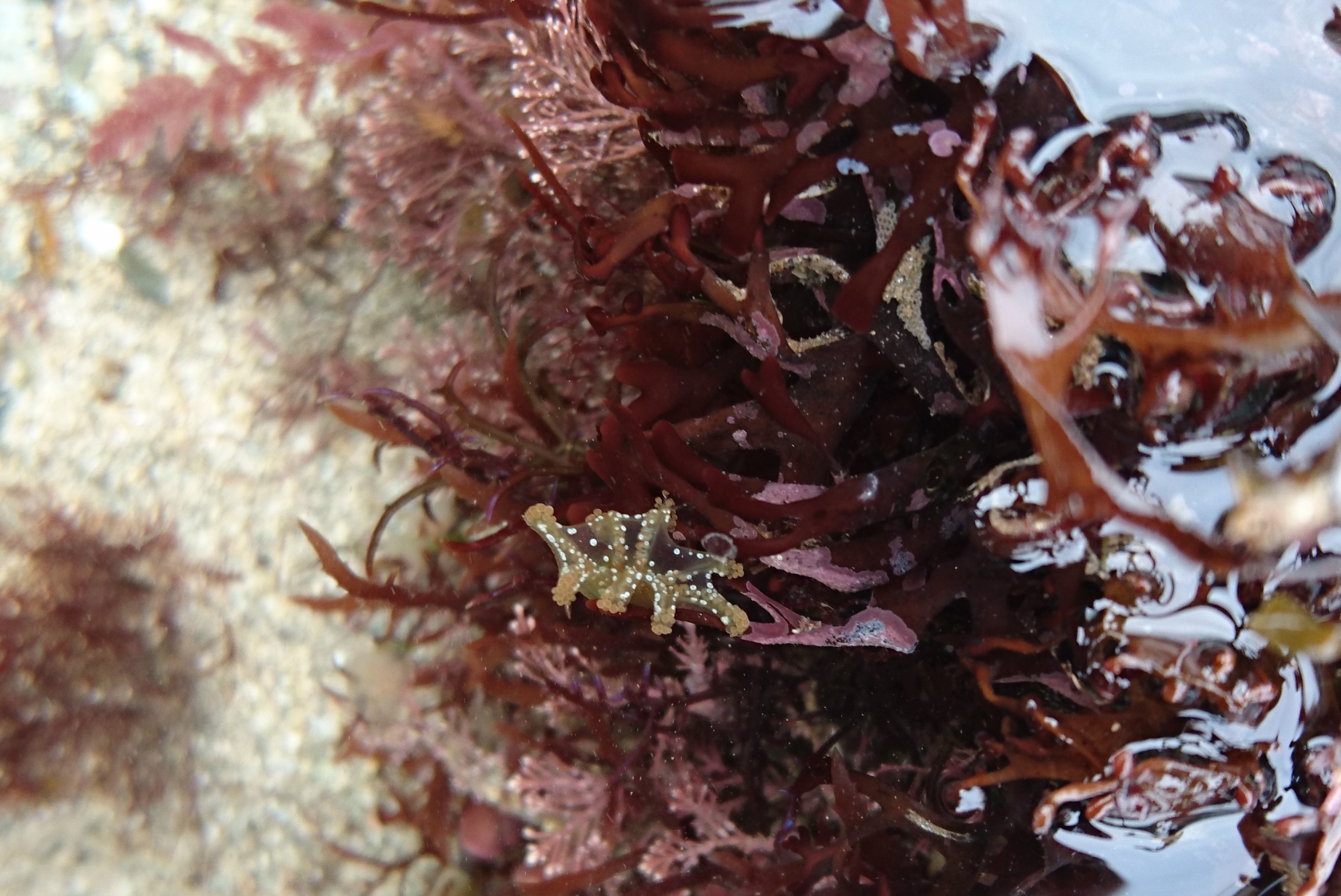
A stalked jellyfish.

A Lucernariopsis campanulata stalked jelly among the seaweed. They're easier to spot this time of year when the seaweed dies back - if the weather's calm enough.
A Lucernariopsis campanulata stalked jelly among the seaweed at Looe. They’re easier to spot this time of year when the seaweed dies back – if the weather’s calm enough. Thanks to Laura Smith for this photo.


And this sardine (or related species) which seemed to have escaped the Breton canning factories and followed me home.

Having watched sardines being canned in Quiberon's fish factory, it was great to see this one swimming freely. Thanks to Laura Smith for this photo.
Having watched sardines being canned in Quiberon’s fish factory, it was great to see this one swimming freely. Thanks to Laura Smith for this photo.


And finally… Huge thanks to our amazing hosts in Quiberon who welcomed us to their home, organised fabulous trips and let my other half try on a 27kg diving helmet!


OLYMPUS DIGITAL CAMERA
Making ourselves at home with our host family – exploring a treasure trove of our host’s diving finds and equipment.

Comments

10 responses to “Home from Home: Quiberon in Brittany”

  1. scooj Avatar

    Fabulous post as always. Yours together with another recent post I have read have certainly helped me to consider visiting Brittany. Thank you

    Liked by 1 person

    1. Heather Buttivant Avatar

      Thanks Scooj. Brittany and Cornwall are so similar – it’s a beautiful region. I hope you manage to visit soon. My son especially loved that they still have red squirrels and he can’t get enough of the chocolate crepes!

      Liked by 1 person

      1. scooj Avatar

        Sounds wonderful. I have heard it is like Cornwall. I will work on the family. Maybe a Spring destination.

        Like

  2. Lesley Avatar

    Lovely to take me back there again I adore that Quiberon peninsula and that amazing Cote Sauvage _ I am going to go and live there – I must! Never knew about the St Pirans hermit… Glad you had such a great time 🙂 BTW do you know if you can visit the Plymouth Marine Biological centre on the Hoe?

    Like

    1. Heather Buttivant Avatar

      Thank you Lesley. It’s a wonderful place – definitely worth another visit I’d say. I don’t think you can visit the MBA in Plymouth but they do run talks and training there from time to time – I saw my first cup coral on the beach just below there on one of their events. Have a look at their website: https://www.mba.ac.uk/courses-and-training/

      Like

      1. Lesley Avatar

        Wow… thank you I shall look into that many thanks Heather :):)

        Like

      2. Lesley Avatar

        Just to say how lucky I was to get the last training space at Falmouth Uni., 3rd Dec., thanks for your info much appreciated really looking forward to it 🙂 much closer for me too!

        Liked by 1 person

      3. Heather Buttivant Avatar

        That’s brilliant – I hope you enjoy it!

        Like

  3. From Cornwall to Cornouailles – a dabble in the Breton rock pools | Cornish Rock Pools Avatar

    […] Mylene spent her childhood holidays, I find a Pachygrapsus marmoratus crab, a species I saw nearby last year when I didn’t have my […]

    Like

Leave a comment

This site uses Akismet to reduce spam. Learn how your comment data is processed.