The pools sparkle as the sun finally shoulders its way through the February murk. Beneath the surface, the seaweeds are sprouting up, the first sign of spring in the rock pools, and with them come the sea slugs. Many of these minute molluscs choose to spawn in the shallow waters around the shore, where their favourite foods such as sponges, sea squirts and seaweeds are abundant.
A baby sea hare, Aplysia punctata, grazing on seaweed.
How they travel such distances to find mates and lay their eggs here is something of a mystery to me. They are delicate, squishy little things at best, and mere blobs of jelly out of the water. Once in the water, though, they reveal their colours and shapes, and most rockpoolers delight in finding them. Today, I see mostly pale, blobby ones rather than their spectacular cousins, but they are intriguing nonetheless. (more…)
February is an amazing time in the Cornish rock pools. Spring is coming and all sorts of fish, sea slugs and other creatures are moving onto the shore. Rock pooling is free, fun and exciting for all ages, so why not wrap up warm this half-term and head for the beach?
When?
There are some great low tides on Saturday 11th, Sunday 12th and Monday 13th February around lunch time. Check the tide times for your local area before you go.
Aim to start one to two hours before low tide as it’s safest to rock pool on an outgoing tide. Keep an eye out for the tide and always stay away from surging waves.
Joining a guided event is the very best way to discover marine wildlife. Experts (including me!) will be on hand to help you find and identify the crabs, fish, shells, starfish and more. At the end of the session you’ll be able to meet everyone’s best finds in the ‘Shore Laboratory’ and find out how the animals live and how to conserve them.
(If anyone know of any other rock pooling events on this half-term, please let me know and I’ll list them here).
Cornish Rock Pools – spider crab at Looe rockpool ramble
Where?
Any beach with some sheltered rockpools will do. There are lots all around Cornwall – some of my favourites can be found under the beaches tab at the top of this page.
What to do…
The shore can be very exposed, so make sure you’re well wrapped up and waterproofed. Your feet will get wet so wellies are essential.
Otherwise, all you need is a tub and/or bucket (please don’t use nets as these harm delicate animals). A camera and species guide are useful.
Head for the lower shore (keeping a safe distance from the sea’s edge) and go slowly, looking in shaded, wet areas like pools.
Under rocks and seaweed are great places to look, but move them gently and always return them to how you found them.
Even in the depths of winter the rock pools are full of life. In February spring is just round the corner and lots of animals will be moving in for the breeding season.
Expect to see crabs, fish, anemones, sea snails, prawns, starfish and perhaps even a sea slug – these little creatures come in an amazing variety of shapes and colours.
If you need help identifying something, take a photo if possible and get in touch through my contact page, Facebook or Twitter. I love seeing your finds.
Next month, 50 years will have passed since the Torrey Canyon tanker ran aground off the Isles of Scilly, releasing a 700 square km oil slick. On the last day of 2016, I visited Porth Mear to learn how a long-term survey has revealed the secrets of the beach’s fragile recovery, and to see if the St Piran’s hermit crab (Clibanarius erythropus)has managed to make more than a temporary comeback.
Clibanarius erythropus – A red legged hermit crab making a comeback in the Cornish rock pools this year.
When the Torrey Canyon hit rocks in February 1967, its cargo of oil ended up on the Cornish, Breton and nearby coasts. The oil, along with huge quantities of solvent emulsifying chemicals used in an attempt to disperse it, decimated seabird populations and marine wildlife.
Concerned by the impact on his local beach, biology teacher, Richard Pearce, decided to monitor the wildlife on the shore three times a year. He’s been doing his survey without fail ever since.
I wasn’t born when Richard first marked out his quadrats on Porth Mear beach, but I grew up hearing stories of the horror people felt at the sight of the thick black tide, the pervasive smell of the oil, and the woefully unprepared volunteers attempting to shift the cloying oil with garden tools. Decades later, lumps of tar were still washing onto our beaches after every storm.
I’ve always wondered what the process of recovery looked like, so I jumped at the chance to join Richard at Porth Mear for survey number 150.
Survey 150…
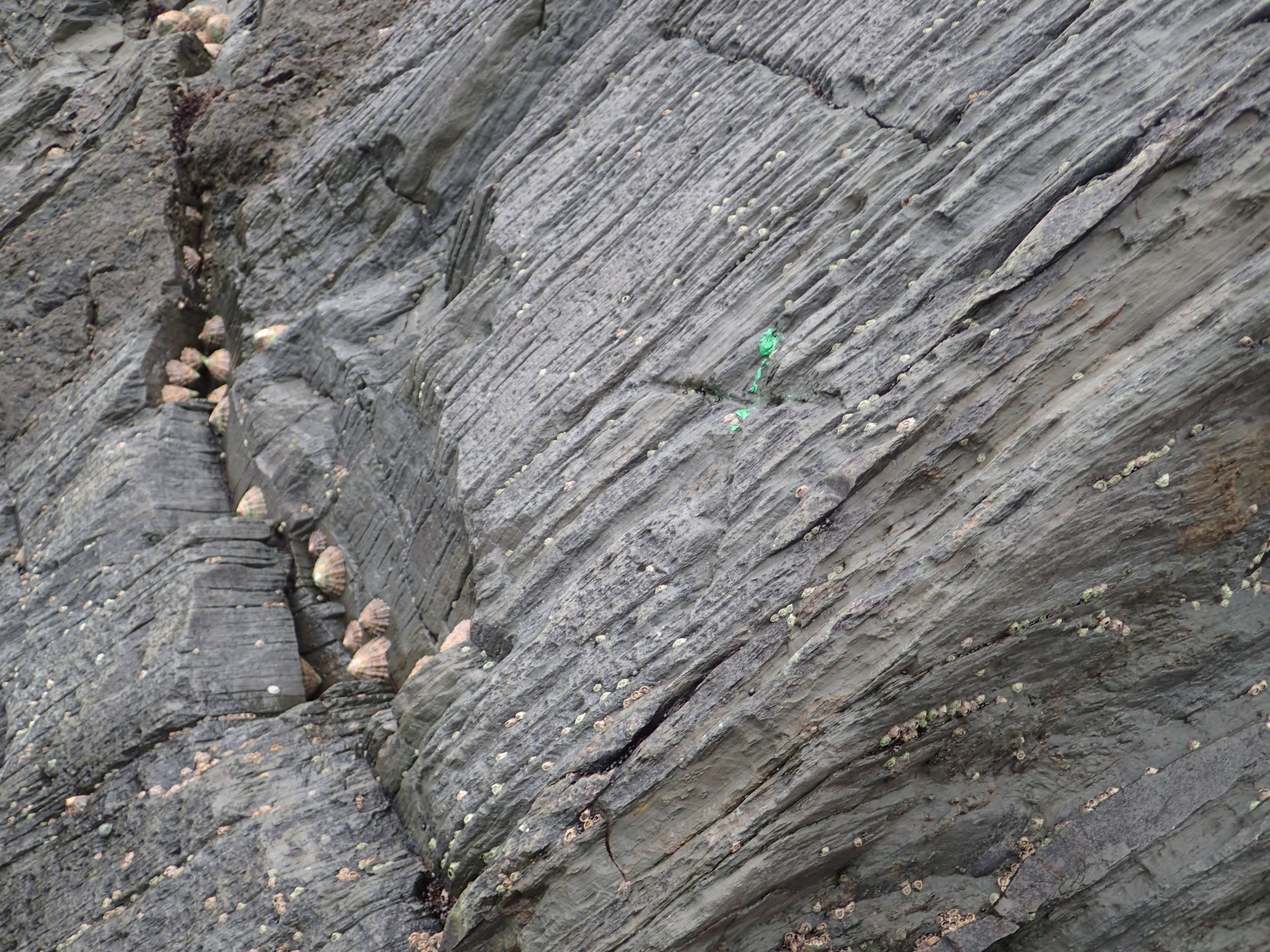
It’s clear, after many surveys, that Richard knows the beach well. So well, in fact, that even when the gouged crosses and splodges of green paint that mark the survey quadrats have worn away or been covered up by seaweed, he still knows exactly where they are.
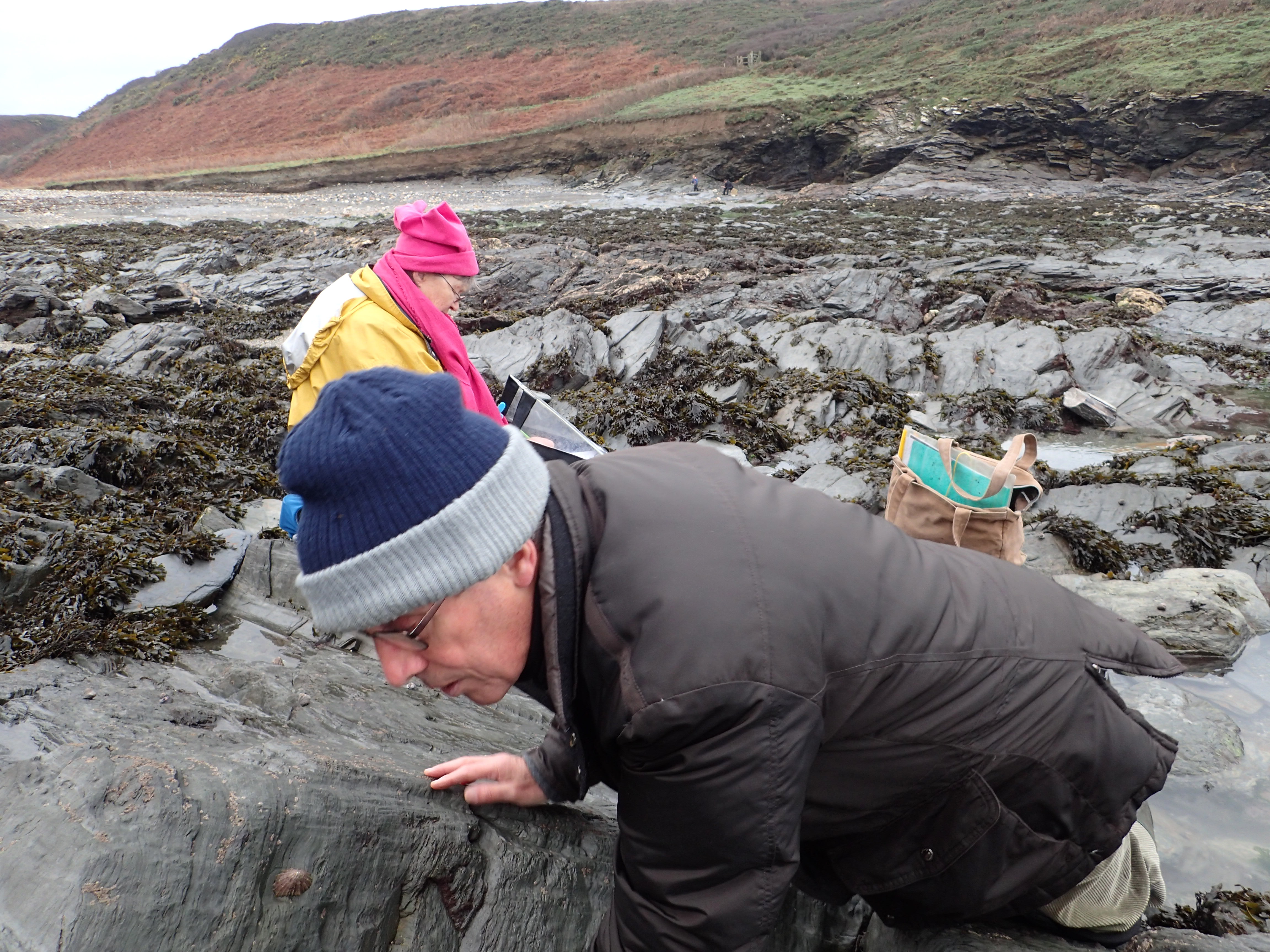
Richard examines a quadrat while Chris notes the data
As he shows me his method, calling out the presence and coverage of seaweeds, barnacles and molluscs to his partner, Richard tells me how after the Torrey Canyon disaster the green seaweeds were the first to flourish. With many of the grazing molluscs wiped out by the oil and the chemicals used to disperse it, the seaweeds soon took over. After this other animals gradually returned.
Crosses in the rock and paint marks show the quadrat boundaries – now on his 150th survey Richard knows just where they all are!
Over the years, Richard has seen many changes. Some are seasonal or weather related, others are harder to explain but may be due to warming seas. Why one pool that was once crammed with mussels now has almost none and why limpets are doing particularly well this season is hard to say, but the data he is collecting reveals changes that would otherwise go unnoticed.
Not for the faint-hearted – Richard has to scrabble down steep rocks and wade knee-deep to reach some of his quadrats.
The tide drops and, while Richard is knee-deep examining a quadrat alongside a long deep pool, I explore the lower shore pools, determined to find out whether the St Piran’s crab is still here. After an absence of more than 30 years, this equal-clawed hermit crab started to reappear around Cornwall in 2016 and we had one record on this beach in the spring. Although past records are too patchy to be sure, it’s thought that pollution from the Torrey Canyon played a role in the loss of this species, so 50 years on it would be lovely to find it re-establishing.
Every time I see a shell move, I leap on it, looking for the red legs and spotty eyes, but every one is a common hermit crab (Pagurus bernhardus).
The disappointment mounts… I find lots of common hermit crabs (Pagurus bernhardus) – the right claw is much chunkier than the left with lots of raised bumps on top.
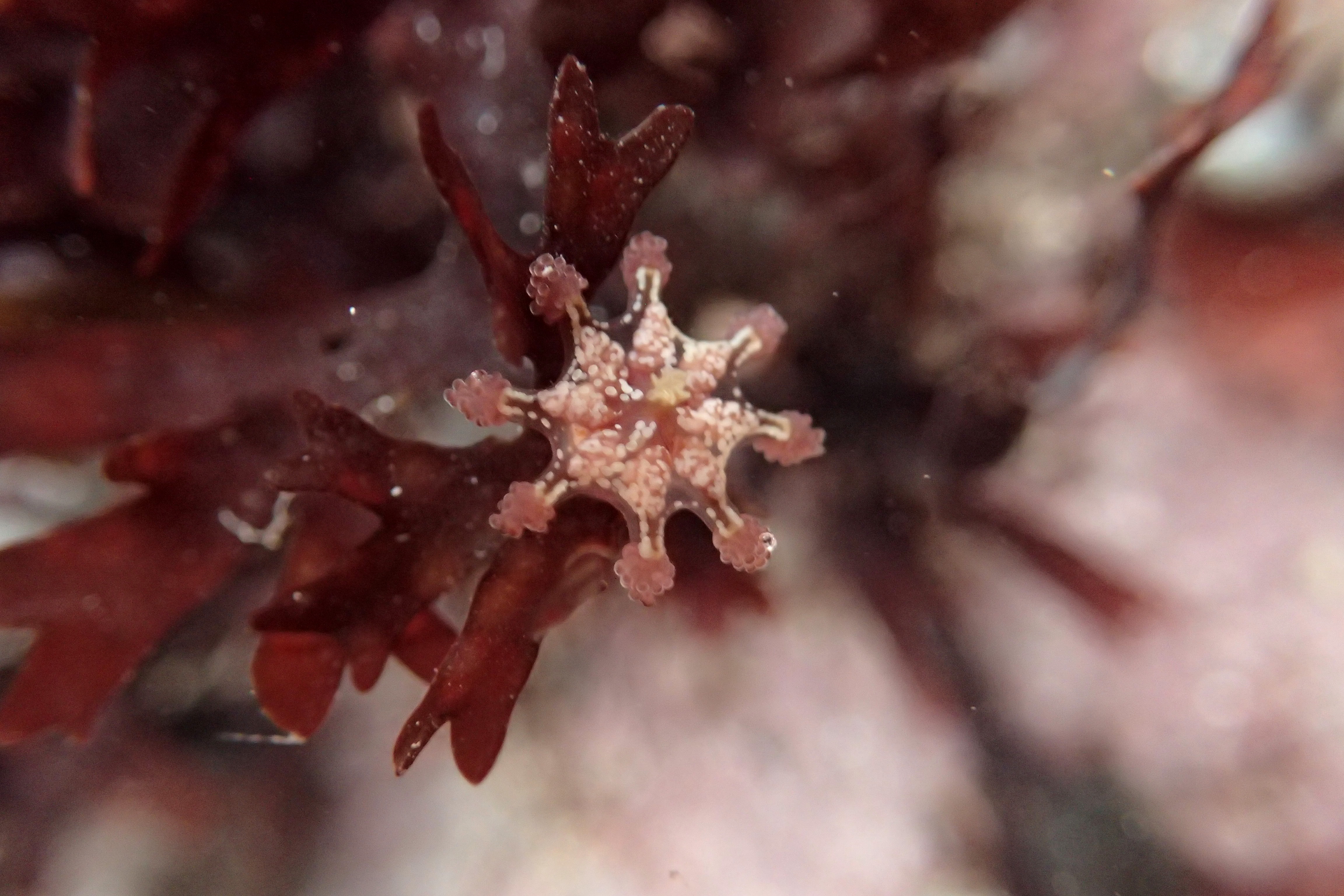
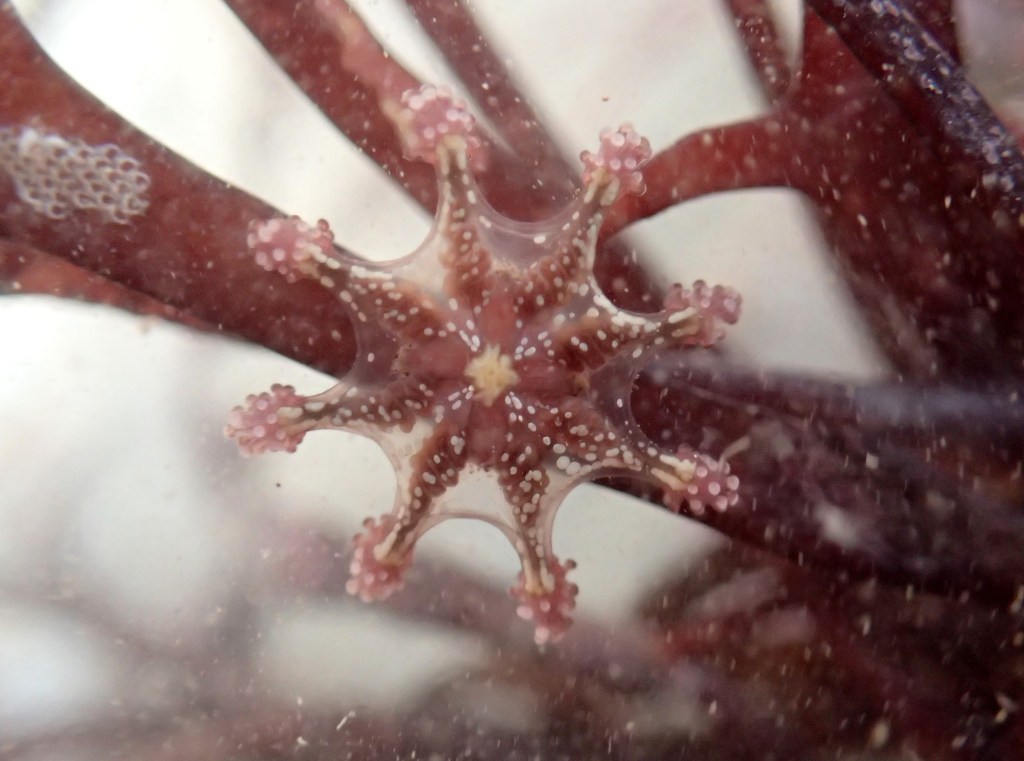
Rooting around in the pools always reveals some unexpected treasures. I make my first record of a stalked jellyfish (Calvadosia cruxmelitensis) at this site.
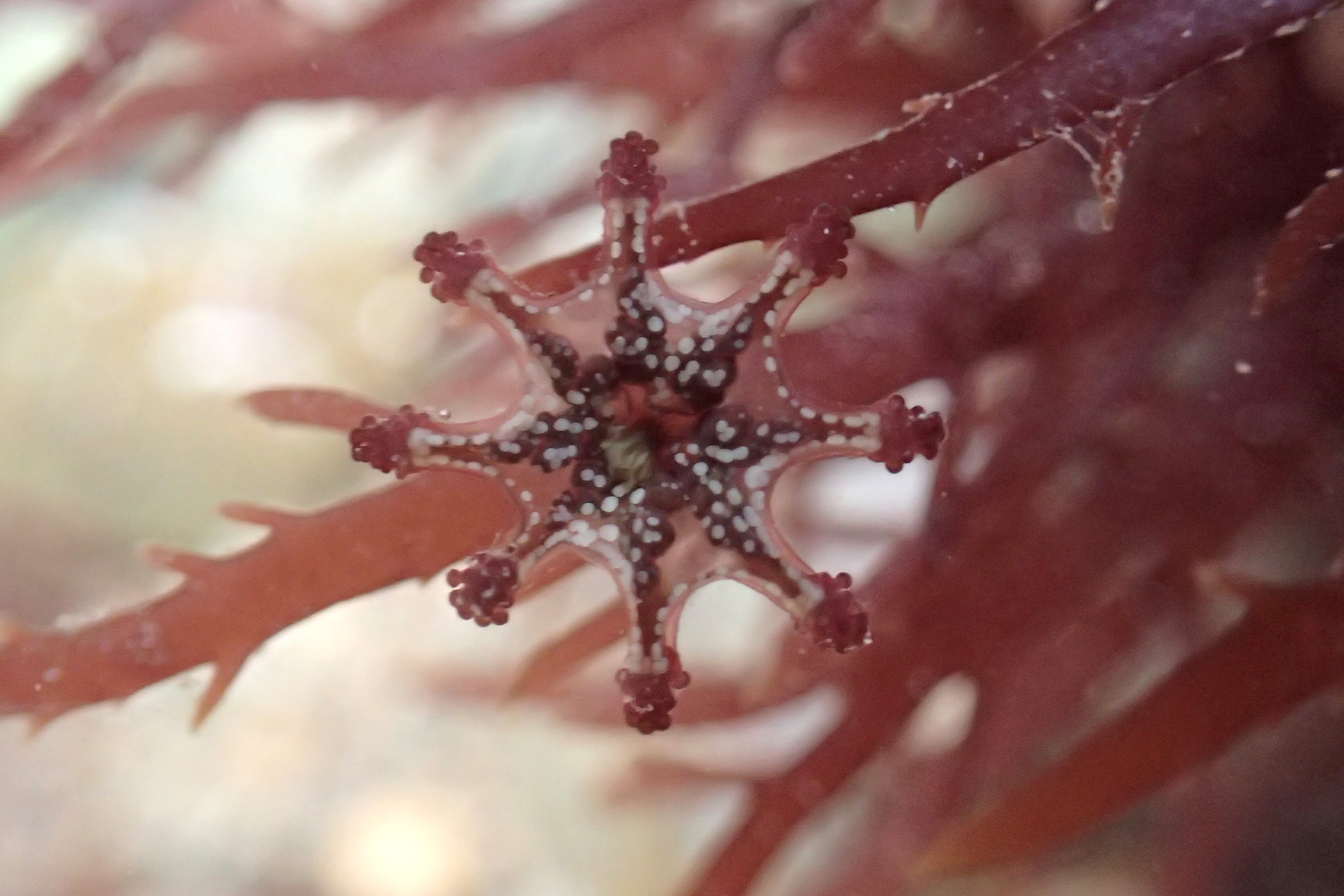
Stalked jellyfish – Calvadosia cruxmelitensis – at Porth Mear
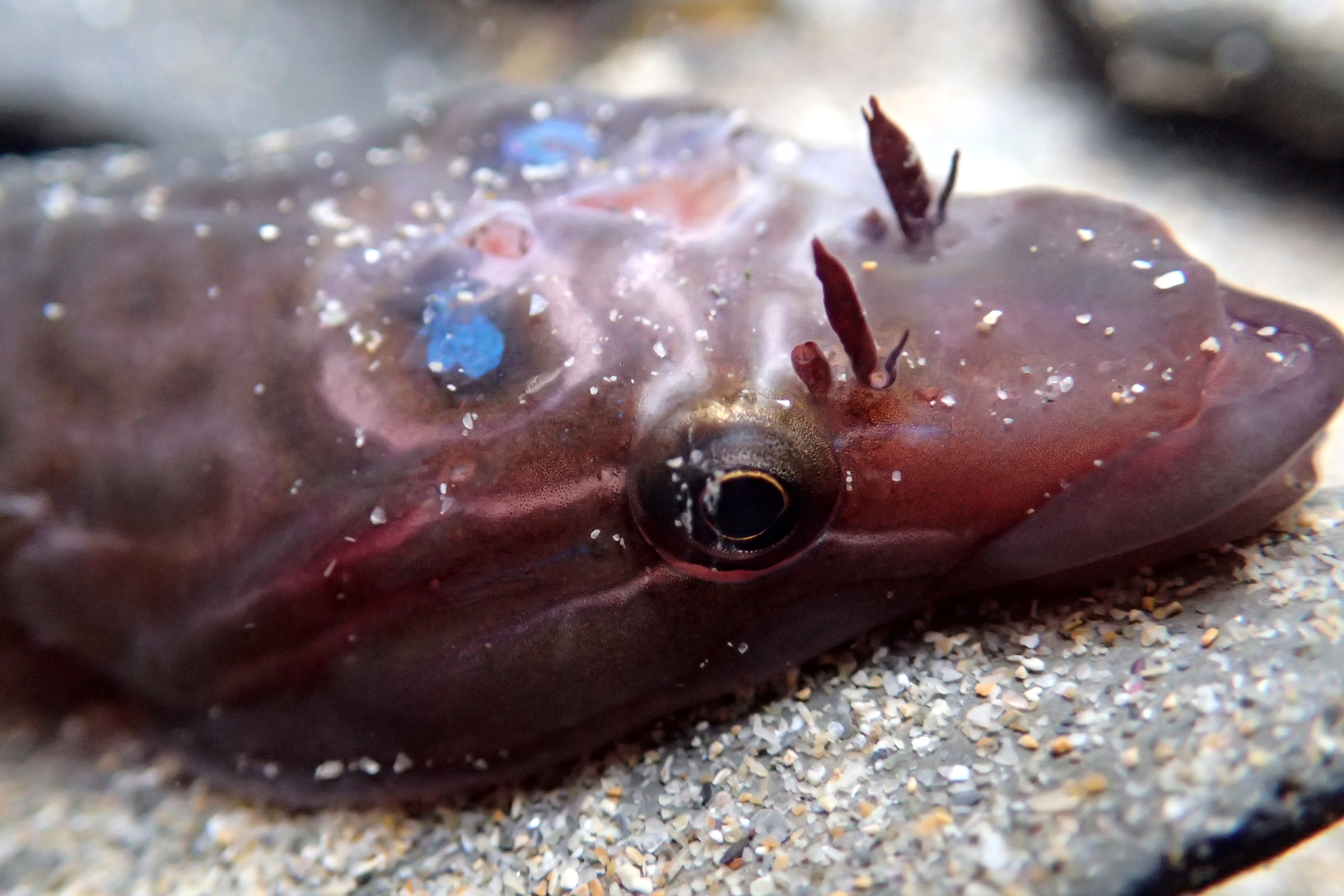
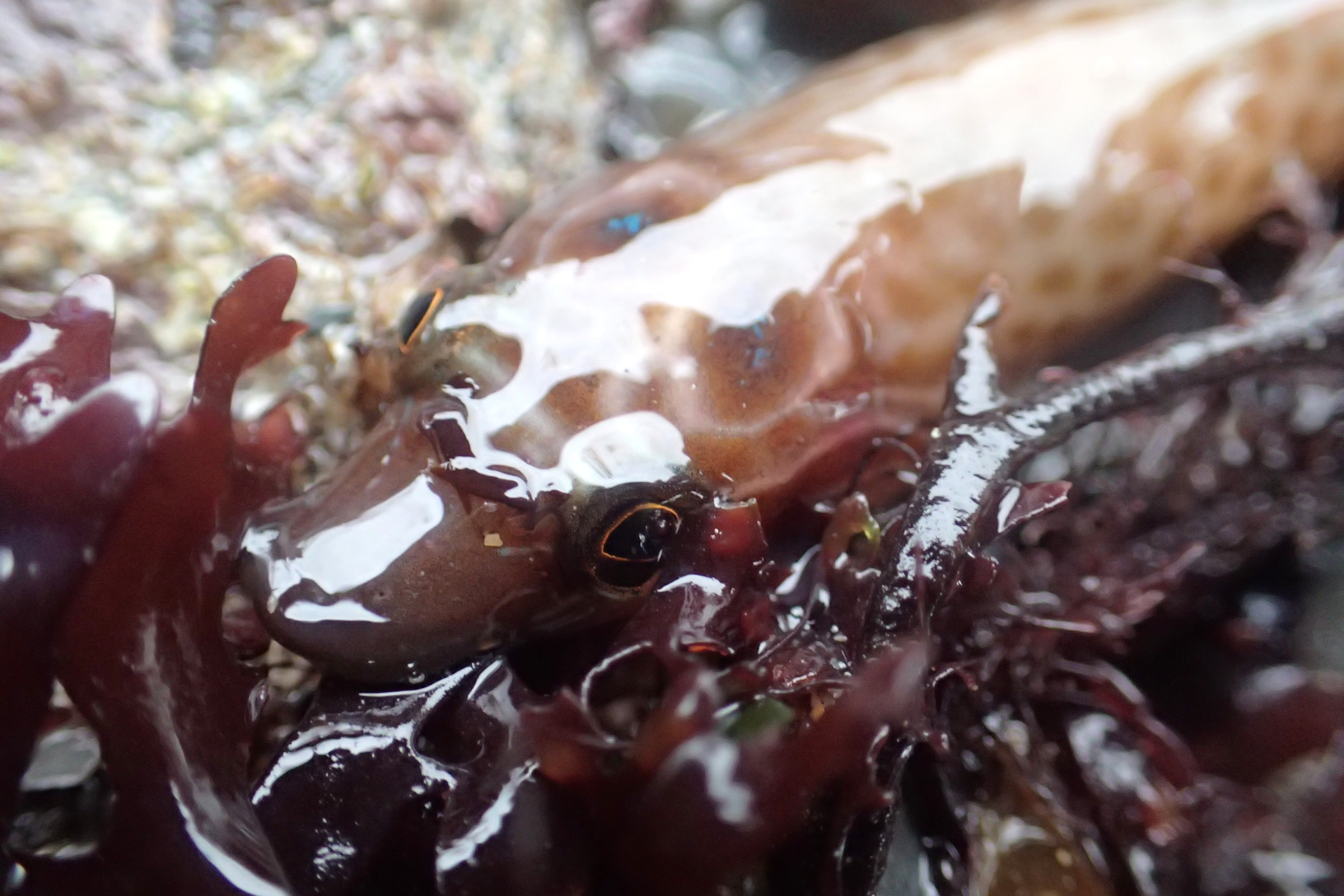
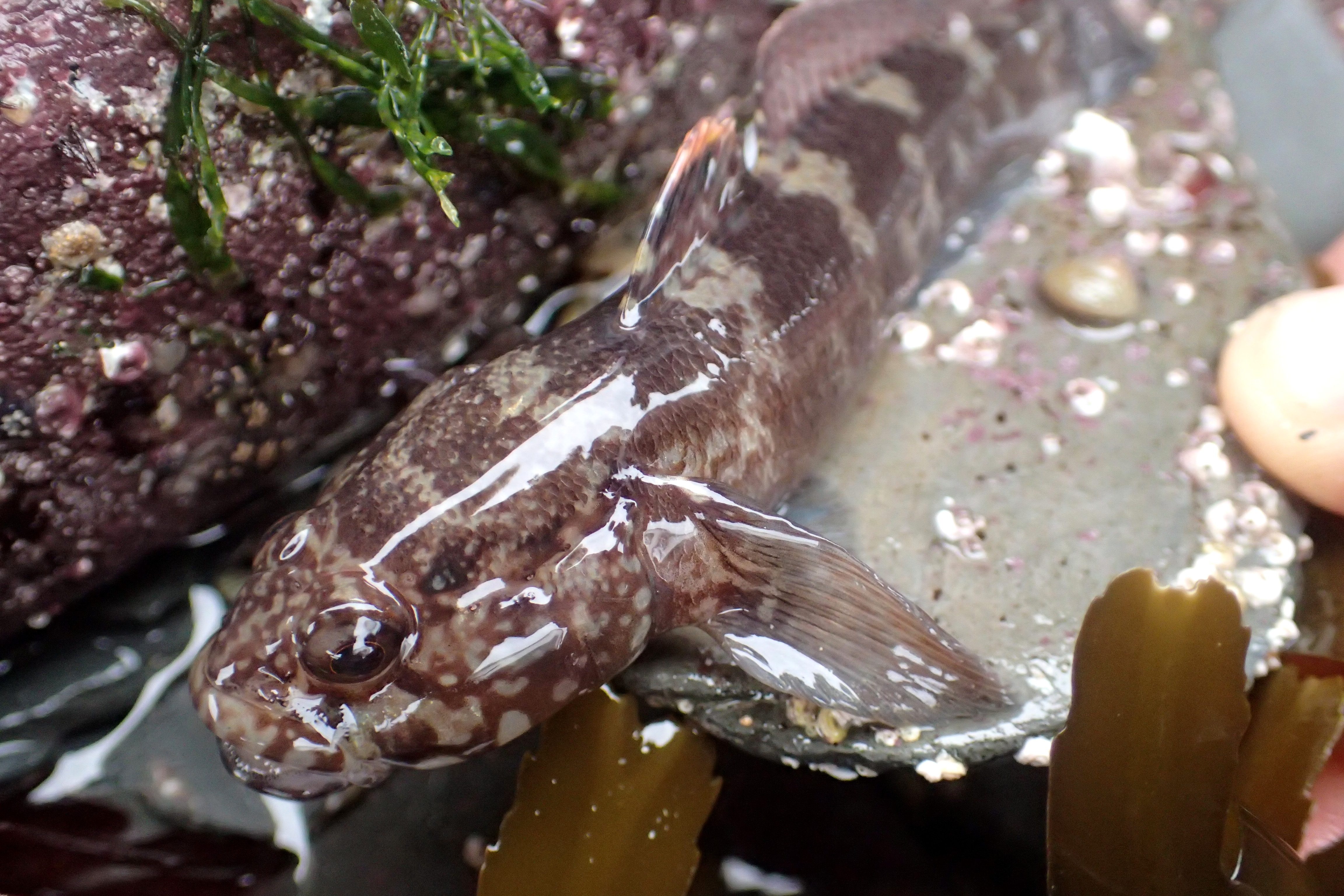
This is always a good beach for finding Cornish clingfish, and the rocks of the lower shores don’t disappoint. In one small area I find a dozen of these stunning little duck-faced fish, some with iridescent blue spots on their heads.
Cornish clingfish at Porth Mear
And another Cornish clingfish…
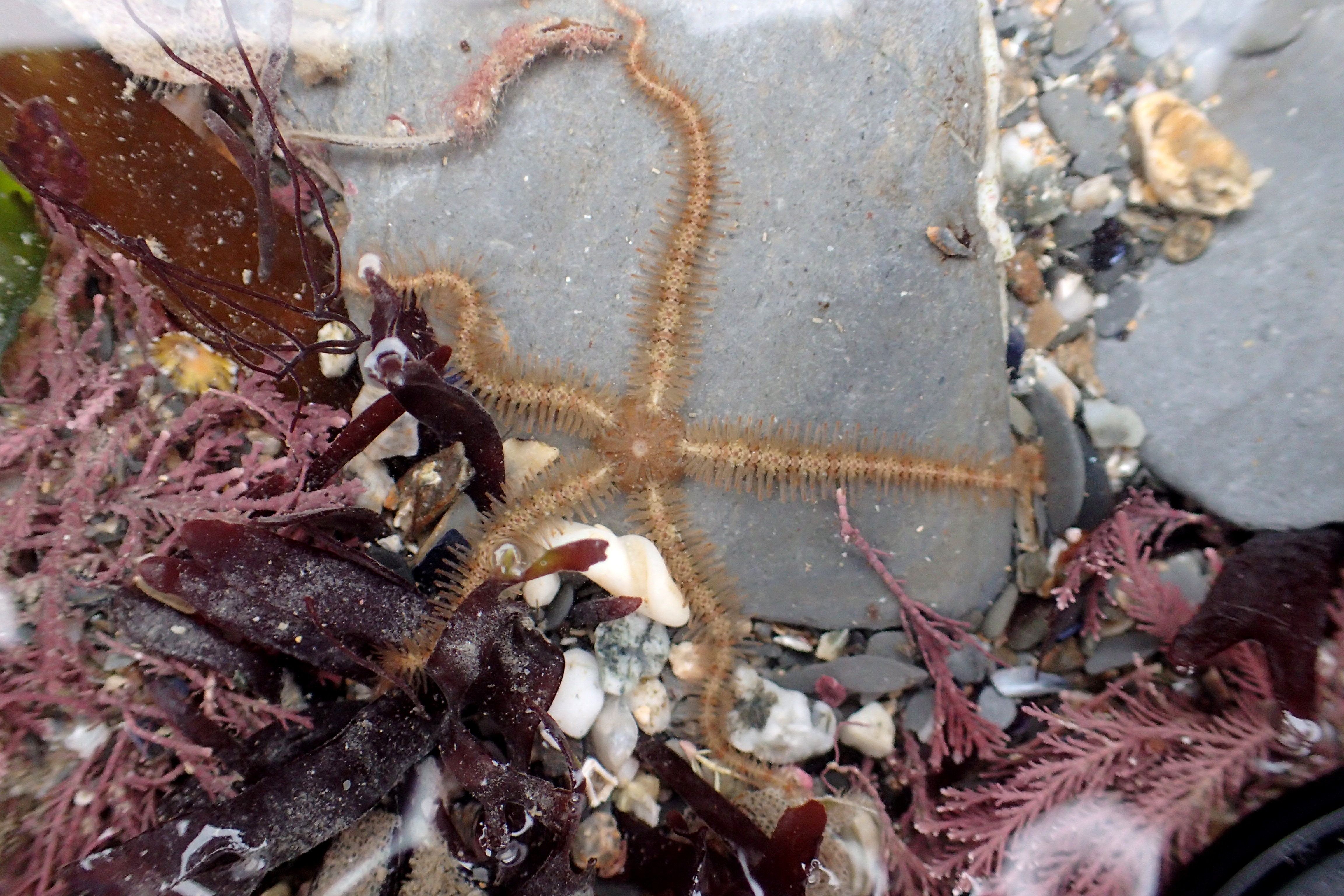
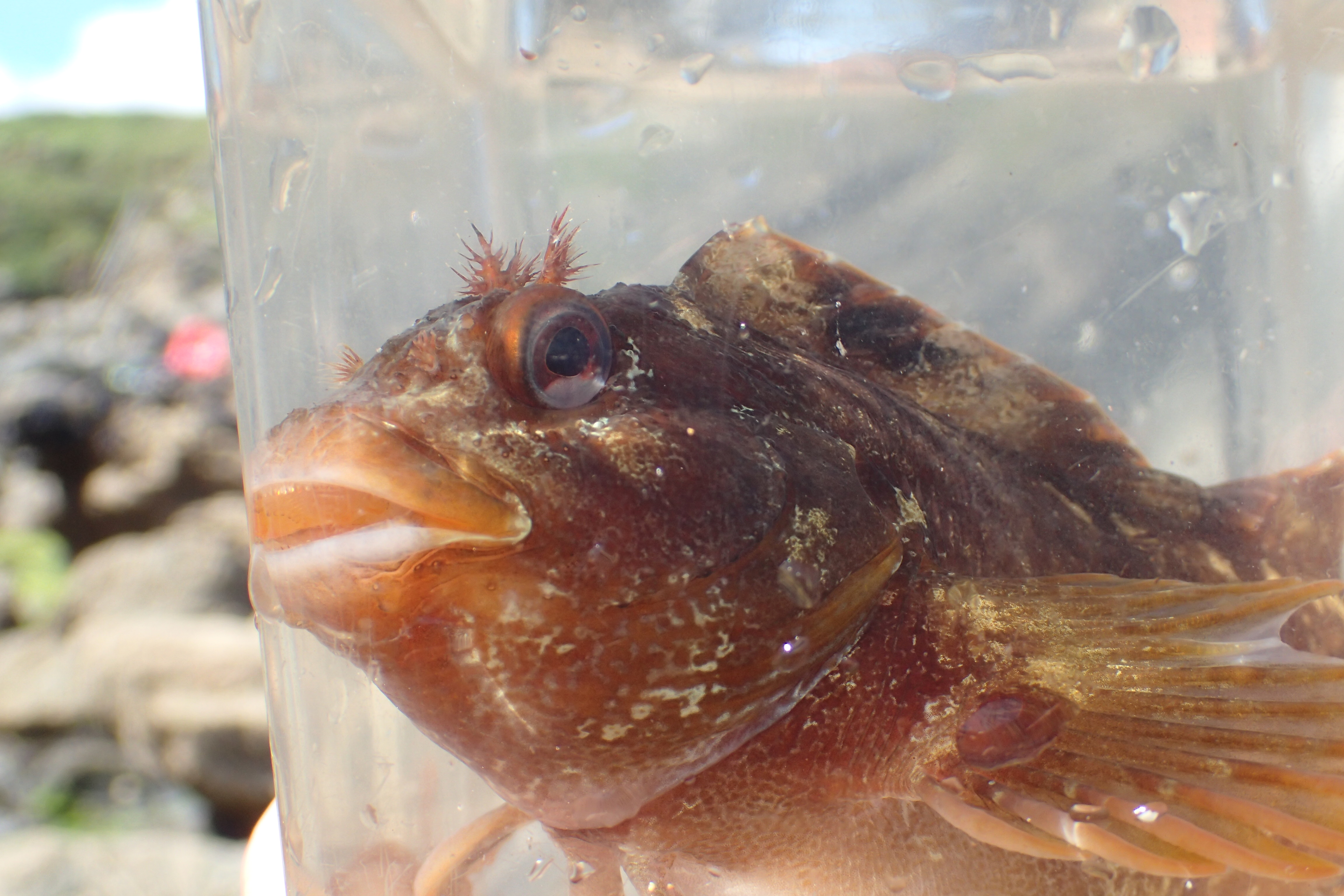
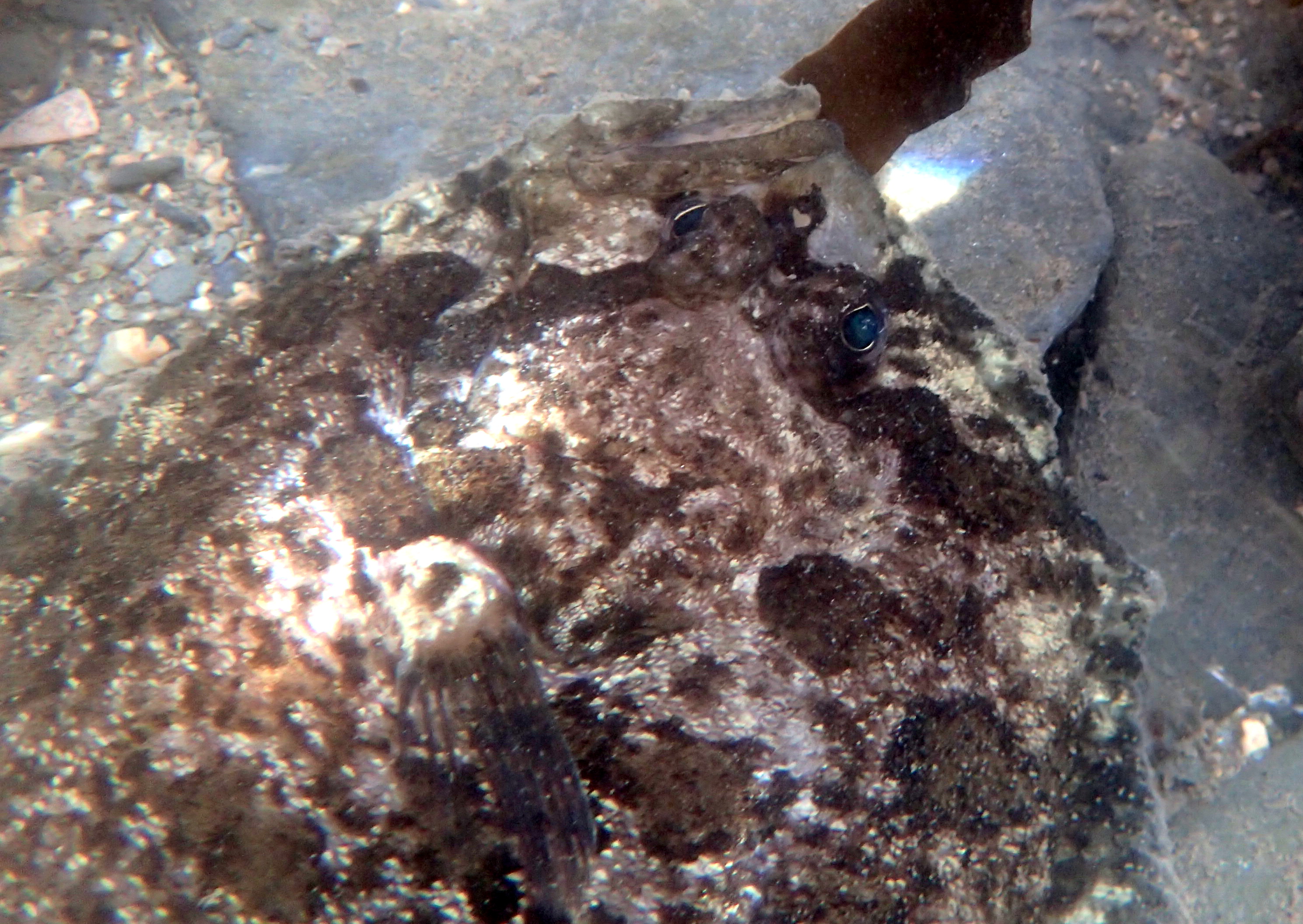
As I follow a gully across the shore I find several scorpion fish lurking among the rocks. Brittle stars lurch away into the seaweed and Xantho pilipes crabs close up, pretending to be pebbles.
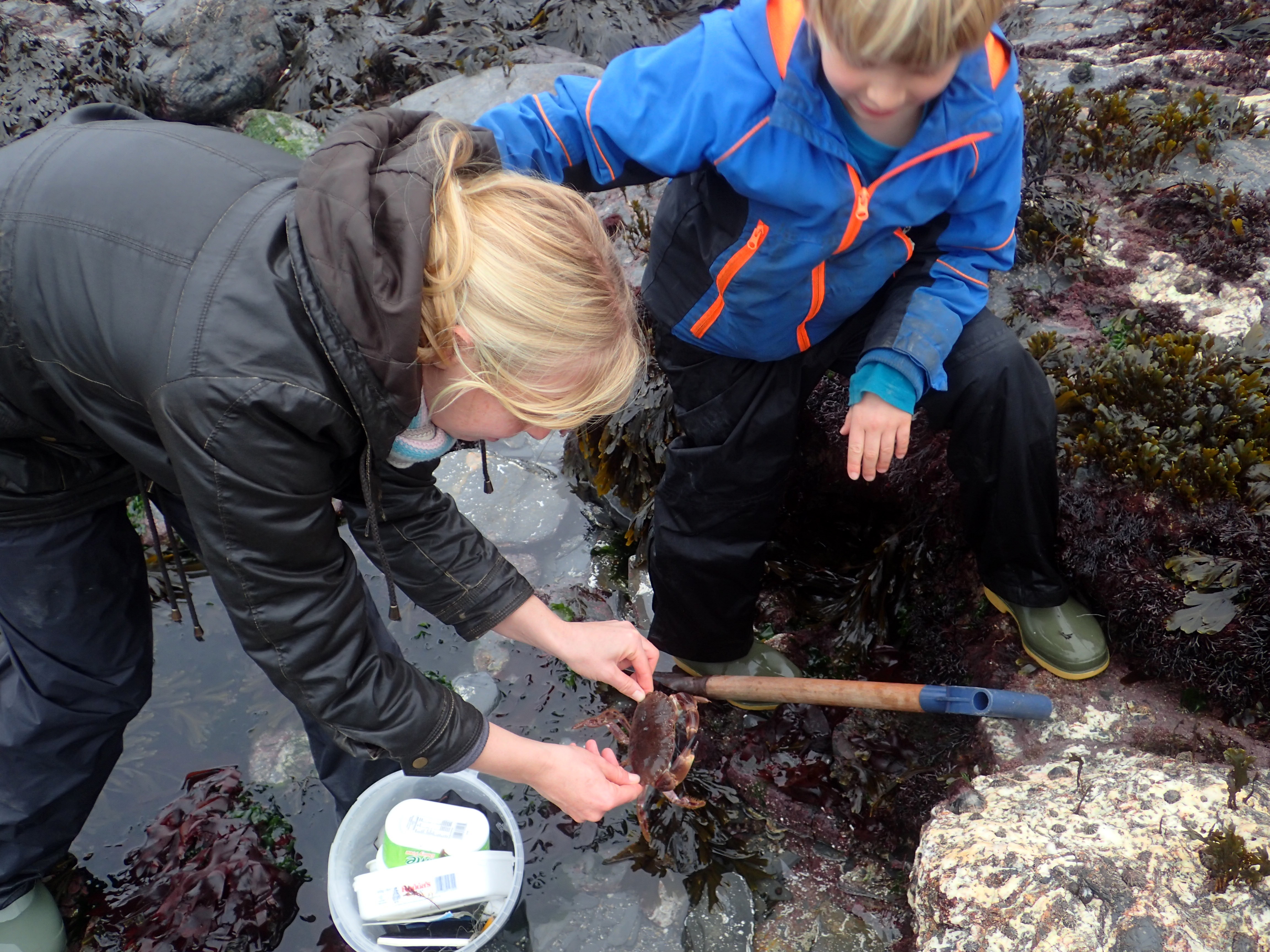
My other half and Junior join me, hunting for crabs and fish. Every thirty seconds I remind them that we need to look for little hermit crabs and they ignore me as they should. They’re used to me and my missions.
Not a hermit crab… a feisty male edible crab at Porth Mear.
Junior at least keeps pointing out suitable pools. He knows they like the ones with pink coralline seaweed and there are lots here. I barely have time to glance at one before he’s trying to drag me to the next.
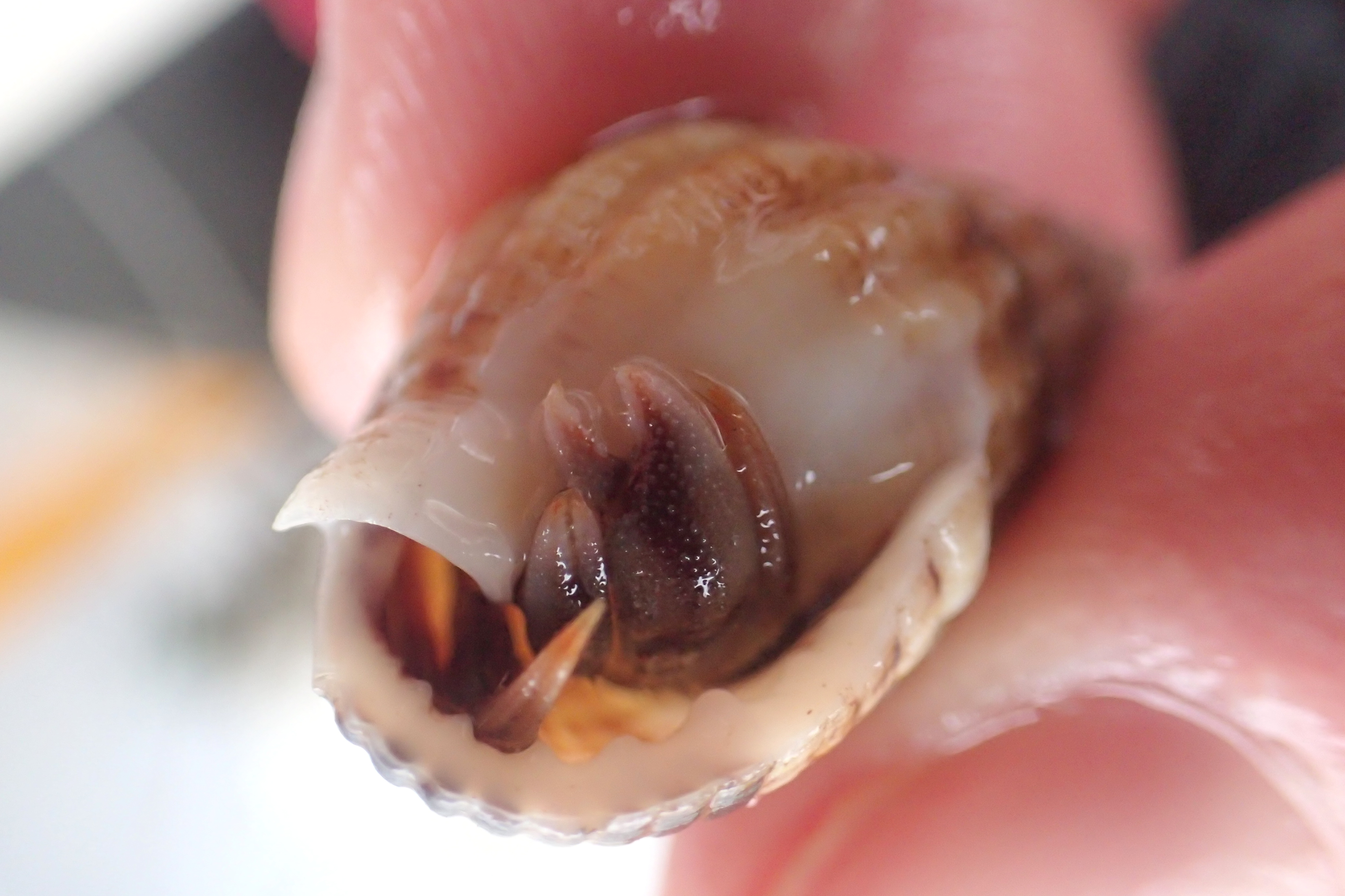
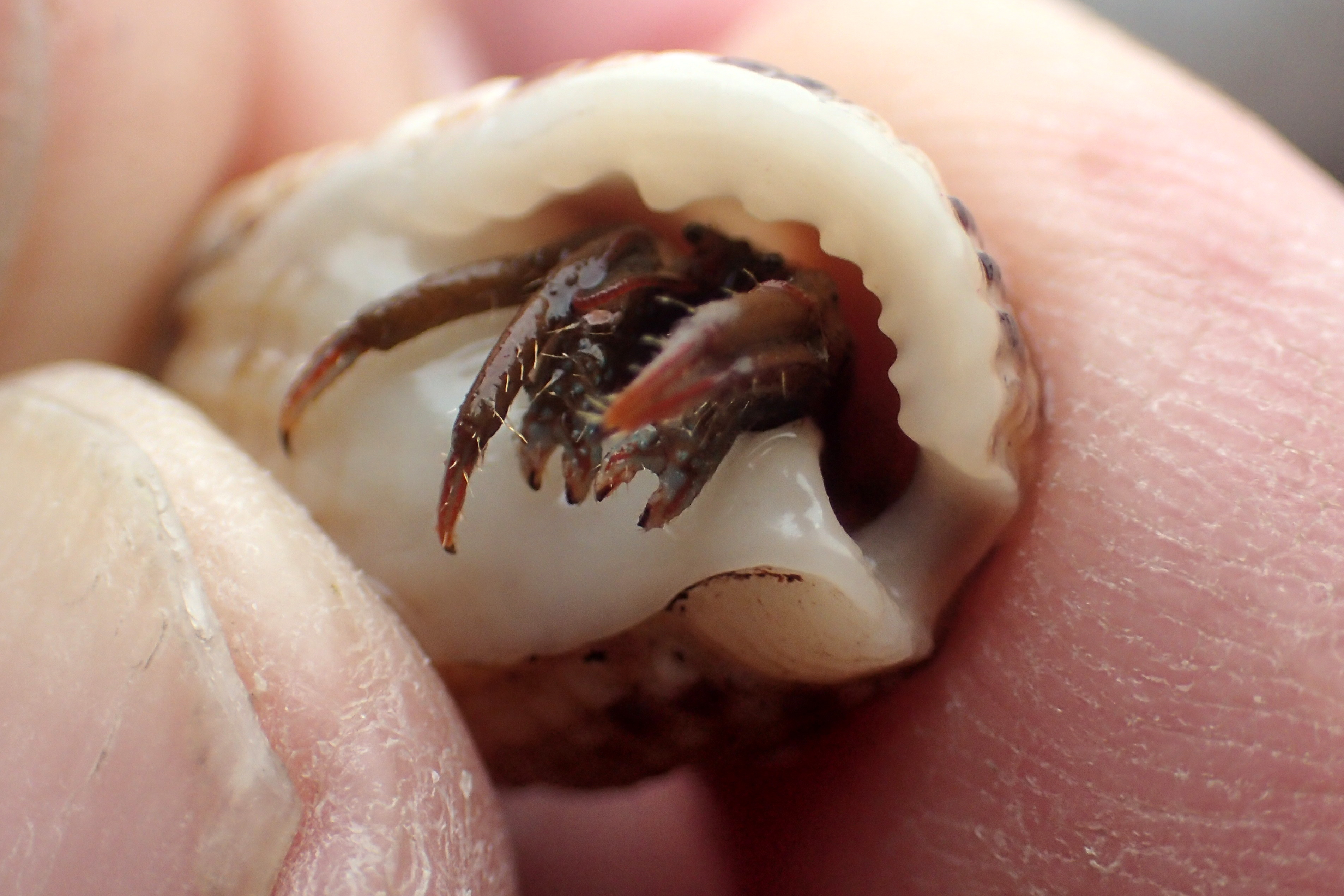
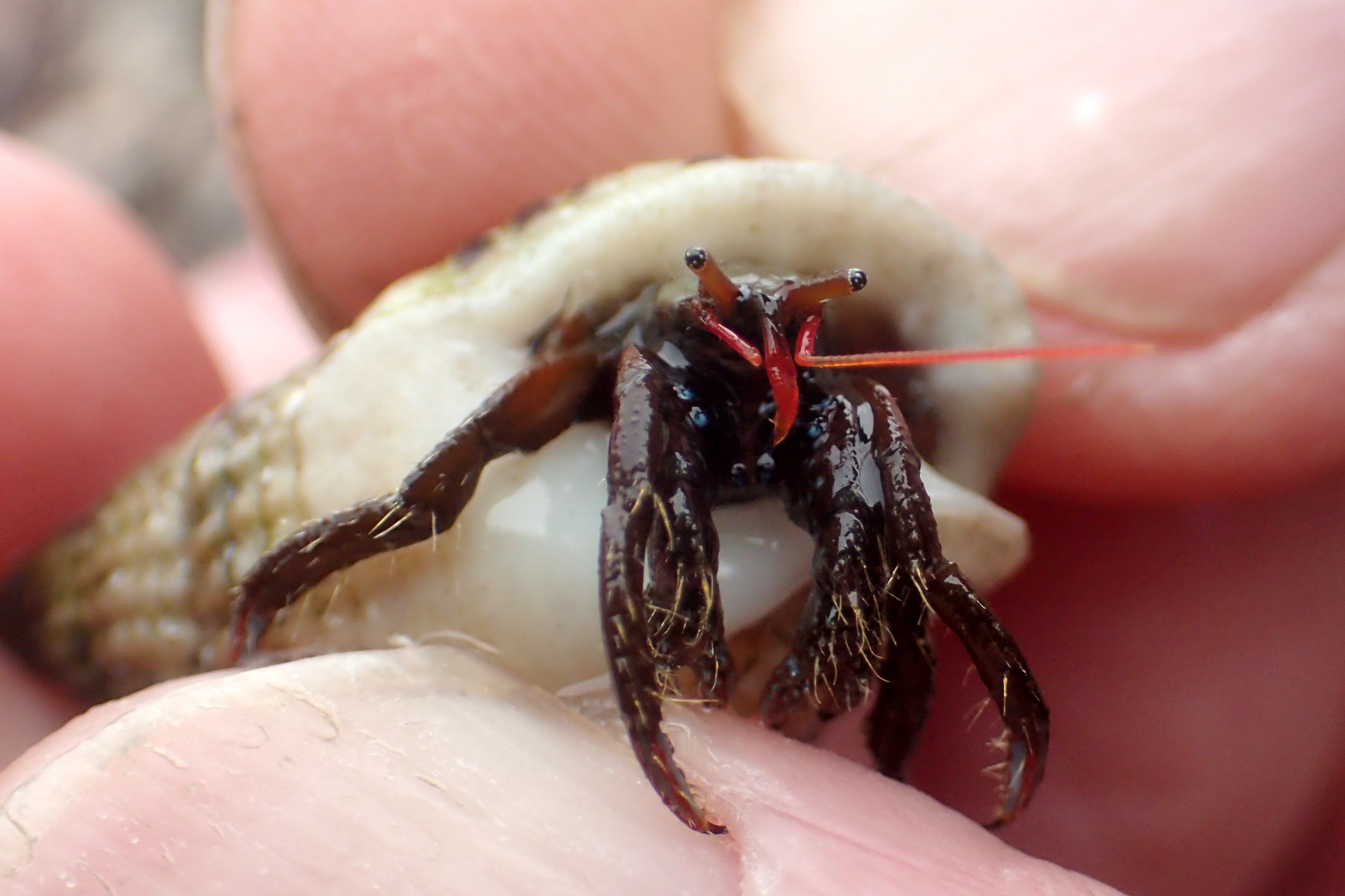
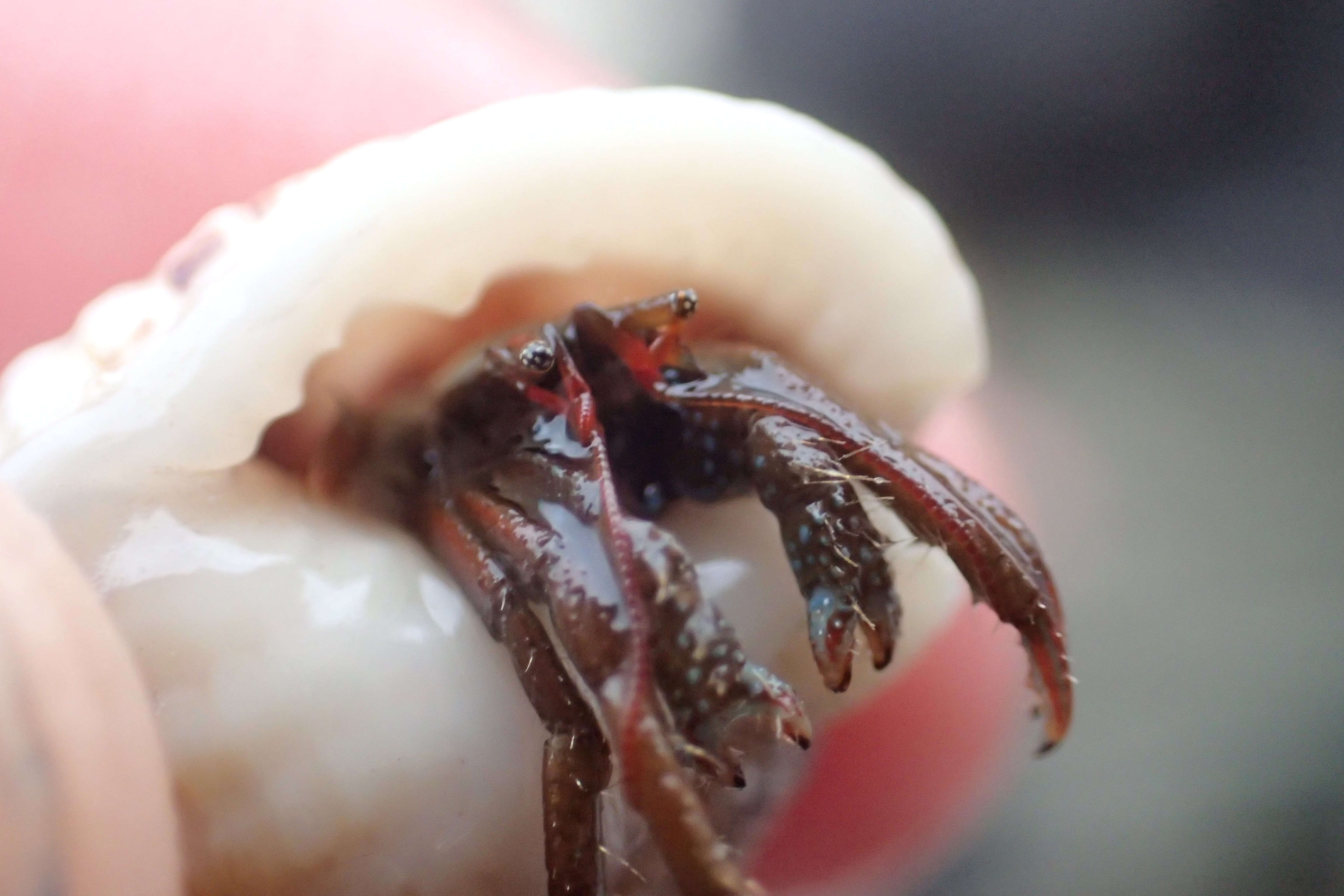
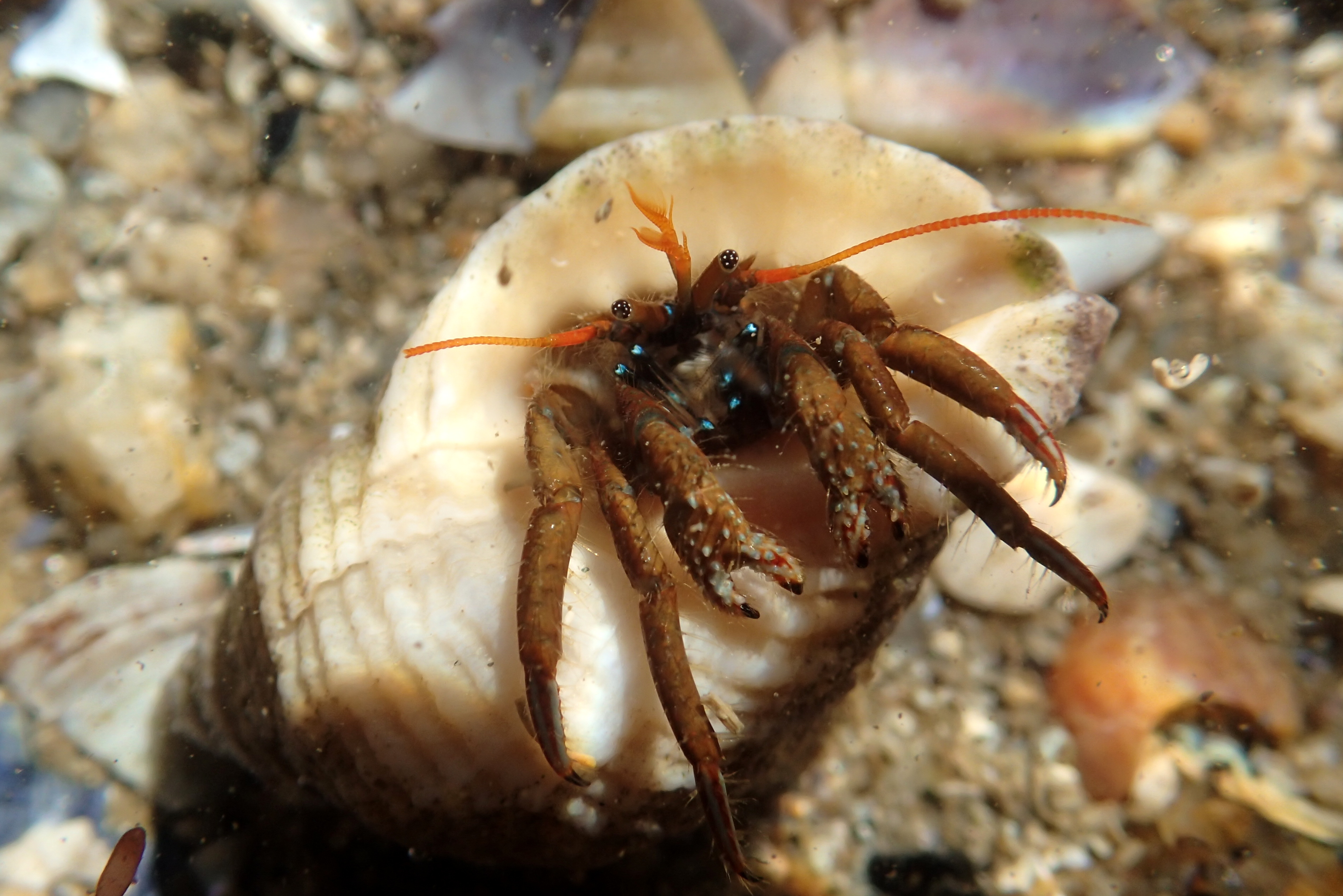
And then it happens. A shell moves and as soon as I pick it up I know. The legs are red, the shape’s wrong for the common hermit crab.When the crab extends its claws there can be no doubt, they’re hairy and pretty much equal sized. This is a St Piran’s crab.
When I see the red legs and equal-sized claws I know – a St Piran’s hermit crab at Porth Mear
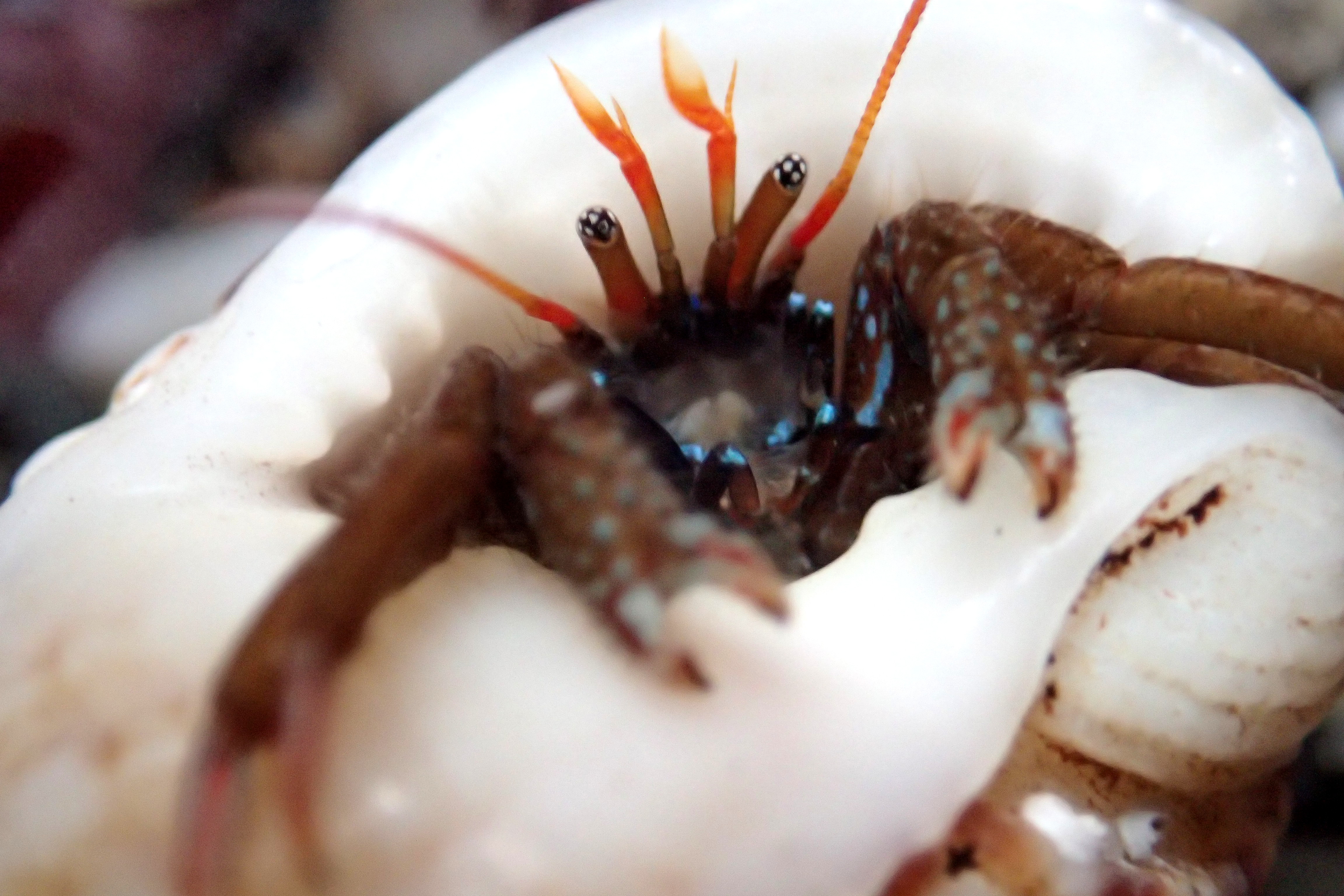
I yell like I’ve won a golden ticket. Under my camera it’s easy to see the black and white spotty eyes of the crab. We all gather to look and as I take an underwater photo, I see other shells moving.
The long eye-stalks with black and white-spotted eyes are distinctive too – a St Piran’s crab at Porth Mear
Sure enough, this next shell has a St Piran’s crab in it, and the next, and the next. While I’m taking photos in the pool, Richard is examining shells on the rock by a small overhang. “There are nine more here,” he says. Soon we’ve counted at least fourteen. They’re all larger than the one found here earlier in 2016.
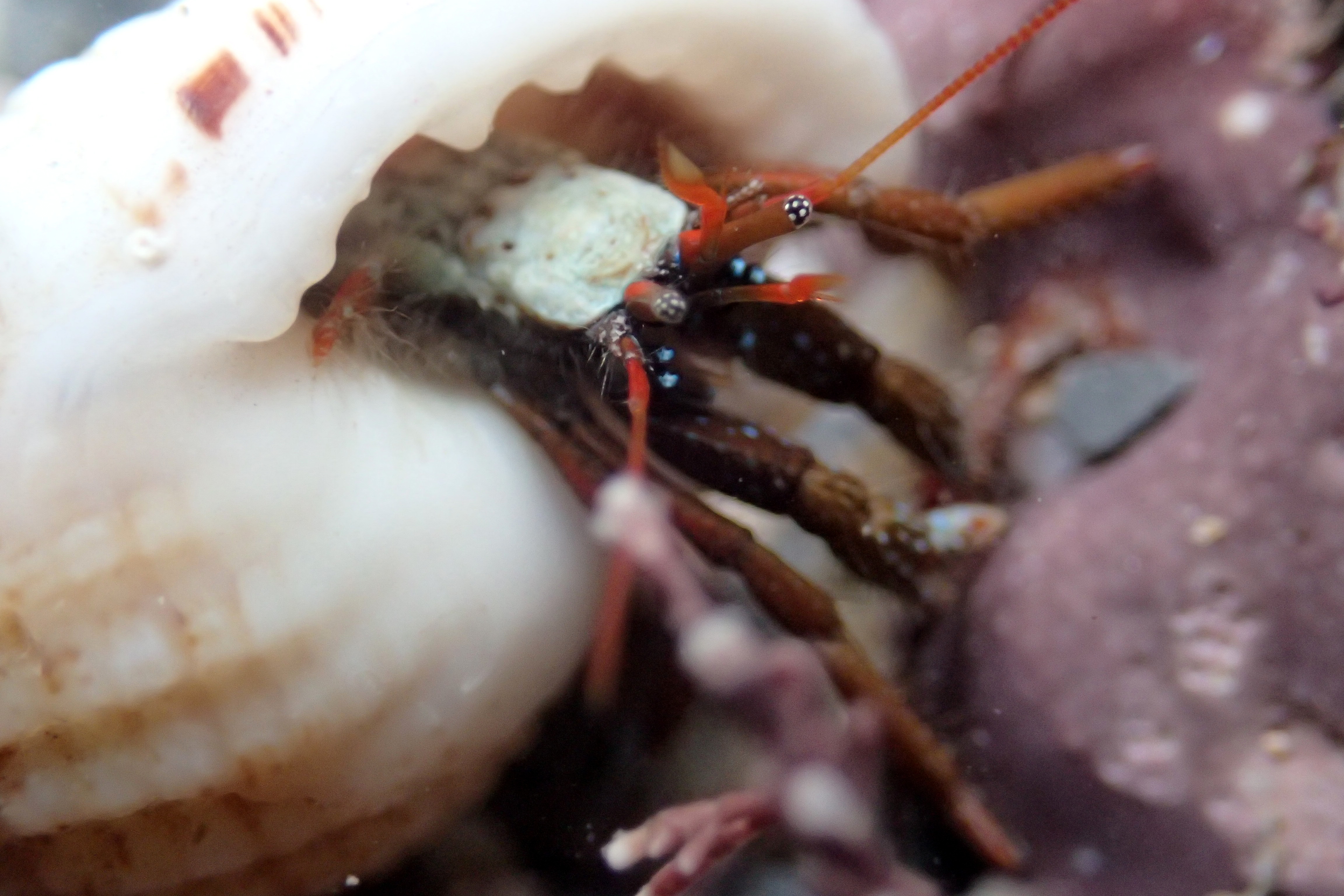
A St Piran’s hermit crab in the pool at Porth Mear
Whether there are other groups of St Piran’s crabs on this beach is hard to say. The tide is surging in now so we’ve run out of time to search.
A St Piran’s crab foraging in the pool at Porth Mear
The existence of the St Piran’s crab is a fragile one; storms, temperature change, pollution and disturbance threaten our shore wildlife now more than ever. Richard’s survey provides an incredible conservation tool with its wealth of data about what’s here and how it changes.
50 years on from the Torrey Canyon disaster, the confirmation of the St Piran’s crab’s comeback is an uplifting way to complete this survey (and the year).
A Scorpion fish at Porth MearA rock gobyA brittle star on the move at Porth Mear.Xantho pilipes crab pretending to be a pebble at Porth MearAs the last tide of 2016 rushed in, I had to say au revoir to this little St Piran’s hermit crab. Hopefully they’ll be sticking around in 2017. Happy New Year!
In a year of turmoil in the human world, the colour and diversity of the Cornish rock pools have revived my spirits on every visit. While there’s much to be done about plastic waste, discarded fishing gear, pollution and other threats to our marine wildlife, the end of the year feels a good time to reflect on the positives.
So, here are a few of my rockpool highlights from 2016… (and a scroll down for a video of a chough!)
January
Flat periwinkle in the Cornish rock pools
Flat periwinkles are so common on the shore that I’m guilty of overlooking them. Taking a morning to watch them was a revelation. They’re colourful, industrious and surprisingly engaging. They’re well worth a look, especially on stormy winter days when the lower shore isn’t accessible.
February
Anapagurus hyndmanni hermit crab
On the first big tides of the year, I explored a new section of the rocky shore near Looe and found an amazing gully teeming with life. Among the cowries, sea squirts, sea slugs and crabs, I came across this gorgeous little hermit crab with one huge white-gloved claw, the Anapagurus hyndmanni.
March
Galathea strigosa – a squat lobster
In March the rock pools were bursting into life. Baby cat sharks were hatching in front of my eyes and other fish were busy laying their eggs. Among the rocks I spotted this Galathea strigosa squat lobster – a rare sight on my local beach. This one was only a few centimetres long, but its colours were fabulous.
April
Scarlet and gold cup coral
In April I visited one of my favourite childhood beaches, Porth Mear near Porthcothan, with a group of North Devon naturalists. We recorded sea spiders, unusual crabs and had the most northerly sighting (at that time) of the St Piran’s Hermit crab, which has made a comeback around Cornwall in 2016. Best of all, we found a pool full of Scarlet and gold cup corals. These corals were way too small for my old camera to capture but this time I was better prepared.
May
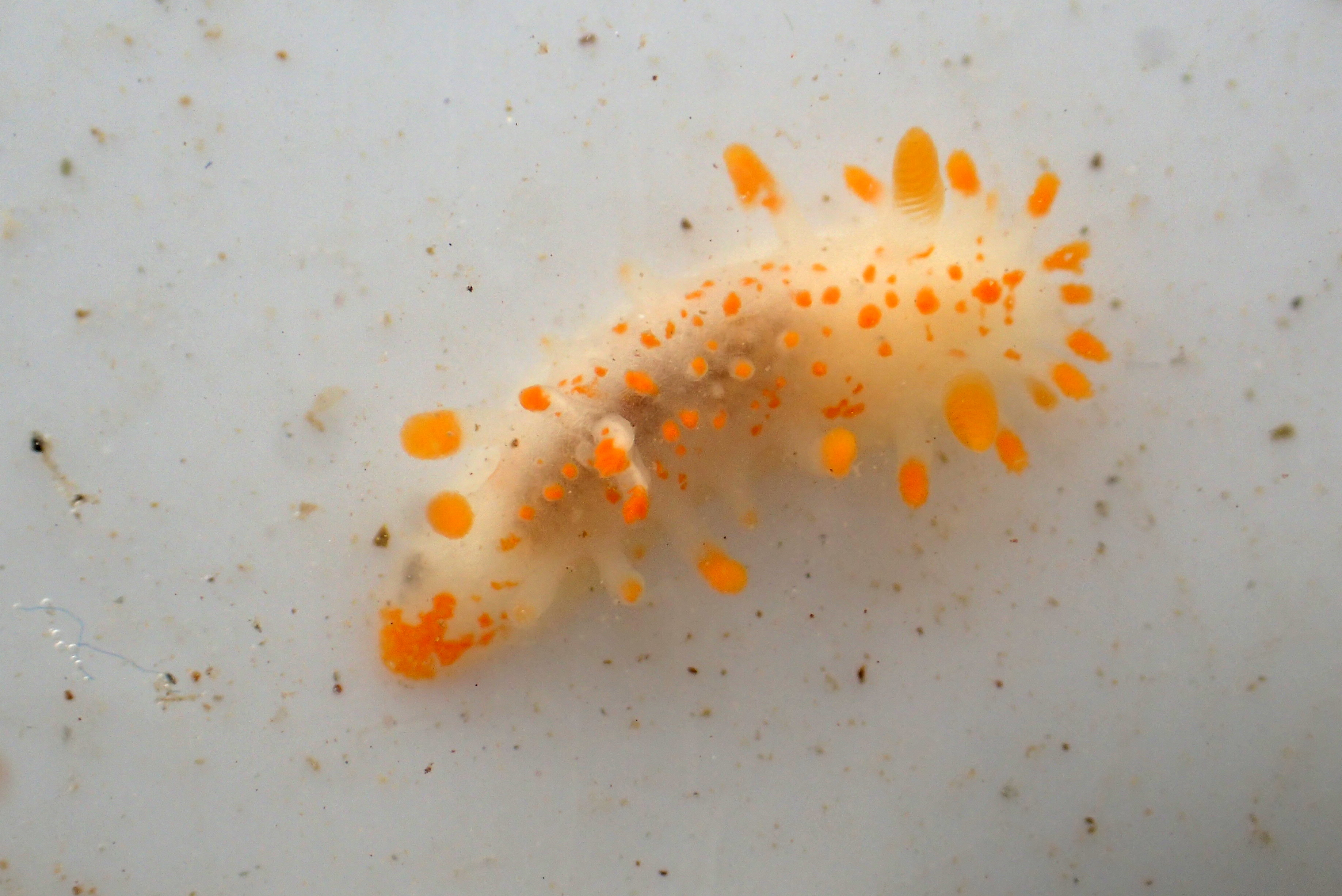
Limacia clavigera sea slug
The water was warming up nicely in May and little eyes were starting to look back at me from the fish eggs clustered under the rocks. Sea slugs were also making their way onto the shore and, as always, blowing me away with their colours. This yellow-clubbed sea slug (Limacia clavigera) was exploring the seaweed in West Looe and was a big hit with the children on our shore survey.
June
Clingfish eggs – with one newly-hatched fish (centre)
Under a shining sun, June was a fabulous month for rockpooling. What grabbed my attention most were the fish eggs. To the naked eye there’s not much to see, but with some help from my camera, I was looking into the fully-formed eyes of baby clingfish and seeing their spotted tails wrapped around their noses. In this photo there was even one recently-hatched baby among the crowd.
July
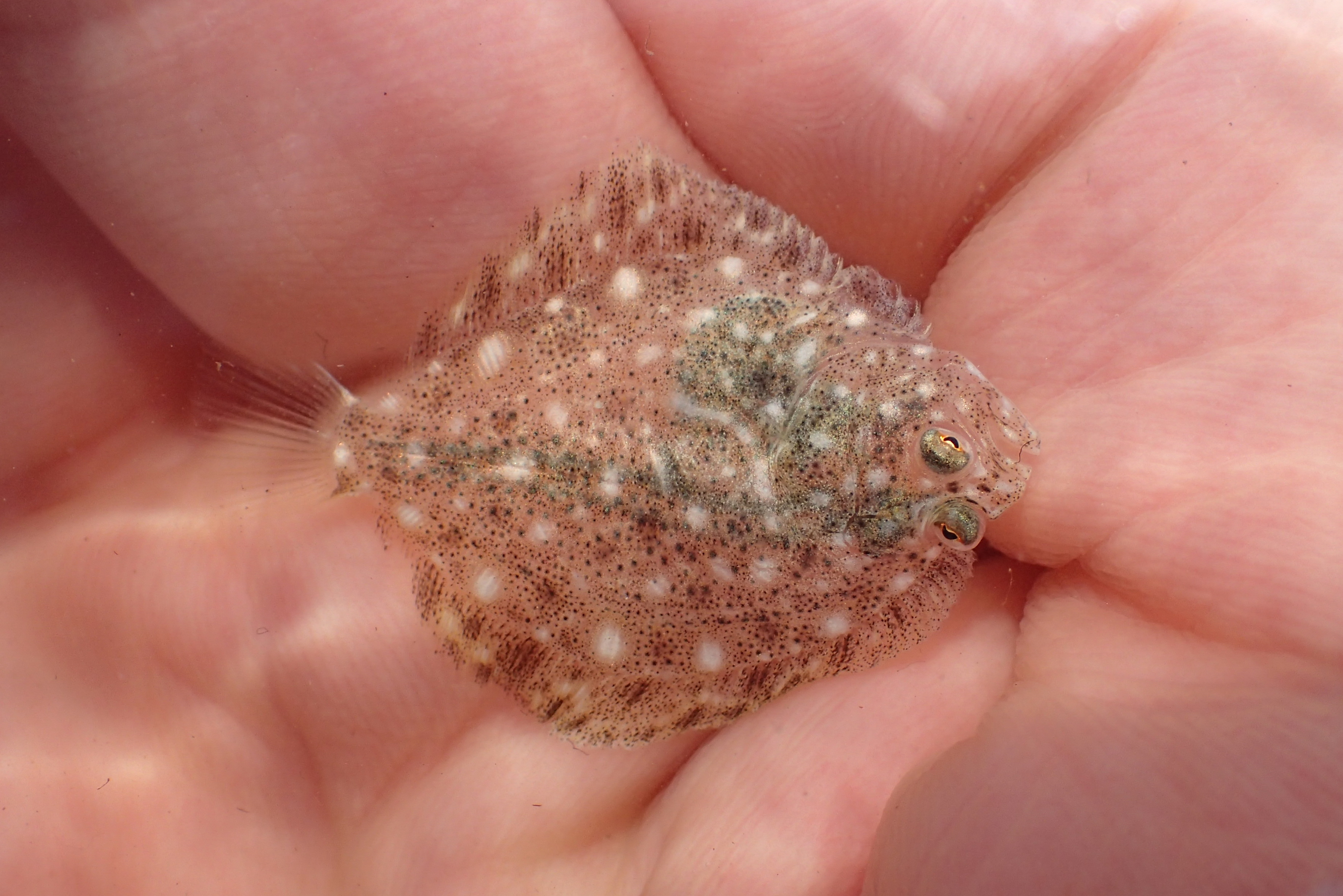
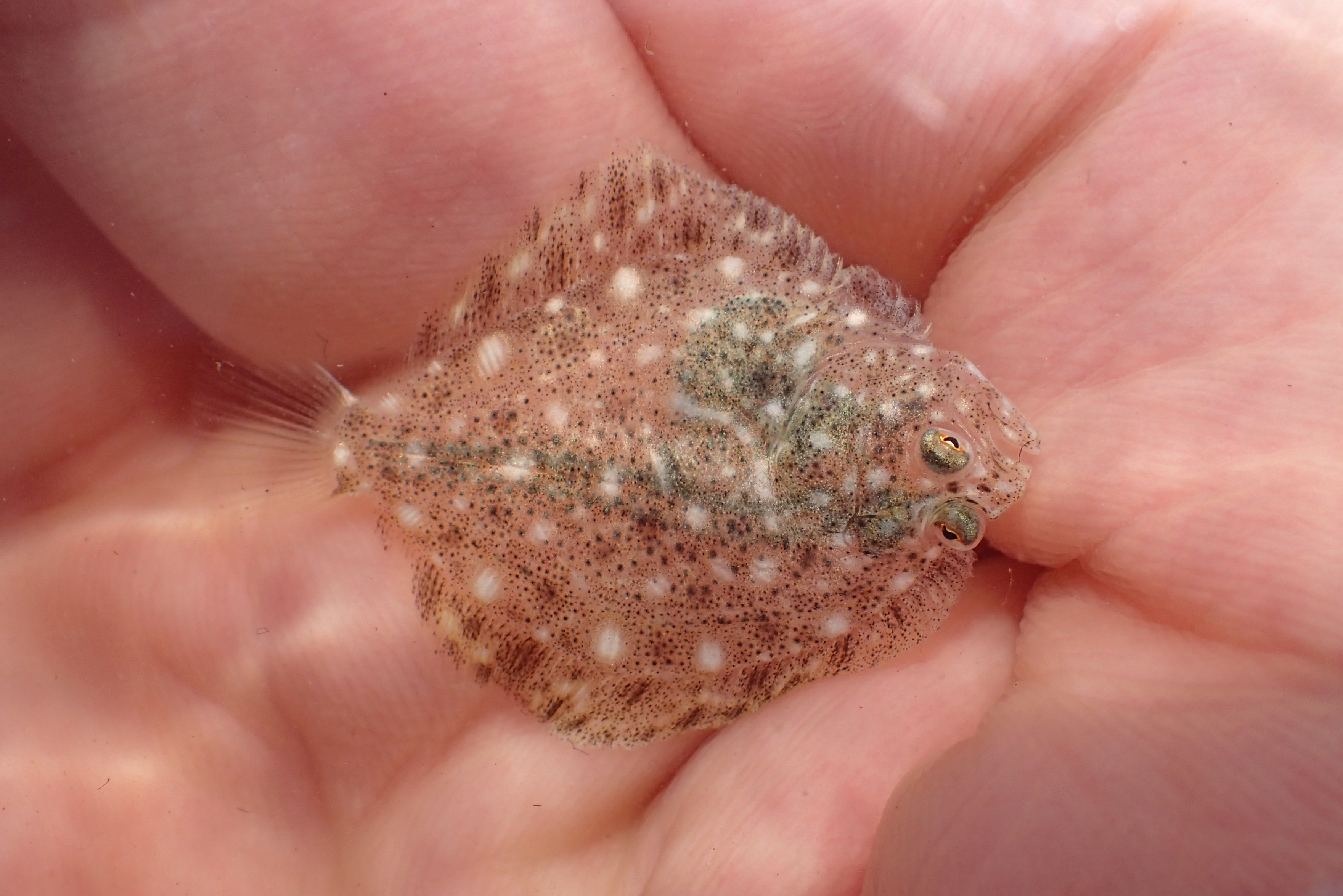
A juvenile turbot at Lundy Bay
At the beginning of July, the Bioblitz at Lundy Bay saw perfect conditions, with a tompot blenny, moon jellyfish and even a slow worm among the beach finds. The high point for me was holding this tiny baby turbot – a flatfish – which had been found using nets in the sandy shallows.
August
Cornish Rock Pools Junior meets a bootlace worm
During the school holidays, the more accessible sandy beaches are packed, but there’s often plenty of space on the rocky shore. I took Junior and his friends out to explore. On this day we saw jewel anemones, a stalked jellyfish and a butterfish, but our highlight was this bootlace worm. According to the Guinness Book of Records, it’s the world’s longest animal – this was just part of the one we found.
September
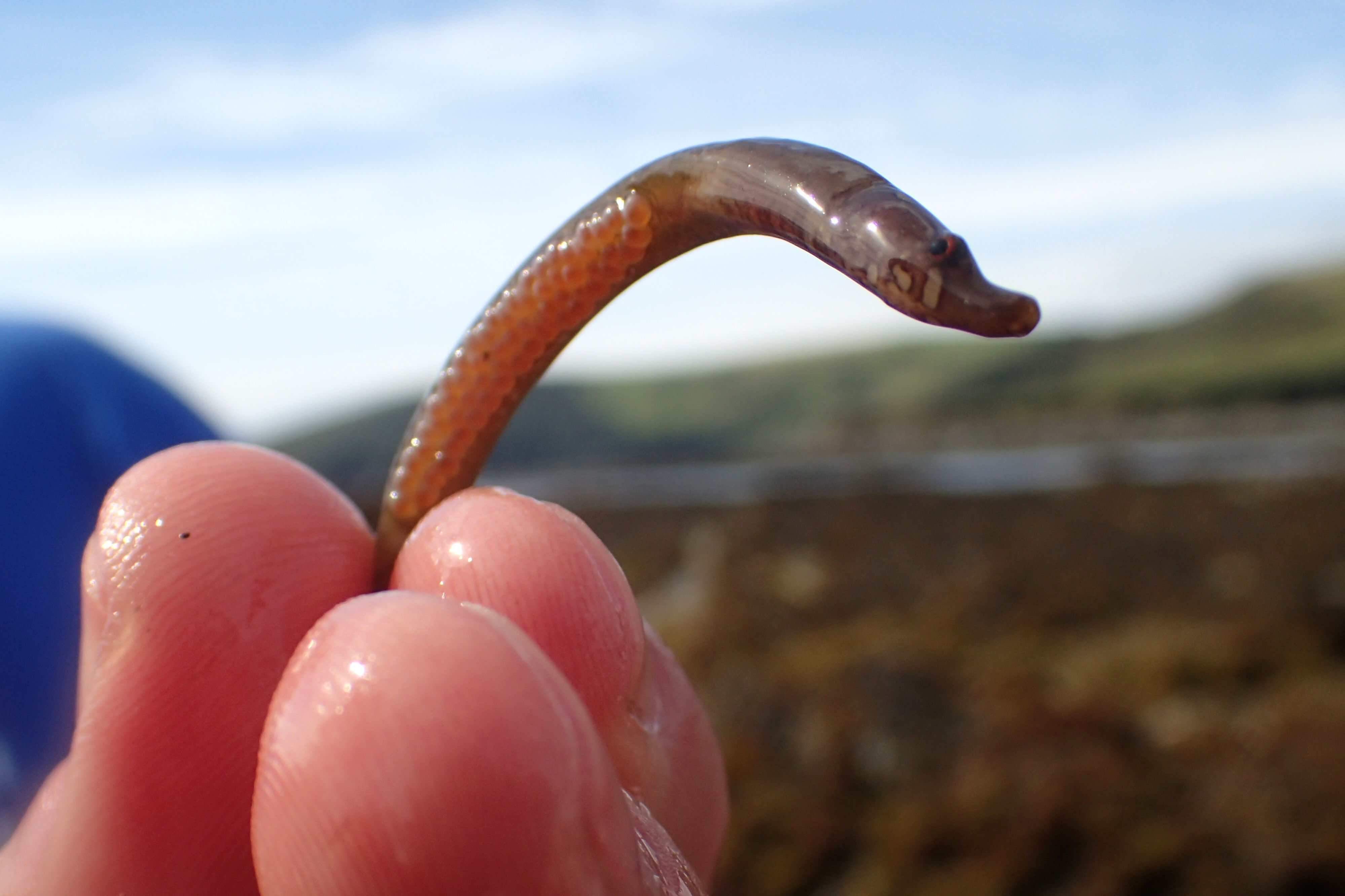
A male worm pipefish with eggs on his belly
I joined a Shoresearch survey at Hannafore in early September and, as always, there was lots to see. Although they’re not uncommon on the shore, the pipefish are special creatures. They are close relatives of the seahorses. This male is carrying eggs in a special groove down his belly.
October
St Piran’s Crab in Concarneau
In October I took a little ‘school trip’ to see our Celtic cousins in Brittany. I soon discovered that the ‘St Piran’s Crab’, which has reappeared in Cornwall this year after decades of absence, is the common species on the Breton shores. They’re so new to our shores that the only ones we see are tiny. The full-grown specimens were much easier to photograph – showing their equal-sized claws and white-spotted eyes.
November
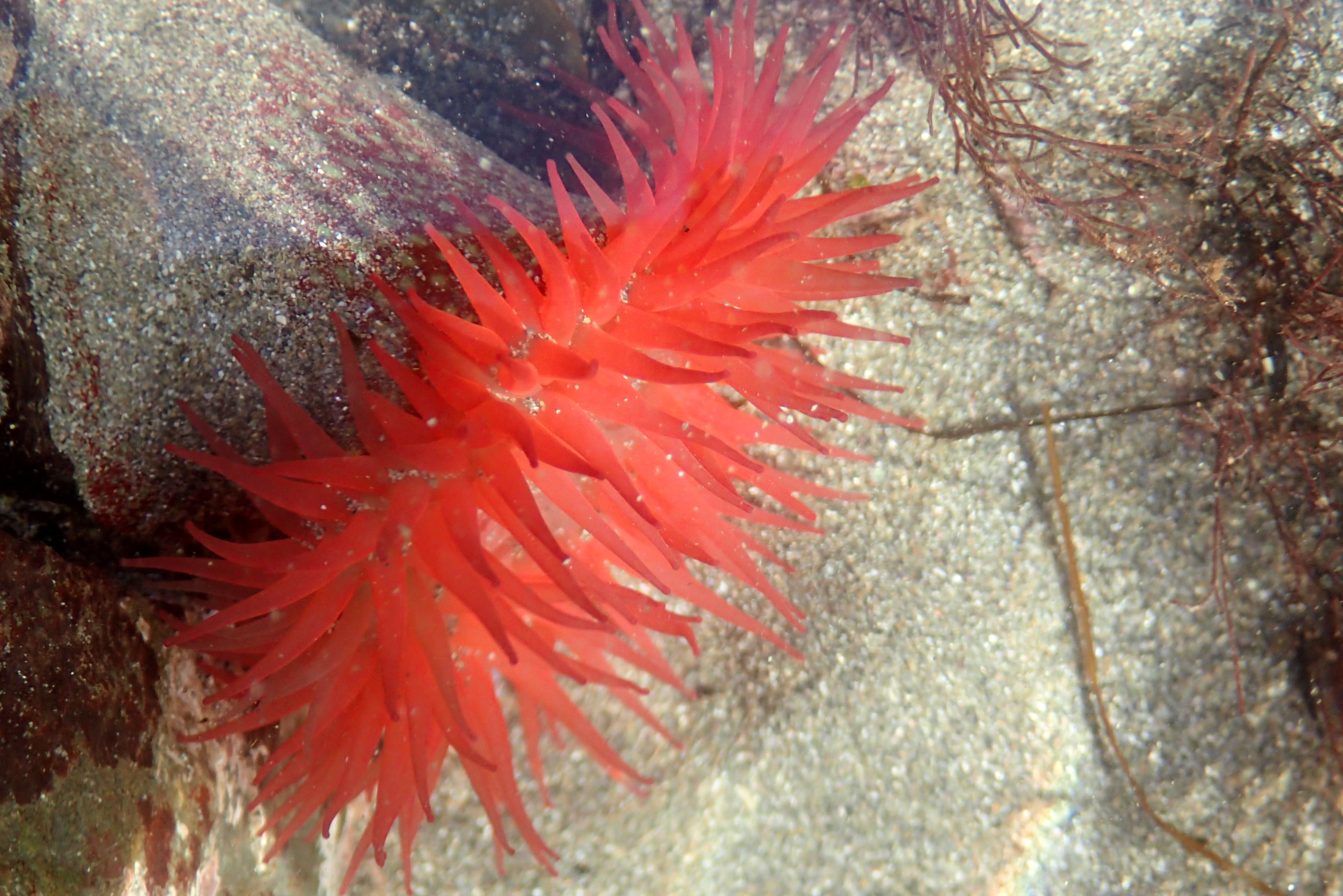
Strawberry anemone basking in a brief moment of November sunshine
In the last couple of months of the year I spent most of my time looking for stalked jellyfish in the pools, but I couldn’t help but be distracted by the sunshine falling on this strawberry anemone.
December
Cornish rockpool junior’s first stalked jellyfish – Calvadosia cruxmelitensis
Stalked jellyfish are relatively easy to see this time of year, when the seaweed has died back, but only if the conditions are calm and clear. During several calm days of spring tides this December I recorded dozens of these little gems in the rock pools. When the land is looking bare and brown in winter, there’s still no shortage of colour in the rock pools.
I closed my year with a walk on my home beach of Mawgan Porth. As I watched sand gobies skidding away under a rock, an unmistakeable cry made me look up. On the clifftop just metres away, a solitary chough was feeding, plunging its scarlet deep into the turf. These birds were considered extinct here when I was a child on this beach, but now I’m able to show my son his first chough in the place I grew up.
We came across a chough again at sunset and my other half took this video.
What better sign could there be? 2017 will bring challenges for wildlife, but as long as there are enough people who take action, positive change is possible.
It’s funny how the summer days float by. The house has been practically bursting with people for weeks now and I haven’t found the space to write about our many beach trips, but August still feels like a lazy month.
It reminds me of my childhood summers; a jumble of paddling, swimming, rockpooling and finds. Only I’ve just turned 40 and now I’m the one remembering hats and towels, preparing picnics and being called on constantly to help build dams or identify creatures. Every few days I realise that I’ve failed to take many photos and still haven’t blogged anything I’ve found. It’s just the way August goes.
Compass jellyfish. Also known as sea nettles as they pack quite a little sting, these jellyfish have beautiful markings.
The warm waters are drawing in all sorts of creatures at the moment. The north coast especially is teeming with jellyfish. Harmless Moon jellyfish have washed up in their thousands. These transparent little jellies have four mauve circles in their centre in a pattern that reminds me of cucumber slices (OK, that’s probably just me).
One of many moon jellyfish washed up by the strong swell. This species is harmless.
Other jellyfish that have mild stings, like the compass jellyfish are also washing in and I think my thigh met with one of the many blue jellies in the water at Mawgan Porth a couple of weeks ago from the unattractive rash I developed! On the plus side, some friends found a spiny starfish in a pool at the top of the mid-shore pools, which looked like it might be feeding on the stranded jellies.(more…)
Bioblitzes have become a regular thing these last few years and I love them. These time-limited surveys of every living thing in an area are a fantastic way to bring experts and the public together, so I’m excited to join the Lundy Bay 24 hour bioblitz organised by the National Trust.
Getting started on the beach with at the Lundy Bay bioblitz
When I first walk down on the first afternoon to do a pre-survey recce there’s no beach at all. The tide is high and the waves are exploding against the rocks sending up a shower of spray that delights Cornish Rock Pools Junior. Fortunately, some intrepid friends from the Marine Biological Association and Coastwise North Devon arrived early and collected a lovely hydroid medusa (like a tiny jellyfish) and lots of moon jellies – so it seems likely there will be interesting things to find when the tide goes back out.
One of many moon jellyfish washed up by the strong swell. This species is harmless.
After an exciting evening and early morning of mammal surveying with Junior, I finally get to see the beach at low tide. It’s an exposed shore with sheer rocks and golden sand, which looks wonderful, but is a tricky environment to find creatures. Still, with the number of people we have taking part and the combined resources of lots of different organisations including kick nets and fish traps, we’re sure to find something.
I spend most my time near the event flags, helping people to identify their finds. Everyone is fascinated by the sea hare. These common sea slugs are easily recognised by the long tentacle ‘ears’ on their heads. Up close, you can see a leopard-like pattern on their bodies. If you upset them (which we don’t) they can squirt out purple ink to confuse predators.
A small sea hare explores my tray.
The find of the day is a creature none of us expect to find tangled in a discarded fishing net. This slow worm (a legless lizard) probably came down to the beach to hunt at low tide and became caught in the ghost net. It has a lucky escape and is released safely.
This slow worm was found tangled in discarded fishing gear.
The nets bring up lots of tiny baby flatfish that were hiding in the sand in the shallows. Most are probably plaice and this one looks like a baby turbot – with a much wider body-shape. I’ve never seen one this small before, it swims onto my hand and rests there, looking around with bulging eyes, opening its lop-sided mouth a little. If it makes it to adulthood it may eventually weigh 10 kilos or more, but it has a way to go yet.
A tiny young turbot swims into my hand.
Everyone loves a cheeky tompot blenny. There bold fish are unmistakeable with their fat lips, colourful eyes and television aerial style tentacles on their heads.
A tompot blenny giving its typical toothy smile.
Other highlights include toothed crabs (Primela denticulate), celtic sea slugs, which are present in huge numbers on some large rocks around the point, and a lobster lurking at the back of a deep overhang cave.
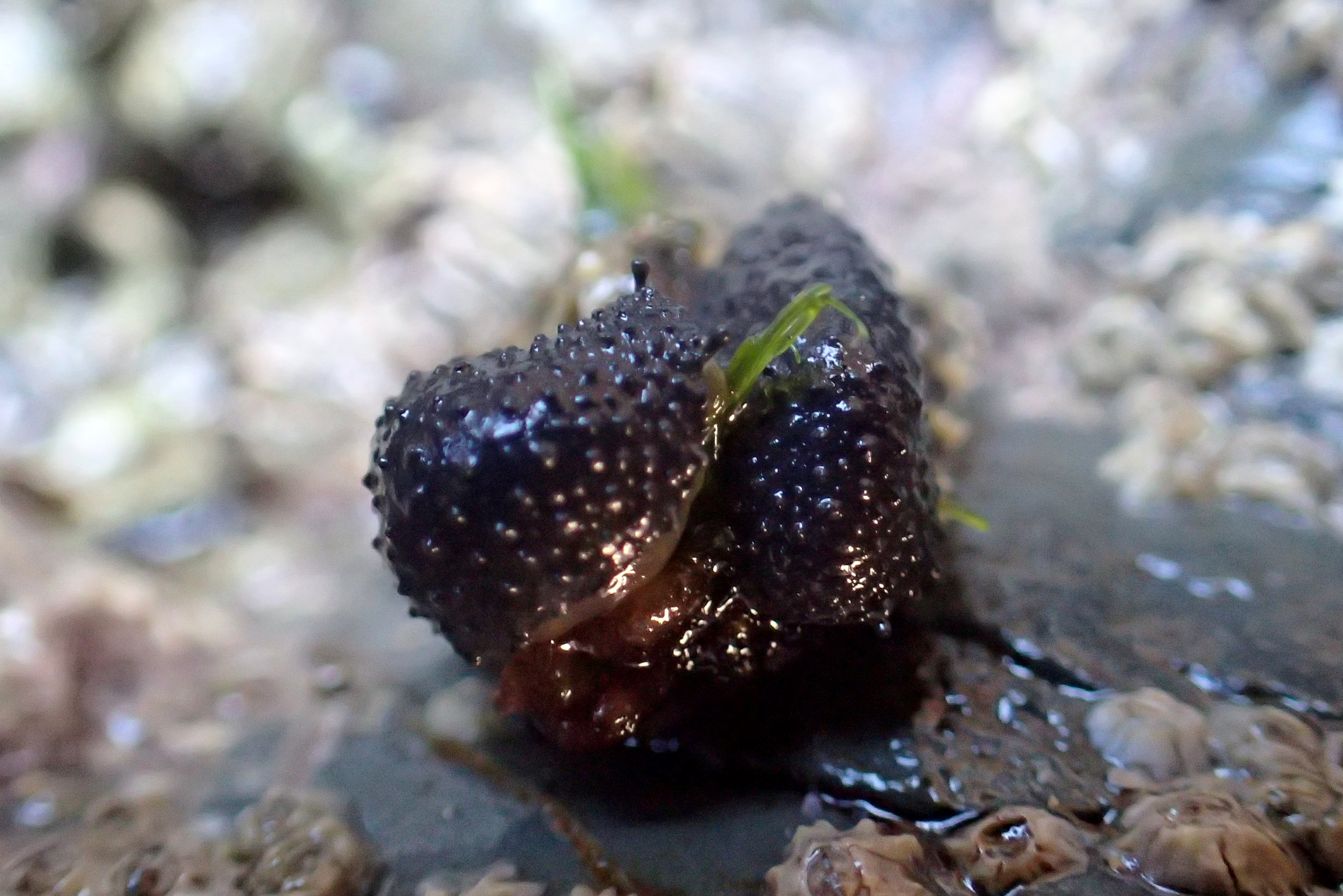
Built like miniature tanks, the Celtic sea slugs cover the rocks in places.
After the strong winds and rain of the previous day, the sunshine takes us by surprise. Conditions are perfect and the turnout is good, but before long the tide is racing back in. By the time we make it back to base, the short, intense Bioblitz is coming to an end and the stands are being packed away. Soon this will be a remote empty field again, but I’ll be back sometime soon to explore this wonderful bay some more.
There are many fabulous rock pooling beaches around Cornwall and this isn’t one of them. The smooth serpentinite rocks of Kynance Cove on the Lizard peninsula are colourful and create breathtaking scenery, but they’re mostly devoid of places for creatures to shelter. Realistically there’s not much here, but it’s one of Cornwall’s loveliest places and experience tells me there’s always something if I look hard enough.
It’s easy to see the snakeskin texture that gives serpentine rock its name.
One thing this beach does have is caves. Junior strides ahead of me, clutching a geological hammer and chisel, shining his torch along the smooth, damp walls.
Cornish rock pools junior explores the serpentinite caves
He’s on a mission to explore every centimetre of these rare rocks, forced up millions of years ago from deep under the oceans, exposing the upper layer of Earth’s mantle. While Junior hammers away at history, cave-dwelling periwinkles not much bigger than grape pips are undertaking their own explorations.
This tiny periwinkle species lives on the upper shore in dark and damp places such as this cave.
A steady swell breaks against the island stacks and scattered rocks of the bay. Barnacles cling to imperfections and overhangs, joined by beadlet anemones and black-footed limpets.
A beadlet anemone next to dog whelk eggs. Barnacles and limpets also cling on to this small overhang in the smooth serpentinite.
I watch a limpet slamming down its shell on a barnacle’s feeding arms and wonder if it’s if it’s after a more substantial meal than its usual fare of micro-algae?
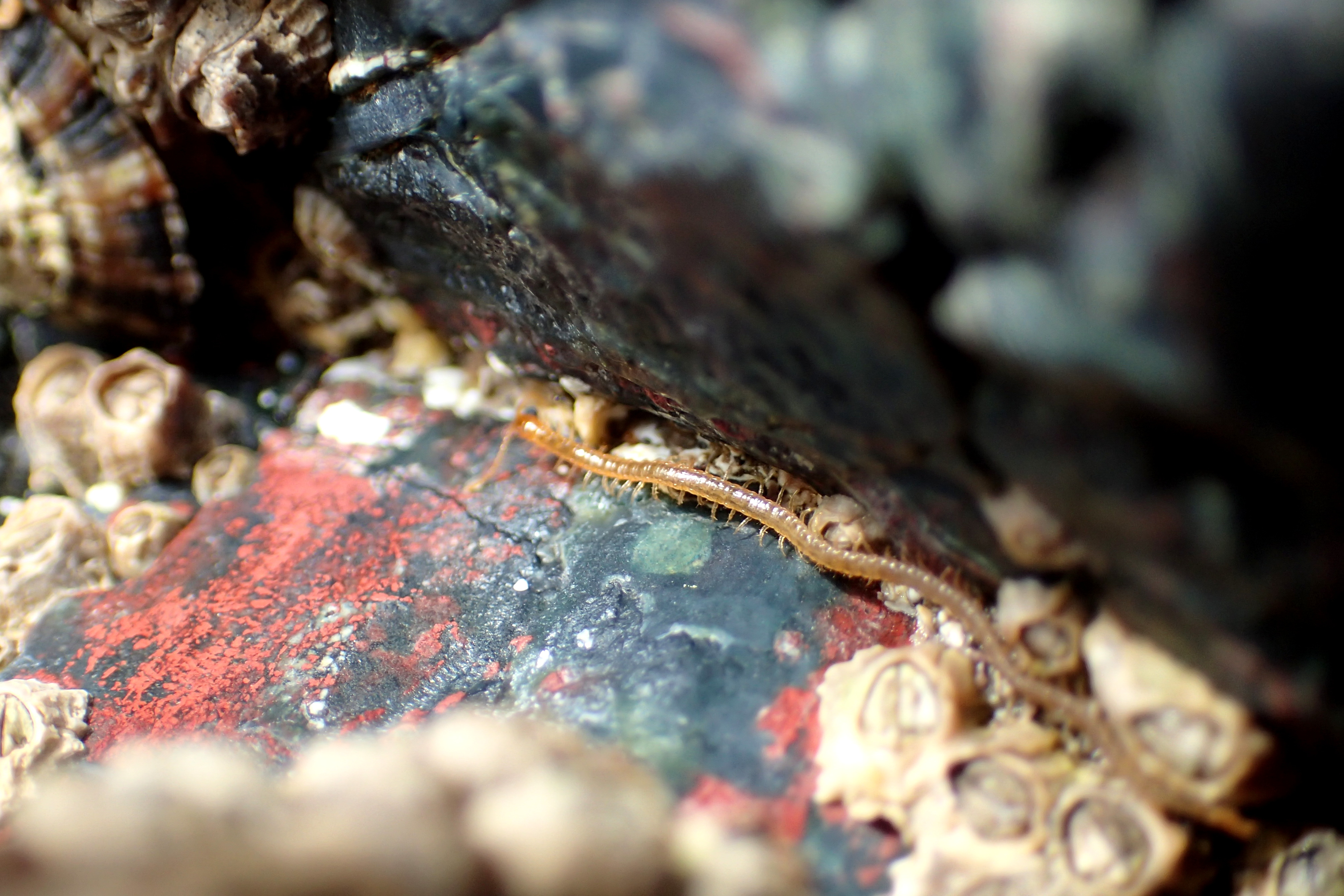
Sea slaters scuttle among the barnacles together with occasional flies and even a centipede. I assume it has journeyed down from the top of the grassy island to forage at low tide.
A centipede visiting the shore
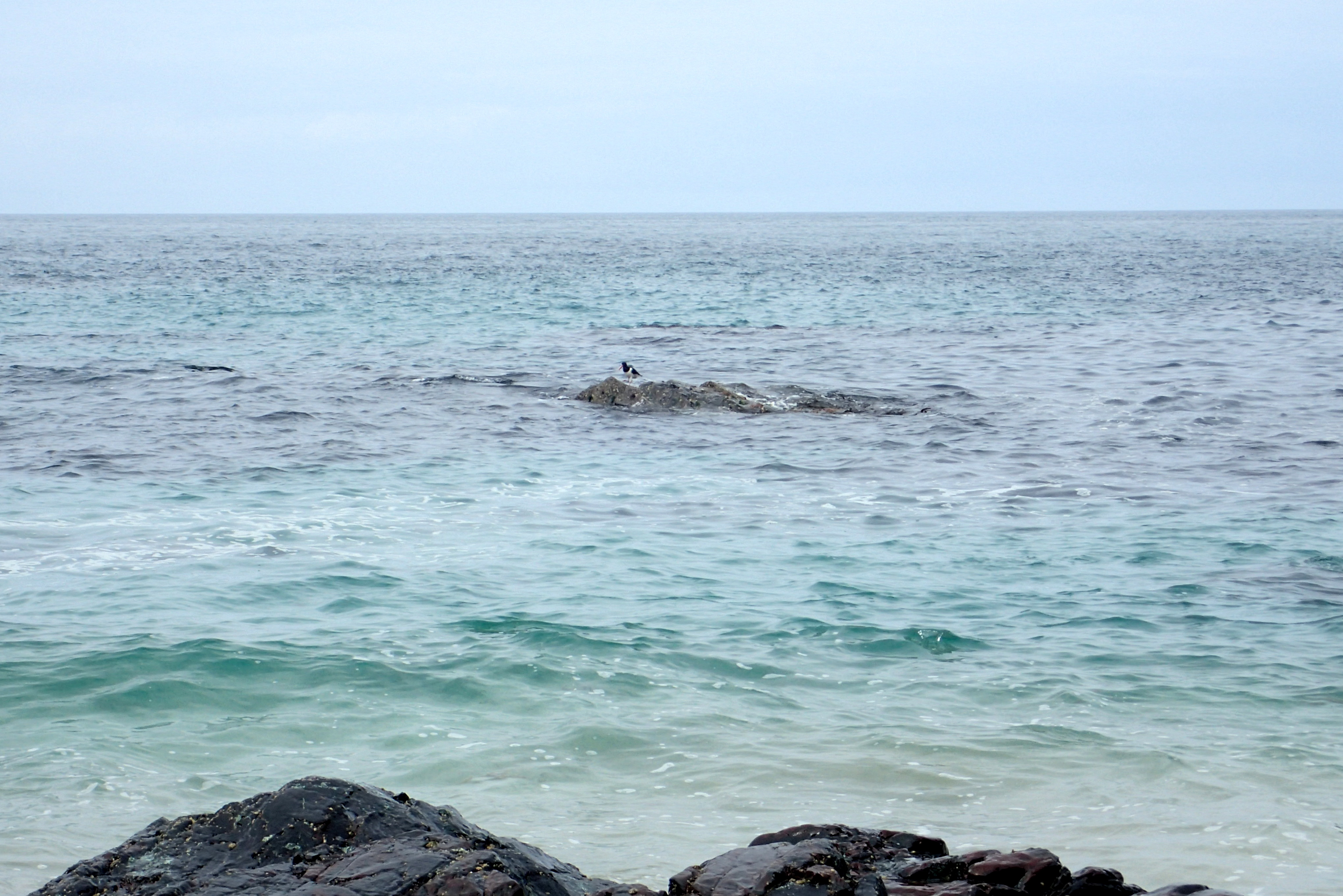
An oystercatcher watches me cross the beach, preening itself with its orange chopstick bill. It watches as I climb a shelving part of the lower cliffs where several deep bowls have been eroded from the rock.
A lone oystercatcher on a rock at Kynance Cove.
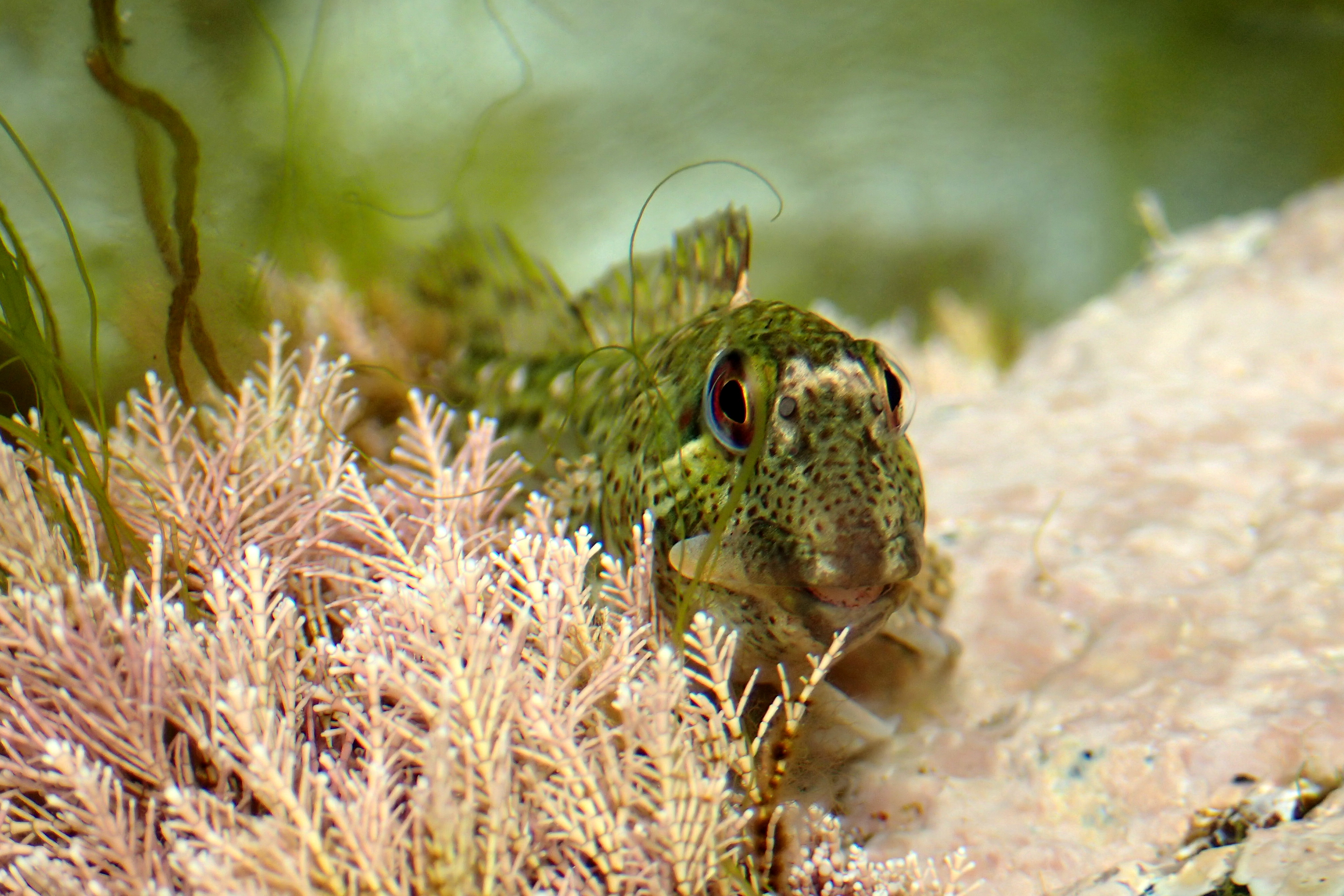
As I approach the pools, a gaggle of small fish jostles against each other before darting away below a ledge. I take up position beside the pool and wait. Sure enough, after a few minutes, a shanny’s head pops over the ledge, propping itself on its clawed pectoral fins to get a better look. Others soon join it as they return to their basking positions at the shallow edges of the pool.
‘Say cheese!’ A grinning shanny propped on its pectoral fins watches me from a rock pool.
I lower my camera bit by bit until it’s almost touching the surface of the water. The fearless shanny stays put. After a few attempts I manage to capture one of my favourite things about these common little rockpool fish: their extraordinary chameleon-like eyes which can swivel independently in all directions.
Being able to do this must be a huge advantage when looking out for prey and predators.
I spot a Montagu’s blenny in the pool, easily distinguished from its larger cousins by its radio mast style headgear. It’s too shy to have its photo taken and I’m called away to help with Junior’s mining exploits, but it’s been a rewarding morning. It shows how much is there if you look.
Barnacles on a beautiful piece of banded serpentinite.
Have I mentioned that I don’t like the cold? Well I don’t, and worse than that I don’t function well in it; my fingers seize up, my brain goes fuzzy and my grumpiness level soars. Not ideal when I’ve agreed to meet up with a small army of children on a freezing, windswept beach. Fortunately I’m prepared and have no shame.
Full thermals + three layers of jumpers + coat + scarf + green waders equals = a toasty-warm fashion disaster.
Junior’s still young enough not to notice or care about anything except whether I’ve brought his enormous metal spade. The other kids don’t seem worried either as I waddle over to them. They call me ‘the shark lady’. I think they mean that in a good way.
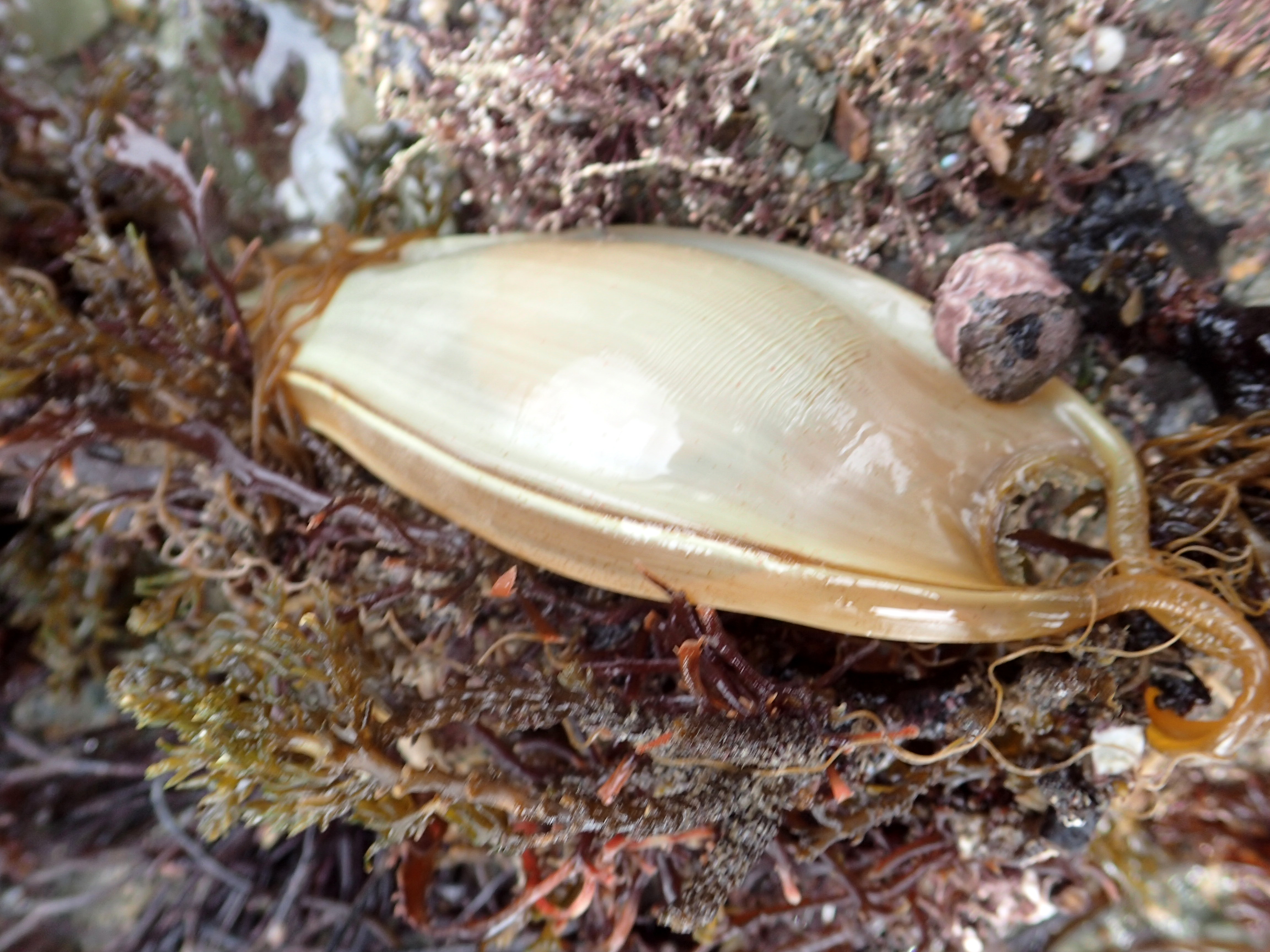
It’s amazing how fast children learn. A few minutes after he’s shown his first catshark egg case, a friend’s child is spotting them everywhere, his sharp eyes picking them out faster than me. We’ve soon clocked a couple of dozen of them. The parents find some too.
As anyone who spends time around children knows, they generally delight in things that adults find yucky. So, what better for a day out with Cornish Rock Pools Junior than a visit to a sheltered, silty shore? It’s the perfect environment for all things slimy.
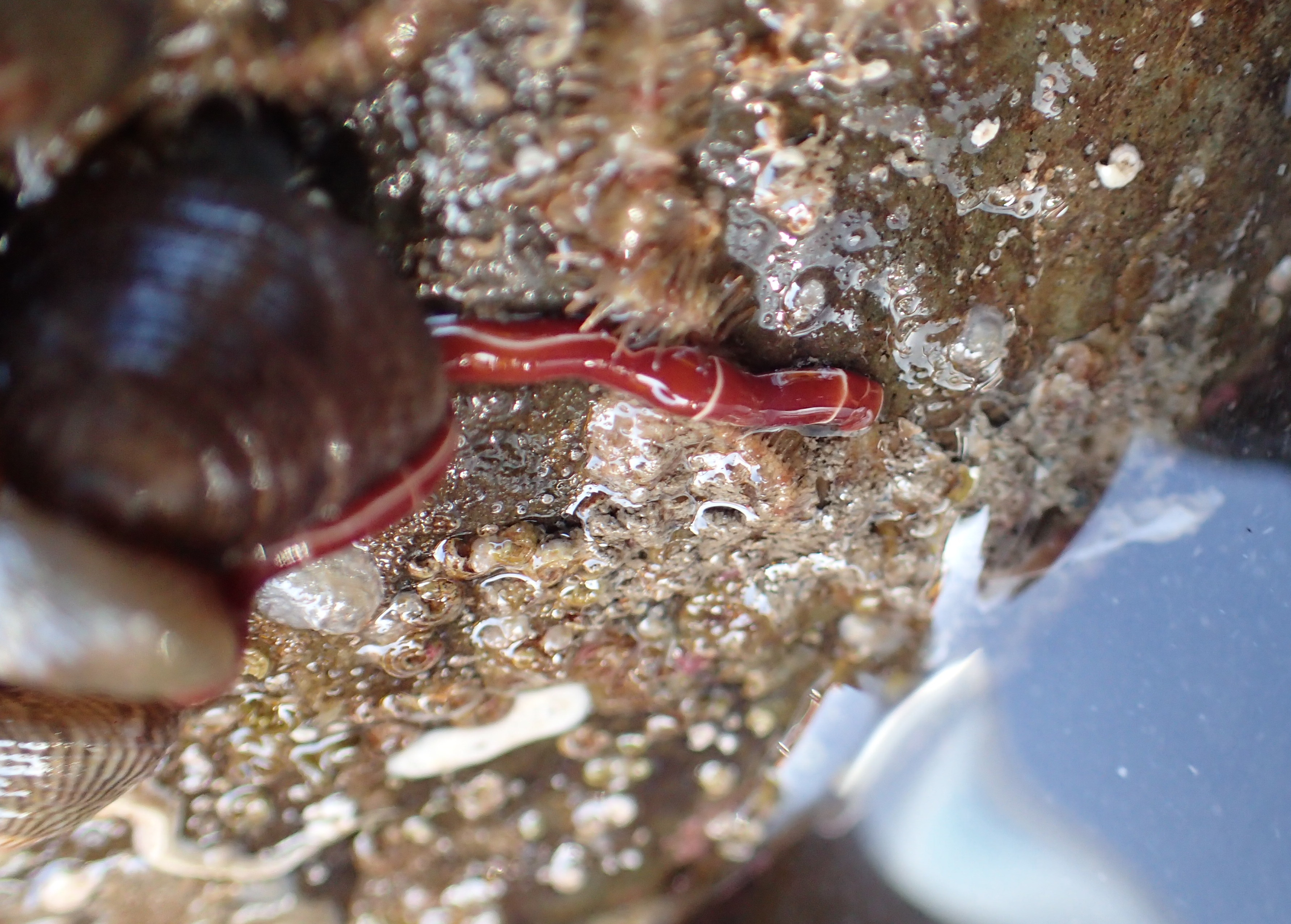
It didn’t take us long to find one of the strangest – and stinkiest – animals on the shore, the bootlace worm. We turned a stone and on one side was the head and part of the tangled body of the brown worm. The rest of the body spanned across to the next boulder like a rope bridge.
The long, thin body of a bootlace worm stretched between two rocks.
The bootlace worm is massively long – the longest recorded apparently came in at 55 metres, making it the longest animal in the Guinness Book of Records. This one would probably have spanned at least 7 metres. Given the difficulties of unravelling the tangled body without breaking it coupled with the fact it exudes acrid-smelling, toxic mucus, we decided against measuring it.
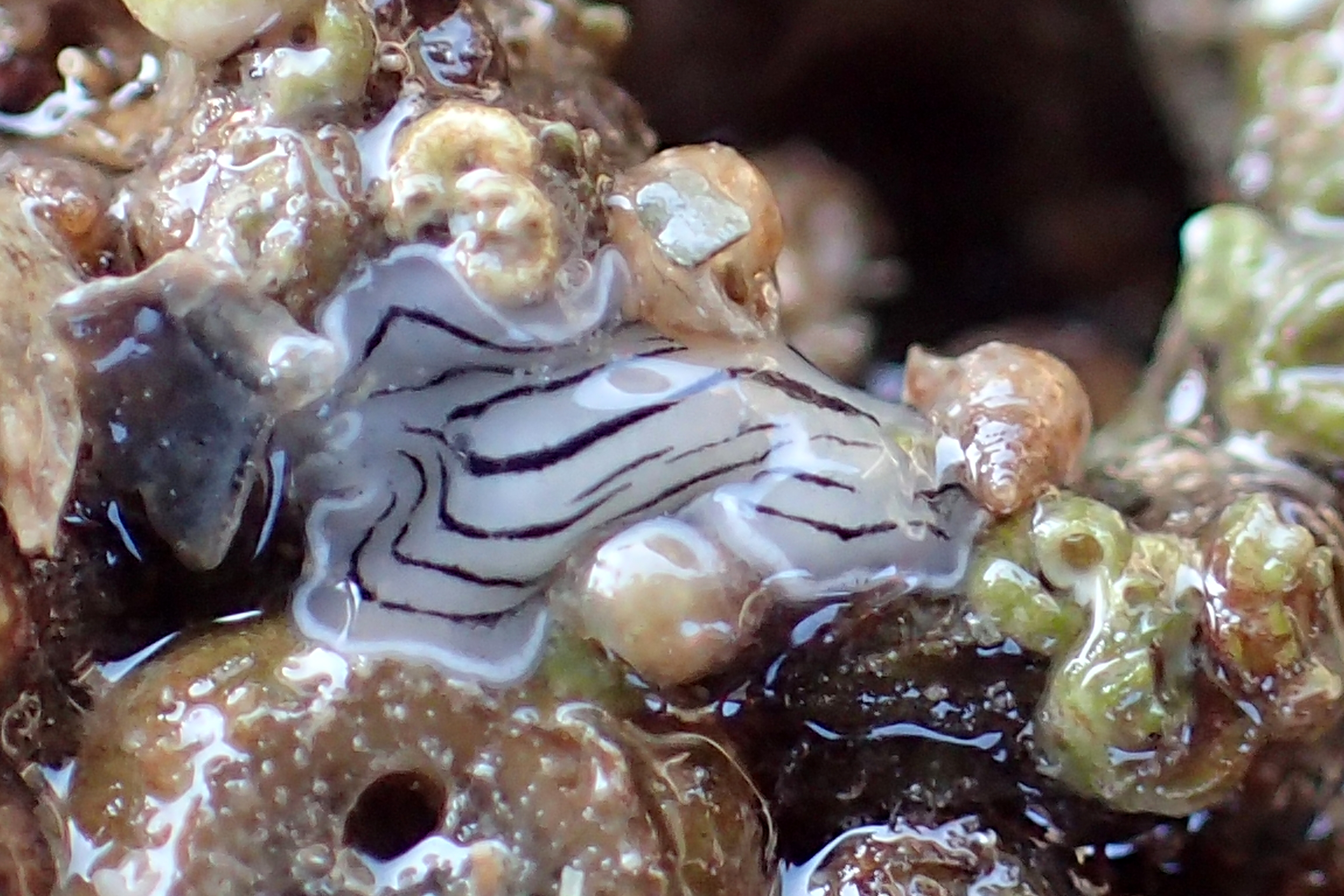
On another rock we found a prettier creature, the candy-stripe flat worm. This one had moulded its paper-thin body to the contours of the rock. When they’re not oozing along like this, they’re reasonable swimmers, albeit with a technique that resembles a tissue blowing along the pavement.
A small candy stripe flatworm oozing along its way.
We started the search for jellies. The sheltered clumps of seaweed seemed a likely spot for stalked jellies, although Junior’s fascination with kicking up ‘pyroclastic flows’ of silt did hamper visibility a little. For a while we found nothing but ‘snotworm’ eggs, the green eggclumps of the green leaf worm.
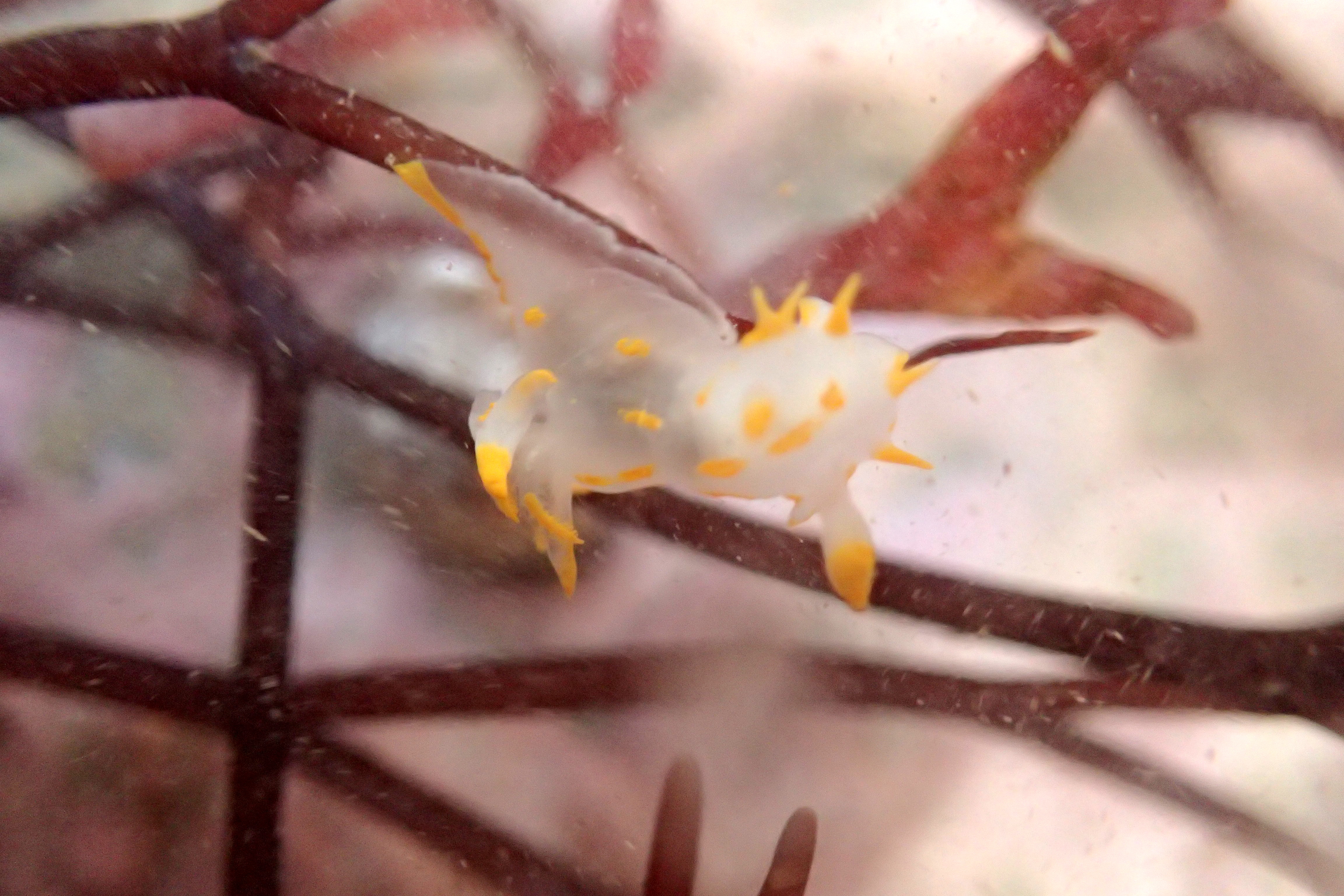
When we did find our first jelly blob, it turned out to be another kiddy favourite, a slug. Out of the water, it was a shapeless splodge of yellow. In the water, it stretched out its white body to display yellow stripes and various yellow appendages and antennae.
Sea slug – Polycera quadrilineata
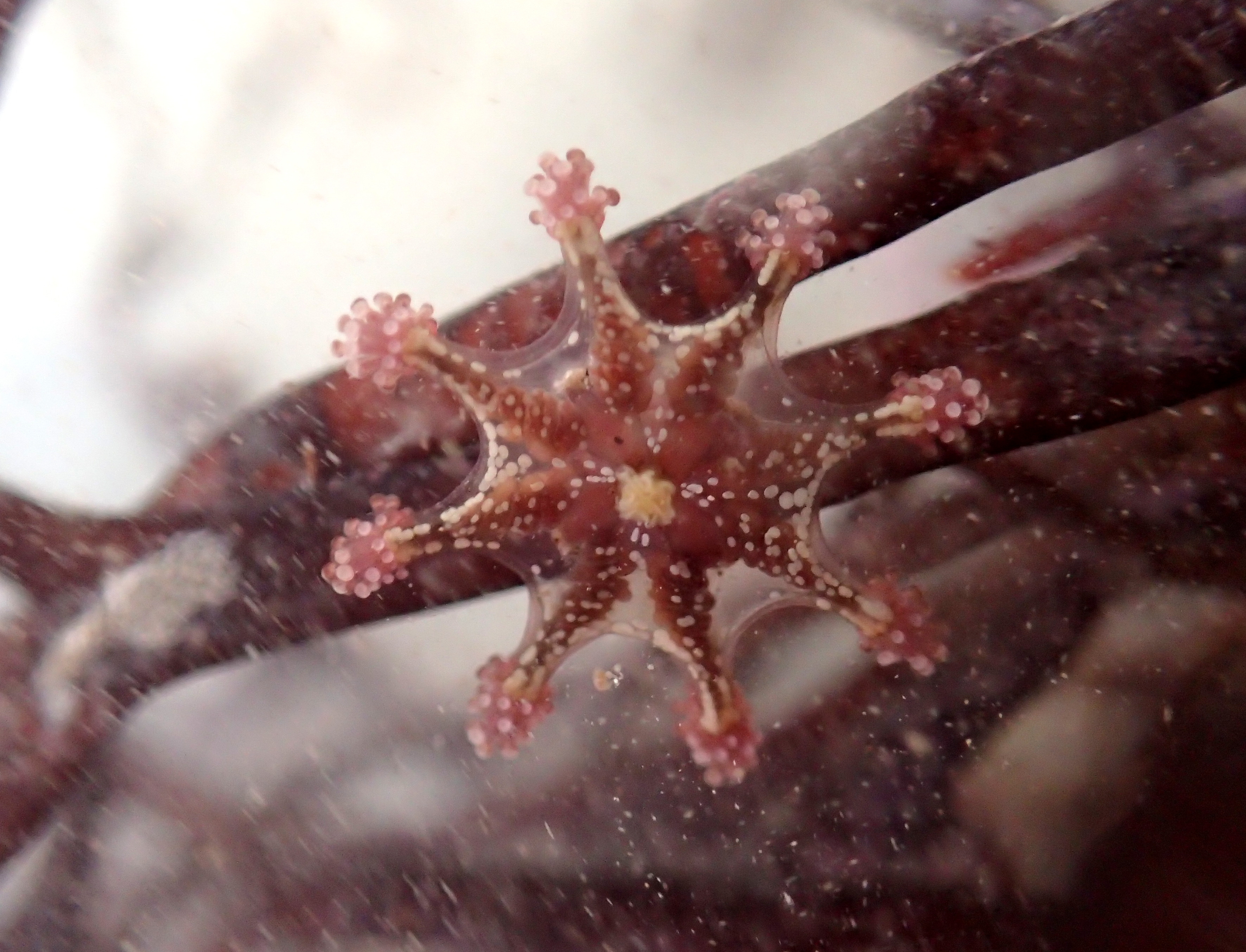
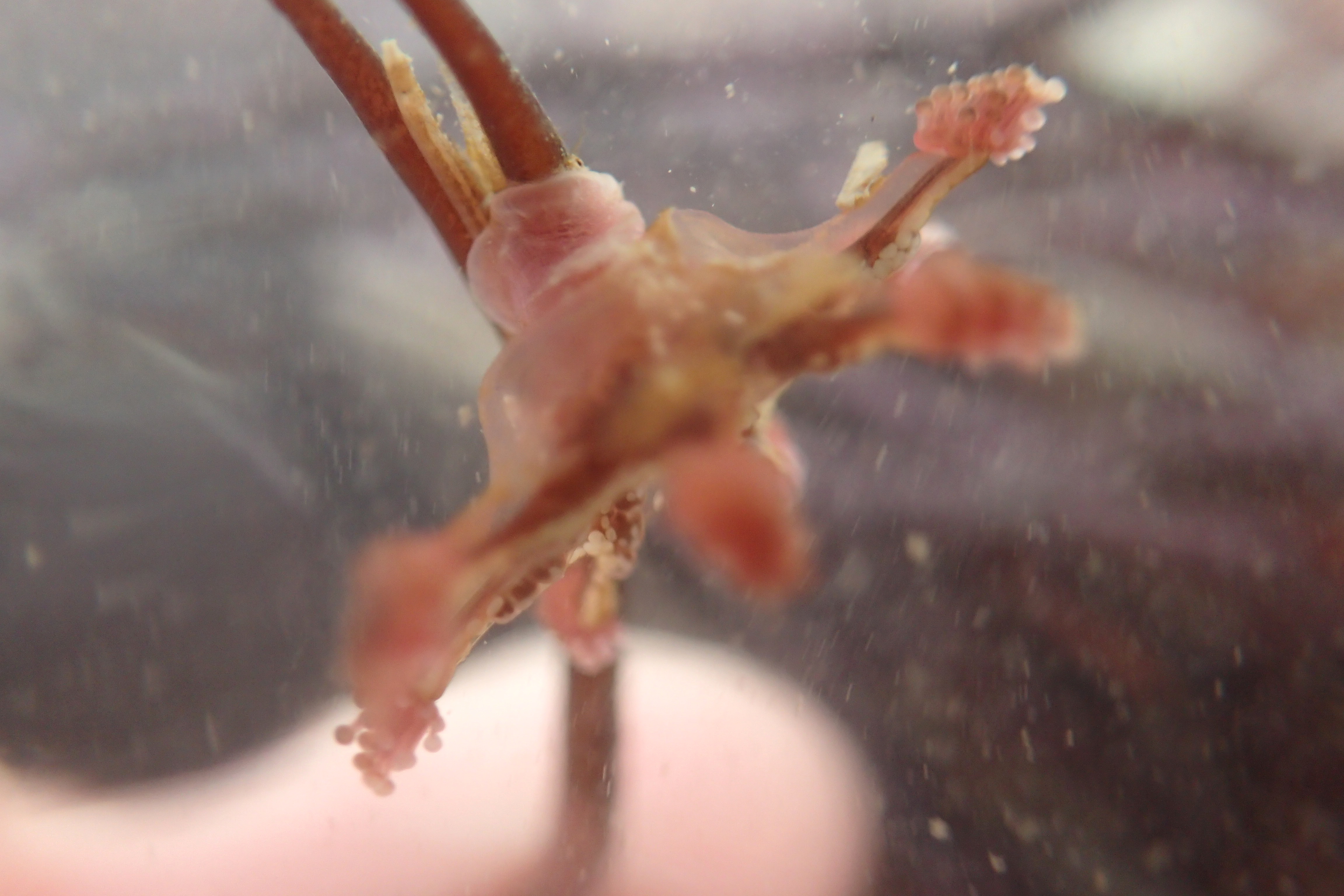
As we watched the Polycera quadrilineata slug’s slow progress along the seaweed, we noticed another, more flowery jelly-blob behind it. This was the first of several Lucernariopsis cruxmelitensis stalked jellyfish we found.
Stalked jellyfish – a Lucernariopsis cruxmelitensis.
The incoming current was throwing up a cloud of silt, but we managed to find eight stalked jellies among this small area of the shore. Not a bad haul of squidgy, slimy, child-pleasing creatures.
Stalked jellies have stinging tentacles like their cousins, the jellyfish, but live attached to seaweed rather than floating in the ocean.
Here are some of our other favourites from this expedition:
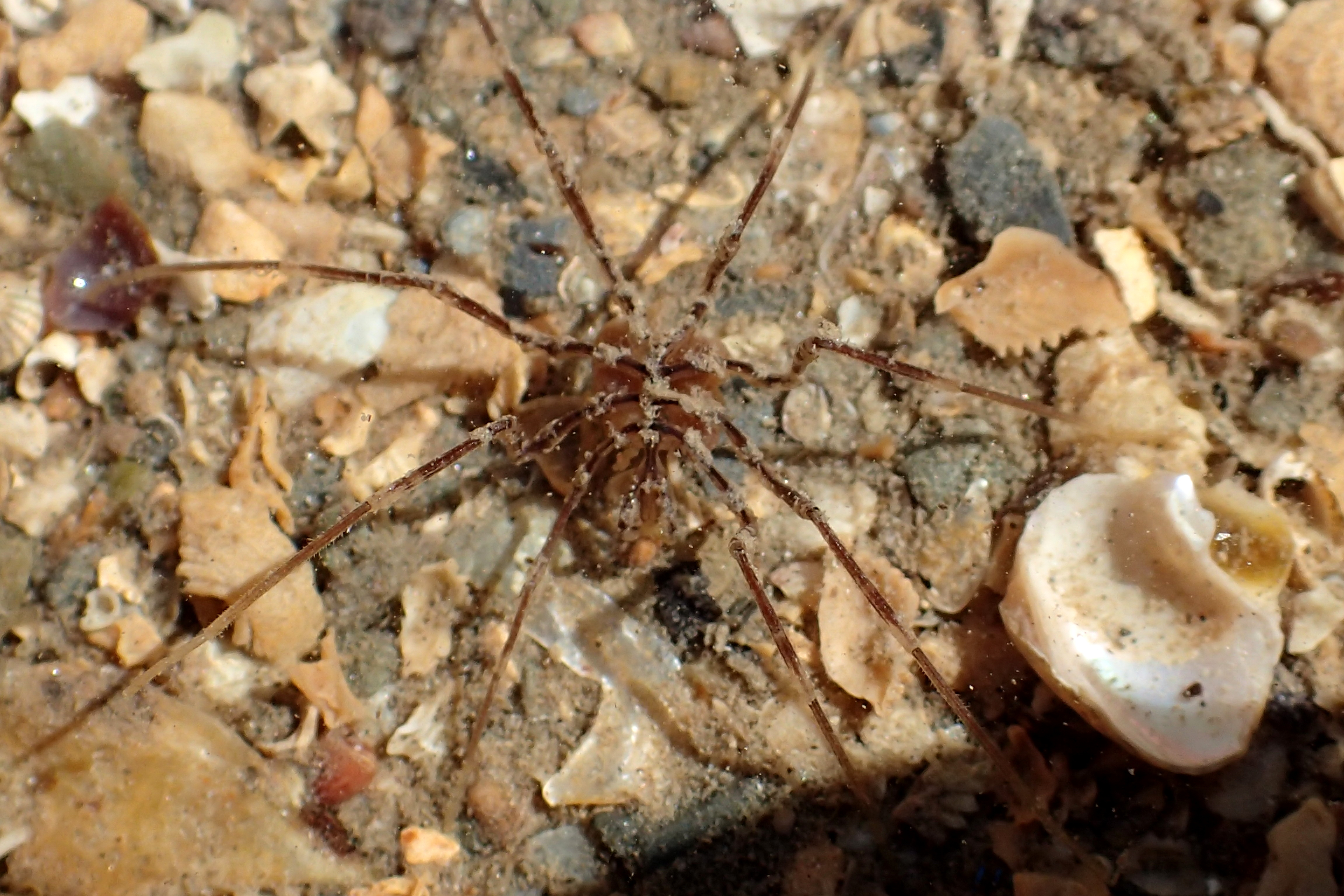
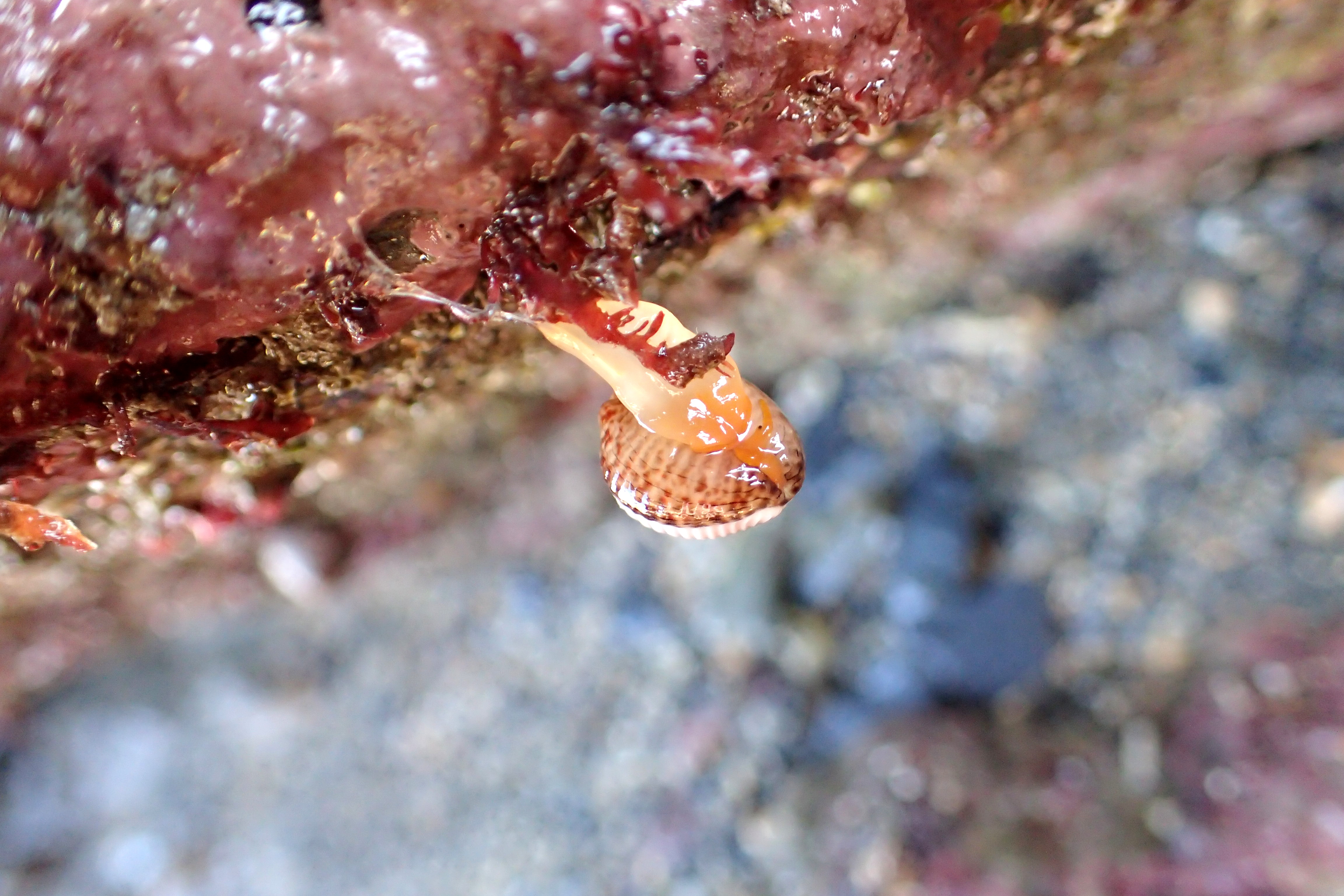
A sea spider. These delicate little creatures are perfectly camouflaged among the seaweed.Tubulanus annulatus. This strikingly coloured worm was a first for me and is more commonly seen offshore.I was right at the depth-limit for my wellies when I found this topknot flat fish scooting along the bottom of a pool. Junior loves their asymmetrical faces.More slime! Cowries are able to dangle from the rocks using their strong mucus trails. This one’s in typical abseiling position.
This week the spring tides are huge, which means perfect rockpooling conditions all around Cornwall. Yesterday’s ‘storm without a name’ passed just in time and today the sun shone, so I dusted off my waders and followed the tide out to see what it would reveal. Answer: lobsters, baby sharks and a whole lot more.
I was hoping to re-discover an overhang packed with jewel anemones at the far end of the beach that I’d come across once before, but couldn’t resist taking a look at the wildlife on the way. You know it’s going to be a good day when the first stone you lift is unexpectedly awesome. This one was hiding a troop of hermit crabs, a rock goby and a beautifully camouflaged scorpion fish.(more…)
Privacy & Cookies: This site uses cookies. By continuing to use this website, you agree to their use. To find out more, including how to control cookies, see here: Privacy and Cookies Policy.






















 Cornish Rock Pools