Category: Anemones and Jellyfish

  • Wading through jelly – Comb Jellies in Looe

    Wading through jelly – Comb Jellies in Looe

    I should be at home, cracking on with some work, but I’ve heard there are comb jellies about and I could do with some photos for my jellyfish course for ERCCIS.

    Any excuse.

    I cut through overgrown vegetation, down the cliff path to a favourite cove. In the ten minutes it’s taken me to walk here, the grey clouds have lifted and the sea’s looking good enough to dive into.

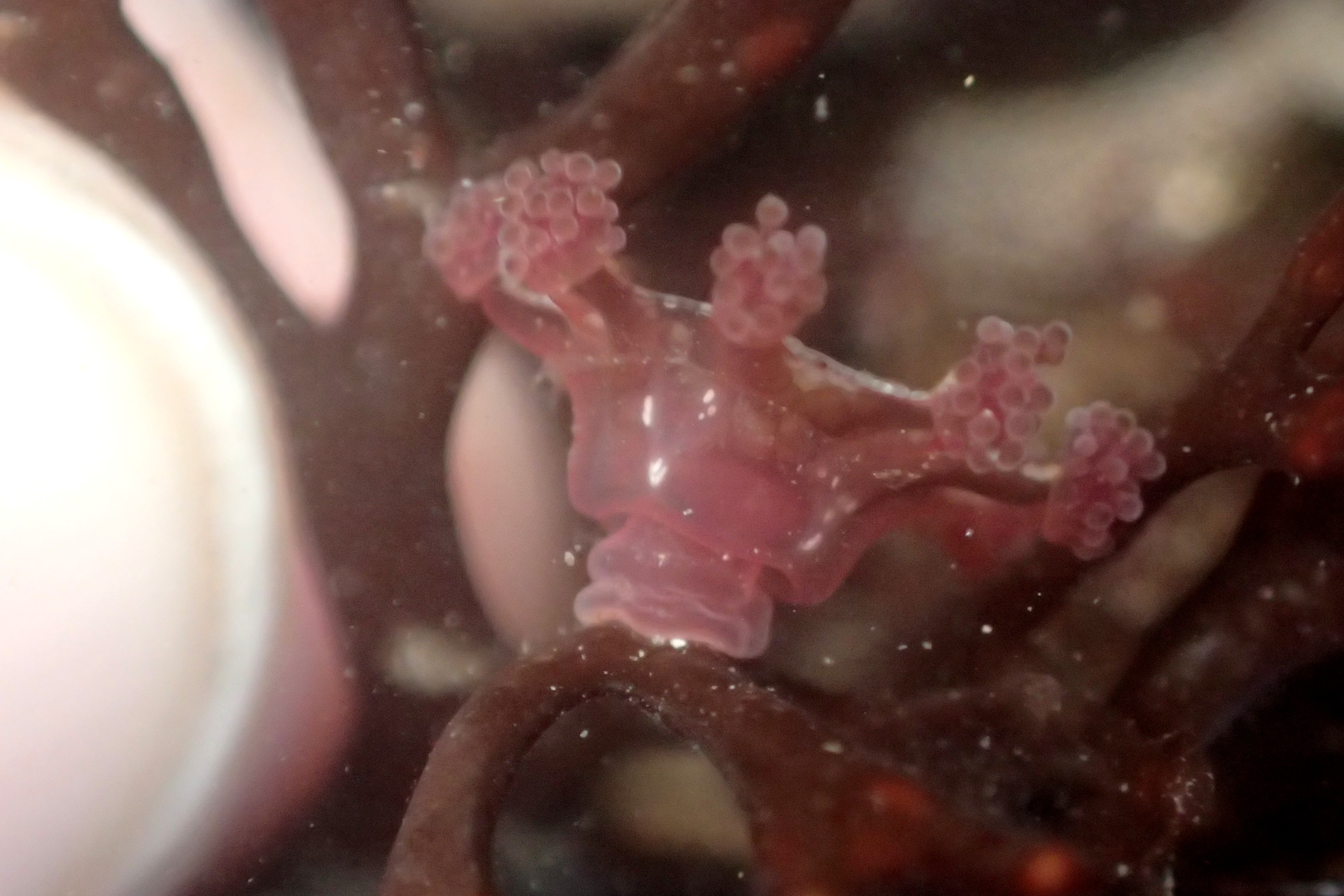
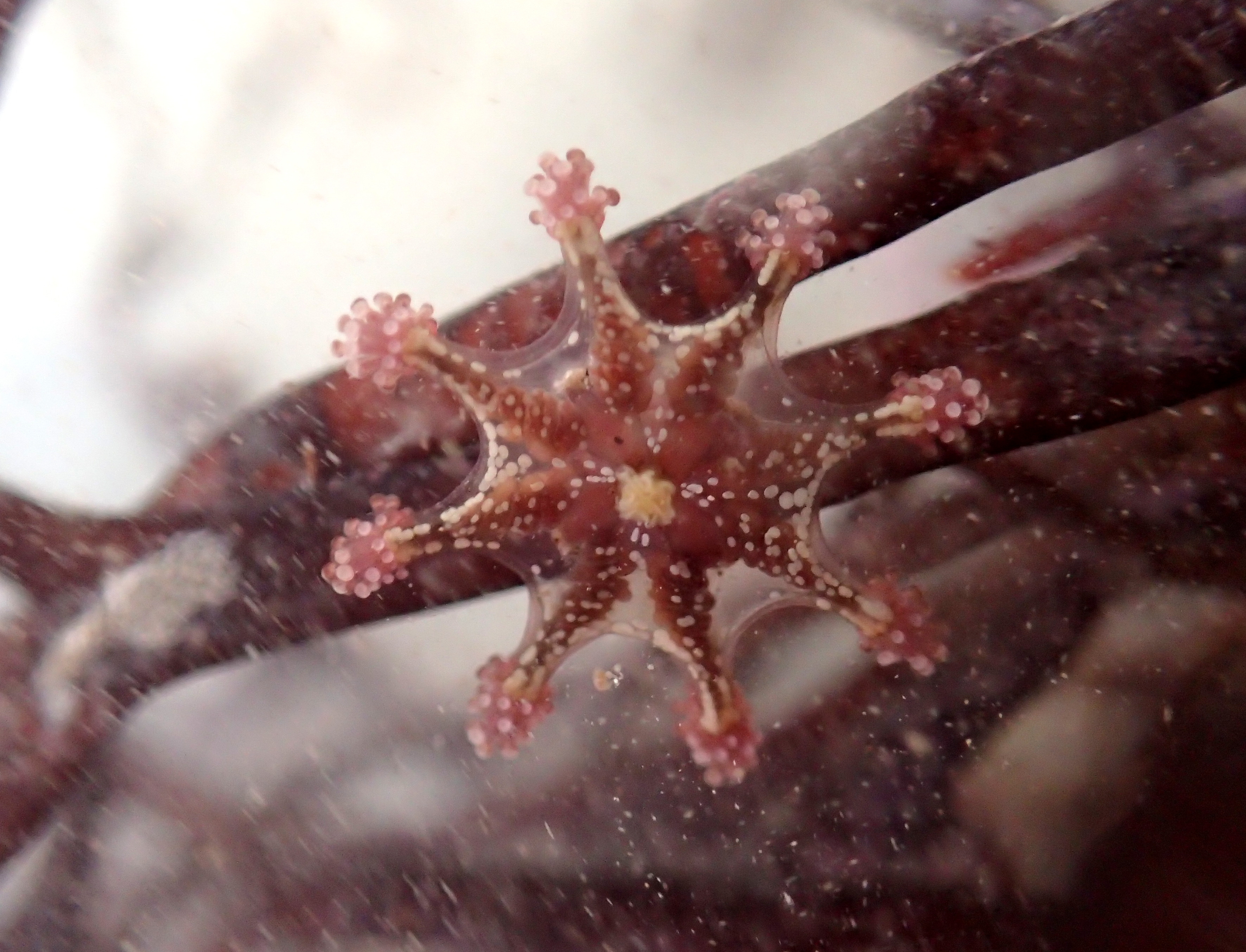
    My progress through the rocky gully is slow. The warm weather has brought an explosion of slippery sea lettuce which blocks my view of my feet as they feel for underwater rocks. Tangles of pink spaghetti, the eggs of sea hares, are wrapped around many of the green fronds and a close inspection reveals that dozens of stalked jellyfish (Haliclystus octoradiatus) have already made their homes here.

    As I move into deeper water, something catches my eye, floating below the surface. It’s so transparent it’s barely there, but it shimmers intermittently. With some difficulty, the current swishing the jelly back and forth, I scoop it up and carry it in cupped hands to a sheltered overhang. For a moment I think I’ve dropped it, then it swims out.
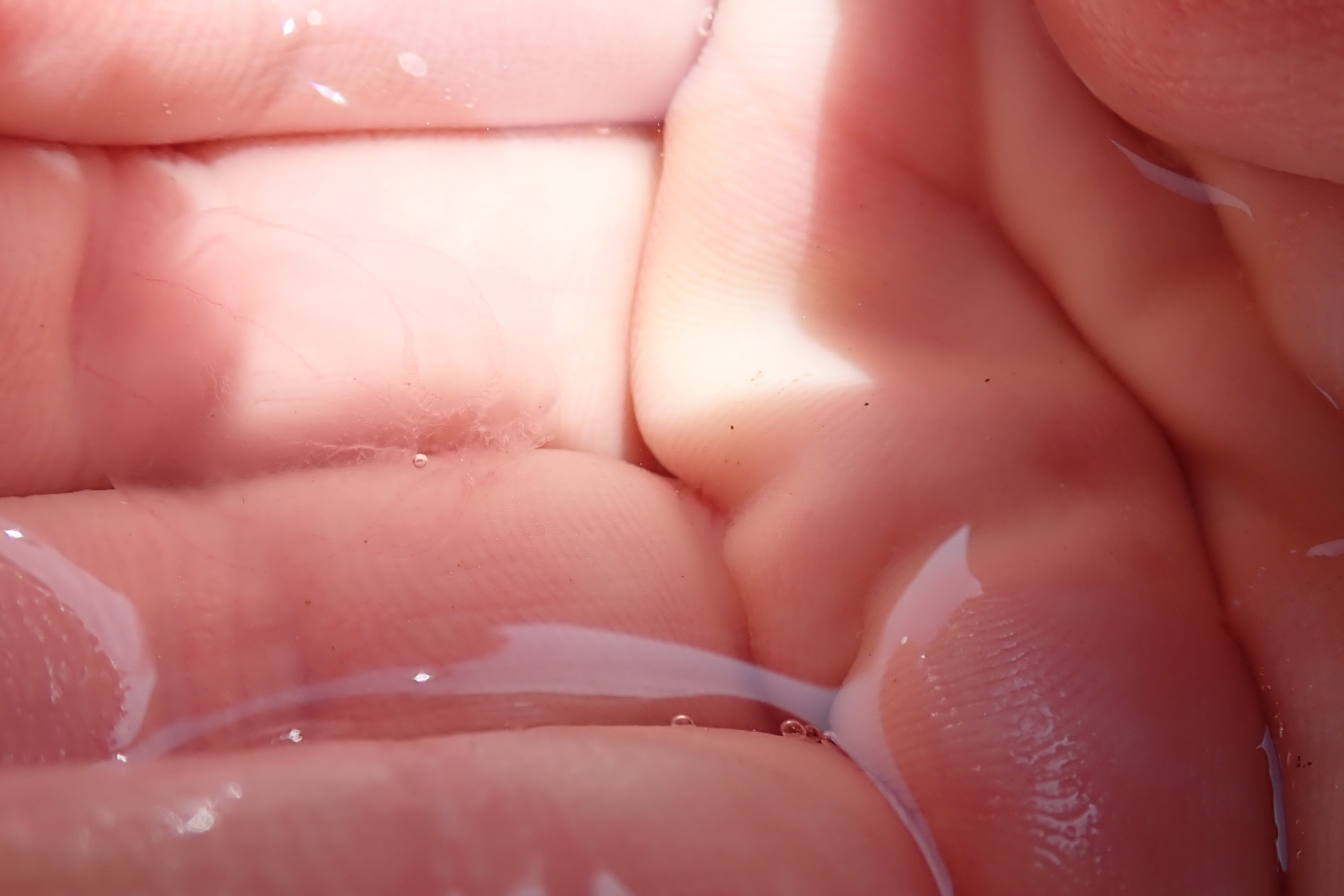
    Barely there - a transparent Beroe cucumis comb jelly in my hand
    Barely there – a transparent Beroe cucumis comb jelly in my hand

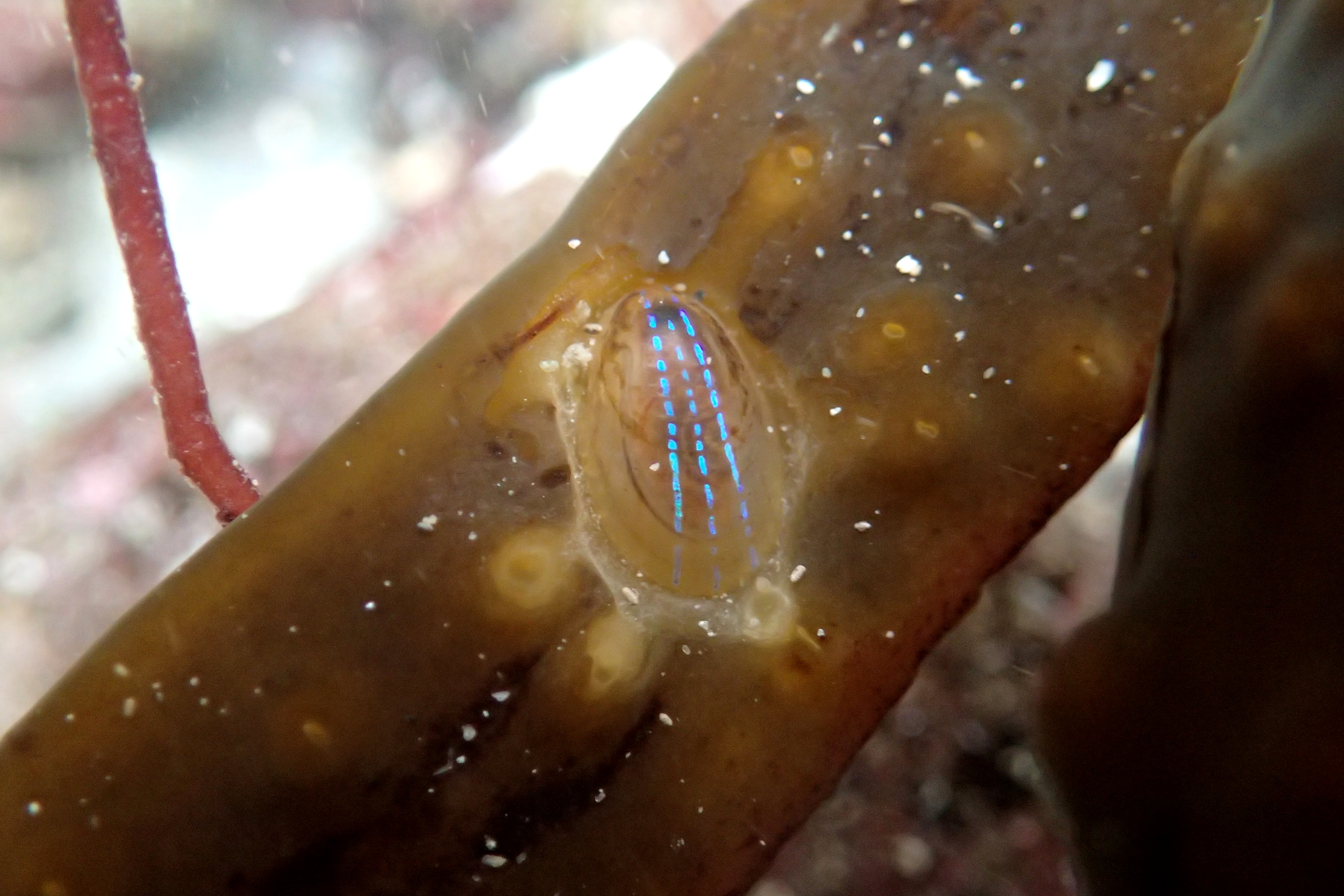
    I’m treated to a fabulous display of iridescence as the comb jelly beats its tiny combs, sending a trail of light and colour up the lines on its tiny body.

    Between the current washing into the pool and the jelly’s own surprisingly speedy swimming efforts, it slips away each time I come close to getting it under the camera. To add to the fun, my camera can’t see it. I take a whole series of photos of nothing. The perfect transparency of the animal means I can only focus on the seaweed below.

    The Beroe cucumis comb jelly has a characteristic sack shape.
    The Beroe cucumis comb jelly has a characteristic sack shape.

    When another comb jelly washes into the pool, I’m sure there will be lots more opportunities to attempt photos. Stepping out into the open water, I take some time to accustom my eyes, staring past the surface reflection into the water. Soon, I notice comb jellies everywhere.

    The irridescent combs of Beroe cucumis
    The irridescent combs of Beroe cucumis

    There are dozens, hundreds even, and some are large enough to fill the palm of my hand. Even the large jellies pose a challenge to my camera, but amongst the many seaweed shots, I start to take a few that show off the jellies’ light display.

    While most are the large species, Beroe cucumis, with their characteristic sack shape, there are a few smaller ones amongst them. These are sea gooseberries, Pleurobrachia pileus. They are barely a couple of centimetres long, spherical, with two trailing tentacles.

    A sea gooseberry with trailing tentacles. Its combs are arranged in lines up its sides.
    A sea gooseberry with trailing tentacles. Its combs are arranged in lines up its sides.

    Despite their tiny size, they are just as mesmerising as the B. Cucumis, the lines down their sides flickering every colour of the rainbow.

    Sparkles of irridescence from a passing Sea gooseberry
    Sparkles of irridescence from a passing Sea gooseberry

    Among all the comb jellies I spot an even smaller interloper, a hydroid medusa. Hydroids are related to jellyfish, but their adult form usually lives attached to seaweeds, stones or shells. This minute creature is a baby hydroid, looking very much like a jellyfish as it actively swims past, beating its bell fringed with short tentacles.

    Hydroid medusa - probably Clytia hemisphaerica swimming by
    Hydroid medusa – probably Clytia hemisphaerica swimming by

    The pattern of the cross on top of it and the fringe of dark spots around the edge of the bell suggest that it is a young Clytia hemispherica.

    Hydroid medusa showing its delicate pattern and short tentacles.
    Hydroid medusa showing its delicate pattern and short tentacles.

    The glare of sunlight on my screen combined with the transparency of all the animals I’m trying to photograph make it impossible to tell how I am doing. I give up taking photos and simply enjoy the spectacle until the tide calls time and forces me back up the beach.

    Comb jellies are supposed to phosphoresce, which would be amazing to see. I’m wondering if I can sneak in a little night time rockpooling this weekend. Although the jellies are here in huge numbers today, they may disappear as quickly as they arrived. I should be working, but some things are just too exciting.

  • A Night Out in the Rock Pools

    A Night Out in the Rock Pools

    Nights out tend to become a distant memory when you’re a parent. For the most part I don’t miss them. I have, however, been looking forward to Junior being old enough to join me for night time rock pooling. Towards the end of last year, we tried it for the first time and, although the conditions weren’t ideal, he’s been asking to go again ever since.

    The best low tides always happen around the middle of the day, and the middle of the night, but we compromise for this first family expedition of the year, choosing a reasonable low tide at around 10.30pm. The warm, calm weather provides good opportunities for seeing nocturnal activity and tonight I’m trying out my ultraviolet (UV) torch.

    It doesn’t disappoint.

    Head torch at the ready - night time rock pooling is a perfect adventure
    Head torch at the ready – night time rock pooling is a perfect adventure

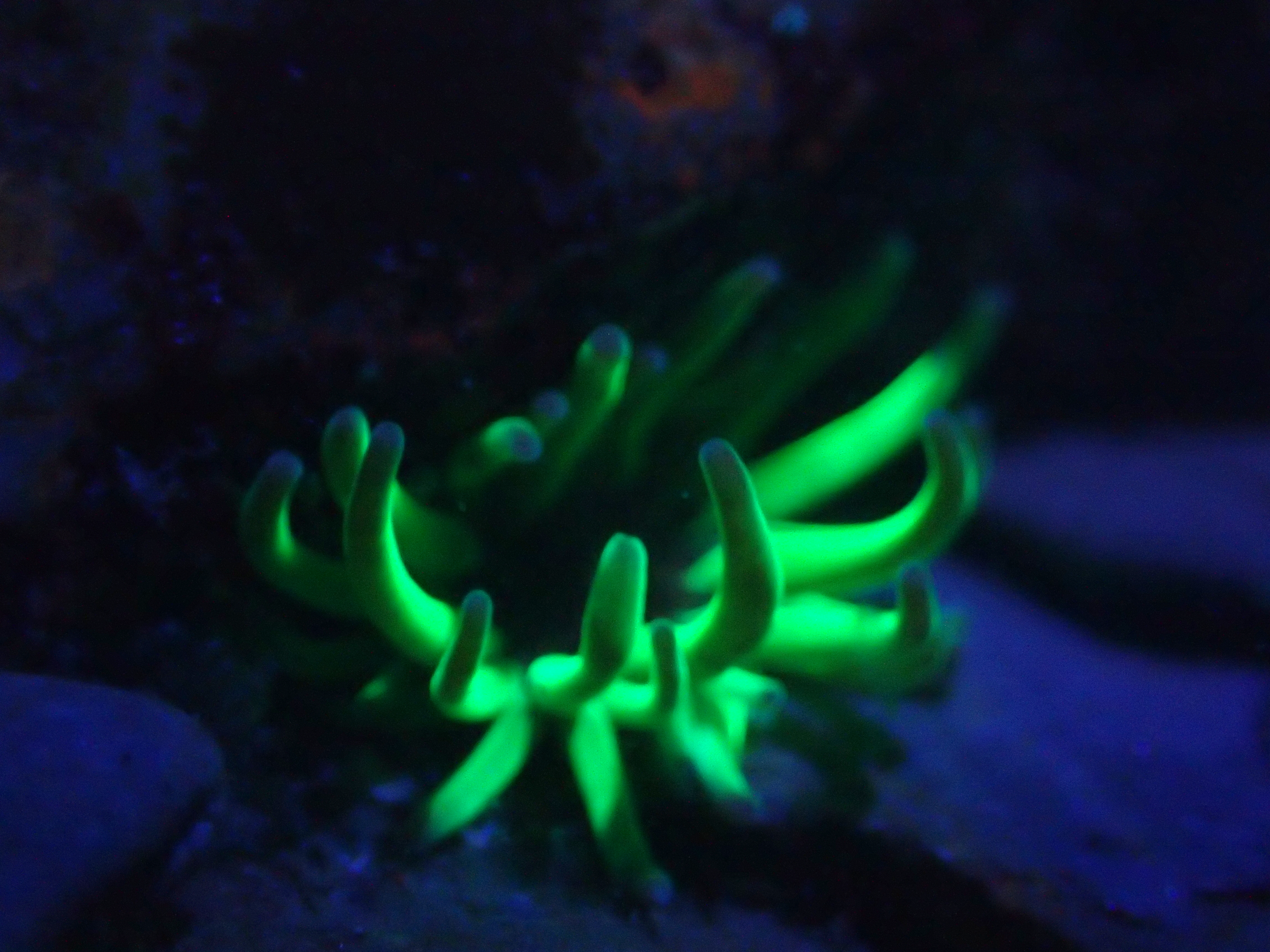
    I’ve always known that certain species glow under UV light, but I had no idea how much. We’ve barely taken ten paces out across the rocks when we see our first snakelocks anemone, shining from the darkness like an eerie green beacon. The colour is wonderfully alien.

    Snakelocks anemone at night under UV light - a true alien of the Cornish rock pools
    Snakelocks anemone at night under UV light – a true alien of the Cornish rock pools

    This fluorescence is caused by certain proteins within the animals that take in light of one colour and emit it as another. Some deeper water species can use these properties to appear red, even though red light is filtered out as it passes through the water, meaning the only light available to underwater creatures is UV or blue.

    It’s not clear why snakelocks anemones and other sea creatures might want to fluoresce in this way. It seems there may be some benefit in it for their symbiotic algae or it might give them sun protection. It may just be a by-product of a protein that’s useful in other ways. Whatever the reasons, it produces an incredible glow. Junior is already talking of coming back at Halloween.

    A spooky night time rock pooling walk is definitely on the programme for this Halloweeen!
    A spooky night-time rock pooling walk is definitely on the programme for this Halloweeen!

    It’s not just the anemones that take our breath away. If you’re used to rock pooling in daylight when most animals are hiding away under rocks and seaweed, the sheer level of activity in after dark takes you by surprise.

    A scratching, crackling sound stops us in our tracks. It’s coming from the rocks. I lift the seaweed to show Junior a group of limpets. Some are feeding, their strong radulas scouring seaweed off the rock and chipping bits of rock. Others are setting into their home scars, grinding their shells into their grooves to create a perfect fit. Close-up, their activities make a surprising amount of noise.

    Limpets on their way home as the tide retreats
    Limpets on their way home as the tide retreats

    Most rockpool animals are largely nocturnal. Pools that seem empty in daytime become bustling cities of activity. We watch hermit crabs milling around in large numbers, crabs marauding through the pool and across the rocks, fish floating in plain sight. Prawns come towards the light and watch us before shooting away backwards.

    A green shore crab looking blue in the UV light
    A green shore crab looking blue in the UV light
    Hermit crabs are more active at night, every pool is teeming with them
    Hermit crabs are more active at night, every pool is teeming with them

    Other Half spots a small species of spider crab (Macropodia sp.) decorated with long fronds of seaweed edging sideways across the pool. It’s moving too fast to take a clear photo in the poor light. The blurring makes it look even more alien.

    A blurry small spider crab (Macropodia sp) moving across sand.
    A blurry small spider crab (Macropodia sp) moving across sand.

    A scorpion fish lies still on the sand, watching out for prey.

    A scorpion fish (Taurus bubalis) hiding in plain sight.
    A scorpion fish (Taurus bubalis) hiding in plain sight.

    One surprise is the stunning colours of the seaweeds under the UV light. Some of the dark red seaweeds take on a far more intense, bright colour, glowing red, pink and orange. Where the top shells have worn spires, their tips glow pink.

    A grey topshell on a red seaweed under UV light
    A grey topshell on a red seaweed under UV light

    After an hour, tiredness and cold begin to set in. We switch off our torches and take a moment to gaze at the stars before we head home to bed. Junior is already asking if we can come again the next night, and the next.

    It looks like I’ll be having a few more nights out this summer.

  • Chilly autumn rockpooling

    Chilly autumn rockpooling

    I’m not a fan of winter. Even though I go rock pooling all year round and love the way the wildlife varies with the seasons, the November to February period is a challenge for me. The thought of sticking my hands in icy-cold water makes me want to hibernate. Right on cue, a fierce northerly wind blows in for the spring tides. I layer up and wear my fluffiest, most comforting jumper to bring you this week’s blog post.

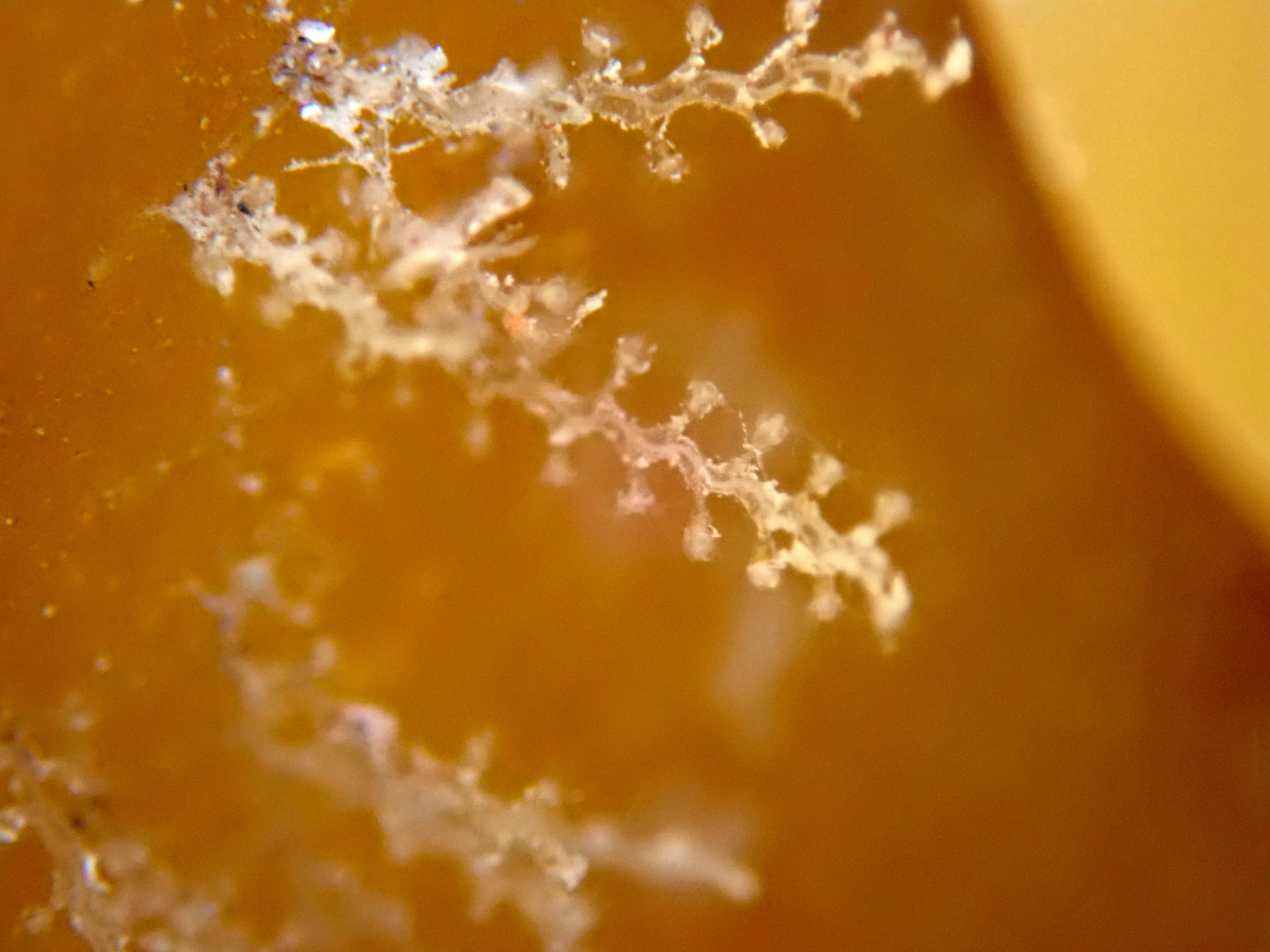
    Obelia geniculata - a hydroid known as 'sea fir'.
    Obelia geniculata – a hydroid known as ‘Kelp fir’. Recognisable by its zig-zag ‘stems’.

    I’m trying to photograph hydroids at the moment. These relatives of the jellyfish and anemones are generally translucent and no more than a few centimetres long, making them hard to spot. At this time of year when the seaweeds die back and the waves roll in, it’s especially tricky. My camera doesn’t like focussing on them and they won’t stay still in the current, but their nodding tentacles and curious structures are mesmerising.

    Another hydroid - Coryne pusilla. This one can't retract its tentacles into little cups. It has a ringed stem (visible in the bottom-left of the photo).
    Another hydroid – Coryne pusilla. This one can’t retract its tentacles into little cups. It has a ringed stem (visible in the bottom-left of the photo).

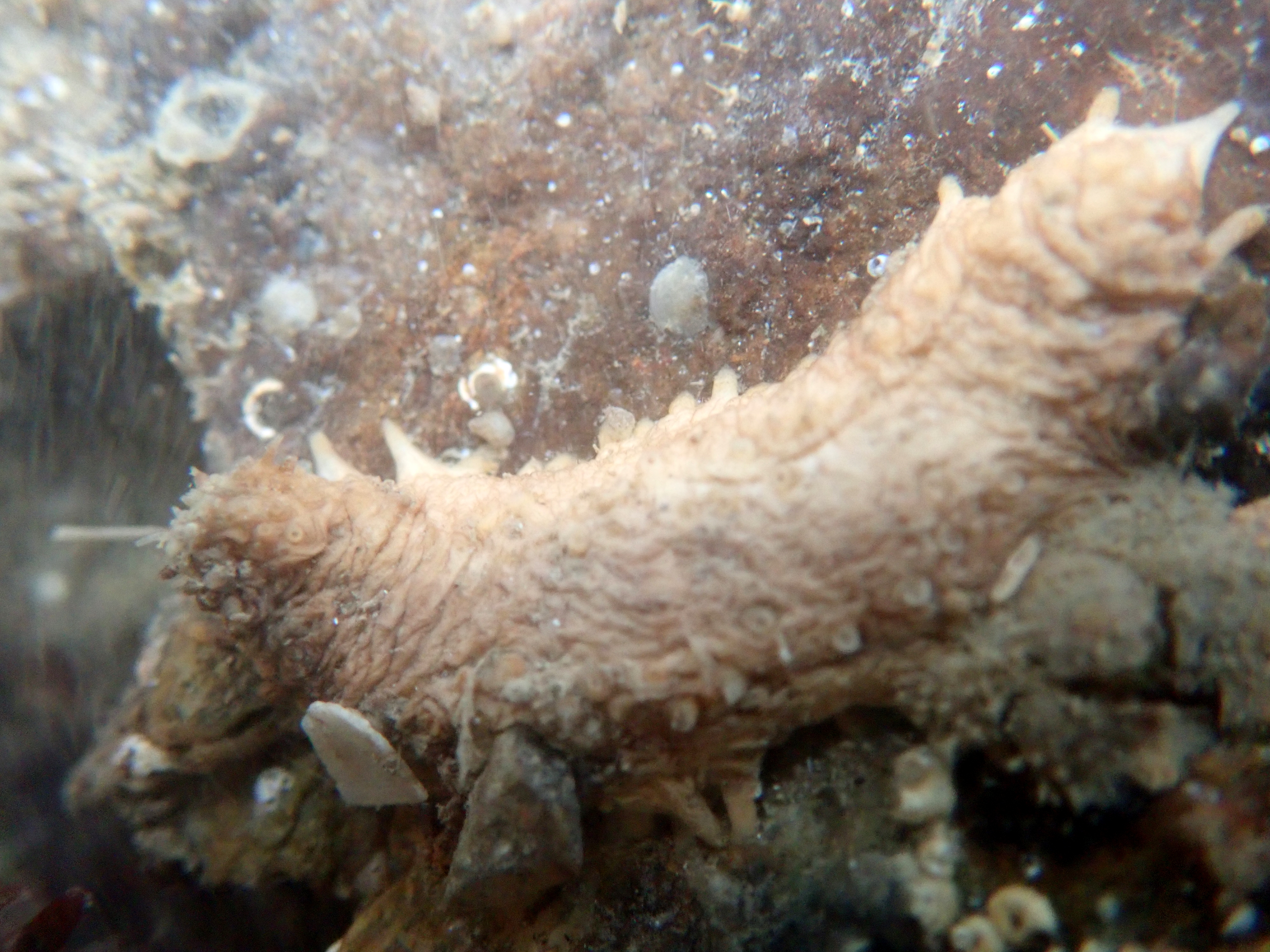
    As always there are strange creatures galore. This Sea gherkin is unusually large and gnarled.

    A Sea gherkin (Pawsonia saxicola) - this is a type of sea cucumber and clings onto the rock with its tentacle feet.
    A Sea gherkin (Pawsonia saxicola) – this is a type of sea cucumber and clings onto the rock with its tentacle feet.

    Among the sponges and brittle stars I come across this invasive species from the South Pacific, the Orange-tipped sea squirt, Corella eumyota.

    The invasive Orange-tipped sea squirt
    The invasive Orange-tipped sea squirt

    The twisted gut is very prominent in this species and you can see the orange colouration at the top. It’s thought this species may compete with native squirts and other invertebrates, but we will only find out by monitoring its spread. This is the first one I’ve recorded here.

    Nearby I find the native sea squirt Ascidia mentula with lovely red flecks in its almost transparent test.

    Ascidia mentula - a tunicate sea squirt. The red streaks reminded me of fireworks.
    Ascidia mentula – a tunicate sea squirt. The red streaks reminded me of fireworks.

    This sponge also catches my eye. It’s hard to identify many sponges with any certainty without examining their spicules under a microscope, but this one has the appearance of Myxilla rosacea.

    A striking sponge with its fine structures and deep pores. Possibly Myxilla rosacea.
    A striking pink sponge with fine structures and deep pores. Possibly Myxilla rosacea.

    On the next tide we make a successful return visit to the beach where Cornish Rock Pools Junior achieved finding a world record haul of stalked jellyfish last year. We come close to matching the numbers we found last time. I lose count at 25 because Junior makes it clear he doesn’t want his record broken.

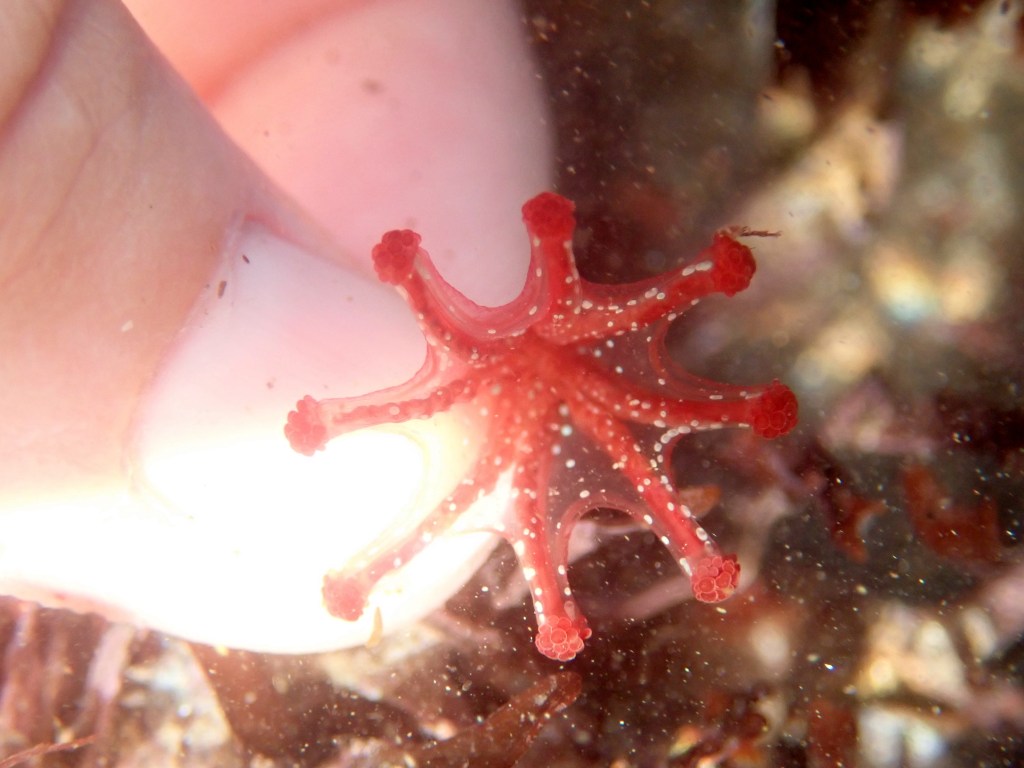
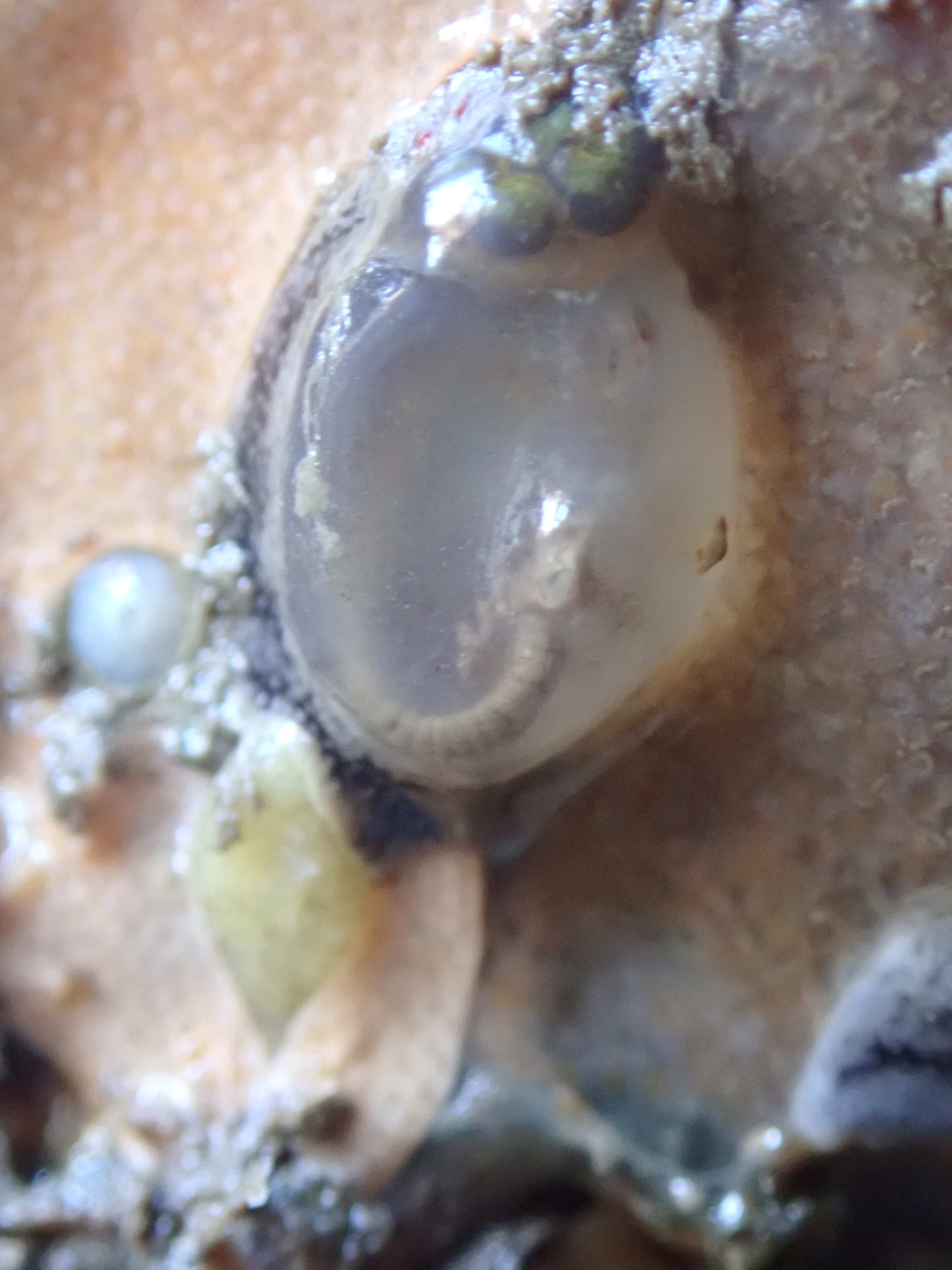
    Many of the stalked jellyfish are juveniles, only a few millimetres long and it tests my eyes to pick them out among the swirling seaweed. Then I spot this 1mm pinprick of a jelly blob and take a photo in case it turns out to be a stalked jelly.

    My eyes must still be good - a 1mm baby stalked jellyfish. It's not possible to say for sure what species.
    My eyes must still be good – a 1mm baby stalked jellyfish. It’s not possible to say for sure what species.

    On my screen at home its column is clearly visible although the tentacles are either retracted or haven’t yet grown. Little is known about the very early stages of development of these creatures and how to separate the species by sight, but David Fenwick who runs the amazing Stauromedusae UK website confirms that it is definitely a stalked jelly.

    It’s great to be able to show a friend from Natural England how abundant these species are in the Looe and Whitsand Bay Marine Conservation Zone, which aims to give them protection from developments and disturbance.

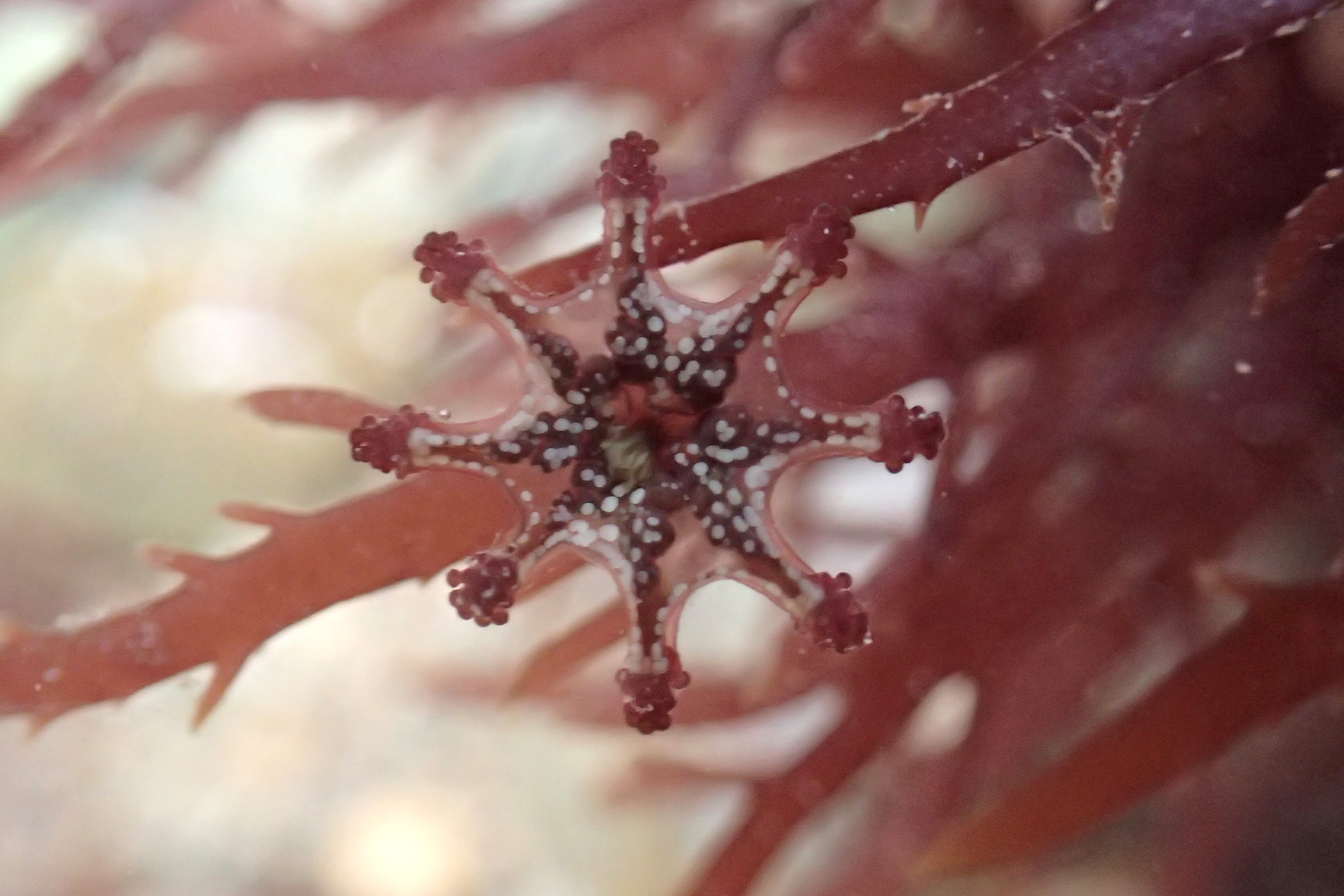
    Haliclystus octoradiatus - the blobs between the arms are primary tentacles, which easily identify this species from most others we see.
    Haliclystus octoradiatus – the blobs between the arms are primary tentacles, which easily identify this species from most others we see.

    One of her sons does an impressive job of finding stalked jellies and even finds one that is in the middle of eating an amphipod. The current is too strong to get a great photo, but you can clearly see the unfortunate creature’s head sticking out of the stalked jellyfish’s mouth here.

    A stalked jellyfish (Haliclystus octoradiatus) eating an amphipod.
    A stalked jellyfish (Haliclystus octoradiatus) eating an amphipod.

    I’ll be submitting all my stalked jellyfish records to help reinforce the evidence that will hopefully keep these protected species from harm.

    A juvenile Calvadosia cruxmelitensis stalked jellyfish. We found 3 species of stalked jellyfish on the site.
    A juvenile Calvadosia cruxmelitensis stalked jellyfish. We found 3 species of stalked jellyfish on the site.

    I can’t help taking a look at some other things while I’m here. But before long the cold is hurting my fingers and chilling my insides in the sort of way that can only be fixed by a steaming mug of hot chocolate.

    That’s the bit of winter I look forward to!

    Rayed trough shell
    Rayed trough shell
    Aslia lefevrei - the brown sea cucumber. This sea cucumber lives in crevices in the rock with just its tip poking out.
    Aslia lefevrei – the brown sea cucumber. This sea cucumber lives in crevices in the rock with just its dark tip poking out.
    Dysidea fragilis - or the hedgehog sponge as I call it.
    Dysidea fragilis – or the hedgehog sponge as I call it.
    3-spot cowrie hanging on an overhang
    3-spot cowrie hanging on an overhang


    Happy rockpooling!

  • A close (enough) encounter with Weever fish.

    A close (enough) encounter with Weever fish.

    We’re on a stomp about the beaches between Looe and Seaton, enjoying a patch of sunshine.  “Watch out for Portuguese Man O’War jellies,” I warn Junior as we cross the muddy sand at Millendreath. I know there have been reports of them washing up all around the south west coast over the last few weeks, but there are none today. Inevitably, it’s something else that nearly gets me.

    In a sandy pool at the sea’s edge, a flicker of movement catches my eye. It happens so quickly I can’t be sure there’s anything there but the sand is settling, suggesting something has just buried itself.

    I call Junior over to look and I crouch low, reaching a hand to the water’s surface. If I can scoop the sand up from underneath I might be able to gently lift out the creature. Having seen plenty of well-camouflaged dragonets scooting about the pools today, I expect this to be another one. I stop short and stare into the shimmering pool.

    Dragonets, especially the females, are perfectly camouflaged on sand.
    Dragonets, especially the females, are perfectly camouflaged on sand.

    It’s a good call. You never know what might be lurking in the rock pools. Near where I saw the movement is a sandy coloured lump. I think I recognise the shape, but it’s only when I lower my camera into the water and zoom right in that I can be sure. A Lesser weever-fish is staring down my lens, its frog-mouth gaping slightly, the rest of its body buried in the sand. Before I can take a shot it’s gone. (more…)

  • Wrasse and wrack

    Wrasse and wrack

    The Cornish summers are anything but predictable. One day I’m sweltering in shorts and beach shoes and the next I’m shivering in waders and a thick jumper. Although the showers are back with a vengeance, there’s always something to be found if I can make it across the rocks without breaking an ankle.

    Painted top shell, East Looe
    Painted top shell, East Looe

    My first outing is to the rocks beyond East Looe beach and I’m pleased to come across a new colony of St Piran’s hermit crabs on the mid-shore.

    A St Piran's hermit crab starting to emerge from its shell.
    A St Piran’s hermit crab starting to emerge from its shell.

    They’re becoming a familiar sight around Cornwall and I’m starting to recognise them from the tips of their red legs, before their chequerboard eyes and equal-sized claws emerge from their shells. (more…)

  • The Stalked Jellyfish World Record (for Portwrinkle)

    The Stalked Jellyfish World Record (for Portwrinkle)

    “So is this a world record?” Cornish Rock Pools Junior has just found 26 stalked jellyfish and is feeling rightly proud of himself.

    “It’s a record for Portwrinkle,” I tell him. “They’ve never been found here before.”

    “But is it a world record?” he insists.

    I take a moment to consider this. Only a moment, because my hands are frozen from holding my camera in the water and another snow flurry is starting.

    “Yes,” I say. “You now have the world record for finding stalked jellyfish in Portwrinkle.”

    From the leaping and cheering, I’d guess he’s satisfied with that.

    Cornish Rock Pools Junior searches for stalked jellyfish at Portwrinkle
    Cornish Rock Pools Junior searches for stalked jellyfish at Portwrinkle

    (more…)

  • Christmas Rockpooling in Looe

    Christmas Rockpooling in Looe

    I doubt anyone in Looe can have missed it – the moment today when Cornish Rock Pools Junior found his first stalked jellyfish. His scream of, “I’ve actually found one!” rang across the beach and echoed off the hillside.

    Cornish rockpool junior's first stalked jellyfish - Calvadosia cruxmelitensis
    Cornish rockpool junior’s first stalked jellyfish – Calvadosia cruxmelitensis

    His first find was closely followed by his second, next to which was a third. A volunteer from Looe Marine Conservation Group found a fourth. The Natural England team found some more and by the time we were done we recorded a whopping 26 Stalked jellyfish.

    Calvadosia campanulata stalked jellyfish
    Calvadosia campanulata stalked jellyfish

    As all our records today were of two species (Calvadosia cruxmelitensis and Calvadosia campanulata) I’m feeling hopeful that they may soon be added as recognised features of the Looe and Whitsand Bay Marine Conservation Zone.

    Looe Marine Conservation Group volunteer, Dawn, finds her first Stalked jellyfish on our survey
    Looe Marine Conservation Group volunteer, Dawn, finds her first Stalked jellyfish on our survey

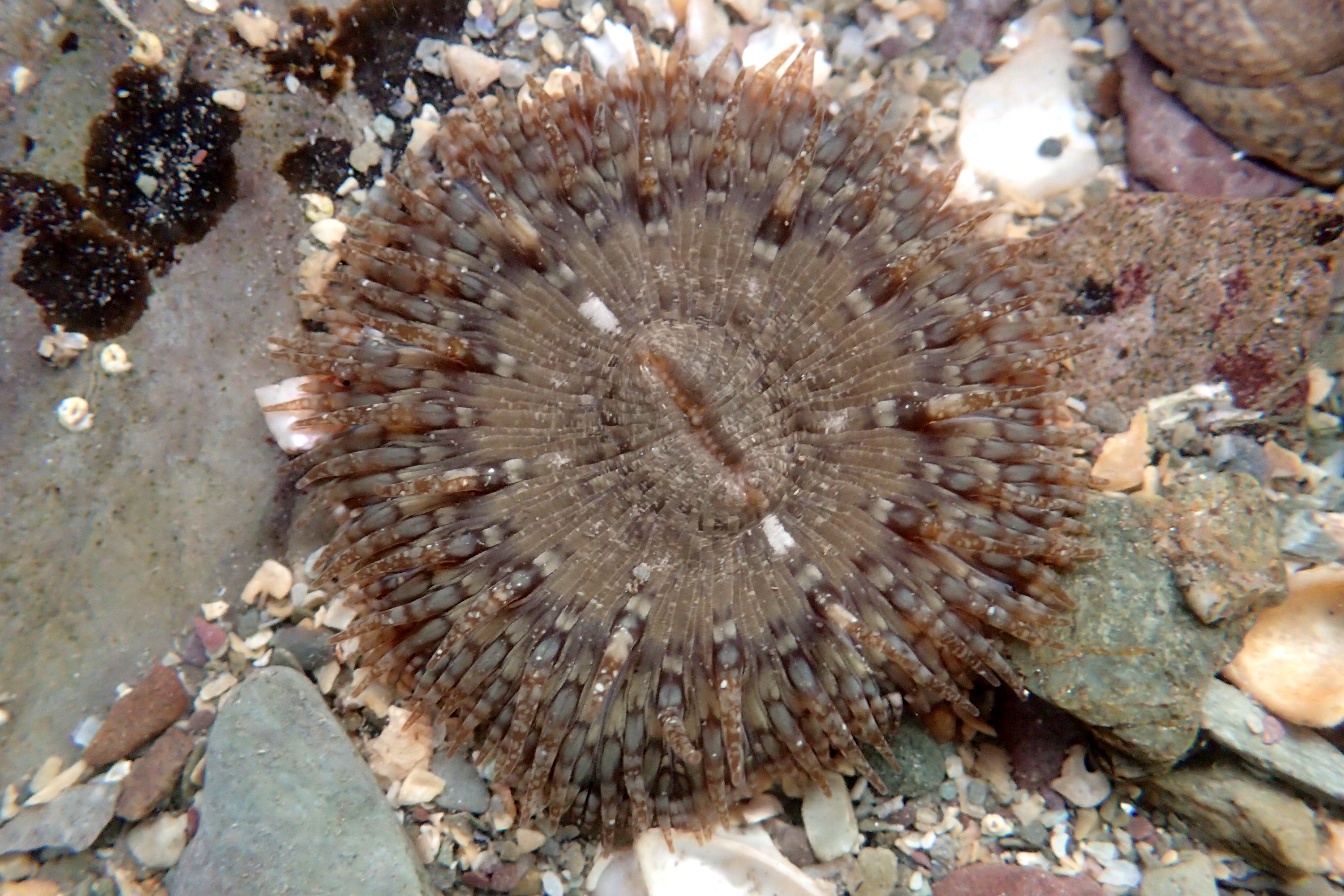
    In December, good tides, mild temperatures and low winds coincide about as often as it snows on the Cornish coast (i.e. about once every ten years). Amazingly, today was one of those rare occasions and the rockpools were in impressive festive colours. What could be more Christmassy than this Dahlia anemone?

    Festive colours in the Cornish rock pools - a Dahlia anemone
    Festive colours in the Cornish rock pools – a Dahlia anemone

    We were doing so well with our stalked jellyfish survey that I didn’t feel too bad about getting distracted. When I spotted a wriggling piece of seaweed, I chased it across the rocks.

    If a piece of seaweed runs off, it's probably a spider crab
    If a piece of seaweed runs off, it’s probably a spider crab

    As I suspected, under the seaweed decorations was a small spider crab species. This one was a Macropodia deflexa, a long-legged spider crab.

    A Macropodia deflexa crab - covered in seaweed decorations
    A Macropodia deflexa crab – covered in seaweed decorations

    Relying on their camouflage, scorpion fish were lying still among the seaweed, allowing us to come right up to them.

    A scorpion fish hides among the seaweed
    A scorpion fish hides among the seaweed

    It was a huge relief that everything turned out so well for our Stalked jellyfish survey. Had the conditions been less favourable we’d have been more likely to find none at all. 26 was an amazing total.

    I needed my hot chocolate afterwards, but it was an afternoon well spent with some fabulous people. And tomorrow the forecast is even better… I’ll let you know what I find!

    Another Christmas sea-flower - the Daisy anemone. In full bloom at Hannafore, Looe
    Another Christmas sea-flower – the Daisy anemone. In full bloom at Hannafore, Looe
    Like a string of Christmas lights - the Blue-rayed limpet
    Like a string of Christmas lights – the Blue-rayed limpet
    Our Stalked jellyfish survey at Hannafore Beach, West Looe
    Our Stalked jellyfish survey at Hannafore Beach, West Looe


  • On a stalked jellyfish mission…

    On a stalked jellyfish mission…


    My local area is special and it’s partly down to some fabulous little jellies we find here.

    Looe and Whitsand Bay was one of the first to be designated a Marine Conservation Zone (MCZ) three years ago. Apparently Ocean quahog (a clam shell), pink sea fans, pink sea fan anemones and a stalked jellyfish species (Haliclystus sp.) can all be found here.

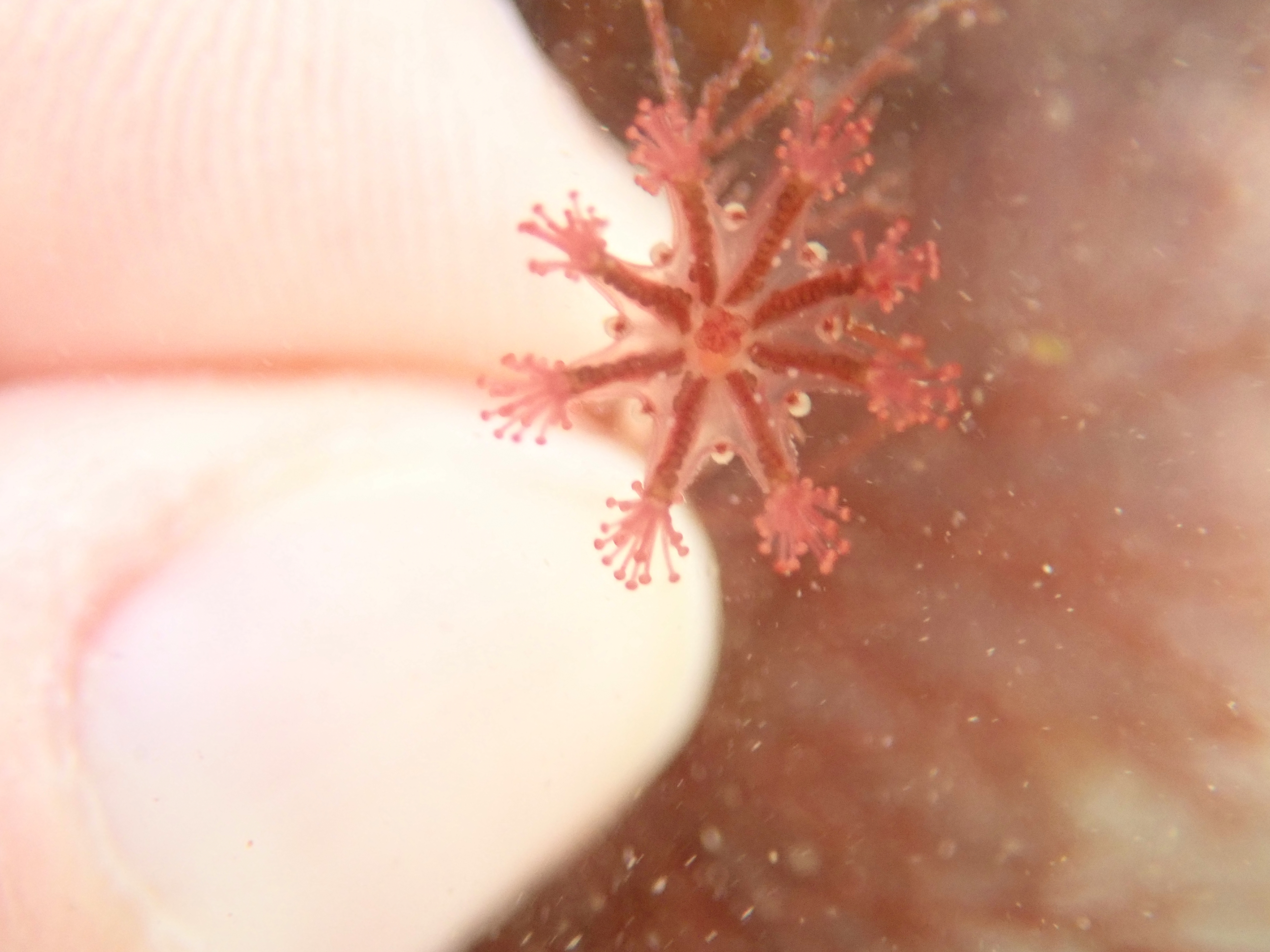
    As you'd expect, stalked jellyfish have a stalk which attaches to seaweed so they don't float around like other jellies. They have eight arms with tentacles on the end.
    As you’d expect, stalked jellyfish have a stalk which attaches to seaweed so they don’t float around like other jellies. They have eight arms with tentacles on the end.

    I’m hoping we can add more species to that list. There have been some local records of giant gobies, which are one of the MCZ ‘feature’ species and we’ve found three other species of stalked jellyfish on our beaches.

    The problem with stalked jellyfish is that they’re tiny and seaweed coloured. In theory, the winter die-back of seaweed makes them easier to see, but Cornish winters don’t often provide the calm conditions you need to spot stalked jellies. Consequently not many people see them and even fewer people record their discoveries on ORKS – so please, please do share your finds!

    In a quest to add more evidence that these species are present in significant numbers, I take Cornish Rock Pools Junior for a wander through the pools at a quiet local bay.

    Grey herons like fishing in this quiet bay - Plaidy beach, East Looe
    Grey herons like fishing in this quiet bay – Plaidy beach, East Looe

    I find it’s best to focus on nothing else if I’m going to find stalked jellies. The problem is, as anyone who’s seen me in the vicinity of a chocolate hobnob will know, that I have no willpower. So, I spend the first half hour snapping this gorgeous strawberry anemone as it stretches its tentacles towards the last of the autumn sunshine. (more…)

  • Home from Home: Quiberon in Brittany

    Home from Home: Quiberon in Brittany

    Things have been quiet on this page the last couple of months. Cornish Rock Pools Junior, Other Half and I took an extended holiday to visit the towns and beaches of Brittany. As always our travels had a bit of a marine theme…

    Est-ce que c’est un anémone?” the eager child in the dark-rimmed spectacles asks. We explain what a ‘stalked jellyfish’ is to the class of seven-year-olds. “Jellyfish!” they chant.


    Stalked jellyfish - a Lucernariopsis cruxmelitensis.
    Stalked jellyfish – a Lucernariopsis cruxmelitensis.

    Between fascinating excursions to the fire station and the sardine factory, we are giving impromptu English lessons to a class of primary school students during our twinning visit to Quiberon in Brittany.


    We have covered the words goby, crab, jellyfish and shark so far and there’s still a sea of raised hands. The children seem desperate to tell us about their finds around the shores of Quiberon. (more…)

  • Summer Lazing in Cornwall’s Rock Pools

    Summer Lazing in Cornwall’s Rock Pools

    It’s funny how the summer days float by. The house has been practically bursting with people for weeks now and I haven’t found the space to write about our many beach trips, but August still feels like a lazy month.

    It reminds me of my childhood summers; a jumble of paddling, swimming, rockpooling and finds. Only I’ve just turned 40 and now I’m the one remembering hats and towels, preparing picnics and being called on constantly to help build dams or identify creatures. Every few days I realise that I’ve failed to take many photos and still haven’t blogged anything I’ve found. It’s just the way August goes.

    Compass jellyfish. Also known as sea nettles as they pack quite a little sting, these jellyfish have beautiful markings.
    Compass jellyfish. Also known as sea nettles as they pack quite a little sting, these jellyfish have beautiful markings.

    The warm waters are drawing in all sorts of creatures at the moment. The north coast especially is teeming with jellyfish. Harmless Moon jellyfish have washed up in their thousands. These transparent little jellies have four mauve circles in their centre in a pattern that reminds me of cucumber slices (OK, that’s probably just me). 

    One of many moon jellyfish washed up by the strong swell. This species is harmless.
    One of many moon jellyfish washed up by the strong swell. This species is harmless.

    Other jellyfish that have mild stings, like the compass jellyfish are also washing in and I think my thigh met with one of the many blue jellies in the water at Mawgan Porth a couple of weeks ago from the unattractive rash I developed! On the plus side, some friends found a spiny starfish in a pool at the top of the mid-shore pools, which looked like it might be feeding on the stranded jellies. (more…)