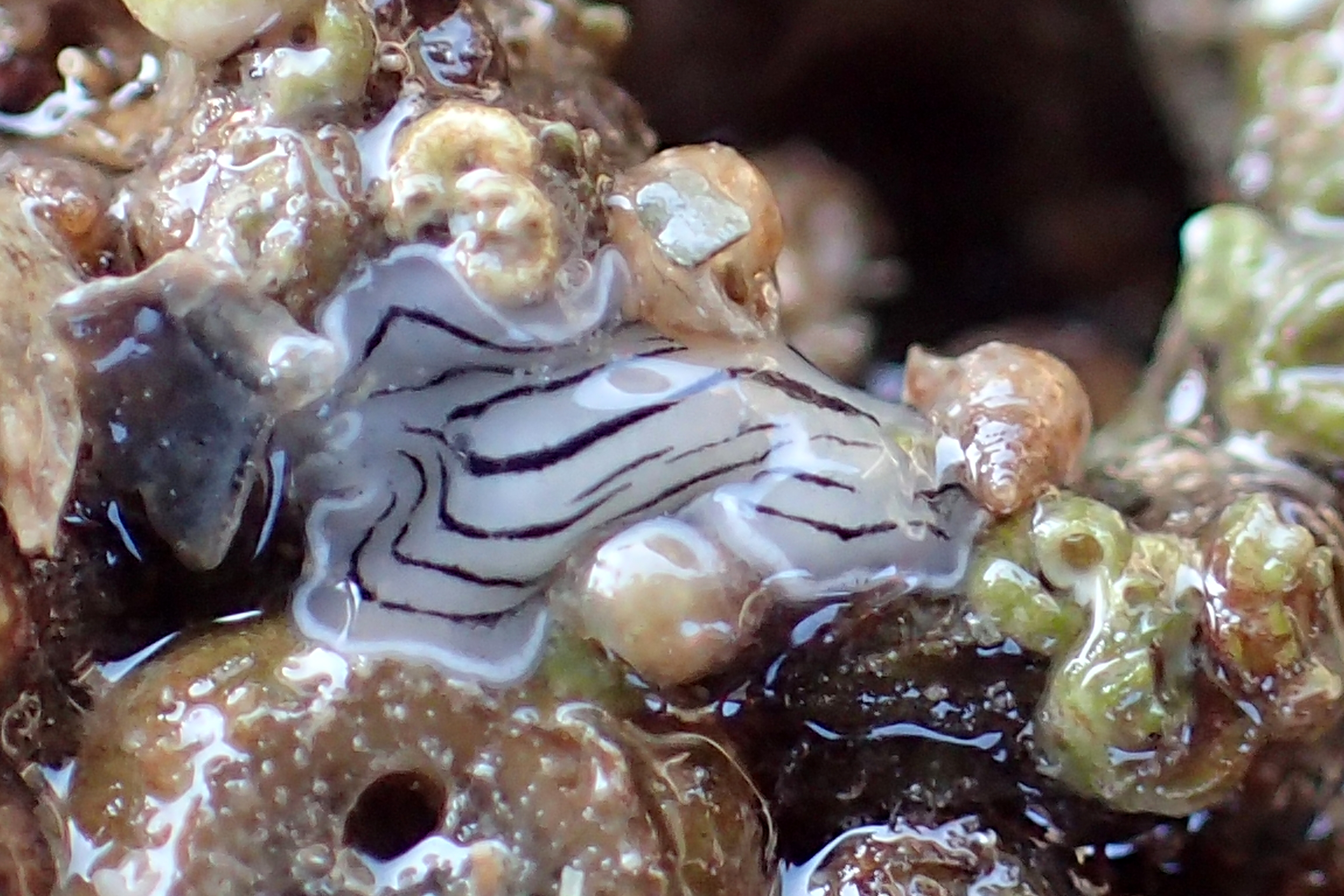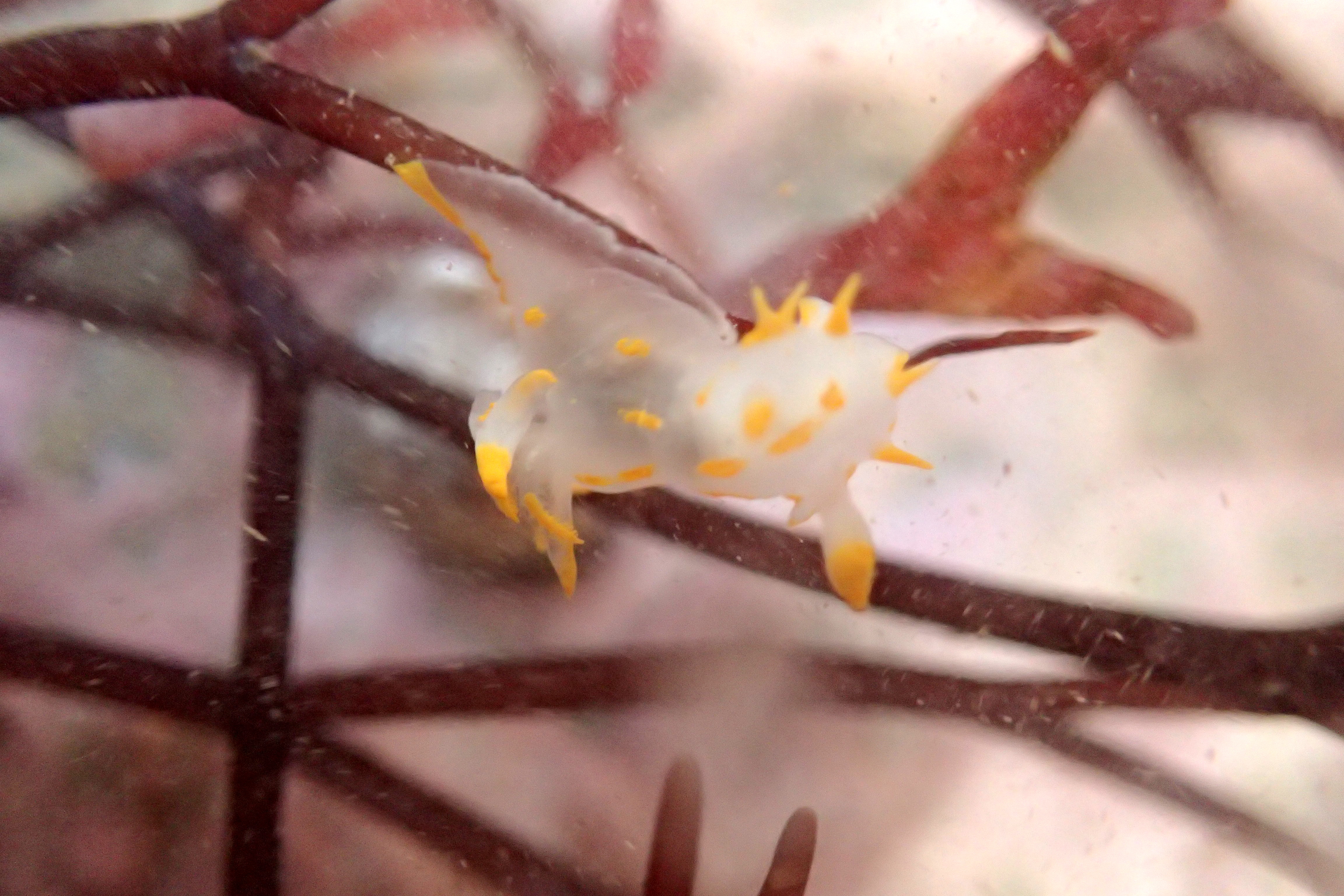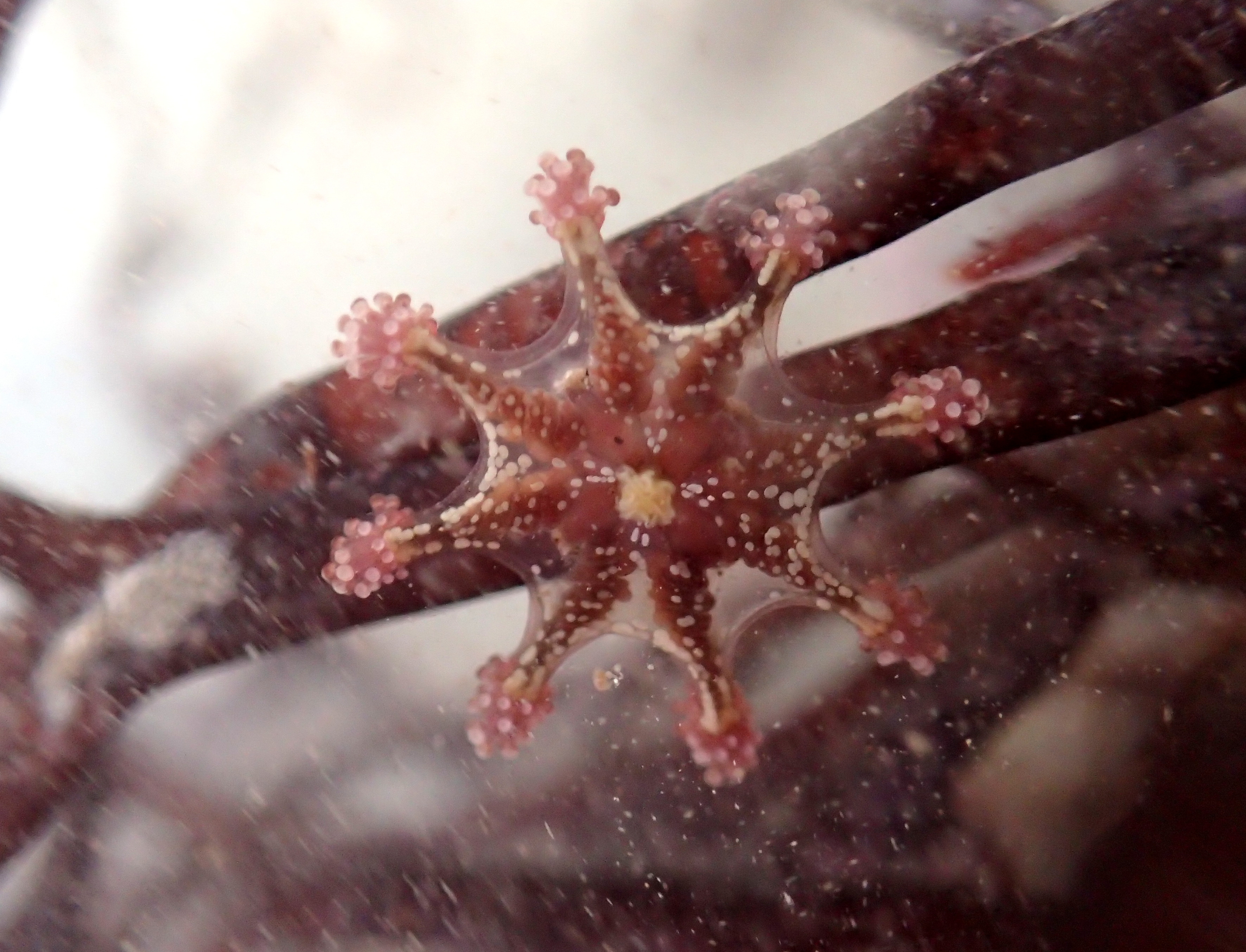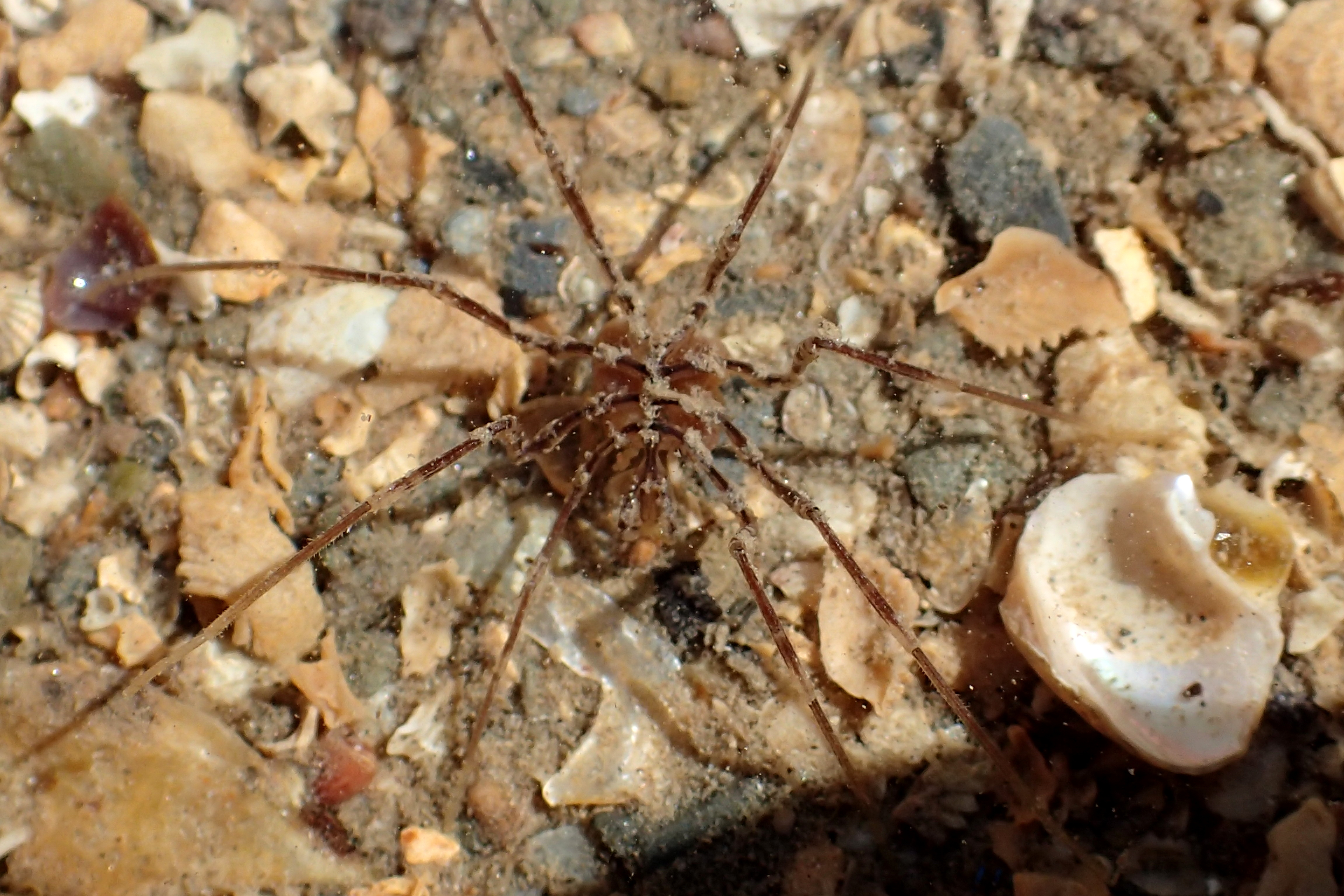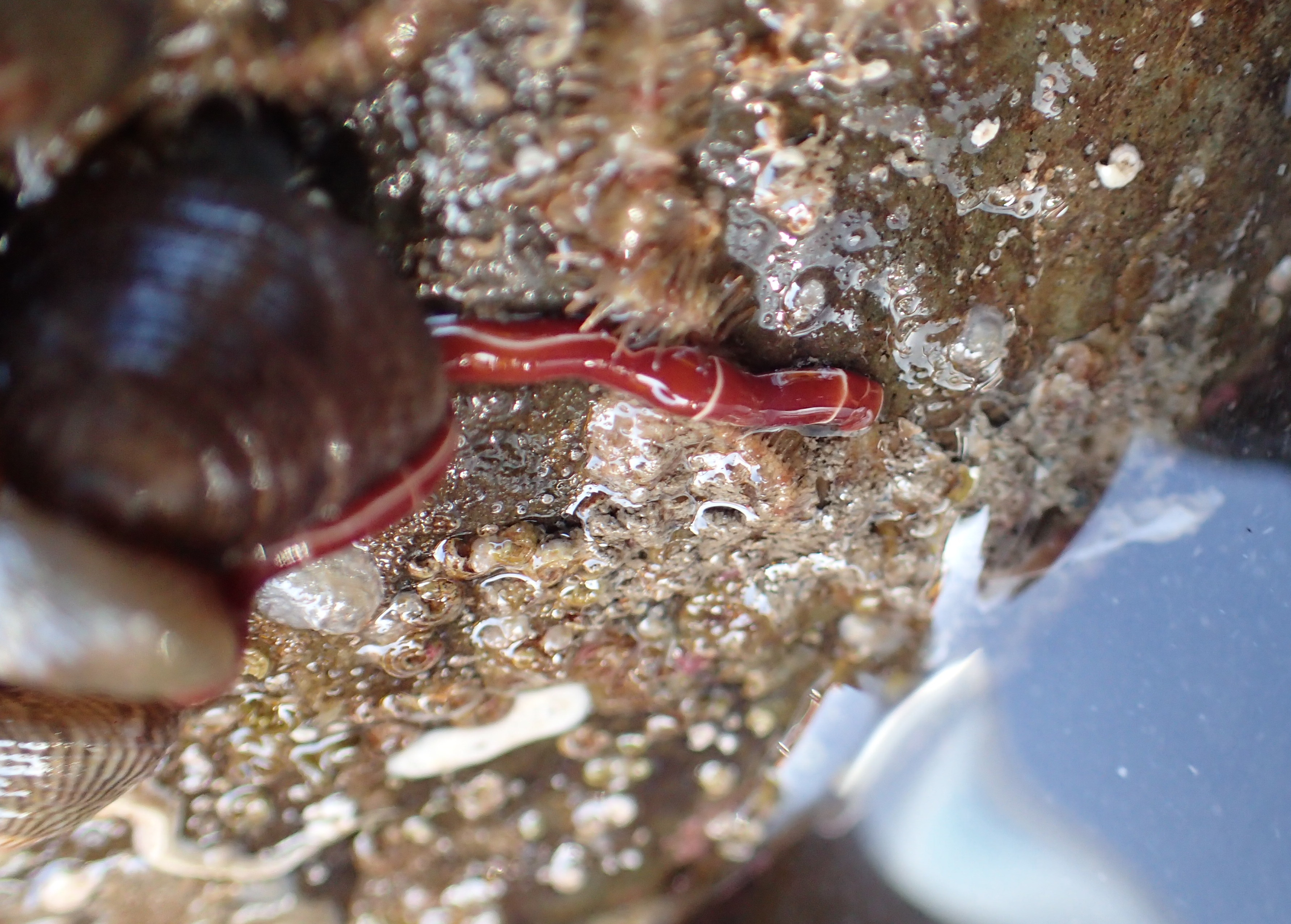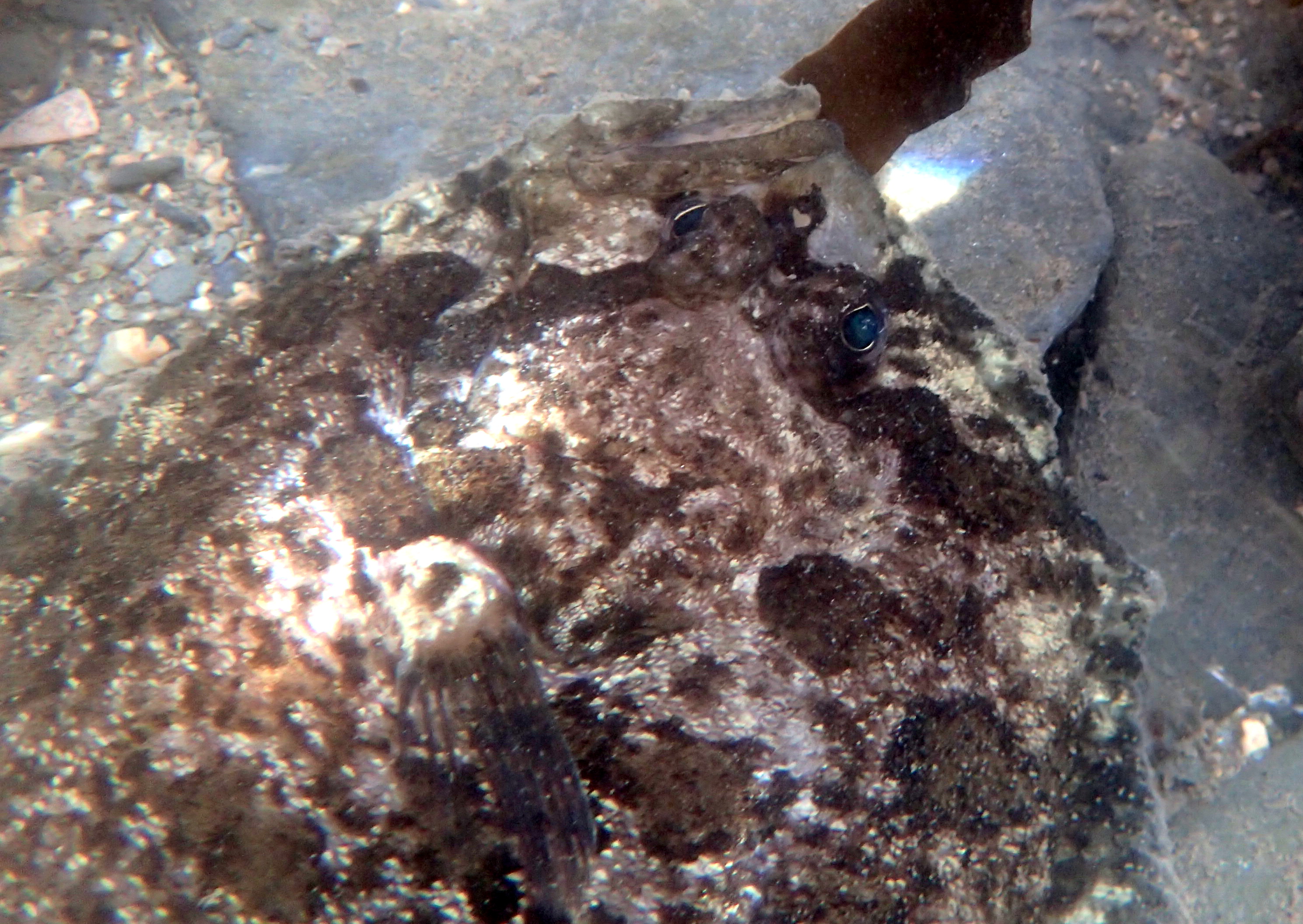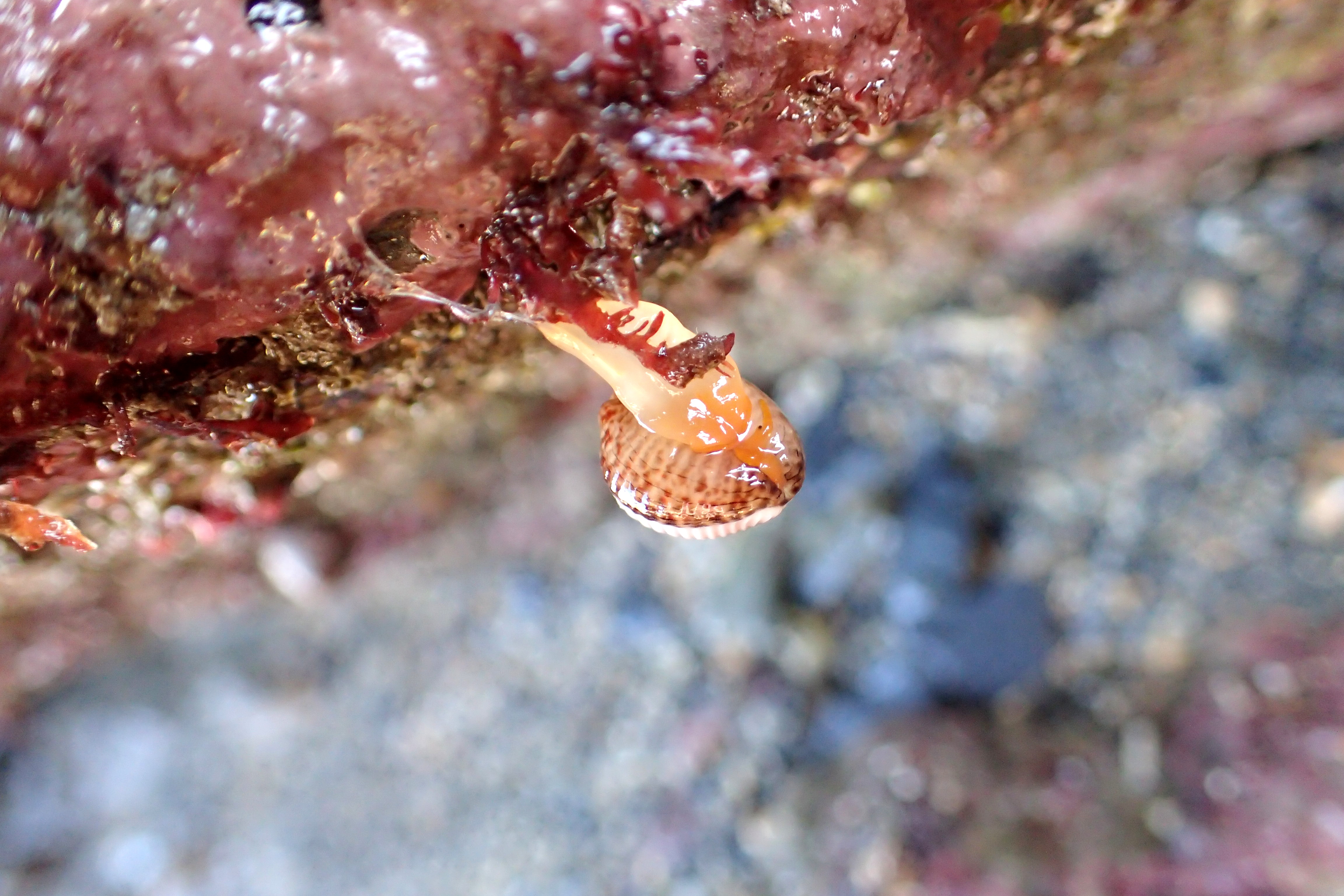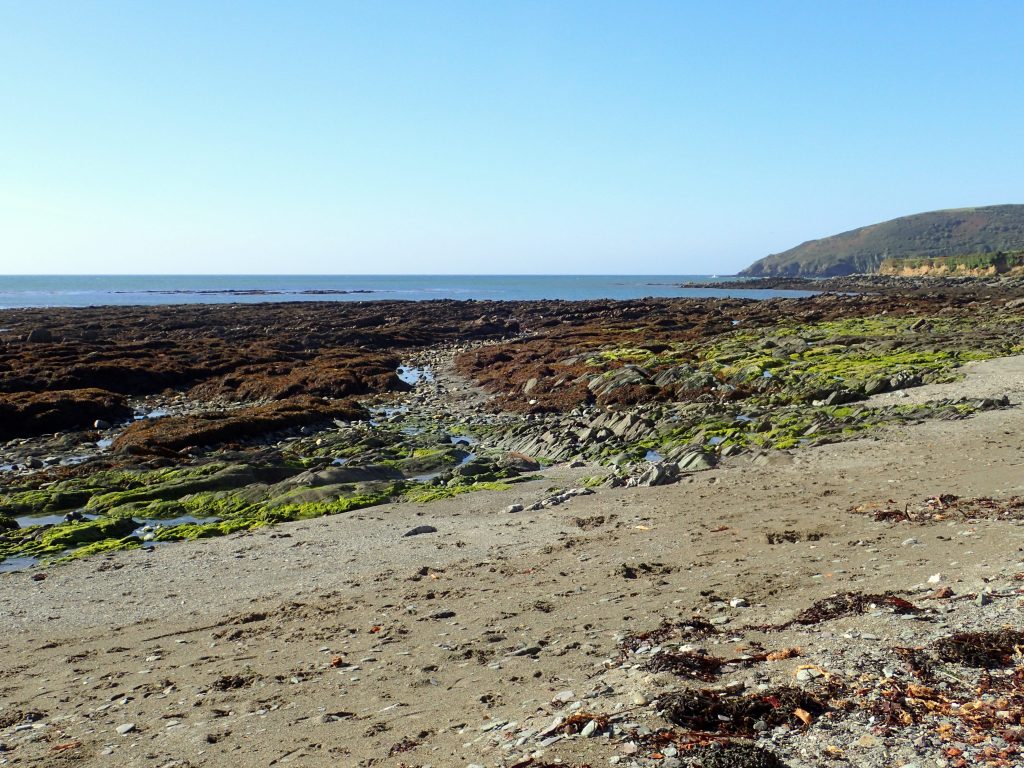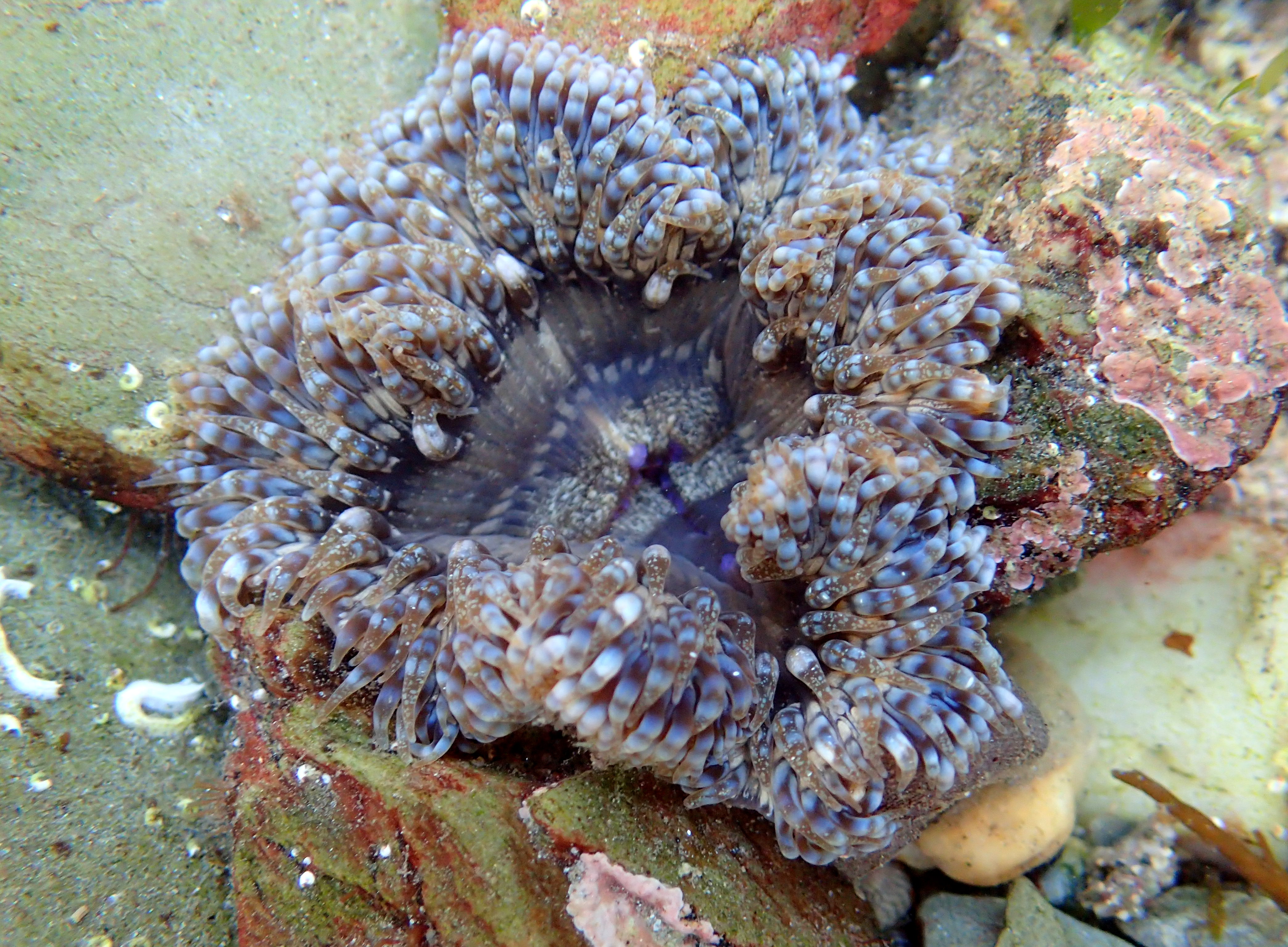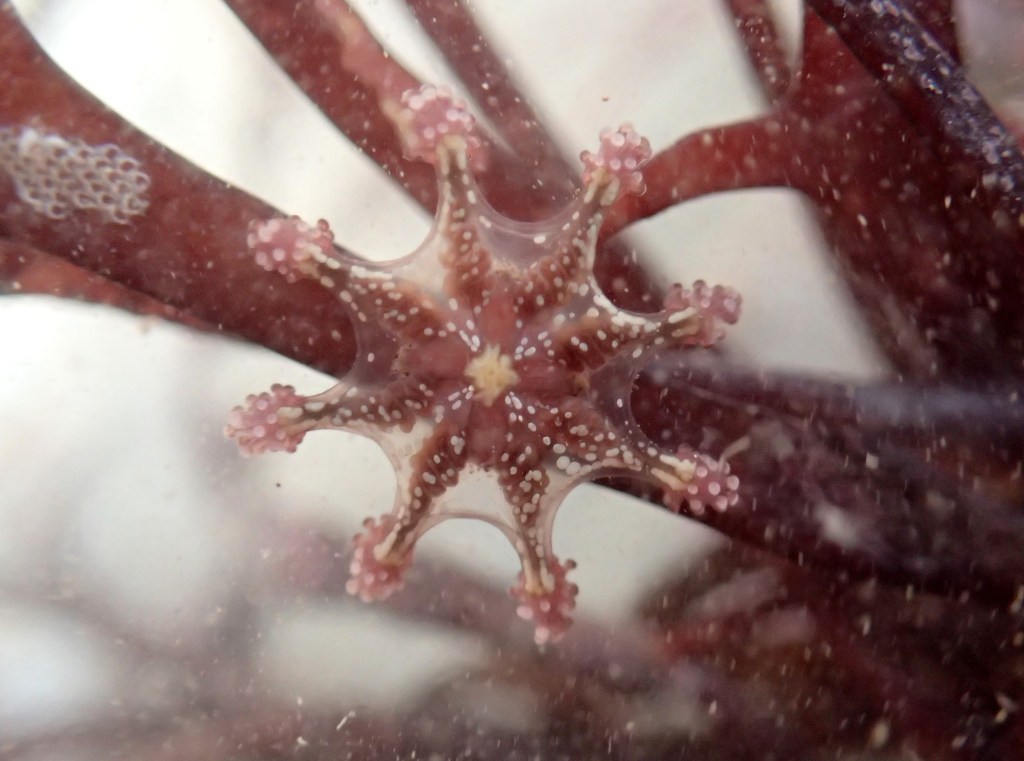
This week the spring tides are huge, which means perfect rockpooling conditions all around Cornwall. Yesterday’s ‘storm without a name’ passed just in time and today the sun shone, so I dusted off my waders and followed the tide out to see what it would reveal. Answer: lobsters, baby sharks and a whole lot more.
I was hoping to re-discover an overhang packed with jewel anemones at the far end of the beach that I’d come across once before, but couldn’t resist taking a look at the wildlife on the way. You know it’s going to be a good day when the first stone you lift is unexpectedly awesome. This one was hiding a troop of hermit crabs, a rock goby and a beautifully camouflaged scorpion fish.(more…)
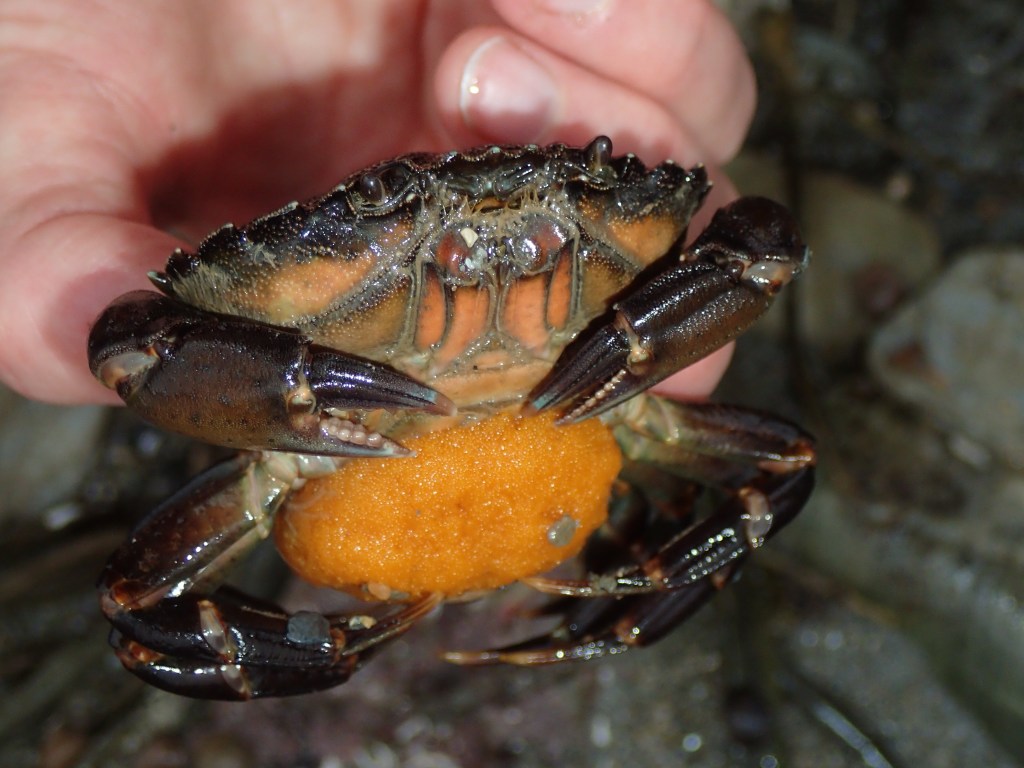
It may seem too early in the year for rock pooling, but this is an exciting time of year on the shore. Spring has arrived in the Cornish rock pools and the huge clutch of eggs under the tail of a female green shore crab proves it.
Eggs come in all sorts of forms in the rock pools. Why not get out for your own ‘egg hunt’ on the shore this Easter?
Here’s my quick guide to some of the common types of egg you might see.(more…)
I did my first Facebook challenge this week: #challengeonnaturephotography. One nature photo a day for a week.
I normally operate a ‘just say no/ pretend I haven’t seen it’ policy when it comes to nominations for social media challenges, but this one caught my eye. It was hard to know what to choose, but, of course, I majored on photos of the Cornish rock pools.
Given how much I squirm when I’m nominated for anything, I haven’t tagged anyone to carry on the challenge. But, if you’d like to share photos of wild things and places you love with your friends, please do take it up.
Cornish rock pools junior says David Cameron is his arch-enemy. He says David Cameron doesn’t like nature and he just can’t understand it. Attributing everything to one person may not be right, but I can see where he’s coming from.
Like most kids his age, Cornish rock pools junior loves nothing better than running wild in the woods and clambering between rock pools. He’s a den-building, dam-making, butterfly-chasing, wave-splashing kind of child – is there any other kind? You could argue that his fierce love of nature is down to my influence, but I don’t think that’s the whole story. He’s very sure of his own mind.
In the last few years in our small coastal town we’ve lost our community bus, seen library opening hours slashed and lost access to some of the few public green spaces. Right now, diggers are tearing up the playground and park at the end of our road in order to build houses. Another application is being discussed to build on one of the two remaining public green spaces.(more…)
The sun is shining and, for the first time in months, I can feel the warmth on my face. With calm seas, the tide has run out even further than I hoped, rockpooling conditions here in Looe are near-perfect. There are ominous clouds looming over the hills behind me, but I choose not to look at them.
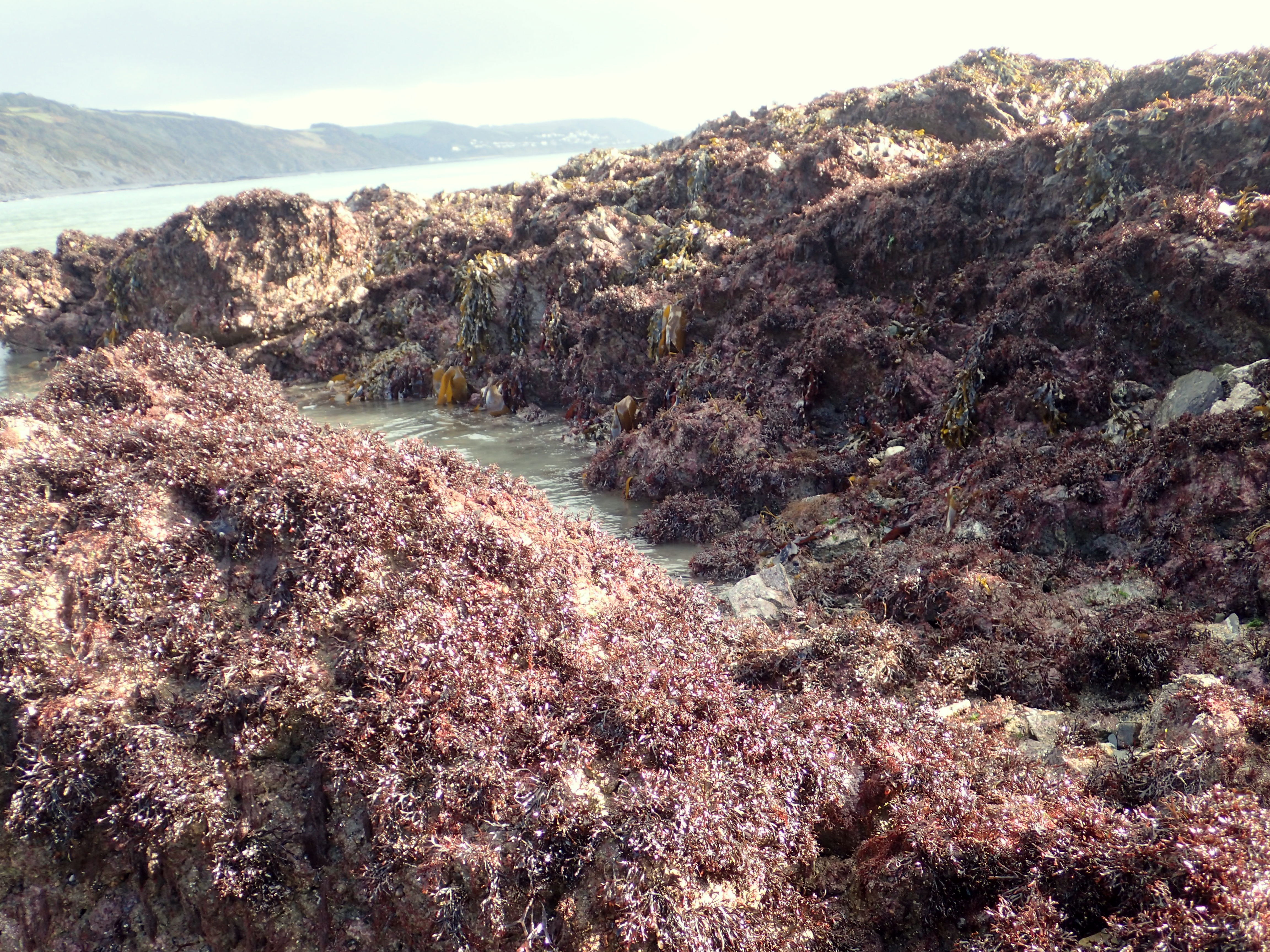
Perfect – this sheltered gully has weathered the storms.
After the fierce storms, I half expect to find the rockpools empty, scoured of life, but I couldn’t be more wrong. I explore an area of my local shore in Looe that I don’t often visit and within minutes I have found my new favourite rockpooling spot, a gully that’s visibly wriggling with life. (more…)
Rockpooling in stormy winter weather can be a risky business here in Cornwall, so my advice is … don’t. At best you get blown over on the slippery rocks and soaked by rain that seems to come in horizontally and go right up your nose. At worst you could end up in the path of the fierce waves and currents. It’s not worth it.
When there’s a calm moment and a good tide (I’m hoping tomorrow will be such a day), there’s plenty to see in the rockpools. Between times, stick to the strandline, where the sea throws up all sorts of treasures and unexpected visitors.
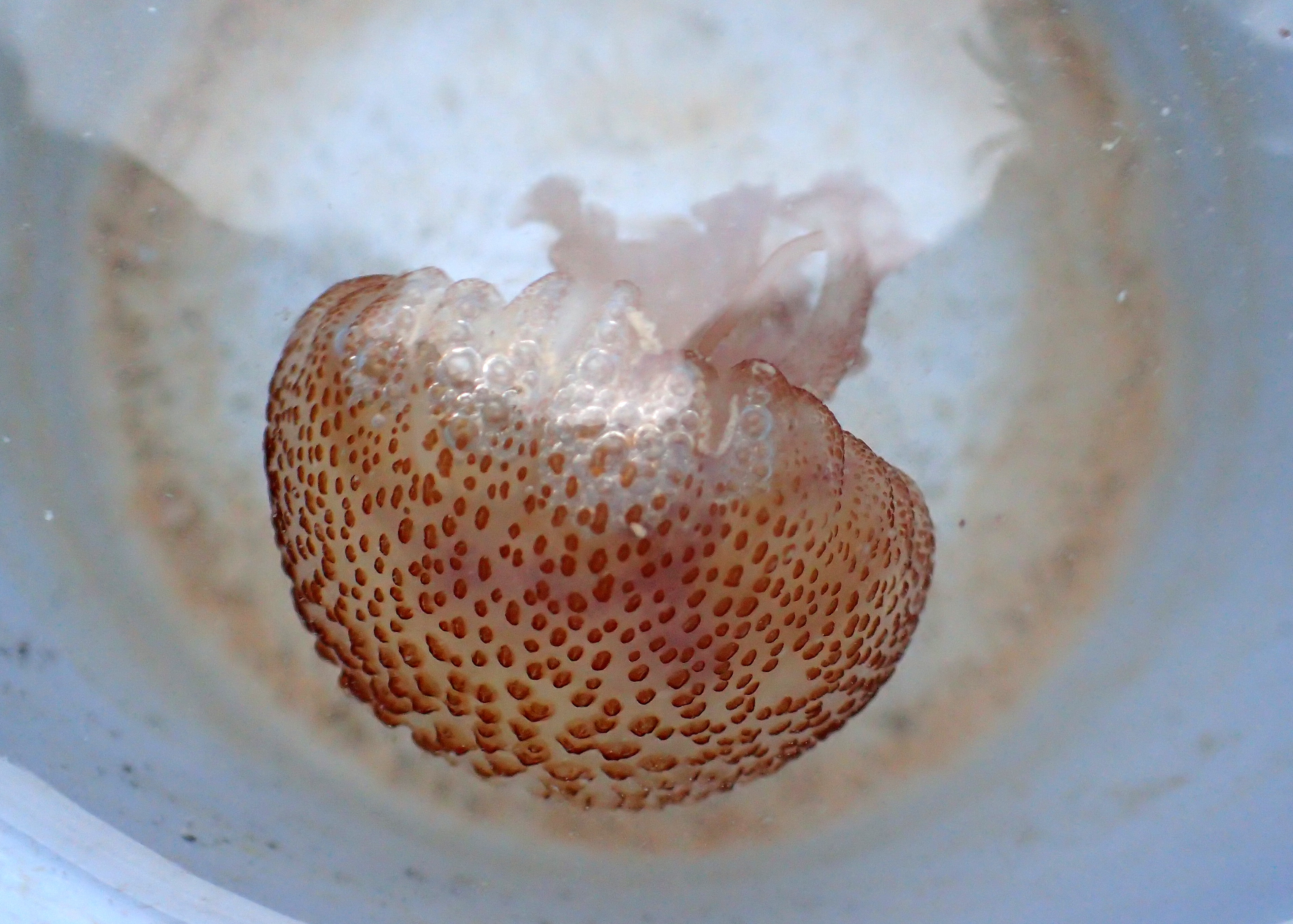
Mauve stinger jellyfish (Pelagia noctiluca) at Mawgan Porth
One of my favourites this year was the swarm of mauve stinger jellyfish (Pelagia noctiluca). They look small and inoffensive, measuring up to 10cm across their bell. The spotted pattern that gives them their name is distinctive and rather pretty. They can also glow in the dark – noctiluca means night light. (more…)
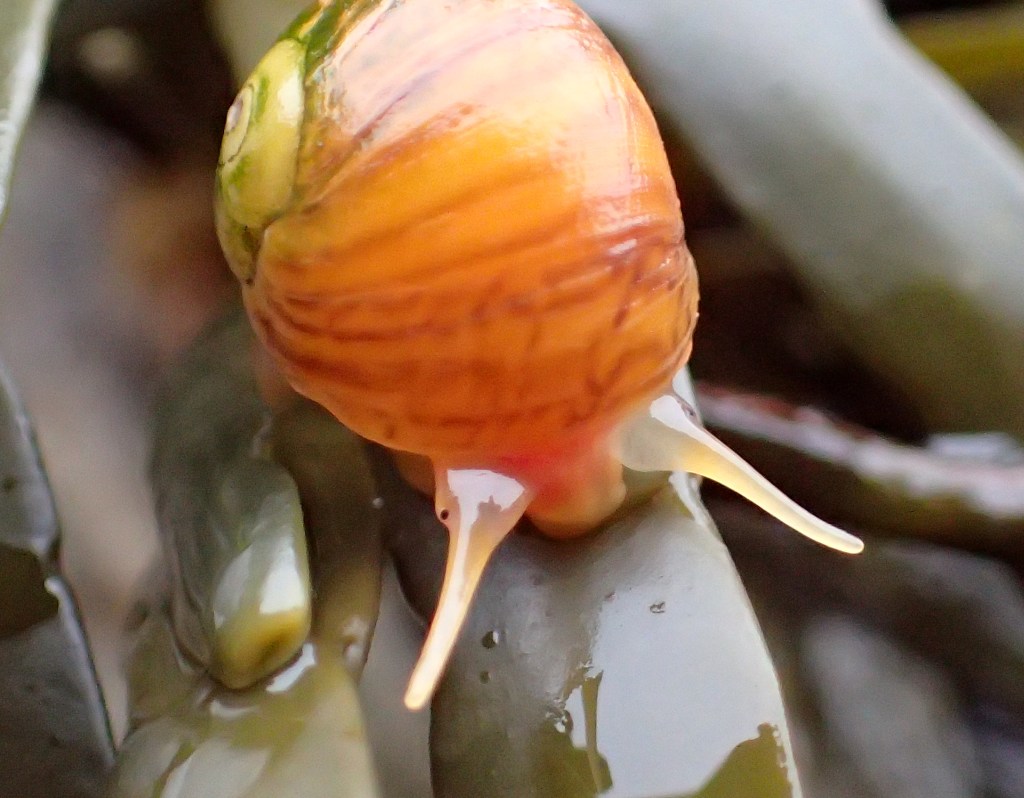
If you’ve ever collected shells on the shore, you’ve probably homed in on the bright yellow, orange, white and even chequerboard colours of the flat periwinkle. Their shells look like a miniature version of the garden snail, but smaller, tougher and much, much brighter.
A flat periwinkle on the mid-shore seaweed
This time of year, when the seas are rough and the lower shore is hard to reach, I love to search among the seaweeds of the mid and upper shore. The flat periwinkles’ vivid colours shine out like jewels among the tangle of brown seaweeds.
On a damp day at my local beach, it doesn’t take me long to find dozens of them. They’re in no danger of drying out today so they’re busy grazing, tentacles waving from side to side, black eyes on the lookout for crabs and other predators.
An orange-banded flat periwinkle on the move – showing its eye and tentacles.
Close-up they’re endearing little things, a herd of gentle grazers feeling their way through the swathes of seaweed. In this video you can see how they search out food with their tentacles. Watch them reaching out their proboscis mouth, pink radula pulsing as they rasp away at the seaweed.
In a patch of seaweed around five metres square, I find a huge variety of colours. These variations probably offer some protection from predators, as does the covering of microalgae on many flat periwinkles, which gives them a green colour.
Some flat periwinkles are white or cream coloured
Whatever the reasons for their varied colours, they make the flat periwinkle one of the most striking shells on the shore. (Note: If you collect shells, please always remember to check they’re empty before you take them home.)
Some flat periwinkles are black or brown. The variety probably provides protection from predators.
It’s so easy to get close to these animals and watch them in action. Look out for them next time you’re at the beach.
About flat periwinkles…
There are two species of flat periwinkle, Littorina obtusata and Littorina mariae. In theory L. mariae has a flatter profile and is the smaller of the two with a thicker shell, but on the shore they vary and mix so it is hard to distinguish between the two species.
Generally, you find Littorina obtusata on the mid-upper shore, especially on egg wrack and Littorina mariae on the lower shore, especially on serrated wrack. The main difference is that L. obtusata tucks into the seaweeds it lives on, whereas L. mariae likes to graze on organisms that live on the its preferred seaweeds. Each one prefers to live on the seaweeds mainly found on its own zone of the shore.
The animals in these pictures are almost certainly Littorina obtusata given their location and diet. However, as far as I know the only way to be certain is to examine the animal’s penis – not something I intend to do. The Field Studies Council have a great paper on the habits and identification of the two flat periwinkle species (including penis shapes) here: http://fsj.field-studies-council.org/media/342551/vol7.3_202.pdf. Take a look if you’d like to know more.
A tiny yellow flat periwinkle grazing among the Cornish rock pools.
There’s a chill in the air and the pools are strewn with orange and yellow oak leaves, blown in from the nearby woods, yet there’s a crowd on the beach for the Looe Marine Conservation Group’s half-term rockpool ramble. It’s nearly Halloween and there’s no better way than this to get close to other-worldly creatures with some revolting habits.
We arrive late and everyone’s already gathered around the shore lab trays, sharing their discoveries. I’m called on straight away to identify a lugworm, its dark slimy body is oozing into a corner of the tray. You’d only have to blow it up to human size to have a classic horror movie monster.
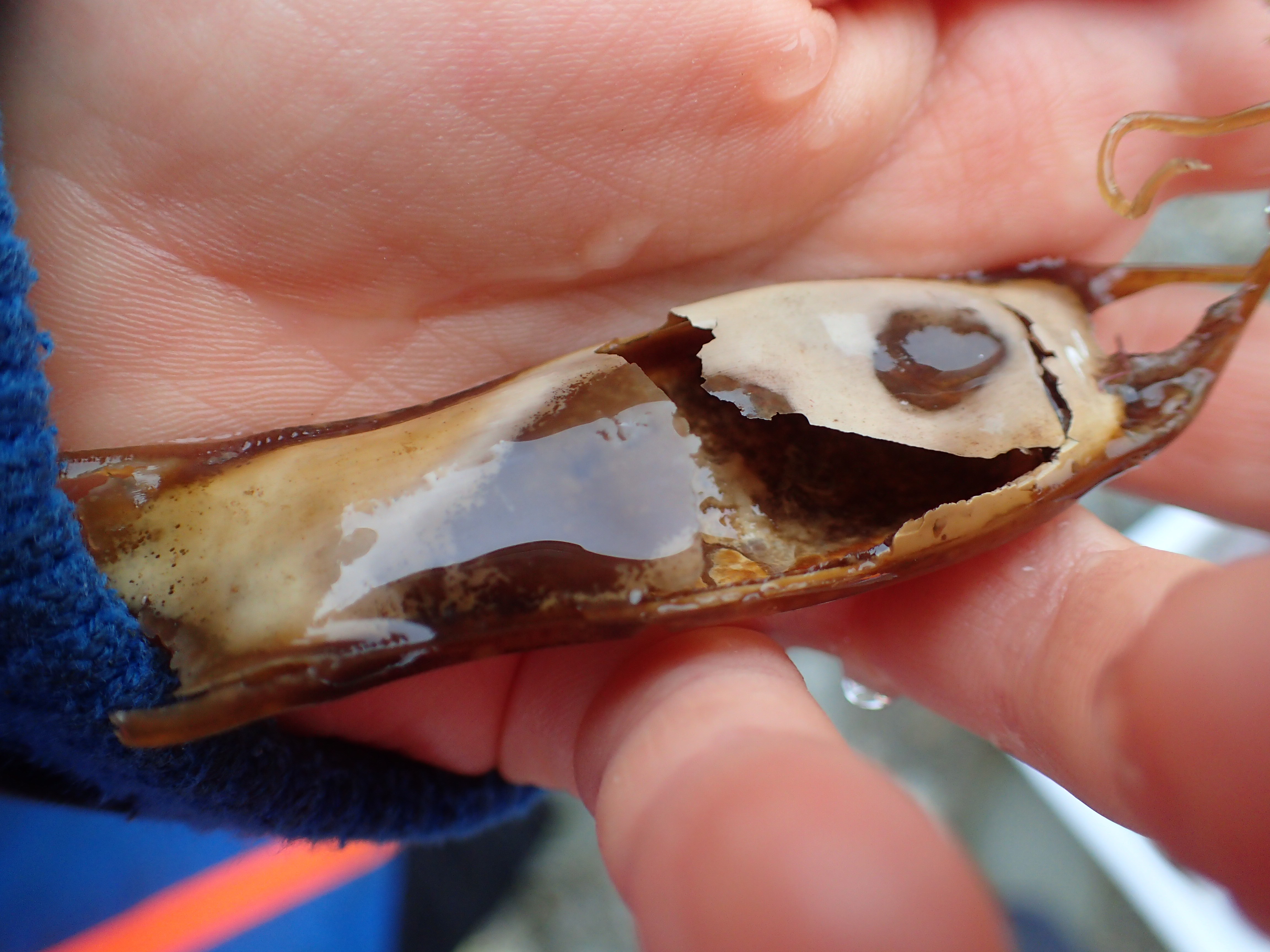
Next up is an empty egg case and several keen kids at the front shoot their hands up and jump eagerly. “It’s a shark!” they call out. Lots of guesses follow about what species of man-eater might be lurking in the shallows. This case is actually from a lesser-spotted catshark, also known as a dogfish, which has some impressive teeth and grows to around 75cm, but is shy and harmless.
Egg case of a lesser-spotted catshark (dogfish) – Scyliorhinius canicula
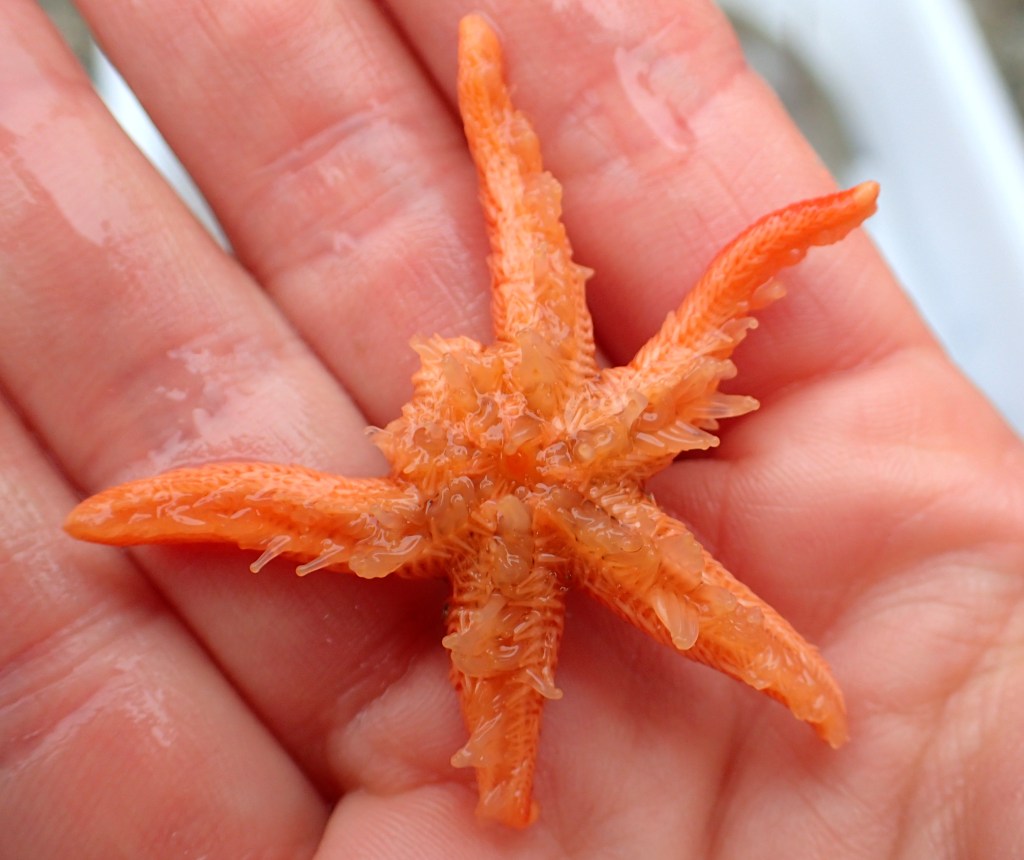
The rock poolers have gathered an impressive haul of starfish. There are cushion stars, a common starfish, brittle stars and a spiny starfish so large it occupies most of the tray on its own. We look closely and a stunning little starfish with a pumpkin-orange back. At first glance it appears to have five arms like the others, but on closer inspection we see two stumps.(more…)
Autumn is a time of great change in the Cornish rock pools, but on the surface this could be mid-summer. The water is warm, the sun is blazing and an immense low tide is beckoning. I accompany a group of under-fives and their parents as they set out to investigate.
On land, the yellow tinge of autumn is only just creeping across the woods, but in the rock pools, the seaweeds have already died back. The invasive Japanese wireweed (Sargassum muticum) that clogs the pools all summer with long tresses like knotted hair all summer has thinned away, making it easier to see into the water.
A daisy anemone in clear water
There are many species that visit the shore in spring and summer to breed and some of these are long gone, but there’s still plenty to see. I was surprised to find a worm pipefish (Nerophys lumbriciformis) with eggs this late in the year. The pipefish are closely related to the seahorses, so it is the male that carries the eggs in a special groove on his belly. (more…)
Here’s something I’ve never seen before. While I was rockpooling, I lifted a stone and found this little variegated scallop, which is a smaller cousin of the scallops people eat. As I watched it began to open and I guessed it might take a little swim so I took this short video.
All scallops can swim but they don’t do it very often because it takes a lot of energy. I think this one was thought I might be a predator and wanted to swim back to the safety of a rock. It was surprisingly speedy.
Filmed at Hannafore Beach, West Looe, Cornwall on 31 August 2015 during a very low spring tide.
Privacy & Cookies: This site uses cookies. By continuing to use this website, you agree to their use. To find out more, including how to control cookies, see here: Privacy and Cookies Policy.