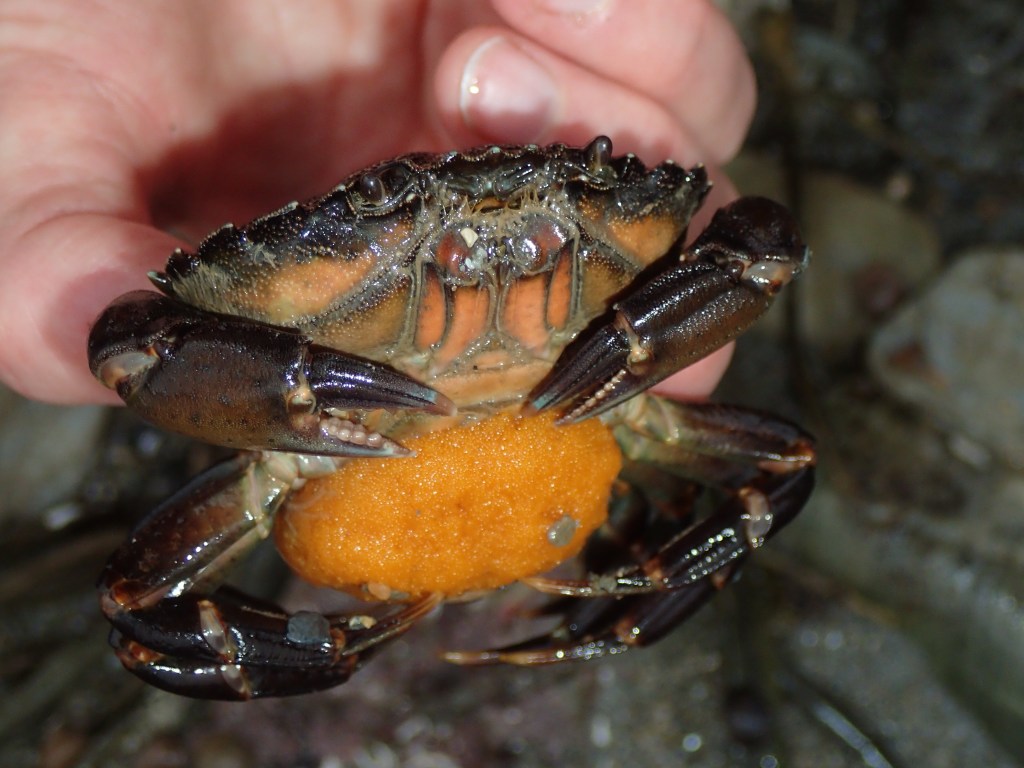
It may seem too early in the year for rock pooling, but this is an exciting time of year on the shore. Spring has arrived in the Cornish rock pools and the huge clutch of eggs under the tail of a female green shore crab proves it.
Eggs come in all sorts of forms in the rock pools. Why not get out for your own ‘egg hunt’ on the shore this Easter?
Here’s my quick guide to some of the common types of egg you might see.
Dog whelk
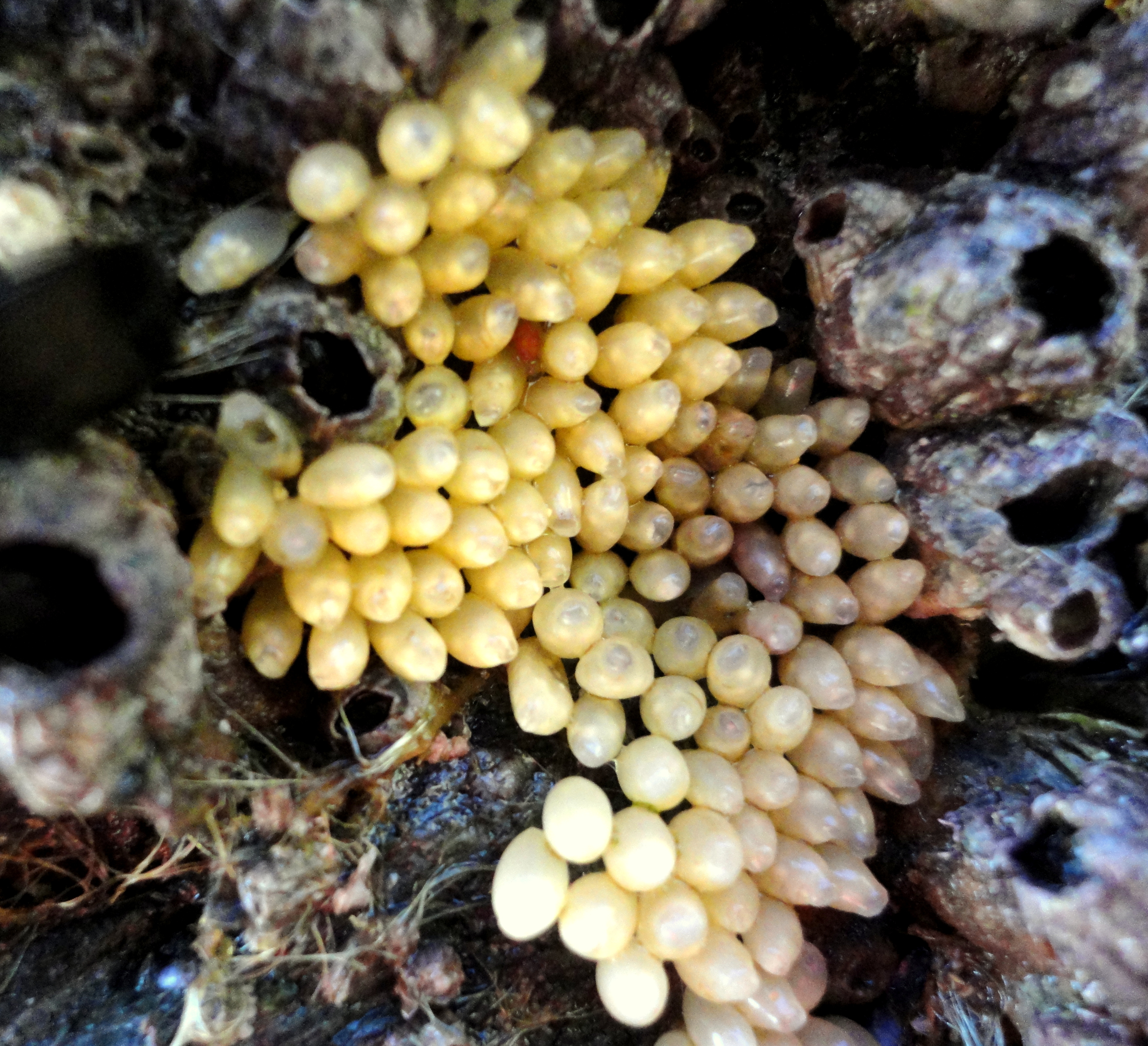
I’m often asked to identify these eggs. The distinctive yellow or pink-tinged capsules of the dog whelk are common on mid-low shore rocks, often in crevices and overhangs in the rock.
Netted dog whelk
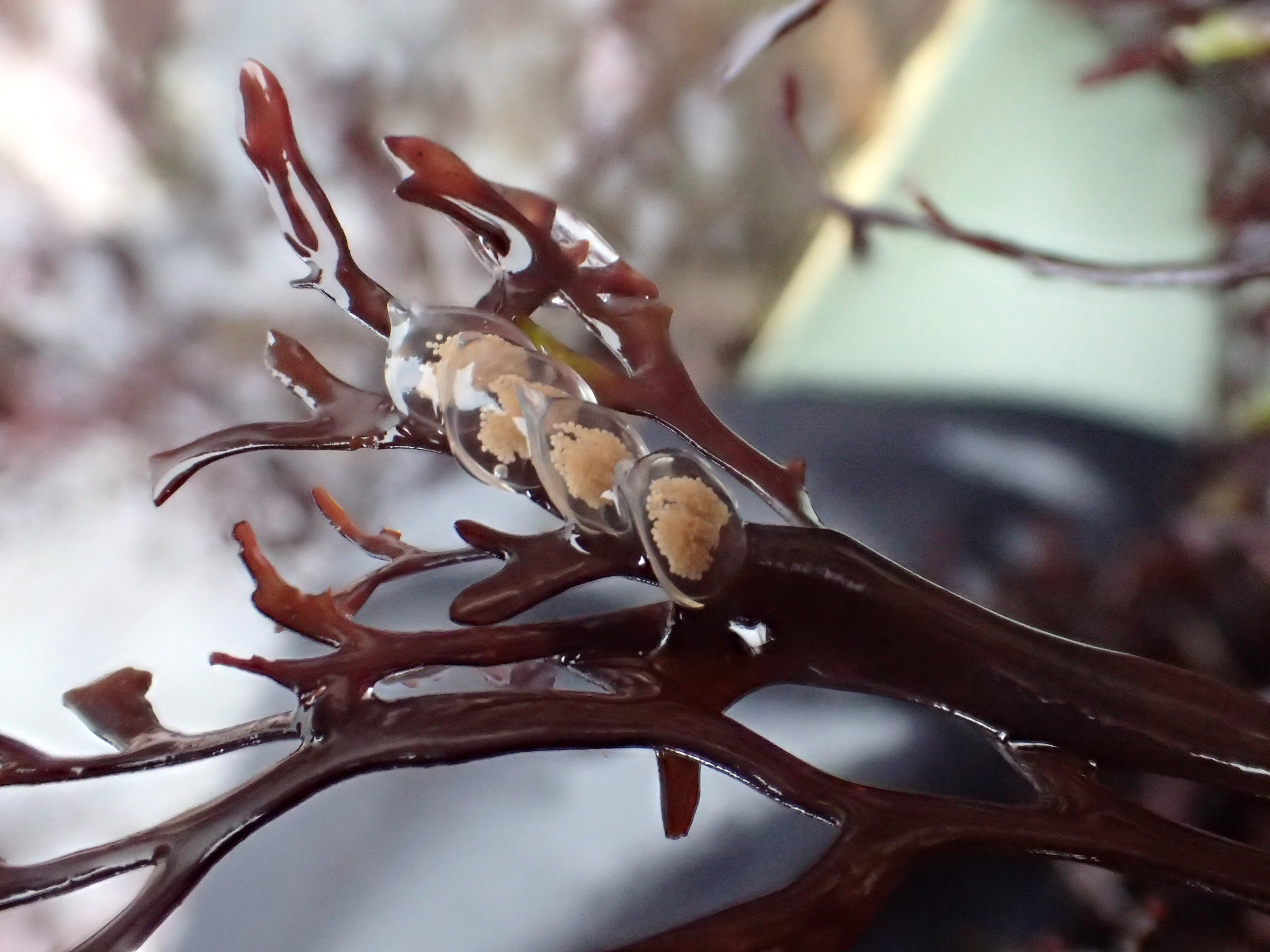
These eggs are unmistakable. Look for these strings of transparent discs with eggs inside attached to seaweed in mid-lower shore pools.
Crabs
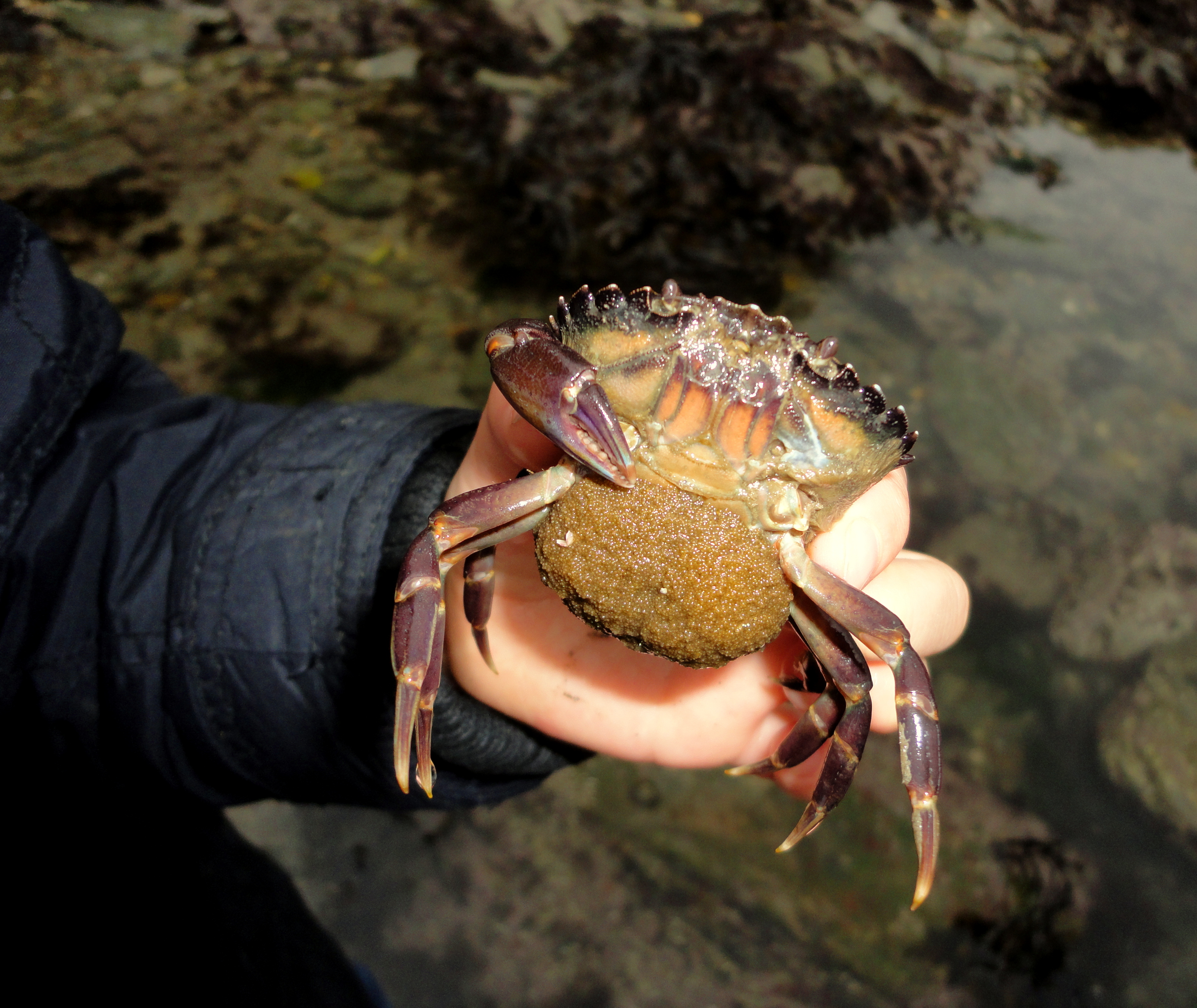
Female crabs carry their clutches of eggs under their wide tails. They look like a big spongy mass, but on close inspection you can see the individual eggs. In the summer, some crabs become infected with a parasitic barnacle, which can sometimes be mistaken for eggs.
Fish Eggs
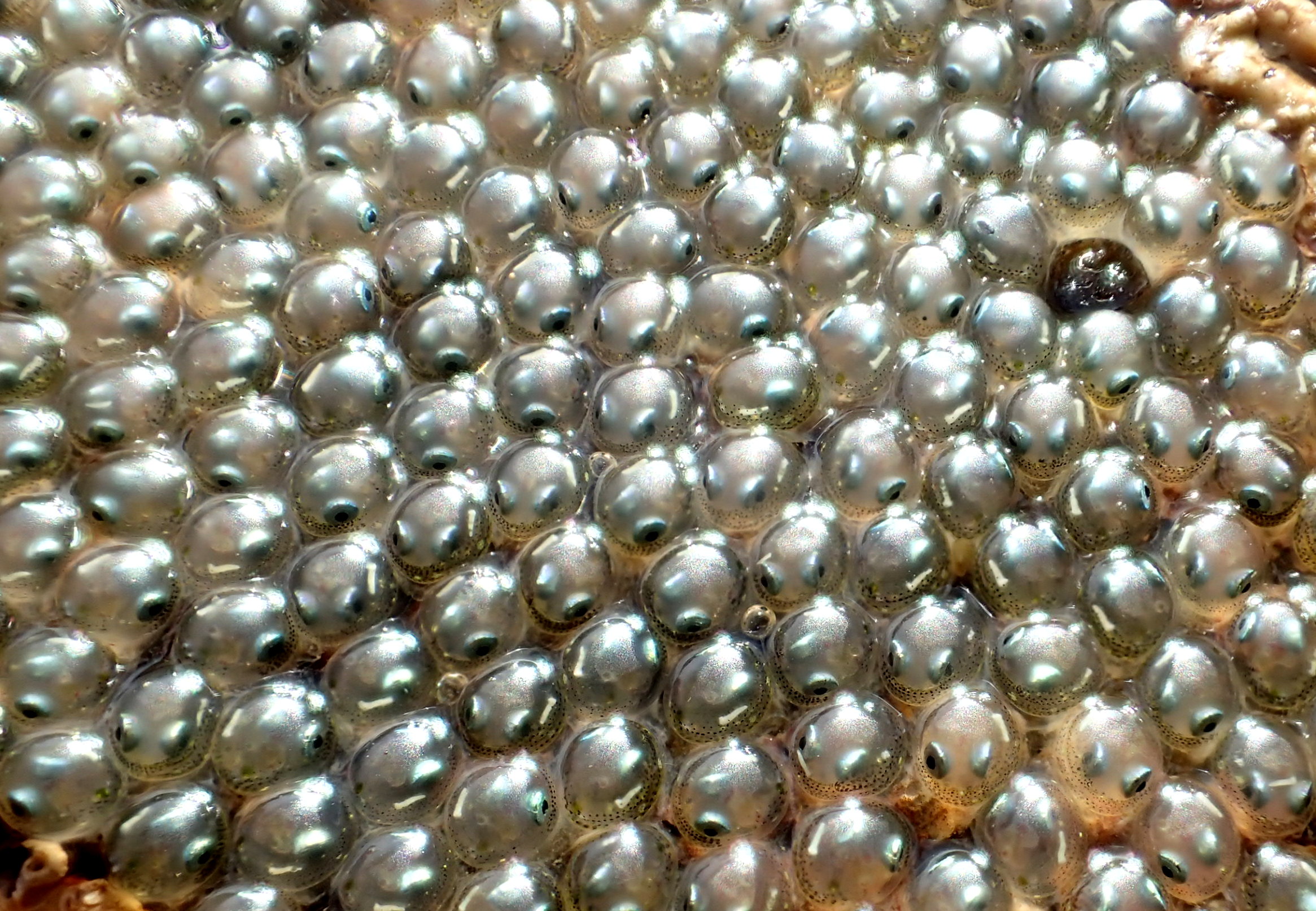
Many species of fish come into the shore to lay their eggs. The males of several species, such as the blennies, stick around to guard the eggs until they hatch. Clingfish and gobies often lay their eggs on the underside of rocks.
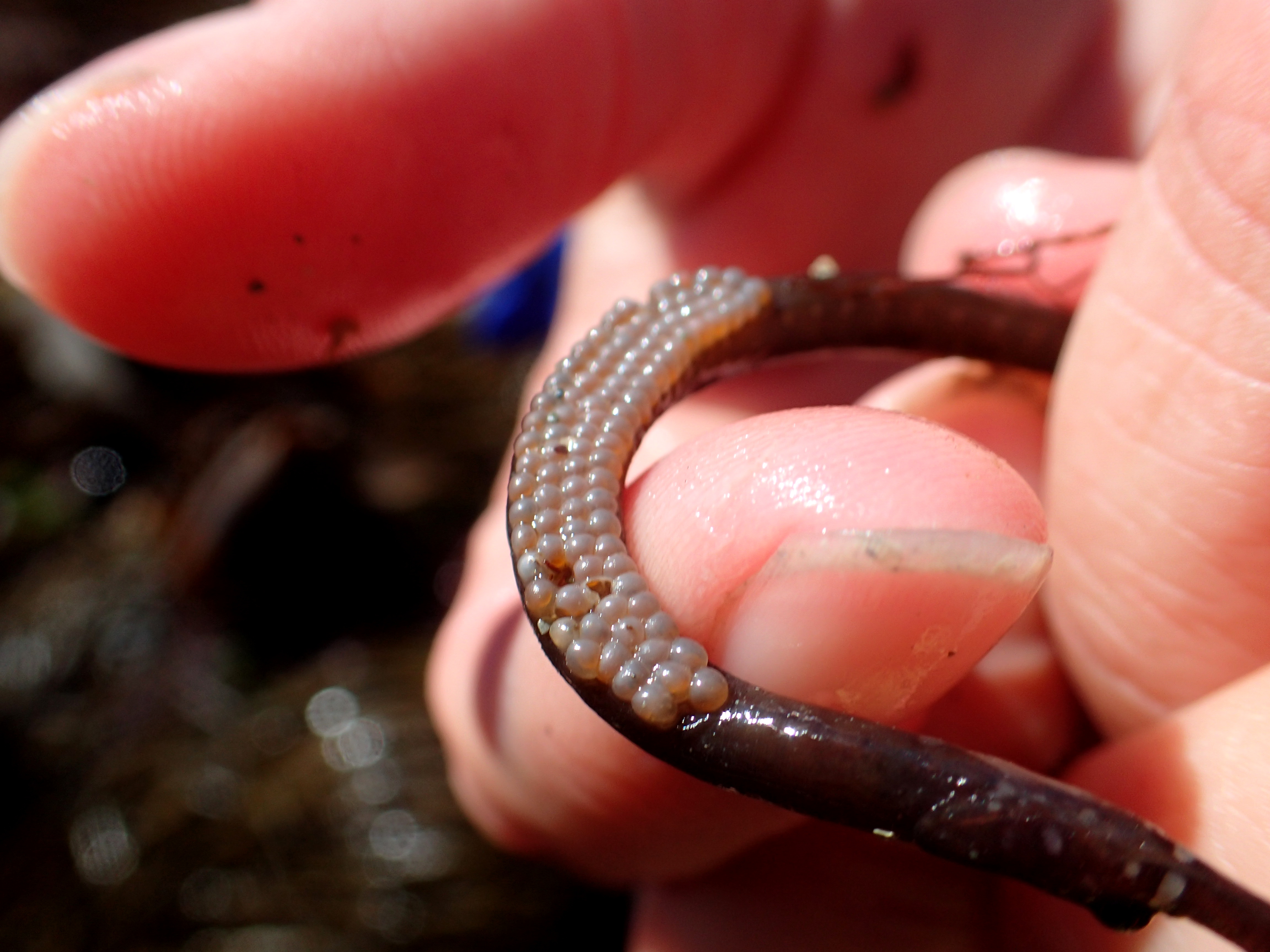
The male worm pipefish (relatives of the seahorse) carries eggs on a special slit on his belly.
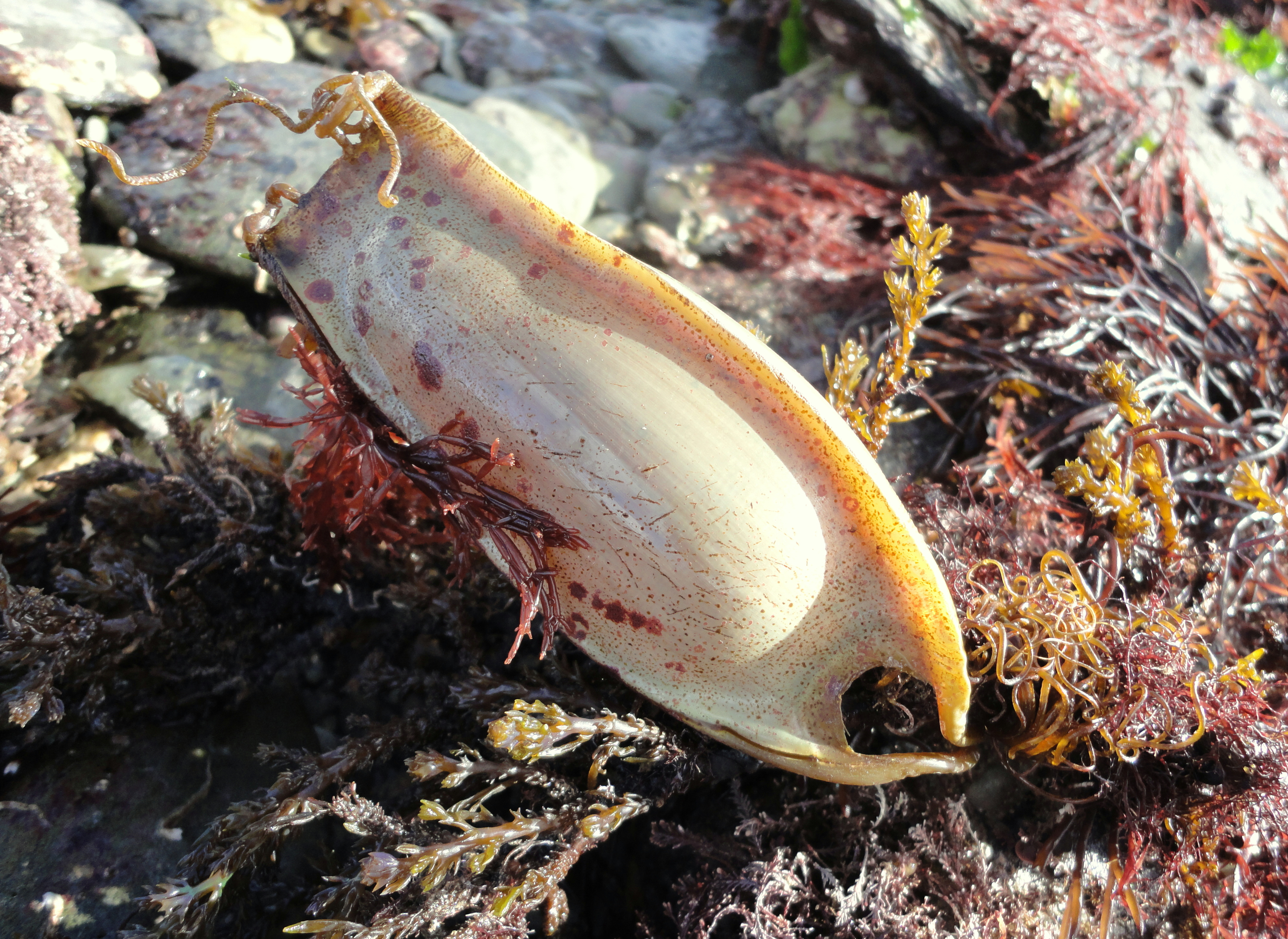
On the lowest tides look out for the ‘mermaid’s purses’ – the egg cases of the lesser spotted and greater spotted cat shark – among kelp and seaweed on the lower shore.
Sea slug spawn
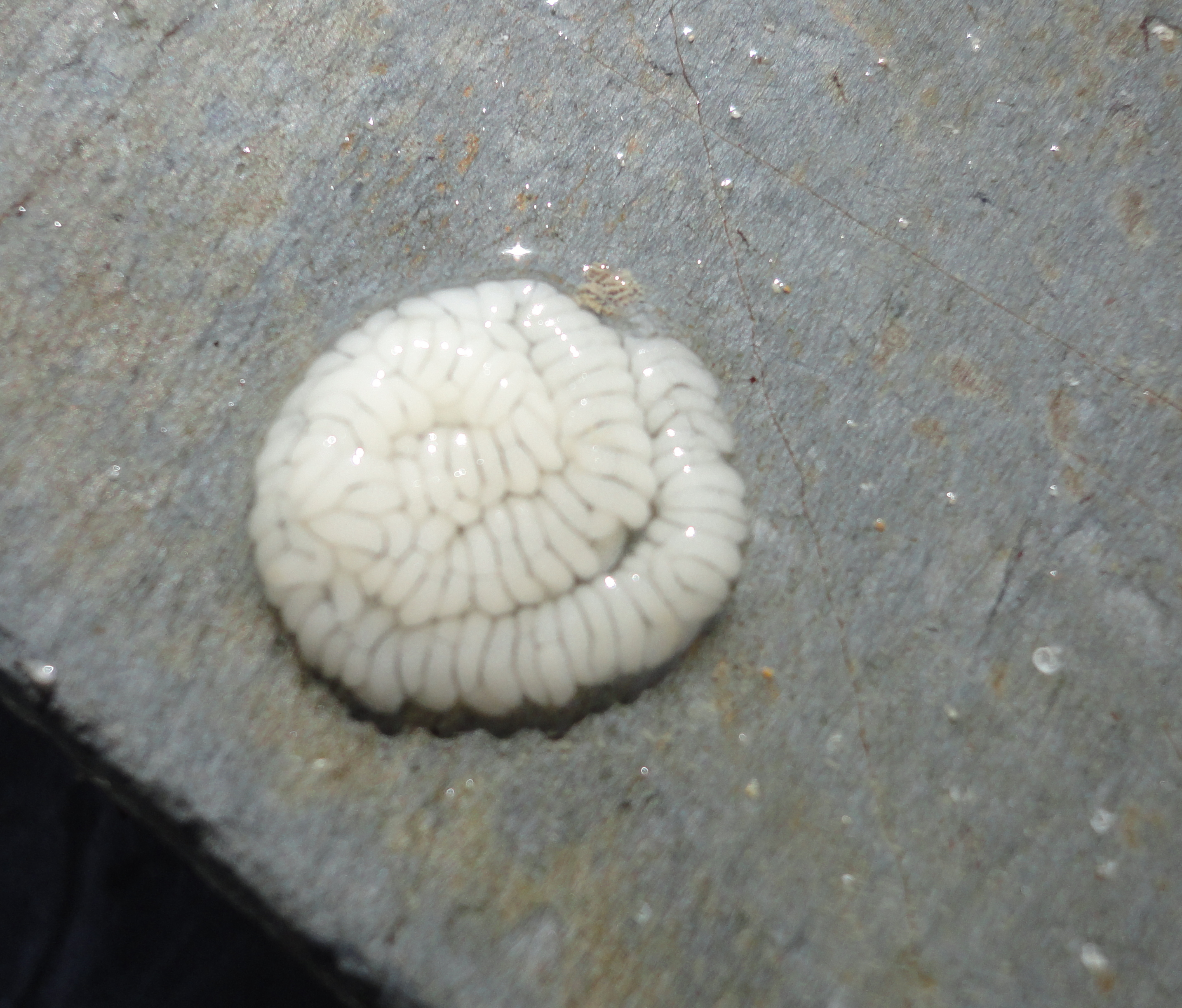
Many sea slugs lay coils of eggs, often found under rocks.
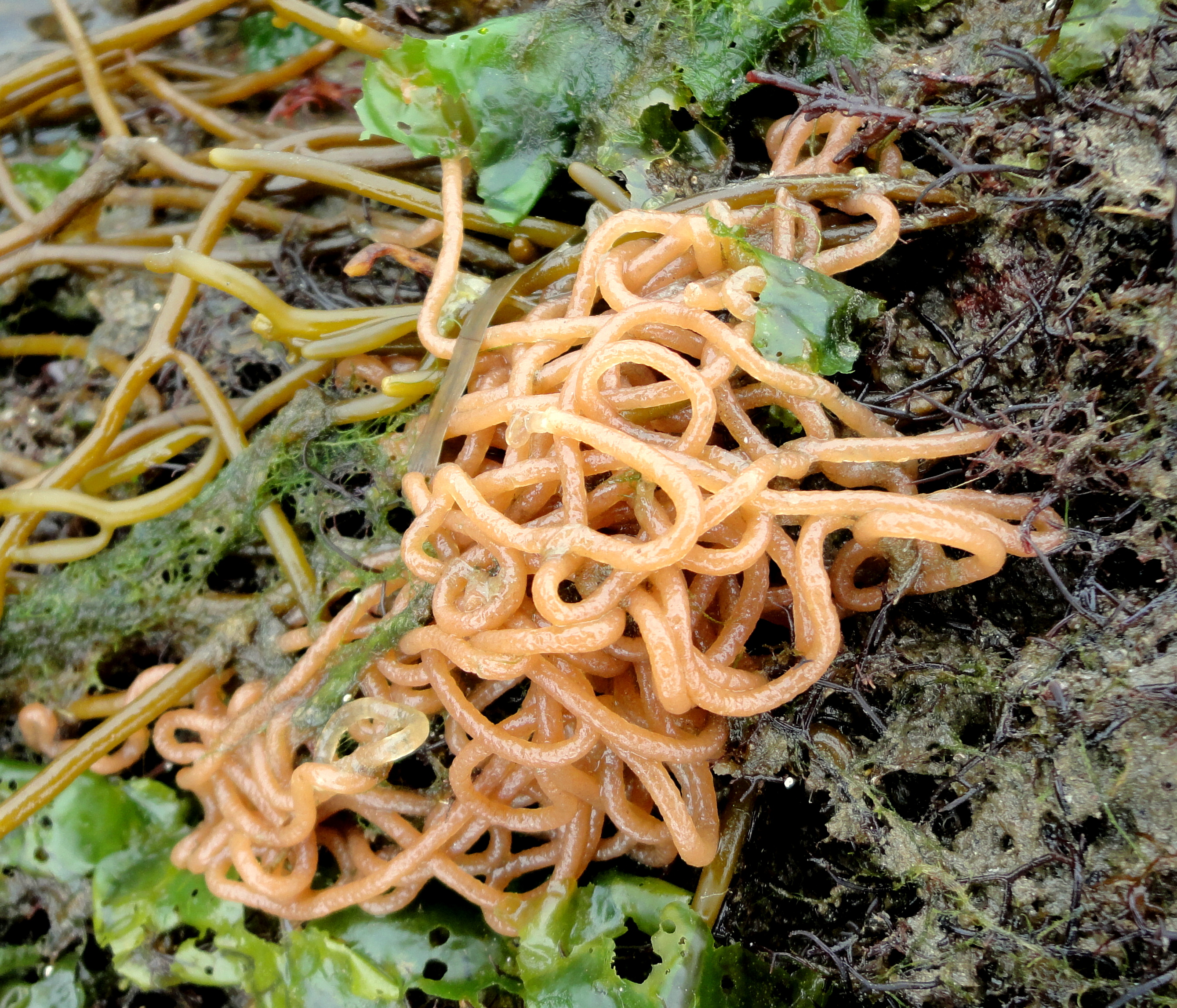
Sea hares lay strings of pink or yellow eggs, which are hard to the touch and look like silly-string.
Snot-worm Eggs
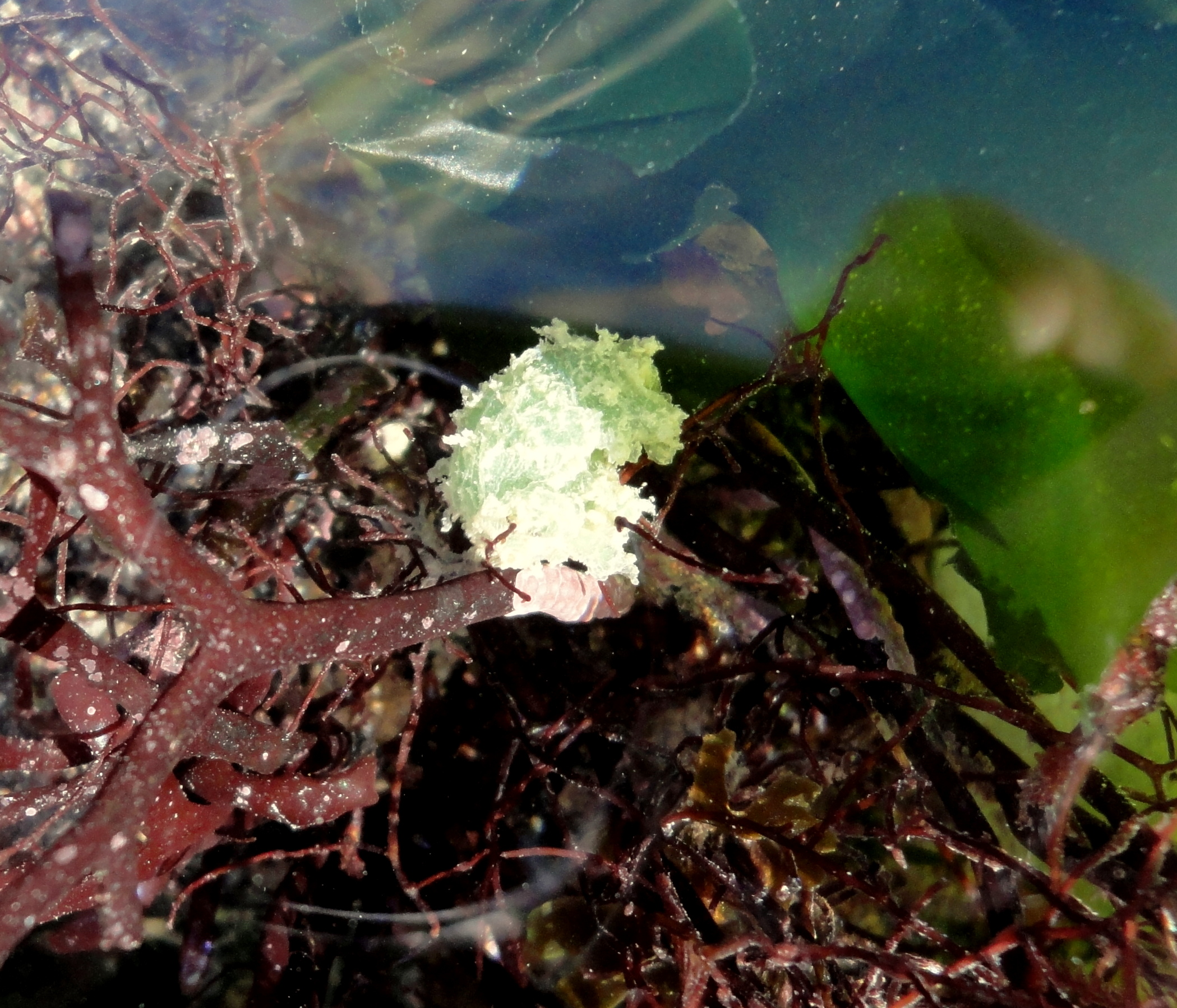
Look out for green blobs that look like balls of snot. These are the eggs of the Green leaf worm and family.
Happy egg hunting! Let me know what you find.


Leave a Reply