
The tide has turned and I am reluctantly preparing to leave one of best rock pooling beaches in Cornwall after a fabulous few hours in perfect conditions in the company of great friends. As you’d expect, the day has been full of interesting finds, from sponge-covered spider crabs to golden clutches of clingfish eggs. My camera batteries are running low and my hair is dripping with seawater from all the time I’ve spent poking my head under seaweed-festooned overhangs. The kids migrated up the beach a while back to investigate the picnic bag but us adults can’t bear to leave the pools. As the water creeps up my wellies, I gently turn one last rock, and then another for luck.
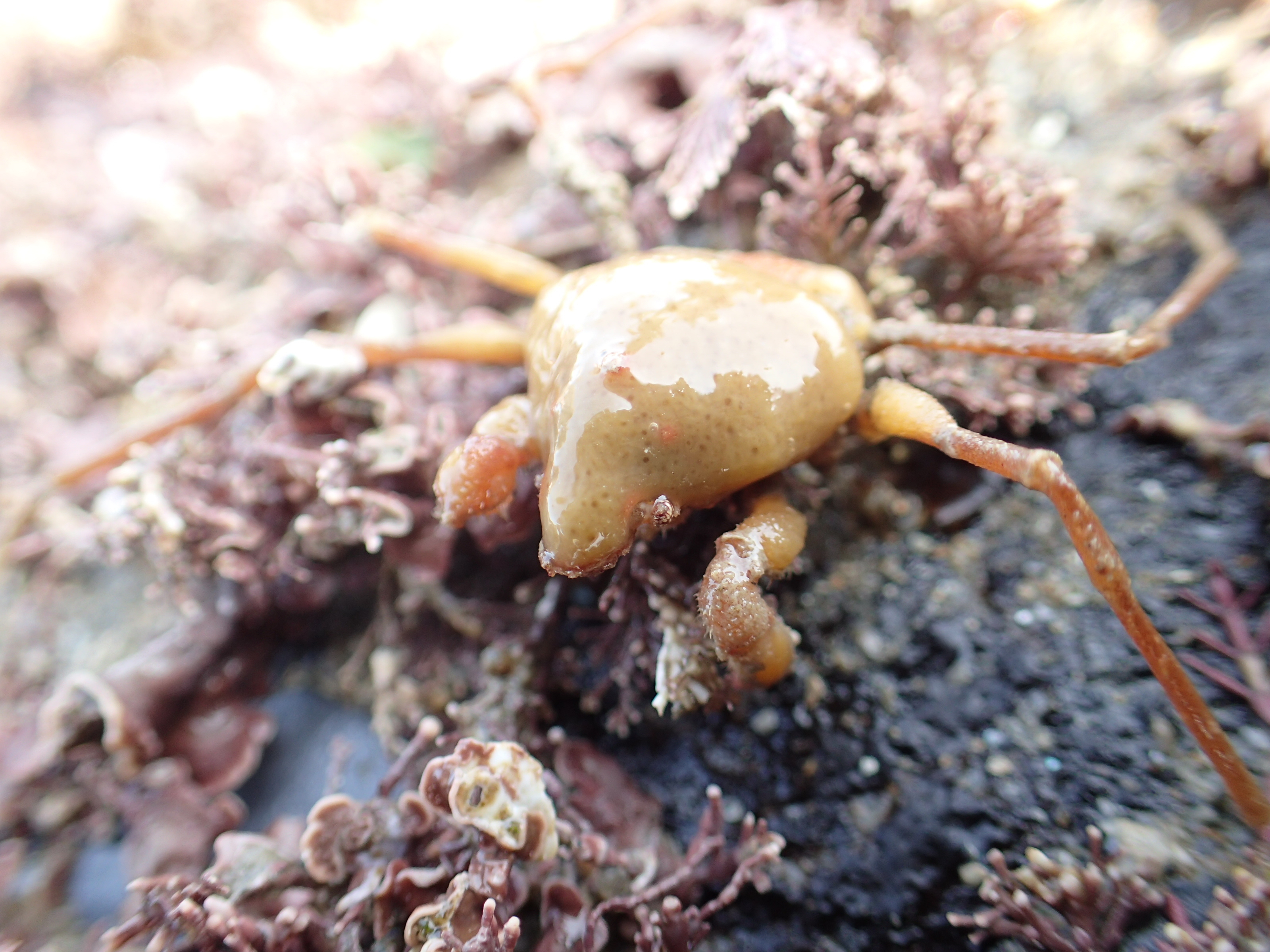
I let out gasp so loud that it would make most people think I’d just broken a bone, but my friend knows better. She moves closer to ask what I’ve discovered, but I’m so overwhelmed with excitement that I can only babble about having, “finally found one”.
I point a trembling finger at the rock. “It’s a Disco…a Discodoris planata,” I stutter, before launching into a garbled explanation of how it used to be a Discodoris has been renamed Geitodoris, but I use Discodoris because I love that name and…
I take a few photos of the cause of my breathless wonder, straighten up and fling my arms over my head and shout at the top of my lungs to attract the children’s attention. It takes me a minute to realise that the distant child I have in my sights is not mine, but Junior has noticed my flailing and comes scrambling across the rocks with his friends.
We crowd in the fast-filling pool and peer down at my rock. Even Junior is a bit confused by my excitement over the small, brown lump I’m indicating.

“It’s Discodoris,” I explain, breathlessly. Instantly, he joins my paroxysms of delight, shrieking out the great news to his friends and going through the same Geitodoris speech as me, for this unassuming slug has become something of a legend in our household.
This isn’t the first time I’ve ever seen one, but it’s the first time I’ve had a working camera with me and it’s the first “Discodoris” that Junior has seen. He is especially impressed with the white star patches on the slug’s back. These are glands which secrete a powerful acid, ideal for seeing off predators.

On close inspection, there’s a pale-yellow blob alongside our “Discodoris” (Geitodoris planata): another slug. At first, I assume from its colour that it must be a Jorunna tomentosa, a slug I often see on this shore. Indeed, there is another Jorunna tomentosa on the same rock. However, this one seems to be getting very cosy with Discodoris. In fact, it looks to me as though they are mating. The yellow slug also has a far flatter profile than any Jorunna tomentosa I’ve seen before.

If the tide wasn’t coming in, and if I wasn’t called away by someone further up the beach finding a giant goby, I might have been able to check the slug’s underside. If I’d done that I could have seen without doubt that this was a second “Discodoris”, a two-for-one package. The underside of Geitodoris planata is fringed in brown spots, unlike the very similar sea lemon, which is all one colour.

Fortunately, social media now enables geeks like me to swap photos with other slug-loving types and sure enough, Geitodoris planata, though usually brown with distinct white acid glands, can sometimes be pale.
Although I will record the slug as Geitodoris planata and there are important scientific reasons for the name change, this little animal will always conjure up glitter balls and platform shoes in my mind. To take photos of the fabled Discodoris, and a mating pair at that, has to be the perfect end to a perfect day.


“The slug formerly known as Discodoris” and a host of other rock pool creatures feature in my book Rock Pool: Extraordinary Encounters Between the Tides. Out now online and in book shops nationwide from September Publishing. If only I’d found one in time to include a photo in the book…


 Cornish Rock Pools
Leave a reply to Heather Buttivant Cancel reply