Category: Molluscs

  • Colourful and Endearing – Video: Meet the Flat Periwinkle

    Colourful and Endearing – Video: Meet the Flat Periwinkle

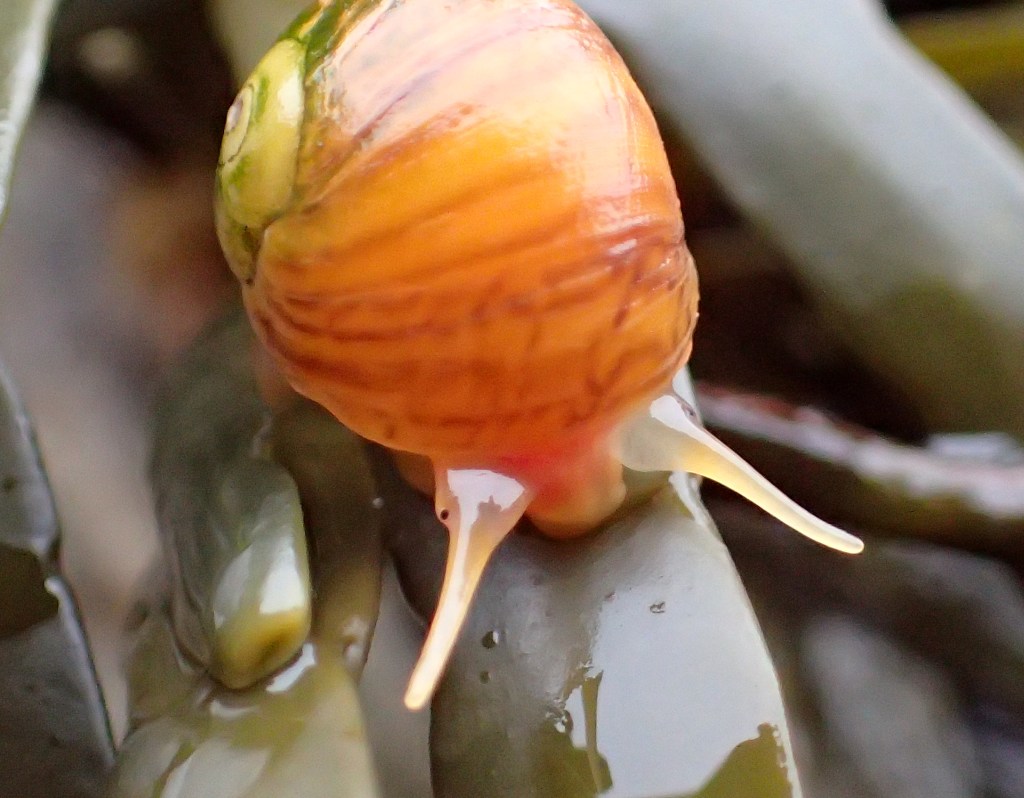
    If you’ve ever collected shells on the shore, you’ve probably homed in on the bright yellow, orange, white and even chequerboard colours of the flat periwinkle. Their shells look like a miniature version of the garden snail, but smaller, tougher and much, much brighter.

    Flat periwinkle in a Cornish rock pool
    A flat periwinkle on the mid-shore seaweed

    This time of year, when the seas are rough and the lower shore is hard to reach, I love to search among the seaweeds of the mid and upper shore. The flat periwinkles’ vivid colours shine out like jewels among the tangle of brown seaweeds.

    On a damp day at my local beach, it doesn’t take me long to find dozens of them. They’re in no danger of drying out today so they’re busy grazing, tentacles waving from side to side, black eyes on the lookout for crabs and other predators.

    An orange-banded flat periwinkle on the move - showing its eye and tentacles.
    An orange-banded flat periwinkle on the move – showing its eye and tentacles.

    Close-up they’re endearing little things, a herd of gentle grazers feeling their way through the swathes of seaweed. In this video you can see how they search out food with their tentacles. Watch them reaching out their proboscis mouth, pink radula pulsing as they rasp away at the seaweed.

    In a patch of seaweed around five metres square, I find a huge variety of colours. These variations probably offer some protection from predators, as does the covering of microalgae on many flat periwinkles, which gives them a green colour.

    Some flat periwinkles are white or cream coloured
    Some flat periwinkles are white or cream coloured

    Whatever the reasons for their varied colours, they make the flat periwinkle one of the most striking shells on the shore. (Note: If you collect shells, please always remember to check they’re empty before you take them home.)

    Some flat periwinkles are black or brown. The variety probably provides protection from predators.
    Some flat periwinkles are black or brown. The variety probably provides protection from predators.

    It’s so easy to get close to these animals and watch them in action. Look out for them next time you’re at the beach.

     About flat periwinkles…

    There are two species of flat periwinkle, Littorina obtusata and Littorina mariae. In theory L. mariae has a flatter profile and is the smaller of the two with a thicker shell, but on the shore they vary and mix so it is hard to distinguish between the two species.

    Generally, you find Littorina obtusata on the mid-upper shore, especially on egg wrack and Littorina mariae on the lower shore, especially on serrated wrack. The main difference is that L. obtusata tucks into the seaweeds it lives on, whereas L. mariae likes to graze on organisms that live on the its preferred seaweeds. Each one prefers to live on the seaweeds mainly found on its own zone of the shore.

    The animals in these pictures are almost certainly Littorina obtusata given their location and diet. However, as far as I know the only way to be certain is to examine the animal’s penis – not something I intend to do. The Field Studies Council have a great paper on the habits and identification of the two flat periwinkle species (including penis shapes) here: http://fsj.field-studies-council.org/media/342551/vol7.3_202.pdf. Take a look if you’d like to know more.

    A tiny yellow flat periwinkle grazing among the Cornish rock pools.
    A tiny yellow flat periwinkle grazing among the Cornish rock pools.


  • A Variegated Scallop Takes a Little Swim

    A Variegated Scallop Takes a Little Swim

    Here’s something I’ve never seen before. While I was rockpooling, I lifted a stone and found this little variegated scallop, which is a smaller cousin of the scallops people eat. As I watched it began to open and I guessed it might take a little swim so I took this short video.

    All scallops can swim but they don’t do it very often because it takes a lot of energy. I think this one was thought I might be a predator and wanted to swim back to the safety of a rock. It was surprisingly speedy.

    Filmed at Hannafore Beach, West Looe, Cornwall on 31 August 2015 during a very low spring tide.

  • Lazy Sunday rockpooling

    Lazy Sunday rockpooling

    This time of year when the roads are busy and the beaches packed, the summer can feel anything but relaxing. It’s Sunday today and we’re taking it easy, so what could be better than a stroll to a local cove that’s a bit off the beaten track for a spot of quiet rockpooling. Starfish, sea slugs, fish and stalked jellyfish await me. 

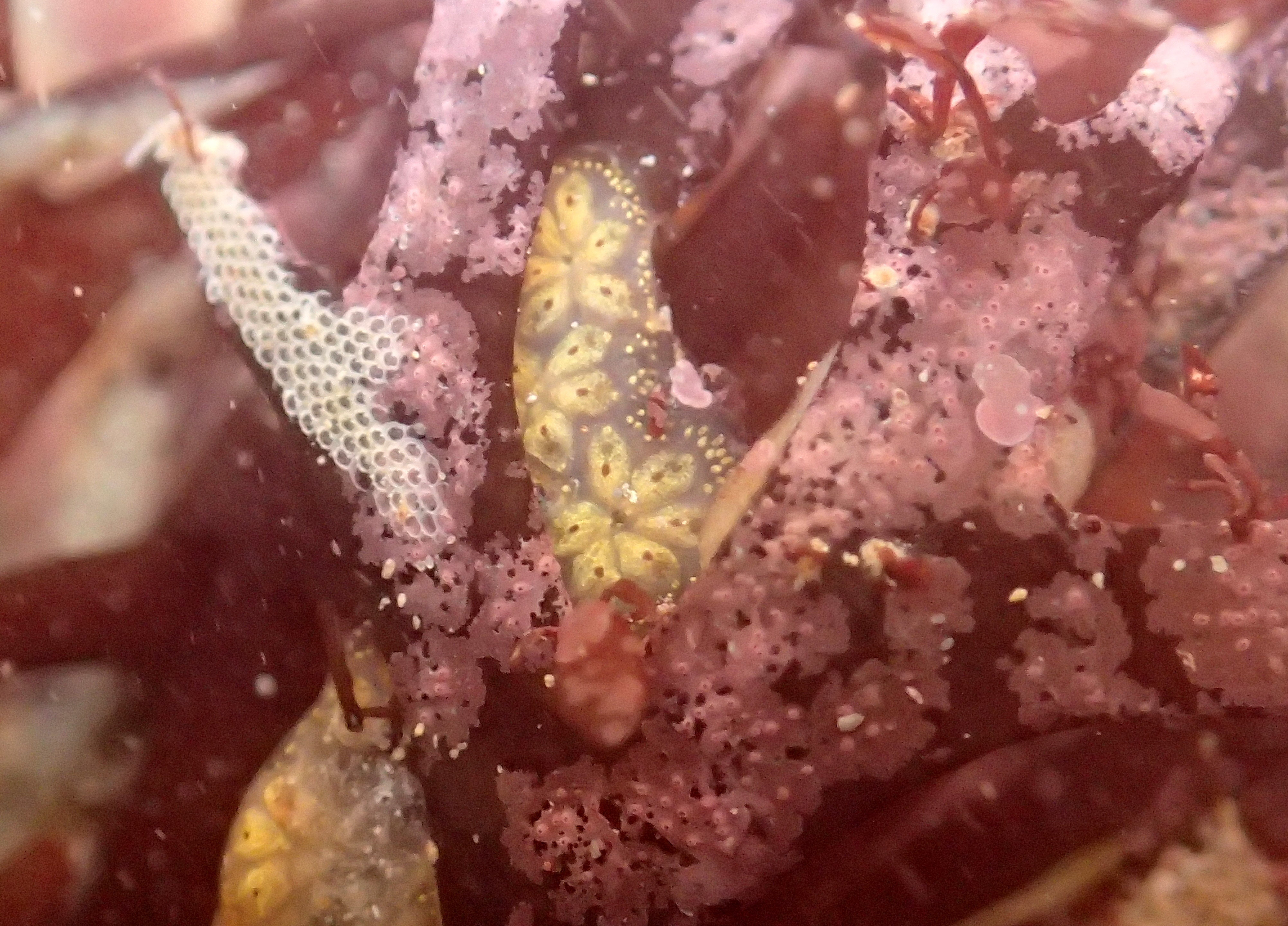
    Going slowly and looking at the seaweed can reveal some beautiful encrustations of sea squirts and bryozoans
    Going slowly and looking at the seaweed can reveal some beautiful encrustations of sea squirts and bryozoans

    It’s always a good idea to move slowly in the rockpools and today I have nothing to rush for. By staring at the seaweed for a very long time, I begin to notice more details and my eye is drawn to a stalked jellyfish. The blobs between the arms are primary tentacles, suckers that the jelly can use to move around.

    Stalked jelly Haliclystus ocroradiatus showing its primary tentacles (blobs between the arms)
    Stalked jelly Haliclystus ocroradiatus showing its primary tentacles (blobs between the arms)

    A little further on I find another species. This one doesn’t have the blobs between the arms and is flecked with pale spots, which contain stinging cells. (more…)

  • Giant birthday surprises – a rare sea hare and a greater pipefish

    Giant birthday surprises – a rare sea hare and a greater pipefish

    There are lots of benefits to having a summer birthday; the sun usually shines, the rock pools shimmer and it’s just about warm enough to put my snorkel on and jump in. The beach has lots of presents in store for me today, including a huge greater pipefish, a cousin of the sea horse, and a rare sea slug. No unwrapping required.

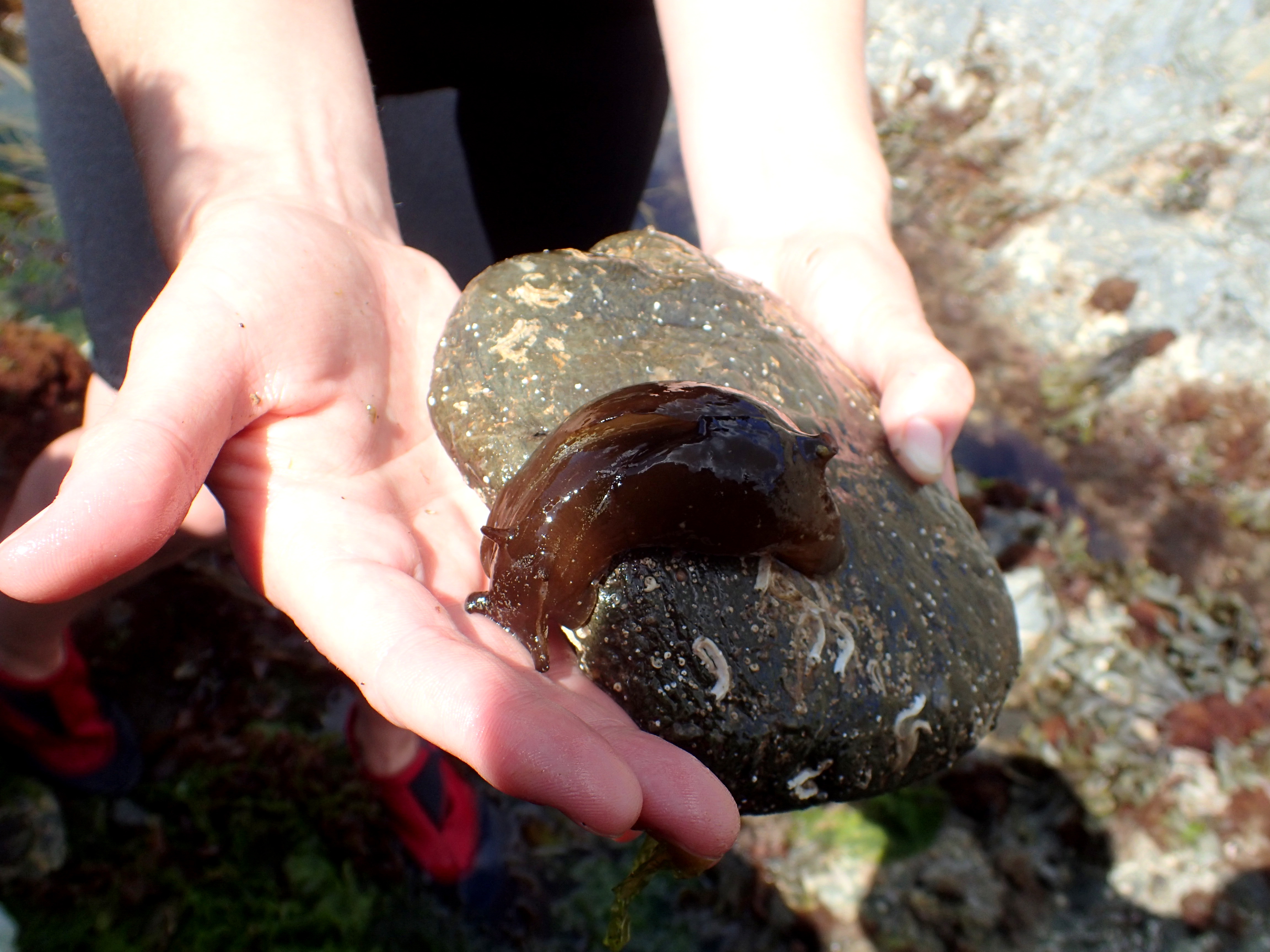
    A juvenile Aplysia depilans - a rare sea hare in UK waters.
    A juvenile Aplysia depilans – a rare sea hare in UK waters.

    It’s holiday season , but a little planning and some walking is all that is needed to find a peaceful cove. We set off to Port Nadler in perfect, calm conditions loaded with wetsuits, buckets and an ample picnic.

    A typical rock pool at Port Nadler near Looe
    A typical rock pool at Port Nadler near Looe

    Under a rock I spot what I think is a very large anemone, but it looks odd. I’m still trying to puzzle it out when it crawls away, unfurling long ear-like tentacles from its head. It’s a sea hare but more bulky than the ones I normally see (Aplysia punctata).

    I think I've found a strange anemone
    I think I’ve found a strange anemone
    Surprise! It turns into a sea hare.
    Surprise! It turns into a sea hare.

    As it oozes towards me across the rock I’m struck by its face, more like a hippo than a hare with wide flapping ears and a broad snout. Very occasionally larger sea hares, Aplysia depilans, have been found around the southern shores of the UK, and I begin to wonder.

    Aplysia depilans - looking more like a sea hippo than a sea hare
    Aplysia depilans – looking more like a sea hippo than a sea hare

    I contact experts who have seen them before and they confirm it is a juvenile Aplysia deplians – a rare find and a species I’ve never seen before. Happy birthday to me!

    It’s still cold for snorkelling and I only last about a quarter of an hour before my teeth start to chatter, but it’s worth it. After several minutes of seeing nothing but kelp, silt and the occasional two-spot goby, a long snake-like body catches my eye. It’s the unmistakeable shape of a greater pipefish (Syngnathus acus).

    The greater pipefish looks out from the weeds
    The greater pipefish looks out from the weeds

    These fish grow to about arm length and have a hexagonal cross-section. This one hardly moves, relying on camouflage for defence, its long nose stretching out over the sand.

    Greater pipefish - a cousin of the seahorse
    Greater pipefish – a cousin of the seahorse

    I drift back into shore, and find a compass jellyfish (Chrysaora hysoscella) stranded in the shallows. It takes its name from the beautiful markings on its back, but I don’t go too close – sea nettle is its other common name.

    Compass jellyfish - showing its distinctive markings
    Compass jellyfish – showing its distinctive markings

    Back on the shore, I huddle on the sand, wrapped in jumpers and towels, shivering and eating cake. Birthdays don’t get any better than this.

    This snakelocks anemone looks like it's had a fright - the tentacles were being picked up by the current
    This snakelocks anemone looks like it’s had a fright – the tentacles were being picked up by the current


    Up close to a red-eyed velvet swimming crab (Necora puber)
    Up close to a red-eyed velvet swimming crab (Necora puber)


    Cornish clingfish eggs - little eyes and noses visible inside
    Cornish clingfish eggs – little eyes and noses visible inside
    A snorkel-scape. Thong weed at Port Nadler near Looe
    A snorkel-scape. Thong weed at Port Nadler near Looe
  • Practice Run – Rockpooling just before the big tides

    Practice Run – Rockpooling just before the big tides

    This weekend will be a rockpool marathon. I’ll be out in my splendidly flattering waders crawling among kelp and tearing my fingers apart on barnacles and keel worms, making the most of the exceptional spring tides.

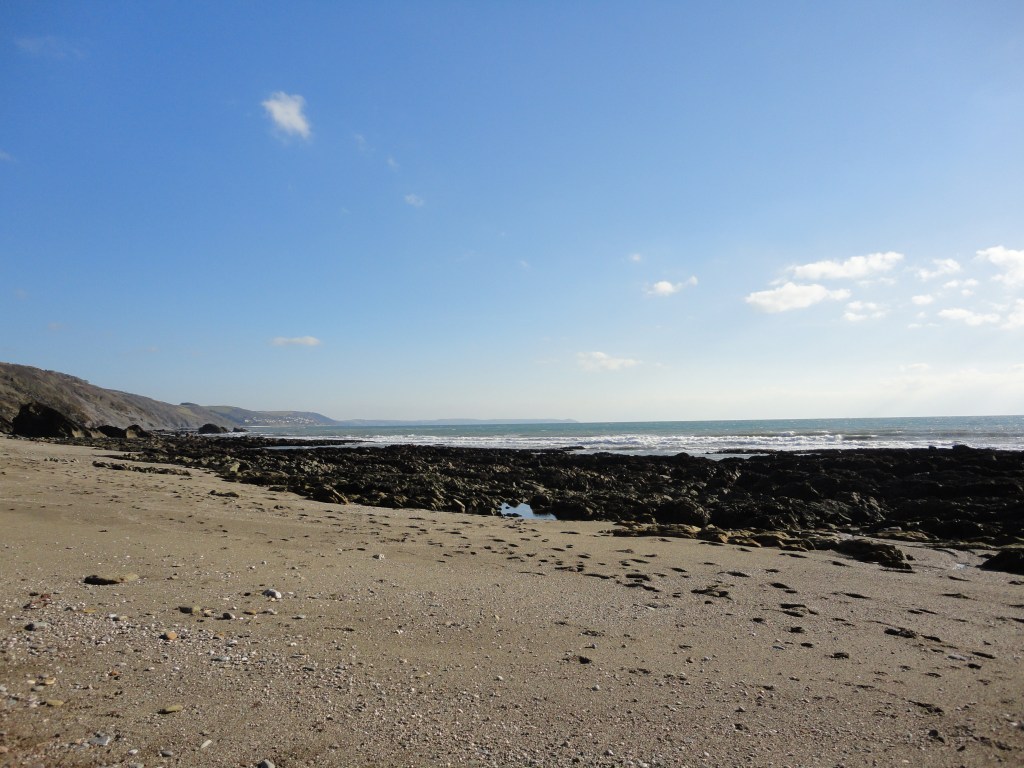
    In preparation I take a leisurely pootle to my local beach, Plaidy. High pressure and calm seas mean this is already a great tide – it will drop another half-metre by Saturday.

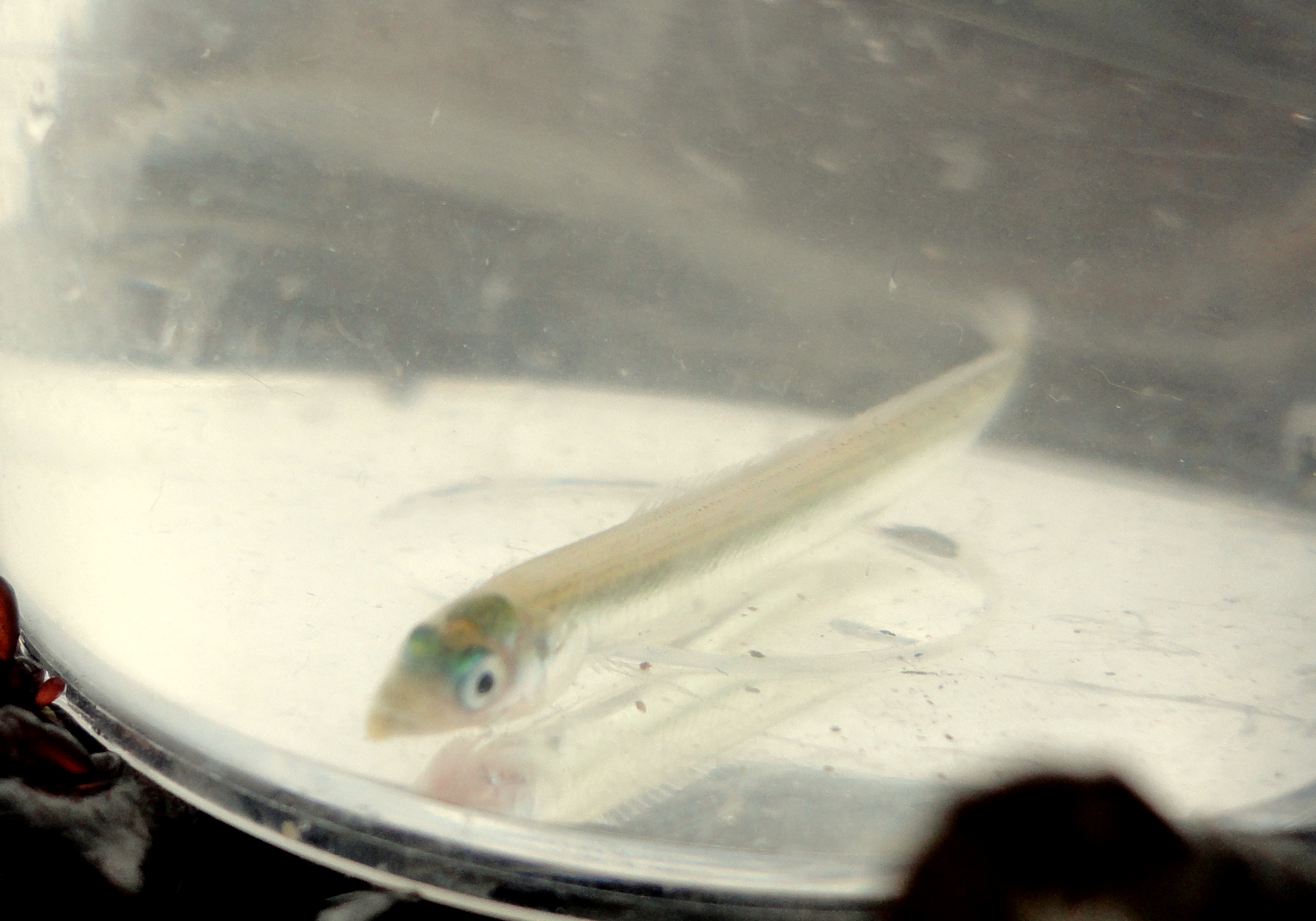
    Baby sand eel
    Baby sand eel

    Cornish Rockpools junior is digging sea defences, rescuing the baby (more…)

  • Spring in the Cornish Rock Pools

    Spring in the Cornish Rock Pools

    Spring is a wonderful time of year in the Cornish rock pools, although like all things British, it’s hard to predict when it will arrive.

     This time of year, the fish are moving inshore to lay their eggs. In many common shore species, the male stays close by, protecting the eggs until the baby fish hatch. Blennies, in particular, are frequently found hiding among the rocks, close to their precious broods.

    A tompot blenny (male) guards his eggs
    A tompot blenny (male) guards his eggs
    Fish eggs under a rock. Inside, lots of tiny eyes look back at me.
    Fish eggs under a rock. Inside, lots of tiny eyes look back at me.

    Many crabs too are ‘in berry’, tucking their clutches of eggs (more…)

  • The Zen Guide to Rockpooling

    The Zen Guide to Rockpooling

    • Pick a quiet day of the week
    • At a quiet time of year
    • On a day with quiet weather
    • Go slowly and quietly
    • Stop. Watch. Let time go

    February is a wonderful month for rock pooling in Cornwall. Well, we think so, although we consider a packet of chocolate biscuits a pre-requisite for achieving anything, especially enlightenment, so (more…)

  • Pirate Rock Pooling Adventure

    Pirate Rock Pooling Adventure

    The leaves are turning, the swallows are no longer dipping over the rock pools, but this long, warm Cornish summer never seems to end. We set sail from Hannafore over a barely rippling sea in the good ship Red Canoe to seek secret beaches, pirate caves and, of course, photos of interesting marine creatures. (more…)

  • The Thrill of Rock Pooling

    The Thrill of Rock Pooling

    Anyone who goes rock pooling regularly will know that it’s addictive. Even when the tide’s creeping up to the top of your wellies and the rain’s flying at you, you see another stone and you have to know what’s under it. It could be something new. (more…)