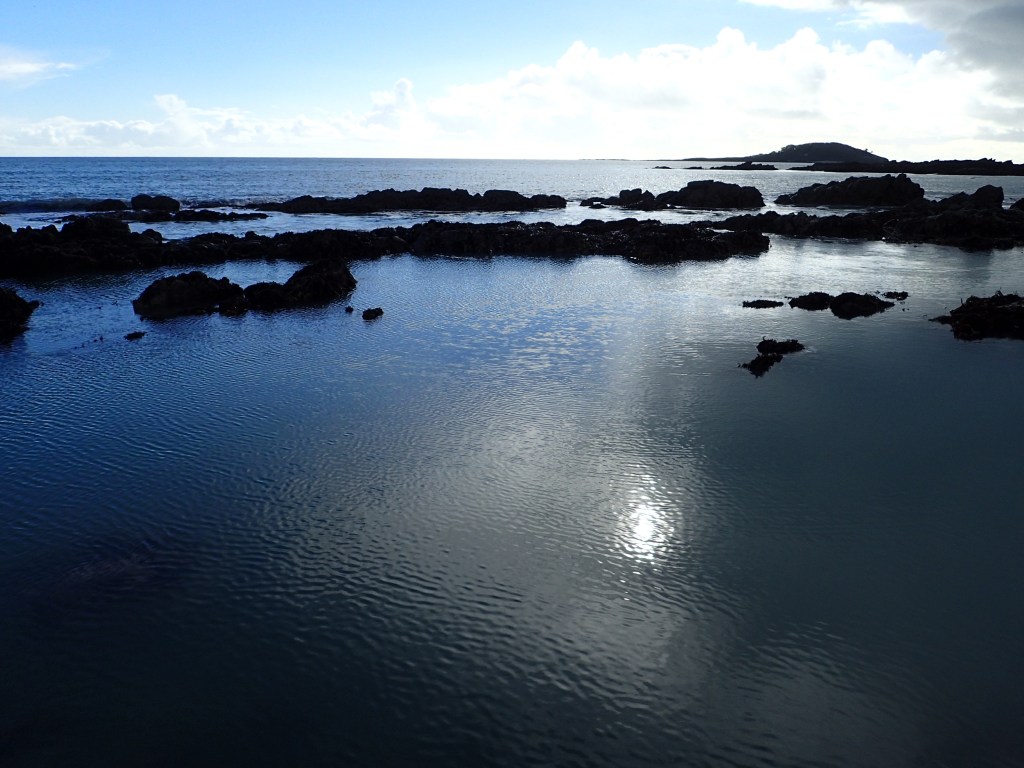
It’s the shortest day of the year, but there’s no shortage of colour and life in the rock pools here in Looe.
I try out a pool I’ve not explored before and am blown away by the variety of animals going about their day, searching for food and shelter.
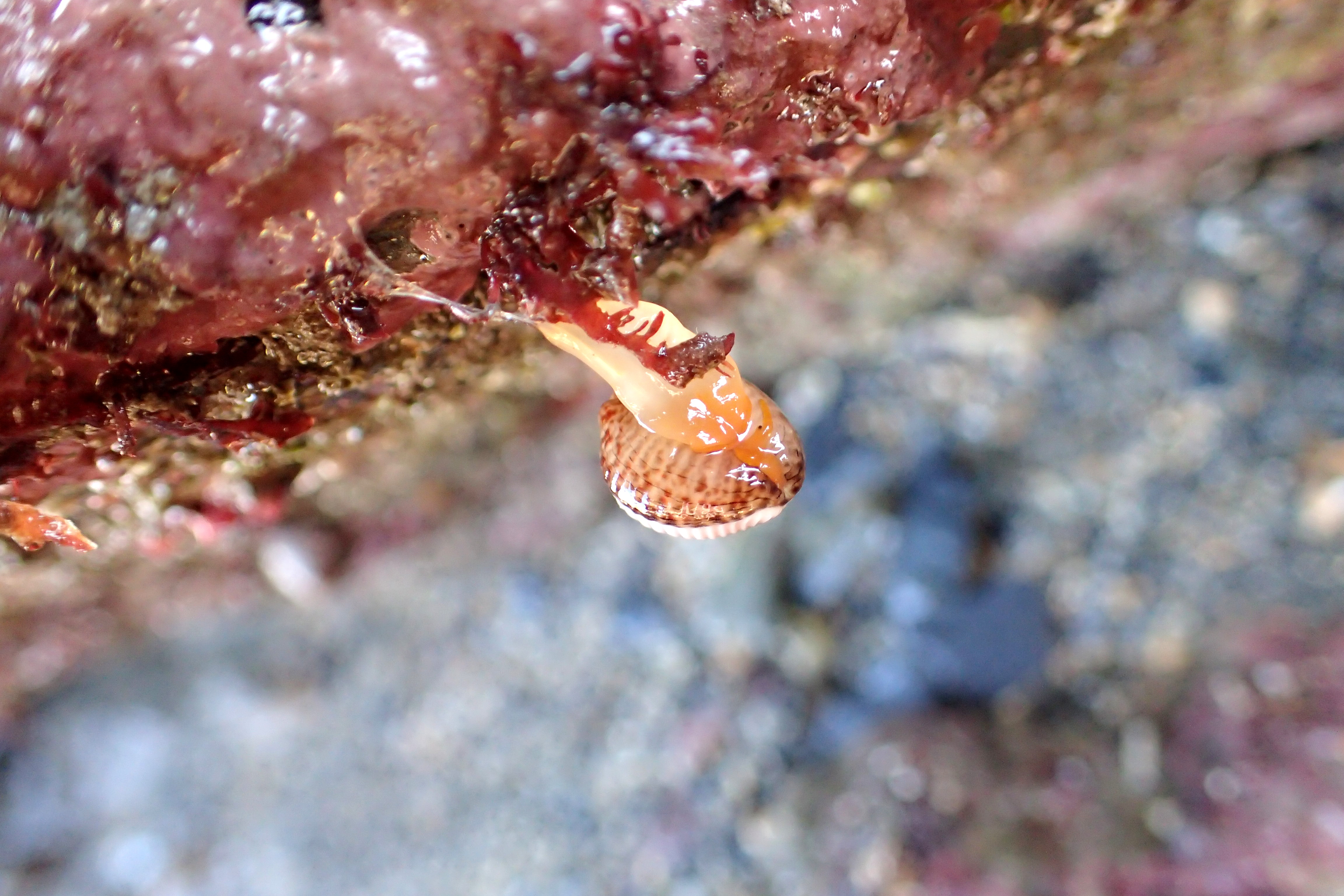
Easily my favourite find of the day is this European three-spot cowrie. Although they’re not uncommon here on the south-east coast of Cornwall, at low tide they’re usually retracted in their shells or abseiling from the rocks on a mucous thread.
To find one fully extended out of its shell, its orange syphon probing the weeds and its leopard-print mantle curled around its shell, is fabulous. I’ve always loved finding these shells washed up on the beach, but the live animal is incredibly colourful. It looks far too tropical for our cold waters.
European three-spot cowrie looking glamorousEuropean three-spot cowrie
It’s not a great low tide but this large, shallow pool is ideal for all sorts of creatures.
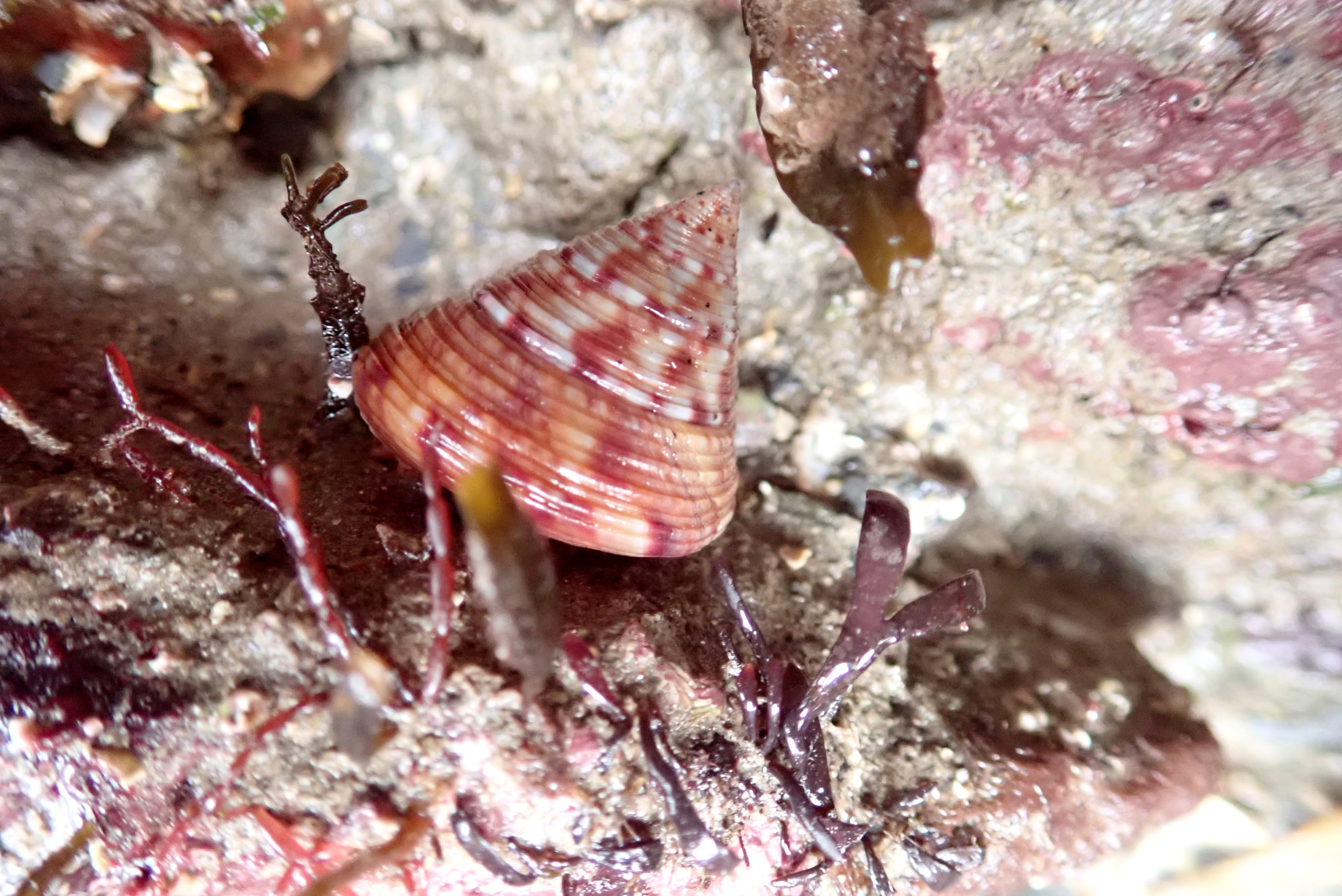
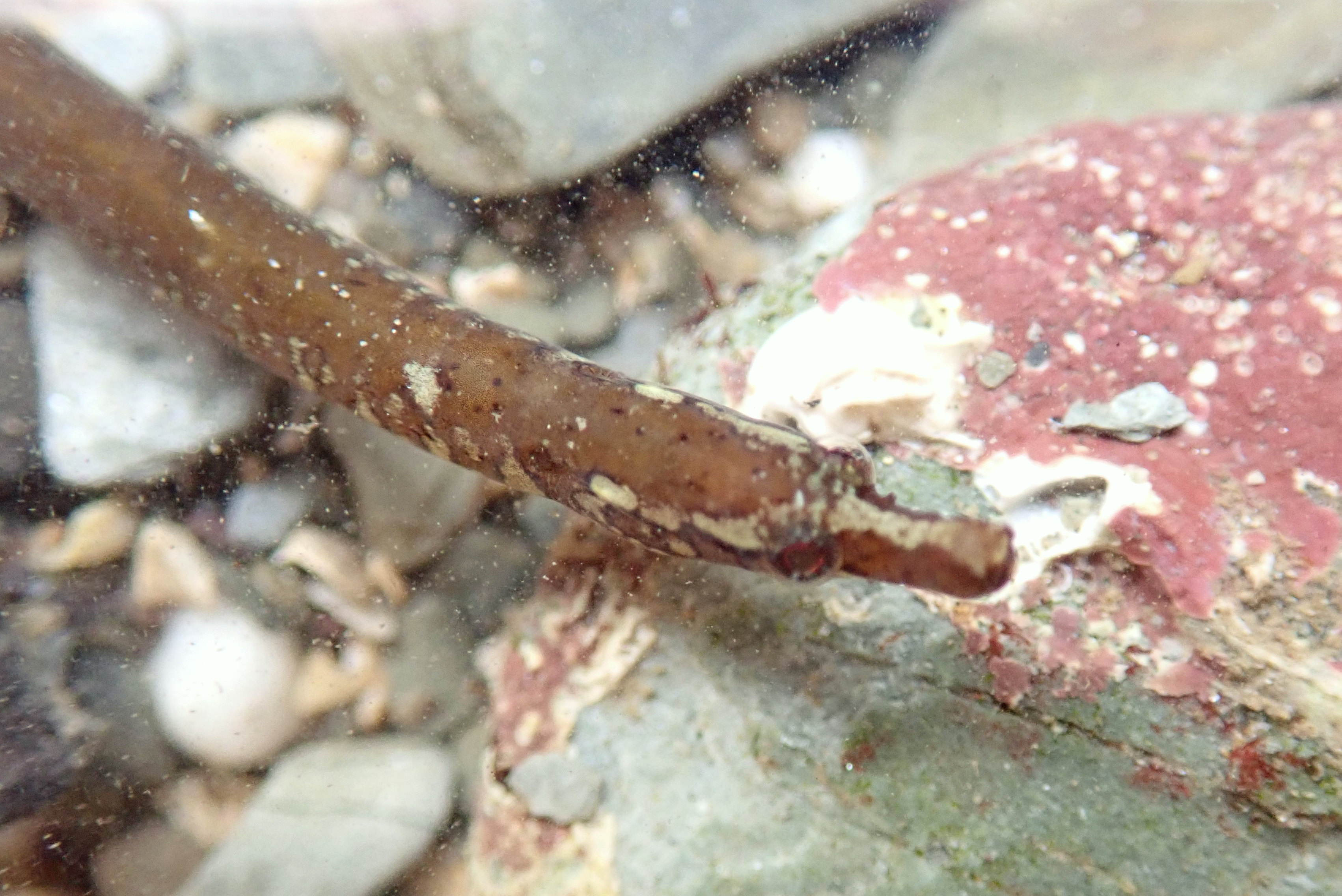
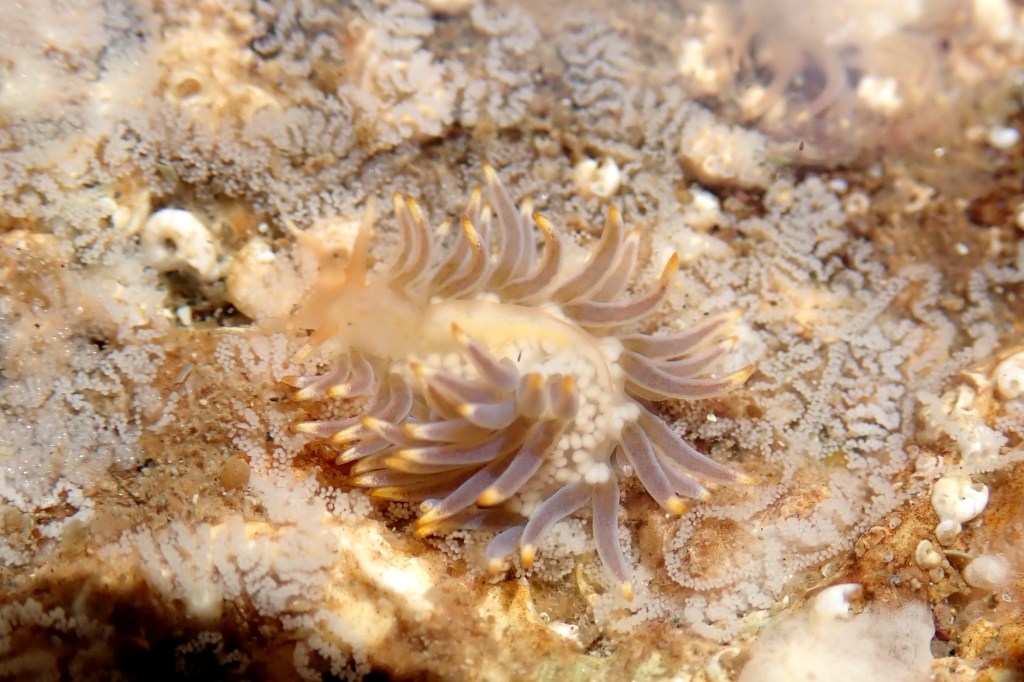
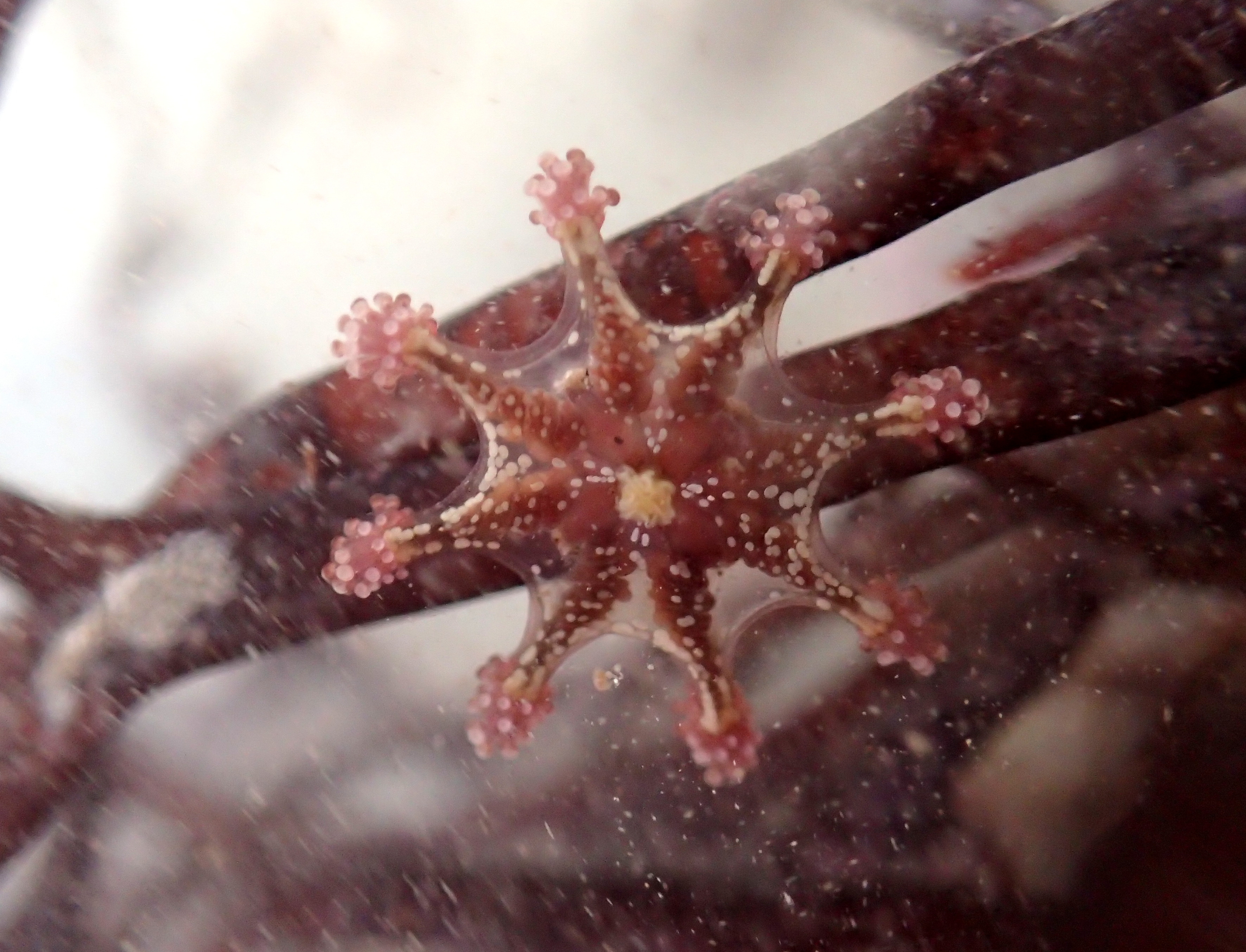
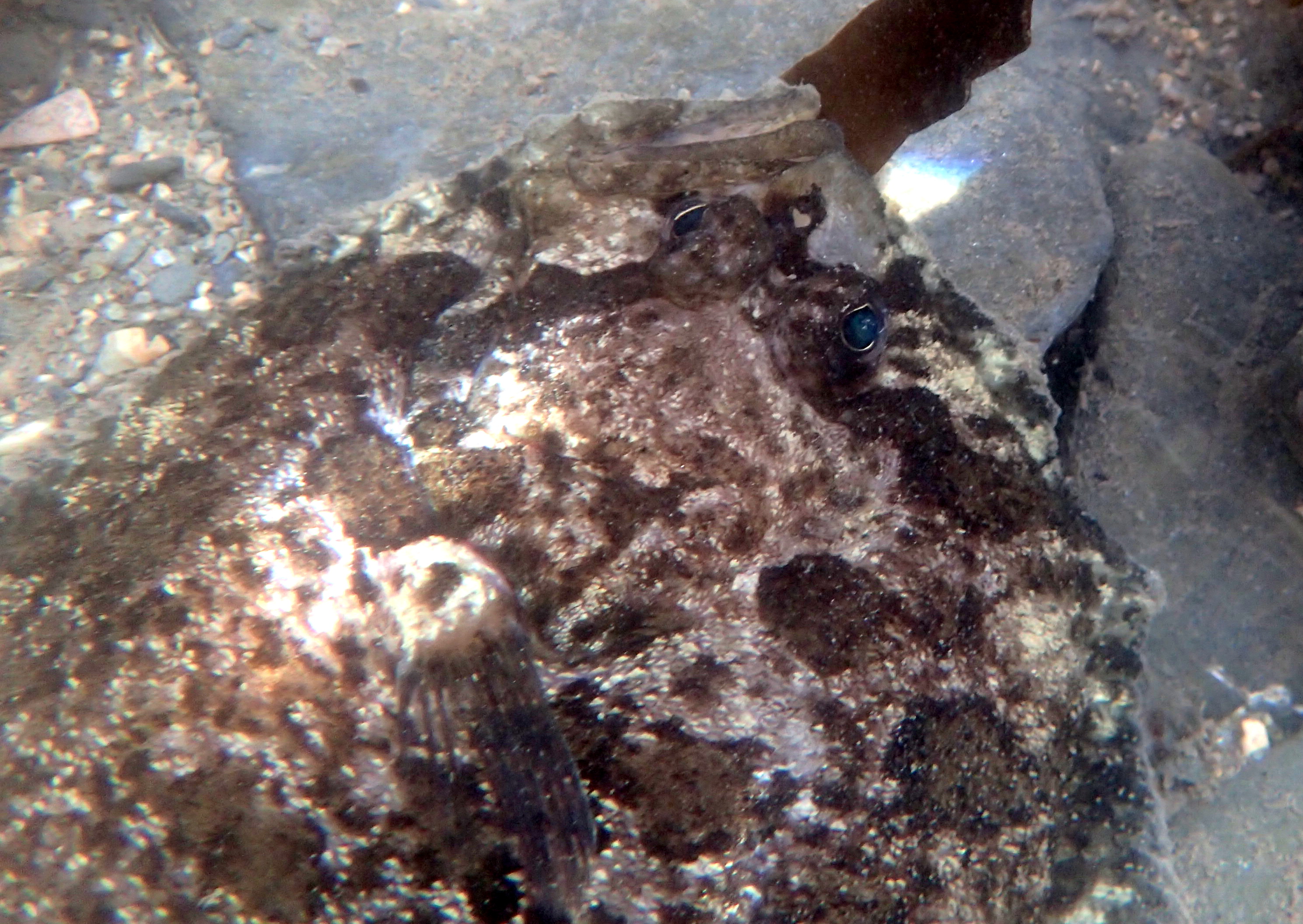
Painted top shells are plentiful in this pool – there must be lots of food for them.Like the cowrie, this thick-lipped dog whelk has a long syphon.A Velvet swimming crab lurking under an overhangThese hydroids and bryozoans have their feeding tentacles outA stalked jellyfish – Calvadosia cruxmelitensisWorm pipefishA young snakelocks anemone
Everywhere I look, there are more animals going about their business. Hermit crabs scurry past me and a fish takes shelter under my welly.
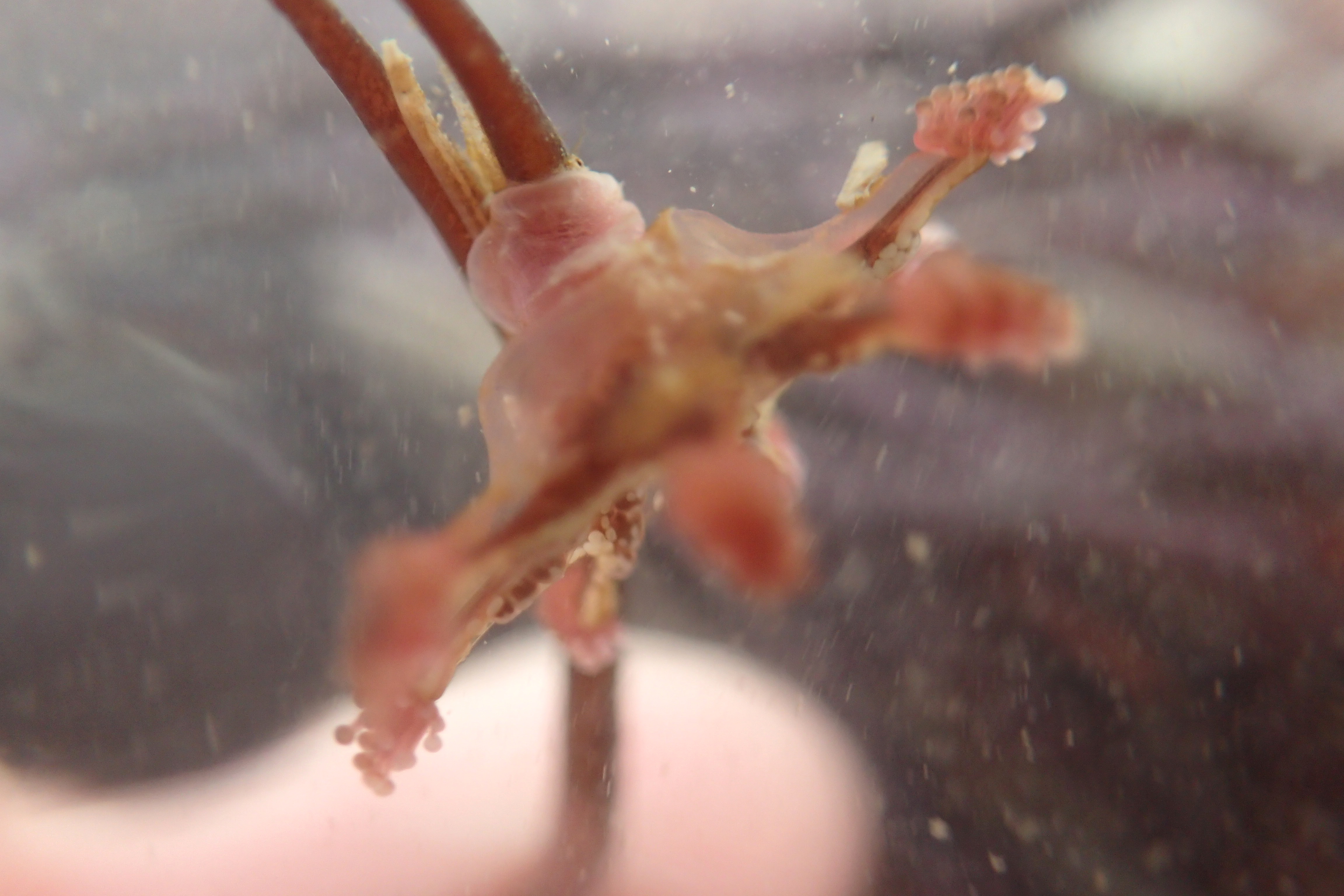
From now on, the days will get longer, and before long the sea slugs and fish will begin to move in to the shore to spawn. It seems some can’t wait for spring – even today I find a pair of Berthella plumula sea slugs under a stone!
If you’re in Cornwall this Christmas, take a look at the rock pools. You won’t be disappointed.
Nadelik Lowen!
Berthella plumula sea slug – I find two under a rock so it looks like they’re planning to spawn soon.Who needs a Christmas tree when you can just decorate yourself in seaweed? ‘Decorator’ spider crab – Macropodia sp.
I love sea slugs a bit more than is probably usual. My other half even made sure I have the t-shirt, which I wear with pride in the Cornish rock pools despite the odd looks it gets me.
Trend setting in my waterlogged wellies and ‘I love sea slugs’ t-shirt. Hannafore beach, Looe.
If you don’t already have your own t-shirt, it might be that you haven’t yet met these amazing little creatures. Unlike land slugs, sea slugs come in a mind-boggling variety of colours and shapes and have cool super-powers.
So, this week I’ve been braving the traditional British summer-holiday weather to find top slugs to convert you to the cause. My lucky t-shirt worked its wonders… (more…)
If you’ve ever been rockpooling, you’ll know the feeling: you’re in the zone, bottom high, head down, lifting a rock or staring into the water when a movement catches your eye. While you’re registering that it’s some interesting creature you’ve never found before, said creature is darting away under an overhang or boulder never to be seen again.
My camera is full of “things that were there only a millisecond before”.
Not the most accomplished photo of a Greater pipefish as long as my arm!
So, you’ll have to take my word for it that I finally encountered an animal I’ve been longing to find in a pool. After four decades of failure, my big moment came while I was taking some friends rock pooling this week. (more…)
If you read this blog regularly, you’ve probably noticed a pattern: I bimble about the Cornish rock pools looking for an exciting creature, fail completely, then find something unexpected. Well, hopefully you like the format because this week is no exception. I go on a quest to find fish eggs and discover this rare sea slug.
After a week of ear-numbing northerlies, the low January sunshine is at last winning through. Junior sets to work with his bucket and spade, attempting to create a sand fort that can be seen from space while I take a stroll at the water’s edge.
Looe Beach – a herring gull is also checking out the pile of shells at the water’s edge
The stretch of sand that forms Looe beach is ideal for summer holidaymakers to lounge on, but generally offers little to the rockpooler, unlike the surrounding shores. Today is different; probably due to a combination of large tides and strong winds from an unusual direction.
Glistening mounds of shells are heaped the length of the shore, and are being nudged onwards by the incoming tide. They crack under my feet despite my efforts not to trample them.
Shells on Looe beach
It’s not unusual to see the odd limpet or a few mussel shells here – the harbour is carpeted with them – but this haul of shells is not just large, it’s more diverse than usual. There’s such a kaleidoscope of blues, whites, oranges and pinks that I have to get in close to focus on individual shells.(more…)
Things have been quiet on this page the last couple of months. Cornish Rock Pools Junior, Other Half and I took an extended holiday to visit the towns and beaches of Brittany. As always our travels had a bit of a marine theme…
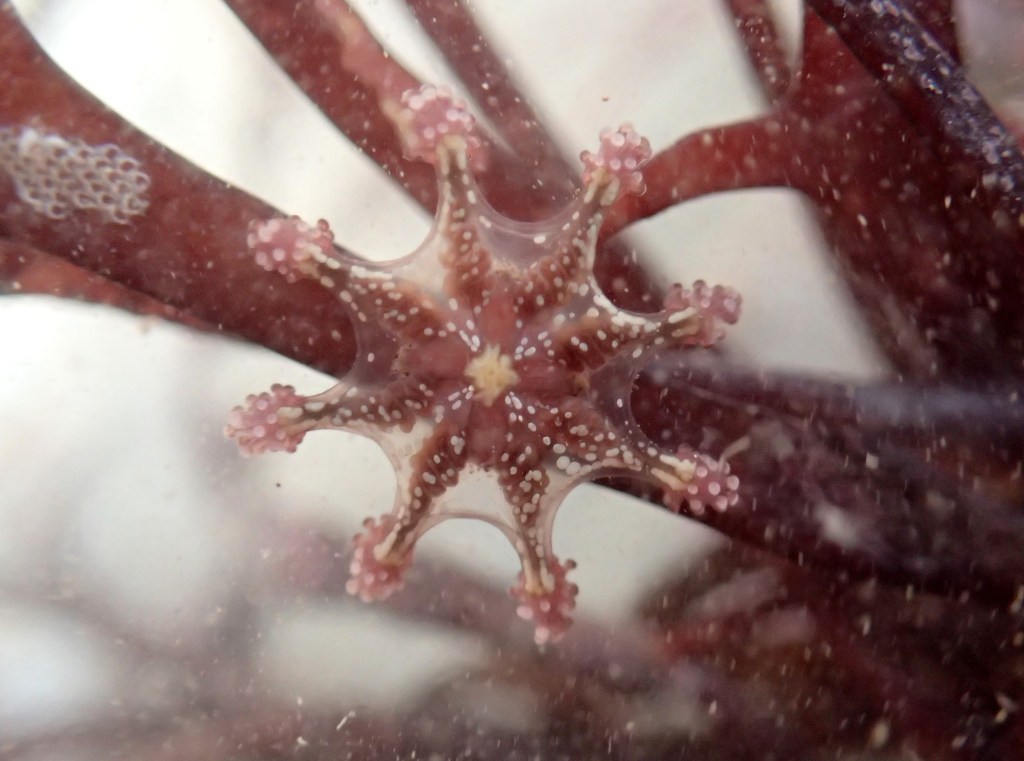
“Est-ce que c’est un anémone?” the eager child in the dark-rimmed spectacles asks. We explain what a ‘stalked jellyfish’ is to the class of seven-year-olds. “Jellyfish!” they chant.
Stalked jellyfish – a Lucernariopsis cruxmelitensis.
Between fascinating excursions to the fire station and the sardine factory, we are giving impromptu English lessons to a class of primary school students during our twinning visit to Quiberon in Brittany.
We have covered the words goby, crab, jellyfish and shark so far and there’s still a sea of raised hands. The children seem desperate to tell us about their finds around the shores of Quiberon. (more…)
A sunny bank holiday weekend followed by a sunny half-term week is nothing short of a miracle. That the second weekend also coincided with some big spring tides is more amazing still.
I’ve seen some wonderful photos this week of rockpooling finds all around Cornwall. Some fabulous creatures. And if you haven’t been able to explore the shore yourself, Springwatch tonight (8th June) are going to be showing footage of the remarkable comeback of the Clybanarius ethryropus (nope, still can’t pronounce it) hermit crab, filmed with Cornwall Wildlife Trust at Castle Beach, Falmouth.
The stars of my pretty perfect day of wading through pools in the blazing sunshine at Port Nadler, near Looe, were the baby fish.
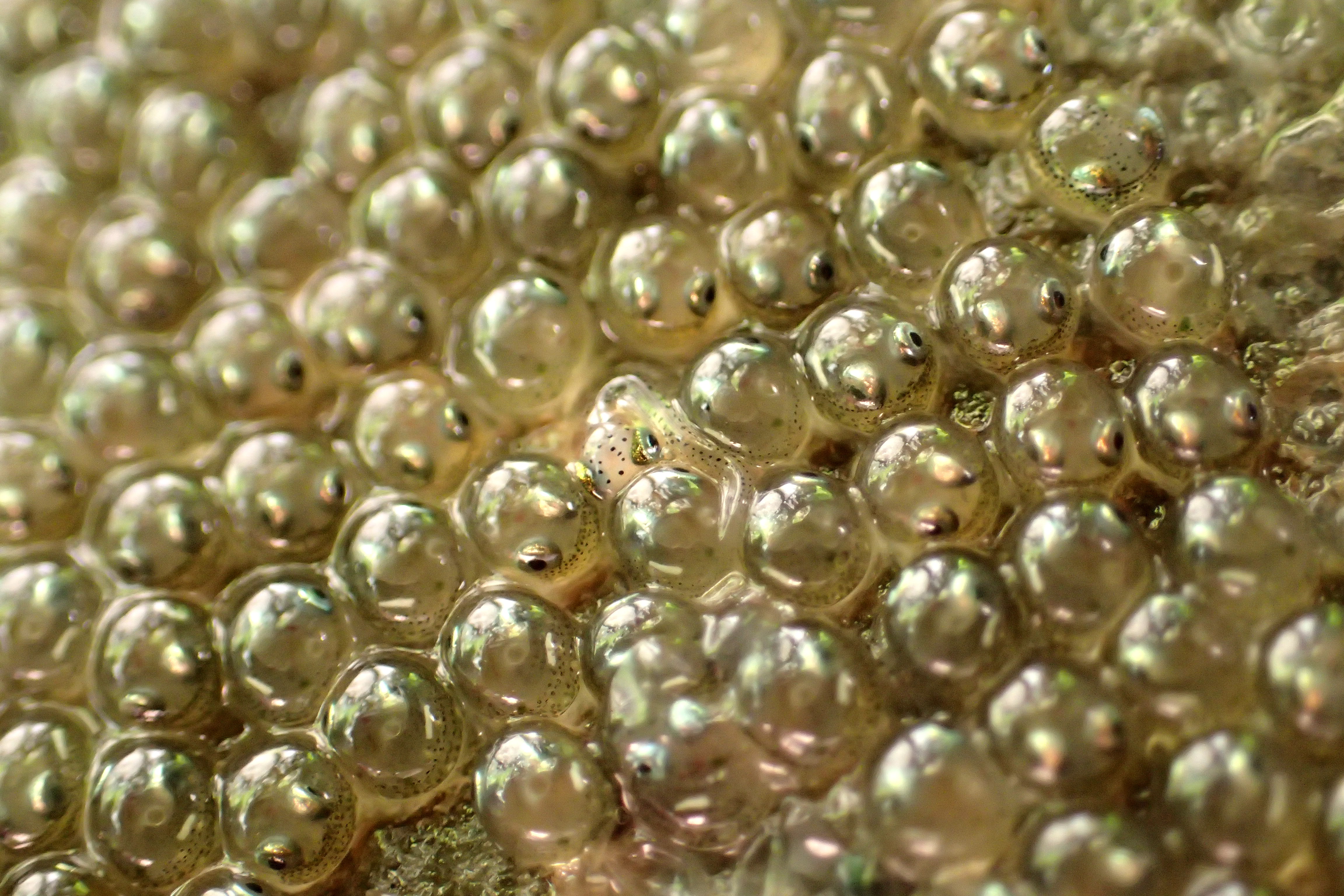
There are plenty of young fish around at the moment but the new hatchlings can hard to spot. I took this photo of clingfish eggs to capture the eyes staring out of each eggs and the little spotty tails curled round them.
Clingfish eggs hatching in a Cornish rock pool.
It was only when I uploaded photo to my laptop that I realised I’d managed to capture my first hatchling (in the centre of the picture). I can’t get enough of those golden eyes.
A recently hatched Cornish clingfish among its egg-bound siblings
Fish often stick around to guard their eggs and sure enough there was a proud parent next to this rock.
An adult Cornish clingfish showing the typical beaky nose, antenna by the eyes and blue patches on the head.
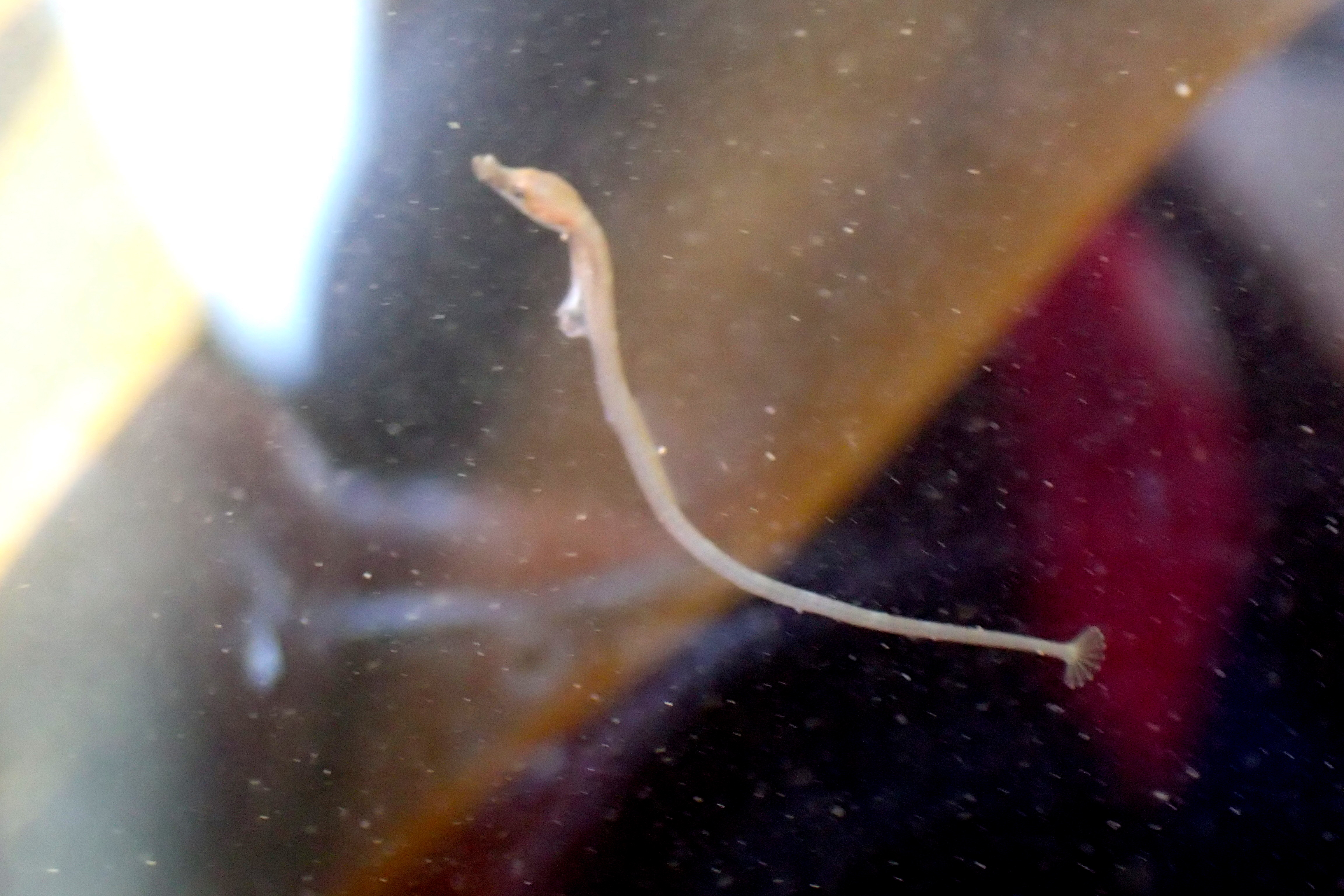
I was up to my waist between rocks leading to the open sea when I saw this pale creature, about 4cm long, wriggling amongst the darker kelp. From its elongated, looping form I expected a worm.
A recently-hatched Greater pipefish baby.
On closer inspection the large eyes and fins were clear. This is the first time I’ve ever seen a baby pipefish.
A baby Greater pipefish with yolk sac still attached. The large eyes and long snout are reminiscent of its cousins, the seahorses.
Judging by the yolk sac still attached to its belly, this little fish hatched very recently. I saw several more in the water, their curling movements reminding me of their cousins the seahorses. I wondered if the dad was close by – like seahorses, the male pipefish looks after the gestating eggs in his pouch until they hatch – but he’d be too well camouflaged to spot in this seaweed.
The rocks were crawling with crabs and the pools were busy with the fry of larger fish that use these sheltered waters as nurseries. My camera battery was low, but this Limacia clavigera sea slug was worth draining my battery for.
A Limacia clavigera sea slug on the move.
The water was so warm after a week of sun that I put on my snorkel for the first time this year and enjoyed a leisurely float across the bay, watching wrasse skirting the rocks and snakelocks anemones waving in the current.
If this weather carries on, I can see myself returning to Port Nadler regularly this summer to watch the baby fish growing up.
Cornish Rock Pools junior drying off in the sunshine at Port Nadler, near Looe.
A variegated scallop opens up showing its multiple eyes then snaps shut. A topknot flatfish skimming along the sand. Just some of the creatures I saw in the rockpools at Hannafore, Looe today on the low spring tide.
I was a too busy taking kids ‘shark hunting’ to take more video today. It was a successful mission; we found more than twenty live egg cases of the Nursehound (Scyliorhinus stellaris) and one live Smallspotted catshark (Scyliorhinus canicula) egg case. There were all sorts of other treasures too.
I’m already looking forward to doing it all again tomorrow.
As anyone who spends time around children knows, they generally delight in things that adults find yucky. So, what better for a day out with Cornish Rock Pools Junior than a visit to a sheltered, silty shore? It’s the perfect environment for all things slimy.
It didn’t take us long to find one of the strangest – and stinkiest – animals on the shore, the bootlace worm. We turned a stone and on one side was the head and part of the tangled body of the brown worm. The rest of the body spanned across to the next boulder like a rope bridge.
The long, thin body of a bootlace worm stretched between two rocks.
The bootlace worm is massively long – the longest recorded apparently came in at 55 metres, making it the longest animal in the Guinness Book of Records. This one would probably have spanned at least 7 metres. Given the difficulties of unravelling the tangled body without breaking it coupled with the fact it exudes acrid-smelling, toxic mucus, we decided against measuring it.
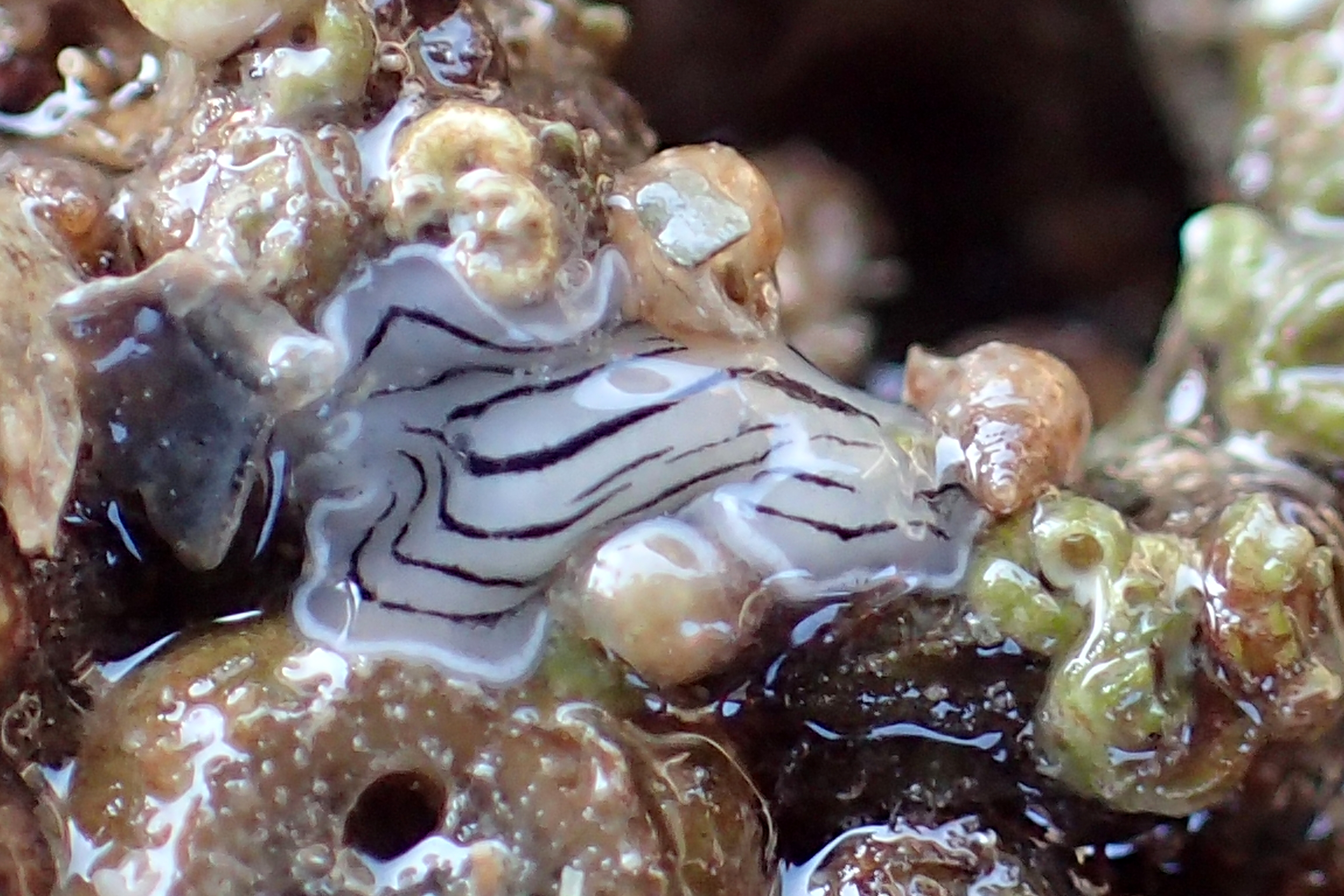
On another rock we found a prettier creature, the candy-stripe flat worm. This one had moulded its paper-thin body to the contours of the rock. When they’re not oozing along like this, they’re reasonable swimmers, albeit with a technique that resembles a tissue blowing along the pavement.
A small candy stripe flatworm oozing along its way.
We started the search for jellies. The sheltered clumps of seaweed seemed a likely spot for stalked jellies, although Junior’s fascination with kicking up ‘pyroclastic flows’ of silt did hamper visibility a little. For a while we found nothing but ‘snotworm’ eggs, the green eggclumps of the green leaf worm.
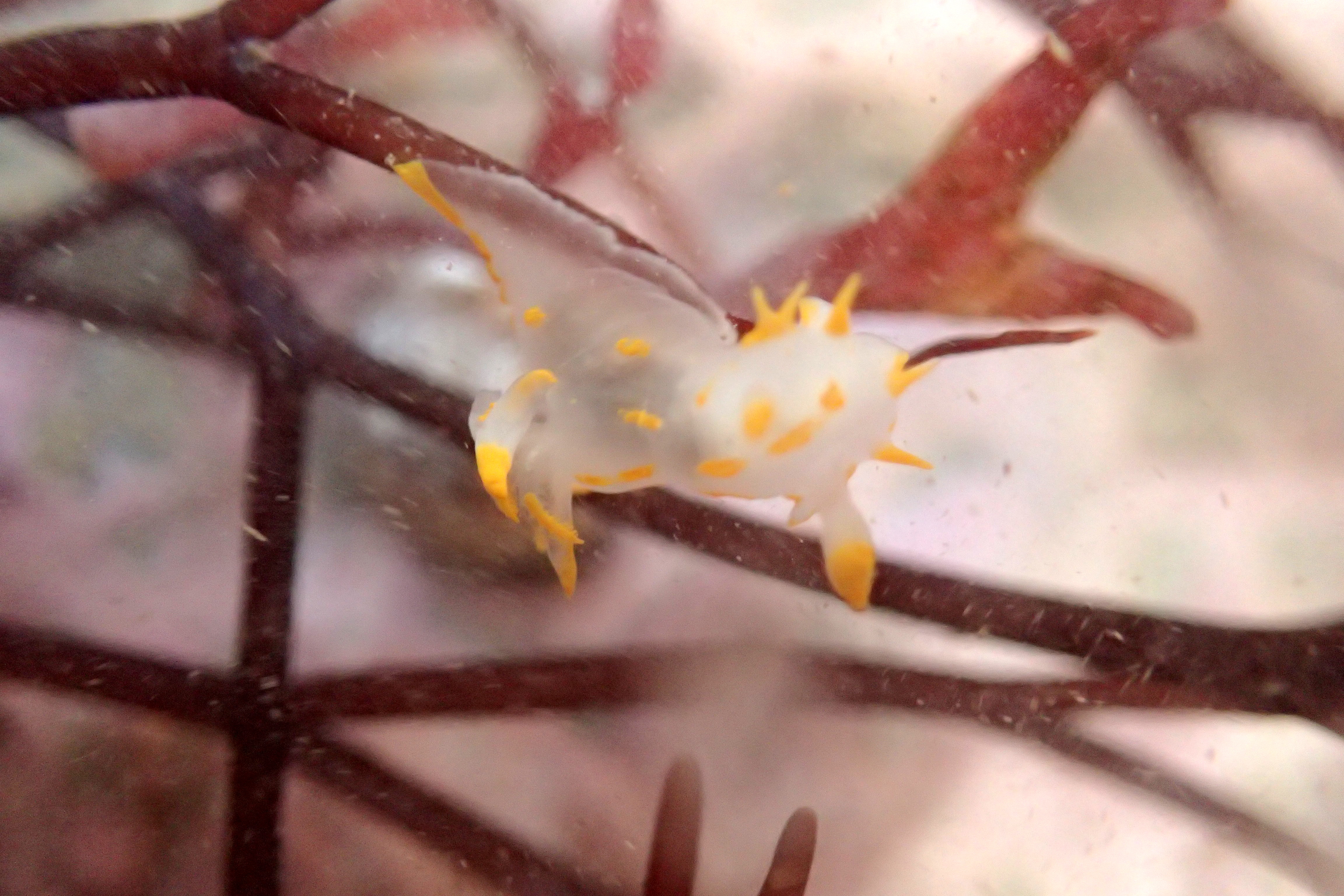
When we did find our first jelly blob, it turned out to be another kiddy favourite, a slug. Out of the water, it was a shapeless splodge of yellow. In the water, it stretched out its white body to display yellow stripes and various yellow appendages and antennae.
Sea slug – Polycera quadrilineata
As we watched the Polycera quadrilineata slug’s slow progress along the seaweed, we noticed another, more flowery jelly-blob behind it. This was the first of several Lucernariopsis cruxmelitensis stalked jellyfish we found.
Stalked jellyfish – a Lucernariopsis cruxmelitensis.
The incoming current was throwing up a cloud of silt, but we managed to find eight stalked jellies among this small area of the shore. Not a bad haul of squidgy, slimy, child-pleasing creatures.
Stalked jellies have stinging tentacles like their cousins, the jellyfish, but live attached to seaweed rather than floating in the ocean.
Here are some of our other favourites from this expedition:
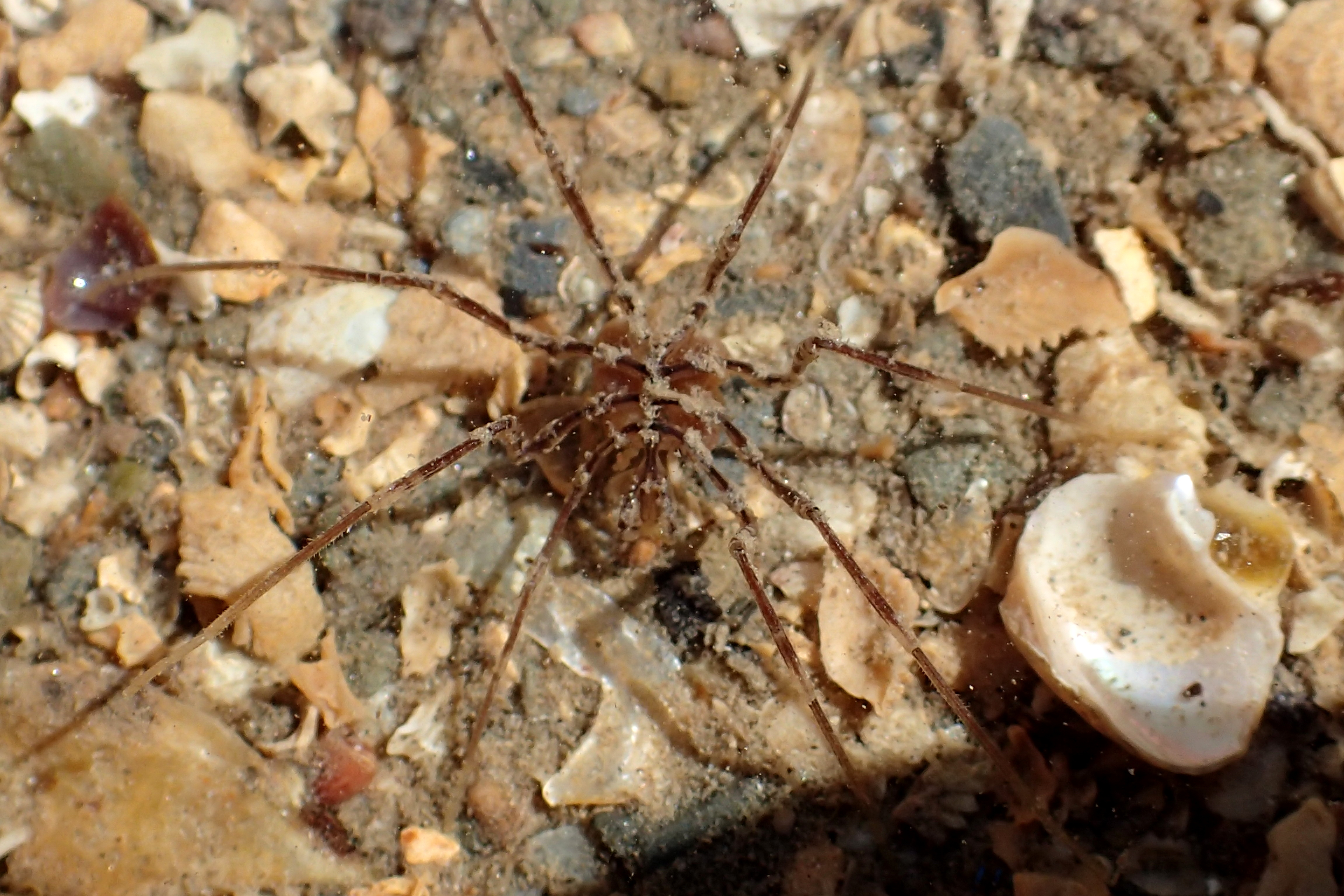
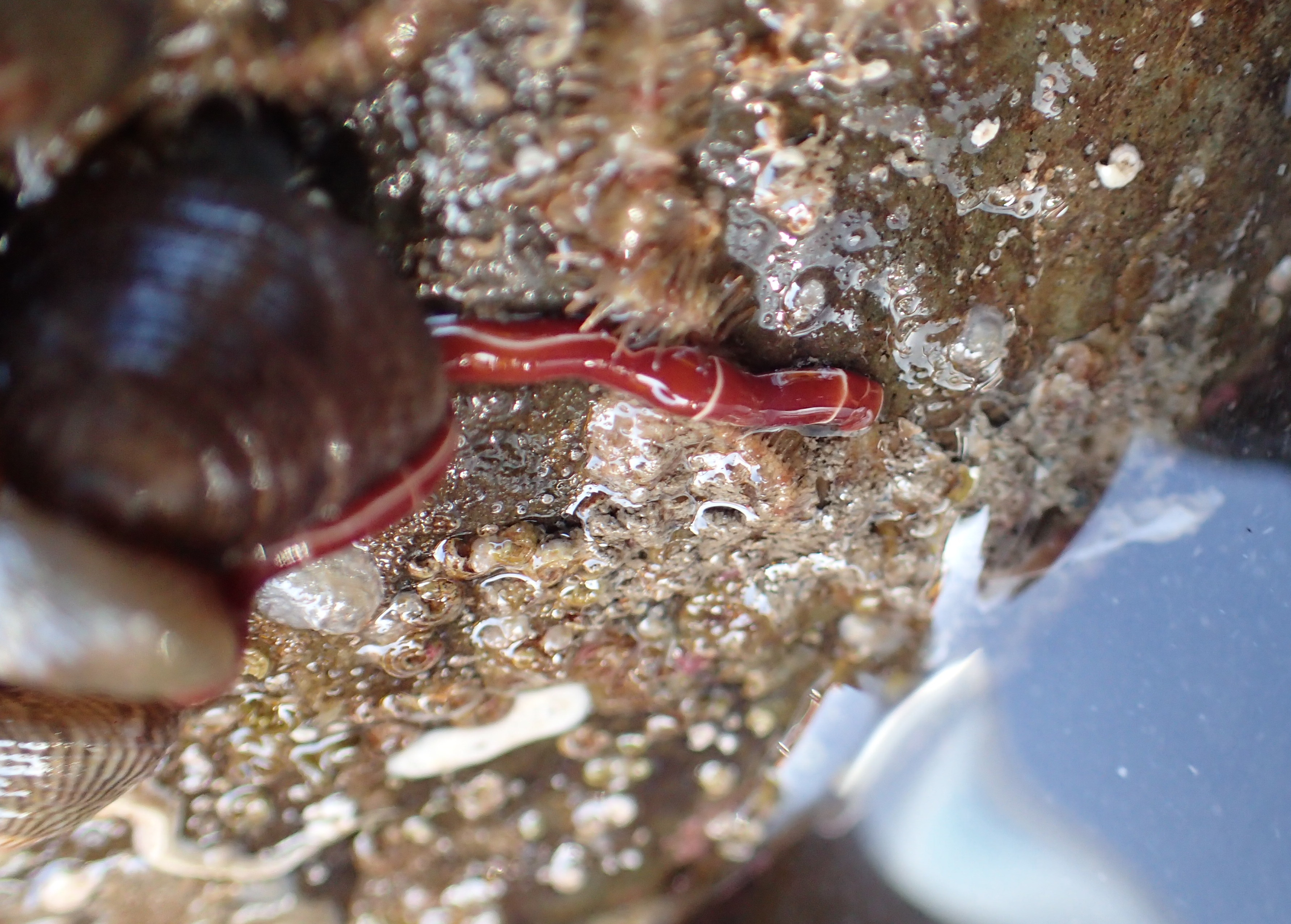
A sea spider. These delicate little creatures are perfectly camouflaged among the seaweed.Tubulanus annulatus. This strikingly coloured worm was a first for me and is more commonly seen offshore.I was right at the depth-limit for my wellies when I found this topknot flat fish scooting along the bottom of a pool. Junior loves their asymmetrical faces.More slime! Cowries are able to dangle from the rocks using their strong mucus trails. This one’s in typical abseiling position.
The sun is shining and, for the first time in months, I can feel the warmth on my face. With calm seas, the tide has run out even further than I hoped, rockpooling conditions here in Looe are near-perfect. There are ominous clouds looming over the hills behind me, but I choose not to look at them.
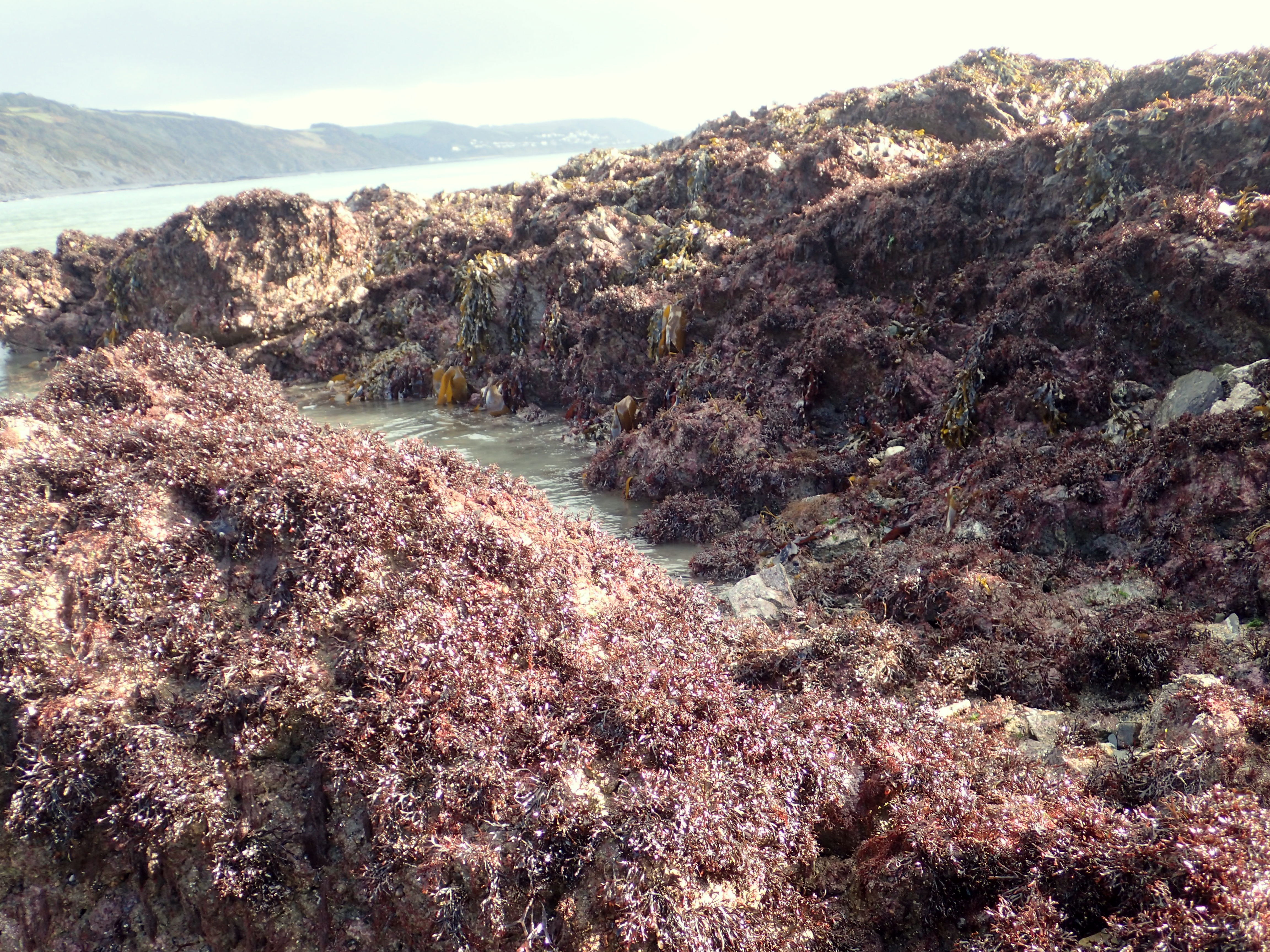
Perfect – this sheltered gully has weathered the storms.
After the fierce storms, I half expect to find the rockpools empty, scoured of life, but I couldn’t be more wrong. I explore an area of my local shore in Looe that I don’t often visit and within minutes I have found my new favourite rockpooling spot, a gully that’s visibly wriggling with life. (more…)
Privacy & Cookies: This site uses cookies. By continuing to use this website, you agree to their use. To find out more, including how to control cookies, see here: Privacy and Cookies Policy.














 Cornish Rock Pools