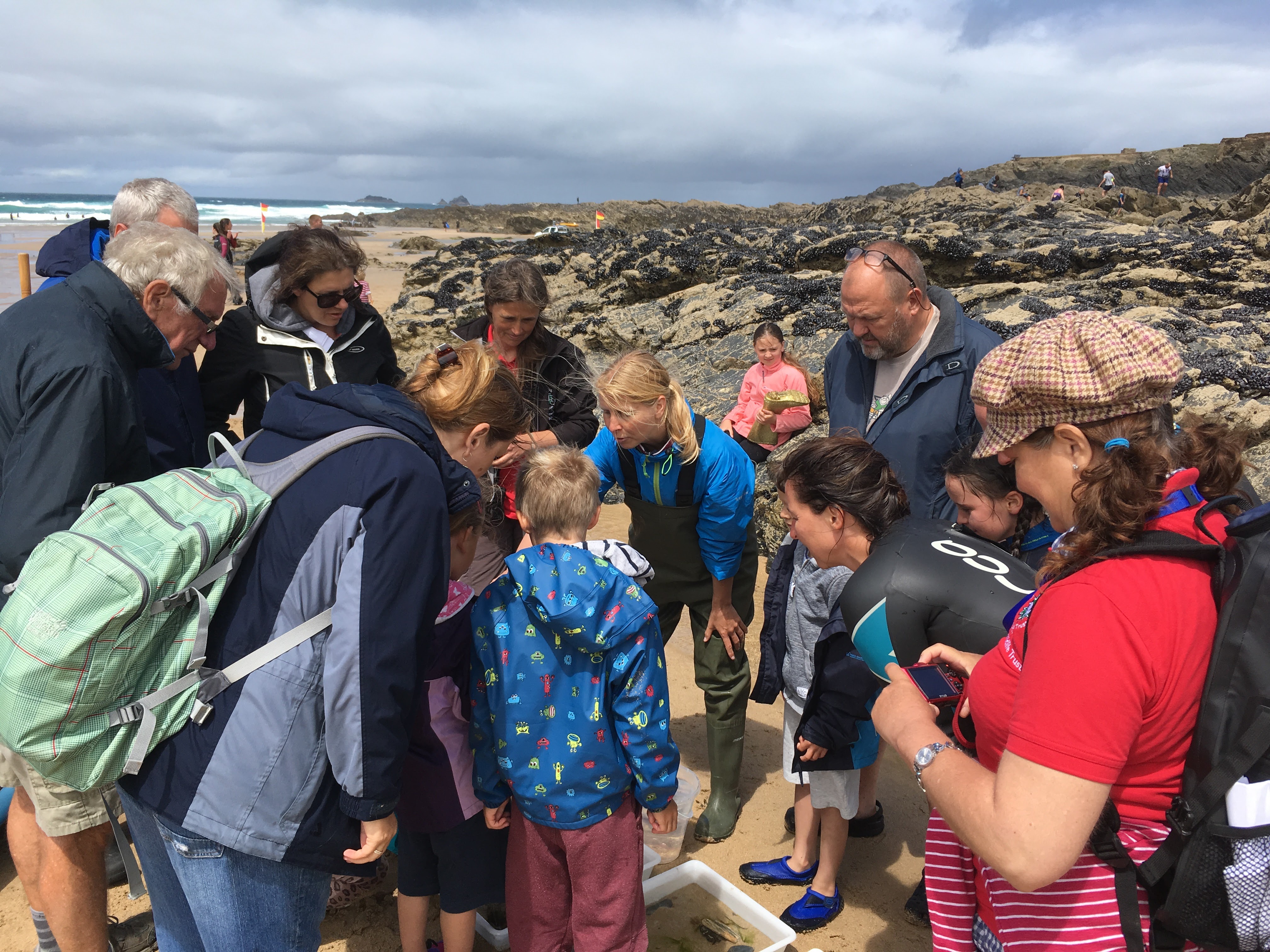
Spring tides and slightly more spring-like weather might finally coincide this weekend, so I’m preparing for a big weekend of rock pooling. If all goes to plan, I’ll be reporting back next week. In the meantime, I’m readying my waterproofs, planning which beach I’ll go to according to the wind direction and sorting out my photos from the last month. And of course, I’ll be at the Looe Marine Conservation Group Rock Pool Ramble on Monday at Hannafore beach, so maybe I’ll see you there?
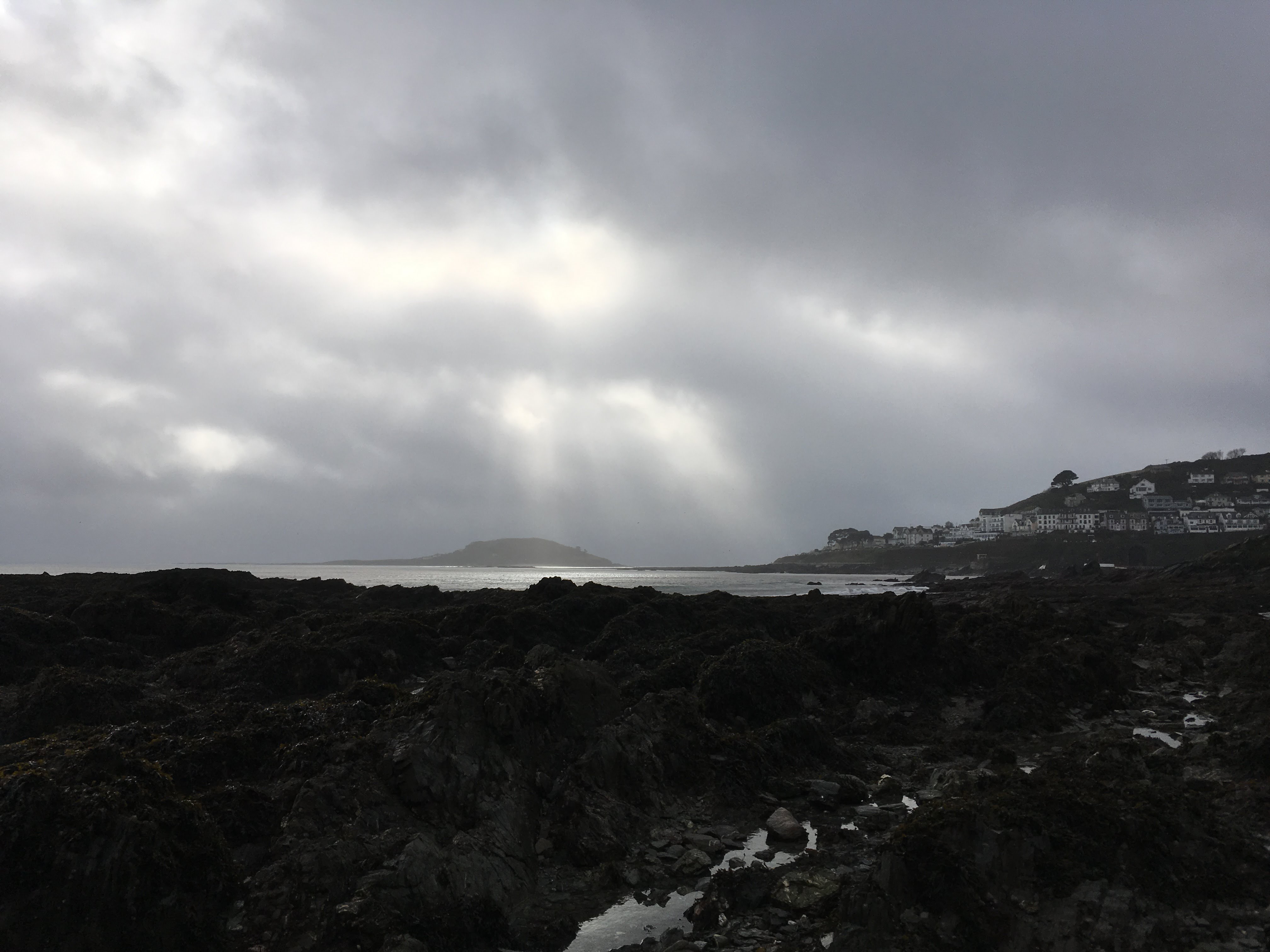
One beach I’m hoping to visit on Saturday is Millendreath. This sheltered south coast beach has an interesting geological history. Somewhere under the sand is a submerged ancient forest. Whether the nutrients come from there, drift along from the Looe river, or both, this beach has a unique fauna and is always full of surprises.
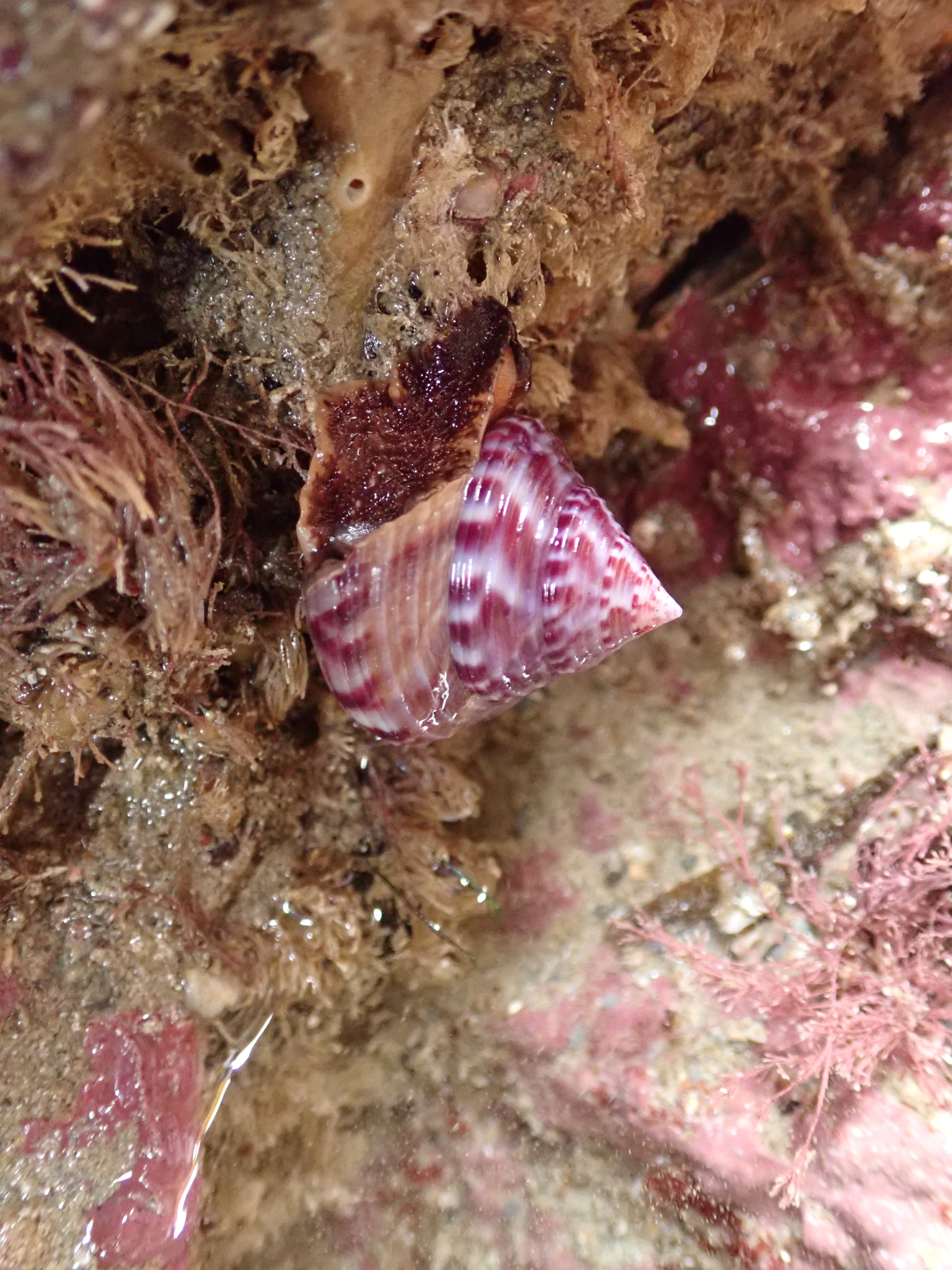
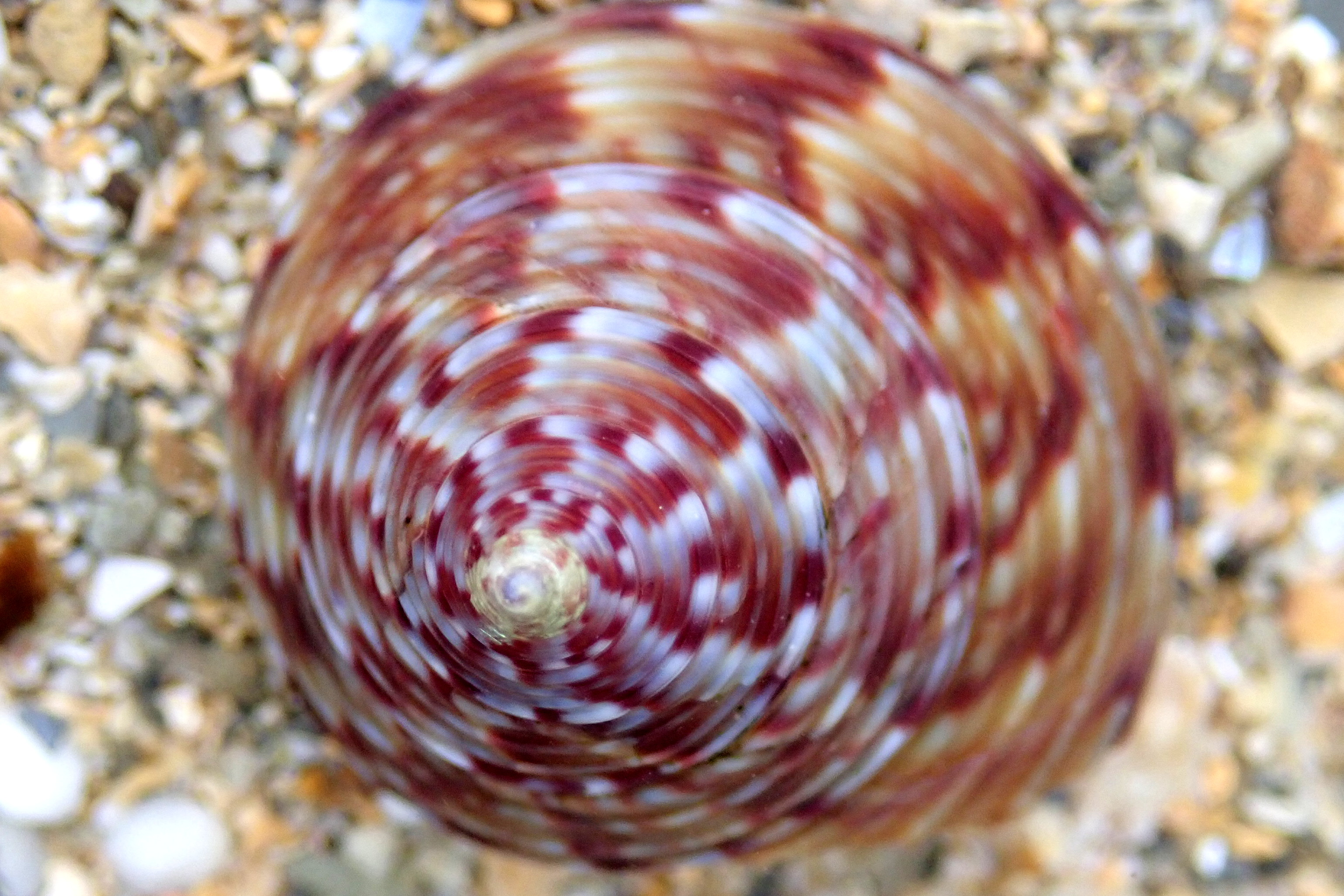
Pheasant shell at Millendreath
In the past I’ve found masked crabs, weever fish and unusual swimming crabs here. On my visit last week, it was all about the sea slugs and cucumbers.
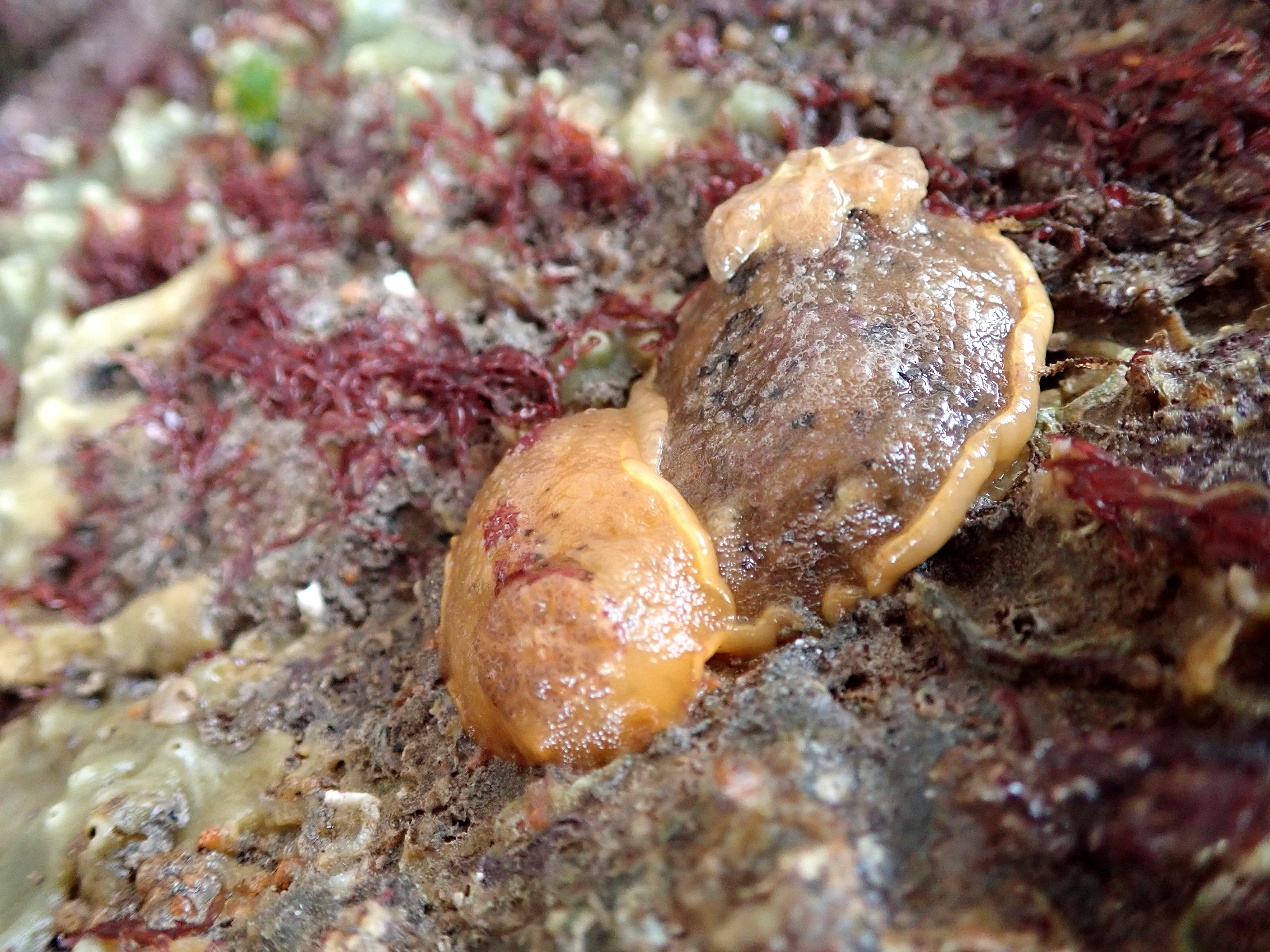
In the chilly breeze it felt less than spring-like, but these things seem not to bother the rock pool creatures. Sea lemons, a type of sea slug with a big circle of feathery gills on their back and pocked citrus-like skin, were everywhere.
Sea lemons – a type of sea slug – enjoying each other’s company.
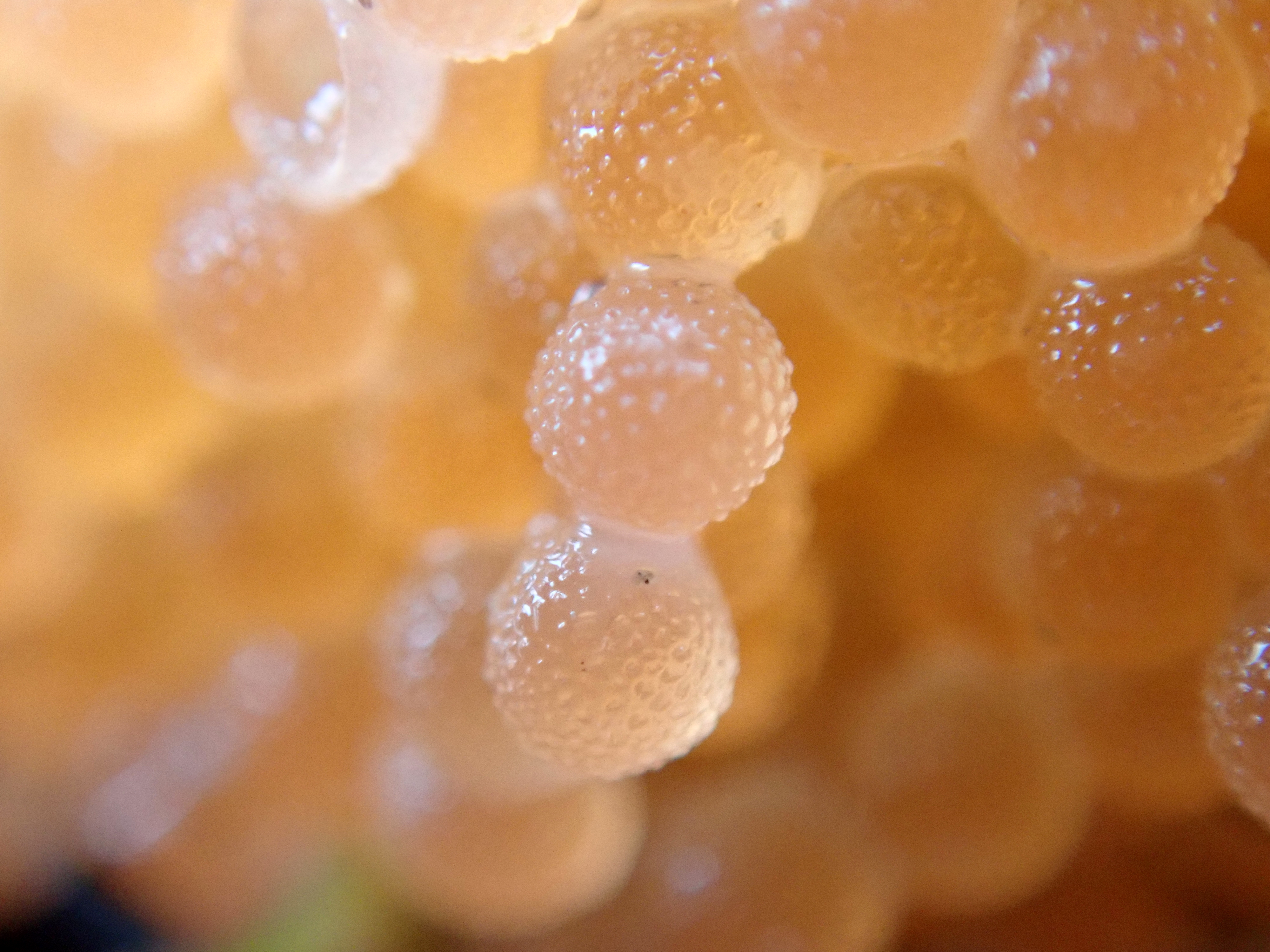
And so was their spawn.
A spiral of sea lemon spawn at Millendreath
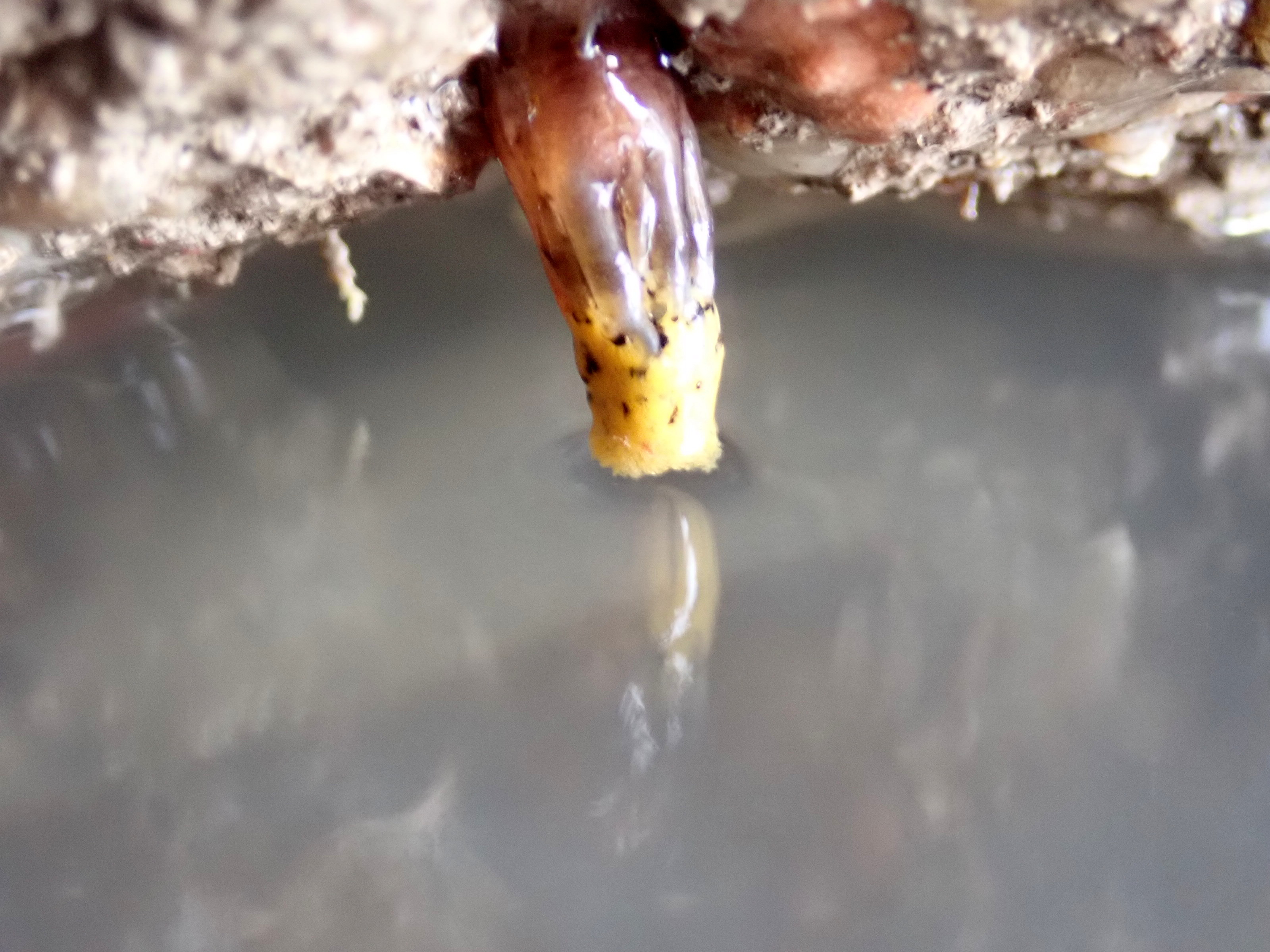
A species that seems to love the conditions here is the brown sea cucumber, Aslia lefevrei, which likes to hide away in holes in the rock with just its retracted tentacles sticking out. When these are fully extended they have a frilly, carrot-top appearance, but at low tide all we see is a yellow and brown blob.
Brown sea cucumber, Aslia lefevrei, at MillendreathThe tip of a brown sea cucumber, Aslia lefevrei
Among the seaweed at the edge of the shore, I spotted a fleck of orange. Old seaweeds often turn bright colours as they die back, but this fleck wasn’t attached to anything. After fumbling about in the cold water for as long as I could bear, I managed to scoop the fleck up and tip it into a petri dish.
Much of my time on the shore is spent staring at things, wondering if they’re animals or just tricks of the imagination. Often they’re nothing, but this one was definitely a something.
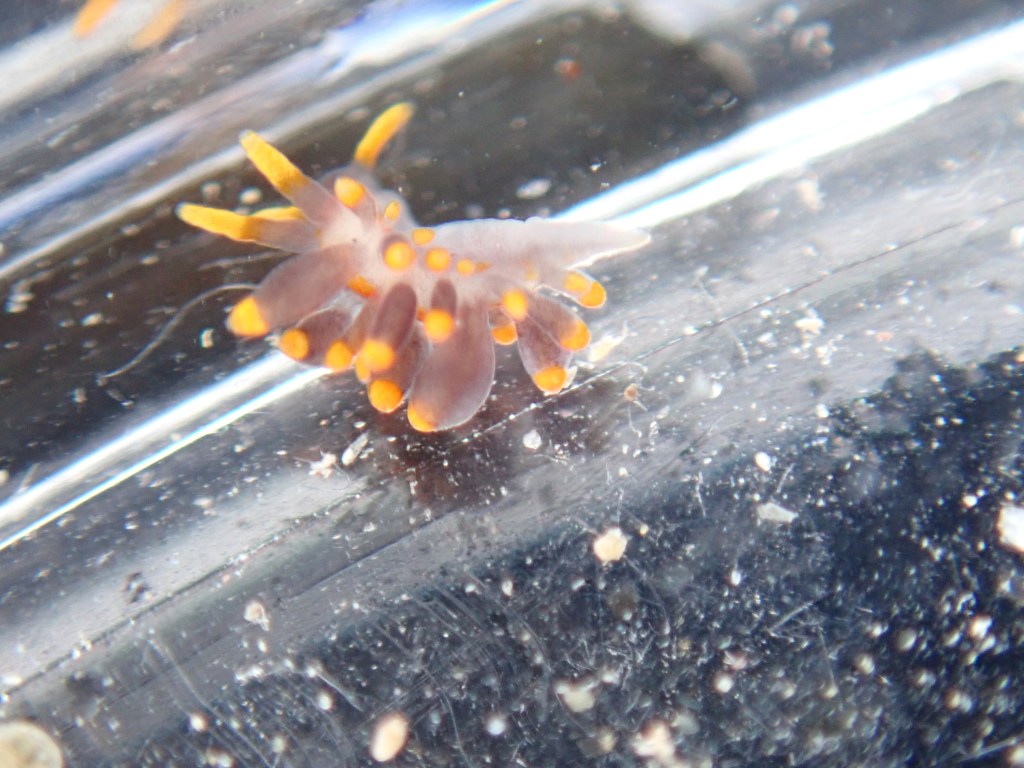
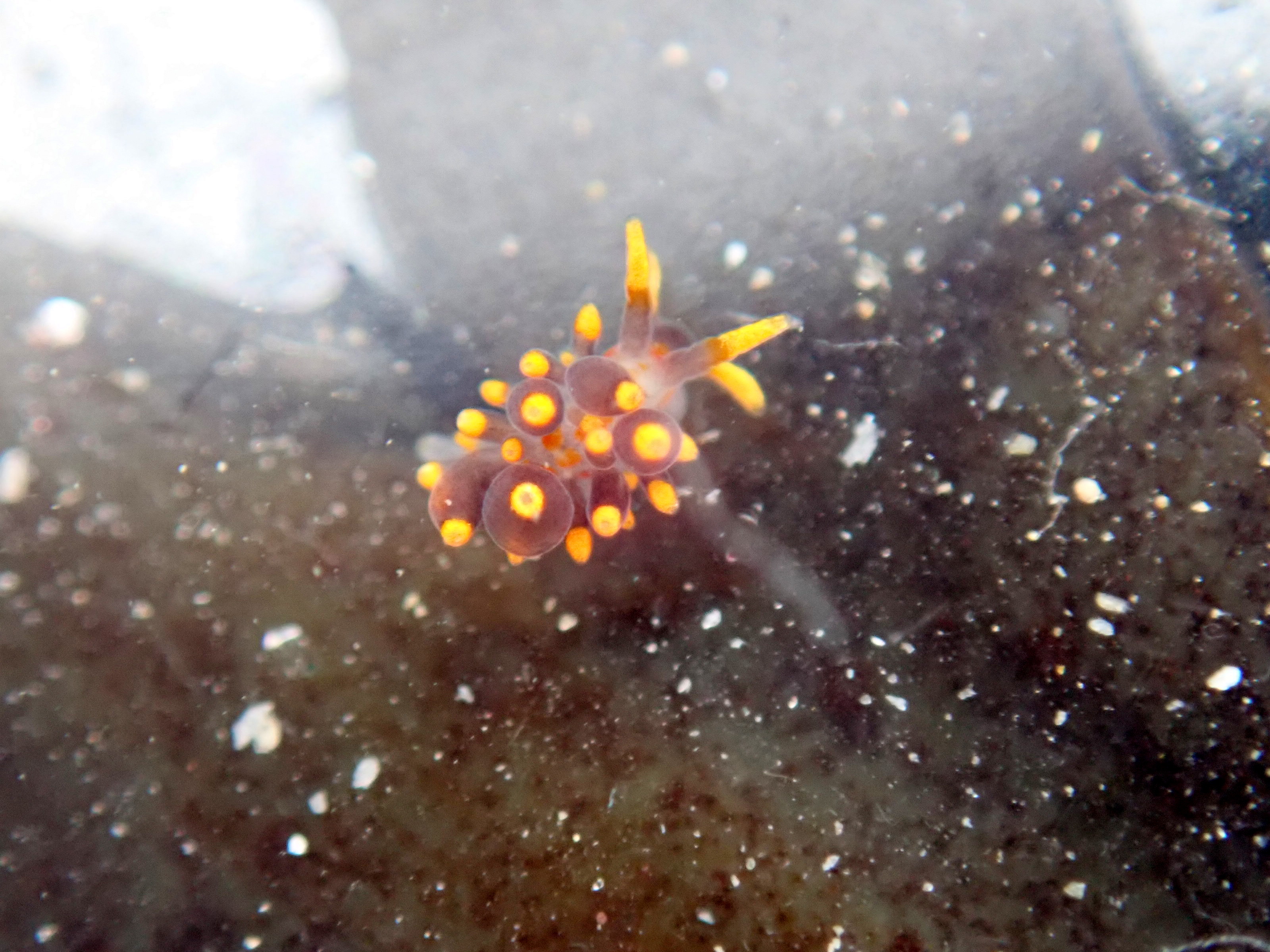
My blob – a Eubranchus farrani sea slug with 20p for scale
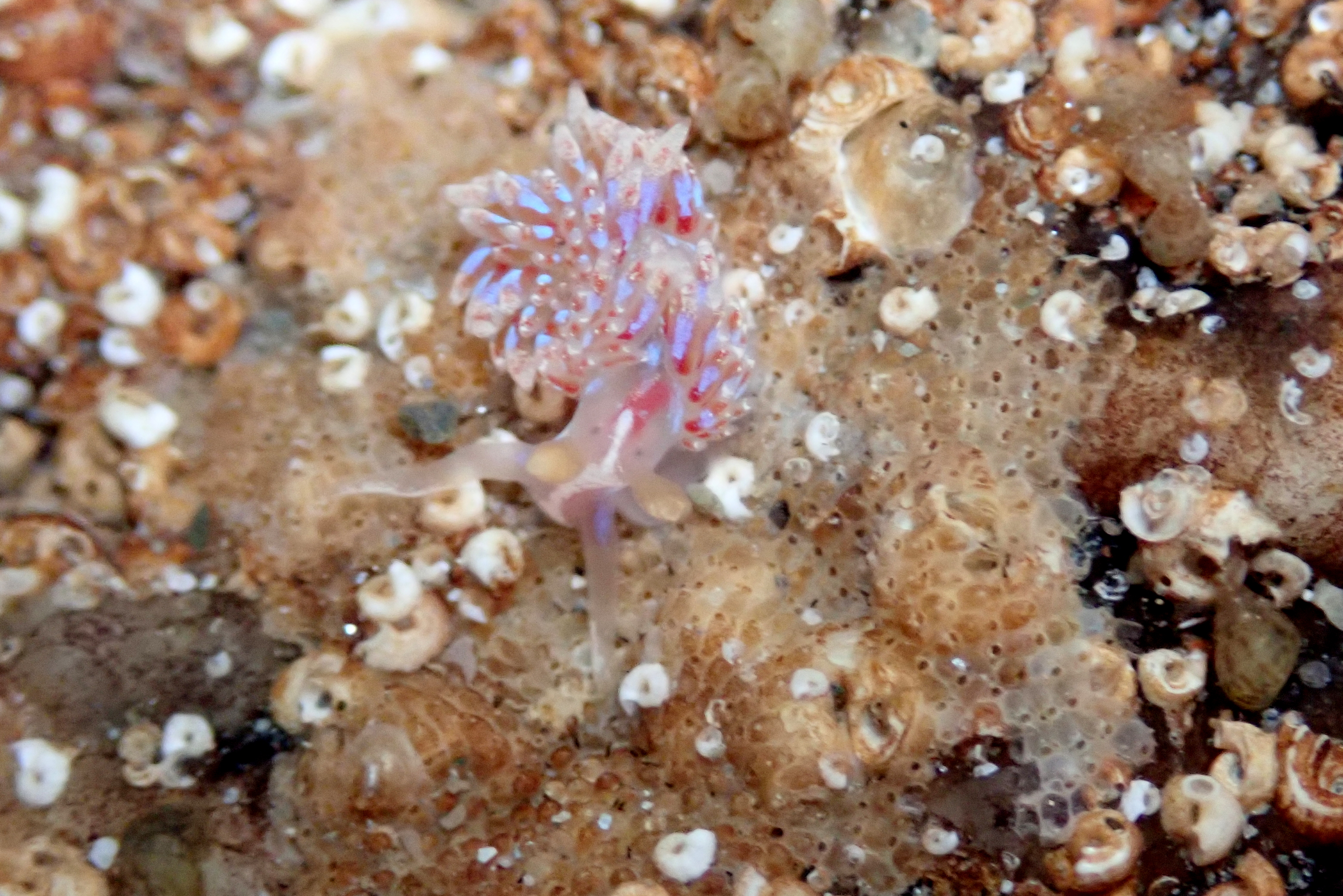
As it settled in the water, the blob began to unfurl and then to secure itself to the dish. It was definitely a sea slug, although still quite hard to see as you can tell from its size compared to the 20p piece.
Eubranchus farrani sea slug – close-up
The chunky cerrata on its back and the orange on its body were typical of the species, a Eubranchus farrani. By far the smallest one I’ve ever seen.
Conditions were too cold to spend any longer with my hands in the water, so I retreated to the upper shore to look for anemones with Junior and to let him dig around the stream. Perhaps one day he’ll dig down to the submerged forest?
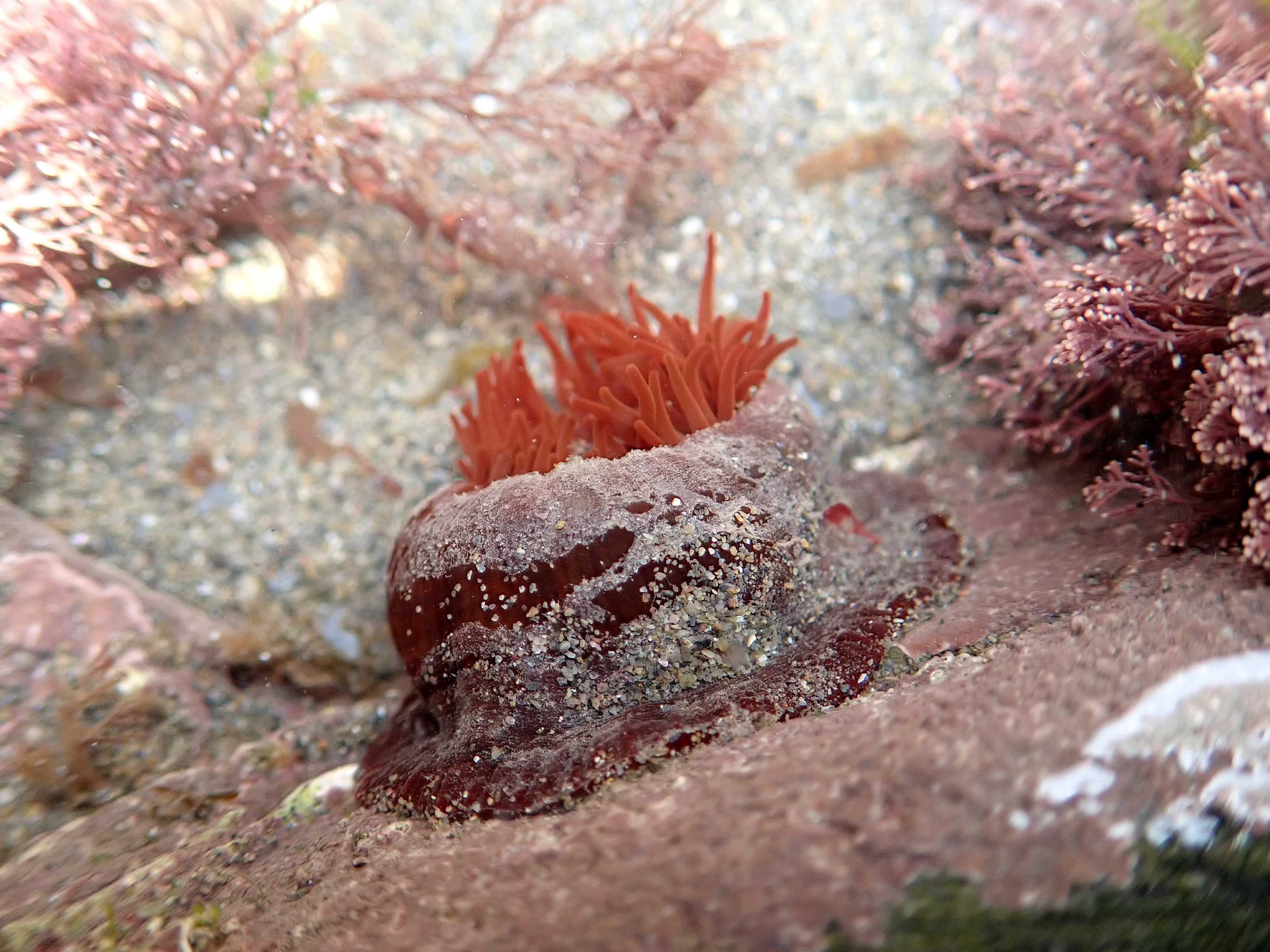
Beadlet anemone in a pool near the top of the shore, Millendreath
Even on uninviting, cold days, there are always things to find. Millendreath never fails to surprise me. Who knows what will turn up this weekend? Conditions should be easier, but I’m taking no chances. Other half got a big thermos flask for his birthday and I’ll be filling it with hot chocolate before we go out!
I wasn’t supposed to be rock pooling at all. It was Other Half’s birthday and we were joining my parents for a walk and lunch to also celebrate my dad’s birthday from the day before. To add to the celebration list, my parents were in the middle of their golden wedding anniversary break at the beautiful Meudon Hotel near the Helford river.
I did well at first, catching up on my parents’ late-night dash across the county to reach the hotel before the snow arrived, while we wandered in the gardens. We stared into the lush ponds and spotted a couple of newts and lots of tadpoles (because it was a family event, nothing like rock pooling).
As we wound our way down the valley we could see the remnants of the snow nestling among the fronds of the tree ferns. We could also see something else glinting in the distance. The sea.
Junior and I picked up the pace. We both knew there was a beach at the end of the path. He was clutching his spade ready for action and I had my camera in my pocket, just in case you understand…
Examining the geology in the cliffs at Bream Cove (I’m already drifting towards the pools).
While I was talking to Mum on the beach, we happened to drift ever-closer to the rock pools and, well… I couldn’t help myself!
At Bream Cove, like other beaches in this area, the folds and channels in the rocks create lovely gullies and pools. There was no shortage of wildlife to be found on the overhangs and in the sand at the base of the pools.
Each time we approached a new pool a flicker of movement caught my eye. At first I assumed it to be prawns or perhaps small blennies scooting out of sight, then I spotted the tubes.
Fanworm tubes built from sand among the topshells at Bream Cove.
The Acromegalomma vesiculosum fanworms that build these constructions to camouflage and protect themselves are extremely hard to photograph. On the end of each long feathery arm of their fan, they have a dark eyespot. As soon as they sense a change in the light, they retract back into their tubes at lightning speed.
I treated mum to a Cornish Rock Pools comedy spectacle as I crawled about on the rocks attempting to approach them from all different angles. No matter what I tried, the fan worms nearly always retracted before I could get close enough to focus and then stayed stubbornly inside their tubes.
Acromegalomma vesiculosum fan worm – my best shot
This beach has a wonderful collection of anemones; the whole area is great for them. In a single pool I found snakelocks anemones, beadlet anemones, a dahlia anemone and a daisy anemone. Like the fanworms, the daisy anemones do a quick disappearing trick when disturbed.
Daisy anemone
My favourite find of the day was this Harbour crab. All the books tell me it’s a common species, but this was the first one I have ever seen.
Harbour crab (Liocarcinus depurator) at Bream Cove
Like other swimming crabs they have flattened back legs, which act as paddles. In this crab the paddles are a bright blue or purple. Best of all were the eyes, which bulged out like yellow lamps. As I watched the crab demonstrated how it could swivel each eye separately in all directions . A great party trick.
The distinctive blue paddle on the back leg of the harbour crab (Liocarcinus depurator).
Nearby, Other Half (who had wisely decided the only way to get my attention on his birthday was to join me in the rock pools) found this mystery blob. It was around 10cm long and seemingly attached to the seaweed.
The mystery blob
It looked vaguely familiar but I didn’t have a clue why. The only white jelly-like blob as big as this that I could think of was squid eggs, which normally come in big clusters, but it looked all wrong.
With the miracle of modern technology, I soon had the answer. The amazing Seasearch Identifications Group on Facebook are poised at their keyboards any time of day of night, ready to identify anything that’s found, no matter how obscure.
Within minutes of posting, I had the answer. Mystery blob was a syphon from a large bivalve mollusc, probably a razor clam or otter shell.
Solved – this is the syphon of a large clam shell, e.g. Razor shell.
Quite what it was doing tangled in seaweed halfway up a rock, I’ll never know, but as soon as I saw the answer I knew why it had looked so familiar. Huge thanks to David Fenwick who runs the brilliant Aphotomarine species identification site, which is also well worth a visit any time you’re struggling to identify something.
Another great little crustacean find was this St Piran’s Crab.
St Piran’s Hermit Crab (Clibanarius erythropus) showing its equal-sized claws
Since they reappeared in Cornwall a couple of years back, they’ve been popping up everywhere. I only saw one, but with plenty of empty shells around, I’m sure there must have been others.
St Piran’s Hermit crab on the move with its black and white eyes sticking out.
The tide was falling beautifully and I could see more pools emerging. I had to accept, though, that if I wanted my family to ever speak to me again, I’d better tear myself away from the rock pools for the birthday lunch.
Bream Cove, like so many others on this wonderful stretch of coastline between Falmouth and the Helford, is firmly on my return visit list. There aren’t any facilities at the beach, but you can always pop up to the Meudon Hotel for a luxury cream tea!
I’ll leave you with a few more photos from my sneaky rockpooling excursion.
A striped venus shell (Chamelea gallina). There were lots of these living in the sand.Hairy crab (Pilumnus hirtellus)Painted topshell from above – the patterns make my eyes go funny!Dahlia anemone with tentacles partly retracted – the column is sticky so is covered with fragments of shell.An overcast Bream Cove looking towards Falmouth.
I’m not sure who cancelled spring, but I’m not impressed. Yet again, the spring tides are accompanied by ear-numbing winds and a flurry of snow. Just the thought of plunging my hands into the pools makes my fingers ache, and yet, like the fool I am, I wade into the pools to see what’s there.
Due to my reluctance to leave my warm house, it’s half-past low tide by the time I hit the beach. The easterly winds are dashing the waves against the rocks and the gully I’d hoped to explore is well and truly submerged. All that’s left is an average-looking pool.
My average-looking pool for the 15 minute challenge
I’m tempted to give up and go home, but I’m always telling people that there’s something in every pool. That you just need to go slowly and look closely. I set myself a 15 minute challenge to find as many species as I can.
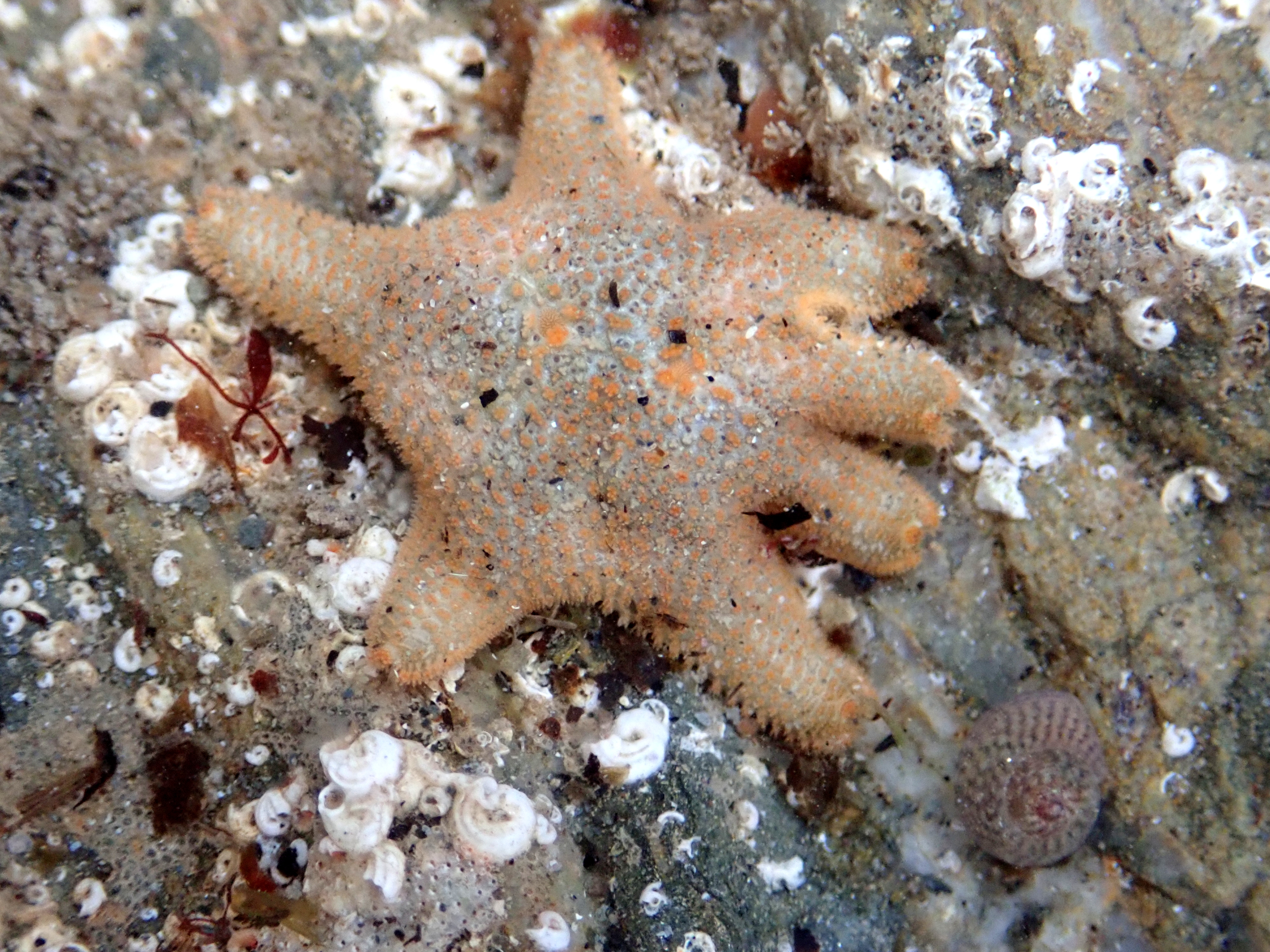
One of my first discoveries is this wonderful mutant cushion star. According to the books, these have five arms. Clearly this one hasn’t read the books. At some point it has lost one or more of its arms and in an incredible feat of regeneration it has sprouted an excess of new ones.
A Cushion star trying to pass as a Seven-arm starfish.
In fact, this cushion star has put so much energy into sprouting arms that it now has a total of seven arms. I do sometimes see another species, the Seven-armed starfish, but they are bright orange and have longer arms so I’m not fooled. It’s a nice try though.
There are lots of molluscs including several colourful painted topshells.
Painted topshell
Nearby, a colony of dog whelks huddles in a crack in the rock, around their yellow egg capsules.
A colony of dog whelks with their yellow egg capsules
It’s hard to see through the wind-rippled water into the tangled seaweed below, but this Calvadosia campanulata stalked jellyfish catches my eye. Its bright-white stinging cells stand out among the pink and red seaweed fronds.
Calvadosia cruxmelitensis stalked jellyfish
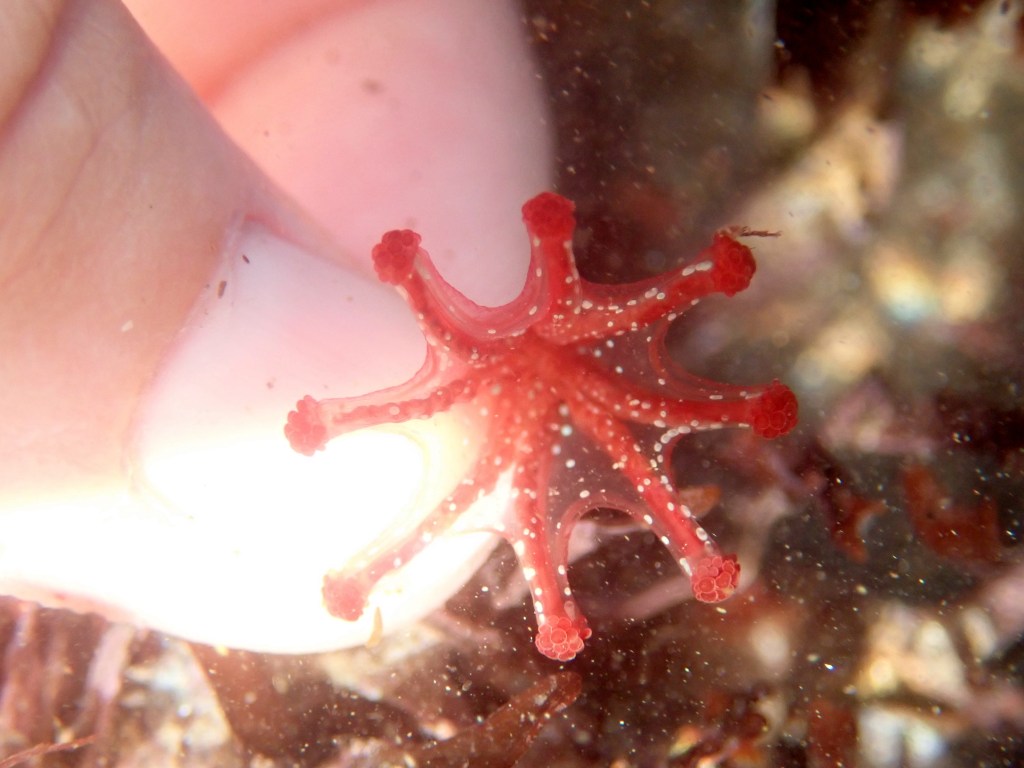
There are several more stalked jellies, including this Haliclystus octoradiatus. This species has a blob between each pair of arms, which acts as a sucker (‘primary tentacle’) allowing the jelly to flip upside down and cartwheel along the seaweed. This one seems to have two suckers between some of its arms. It also has an extra arm (nine arms instead of 8).
I start to wonder if this pool is going to be full of mutants with extra arms and tentacles.
Another mutant – a nine-armed Haliclystus octoradiatus stalked jellyfish with some extra primary tentacles.
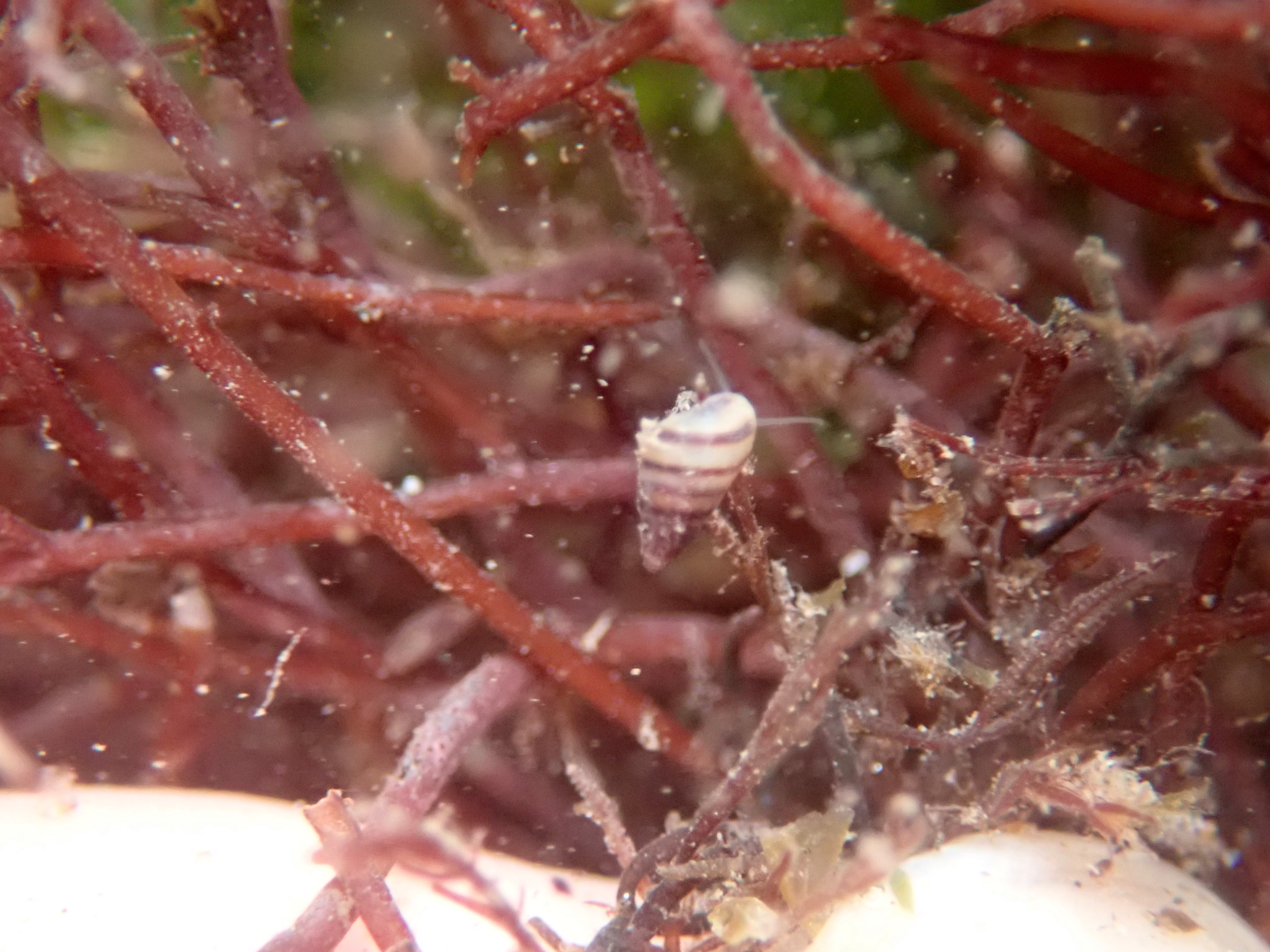
The waves are breaking over the rocks and splashing over my back and the water level is rising precariously close to the top of my wellies. I take a few more quick photos of some wriggling worms, strawberry anemones and a banded chink shell just a few millimetres long.
Banded chink shell (Lacuna vincta)
As I leave the pool, I find a Saddle oyster shell. These small oysters attach to the underside of rocks and have round hole in the upper valve.
Inside of a saddle oyster shell showing its incredible mother-of-pearl colours
It may be a grey day, but the inside of the shell is coated in the most brilliant mother-of-pearl, shining with every colour of the rainbow. I’ll take it as a sign that spring’s on its way.
There’s no better way to explore the shore than with a group of experienced rock poolers. During this month’s big spring tides, I was privileged to join a small, dedicated team to survey Hannafore Beach in Looe. Best of all, David Fenwick who runs the brilliant Aphotomarine website brought along his newly-converted marine laboratory camper van for a test run.
A few weeks on and I’m still downing hot chocolate to recover from the cold (any excuse!), but this was a priceless opportunity to expand my knowledge and encounter new species. Over the week we recorded over 230 species, some of which I never knew existed and I finally found my first Snake pipefish.
Glamorous beach wear for the new season – I’m wearing every piece of clothing I own under my waders! Photo by Cornish Rock Pools Junior.
Day one got off to an inauspicious start. David’s marine lab van broke down on its way to the beach, meaning he missed the best of the tide that day. Those of us who did make it had to leap back into our cars to take refuge from the hail before we’d even got our boots on. Despite the wind chill, we were soon in full swing. Incredibly, the pools were full of signs of spring.
Scorpion fish lay their clusters of yellow glitter-ball shaped eggs earlier than most other species. In some, the baby fish were already taking shape and hundreds of eyes gazed into my camera lens.
Scorpion fish eggs with eyes looking out.A Scorpion fish (Taurus bubalis) – perhaps one of the proud parents – relying on camouflage not to be seen.
Along the grooved bellies of some of the worm pipefish, there were also lines of eggs. Like seahorses, it is the male pipefish that carries the eggs until they hatch.
It’s hard to think of slugs as migratory animals, but several sea slug species have made their annual journey onto the shore to breed. We saw lots of the rarely-recorded slug Aeolidella alderi. My friend Jan from Coastwise North Devon found one that had been chomping on a dark anemone. The colour had passed into the cerrata on its back so that instead of the normal bright white, this one looked almost red.
Aeolidella alderi sea slug – with pigment in its cerrata, probably from eating an anemone.
Another had distinct yellow tips to its antenna and cerrata. This species always has a ring of short white cerrata below the head, making them look like they’re wearing a white ruff.
Another Aeolidella alderi – this time with yellow tips to its cerrata and antennae.An unusual yellow Daisy anemone – perhaps what the sea slug had been eating.
Nearby, a relative of Aeolidella alderi, the more common ‘Great grey sea slug’ (Aeolidia sp. probably filomenae) is feasting on an anemone. This hungry slug isn’t holding back and has dived headfirst into its feast.
Headfirst into its lunch – a Great grey sea slug (Aeolidia sp.) eating a snakelocks anemone.
Yellow-clubbed sea slugs (Limacia clavigera) were also out looking for mates. They’re not easy to spot when the tide’s out, as they look like minute splodges of white jelly on the rocks. Once in the water, they are transformed, with spiral rhinophores sprouting from their heads and robust yellow-tipped cerrata sticking out from their heads and bodies.
Limacia clavigera – the yellow-clubbed sea slug exploring my petri dish.
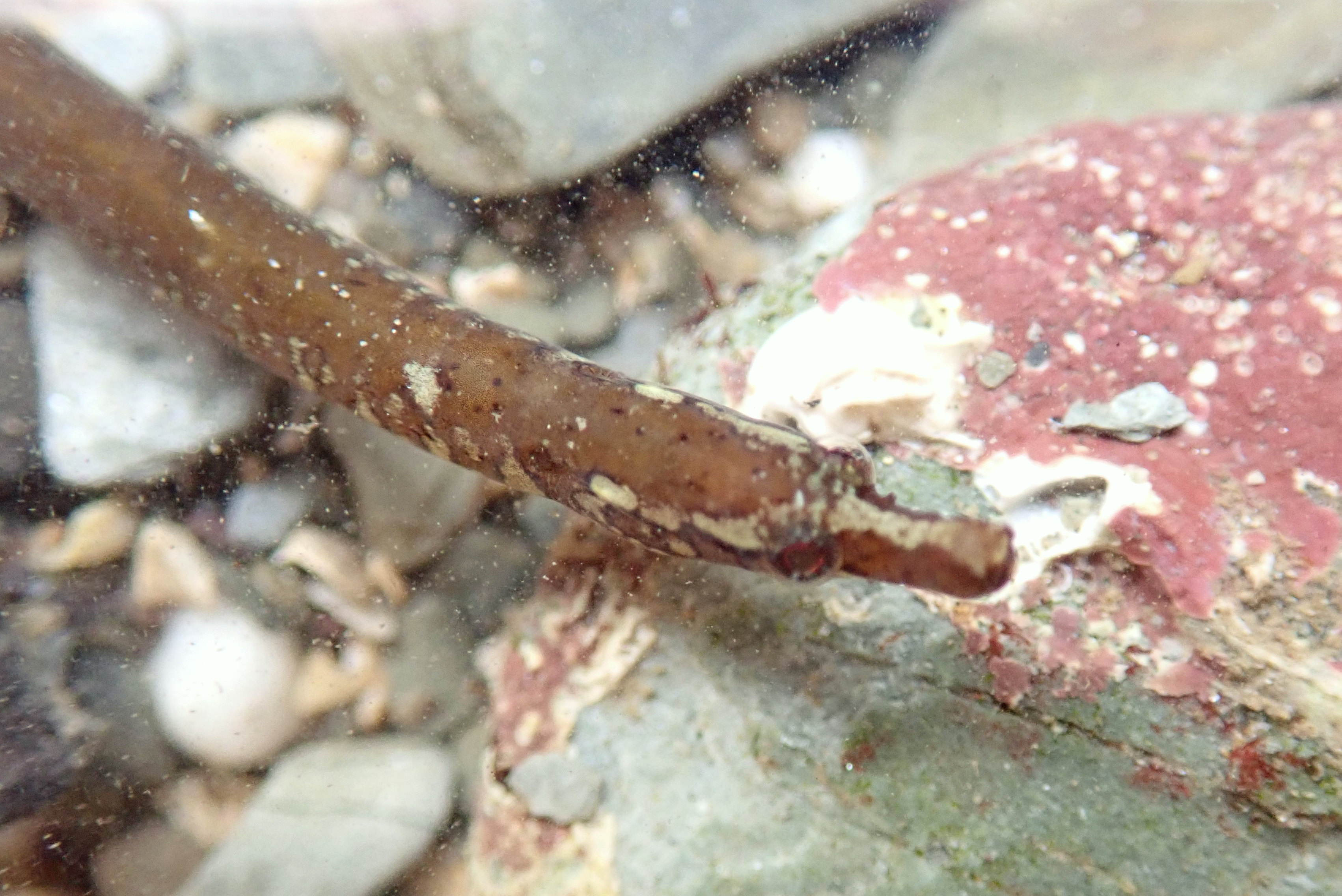
When, towards the end of day 2, I glimpsed a shape gliding through the seaweed my heart leapt. I’ve been looking out for this fish for years to no avail, but this one was hovering above my foot. Snake pipefish, like other pipefish, freezes and relies on its fabulous camouflage to escape predators.
Snake pipefish showing off its distinctive trumpet nose and pale striped pattern.
I was able to reach into the water and lift it out for a quick photo. It wasn’t slippery to hold, but it wound its body around my arm so I had to overcome the powerful urge to squeal and drop it.
Snake pipefish can grow to 60cm and have pale vertical lines down their bodies so are easily recognised. They like to live among sea grass beds so are not commonly seen on the shore.
Snake pipefish (Entelurus aequoreus) on a brief visit to my bucket before release.
Inevitably, other fish were more evasive. David saw a Conger eel among the kelp, but it slipped away.
Among many amazing and less-common species, David Fenwick showed me this rare prawn, Caridion steveni, which appeared to have an especially short, blunt ‘nose’ (rostrum) compared to some other species. Its bright red pigmentation helps it blend in to the seaweeds.
Caridion steveni – A rare prawn species (Hippolytidae family)
Among the weeds on the rocks, tiny spider crabs were everywhere, only visible when they moved their spindly legs. Even when I take close-up photos it can be hard to make out the shape of the crabs.
A small spider crab – Macropodia deflexa (identified by its downcurving rostrum)
Junior spotted a crab with an even more amazing disguise. We were looking under a boulder when he gasped and pointed at a seaweed-covered stone.
What I thought was a seaweed-covered stone.
‘It’s a crab, I saw it move,’ he whispered, as though it might hear him and realise the game was up.
Whichever way I looked at the stone that Junior was waving his finger at, it still looked inanimate. It was only when I picked it up that I felt the sharp spines of the Common spider crab (Maja bracchydactyla) lurking below the seaweed camouflage. We turned it over to see the crab’s legs neatly tucked under its carapace. Junior delighted in placing the ‘stone’ back in the water to watch it sprout legs and scuttle away into the safety of the seaweed.
Even up close it was hard to tell this is a crab – but I could feel the sharp spines on its shell and the legs began to move.
On day one I reached, or frankly surpassed, my cold tolerance limit. By the end of the week I was only able to function by keeping my hands thrust deep inside my scarf to warm them against my neck. I must have ressembled a trussed chicken, but there was no point caring. As always, the rewards outstripped the pain.
Next weekend we’re expecting some huge spring tides in Cornwall, and yet more freezing winds, so you know where I’ll be.
Even my family look at me strangely when I suggest rock pooling in this weather. The Met Office reckons it’s going to turn out fine, but the wind is flinging water straight into our faces and the beach is deserted. We huddle down on some damp rocks and rush to eat our pasties before the rain turns the pastry soggy.
“I wonder if people realise what you go through to put pretty pictures on your blog?” Other Half says.
I nod, watching the waves crashing onto the shore and thinking that it’s worse than that. In these conditions I’m unlikely to find much, let alone manage pretty pictures.
Fortunately, I’m wrong.
Cornish Rock Pools in Looe – fuelled by rain-soaked pasties
After a quarter of an hour of staring into holes in the rock, taking lots of rain-blurred photos and a few passable ones of common crab and barnacles species, I’ve established that my waterproofs are anything but waterproof. If it’s possible, the rain is getting heavier.
Volcano barnacle
Cornish Rock Pools Junior and his dad have wandered off and are probably reaching their tolerance limit. I find a stalked jellyfish and think that’s likely to be the most exciting find of the day.
A stalked jellyfish (Calvadosia cruxmelitensis) in a pool
I lift the edge of one last stone. There are some thick yellow sponges and the rock is crusted over with bryozoans. Broad-clawed porcelain crabs are scuttling along and there are little banded chink shells. On the far side is a spot, maybe half a centimetre across. It’s hard to make it out, but it has a blue-ish tinge and a lined appearance, like an anemone out of the water.
I think it’s a sea slug, but it’s far too delicate to pick off the rock and even if I do there’s nowhere to put it. I need to see it in water otherwise it’s just a blob of jelly. There’s no chance of that here at the base of the gully where the waves are pounding in, so I heave the boulder up the shore and lower the side with the slug into the nearest pool.
Facelina auriculata sea slug unfurls its tentacles and cerata in the water.
Shelter’s hard to come by. The surface of the pool distorts with every gust of wind and the rain goes up the back of my coat and into my ears as I lean over to hold the rock in position. Straight away, I know this is definitely a sea slug. In the water, its cerata pop up all over its back and long tentacles and rhinophores unfurl around its head.
This is the sort of colourful, beautiful slug that I’m always hoping to find and only rarely do. Under the camera it has striking red lines and markings up its cerata, white stripes down its head and an iridescent blue sheen that changes as it moves.
Facelina auriculata – the red patch behind its head is the oesophagus
This is a new slug to me and I can’t wait to look it up when I get home to check the exact species. In the meantime, I take as many photos as I can before hauling the rock back to the same spot where I found it. That done, I rush up the beach to tell my Other Half, Cornish Rock Pools Junior and everyone else I see that day about how amazing my sea slug was.
Facelina auriculata sea slug – from different angles the colours seem to change.
Thanks to my pile of identification books and the quick responses of the hugely knowledgeable members of the NE Atlantic Nudibranchs forum on Facebook, I soon have it confirmed as Facelina auriculata (previously known as Facelina coronata).
This slug is found around many coasts of the UK, and is meant to feed on hydroids, although I didn’t see many in the vicinity of this one. I’m very lucky to find it intertidally on such an average tide.
If you think rock pooling isn’t a normal sort of thing to do in January, I can understand that. You’re probably right and I think my family would agree with you, but you never know what’s going to turn up next in the Cornish Rock Pools.
Sometimes it’s worth braving the horizontal rain just in case.
See – it’s lovely out there! Looe rock pooling in January.A Xantho pilipes crab – they vary in colour but always have hairy back legs.And did I mention I found a sea slug? So excited…
Happy New Year everyone! Having started 2018 in bed with flu, I’m hoping this year’s going to improve as it goes along. The sun’s shining and there are some good tides later in the week, so I’m feeling hopeful.
In the meantime, I’m cheering myself up looking back at some of the incredible creatures I met in the Cornish rock pools last year.
I hope you enjoy last year’s highlights and I’m looking forward to seeing what 2018 brings.
January
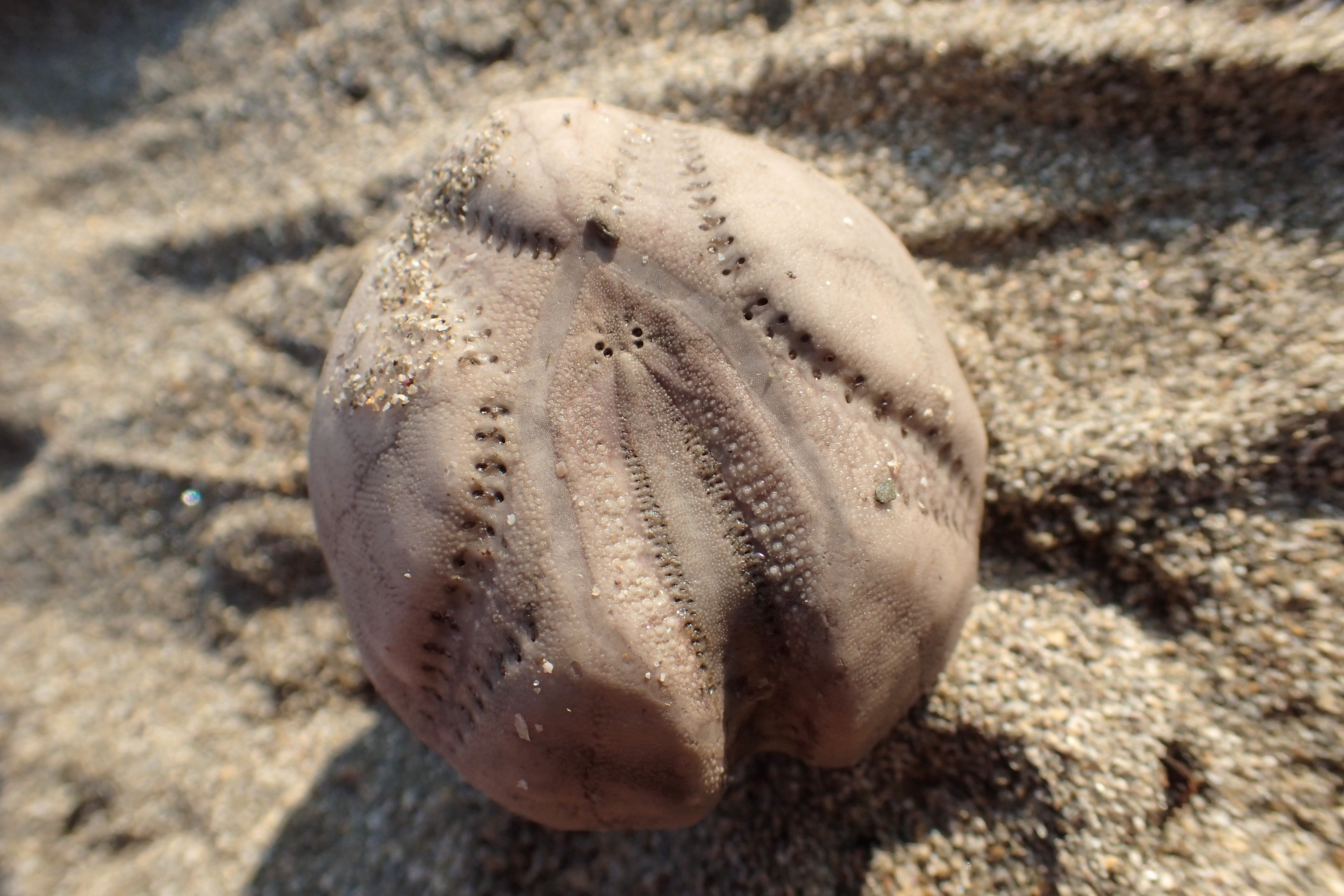
‘Sea potato’ – these little urchins are covered in spines when alive. They bury themselves in muddy sand but sometimes get washed to the surface in storms.
Feburary
My unexpected encounter with ‘Bob’ the lobster in February was one of those wildlife moments that takes your breath away. You really never know what might be lurking in the Cornish rock pools.
March
This mutant double-headed stalked jellyfish (Calvadosia cruxmelitensis) caught my eye in March. Stalked jellyfish have special protection and I spend a lot of time recording these species. There are several different species in Cornwall and some of our Marine Conservation Zones and other areas of coast are importants sites for them.
April
I’m always getting distracted… while surveying for stalked jellyfish at a site which may be threatened by development, this absolutely tiny sea slug caught my eye. It’s a Doto coronata – such a great name. There were several ‘crowned Dotty’ slugs among the hydroids.
June
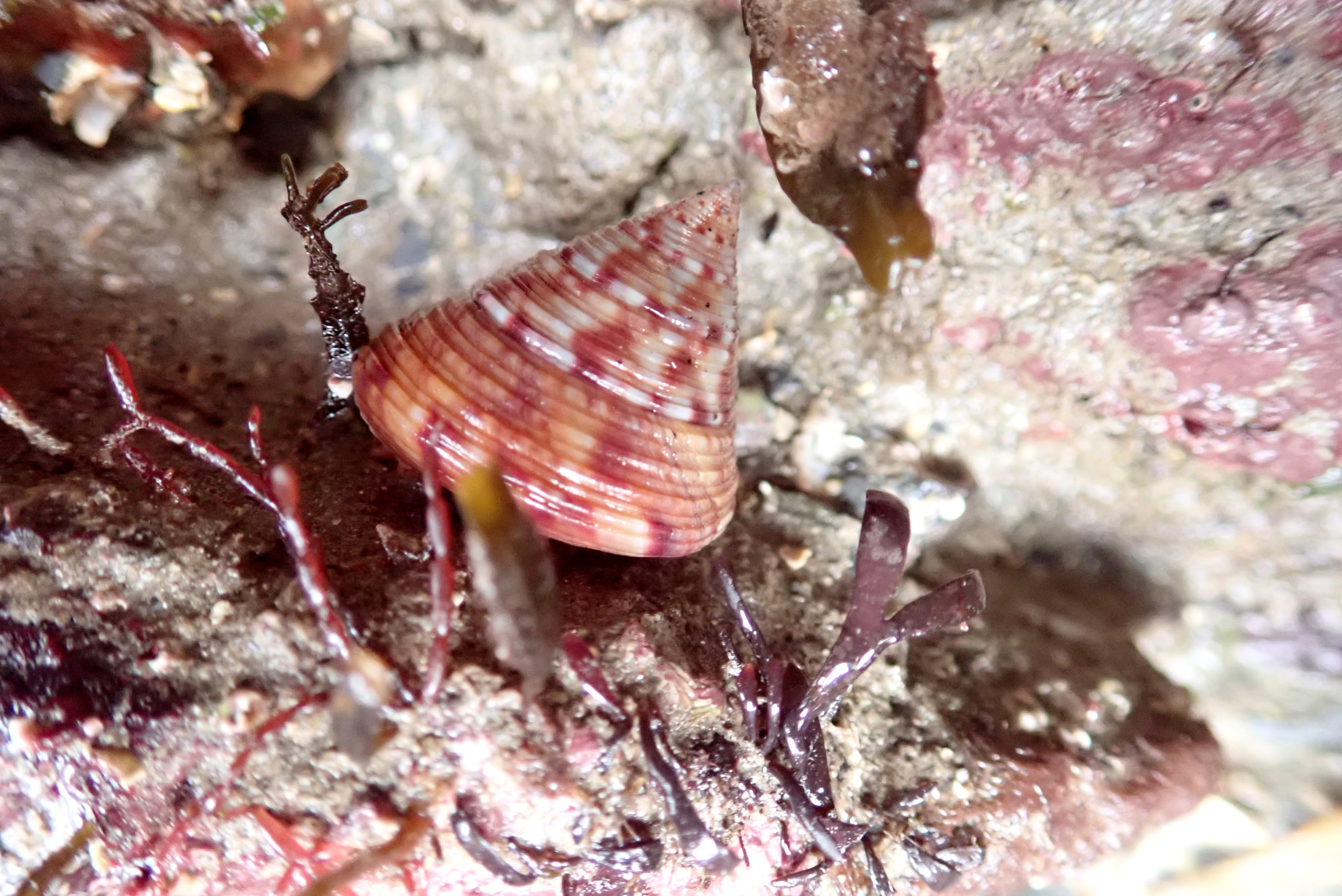
2017 was my first year of leading events for the Cornwall Wildlife Trust’s junior branch. I used to love the events as a kid and introducing a new generation and their families to jellyfish, starfish and other rockpool creatures is so much fun! I can’t wait for my 2018 Wildlife Watch events and the Looe Marine Conservation Group rockpool rambles where I also volunteer.
July
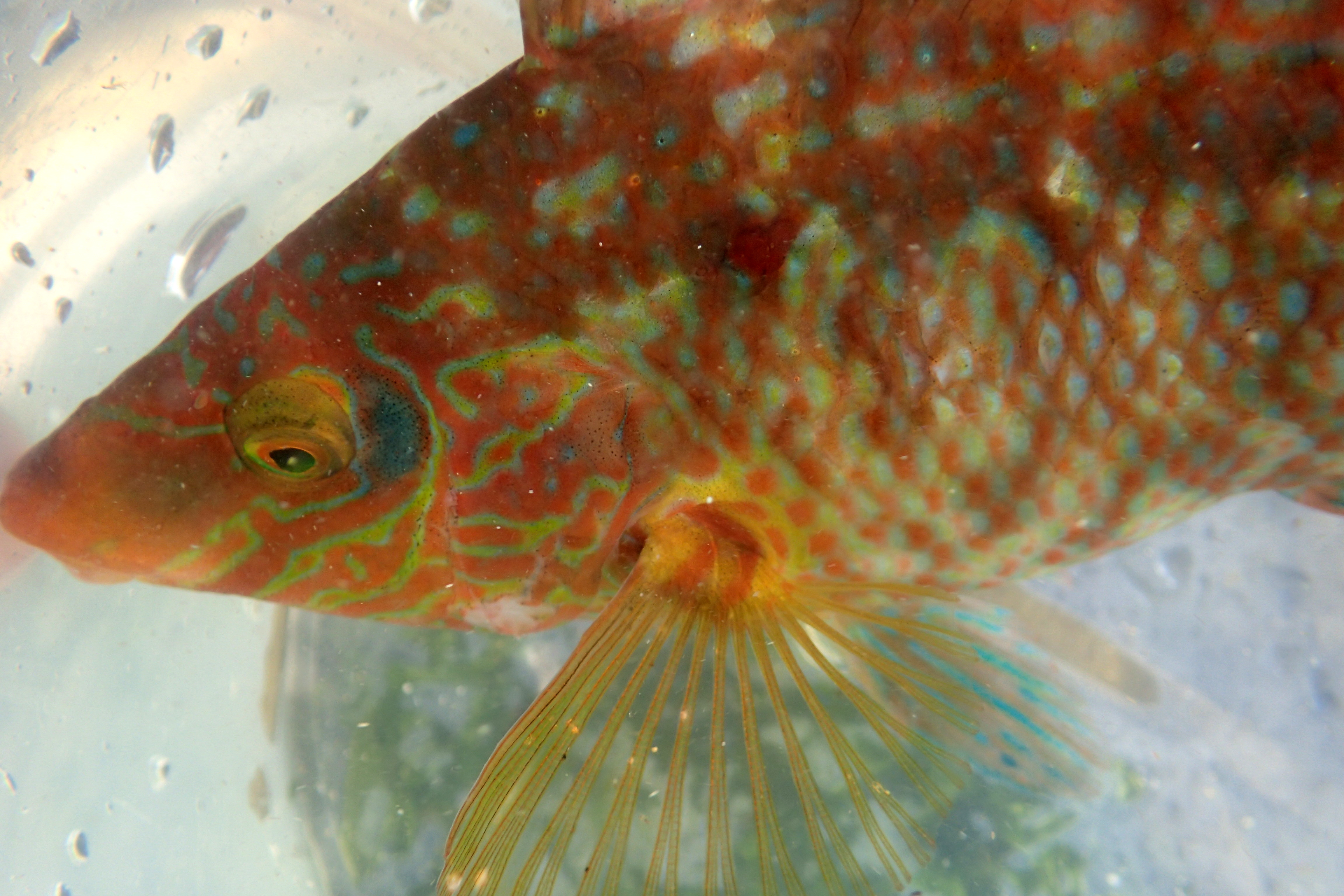
Fish always seem to get away, so we were all very excited when I managed to coax this beautiful Corkwing wrasse into my bucket on a family rockpooling day. It’s such a tropical looking fish.
August
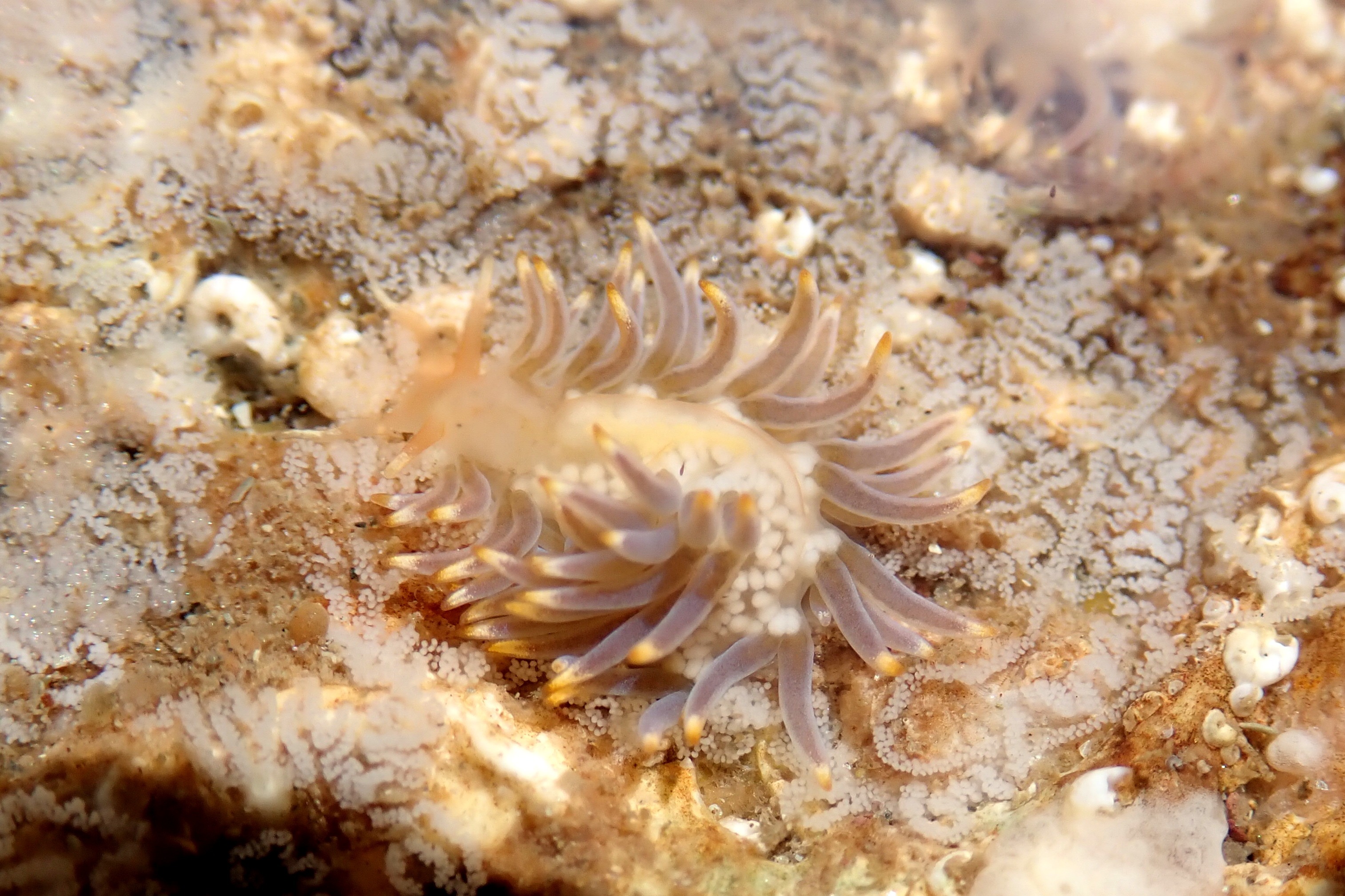
My absolute favourite finds of the year were the two species of sea slug that feed on fish eggs. Calma glaucoides (pictured here with its own eggs) feeds on clingfish eggs. I also found Calma gobioophaga, which feeds on goby eggs. Sea slugs really do have the best names.
September
I was away in Brittany in September visiting our twin town, Quiberon. I couldn’t resist having a rummage to see what was in the pools and was amazed to find this crab, Pachygrapsus marmoratus. It’s native to the Mediterranean but is gradually moving north. Next stop Cornwall?
October
Portuguese Men O’War began washing onto Cornish beaches in the summer, but didn’t turn up in Looe until October. Amazing creatures – like pink and purple stinging pasties. Happy days!
November
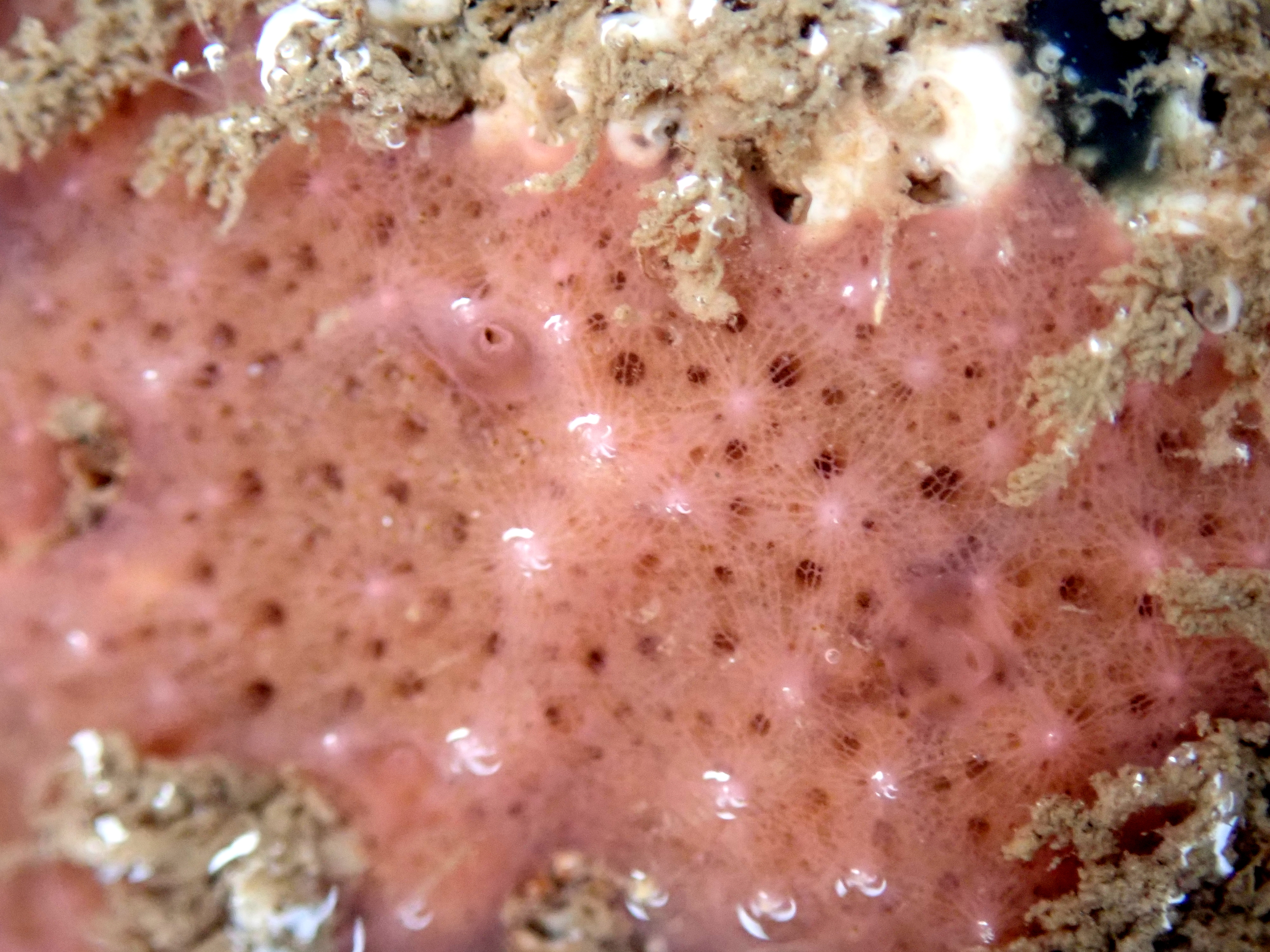
Most people think there’s not much to see in the rock pools in November. They’re wrong of course! This sponge, possibly Myxilla rosacea, was one of the prettiest things I saw all year.
December
The Cornish rock pools are full of tiny creatures that are often overlooked. I could have spent all day watching this 3-spot cowrie (Trivia monacha). The colours are amazing and there’s something incredibly fetching about its big orange syphon. A perfect way to end the year.
It’s the shortest day of the year, but there’s no shortage of colour and life in the rock pools here in Looe.
I try out a pool I’ve not explored before and am blown away by the variety of animals going about their day, searching for food and shelter.
Easily my favourite find of the day is this European three-spot cowrie. Although they’re not uncommon here on the south-east coast of Cornwall, at low tide they’re usually retracted in their shells or abseiling from the rocks on a mucous thread.
To find one fully extended out of its shell, its orange syphon probing the weeds and its leopard-print mantle curled around its shell, is fabulous. I’ve always loved finding these shells washed up on the beach, but the live animal is incredibly colourful. It looks far too tropical for our cold waters.
European three-spot cowrie looking glamorousEuropean three-spot cowrie
It’s not a great low tide but this large, shallow pool is ideal for all sorts of creatures.
Painted top shells are plentiful in this pool – there must be lots of food for them.Like the cowrie, this thick-lipped dog whelk has a long syphon.A Velvet swimming crab lurking under an overhangThese hydroids and bryozoans have their feeding tentacles outA stalked jellyfish – Calvadosia cruxmelitensisWorm pipefishA young snakelocks anemone
Everywhere I look, there are more animals going about their business. Hermit crabs scurry past me and a fish takes shelter under my welly.
From now on, the days will get longer, and before long the sea slugs and fish will begin to move in to the shore to spawn. It seems some can’t wait for spring – even today I find a pair of Berthella plumula sea slugs under a stone!
If you’re in Cornwall this Christmas, take a look at the rock pools. You won’t be disappointed.
Nadelik Lowen!
Berthella plumula sea slug – I find two under a rock so it looks like they’re planning to spawn soon.Who needs a Christmas tree when you can just decorate yourself in seaweed? ‘Decorator’ spider crab – Macropodia sp.
Not many people go rock pooling this time of year. While everyone is busy with the Christmas shopping, Junior and I have the whole beach to ourselves. This is a perfect time of year to watch the common rock pool species going about their business, to enjoy the vivid colours and, as always, make some discoveries too.
Our first surprise is a stranded flounder, possibly dropped by the heron that flapped away as we arrived on the shore.
The upturned flounder revived considerably once it was in some water.
Assuming the unmoving fish is dead, I scoop it off the muddy sand into my bucket. As I do so, it flaps a little and we stumble through the quicksand pools to find it some water. After a few minutes lying still in the bucket, it seems to revive and we release it in a deep pool alongside a good overhang. It glides straight into the shelter of the rock and buries itself in the sand.
In the dark days of winter, the colourful anemones are even more striking and this beach is a great spot for Strawberry anemones.
A strawberry anemone brightening up a pool
There are more bright red spots among the seaweeds. Dozens of juvenile Sea hares, each just a few millimetres long, are grazing away. They’re hard to spot among the red weeds, but they’re beautiful little beasts. Their red bodies look like they’re flecked with snow and their extremities are tipped in black as though they’ve been dipped upside down in black paint.
On close inspection there are many baby sea hares
Not all red glows in the Cornish rock pools are friendly. Under every overhang there seem to be twin pairs of scarlet lights glowing; the eyes of Velvet swimming crabs. These stunning creatures do not appreciate being disturbed and won’t hesitate to use their claws. Junior and I leave the ‘devil crabs’ well alone and take photos from a safe distance.
Watch your fingers! There is a Velvet swimming crab in almost every overhang.
My eye is drawn to the shimmering colours as this iridescent animal disappears into a hole in the rock.
A moving rainbow of colours – a polychaete worm, possibly Perinereis cultrifera
If you ever doubted that worms could be beautiful, this might be the one to change your mind. It looks like a ragworm of some sort, perhaps Perinereis cultrifera. Attractive though these worms are, they have impressive jaws on them that I prefer not to mess with so I let it glide away.
Junior calls me over to look at strange little animals darting about in a shallow sand pool. He thinks at first they are cuttlefish from their odd-looking mouthparts. They are a type of shrimp that I haven’t seen before – and thanks to the wonders of Facebook groups, I’ve been able to confirm that they are Philocheras trispinosus (rolls off the tongue doesn’t it!).
Pilocheras trispinosus – these brilliantly camouflaged shrimps don’t sit still so taking photos was a challenge.
The calm conditions are perfect for observing the animals moving about. In the same pool we also watch a thin tellin burying itself in the sand. Although these fragile shells are common, they live hidden beneath the surface and we only usually see dead shells washed up on beaches.
Thin tellin shell before it buried itself.
Rockpooling might not be the most popular activity in December, but on a calm day, it is still as rewarding and surprising as any summer day, but without the crowds.
Happy rockpooling!
We also came across this St Piran’s hermit crab with fabulous black and white spotty eyes.Like strings of fairy lights on the kelp – Obelia geniculata hydroid.
I’m not a fan of winter. Even though I go rock pooling all year round and love the way the wildlife varies with the seasons, the November to February period is a challenge for me. The thought of sticking my hands in icy-cold water makes me want to hibernate. Right on cue, a fierce northerly wind blows in for the spring tides. I layer up and wear my fluffiest, most comforting jumper to bring you this week’s blog post.
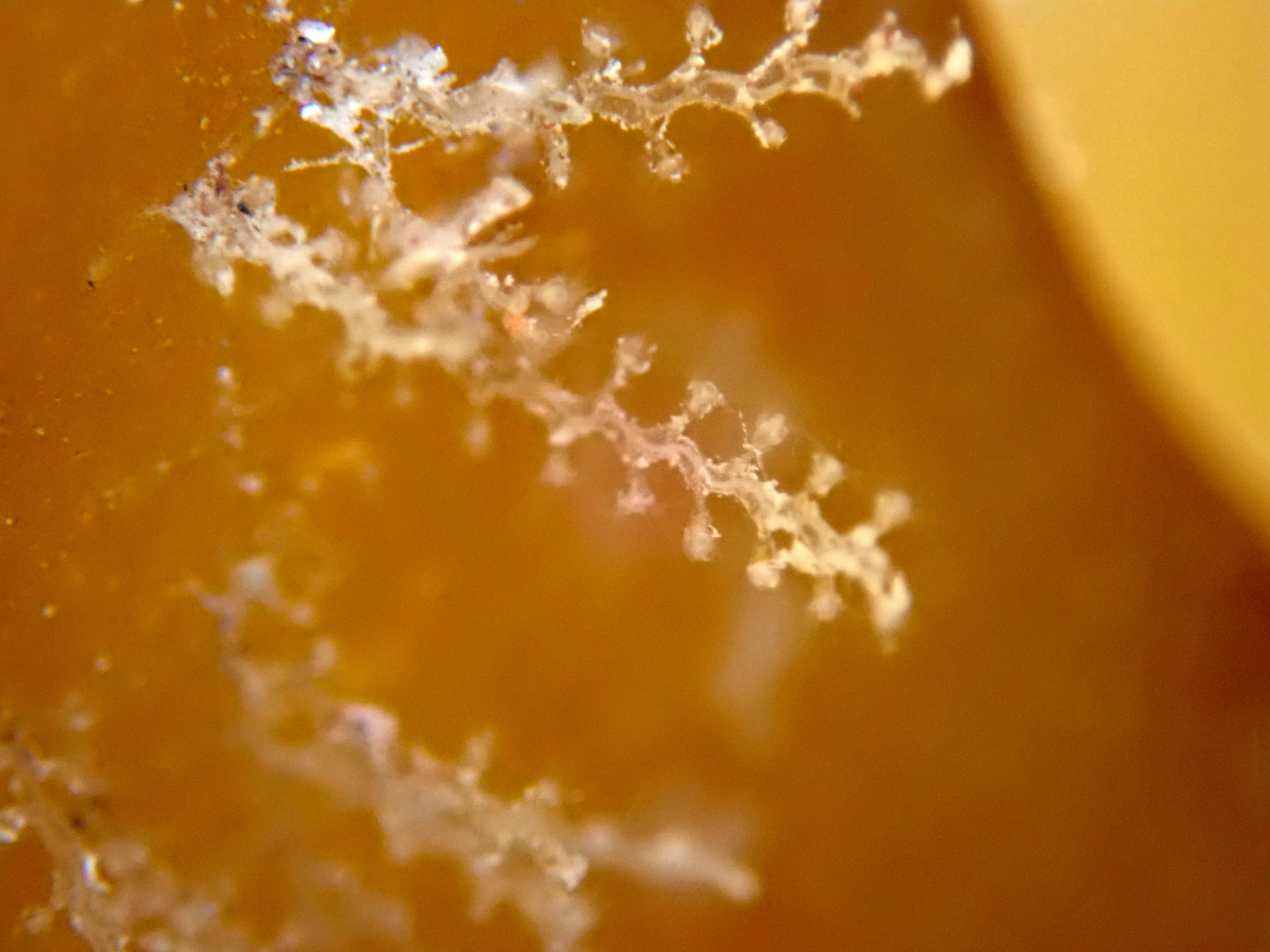
Obelia geniculata – a hydroid known as ‘Kelp fir’. Recognisable by its zig-zag ‘stems’.
I’m trying to photograph hydroids at the moment. These relatives of the jellyfish and anemones are generally translucent and no more than a few centimetres long, making them hard to spot. At this time of year when the seaweeds die back and the waves roll in, it’s especially tricky. My camera doesn’t like focussing on them and they won’t stay still in the current, but their nodding tentacles and curious structures are mesmerising.
Another hydroid – Coryne pusilla. This one can’t retract its tentacles into little cups. It has a ringed stem (visible in the bottom-left of the photo).
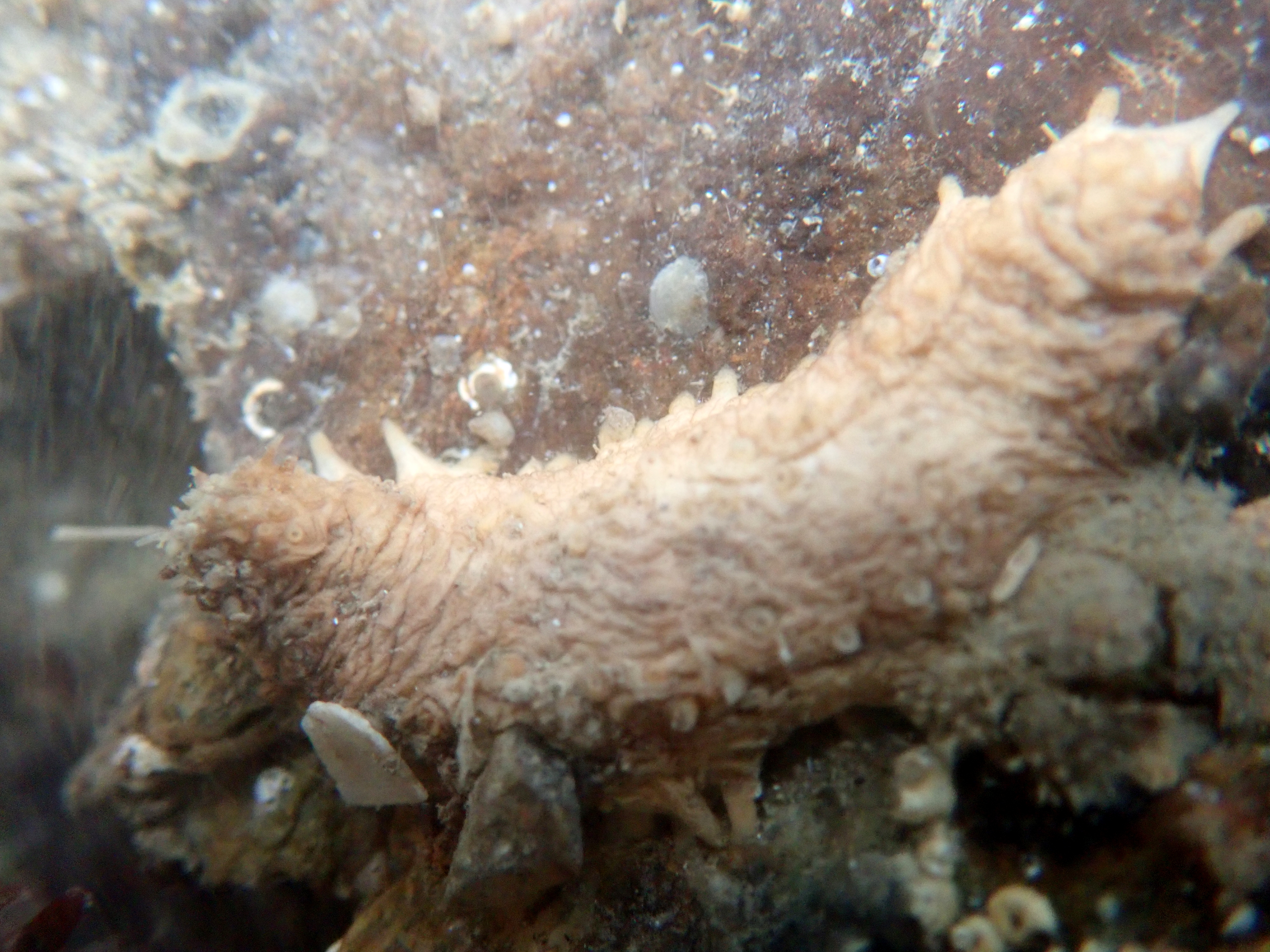
As always there are strange creatures galore. This Sea gherkin is unusually large and gnarled.
A Sea gherkin (Pawsonia saxicola) – this is a type of sea cucumber and clings onto the rock with its tentacle feet.
Among the sponges and brittle stars I come across this invasive species from the South Pacific, the Orange-tipped sea squirt, Corella eumyota.
The invasive Orange-tipped sea squirt
The twisted gut is very prominent in this species and you can see the orange colouration at the top. It’s thought this species may compete with native squirts and other invertebrates, but we will only find out by monitoring its spread. This is the first one I’ve recorded here.
Nearby I find the native sea squirt Ascidia mentula with lovely red flecks in its almost transparent test.
Ascidia mentula – a tunicate sea squirt. The red streaks reminded me of fireworks.
This sponge also catches my eye. It’s hard to identify many sponges with any certainty without examining their spicules under a microscope, but this one has the appearance of Myxilla rosacea.
A striking pink sponge with fine structures and deep pores. Possibly Myxilla rosacea.
On the next tide we make a successful return visit to the beach where Cornish Rock Pools Junior achieved finding a world record haul of stalked jellyfish last year. We come close to matching the numbers we found last time. I lose count at 25 because Junior makes it clear he doesn’t want his record broken.
Many of the stalked jellyfish are juveniles, only a few millimetres long and it tests my eyes to pick them out among the swirling seaweed. Then I spot this 1mm pinprick of a jelly blob and take a photo in case it turns out to be a stalked jelly.
My eyes must still be good – a 1mm baby stalked jellyfish. It’s not possible to say for sure what species.
On my screen at home its column is clearly visible although the tentacles are either retracted or haven’t yet grown. Little is known about the very early stages of development of these creatures and how to separate the species by sight, but David Fenwick who runs the amazing Stauromedusae UK website confirms that it is definitely a stalked jelly.
It’s great to be able to show a friend from Natural England how abundant these species are in the Looe and Whitsand Bay Marine Conservation Zone, which aims to give them protection from developments and disturbance.
Haliclystus octoradiatus – the blobs between the arms are primary tentacles, which easily identify this species from most others we see.
One of her sons does an impressive job of finding stalked jellies and even finds one that is in the middle of eating an amphipod. The current is too strong to get a great photo, but you can clearly see the unfortunate creature’s head sticking out of the stalked jellyfish’s mouth here.
A stalked jellyfish (Haliclystus octoradiatus) eating an amphipod.
I’ll be submitting all my stalked jellyfish records to help reinforce the evidence that will hopefully keep these protected species from harm.
A juvenile Calvadosia cruxmelitensis stalked jellyfish. We found 3 species of stalked jellyfish on the site.
I can’t help taking a look at some other things while I’m here. But before long the cold is hurting my fingers and chilling my insides in the sort of way that can only be fixed by a steaming mug of hot chocolate.
That’s the bit of winter I look forward to!
Rayed trough shellAslia lefevrei – the brown sea cucumber. This sea cucumber lives in crevices in the rock with just its dark tip poking out.Dysidea fragilis – or the hedgehog sponge as I call it.3-spot cowrie hanging on an overhang
The rock pools are full of weird creatures. I come away from most rockpooling trips with photos of strange blobs and odd leggy things that I mean to identify. Some are new to me, some I can’t remember the names of and some are things that look so much like other things they’re worth checking.
While I wait for the return of the spring tides this weekend, it seems a good time to put names to things I’ve tagged ‘to identify’.
First up is a minute shell that Cornish Rock Pools Junior thrust into my hand one day. At around half a centimetre long, it was too much of a challenge to identify in the field, so we took a photo and promptly forgot about it.
Fortunately on-screen in a warm living room it’s much easier to figure out how many whorls it’s got, that the opening has a short canal and that there are three rows of tubercles on each whorl. It has a distinctly unmemorable name: Cerithiopsis tubercularis. These shells live on sponges like the breadcrumb sponge, which is where we found this one.
Cerithiopsis tubercularis
The next photo is one end of a scale worm – it’s not entirely clear which end, but hopefully the worm knows. After a lot of staring at the arrangement of the bristles and the shape of the scales I’m satisfied that this is Lepidonotus clava.
Lepidonotus clava – a scale worm
Among my photos there are others like this Syllid worm that I’m unable to identify to species level. I was taking a photo of the Candelabrum cocksi and by the time I realised it was there it was slithering off down the far side of the boulder.
A syllid worm – orange at the far end and white at the near end between two Candelanbrum cocksi.
Sea spiders always need a close look as there are some very similar species. This is a Nymphon gracile. The egg sac it’s carrying looks huge under its spindly, delicate body.
Nymphon gracile sea spider
This isopod was hard to photograph as it was especially small and kept walking about on the rock. It had amazingly long antennae, longer than its whole body, making it easy to identify as a Janira maculosa.
Janira maculosa – a marine isopod
Chitons aren’t easy to tell apart with the naked eye, so I usually take a photo of the edges (the girdle) to check the details. This one is a Lepidochitona cineraria with sand-like grains fringed with lots of little spines around the edge. The shell also has a grainy texture.
Lepidochitona cineraria – a chiton
I still have a pile of photos to go through and I’m half-buried under identification books, but it’s been a great learning exercise. Here are a few more photos that I (think) I’ve identified today. I’ll be back soon with whatever turns up in the rockpools this weekend!
Morchellium argus sea squirtDidemnum maculosum sea squirtA Common dragonet – Callionymus lyraSargatia troglodytes anemoneI’ve no idea what the leechy worm is, but the bryozoan it’s on is Membranipora membranacea, which is recognisable from the rectangular shape of the zooids.
Privacy & Cookies: This site uses cookies. By continuing to use this website, you agree to their use. To find out more, including how to control cookies, see here: Privacy and Cookies Policy.