
The other side of the Looe valley has disappeared. Beneath the thick Cornish sea fog, a steady, soaking drizzle is blowing in. Junior, contemplating the scene out of our back window, decides it’s a perfect day to go for a picnic at Port Nadler.
Two and a half miles later, with water running off our noses and mud splashed up our waterproof trousers, we arrive in the deserted bay. We listen to the whistles of oystercatchers, sounding closer than they are in the fog. Junior follows trails of bird footprints across the beach.
The sun doesn’t shine on our picnic, but the rain eases and we begin to catch glimpses of the sea through the mist. After a quick sandwich, we start exploring.
The cool, damp conditions aren’t great for humans, but they’re ideal for rockpool creatures that need to avoid drying out. I’ve barely taken a few steps across the rocks when I spot a decorator crab out for a walk among the seaweed. It’s so well covered with pieces of weed that I have to move it to take a distinguishable photo.

It’s not a particularly big tide, but it’s low enough to access some wide, shallow pools and an area strewn with loose rocks begging to be turned.
Cornish clingfish wriggle under every stone and sucker on to their hiding places. It won’t be very long now before they start laying their golden egg clusters under these rocks.

Overhangs in the rock harbour extensive colonies of sponges. These Sycon ciliatum sponges catch my eye.

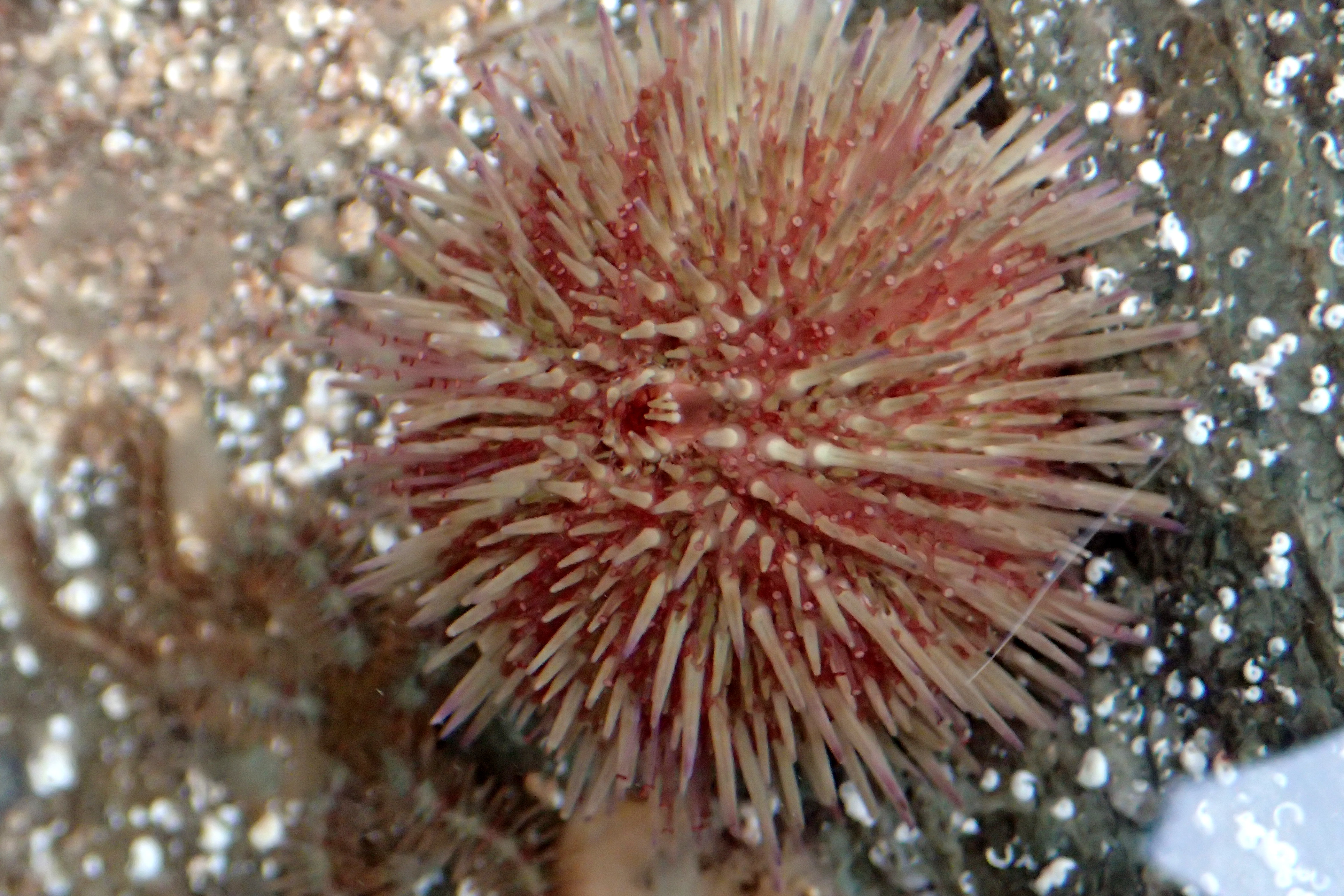
We find a large and very red shore urchin under a rock, waving its tentacles in the water. I show Junior the purple tips to the spines.

Nearby, a Lamellaria perspicua is inching along the rock. It looks like a slug, but is actually a snail, with an internal shell that you can’t see when it’s alive. Its back looks like an abstract splash-painting of white, purple and yellow. These markings help it to blend in among the sea squirts it likes to eat.


A few minutes later, Junior spots a yellow blob on a rock. This time it’s a true sea slug, a Berthella plumula (or ‘Feathered Bertha’ as I call them). I pop it in the water and soon we can see its rhinophores (antennae) emerging. The dark spot in the centre of the slug is an internal shell.

We find what might be the first stalked jellyfish record in this location, a Calvadosia cruxmelitensis. Another one to add to the Looe and Whitsand Bay Marine Conservation Zone records.
I spot this lovely little keyhole limpet under a rock. As the name suggests, they have a hole in the top of their shells.

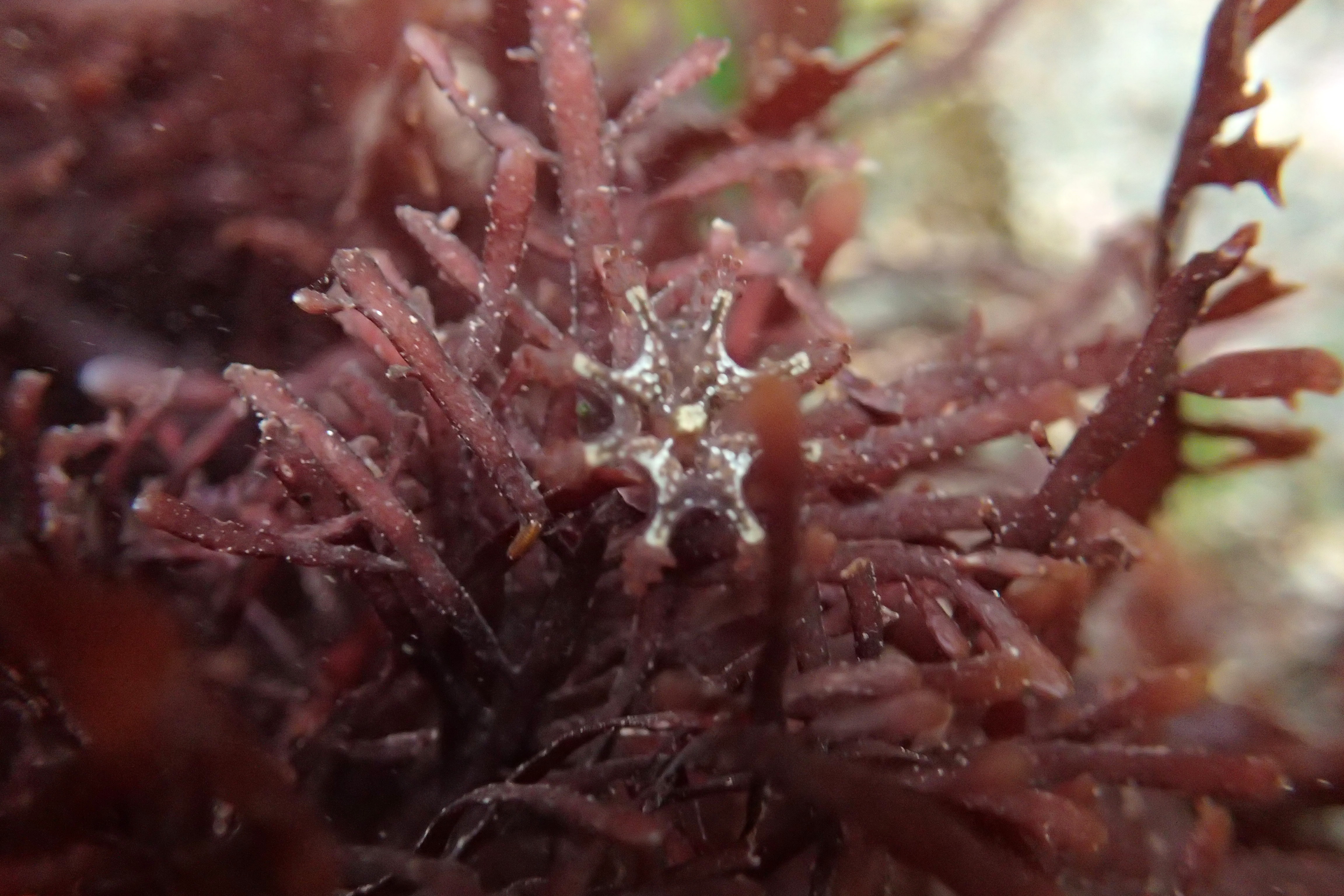
The odd-looking Candelabrum cocksii is abundant here, although it’s not common in the UK as it prefers warmer waters. A relative of the jellyfish, this hydroid (hydrozoan family) can contract and expand greatly, so varies in size and appearance. The white balls are the stinging cells, although fortunately they’re not harmful to humans. These creatures have a very limited range in the UK.

It’s a productive afternoon. We find more crabs than we can count and plenty of cushion stars and brittle stars too.
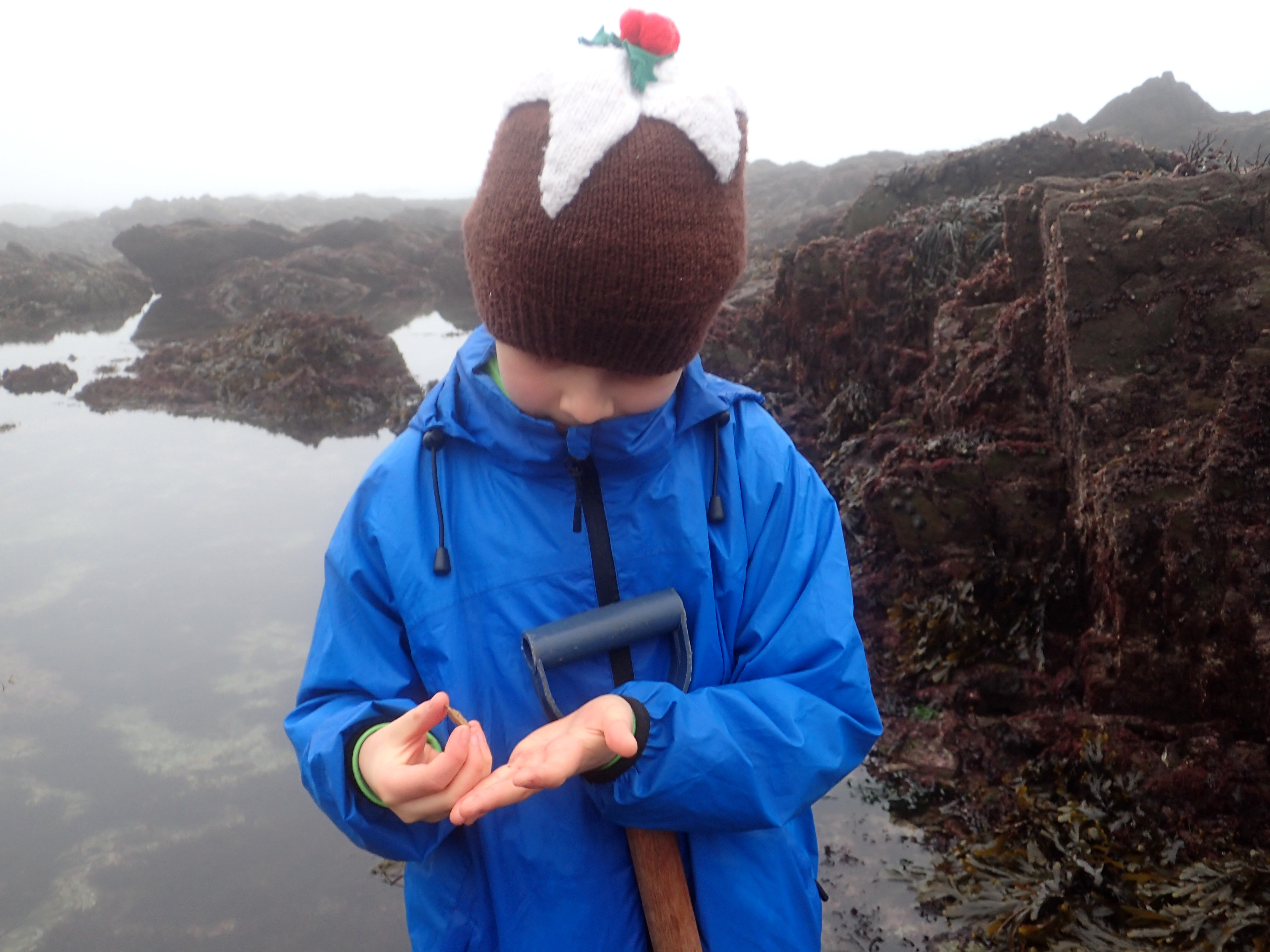


This time of year, it might not seem appealing to trudge through the mud and rain to reach secluded bays, but it’s worth the effort.
When the tide rolls in and the oystercatchers gather on the rocks, we begin the long climb out of the bay and strike out for home.


 Cornish Rock Pools
Leave a comment