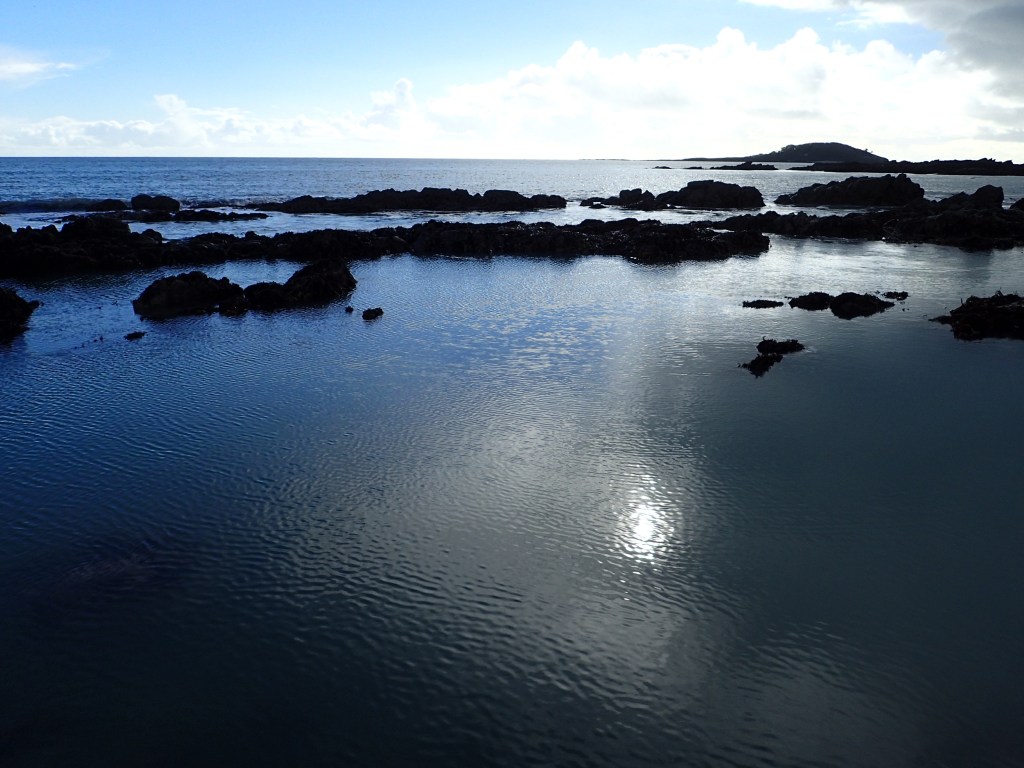
The sun is shining and, for the first time in months, I can feel the warmth on my face. With calm seas, the tide has run out even further than I hoped, rockpooling conditions here in Looe are near-perfect. There are ominous clouds looming over the hills behind me, but I choose not to look at them.
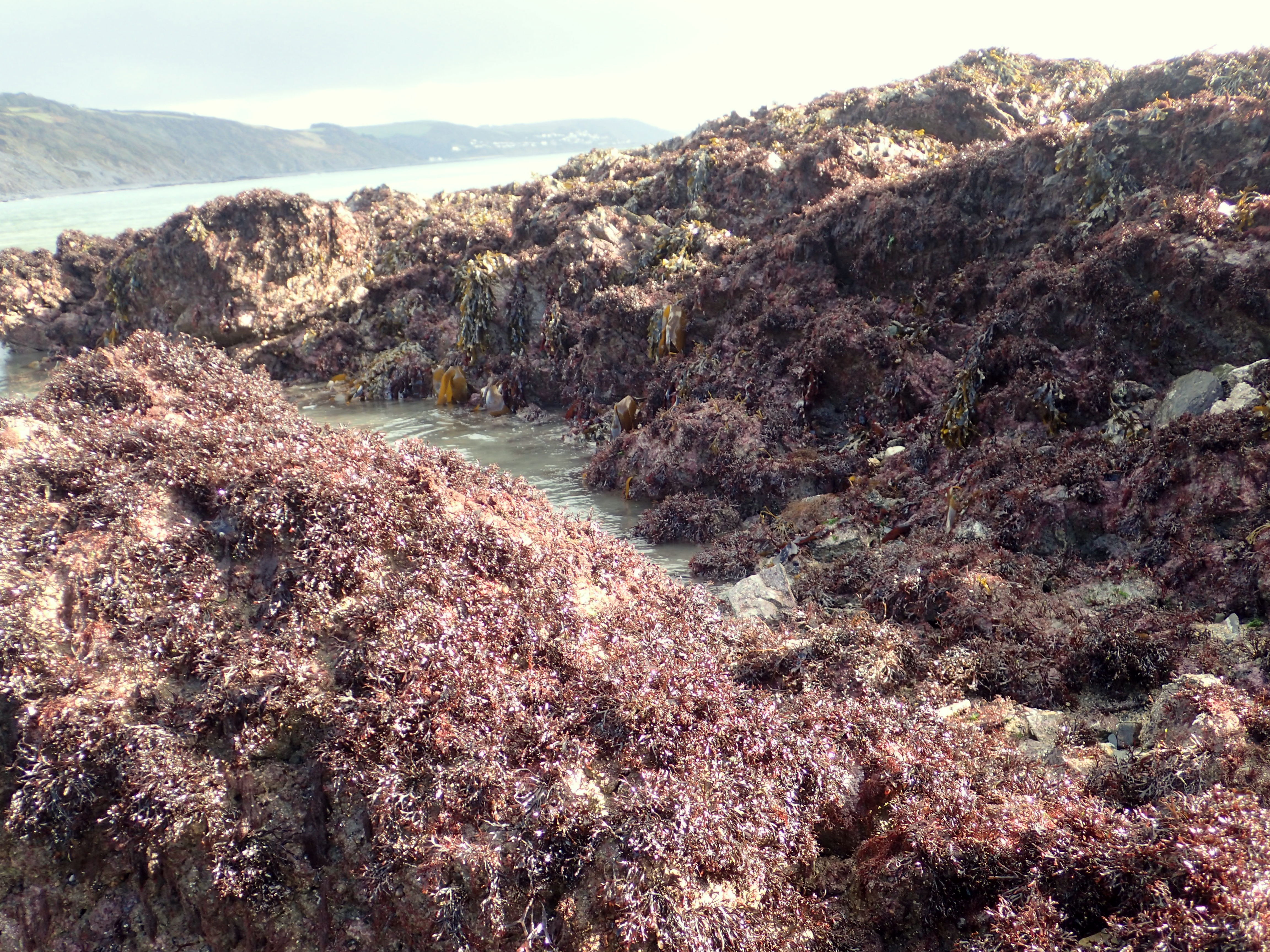
After the fierce storms, I half expect to find the rockpools empty, scoured of life, but I couldn’t be more wrong. I explore an area of my local shore in Looe that I don’t often visit and within minutes I have found my new favourite rockpooling spot, a gully that’s visibly wriggling with life.
I’ve always loved finding little pink-purse shaped cowrie shells and they seem common on this sheltered stretch of rocks. The animal inside is just as pretty and colourful as the shell, a sunset orange foot laced with white patterns emerges from a leopard-spotted mantle.

In the lee of a boulder, I spot a tiny creature sheltering on a small stone. It takes me a few seconds to realise it’s a fish, at first glance it looks more like a tadpole or worm. The small eyes and tapering tail are distinctive. This is a Montagu’s sea snail (Liparis montagui), possibly the strangest name in the UK fish world.

Like the more commonly-seen clingfish, the pelvic fins of these fish form a sucker on their underside, which allows them to secure themselves to stones.
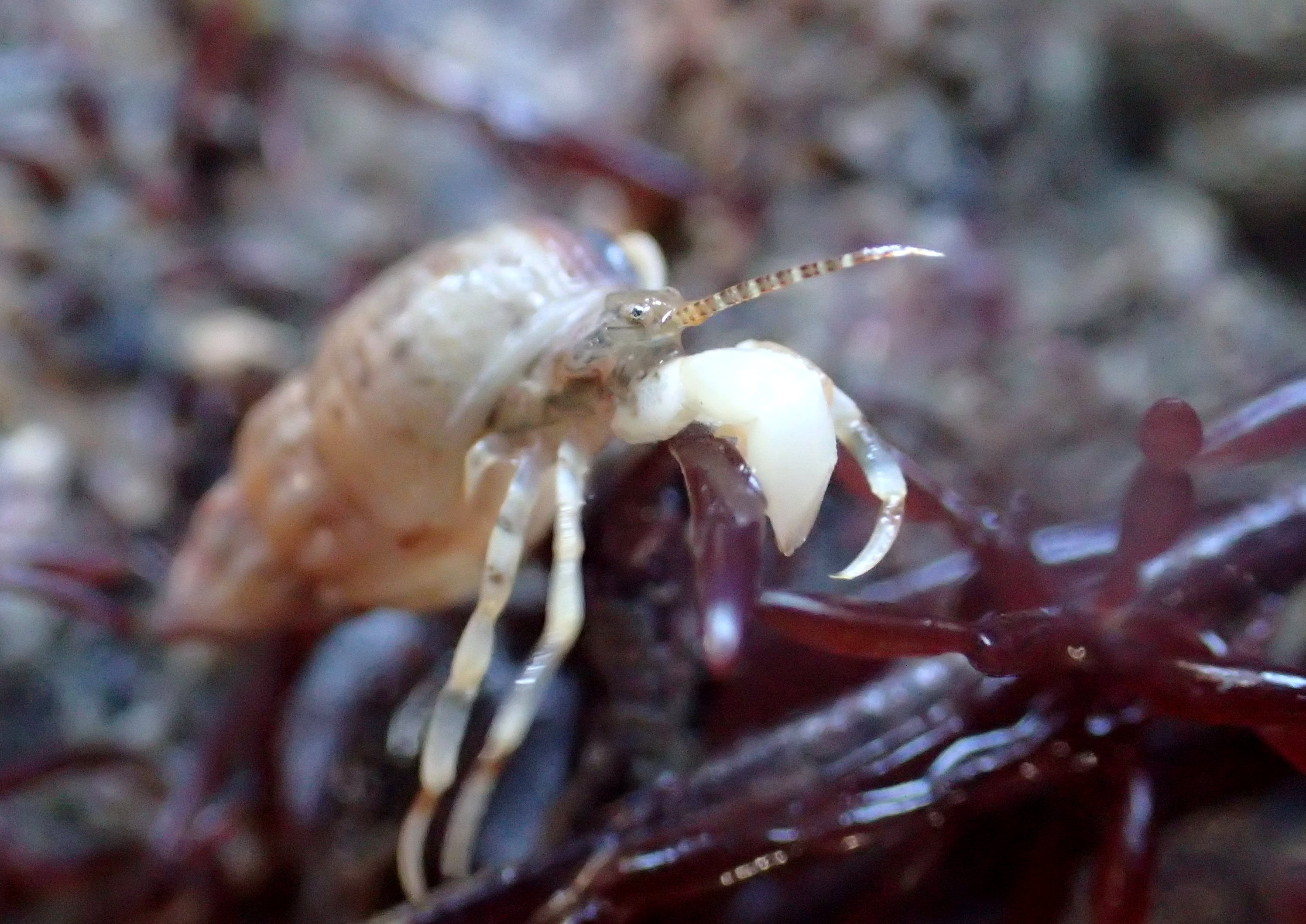
Among a clump of small ‘sausage-weed’ seaweed (Lomentaria articulata), a white-gloved claw waves at me. Well, I have to squint and lean in close to see it, this little hermit crab (Anapagurus hyndmanni) would fit on my fingernail with room to spare.
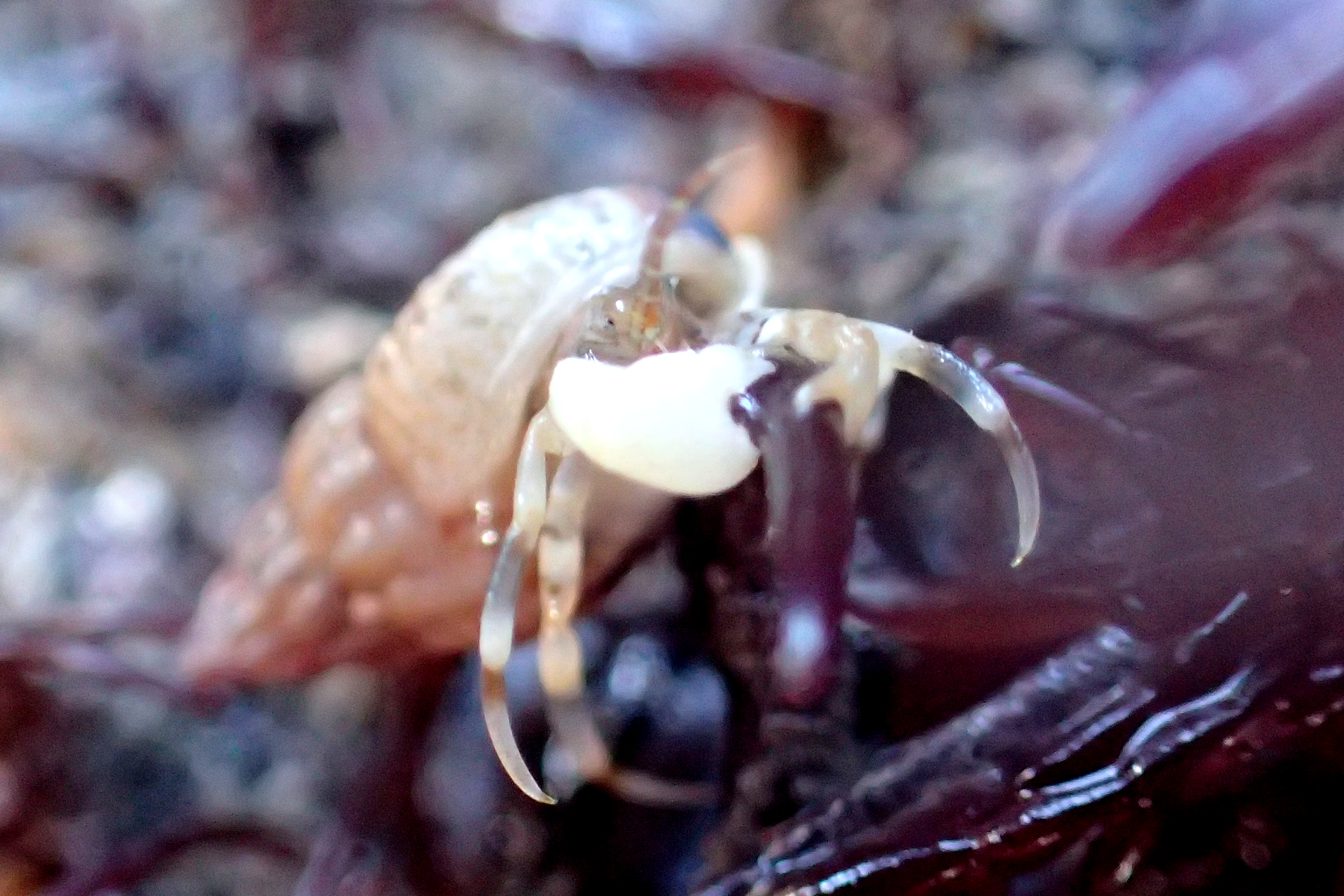
It has one claw much larger than the other. I have no idea why the claw is white, but it makes it easy to spot.
Close by some moving seaweed catches my eye. It turns out to be a small spider crab (Macropodia sp.). It must have spent hours arranging its seaweed camouflage. I’d probably have to clear it all off to be sure of its exact species, so I leave it as it is.

Some sea slugs are already on the shore and will be laying their eggs soon. I find several creamy-yellow ‘plumed Berthas’ (Berthella plumula) and a large ‘sheep slug’ (Aeolidia papillosa) lurking under a rock.

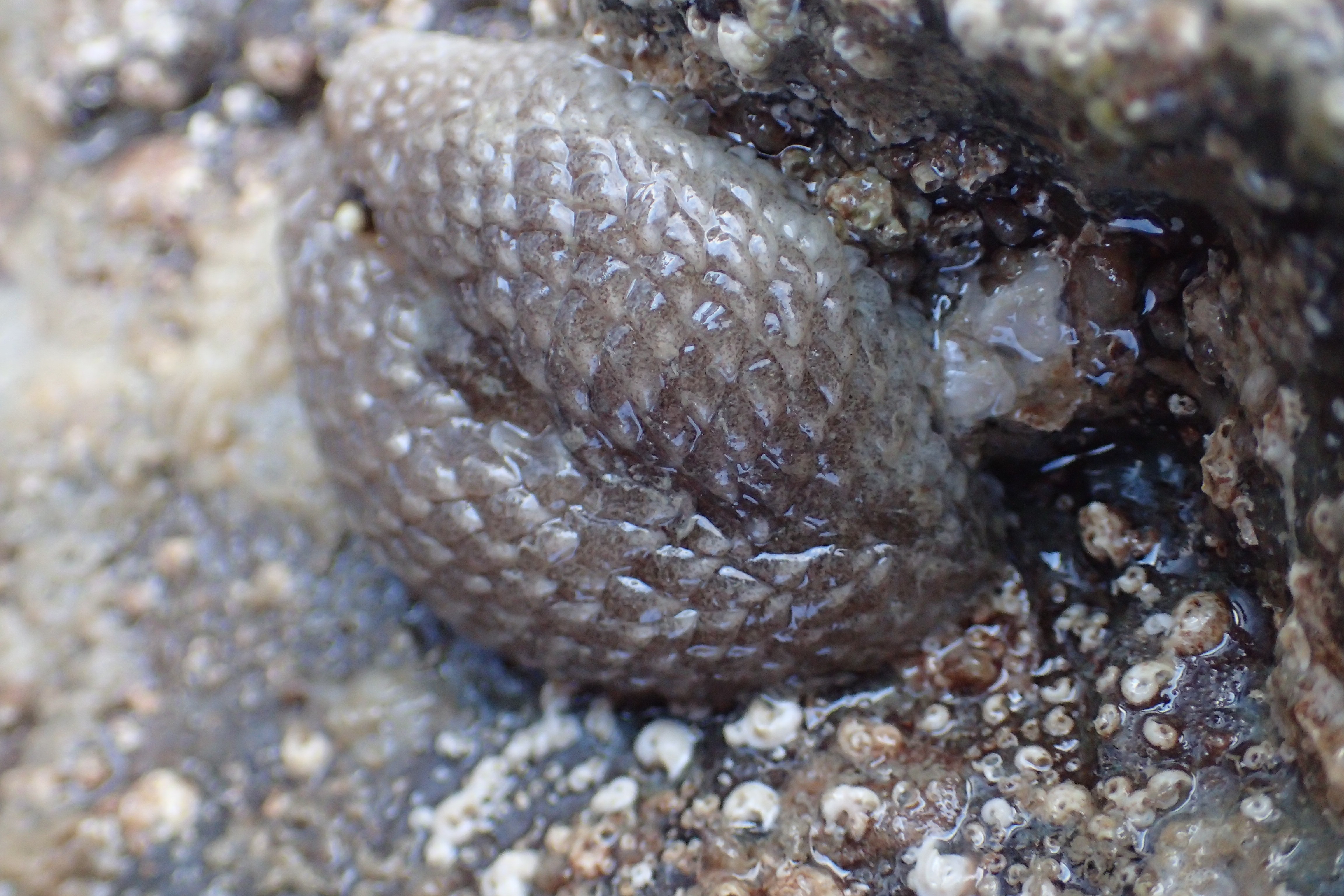
I don’t think I’ve ever seen so many Lamellaria perspicua in one place. They look more like snails than slugs; like spots of jelly on the rock. When submerged, they extend two small head tentacles and a proboscis.

Among all these wonderful finds, the usual busy community of Xantho crabs, broad clawed porcelain crabs, worm pipefish, painted topshells, sponges, brittle stars and more abounds.
Even when the clouds arrive and let loose a downpour of rain and hail, I carry on taking photos. The sun returns and my waterproofs steam, clouding my camera lens, but I keep going until the sea begins to lap in. As I walk away I’m already looking forward to returning on the next spring tides. Who knows what I’ll find?



 Cornish Rock Pools
Leave a reply to Pat Smith Cancel reply