Here’s something I’ve never seen before. While I was rockpooling, I lifted a stone and found this little variegated scallop, which is a smaller cousin of the scallops people eat. As I watched it began to open and I guessed it might take a little swim so I took this short video.
All scallops can swim but they don’t do it very often because it takes a lot of energy. I think this one was thought I might be a predator and wanted to swim back to the safety of a rock. It was surprisingly speedy.
Filmed at Hannafore Beach, West Looe, Cornwall on 31 August 2015 during a very low spring tide.
We all love spending time with likeminded people, don’t we? So, when a keen diver from Newquay contacts me to request a guided rockpooling tour, I can’t resist. Unusually for a bank holiday weekend, the sun pushes the clouds away and leaves behind a perfect, calm shore ready for us to explore.
We’ve barely known each other a minute before we’re enthusing about the joys of going slowly and taking the time to look for underwater life. We discover our shared love of nudibranchs (sea slugs – read on, they’re lovely, really!). I assure my new friend that we’ll find plenty of wildlife, including some species few divers ever see, and all with minimum kit, no buoyancy control and a limitless supply of air.
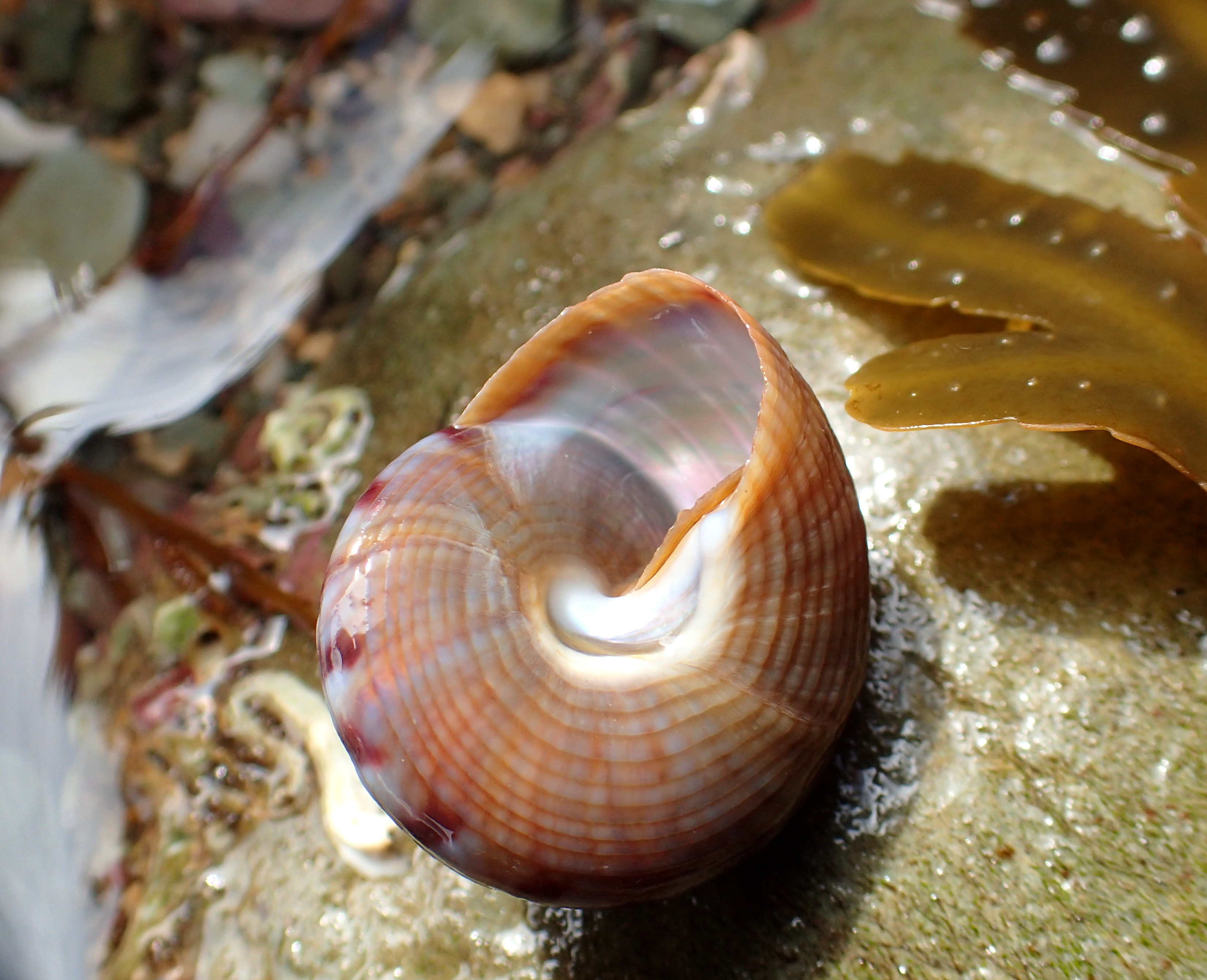
The underside of a painted top shell showing the mother-of-pearl lining
Despite being familiar with edible crabs and velvet swimming crabs from diving, there are several species of intertidal crabs that are new to my guest.(more…)
We’ve been planning this trip since our visitors first came to Cornwall a year ago. They’re determined to try rock pooling having missed out last time. This week the tides are perfect. They live near the sea back home in Essex, but they tell me it’s not the same and I can well believe it.
They’ve never seen a starfish in the wild before. My mission is clear.
Getting stuck in to Cornish rock pooling
With picnic and buckets in hand, we set out, treading gingerly over seaweed and searching among the rocks. Within minutes, our friends are putting yesterday’s hasty tutorial on crabs into practice as they try picking them up safely. They score top marks on this and on working out whether the crabs are male or female from the shape of their tails. We find several species of crustacean, including this large squat lobster.
A squat lobster – galathea squamifera
While our visitors search the shallow pools, finding anemones, fish, prawns and hermit crabs, Other Half and I walk out through slippery gullies towards the sea with Junior, taking photos and collecting interesting creatures for our visitors to see. I find a small rock with a beautiful covering of star ascidian.(more…)
This time of year when the roads are busy and the beaches packed, the summer can feel anything but relaxing. It’s Sunday today and we’re taking it easy, so what could be better than a stroll to a local cove that’s a bit off the beaten track for a spot of quiet rockpooling. Starfish, sea slugs, fish and stalked jellyfish await me.
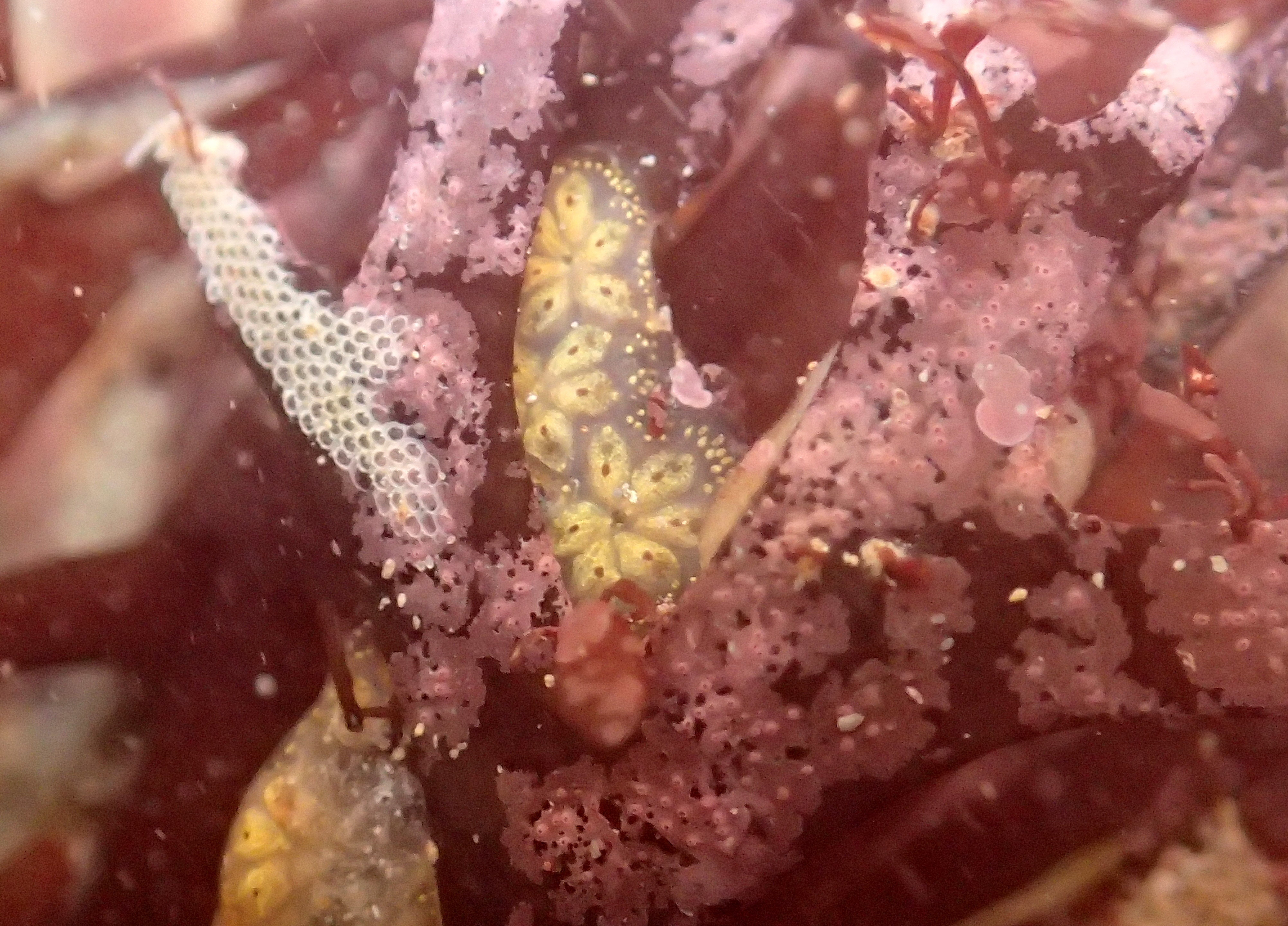
Going slowly and looking at the seaweed can reveal some beautiful encrustations of sea squirts and bryozoans
It’s always a good idea to move slowly in the rockpools and today I have nothing to rush for. By staring at the seaweed for a very long time, I begin to notice more details and my eye is drawn to a stalked jellyfish. The blobs between the arms are primary tentacles, suckers that the jelly can use to move around.
Stalked jelly Haliclystus ocroradiatus showing its primary tentacles (blobs between the arms)
A little further on I find another species. This one doesn’t have the blobs between the arms and is flecked with pale spots, which contain stinging cells.(more…)
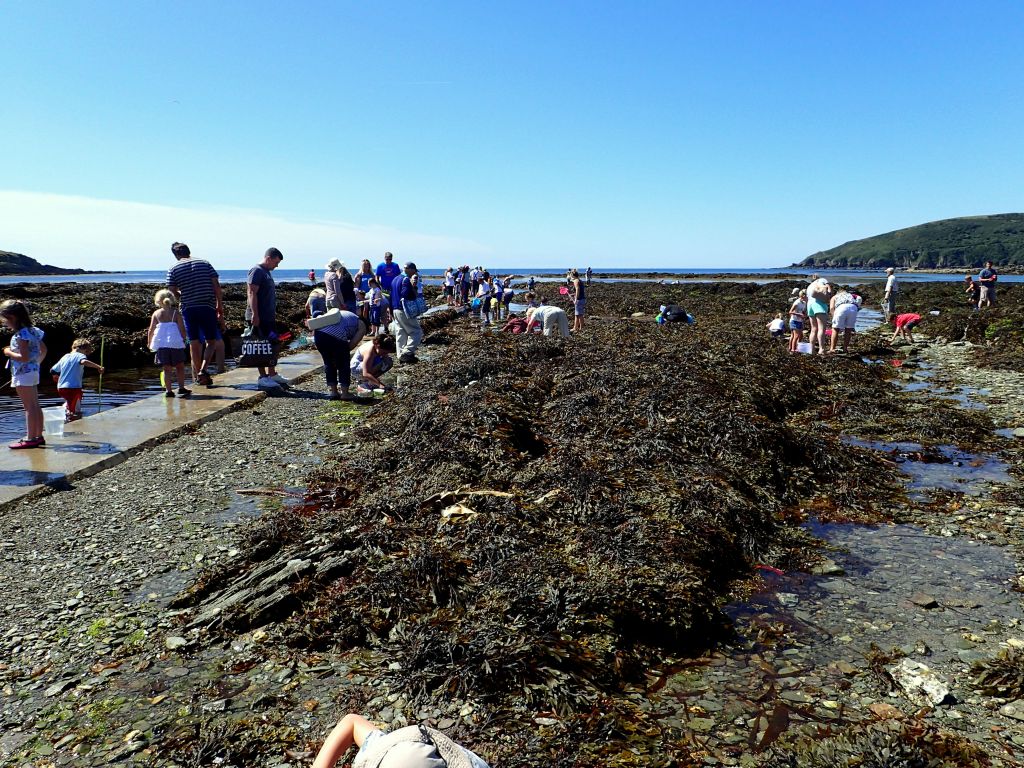
Friday was the ideal day for a Cornish rockpool ramble with warm weather and calm conditions. Over a hundred people joined the Looe Marine Conservation Group rockpool event and I’m sure other rockpooling sessions around the Cornwall were similarly well attended. (Here’s a list of what’s on this summer).
Learning about crabs with a Looe Marine Conservation Group volunteer
There are lots of benefits to having a summer birthday; the sun usually shines, the rock pools shimmer and it’s just about warm enough to put my snorkel on and jump in. The beach has lots of presents in store for me today, including a huge greater pipefish, a cousin of the sea horse, and a rare sea slug. No unwrapping required.
A juvenile Aplysia depilans – a rare sea hare in UK waters.
It’s holiday season , but a little planning and some walking is all that is needed to find a peaceful cove. We set off to Port Nadler in perfect, calm conditions loaded with wetsuits, buckets and an ample picnic.
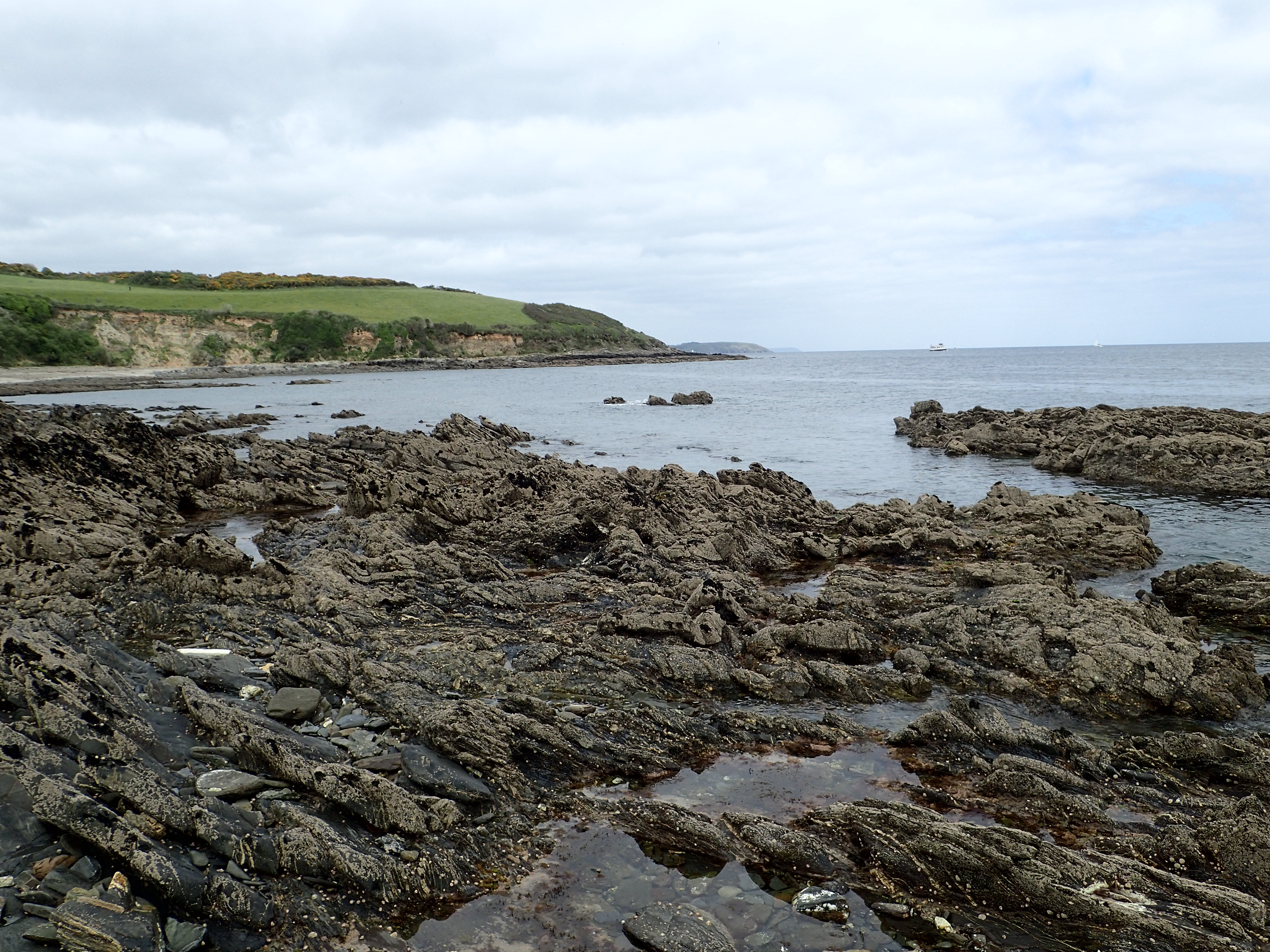
A typical rock pool at Port Nadler near Looe
Under a rock I spot what I think is a very large anemone, but it looks odd. I’m still trying to puzzle it out when it crawls away, unfurling long ear-like tentacles from its head. It’s a sea hare but more bulky than the ones I normally see (Aplysia punctata).
I think I’ve found a strange anemoneSurprise! It turns into a sea hare.
As it oozes towards me across the rock I’m struck by its face, more like a hippo than a hare with wide flapping ears and a broad snout. Very occasionally larger sea hares, Aplysia depilans, have been found around the southern shores of the UK, and I begin to wonder.
Aplysia depilans – looking more like a sea hippo than a sea hare
I contact experts who have seen them before and they confirm it is a juvenile Aplysia deplians – a rare find and a species I’ve never seen before. Happy birthday to me!
It’s still cold for snorkelling and I only last about a quarter of an hour before my teeth start to chatter, but it’s worth it. After several minutes of seeing nothing but kelp, silt and the occasional two-spot goby, a long snake-like body catches my eye. It’s the unmistakeable shape of a greater pipefish (Syngnathus acus).
The greater pipefish looks out from the weeds
These fish grow to about arm length and have a hexagonal cross-section. This one hardly moves, relying on camouflage for defence, its long nose stretching out over the sand.
Greater pipefish – a cousin of the seahorse
I drift back into shore, and find a compass jellyfish (Chrysaora hysoscella) stranded in the shallows. It takes its name from the beautiful markings on its back, but I don’t go too close – sea nettle is its other common name.
Compass jellyfish – showing its distinctive markings
Back on the shore, I huddle on the sand, wrapped in jumpers and towels, shivering and eating cake. Birthdays don’t get any better than this.
This snakelocks anemone looks like it’s had a fright – the tentacles were being picked up by the current
Up close to a red-eyed velvet swimming crab (Necora puber)
Cornish clingfish eggs – little eyes and noses visible insideA snorkel-scape. Thong weed at Port Nadler near Looe
It’s not quite warm enough for shorts yet, but there’s sunshine aplenty and a good turnout for Looe Marine Conservation Group’s first summer rockpooling session of the year. As always, the Cornish rock pools don’t disappoint.
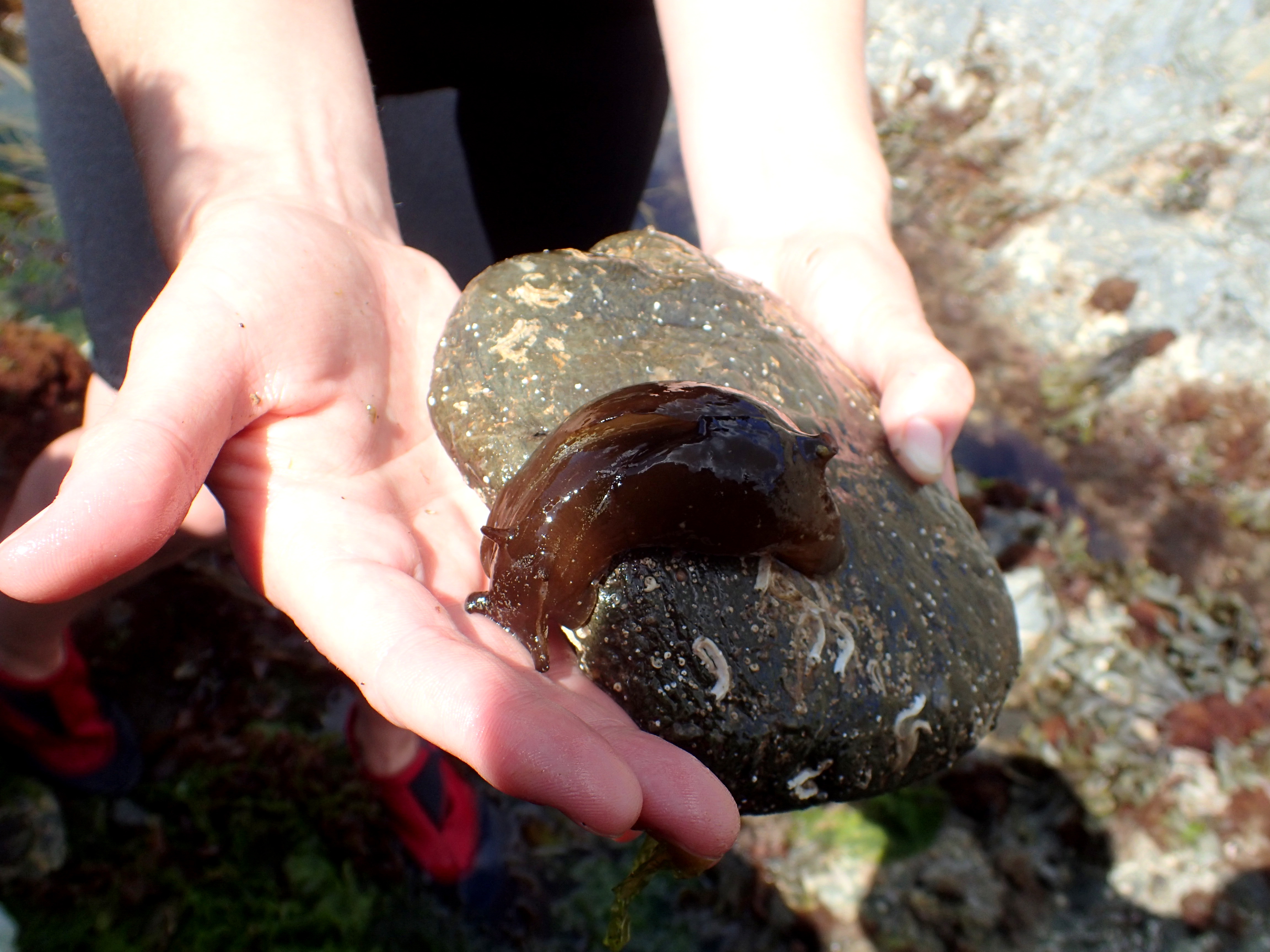
My first find of the morning – a ‘plumed Bertha’ Berthella plumula – a sea slug with a small internal shell.
The big creatures are always the star attractions of public events. Today we are lucky enough to find several magnificent spider crabs.
Spider crabs come into the Cornish rock pools in early summer.
These large crabs with their characteristic spiky shells live out at sea for most of the year, but venture into shallower water in the early summer to breed. They get their names from their long, spindly looking legs – although, being crabs, they have ten legs, not eight like the spiders.
Edible crabs can be large and powerful, but are usually placid
Some sizeable edible crabs lurk at the bottom of buckets, but it is the velvet swimming crab that causes the most gasps. These red-eyed crabs, which my son calls devil crabs, are feisty to say the least and as today’s rockpool leader, Matt, goes to pick one up, it raises its claws in defiance.
Velvet swimming crabs are quick to attack.
Matt takes several attempts, but eventually manages to lift it from the bucket and hold it in front of the upturned faces of a circle of children. He points out the paddle-shaped legs that help it to swim and the smooth velvet surface of the shell before swiftly returning it and moving on to more placid creatures.
This rock goby was easier to handle – the yellow top to its fin can clearly be seen here.
Our local vicar has become a staunch regular on these jaunts and, as always, he’s brimming with smiles and enthusiasm. He makes one of the best finds of the day, although only a few of us make it to the tide’s edge over slippery rocks to see the stalked jellyfish.
Lucernariopsis cruxmelitensis – a stalked jellyfish.
This little jelly is in an awkward position to photograph and the tide is rushing in, but we manage to get some pictures. Lucernariopsis cruxmelitensis – it’s a mouthful to say, but I think it’s the most beautiful of our stalked jellies with its wide open profile and delicate decoration of white nematocysts around each arm.
Lucernariopsis cruxmelitensis – the hand in this shot shows just how small these stalked jellies are. One of my favourite Cornish rock pool creatures.
The next jellyfish we find is a little larger, but still only a few centimetres across. It’s so transparent, I can’t tell most of it is there until I feel the curve of it against my fingers.
This week’s mystery jelly – probably an aequorea species – crystal jellyfish.
From the shape and the faint radiating lines around the base of the bell, I think it may be an aequorea species, also known as the crystal jellyfish. We’ve found these before in Looe, but they’re not a common species – or maybe they are but they’re so transparent they’re hard to spot.
Holding the transparent jelly (aequorea/ crystal jelly?)
It’s wonderful to spend a whole morning on the shore without my fingers becoming painfully cold or having to rush home to counteract early signs of hypothermia with hot baths and drinks. I might even risk going out without a coat soon.
Looe’s vicar doing some quality rockpooling.
Summer is definitely on its way and if you’re heading for the shore, group events like this one are the best way to discover the fantastic Cornish rock pools.
See my links page for lovely groups who run events all through the year. Follow Cornish Rock Pools on Facebook for updates.
Sometimes everything’s just meant to be. This is one of those times.
It’s a random get-together; my Twitter friend Nanny Pat from Bosinver Farm Cottages has suggested we meet with her family and friends to explore a special beach that her son loves. Sounds good to me!
The view towards Falmouth
The sun is struggling through the clouds as we all descend from Mawnan towards the glittering shore. We are nine adults, six children, one dog, some huge buckets and a promisingly enormous picnic bag that Nanny Pat has packed for us.
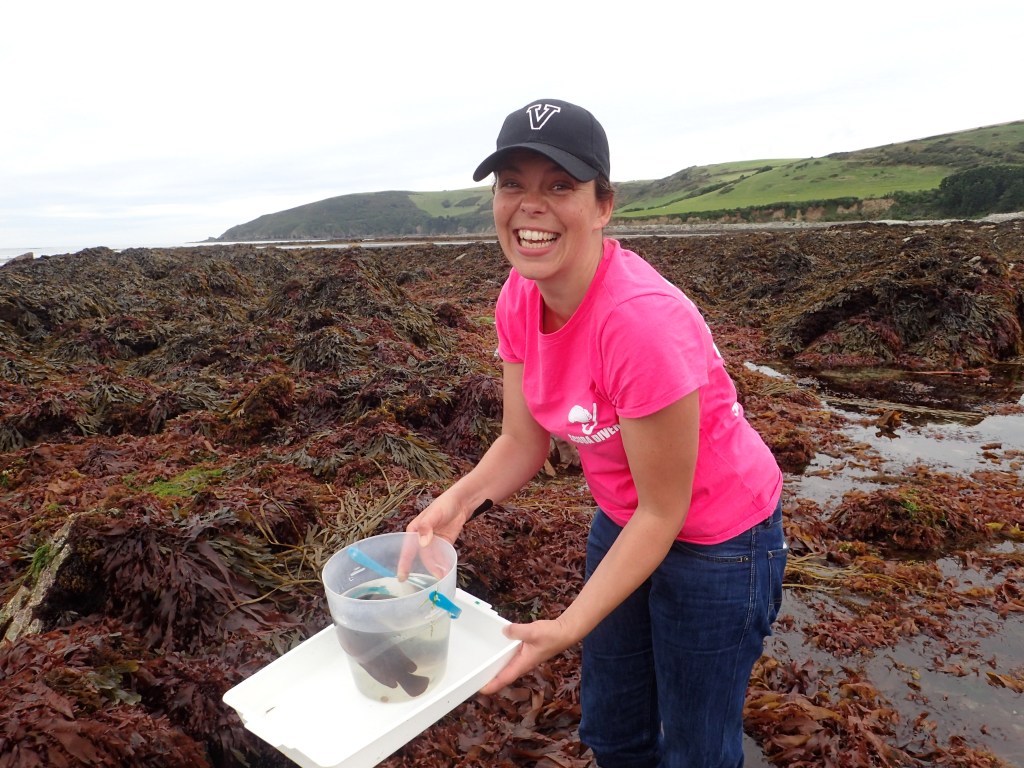
We waste no time and strike out across the slippery rocks. These are serious rock poolers. I am, as other half puts it, “among my people”.
Just one more rock… exploring the Cornish rock pools
We set to and the finds flood in. There are fish eggs everywhere, some are just starting to develop like these clingfish eggs.
Cornish clingfish eggs are a distinctive yellow colour
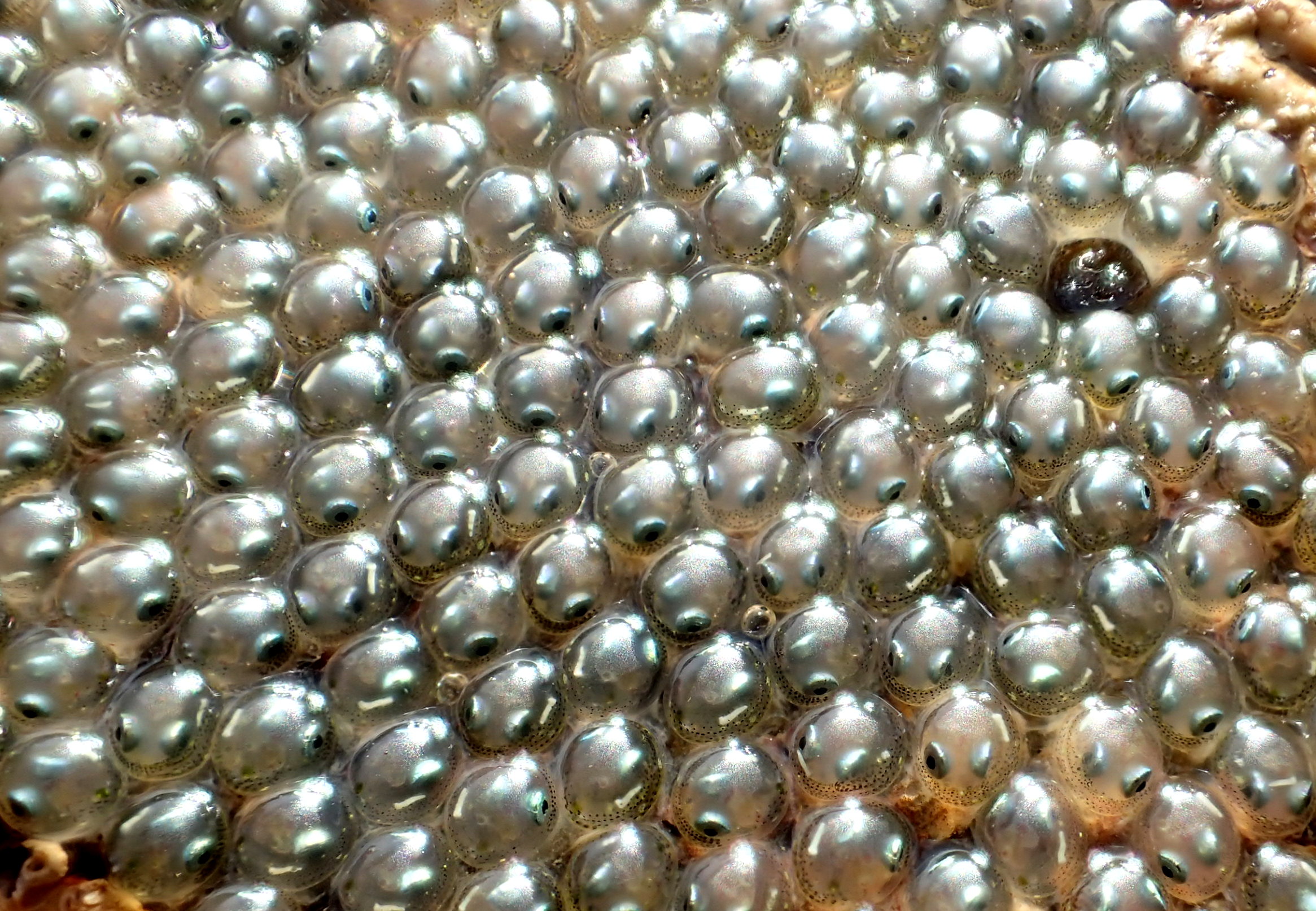
Others are nearly ready to swim away, eyes jammed against their transparent egg cases, tails squished around them.
Ever feel like you’re being watched? Fish eggs in a rock pool.
Best of all, I’m baffled by some of the creatures we find.
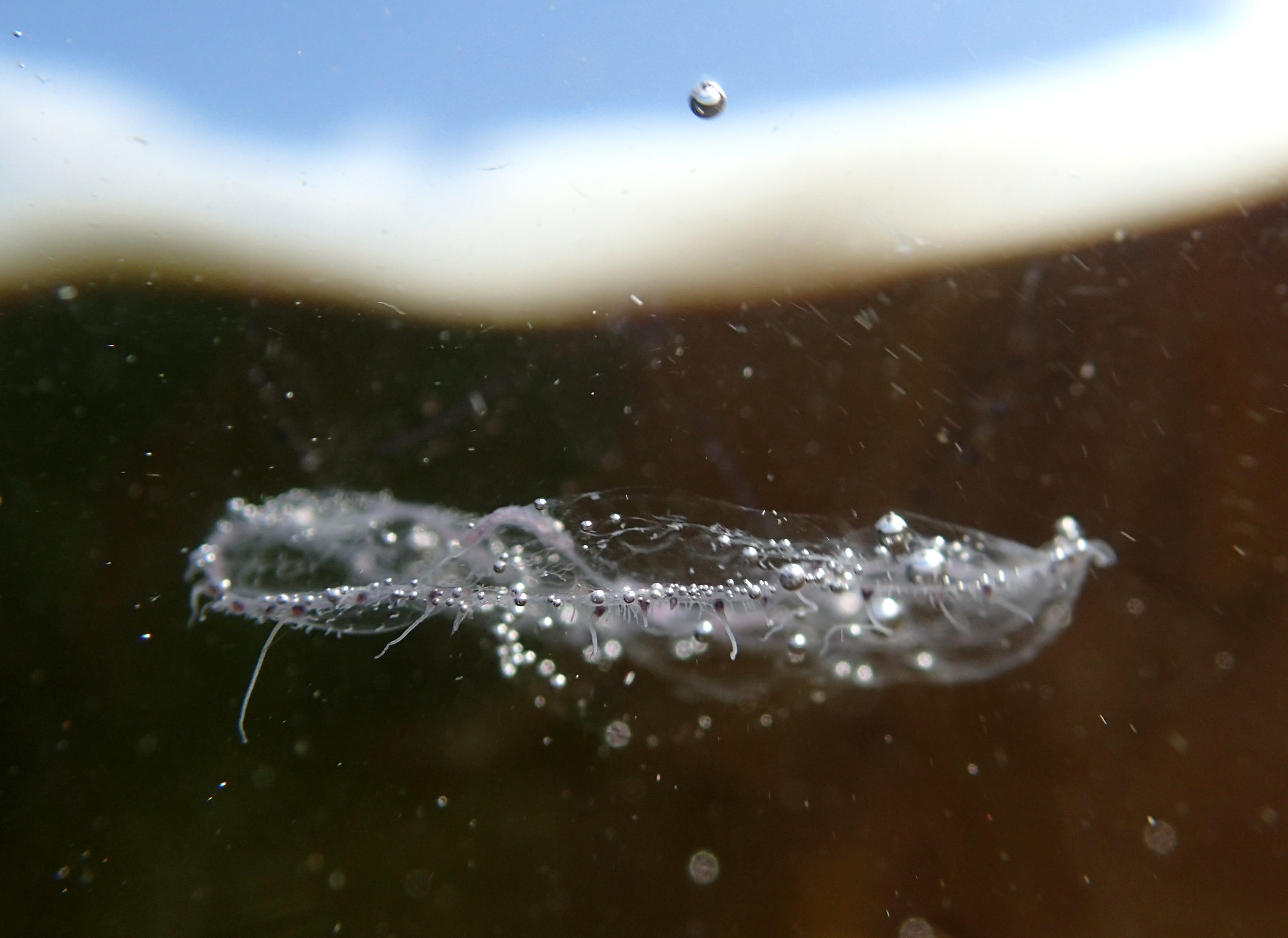
The medusa (jelly) stage of a hydroid or sea fir – possibly clytia hemisphaerica or similar
First there’s a transparent disk of jelly a centimetre across. I scoop it up in a tub and peer at it until I go cross-eyed. It shows no sign of life, but I’m sure it is an animal. All around its rim are mauve dots and a thin purple cross hangs across its centre.
The underside of the medusa
I rule out all the UK jellyfish and it’s the wrong shape for a sea gooseberry. When I take a photo of it in the water, my camera shows some short tentacles, invisible to the naked eye.
Having since consulted the experts, it looks to be the medusa (jelly) stage in the lifecycle of some sort of hydroid or sea fir.
Swimming free – the side view with tentacles showing.
I’m distracted from my observations by some excited shouts and squeals. “Quick, we’ve found a shark!” one of the adults calls.
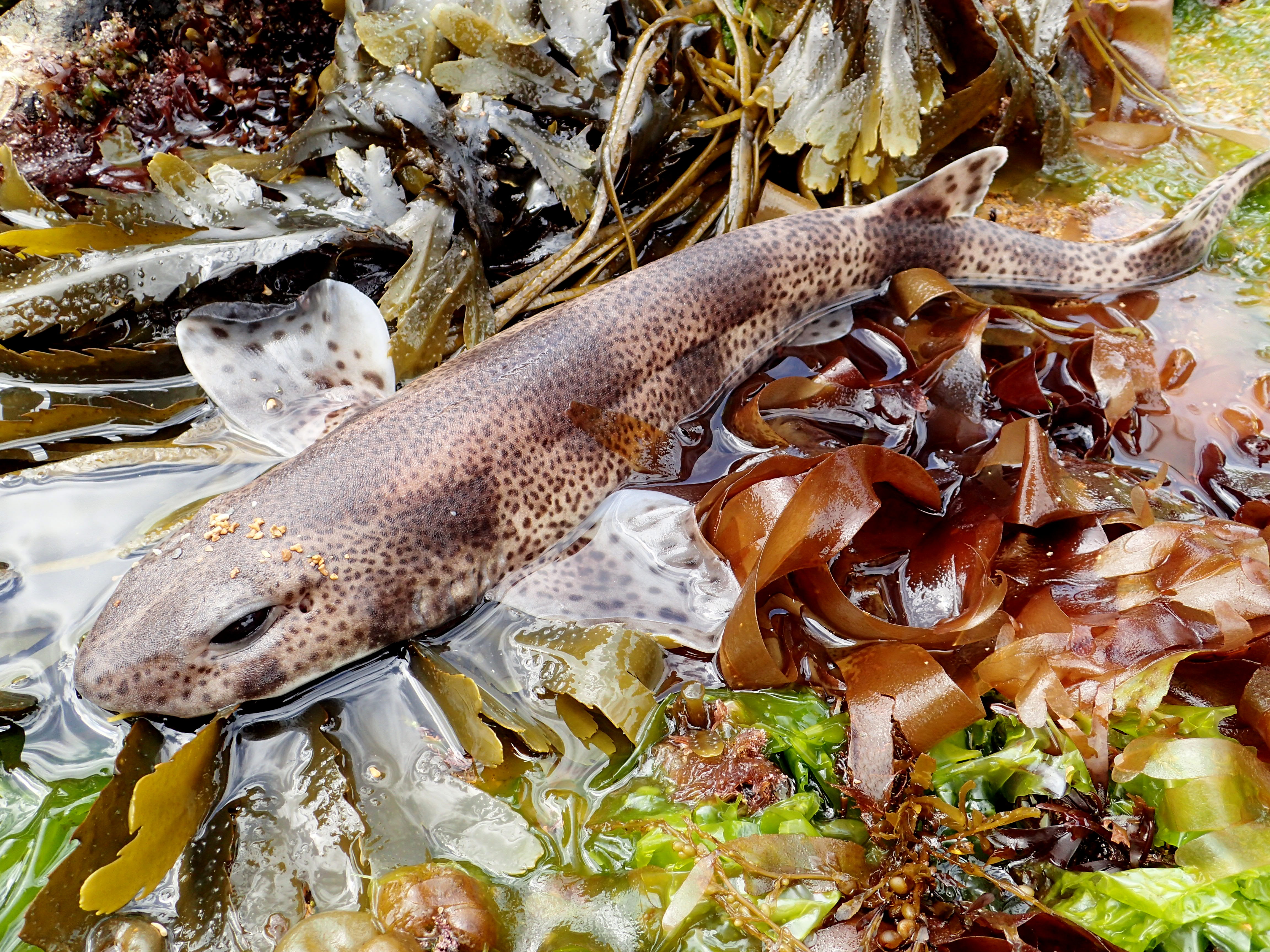
The children are gathering around the edge of a pool and there in some shallow seaweed, a dogfish (small spotted catshark – scyliorhinus canicula) lies stranded.
Scyliorhinus canicula – small spotted catshark, also known as dogfish – stranded in a Cornish rock pool
The animal is calm despite being out of the water and surrounded by eager kids. We take a minute to take photos. Some of the children tentatively touch its sandpaper-rough skin and Cornish Rock Pools junior sluices it with water in an effort to keep it happy.
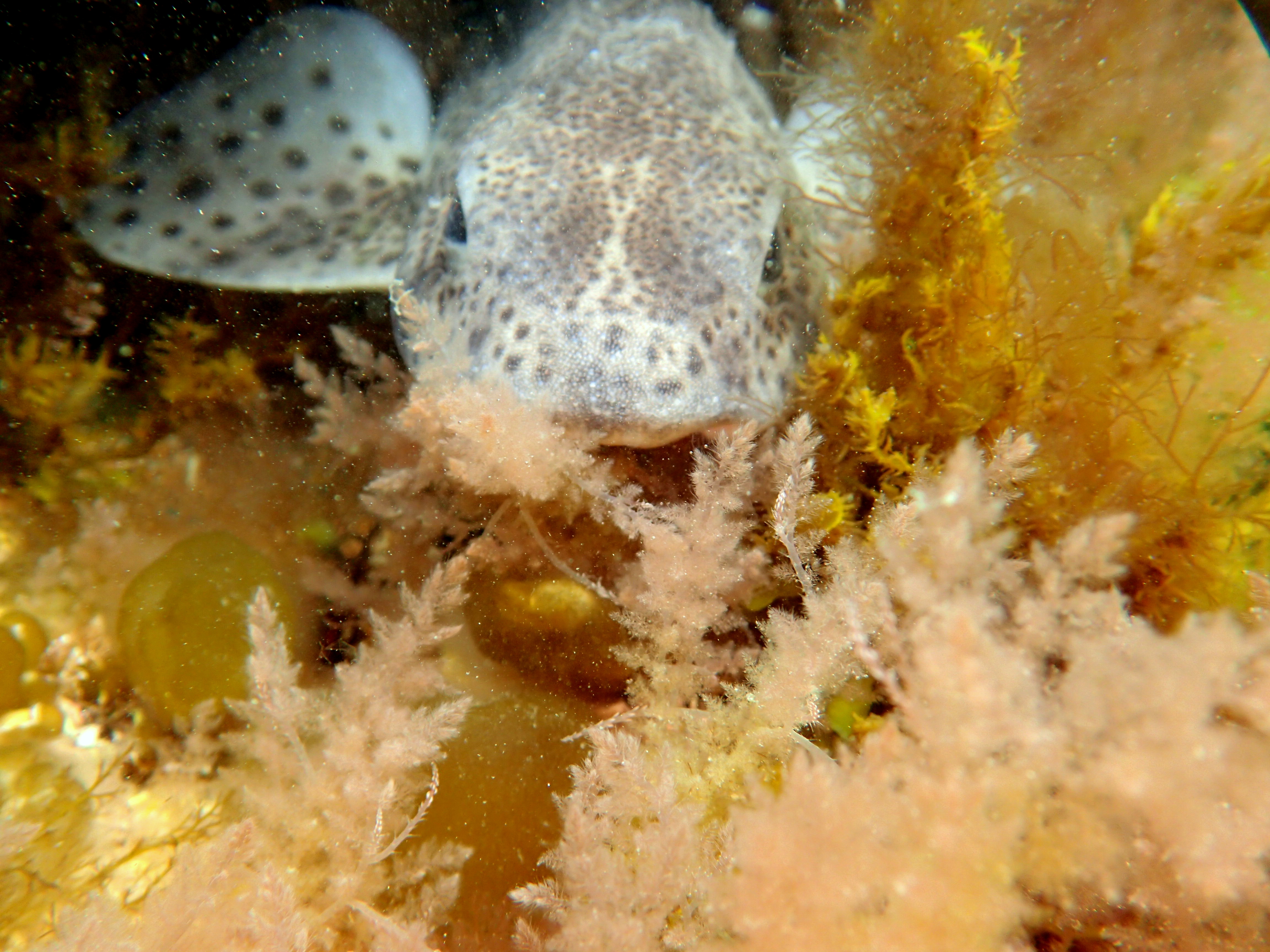
Close up you can see the rough skin (dogfish skin used to be used as sandpaper) and the cat-like eyes
The dads rush in for the privilege of relocating our shark to a deeper pool, where it lurks as we carry on our rockpooling.
The ‘rehomed’ catshark waiting for the tide to come in. It’s so well camouflaged it’s tricky to spot among the seaweed.
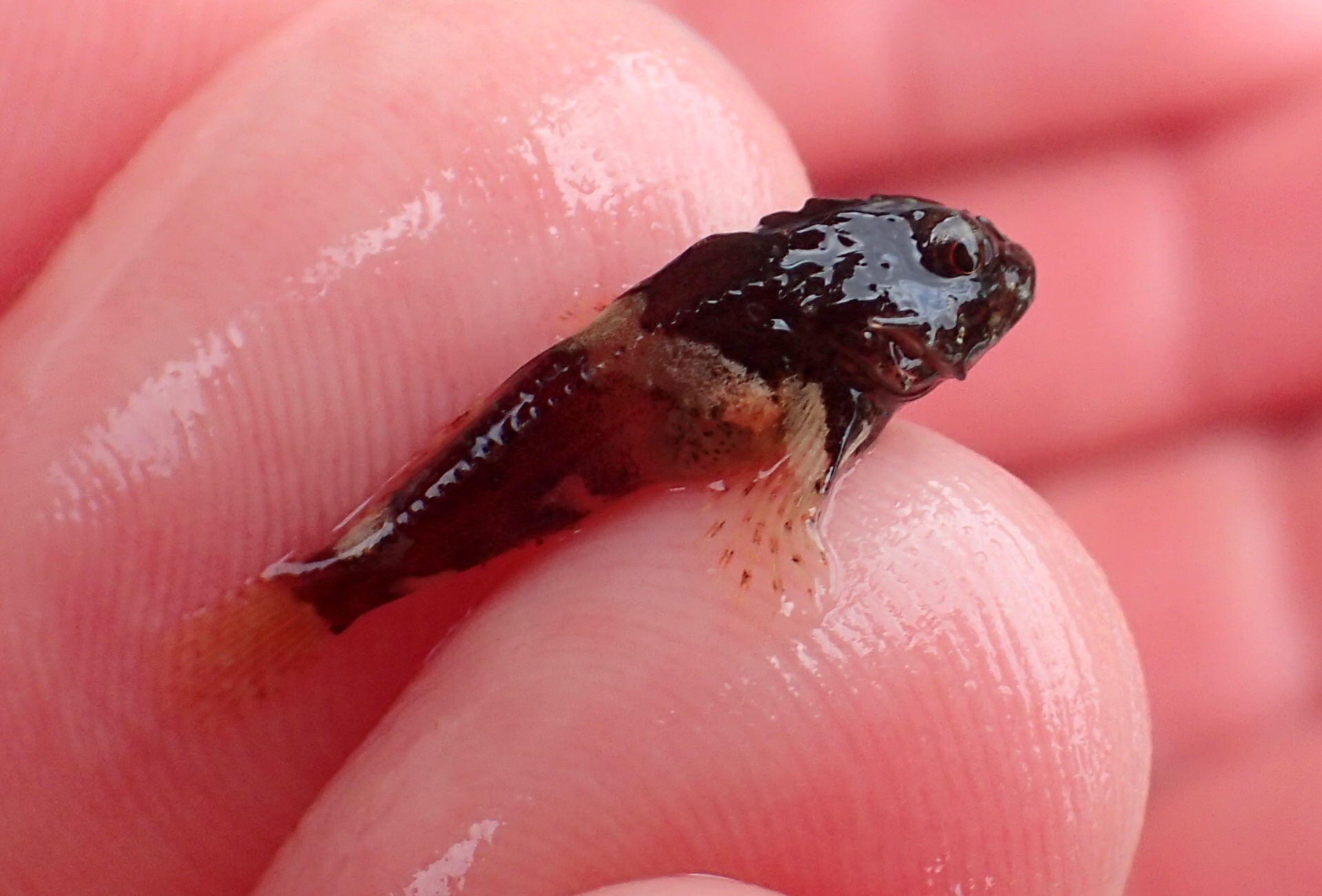
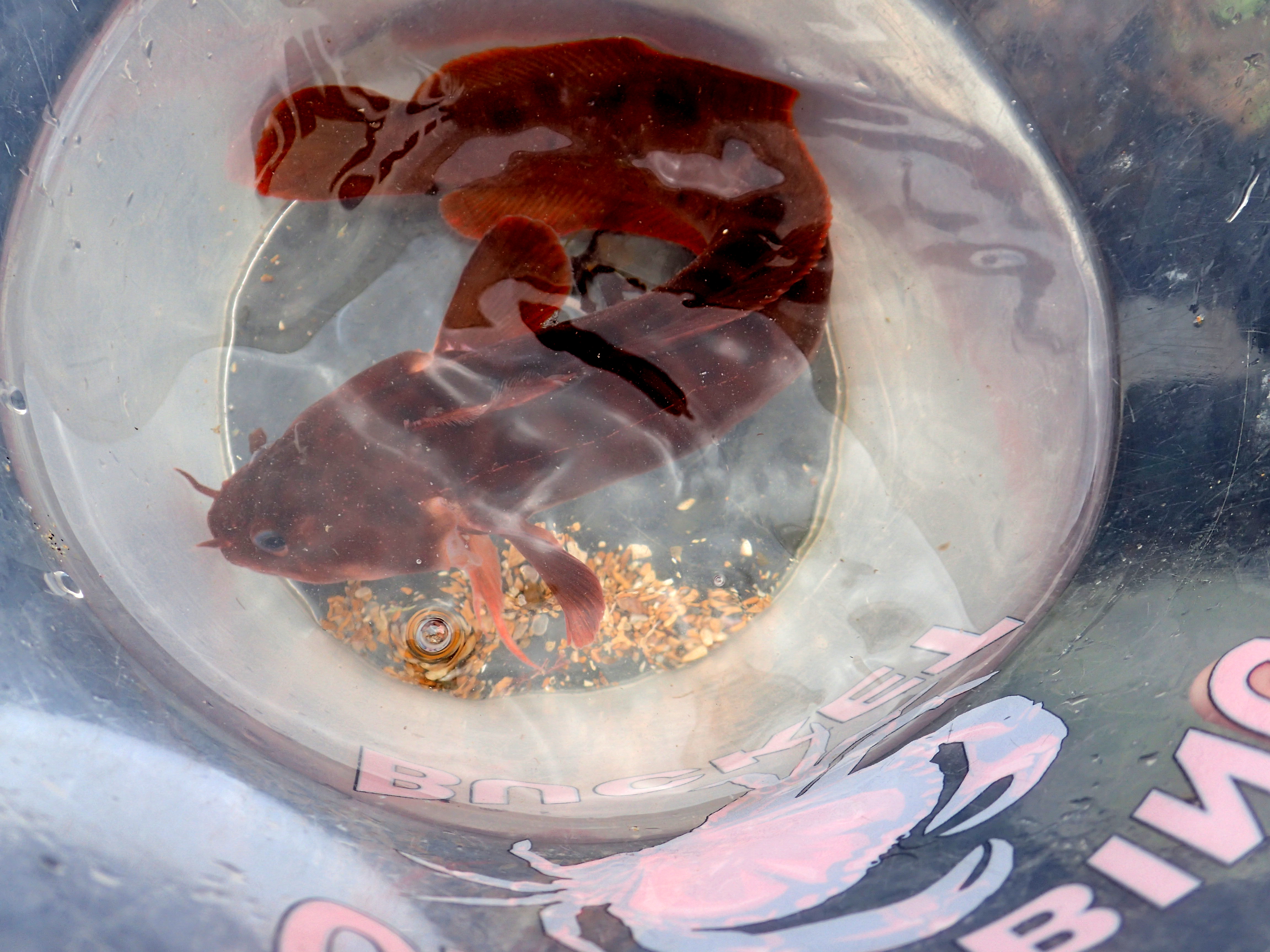
One of the finds, a little fish catches my eye. When I first see its red body and dark head, I think it could be a black-faced blenny. The shape doesn’t seem right though. After much staring, I conclude it’s probably a scorpion fish. In my photos the spines on its face can be seen more clearly, confirming that it’s the smallest specimen of this species I’ve ever seen.
A juvenile scorpion fish – the smallest I’ve ever seen.
The picnic is perfect in every way. Some of the children huddle together with their sandwiches on top of a tall rock. The smaller kids play in the sand and shower some into the olives, but no one cares.
The tide has moved in but there’s still time for some last-ditch rock pooling to the east of the beach. One of the boys is desperate to find and eel and his determination pays off. He locates a good-sized common eel under a rock, but it slithers into a crevice, evading capture.
Love is in the air! Berthella plumula sea slugs under a rock.
There is no shortage of crabs here and we find pairs of lemon-yellow berthella plumula sea slugs clinging to the underside of the rocks. I’m told there are giant gobies around and it’s not long before one of the dads sends up a triumphant cry. “It’s a giant.”
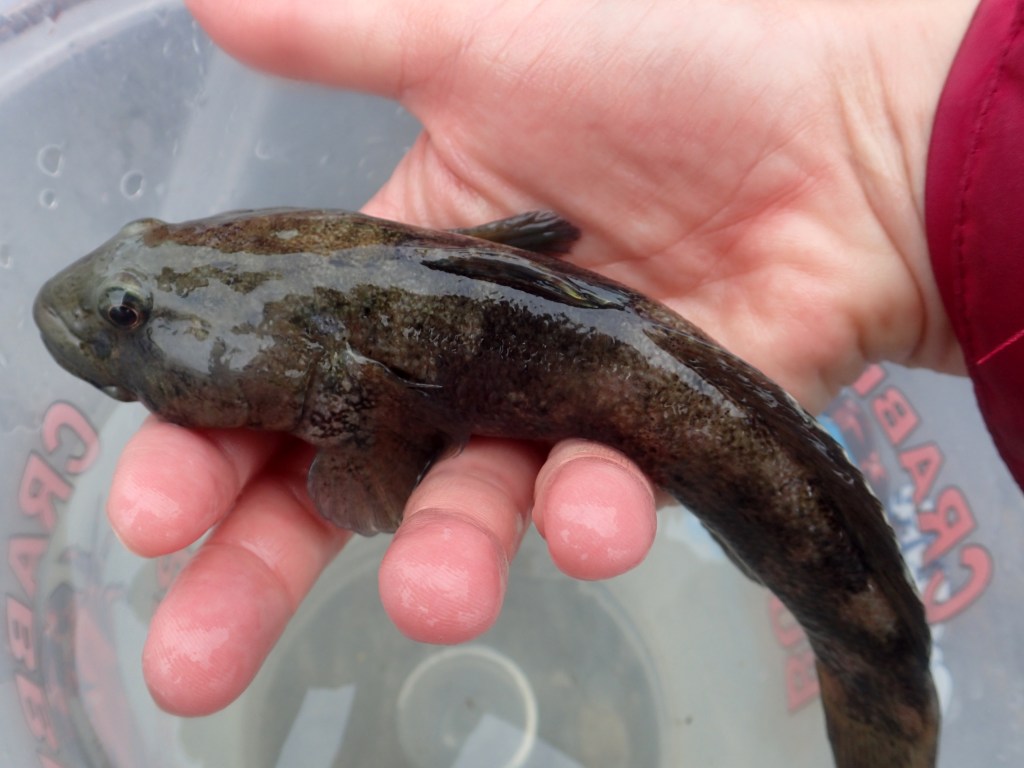
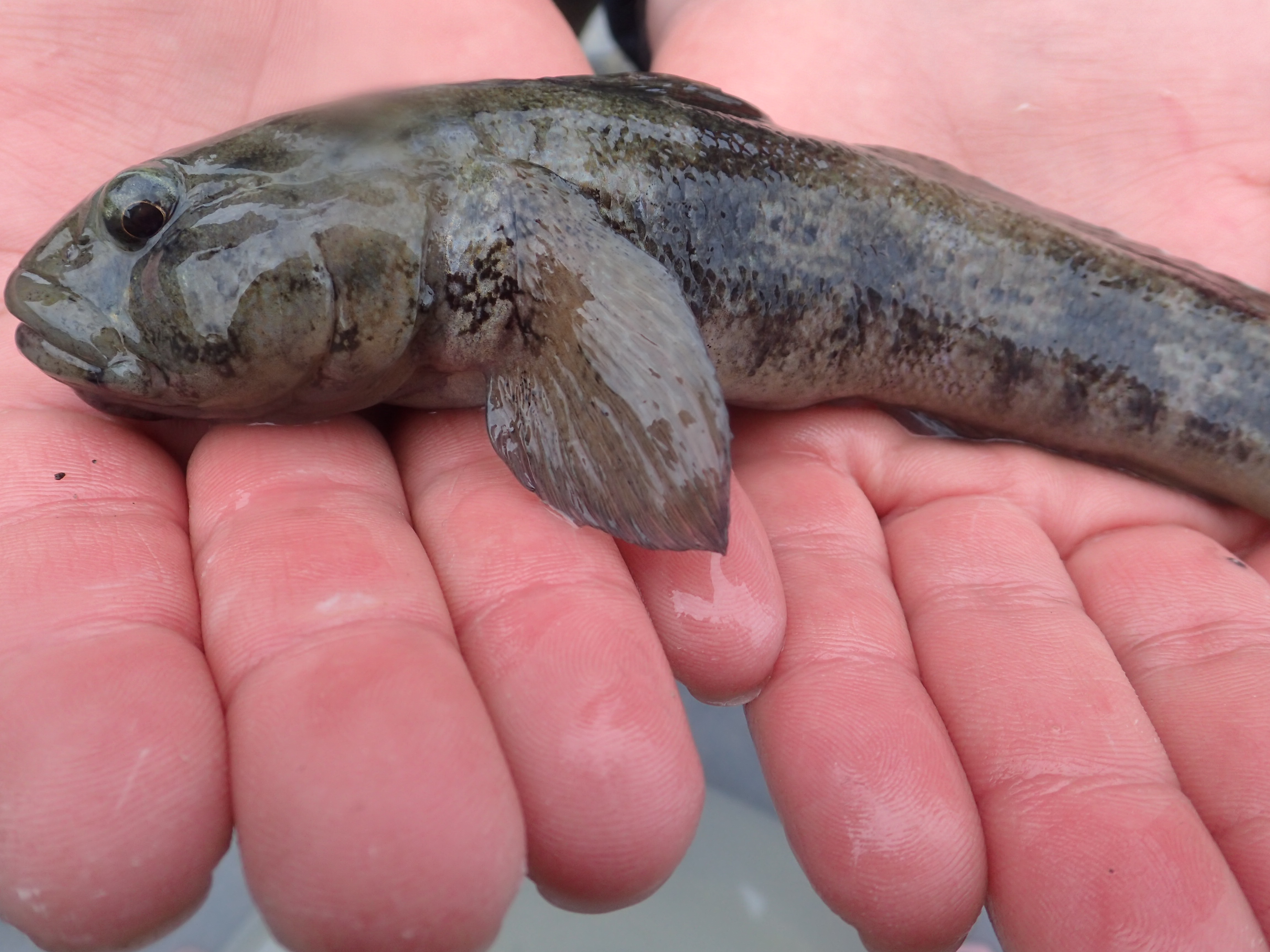
It’s a whopper, but is it a giant? Goby found in a mid-shore pool
We all look closely. I’ve seen some big rock gobies and I know they can be hard to tell apart from the rarer giant goby. This one looks like it could be the real thing. It’s large, at least 17cm, and has the fat-lipped face and salt and pepper colouring of a giant goby.
The goby’s face showing the super-thick lips.
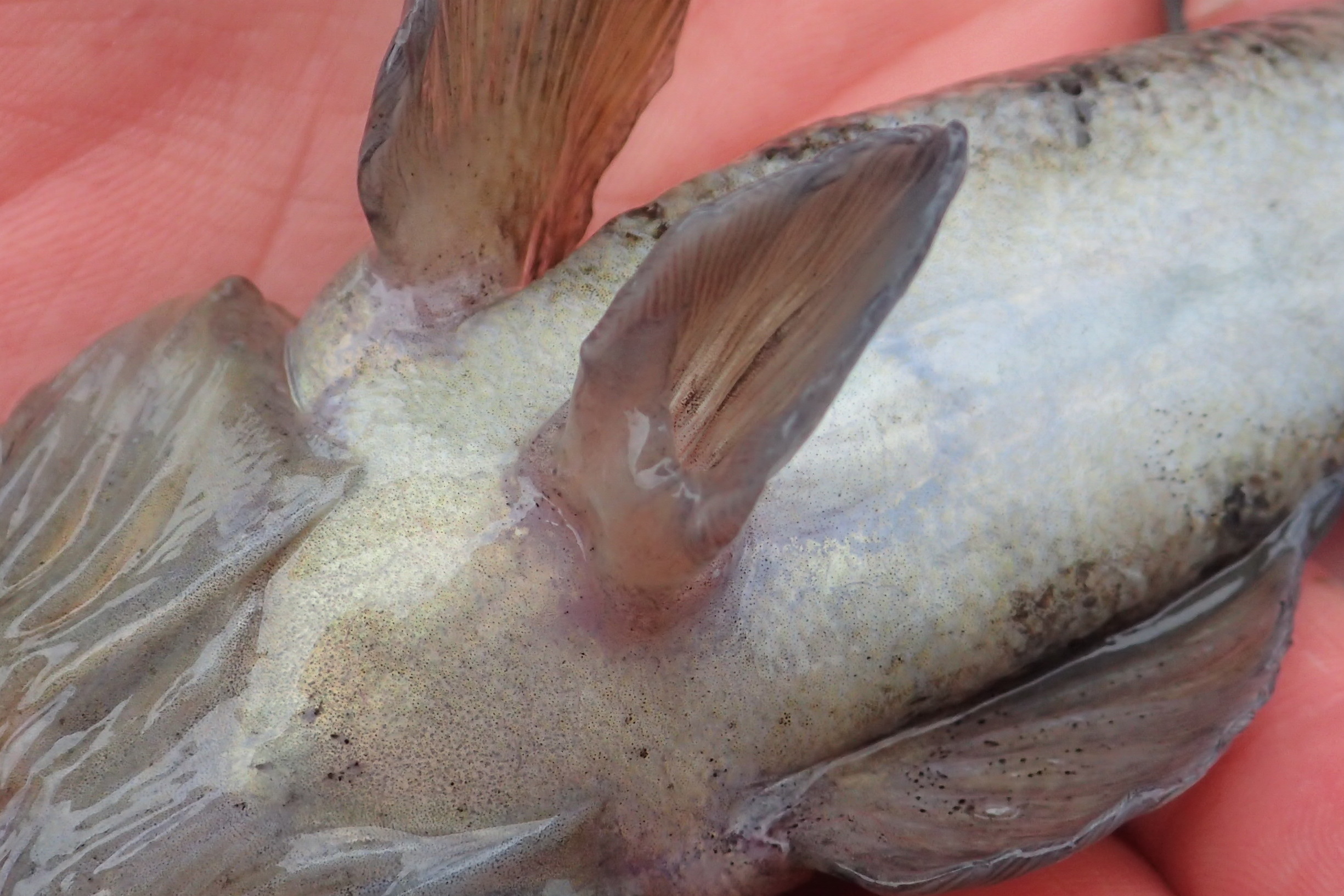
I take photos of the sucker fin on its belly and hope we’ll be able to get a definitive answer from the experts. The giant goby has a detatched lobe at the front of its sucker fin which the rock goby doesn’t have…apparently.
The pelvic sucker fin of the goby
As we release the goby into the pool where we found it, the children spot their granddad walking onto the beach. He’s arrived just as the tide overtakes the last pools and he invites the kids to join him for a spot of skimming.
It’s the first time I’ve been to this beach. I think I’ll be back. Some things are indeed meant to be.
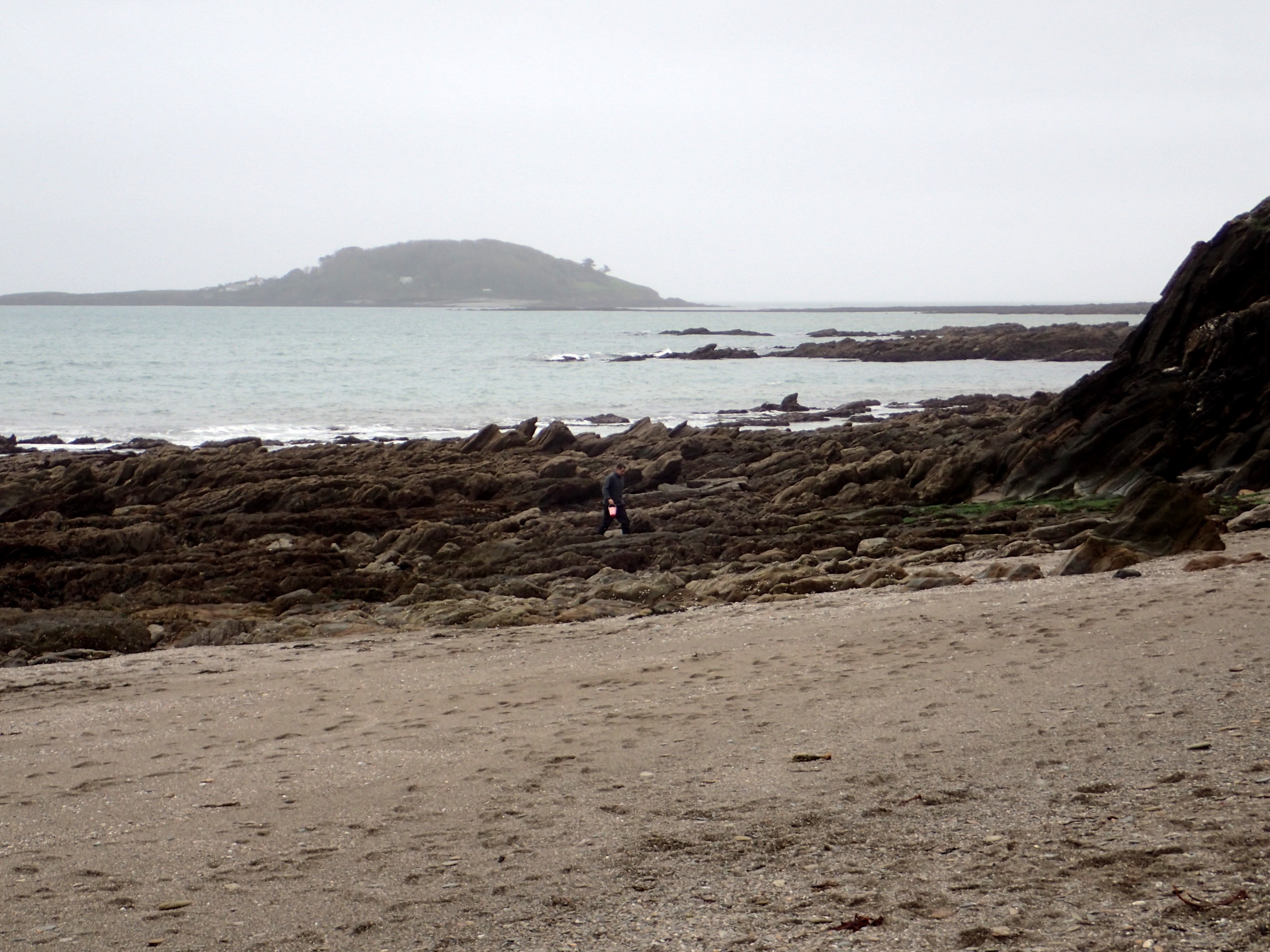
It’s bank holiday Monday and, by rights, the beaches should be packed with tourists, but this is a British bank holiday complete with the standard issue of drizzle and greyness. We seem to be the only people who’ve come for a picnic today.
A very un-summery bank holiday at Plaidy beach near Looe
Cornish Rock Pools junior and his Dad undertake mega-engineering projects on the stream while I explore the rock pools, eager to put my new camera through its paces.
Pleased to meet you! A broad-clawed porcelain crab extends a claw.
It seems that the wildlife has also gone to ground, as though the animals have moved further out to sea during the heavy rains. The regulars are still here though, lurking in the murky water.
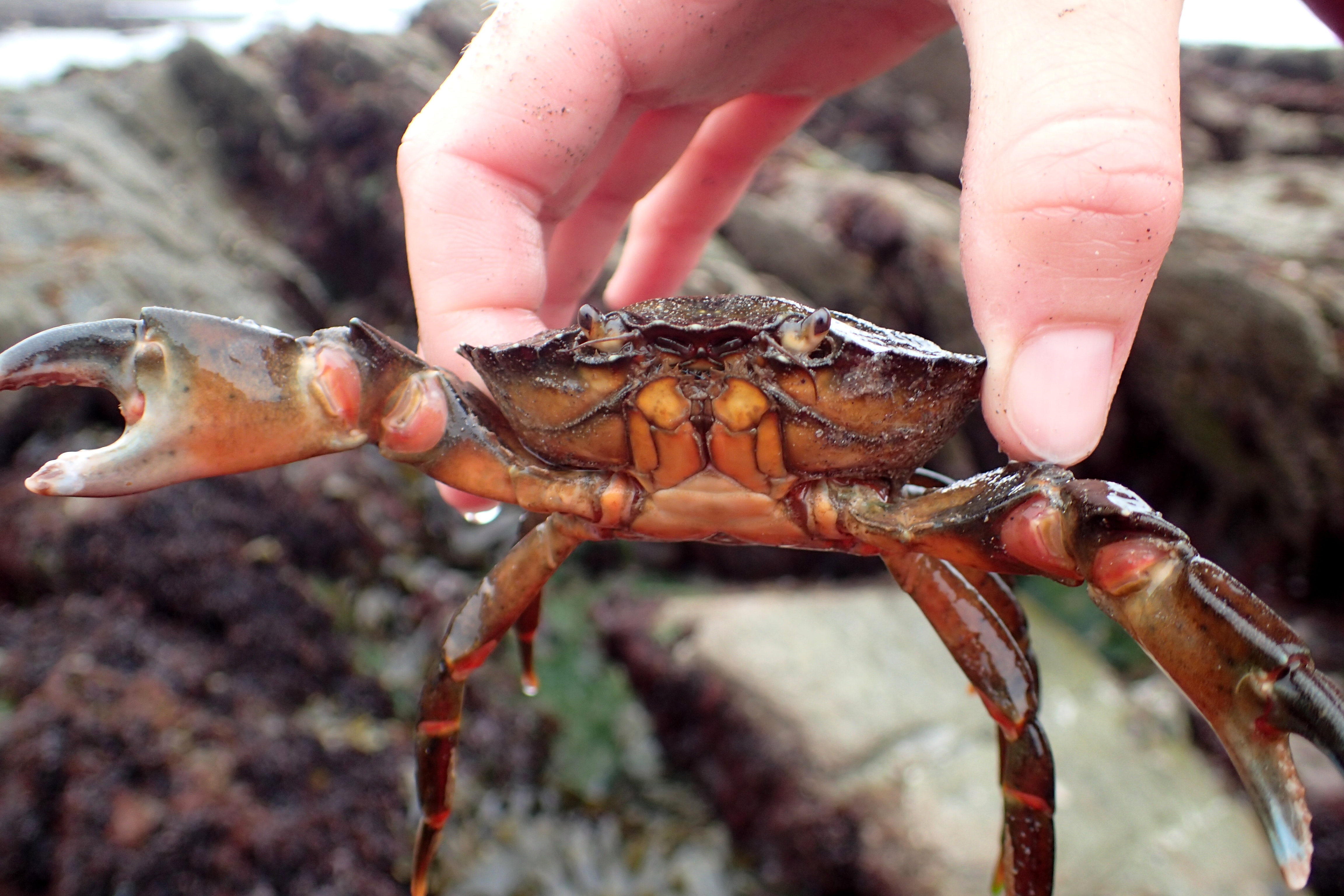
Green shore crabs abound among the rocks.
Under almost every rock there are young edible crabs shunting sand over themselves while larger green shore crabs run for cover.
Netted dog whelk egg capsules
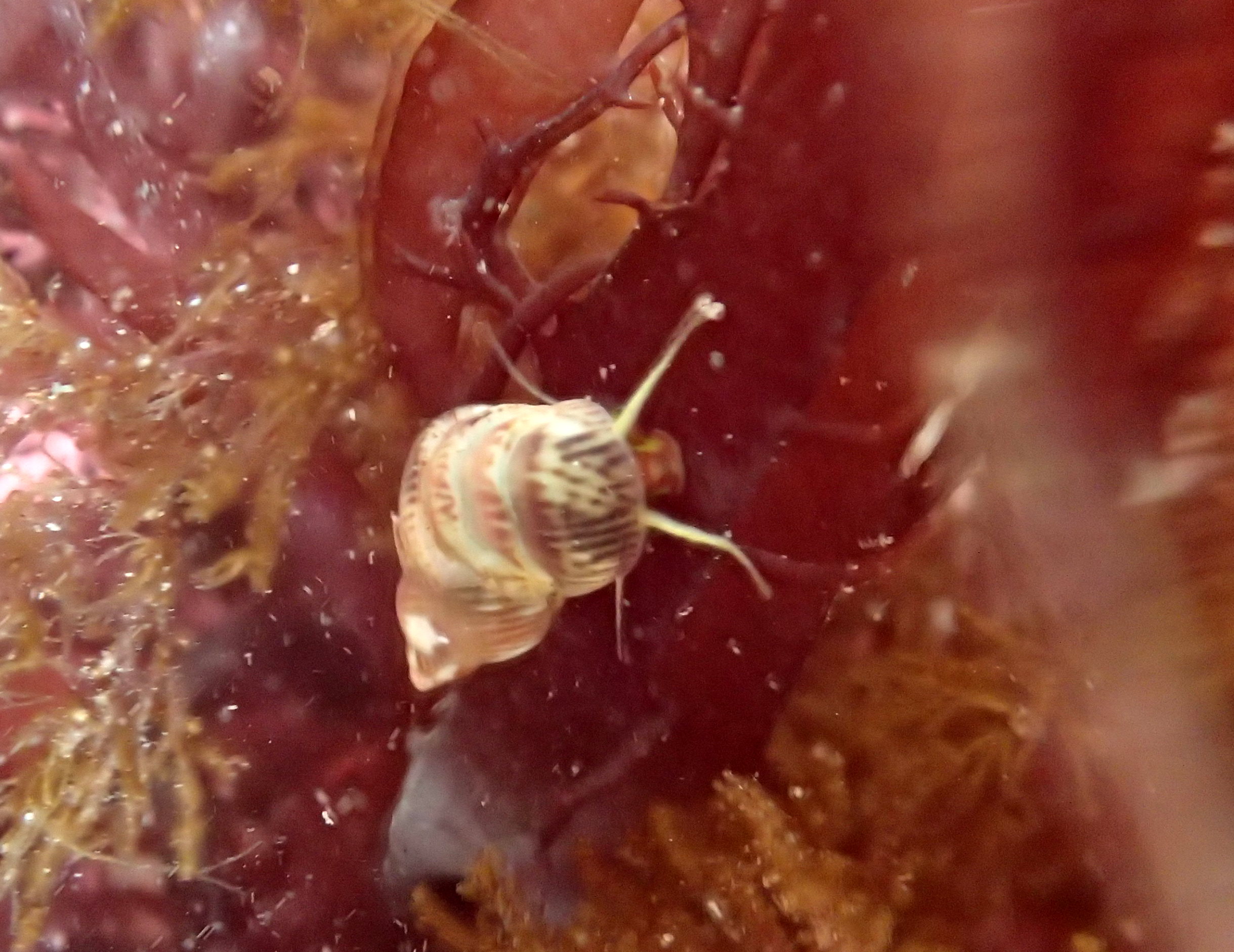
In a pool that threatens to over-top my wellies, I find a pheasant shell going about its business. I can barely see it in the silty water as it makes its way along the red seaweed. Under the camera, its neat maroon stripes become more visible and I can see its tentacles flopping over the edge of the weed.
A pheasant shell undeterred by the silty water
A grey heron is fishing in the farthest pools. As the waves begin to slosh up the gulley, a cormorant flies in and takes up position behind the heron, where it stays for the next half hour. I hunt the mid-shore for the ever illusive starfish, Asterina phylactica.
The first Asterina phylactica starfish I find is especially tiny.
The first of these minute starfish I find is so small that I can barely see it among the weed. It moves remarkably quickly, sliding round the branching tuft of pink coralline seaweed and disappearing from view each time I try to focus on it.
Other half sidles over and asks about the sandwiches. I realise I’ve been staring into this pool for way too long and somehow I’ve managed to soak my fringe and my coat sleeves in my enthusiasm, but I’m not quite ready to give up. Eventually I’m rewarded by finding a larger, brighter specimen, which I photograph with numb fingers.
A slightly larger, more brightly coloured Asterina phylactica starfish.
Asterina phylactica starfish – well worth the time spent searching.
The drizzle sets in properly as we begin our picnic. Cornish Rock Pools junior builds a shelter under his Dad’s coat and happily munches on sandwiches and biscuits. I flex my fingers and am just beginning to sense the return of some sort of blood flow when I remember the bucket. I definitely had it and now I don’t. Other half and I mount a search party, but he heroically sends me back to the chocolate digestives while he continues the hunt.
Cornish Rock Pools junior makes his picnic shelter.
After several long minutes of searching, the tide and mist closing around him, he lifts the bucket aloft and junior and I clap and cheer with our mouths full.
Red bucket is saved!
Soon the cliffs are disappearing in the fog and the rain sets in properly. As the oystercatchers sweep in, we hastily pack up our very British picnic and leave the beach completely deserted.
A snakelocks anemone among the sea lettuce.
Privacy & Cookies: This site uses cookies. By continuing to use this website, you agree to their use. To find out more, including how to control cookies, see here: Privacy and Cookies Policy.





















 Cornish Rock Pools