Category: Anemones and Jellyfish

  • Top 5 Fierce(ish) Rockpool Creatures

    Top 5 Fierce(ish) Rockpool Creatures

    As you might imagine, we’re fans of nature documentaries in this house and we’re all looking forward to watching Steve Backshall’s new series, Fierce. It’s got me and Cornish Rockpools Junior thinking about opportunities to meet ‘fierce’ wild creatures closer to home.

    Of course, these animals aren’t exactly fierce, they’re just equipped to survive the evolutionary arms race with attitudes, weapons and chemicals that aren’t very human-friendly.

    You don’t need a plane, a film crew and a ton of equipment to seek out an encounter with a well-armed rockpool ninja. This weekend’s massive low tides are the perfect opportunity to head out onto the shore and check out our top 5 fierce(ish) rockpool creatures.

    So, check the tide times, grab a bucket, put on your wellies and take a look…

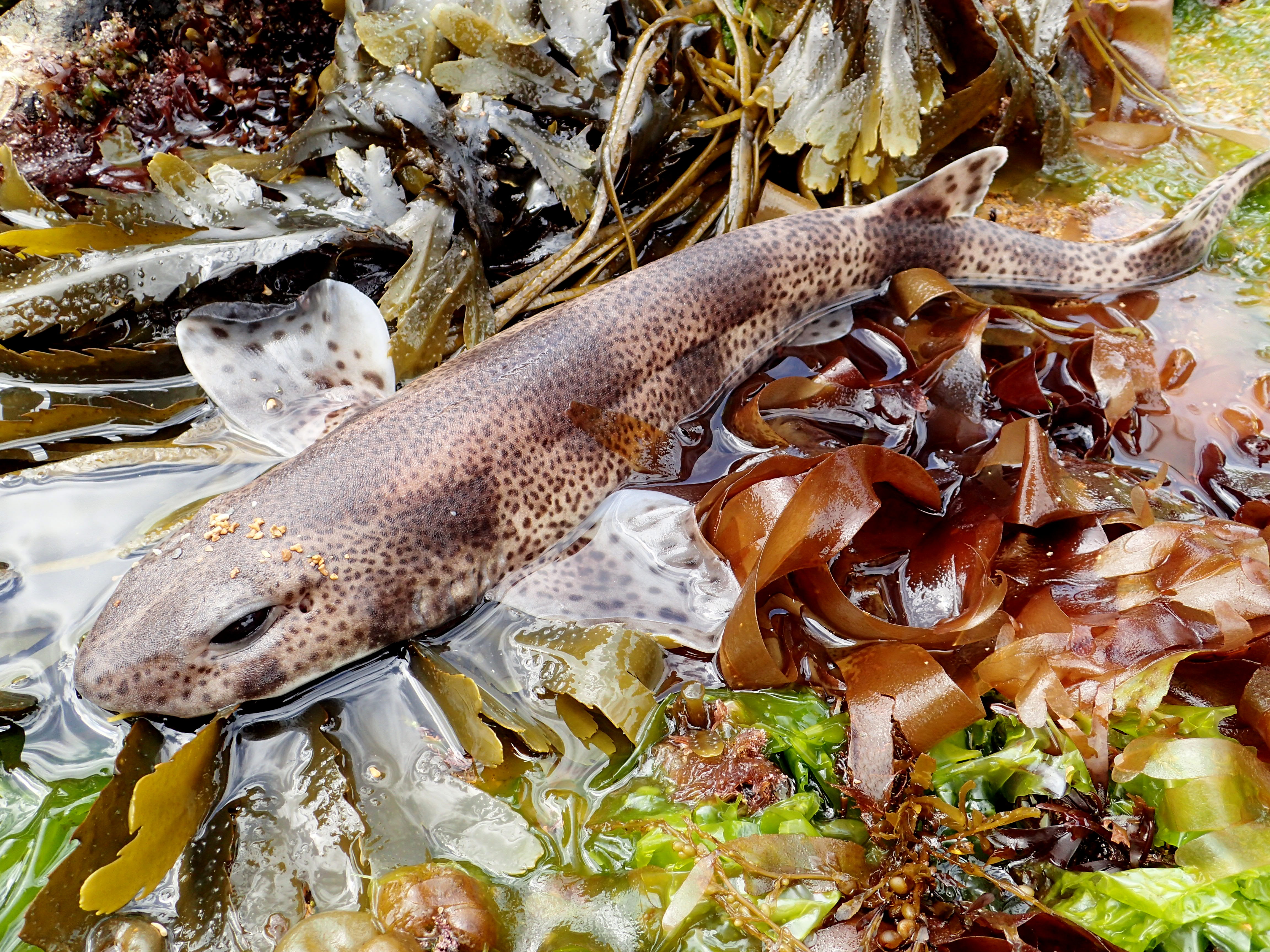
    5. Small spotted catshark

    Scyliorhinus canicula - small spotted catshark or dogfish stranded in a Cornish rock pool
    Scyliorhinus canicula – small spotted catshark, also known as dogfish – stranded in a Cornish rock pool

    These small sharks, often known as dogfish, sometimes become stranded in pools during the very lowest of tides. They’re not at all aggressive, but it’ll sound impressive that you’ve met one. They have incredibly rough skin that used to be used as sandpaper. In some places you can also find their egg cases and those of their larger cousin, the nursehound, attached to seaweed. They take around 7-9 months to hatch out so never detach the egg case from the weed.

    The developing greater spotted catshark can be seen at the bottom of the eggcase
    The developing greater spotted catshark can be seen at the bottom of this eggcase

    4. Snakelocks anemone

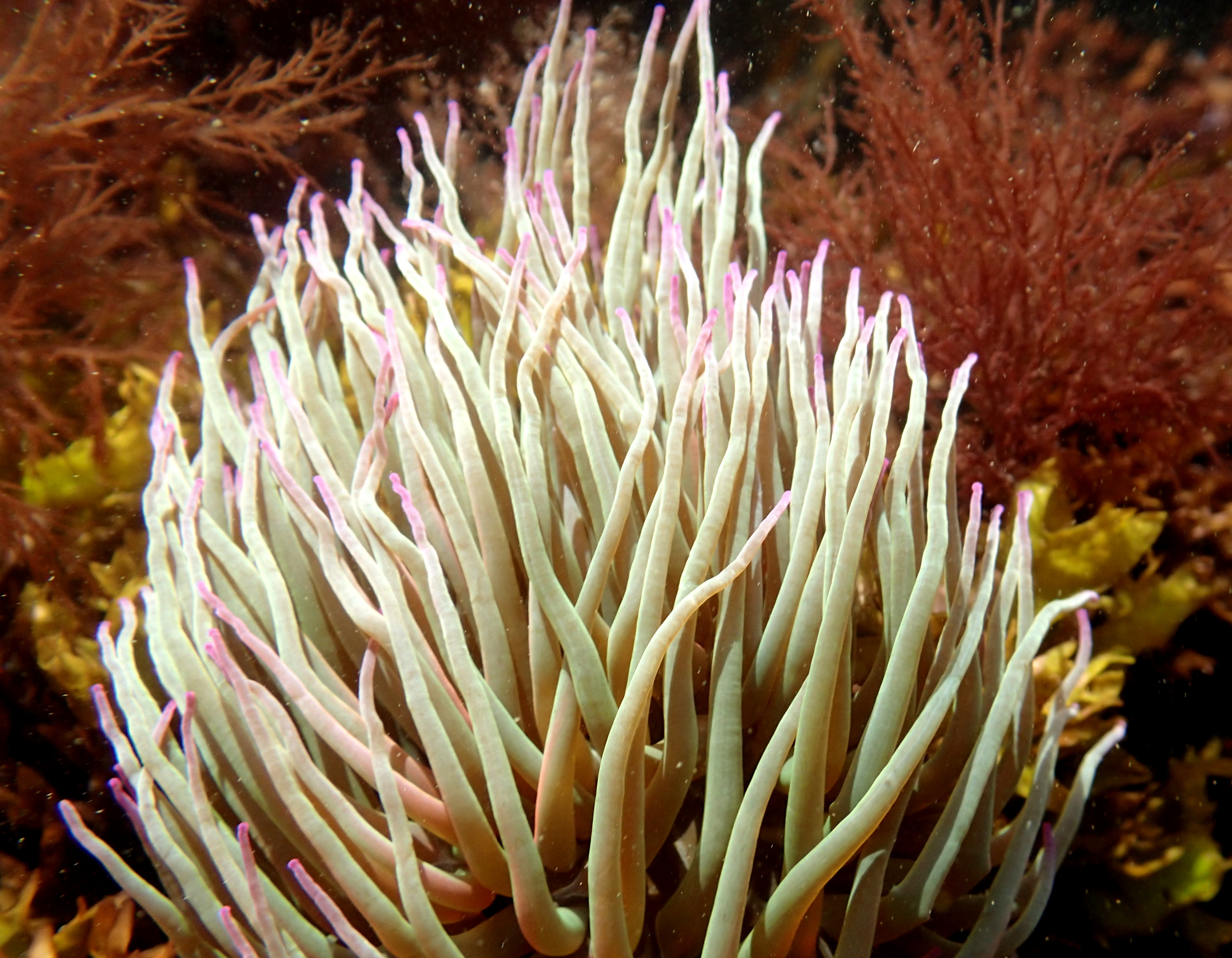
    This snakelocks anemone looks like it's had a fright - the tentacles were being picked up by the current
    This snakelocks anemone looks like it’s had a fright – the tentacles are being picked up by the current

    This anemone is common in rockpools all around Cornwall. It’s easy to see how it gets its name from its long snake-like tentacles, which are usually green with purple tips, but sometimes a dull-brown. They’re from the same family as jellyfish and have stinging cells which shoot poisonous harpoons into anything that touches their tentacles. It’s best not to touch this anemone as some people have a reaction to the sting. If you do touch one be sure not to rub your eyes because stinging cells can attach to your skin – wash your hands as soon as you can.

    Cornish Rock Pools Junior is convinced snakelocks anemones can eat your foot. That’s unlikely, but watch what they do to this fly…

    3. Worms

    Worms are often buried in sand and mud burrows - if disturbed they can shoot out their jaws and give a nasty nip.
    Worms like this ragworm are often buried in sand and mud burrows – if disturbed they can shoot out their jaws and give a nasty nip.

    An unlikely contender, but there are several species of worm on the shore that can be pretty fearsome, especially the larger ragworms. These animals have an extendible jaw that can shoot out and deliver a painful bite. Others, like the bootlace worm secrete a toxic mucus. Handle with care!

    Other finds... a bootlace worm. These worms are many metres long when fully extended, but are usually found in a tangled ball like this.
    A bootlace worm. These worms are many metres long when fully extended, but are usually found in a tangled ball like this.

    2. Compass jellyfish

    Compass jellyfish - showing its distinctive markings
    Compass jellyfish – showing its distinctive markings

    Like the anemone, this jellyfish is armed with lots of nematocysts (stinging cells), but far more powerful. These jellies with their distinctive V-shape compass markings can give you a painful sting. Jellyfish don’t live in the rockpools but are often washed in by the winds and tides, especially in the summer and autumn months. They’re beautiful creatures and well worth a look, but remember not to get close or to put your hands in the water – their tentacles can be hard to see, very long and can become detatched from the main jellyfish, so it’s not worth the risk (yes, that’s talking from experience… I’m a slow learner). There are lots of different species of jellyfish and some, including the massive barrel jellyfish, are harmless, but if you’re not sure, stay clear!

    Jellyfish tentacles can be hard to see, so be careful not to put your hands in a pool that has a jellyfish in it (e.g. to take underwater photos of tentacles like this one!)
    Jellyfish tentacles can be hard to see. It’s best not to put your hands in a pool that has a jellyfish in it (e.g. to take underwater photos of tentacles like this one!)

    1. Devil crab (Velvet Swimming Crab)

    OLYMPUS DIGITAL CAMERA
    A velvet swimming crab (devil crab) shows off its red eyes.

    The top fierce creature award, as voted by Cornish Rock Pools Junior who will not go near them, is [insert fanfare of your choice here]… the velvet swimming crab. This crab, known by Junior and many others who’ve met it as the ‘devil crab’, is afraid of nothing and is always quick to use its pincers. Their dark shells and gleaming red eyes give these crabs a sinister look to match their temperament. They’re brilliantly suited to hunting in the rockpools and shallow seas. If you dare to look closely at one (see ‘How to pick up a crab’), you’ll see that their stripy back legs are flattened into paddles, making them excellent swimmers. Watch out for them lurking buried in the sand, with only those red eyes showing.

    As soon as you approach a velvet swimming crab will stand on its back legs, its claws raised, ready for action.
    As soon as you approach a velvet swimming crab will stand on its back legs, its claws raised, ready for battle.

    There are plenty more dangerous creatures, such as the weever fish and the Portuguese man o’ war, that didn’t make our list because we so rarely see them in the rock pools.

    It almost goes without saying that by far the most dangerous creature on the shore is us humans. Marine litter, warming seas, pollutants, overfishing and habitat destruction all threaten our amazing marine life. Please do your bit every time you visit the shore:

    • If you turn any rocks replace them gently, the right way up.
    • Avoid using nets that can harm creatures and tread carefully.
    • If you catch any creatures, keep them in plenty of sea water and return them quickly to where you found them.
    • Don’t leave any litter behind and be aware that sun cream isn’t good for wildlife.
    • Every time you visit a beach take 2 minutes to pick up any rubbish you see.

    Have fun and please do let me know what creatures you meet (fierce or otherwise) in the Cornish rock pools.
  • Worms, slugs and jelly

    Worms, slugs and jelly

    As anyone who spends time around children knows, they generally delight in things that adults find yucky. So, what better for a day out with Cornish Rock Pools Junior than a visit to a sheltered, silty shore? It’s the perfect environment for all things slimy.

    It didn’t take us long to find one of the strangest – and stinkiest – animals on the shore, the bootlace worm. We turned a stone and on one side was the head and part of the tangled body of the brown worm. The rest of the body spanned across to the next boulder like a rope bridge.

    The thin, long body of a bootlace worm stretched between two rocks.
    The long, thin body of a bootlace worm stretched between two rocks.

    The bootlace worm is massively long – the longest recorded apparently came in at 55 metres, making it the longest animal in the Guinness Book of Records. This one would probably have spanned at least 7 metres. Given the difficulties of unravelling the tangled body without breaking it coupled with the fact it exudes acrid-smelling, toxic mucus, we decided against measuring it.

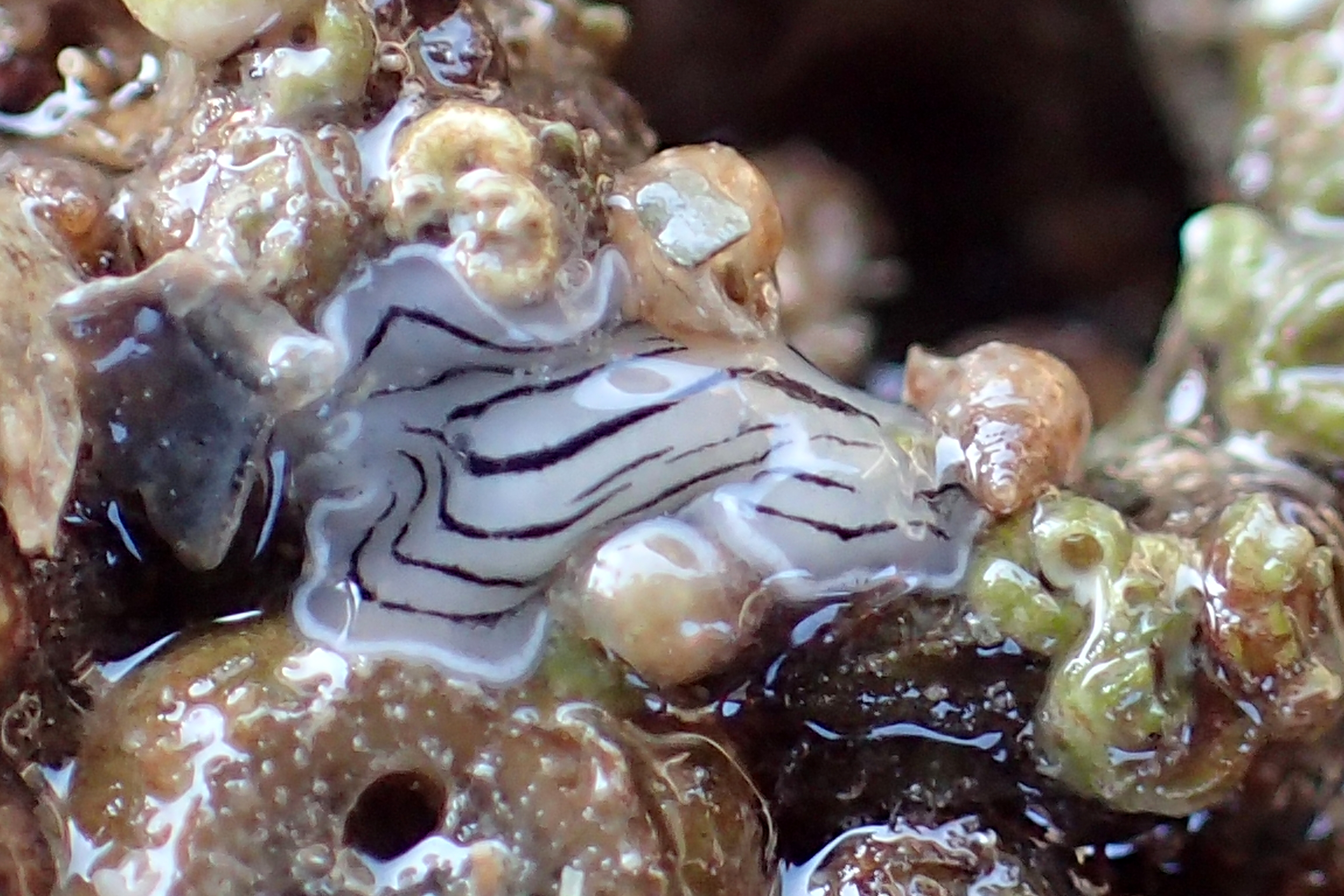
    On another rock we found a prettier creature, the candy-stripe flat worm. This one had moulded its paper-thin body to the contours of the rock. When they’re not oozing along like this, they’re reasonable swimmers, albeit with a technique that resembles a tissue blowing along the pavement.

    A small candy stripe flatworm oozing along its way.
    A small candy stripe flatworm oozing along its way.

    We started the search for jellies. The sheltered clumps of seaweed seemed a likely spot for stalked jellies, although Junior’s fascination with kicking up ‘pyroclastic flows’ of silt did hamper visibility a little. For a while we found nothing but ‘snotworm’ eggs, the green eggclumps of the green leaf worm.

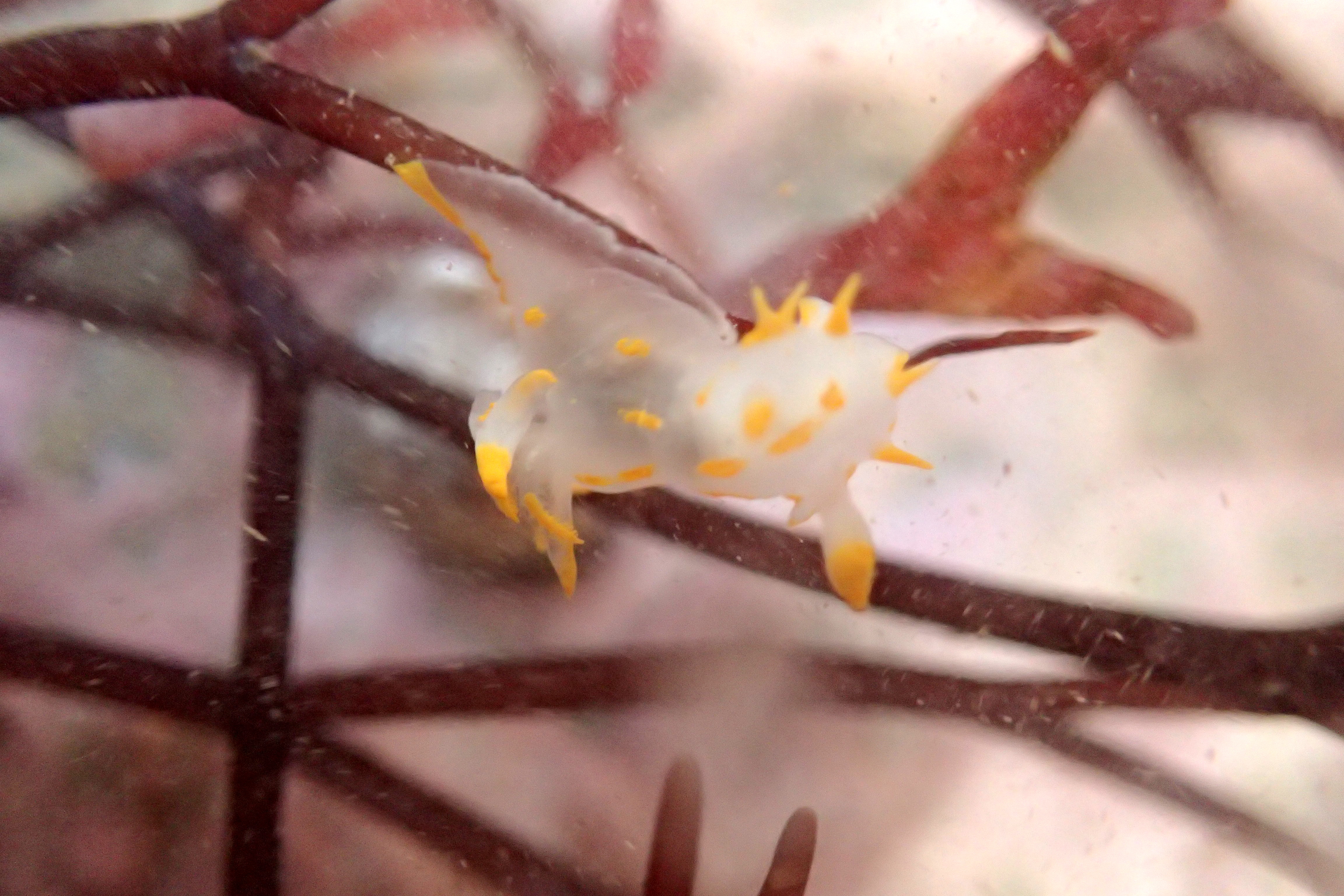
    When we did find our first jelly blob, it turned out to be another kiddy favourite, a slug. Out of the water, it was a shapeless splodge of yellow. In the water, it stretched out its white body to display yellow stripes and various yellow appendages and antennae.

    Sea slug - Polycera quadrilineata
    Sea slug – Polycera quadrilineata

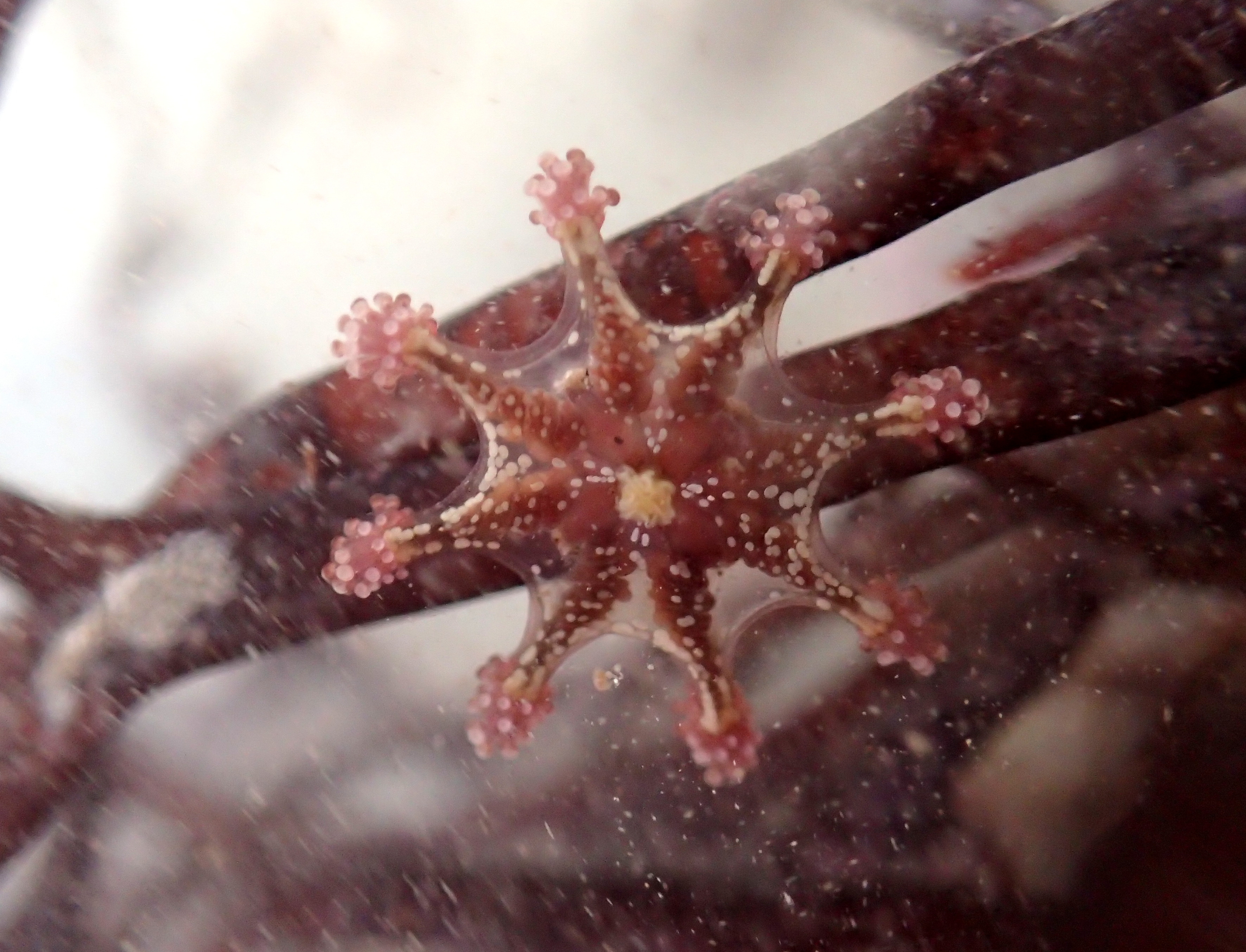
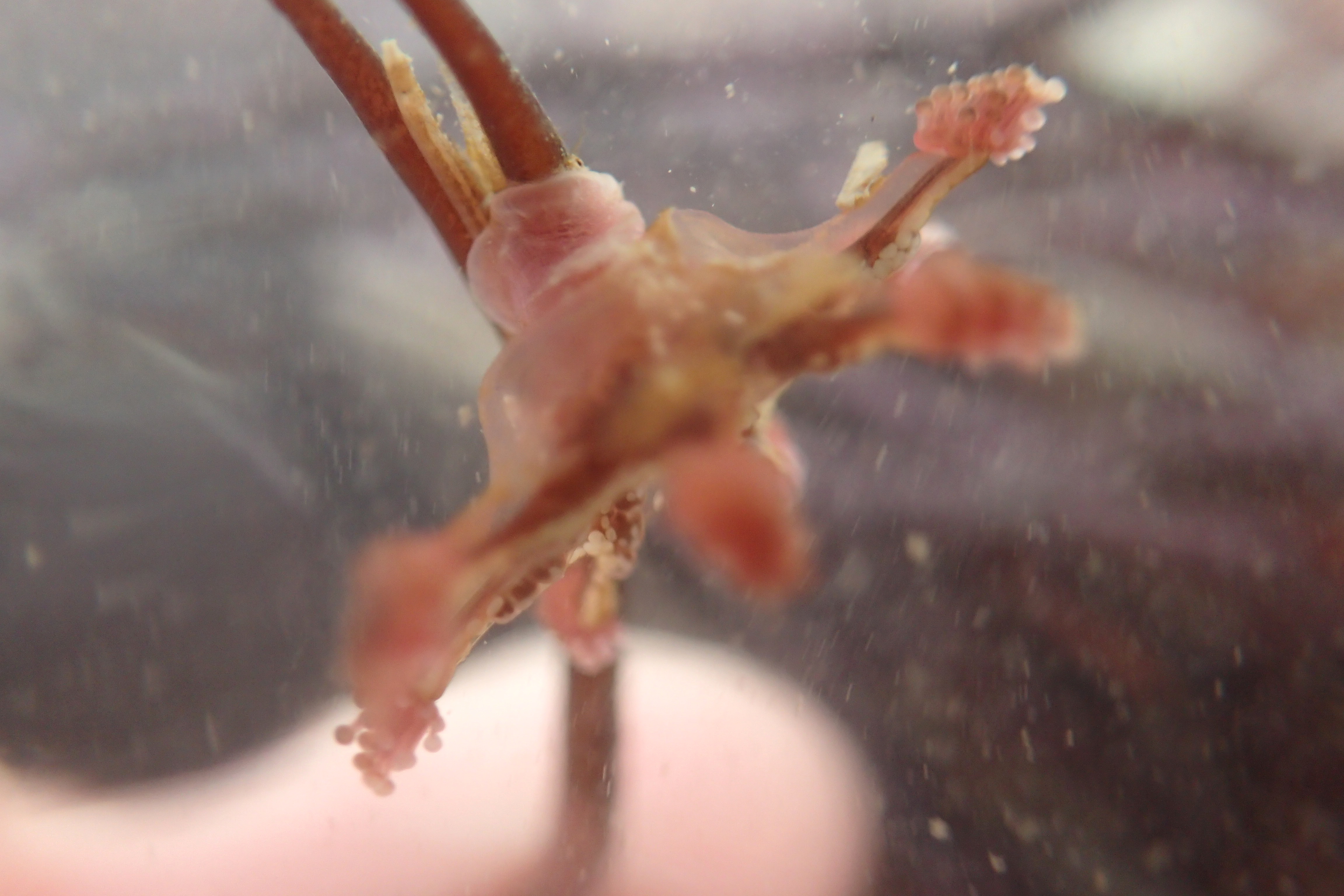
    As we watched the Polycera quadrilineata slug’s slow progress along the seaweed, we noticed another, more flowery jelly-blob behind it. This was the first of several Lucernariopsis cruxmelitensis stalked jellyfish we found.

    Stalked jellyfish - a Lucernariopsis cruxmelitensis.
    Stalked jellyfish – a Lucernariopsis cruxmelitensis.

    The incoming current was throwing up a cloud of silt, but we managed to find eight stalked jellies among this small area of the shore. Not a bad haul of squidgy, slimy, child-pleasing creatures.

    Stalked jellies have stinging tentacles like their cousins, the jellyfish, but live attached to seaweed rather than floating in the ocean.
    Stalked jellies have stinging tentacles like their cousins, the jellyfish, but live attached to seaweed rather than floating in the ocean.

     Here are some of our other favourites from this expedition:

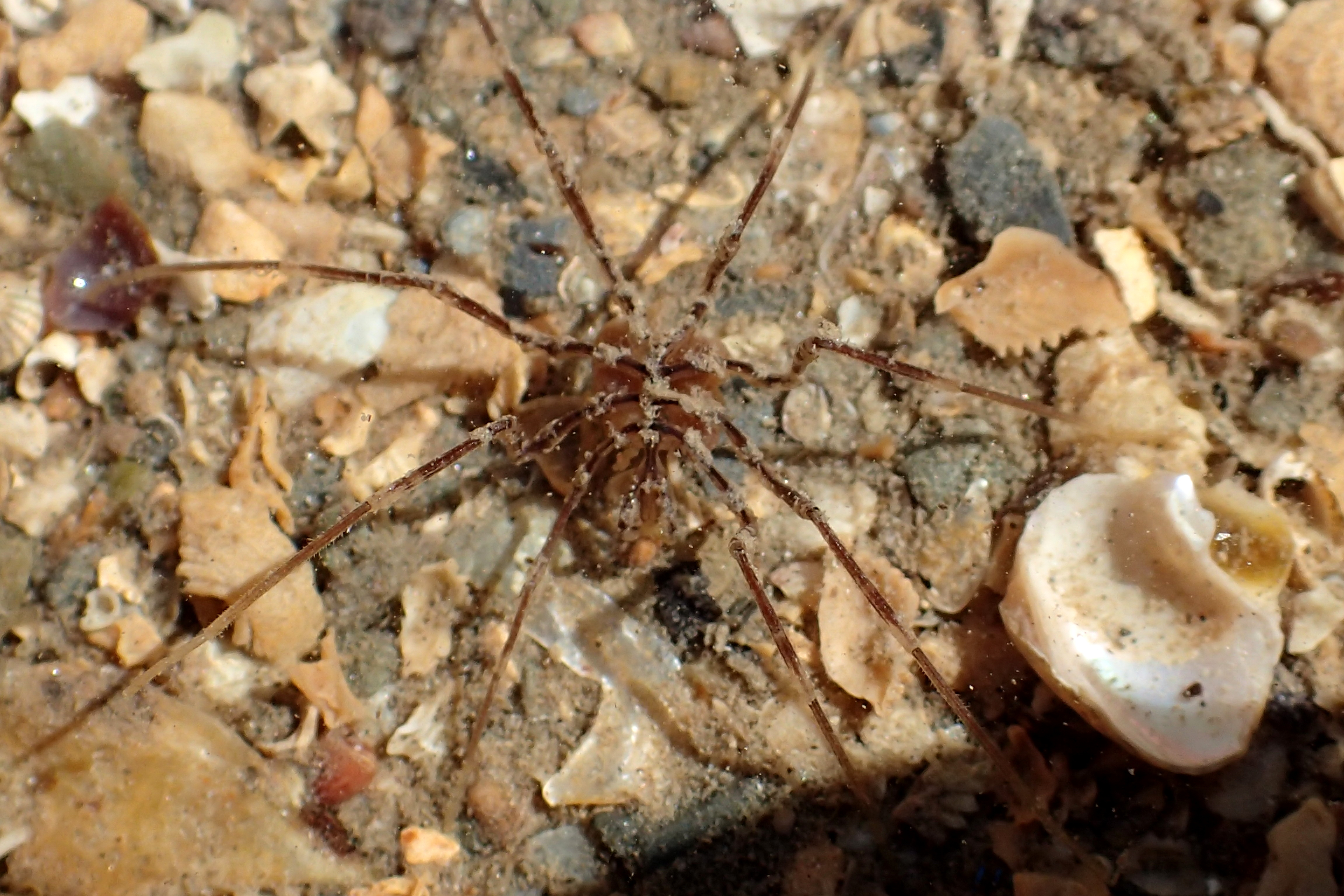
    A sea spider. These delicate little creatures are perfectly camouflaged among the seaweed.
    A sea spider. These delicate little creatures are perfectly camouflaged among the seaweed.
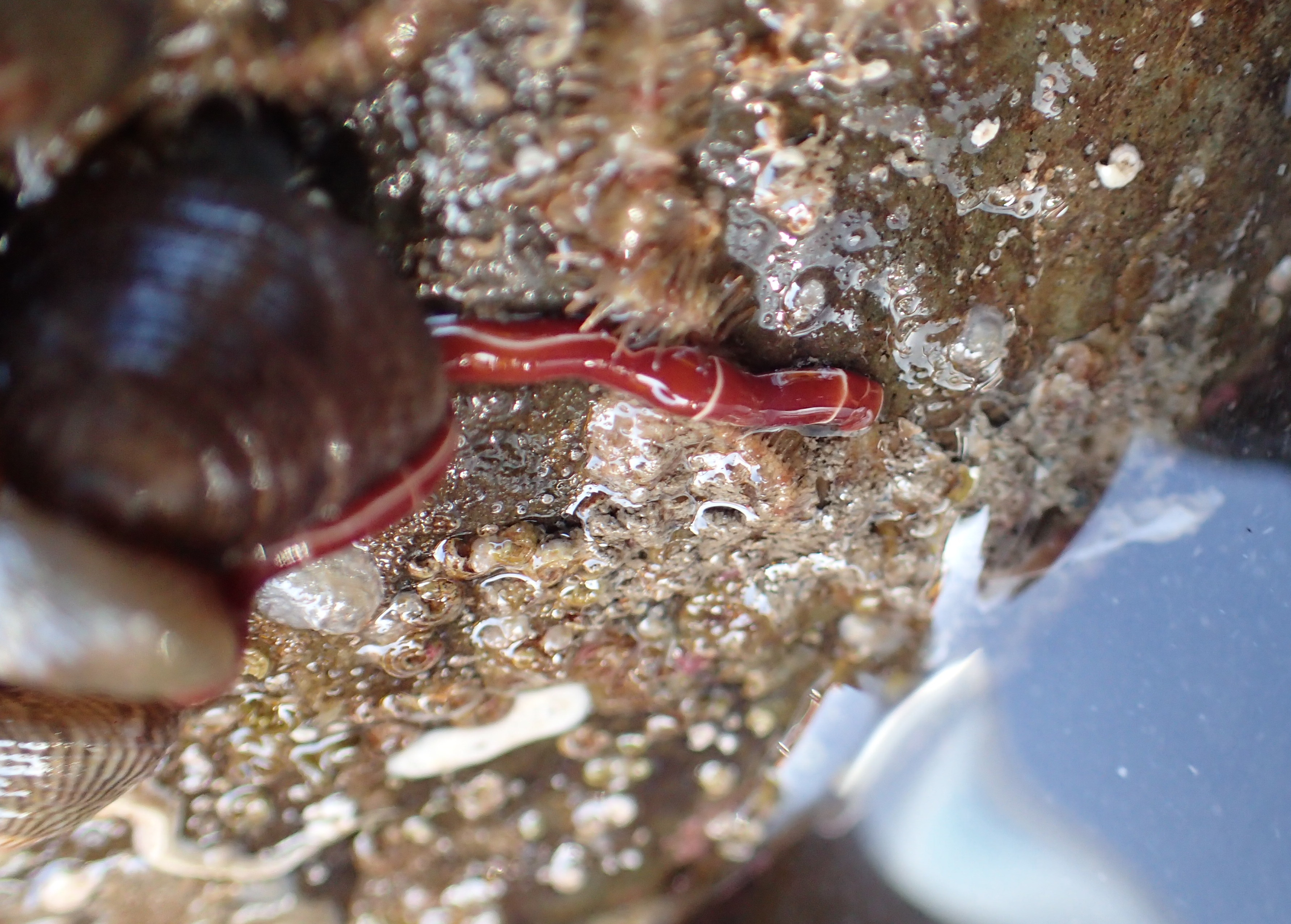
    Tubulanus annulatus. This strikingly coloured worm was a first for me and is more commonly seen offshore.
    Tubulanus annulatus. This strikingly coloured worm was a first for me and is more commonly seen offshore.
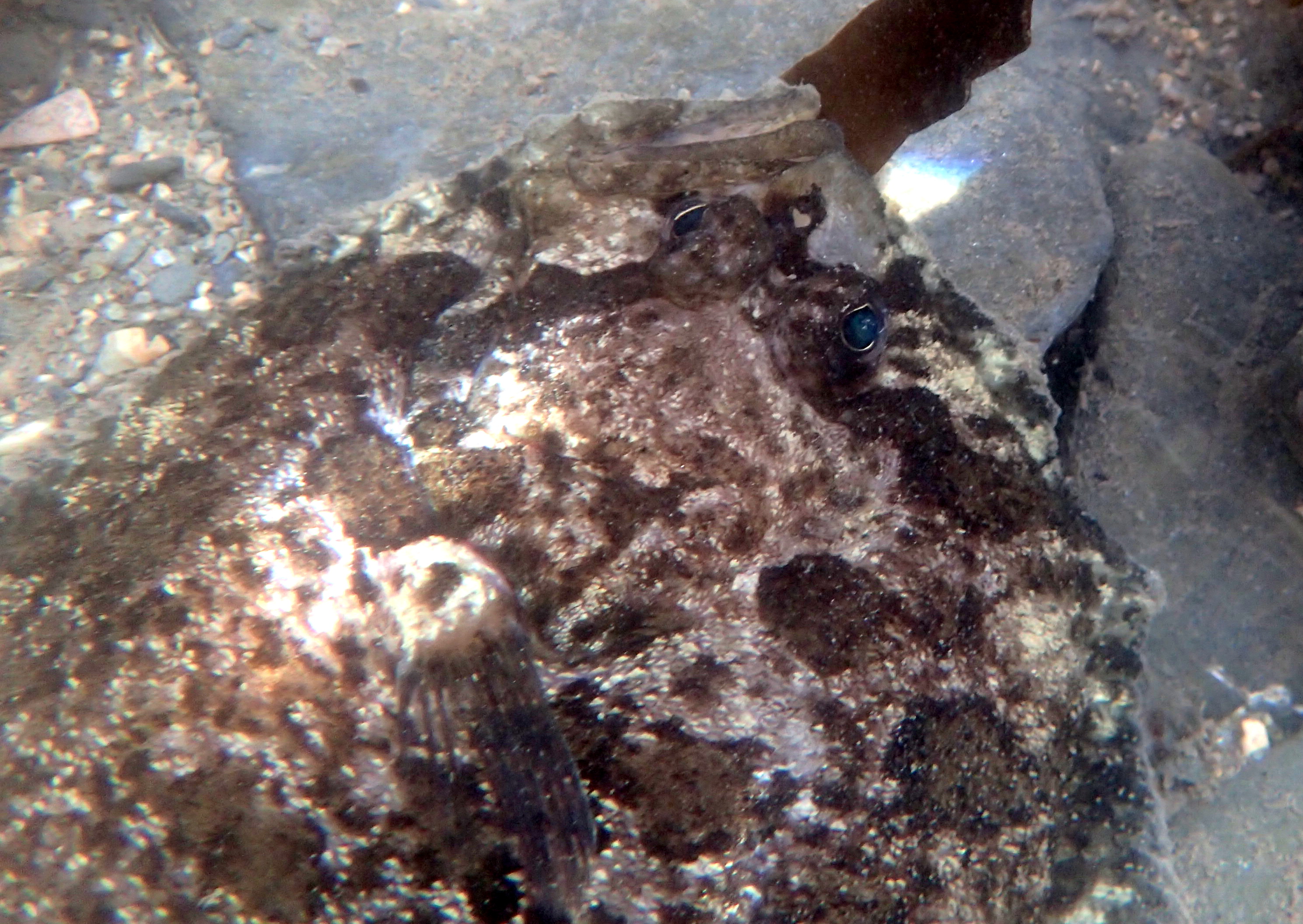
    I was right at the depth-limit for my wellies when I found this topknot flat fish scooting along the bottom of a pool. Junior loves their asymmetrical faces.
    I was right at the depth-limit for my wellies when I found this topknot flat fish scooting along the bottom of a pool. Junior loves their asymmetrical faces.
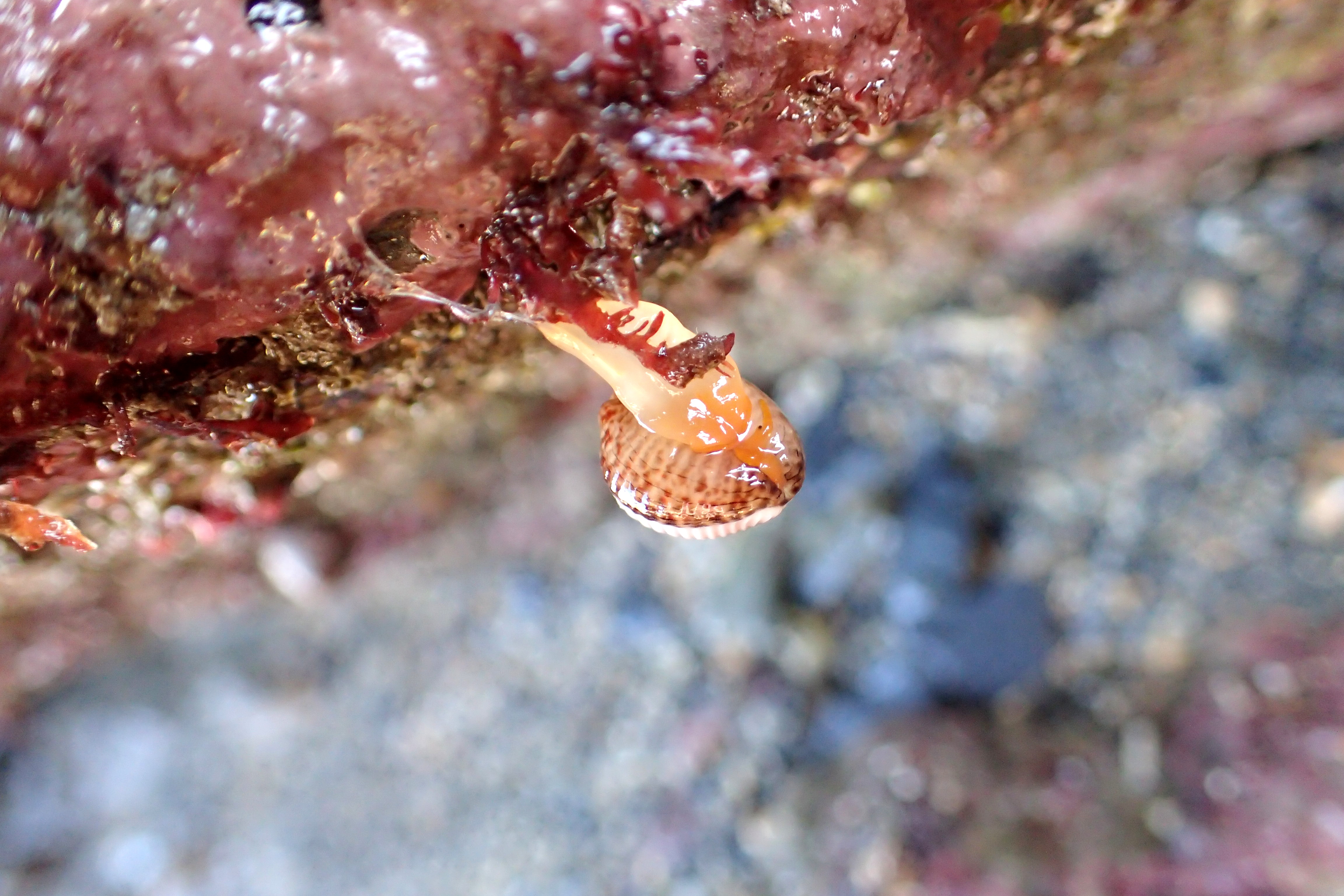
    More slime! Cowries are able to dangle from the rocks using their strong mucus trails.
    More slime! Cowries are able to dangle from the rocks using their strong mucus trails. This one’s in typical abseiling position.
  • Rockpooling on a mega-tide

    Rockpooling on a mega-tide

    This week the spring tides are huge, which means perfect rockpooling conditions all around Cornwall. Yesterday’s ‘storm without a name’ passed just in time and today the sun shone, so I dusted off my waders and followed the tide out to see what it would reveal. Answer: lobsters, baby sharks and a whole lot more.

    Greater spotted catshark baby - Scylliorhinus stellatus
    Greater spotted catshark baby – Scyliorhinus stellaris

    I was hoping to re-discover an overhang packed with jewel anemones at the far end of the beach that I’d come across once before, but couldn’t resist taking a look at the wildlife on the way. You know it’s going to be a good day when the first stone you lift is unexpectedly awesome. This one was hiding a troop of hermit crabs, a rock goby and a beautifully camouflaged scorpion fish. (more…)

  • Stormy weather in the Cornish rock pools

    Stormy weather in the Cornish rock pools

    Rockpooling in stormy winter weather can be a risky business here in Cornwall, so my advice is … don’t. At best you get blown over on the slippery rocks and soaked by rain that seems to come in horizontally and go right up your nose. At worst you could end up in the path of the fierce waves and currents. It’s not worth it.

    When there’s a calm moment and a good tide (I’m hoping tomorrow will be such a day), there’s plenty to see in the rockpools. Between times, stick to the strandline, where the sea throws up all sorts of treasures and unexpected visitors.

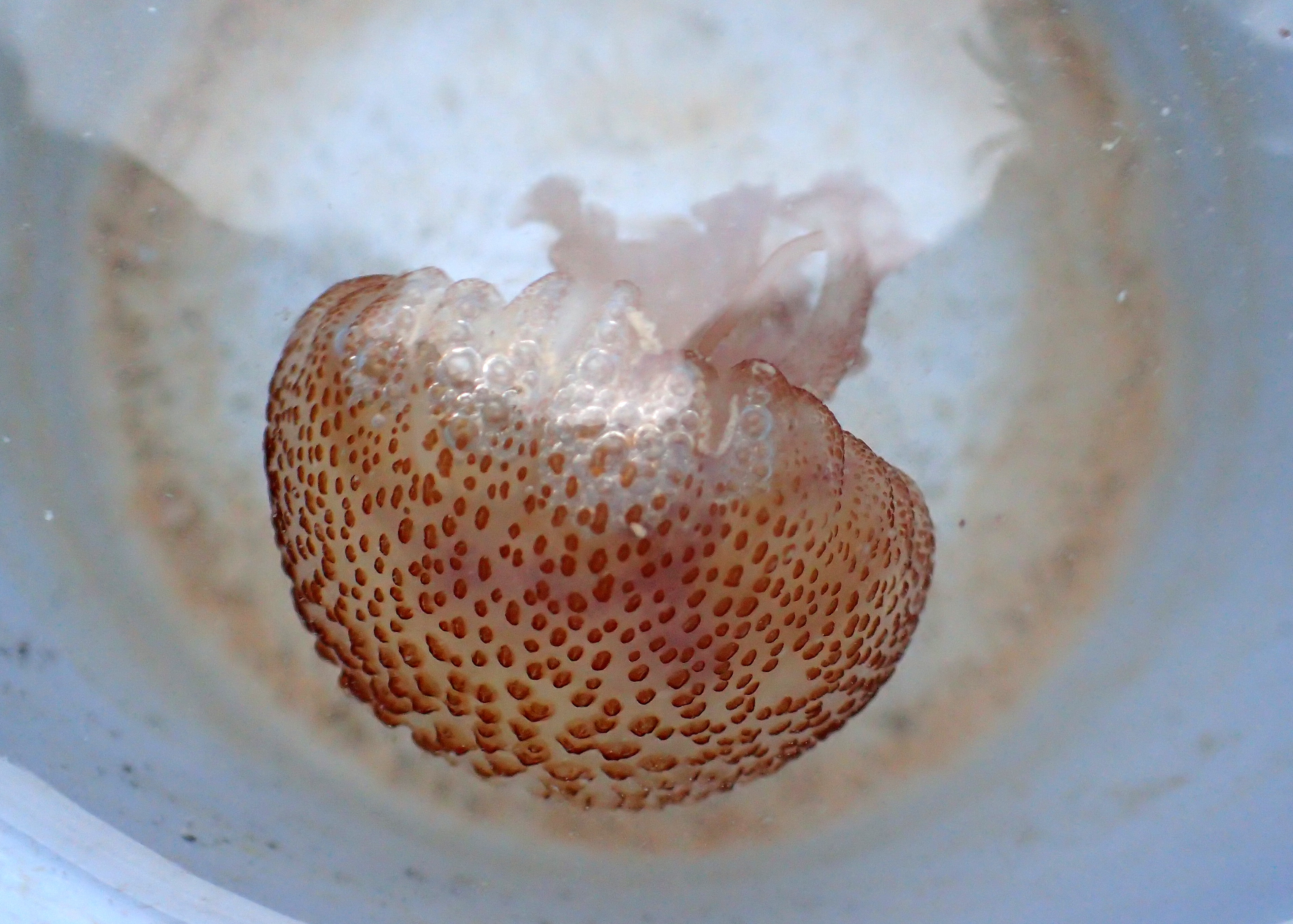
    Mauve stinger jellyfish (Pelagia noctiluca) at Mawgan Porth
    Mauve stinger jellyfish (Pelagia noctiluca) at Mawgan Porth

    One of my favourites this year was the swarm of mauve stinger jellyfish (Pelagia noctiluca). They look small and inoffensive, measuring up to 10cm across their bell. The spotted pattern that gives them their name is distinctive and rather pretty. They can also glow in the dark – noctiluca means night light. (more…)

  • Lazy Sunday rockpooling

    Lazy Sunday rockpooling

    This time of year when the roads are busy and the beaches packed, the summer can feel anything but relaxing. It’s Sunday today and we’re taking it easy, so what could be better than a stroll to a local cove that’s a bit off the beaten track for a spot of quiet rockpooling. Starfish, sea slugs, fish and stalked jellyfish await me. 

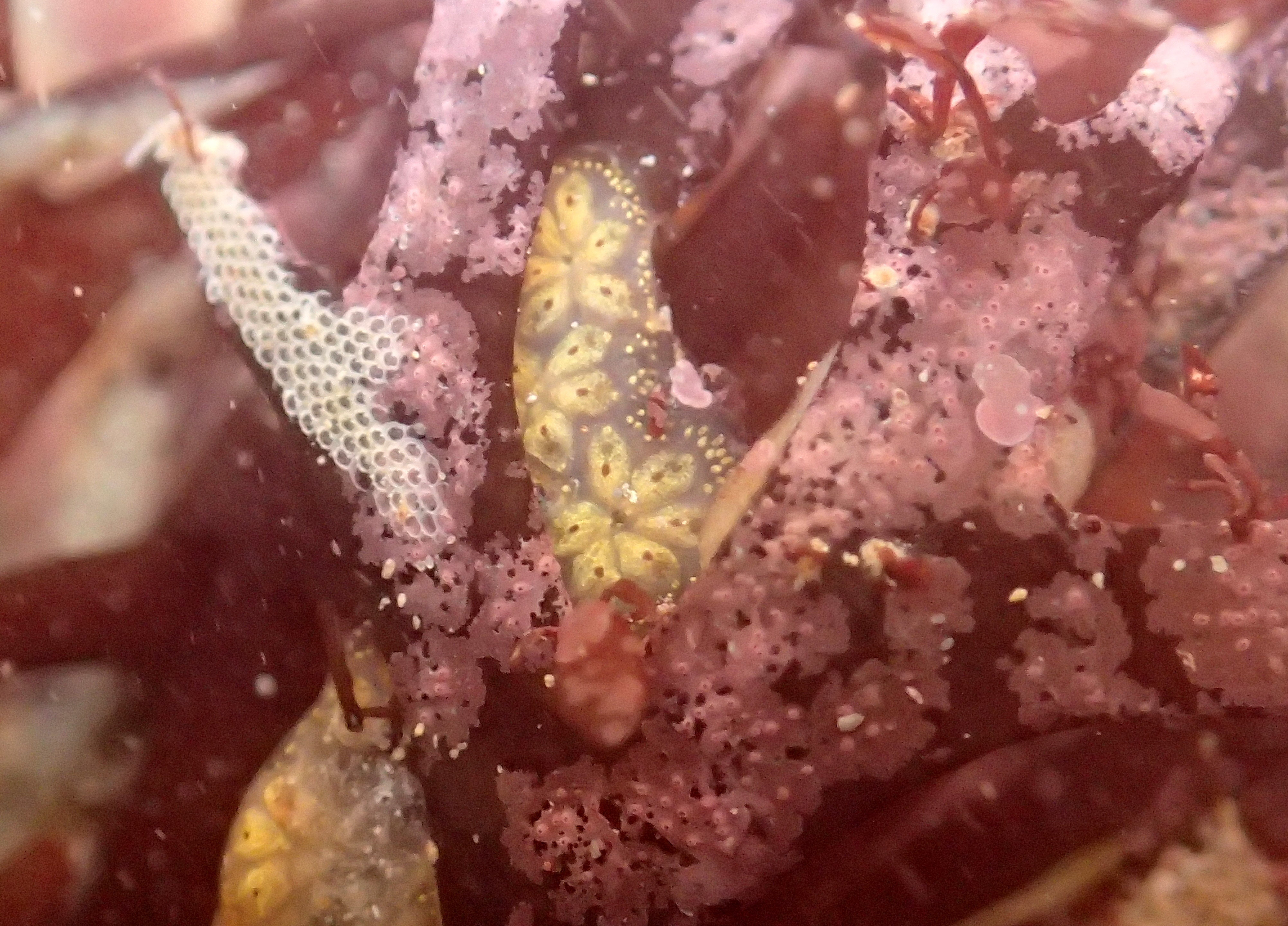
    Going slowly and looking at the seaweed can reveal some beautiful encrustations of sea squirts and bryozoans
    Going slowly and looking at the seaweed can reveal some beautiful encrustations of sea squirts and bryozoans

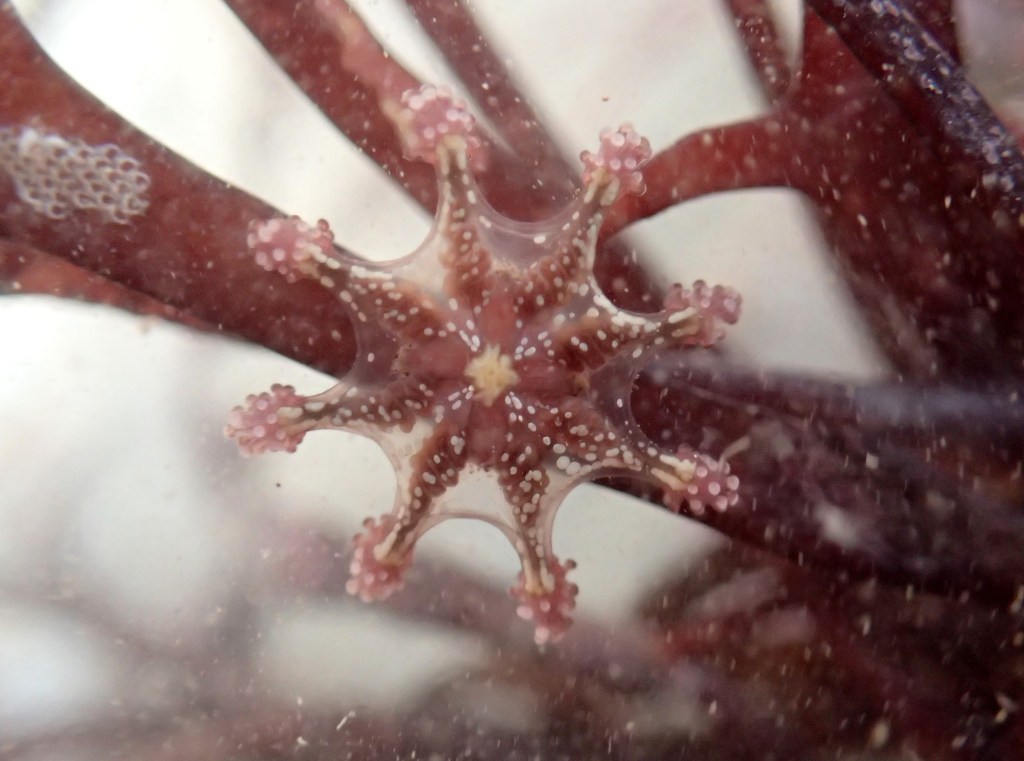
    It’s always a good idea to move slowly in the rockpools and today I have nothing to rush for. By staring at the seaweed for a very long time, I begin to notice more details and my eye is drawn to a stalked jellyfish. The blobs between the arms are primary tentacles, suckers that the jelly can use to move around.

    Stalked jelly Haliclystus ocroradiatus showing its primary tentacles (blobs between the arms)
    Stalked jelly Haliclystus ocroradiatus showing its primary tentacles (blobs between the arms)

    A little further on I find another species. This one doesn’t have the blobs between the arms and is flecked with pale spots, which contain stinging cells. (more…)

  • First Looe Rockpool Ramble of the Summer

    First Looe Rockpool Ramble of the Summer

    It’s not quite warm enough for shorts yet, but there’s sunshine aplenty and a good turnout for Looe Marine Conservation Group’s first summer rockpooling session of the year. As always, the Cornish rock pools don’t disappoint.

    Berthella plumula - a sea slug with a small internal shell
    My first find of the morning –  a ‘plumed Bertha’ Berthella plumula – a sea slug with a small internal shell.

    The big creatures are always the star attractions of public events. Today we are lucky enough to find several magnificent spider crabs.

    Spider crabs come into the Cornish rock pools in early summer
    Spider crabs come into the Cornish rock pools in early summer.

    These large crabs with their characteristic spiky shells live out at sea for most of the year, but venture into shallower water in the early summer to breed. They get their names from their long, spindly looking legs – although, being crabs, they have ten legs, not eight like the spiders.

    Edible crabs can be large and powerful, but are usually placid
    Edible crabs can be large and powerful, but are usually placid

    Some sizeable edible crabs lurk at the bottom of buckets, but it is the velvet swimming crab that causes the most gasps. These red-eyed crabs, which my son calls devil crabs, are feisty to say the least and as today’s rockpool leader, Matt, goes to pick one up, it raises its claws in defiance.

    Velvet swimming crabs are quick to attack.
    Velvet swimming crabs are quick to attack.

     Matt takes several attempts, but eventually manages to lift it from the bucket and hold it in front of the upturned faces of a circle of children. He points out the paddle-shaped legs that help it to swim and the smooth velvet surface of the shell before swiftly returning it and moving on to more placid creatures.

    This rock goby was easier to handle - the yellow top to its fin can clearly be seen here.
    This rock goby was easier to handle – the yellow top to its fin can clearly be seen here.

    Our local vicar has become a staunch regular on these jaunts and, as always, he’s brimming with smiles and enthusiasm. He makes one of the best finds of the day, although only a few of us make it to the tide’s edge over slippery rocks to see the stalked jellyfish.

    Lucernariopsis cruxmelitensis - a stalked jellyfish
    Lucernariopsis cruxmelitensis – a stalked jellyfish.

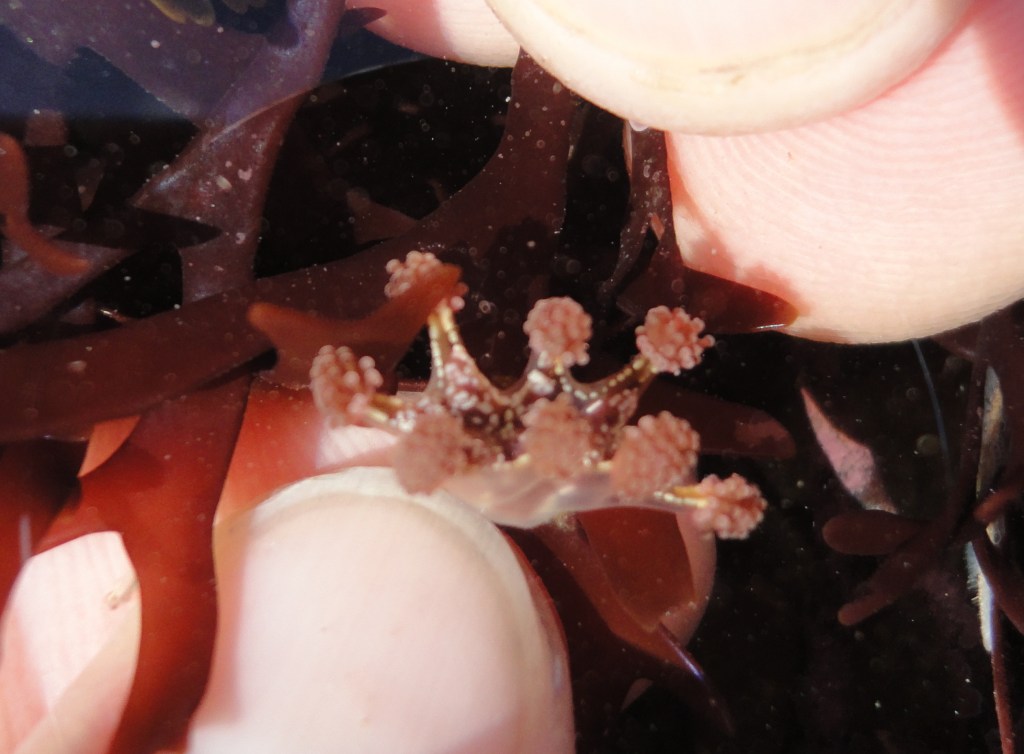
    This little jelly is in an awkward position to photograph and the tide is rushing in, but we manage to get some pictures. Lucernariopsis cruxmelitensis – it’s a mouthful to say, but I think it’s the most beautiful of our stalked jellies with its wide open profile and delicate decoration of white nematocysts around each arm.

    Lucernariopsis cruxmelitensis - the hand in this shot shows just how small these stalked jellies are. One of my favourite Cornish rock pool creatures.
    Lucernariopsis cruxmelitensis – the hand in this shot shows just how small these stalked jellies are. One of my favourite Cornish rock pool creatures.

    The next jellyfish we find is a little larger, but still only a few centimetres across. It’s so transparent, I can’t tell most of it is there until I feel the curve of it against my fingers.

    This week's mystery jelly - probably an aequorea species - crystal jellyfish.
    This week’s mystery jelly – probably an aequorea species – crystal jellyfish.

    From the shape and the faint radiating lines around the base of the bell, I think it may be an aequorea species, also known as the crystal jellyfish. We’ve found these before in Looe, but they’re not a common species – or maybe they are but they’re so transparent they’re hard to spot.

    Holding the transparent jelly (aequorea/ crystal jelly?)
    Holding the transparent jelly (aequorea/ crystal jelly?)

    It’s wonderful to spend a whole morning on the shore without my fingers becoming painfully cold or having to rush home to counteract early signs of hypothermia with hot baths and drinks. I might even risk going out without a coat soon.

    Looe's vicar doing some quality rockpooling.
    Looe’s vicar doing some quality rockpooling.

    Summer is definitely on its way and if you’re heading for the shore, group events like this one are the best way to discover the fantastic Cornish rock pools.

    See my links page for lovely groups who run events all through the year. Follow Cornish Rock Pools on Facebook for updates.


  • Baffling jellies, a little shark and a possible giant – A day in the Cornish Rock Pools

    Baffling jellies, a little shark and a possible giant – A day in the Cornish Rock Pools

    Sometimes everything’s just meant to be. This is one of those times.

    It’s a random get-together; my Twitter friend Nanny Pat from Bosinver Farm Cottages has suggested we meet with her family and friends to explore a special beach that her son loves. Sounds good to me!

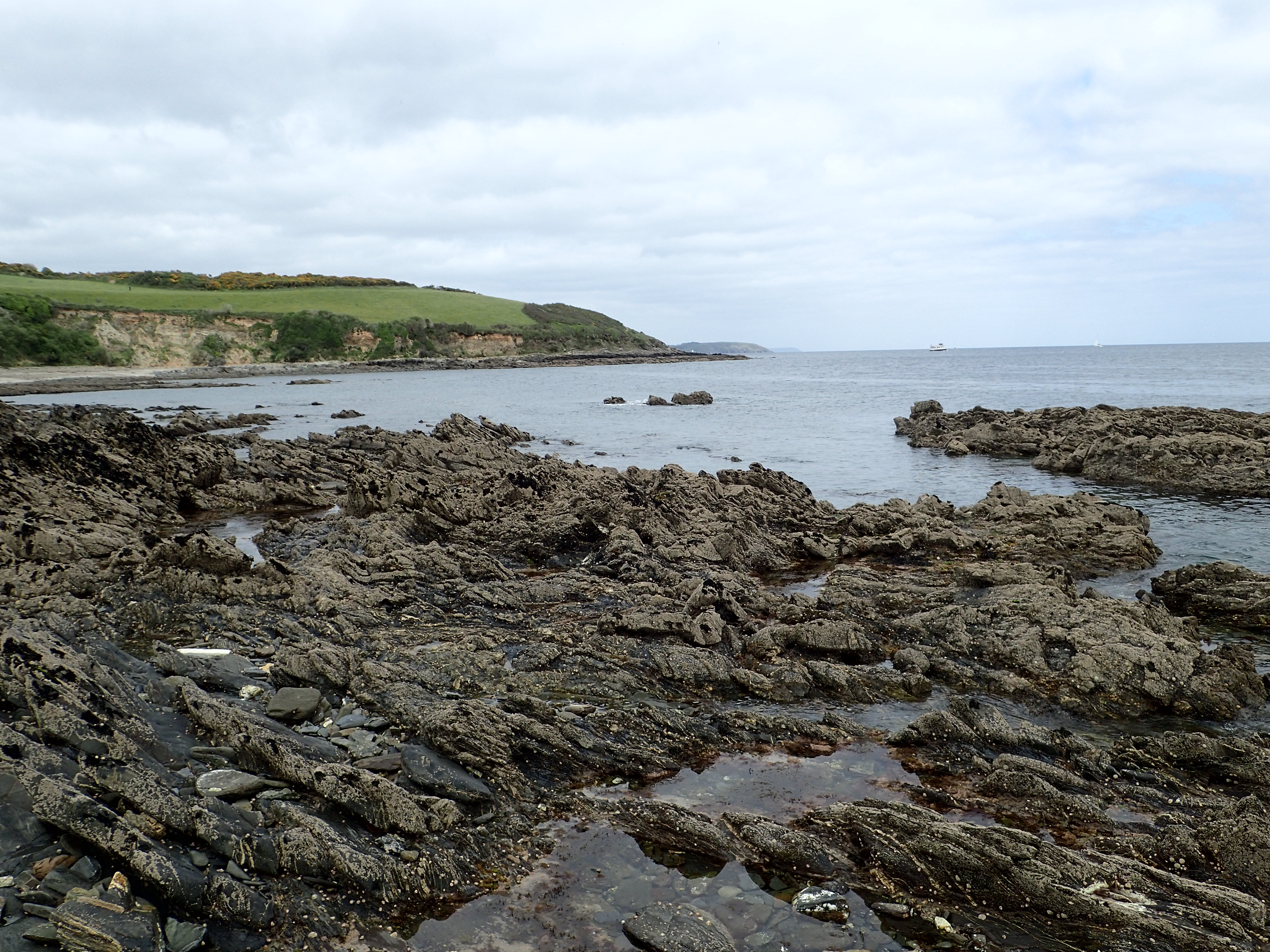
    The view towards Falmouth, Cornish Rock Pools
    The view towards Falmouth

    The sun is struggling through the clouds as we all descend from Mawnan towards the glittering shore. We are nine adults, six children, one dog, some huge buckets and a promisingly enormous picnic bag that Nanny Pat has packed for us.

    We waste no time and strike out across the slippery rocks. These are serious rock poolers. I am, as other half puts it, “among my people”.

    Just one more rock... exploring the Cornish rock pools
    Just one more rock… exploring the Cornish rock pools

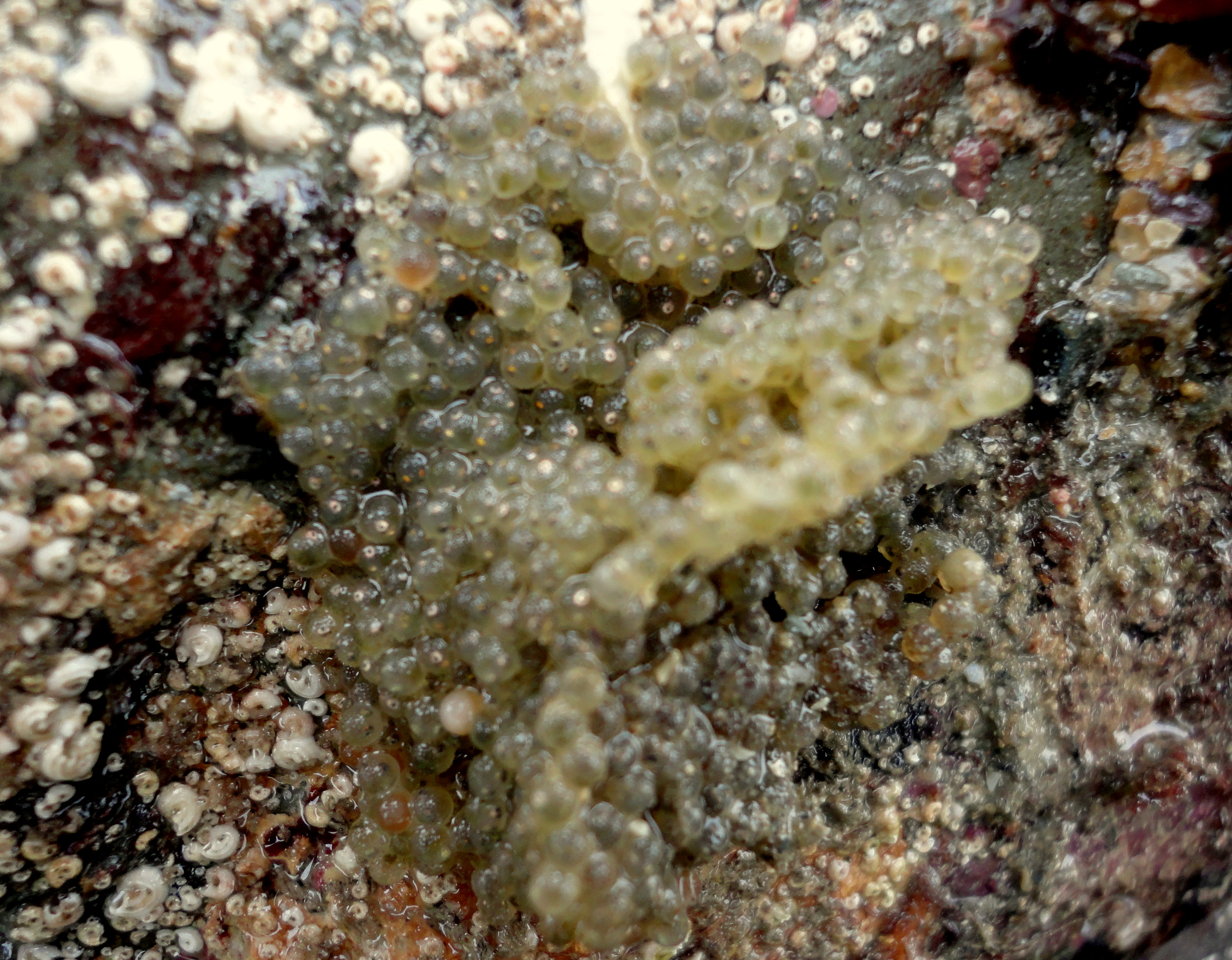
    We set to and the finds flood in. There are fish eggs everywhere, some are just starting to develop like these clingfish eggs.

    Cornish clingfish eggs are a distinctive yellow colour
    Cornish clingfish eggs are a distinctive yellow colour

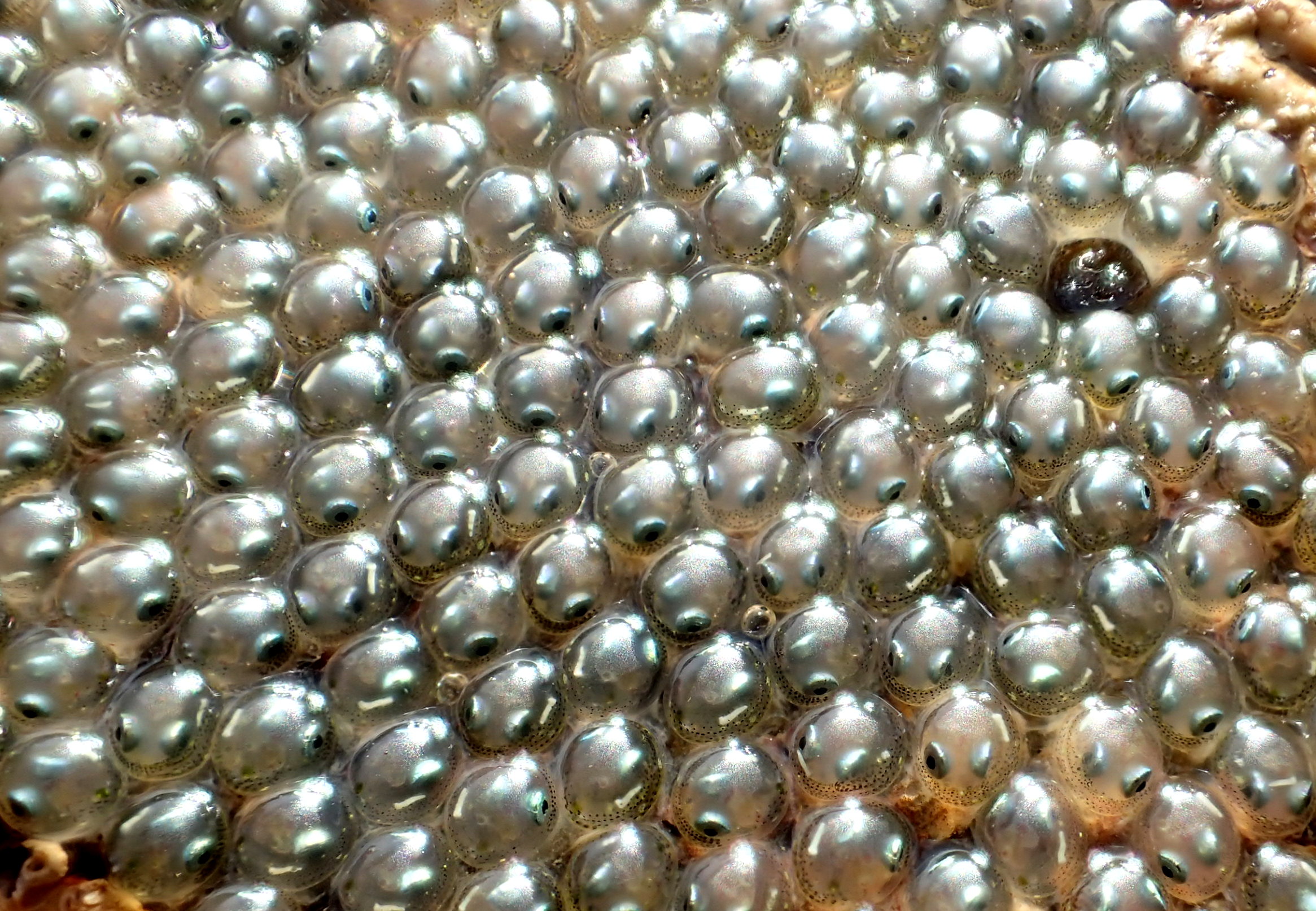
    Others are nearly ready to swim away, eyes jammed against their transparent egg cases, tails squished around them.

    Ever feel like you're being watched? Fish eggs in a rock pool.
    Ever feel like you’re being watched? Fish eggs in a rock pool.

    Best of all, I’m baffled by some of the creatures we find.

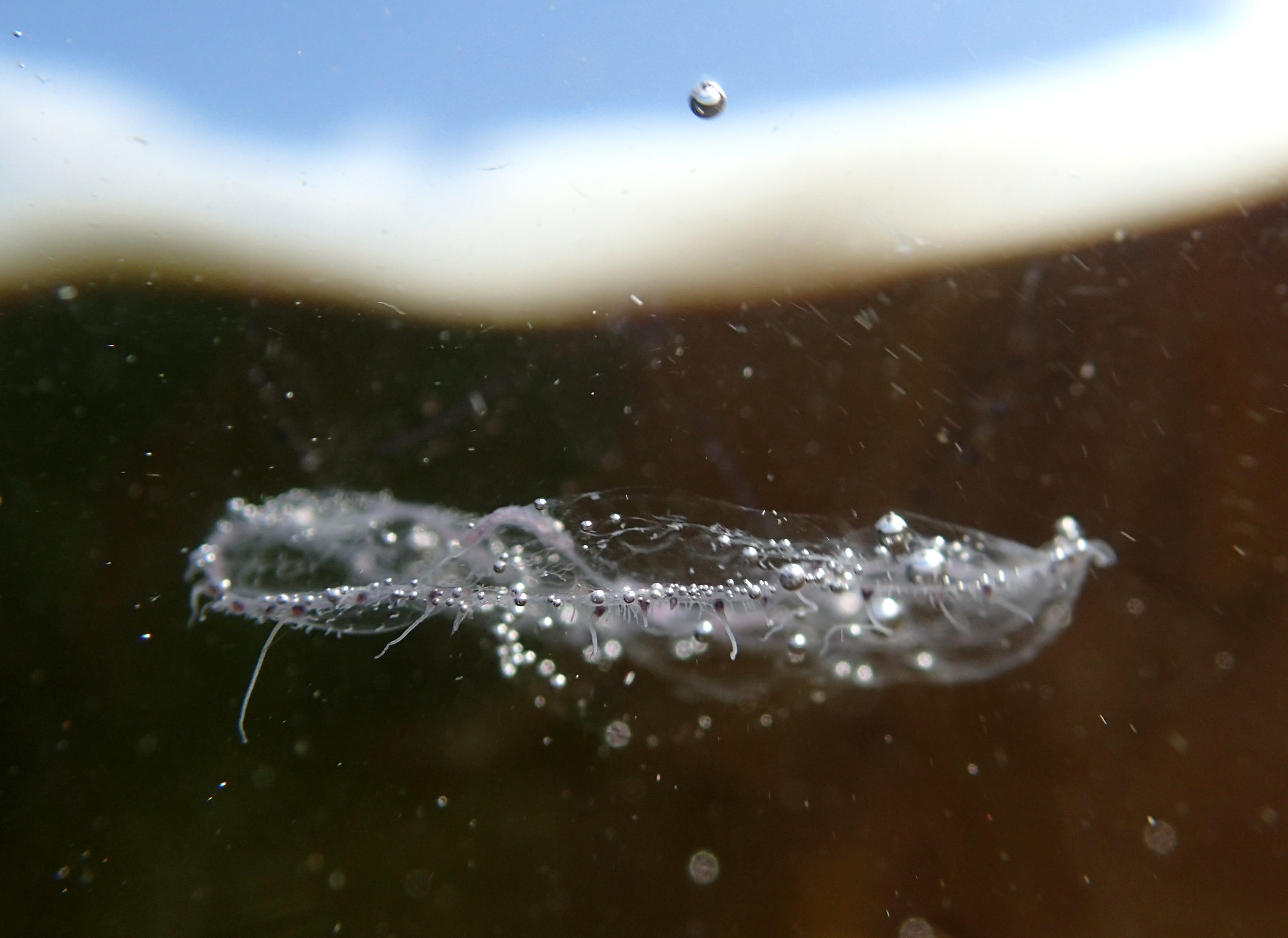
    The medusa (jelly) stage of a hydroid or sea fir - possibly clytia hemisphaerica or similar
    The medusa (jelly) stage of a hydroid or sea fir – possibly clytia hemisphaerica or similar

    First there’s a transparent disk of jelly a centimetre across. I scoop it up in a tub and peer at it until I go cross-eyed. It shows no sign of life, but I’m sure it is an animal. All around its rim are mauve dots and a thin purple cross hangs across its centre.

    The underside of the medusa
    The underside of the medusa

    I rule out all the UK jellyfish and it’s the wrong shape for a sea gooseberry. When I take a photo of it in the water, my camera shows some short tentacles, invisible to the naked eye.

    Having since consulted the experts, it looks to be the medusa (jelly) stage in the lifecycle of some sort of hydroid or sea fir.

    Swimming free - the side view with tentacles showing.
    Swimming free – the side view with tentacles showing.

    I’m distracted from my observations by some excited shouts and squeals. “Quick, we’ve found a shark!” one of the adults calls.

    The children are gathering around the edge of a pool and there in some shallow seaweed, a dogfish (small spotted catshark – scyliorhinus canicula) lies stranded.

    Scyliorhinus canicula - small spotted catshark or dogfish stranded in a Cornish rock pool
    Scyliorhinus canicula – small spotted catshark, also known as dogfish – stranded in a Cornish rock pool

    The animal is calm despite being out of the water and surrounded by eager kids. We take a minute to take photos. Some of the children tentatively touch its sandpaper-rough skin and Cornish Rock Pools junior sluices it with water in an effort to keep it happy.

    Close up you can see the rough skin (that used to get used as sandpaper) and the cat-like eyes
    Close up you can see the rough skin (dogfish skin used to be used as sandpaper) and the cat-like eyes

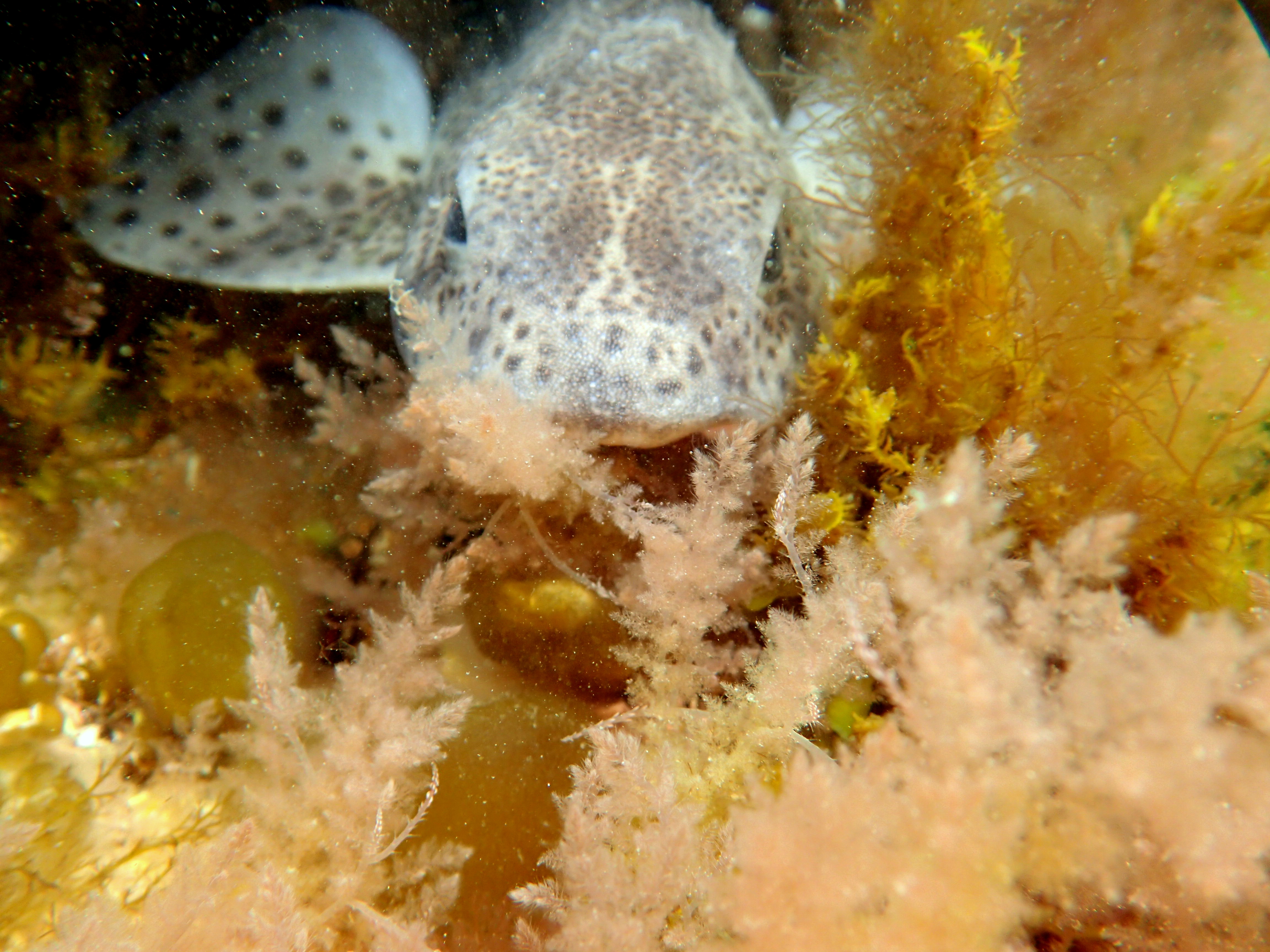
    The dads rush in for the privilege of relocating our shark to a deeper pool, where it lurks as we carry on our rockpooling.

    The 'rehomed' catshark waiting for the tide to come in. It was so well camouflaged it was hard to spot among the seaweed.
    The ‘rehomed’ catshark waiting for the tide to come in. It’s so well camouflaged it’s tricky to spot among the seaweed.

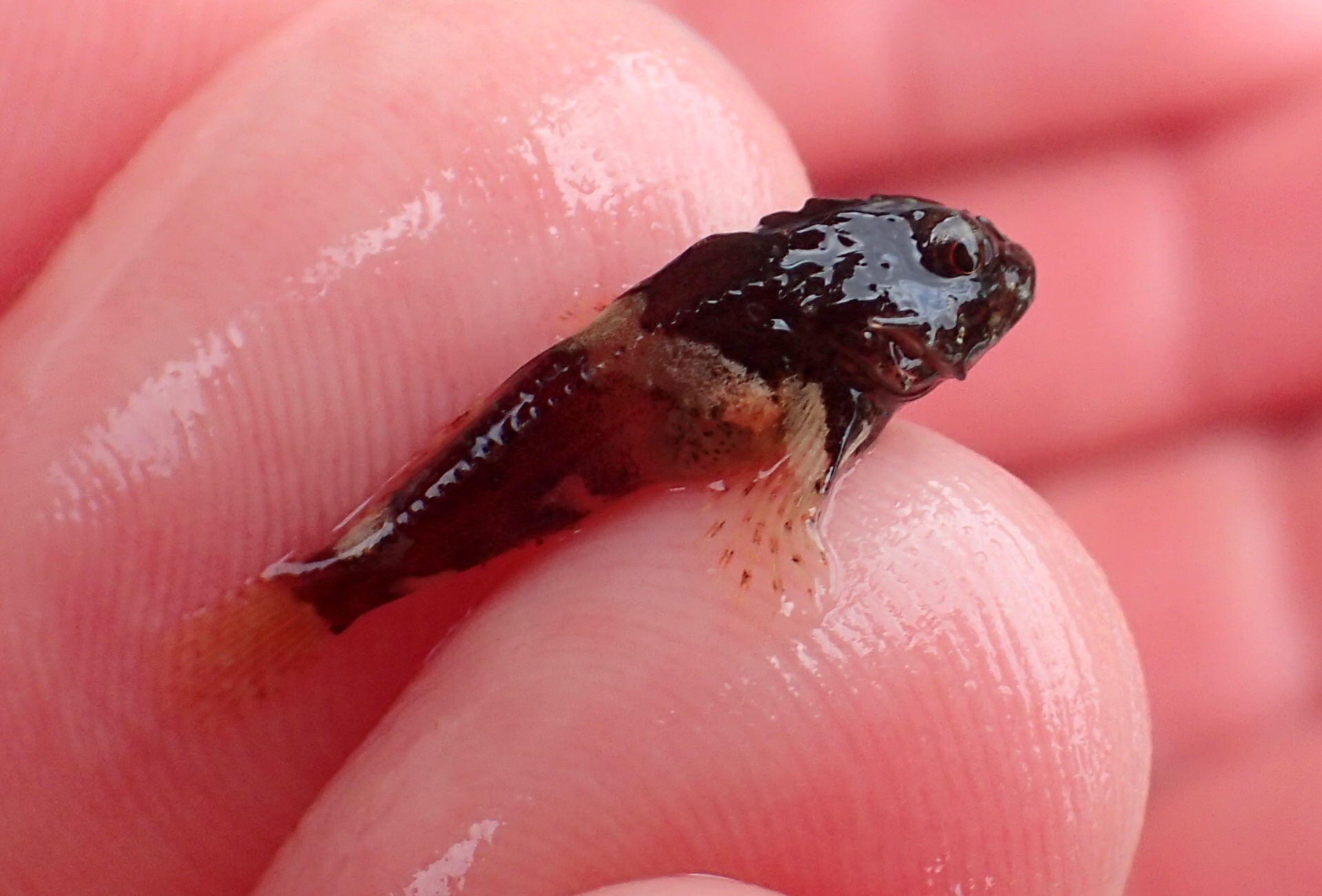
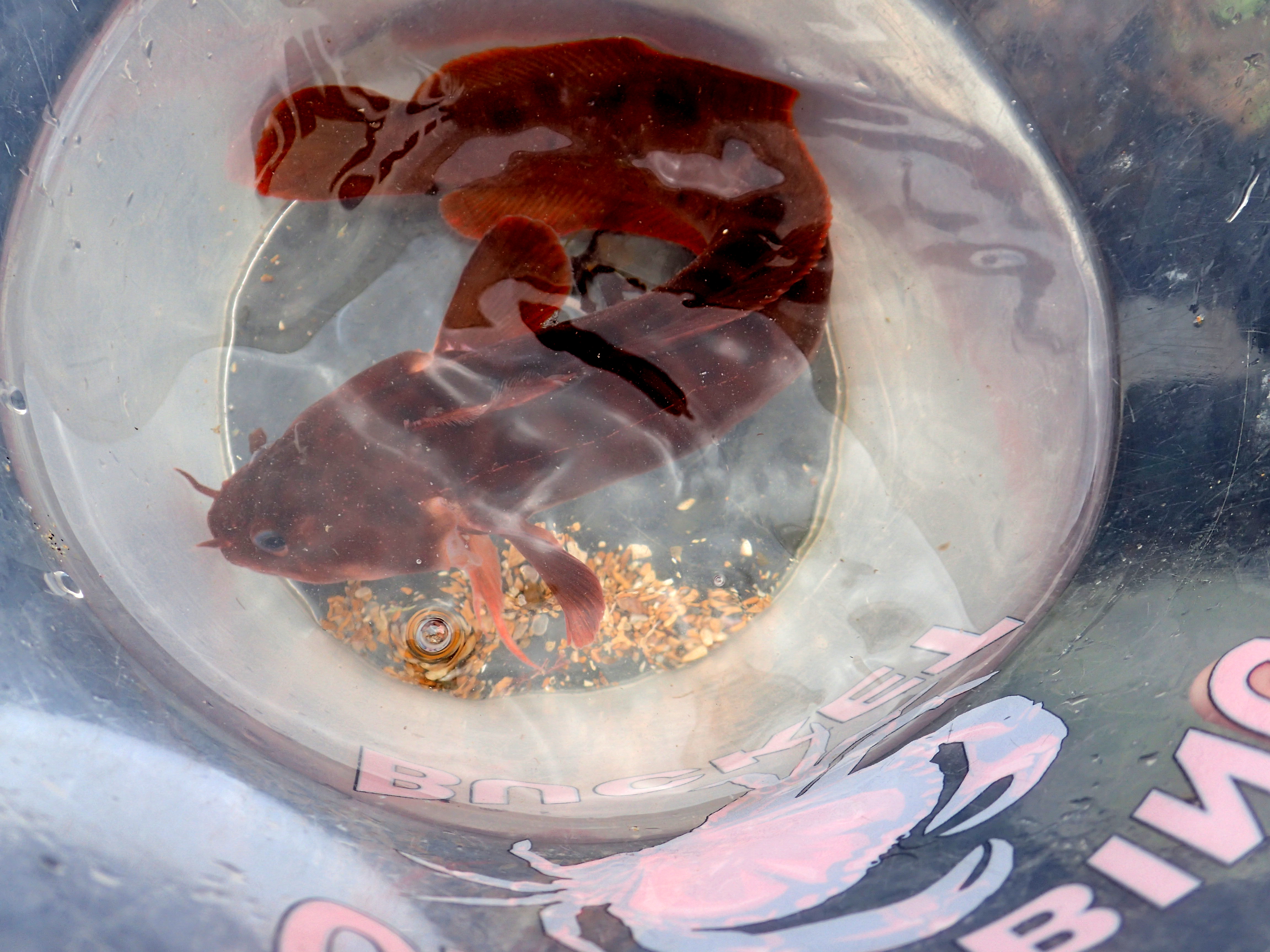
    One of the finds, a little fish catches my eye. When I first see its red body and dark head, I think it could be a black-faced blenny. The shape doesn’t seem right though. After much staring, I conclude it’s probably a scorpion fish. In my photos the spines on its face can be seen more clearly, confirming that it’s the smallest specimen of this species I’ve ever seen.

    A juvenile scorpion fish - the smallest I've ever seen
    A juvenile scorpion fish – the smallest I’ve ever seen.

    The picnic is perfect in every way. Some of the children huddle together with their sandwiches on top of a tall rock. The smaller kids play in the sand and shower some into the olives, but no one cares.

    The tide has moved in but there’s still time for some last-ditch rock pooling to the east of the beach. One of the boys is desperate to find and eel and his determination pays off. He locates a good-sized common eel under a rock, but it slithers into a crevice, evading capture.

    Love is in the air! Berthella plumula sea slugs under a rock.
    Love is in the air! Berthella plumula sea slugs under a rock.

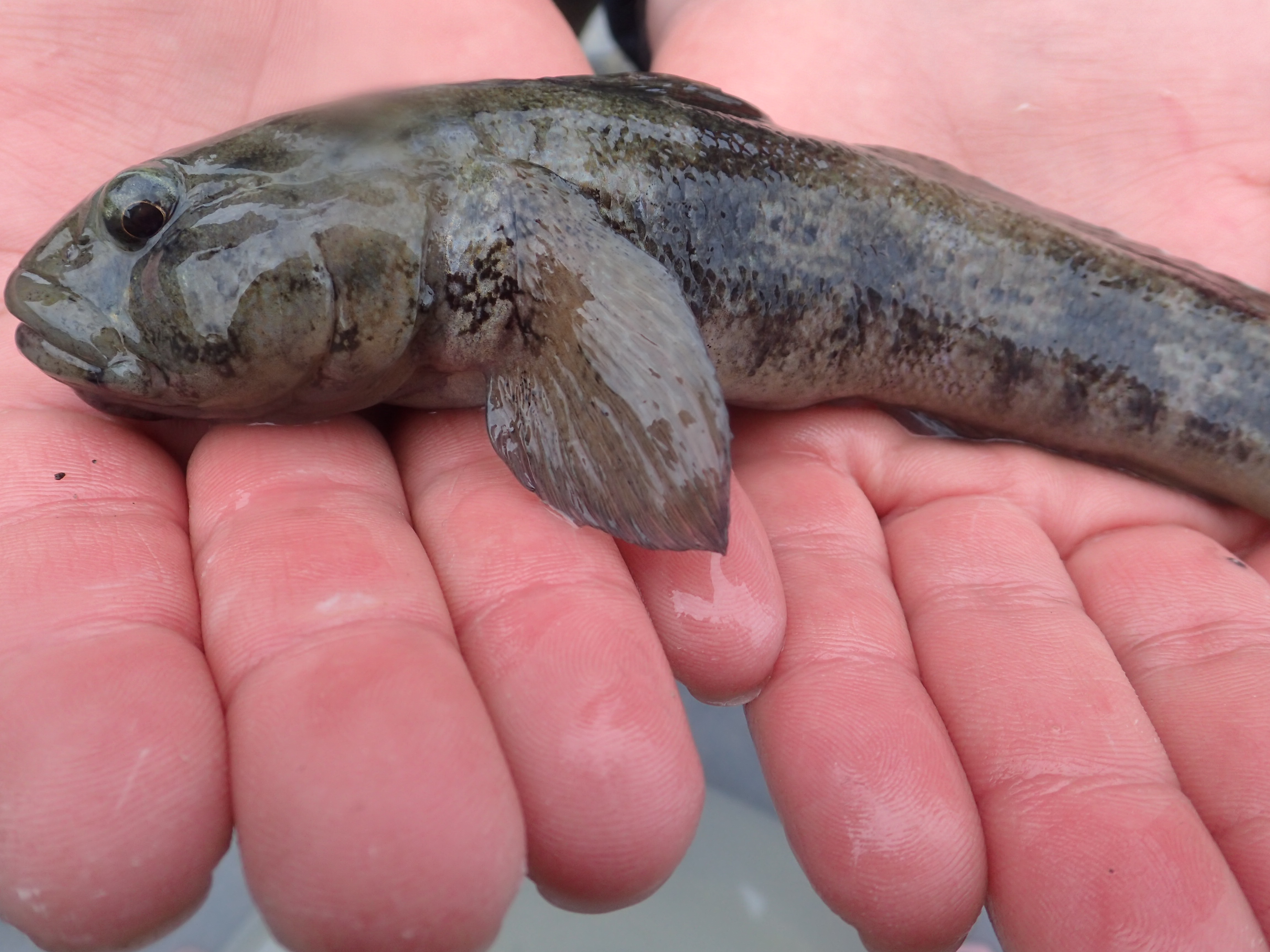
    There is no shortage of crabs here and we find pairs of lemon-yellow berthella plumula sea slugs clinging to the underside of the rocks. I’m told there are giant gobies around and it’s not long before one of the dads sends up a triumphant cry. “It’s a giant.”

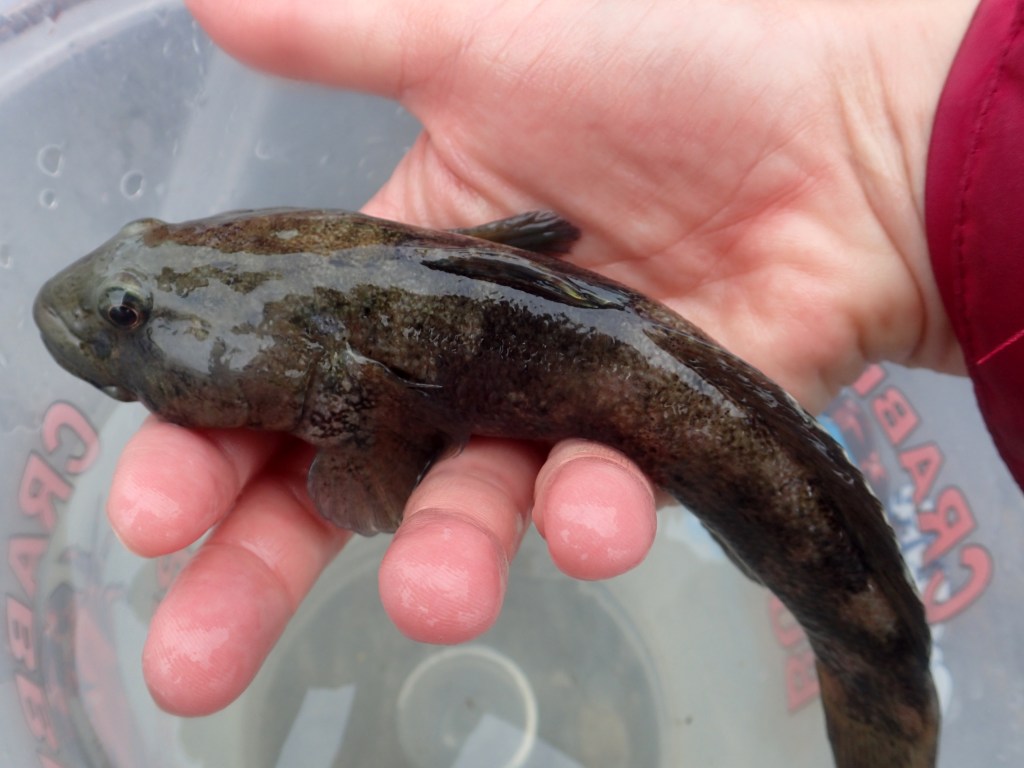
    It's a whopper, but is it a giant? Goby found in a mid-shore pool
    It’s a whopper, but is it a giant? Goby found in a mid-shore pool

    We all look closely. I’ve seen some big rock gobies and I know they can be hard to tell apart from the rarer giant goby. This one looks like it could be the real thing. It’s large, at least 17cm, and has the fat-lipped face and salt and pepper colouring of a giant goby.

    The goby's face showing the super-thick lips.
    The goby’s face showing the super-thick lips.

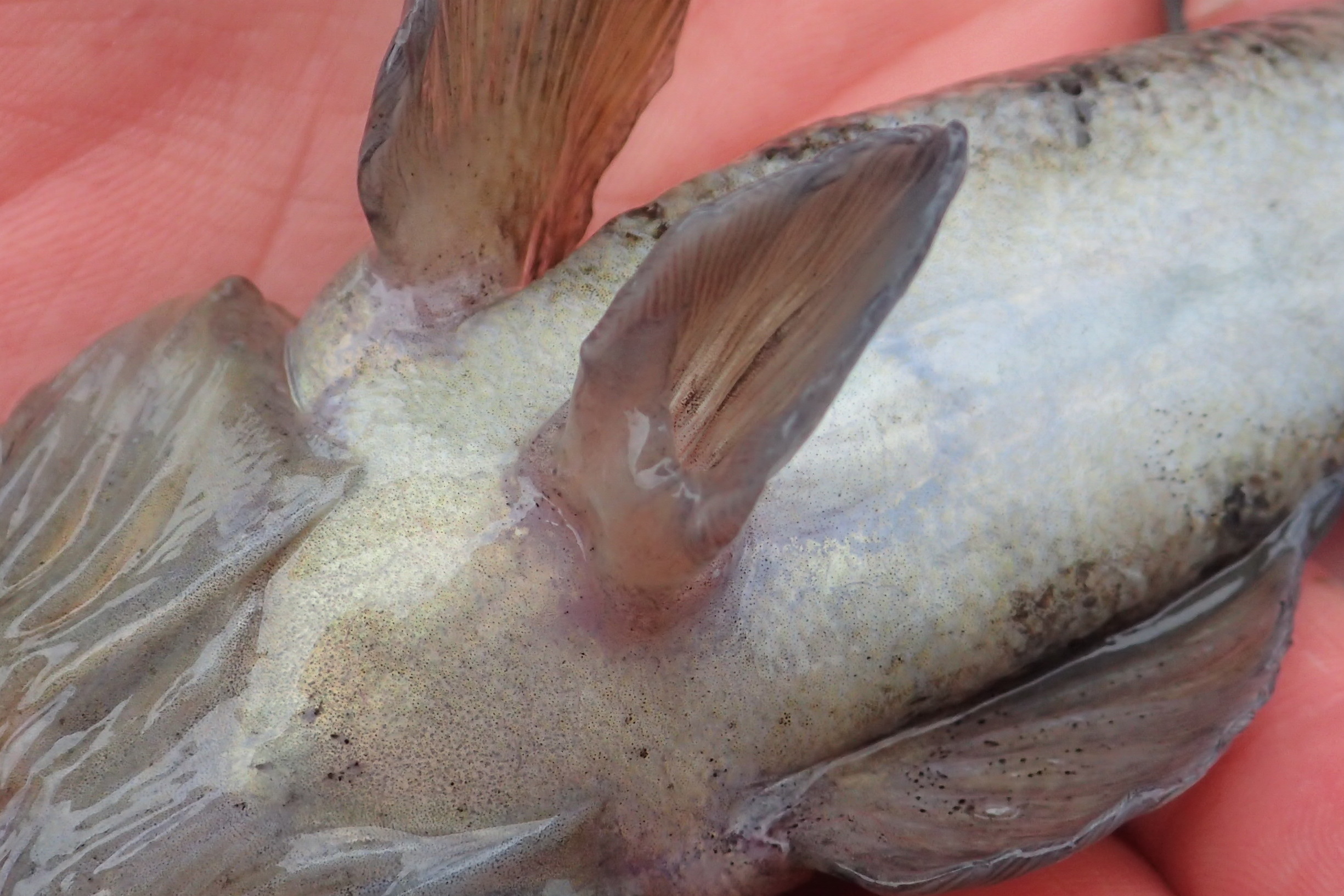
    I take photos of the sucker fin on its belly and hope we’ll be able to get a definitive answer from the experts. The giant goby has a detatched lobe at the front of its sucker fin which the rock goby doesn’t have…apparently.

    The pelvic sucker fin of the goby
    The pelvic sucker fin of the goby

    As we release the goby into the pool where we found it, the children spot their granddad walking onto the beach. He’s arrived just as the tide overtakes the last pools and he invites the kids to join him for a spot of skimming.

    It’s the first time I’ve been to this beach. I think I’ll be back.  Some things are indeed meant to be.

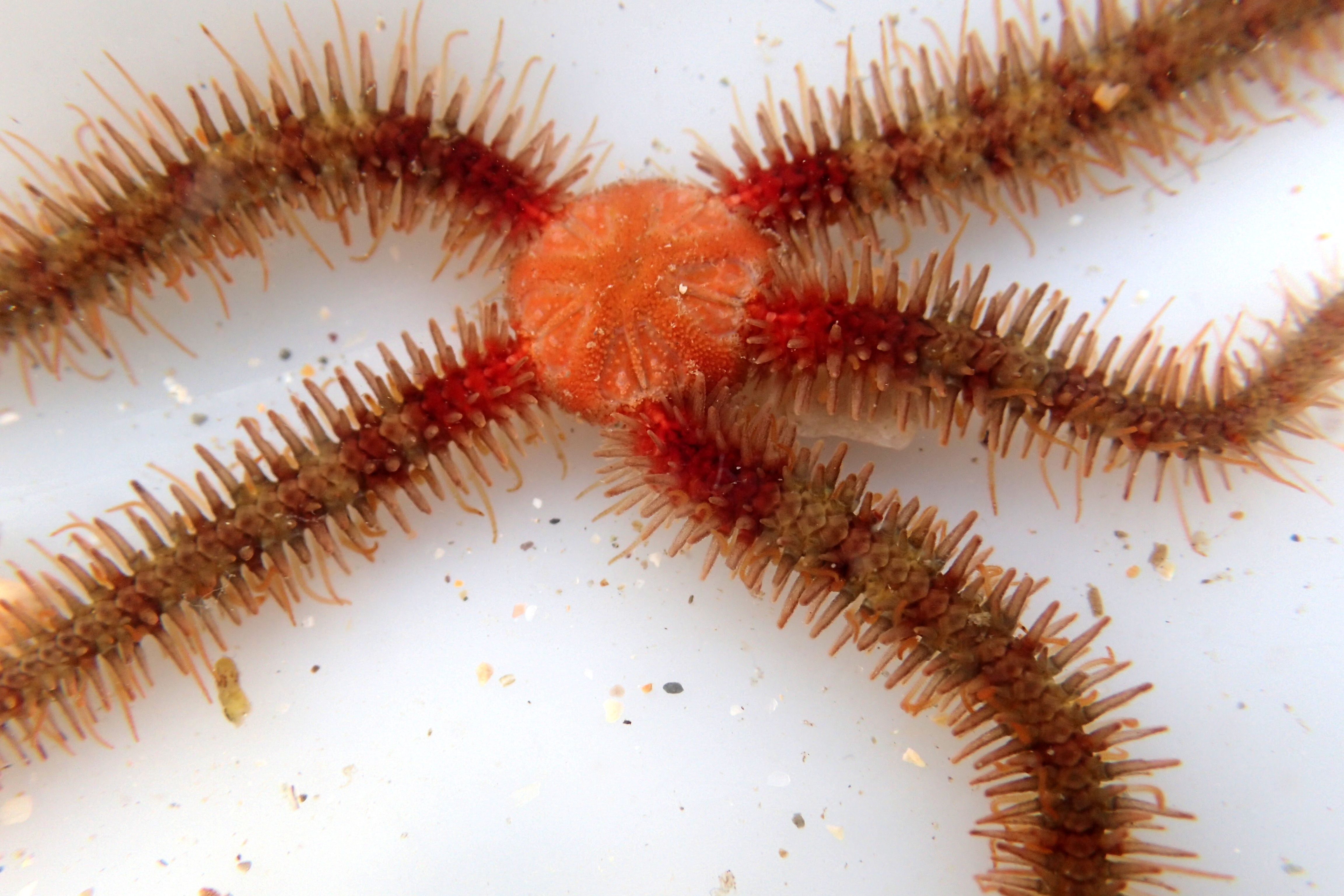
    Brittle star
    Brittle star


    A good sized three-bearded rockling
    A good sized three-bearded rockling
  • An Early Summer in the Cornish Seas

    An Early Summer in the Cornish Seas

    There are eggs everywhere in the Cornish rock pools this time of year and the warm weather and high pressure have provided perfect conditions for finding them.

    Fish eggs among the rocks - when you look closely you can see the little eyes staring back at you.
    Fish eggs among the rocks – when you look closely you can see the little eyes staring back at you.

    Fish have moved inshore to protect their broods, crabs are carrying great mounds of eggs under their tails and sea slugs have started to lay their distinctive neat egg coils. (more…)

  • Staring Into Pools

    Staring Into Pools

    The lack of time before the sea laps back in can sometimes make the hunt for sea creatures a bit of a frantic affair. Add eager small children to the mix and the clock is ticking. After a busy week, I took the time to stop and stare and it paid off.

    Enticing Cornish rock pools in the sunshine
    Enticing Cornish rock pools in the sunshine

    The wide blue skies gave us perfect conditions for taking our Easter visitors and their children rock pooling this week and I’m pretty sure they weren’t disappointed. A quick search was enough to find starfish, blennies, crabs and shells to wow our guests.

    Inevitably a child fell in a rock pool – but fortunately it was fearless Cornish Rock Pools junior. He was already shouting, ‘I’m all right,” as I hooked him out and he ran off to climb rocks as soon as I’d wrung out his coat.

    A female Xantho incisus crab carrying her eggs
    A female Xantho incisus crab carrying her eggs

    On Monday, another set of visitors arrived with their teenage boy, so the pace was suddenly less urgent.

    As I clambered over the rocks with my friend’s son, I pointed out shallow pools packed with snakelocks anemones and we sat awhile entranced by the tangle of moving tentacles.

    Watching tentacles moving in a pool packed with snakelocks anemones
    Watching tentacles moving in a pool packed with snakelocks anemones

    “Sometimes,” I said, “if you sit and stare at a pool for long enough, you begin to notice things you didn’t realise were there.”

    We were looking into a clear rock-top pool lined with pink corraline seaweed. “You might even spot rare creatures, you just have to make time to look,” I explained.

    I trailed my finger gently through the seaweed a few times. Then a few times more, and a tiny star shape came into view. I reached in and lifted it on the tip of my finger, realising it might just be… yes, it was… an Asterina phylactica.

    The tiny Asterina phylactica starfish
    The tiny Asterina phylactica starfish

    I’m probably not meant to have favourites, but Asterina phylactica are absolutely, without a doubt, my favourite sea stars. They are decorated with dots of bright colour, like little gems. I don’t often see them and had no idea they lived here at my local beach.

    Of course, I was there without my camera so I went back today for some more staring.

     After half an hour of gazing into pools and browsing the seaweed, I finally found this little fellow.

    ASterina phylactica are easily recognised by the little circles of colour which often form a dark central star shape
    Asterina phylactica are easily recognised by the little circles of colour which often form a dark central star shape

     I walked out to the lower shore and stood in a welly-deep pool staring and staring some more. I’m not sure how long I was there before this little stalked jellyfish caught my eye. The Lucernariopsis cruxmelitensis is another beautiful little animal that I don’t often see.

    A stalked jelly - Lucernariopsis cruxmelitensis
    A stalked jelly – Lucernariopsis cruxmelitensis

     Sometimes it pays to stop and stare.

    If I looked away for a second, it was almost impossible to spot this stalked jellyfish again.
    If I looked away for a second, it was almost impossible to spot this stalked jellyfish again.


  • Super-tide in the Cornish Rock Pools – Hannafore

    Super-tide in the Cornish Rock Pools – Hannafore

    I am a lucky woman. Not only is my other-half proud to be seen in public with me when I’m wearing my oh-so-flattering waders, but he’s even prepared to spend his birthday on the shore.

    He says he understands; tides like this don’t come up every day. In fact, watching him lifting stones and kneeling to take photos, I start to suspect he’s becoming as obsessed as I am.

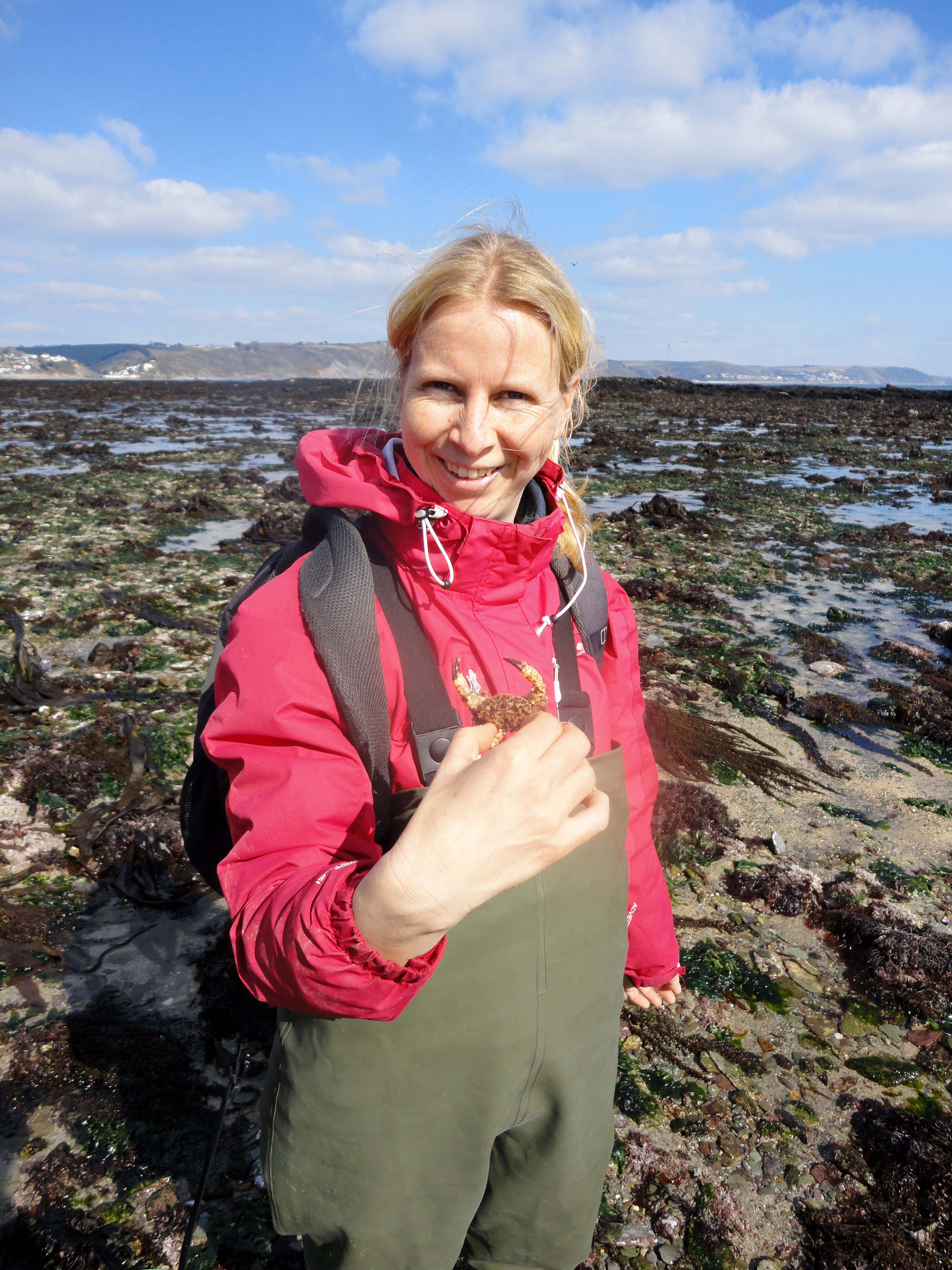
    I love my waders! Exploring the Cornish rock pools.
    I love my waders!

    The tide is already out so far that (more…)