Category: Uncategorized

  • We’re going to find… a rainbow sea slug!

    We’re going to find… a rainbow sea slug!

    Back in March, Junior and I had the opportunity, together with our fabulous home education group, to explore the shore in Looe on one of the lowest tides of the year. For these keen rock poolers, searching for rainbow slugs was the perfect challenge.
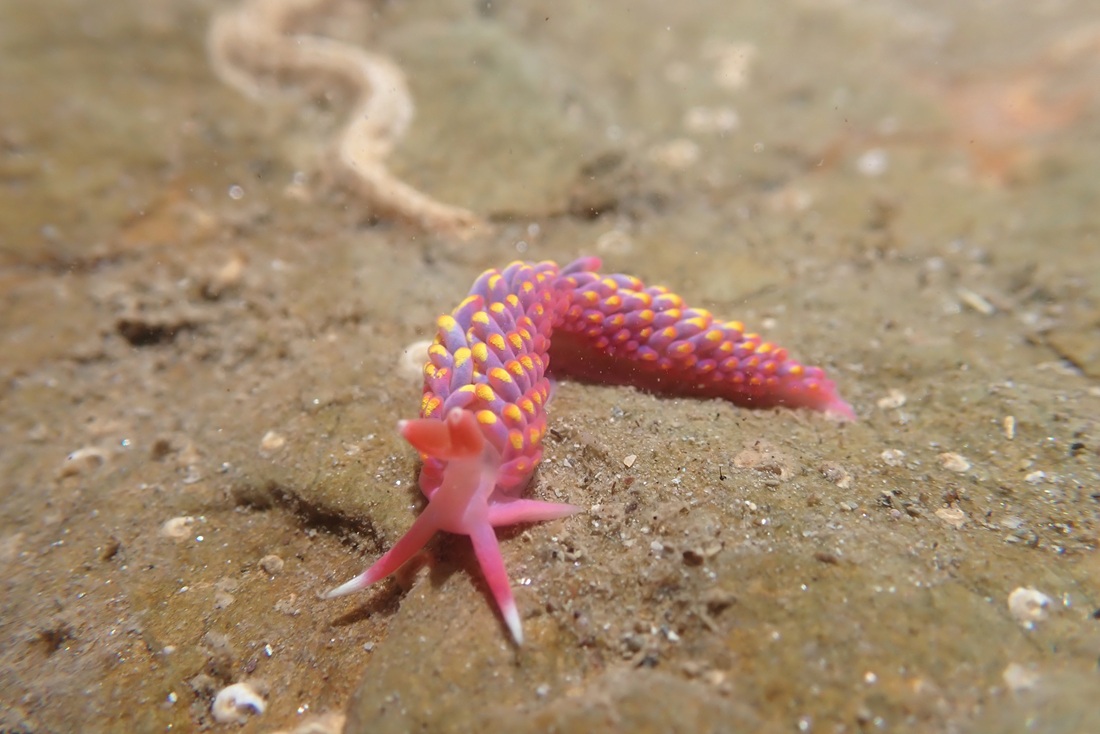
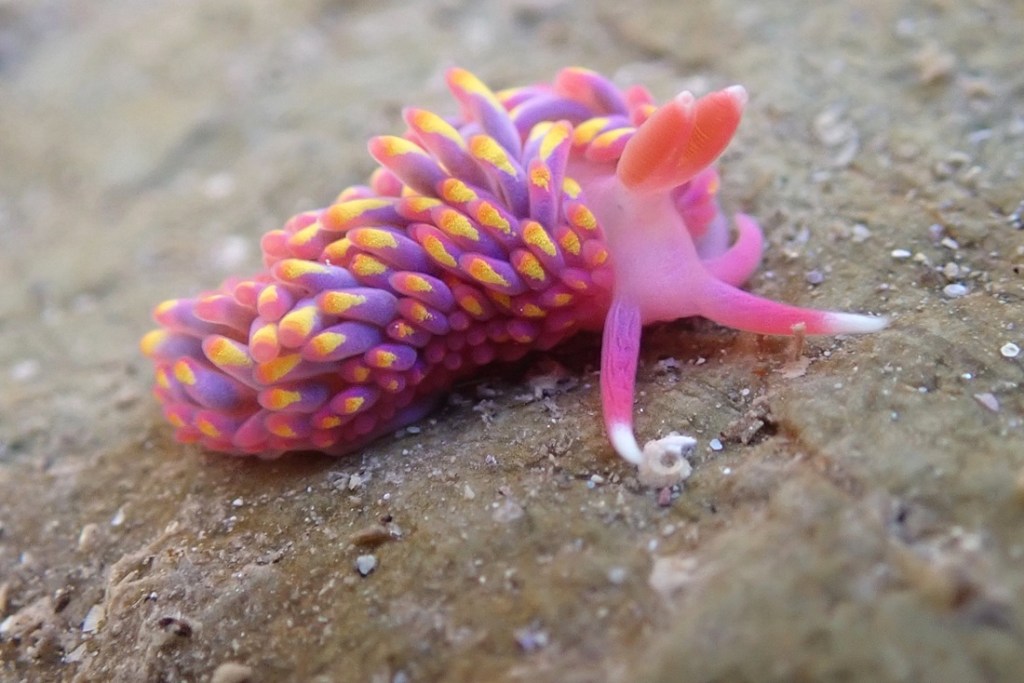
    Brightly coloured pink purple and yellow sea slug.
    Rainbow sea slug, Babakina anadoni

    “So, what does a rainbow sea slug look like?” asks one of the children. A good question.

    I admit I have never seen one in real life.

    “It’s tiny, so you’ll have to look closely,” I say. “Maybe the length of my little fingernail?”

     I hold my fingernail out for inspection and the group gathers round.

    “If you find this slug, you’ll know,” I assure them. “It might be tiny, but it’s a fluffy rainbow, with the brightest colours.”

    Since the first UK sighting off the Isles of Scilly in 2002, the rainbow sea slug, Babakina anadoni, has been found increasingly frequently, including in several locations around Cornwall. Needless to say, I have been looking for it. Everywhere. Endlessly.

    The general view is that this species feeds on hydroids, in particular the rather odd looking (and giggle-inducing) Candalabrum cocksii.

    Most hydroids live in delicate, feathery colonies. Described by the naturalist Cocks 1854 (and previously by Gosse in 1853), Candelabrum cocksii looks more like a blobby worm and, to complete the look, it can even wriggle vigorously.
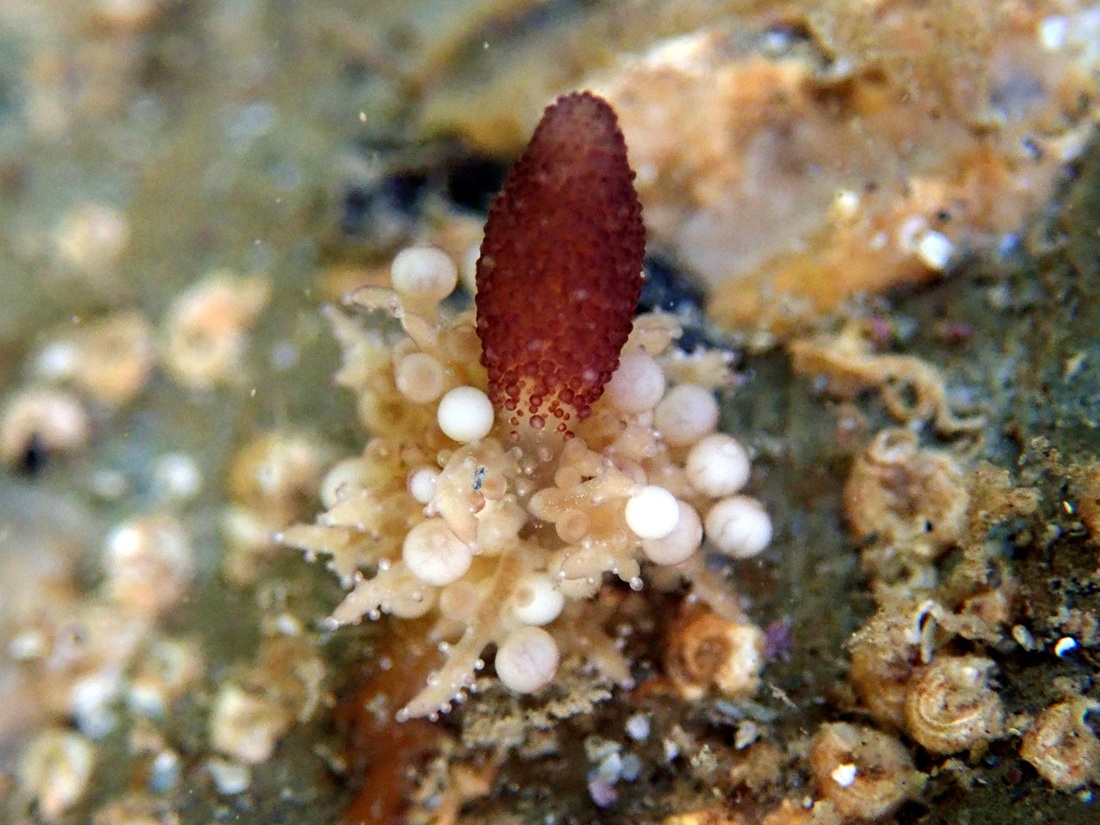
    Candelabrum cocksii hydroid with red body sticking up and a mass of white balls and frilly tentacles at the base. On a rock in the sea.
    Candelabrum cocksii hydroid: believed to be the favoured food of the rainbow sea slug.

    You can just about see why Cocks compared this little animal to a candle-holder. The main, burgundy-red body of the animal often sticks upright like a candle, with the animal’s mouth at the top, and seems to be propped in place by its rounded base, comprising many tiny white balls, and frilled tentacles. Hydroids use stinging cells in their tentacles to fire paralysing toxins into passing prey in the same way as other cnidarians like anemones and jellyfish.

    Underneath the base is a “foot”, which secures the animal to the rock, but can also extend when it wants to move. In fact, the whole animal is highly extendable and transforms in appearance when it puts out its short, round-ended tentacles.

    Candelabrum cocksii hydroid in horseshoe shape on rock, with mass of branched tentacles on right and short tentacles extended all over body.
    Candelabrum cocksii hydroid – showing how it can extend its body and tentacles.

    To make itself seem even longer, it can also connect to other Candelabrum cocksii, forming a pseudo-colony.
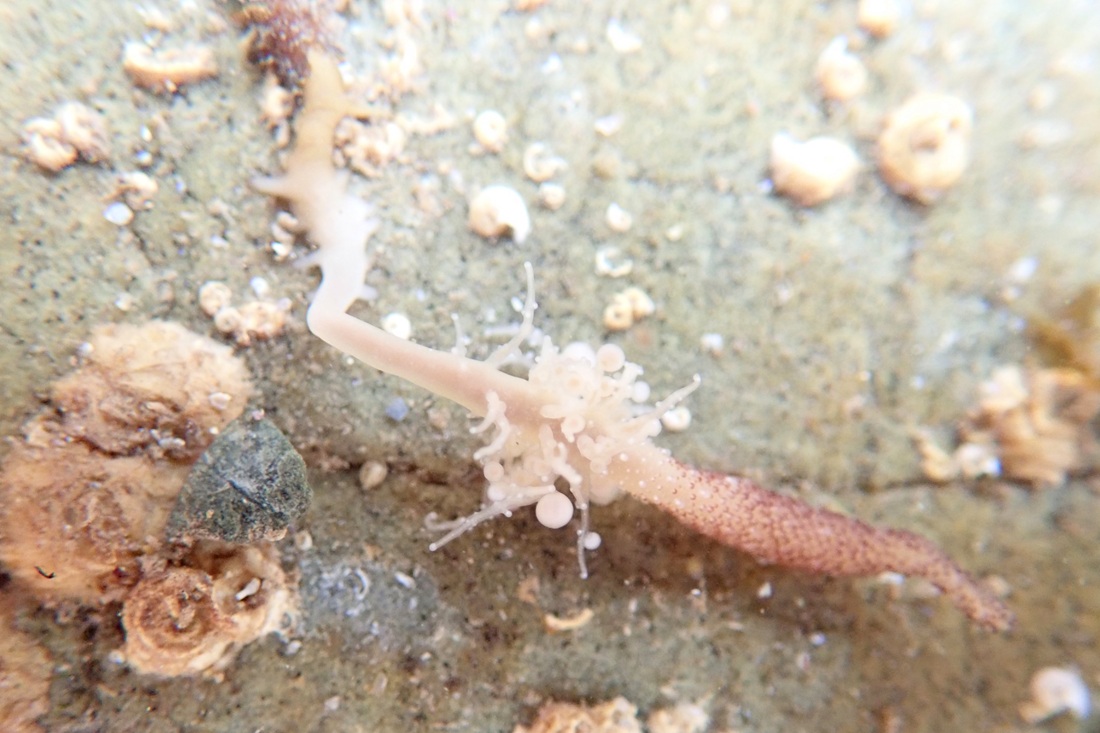
    Extended worm-like Candelabrum cocksii hydroid(s) on grey rock.
    A very extended, worm-like Candelabrum cocksii, with another at the other end.

    To my mind, lots of Candalabrum cocksii hydroids should equal lots of well-fed rainbow sea slugs. Sadly, as so often happens, the slugs don’t seem to have read the same articles as me. After many months of looking, I still haven’t found one.

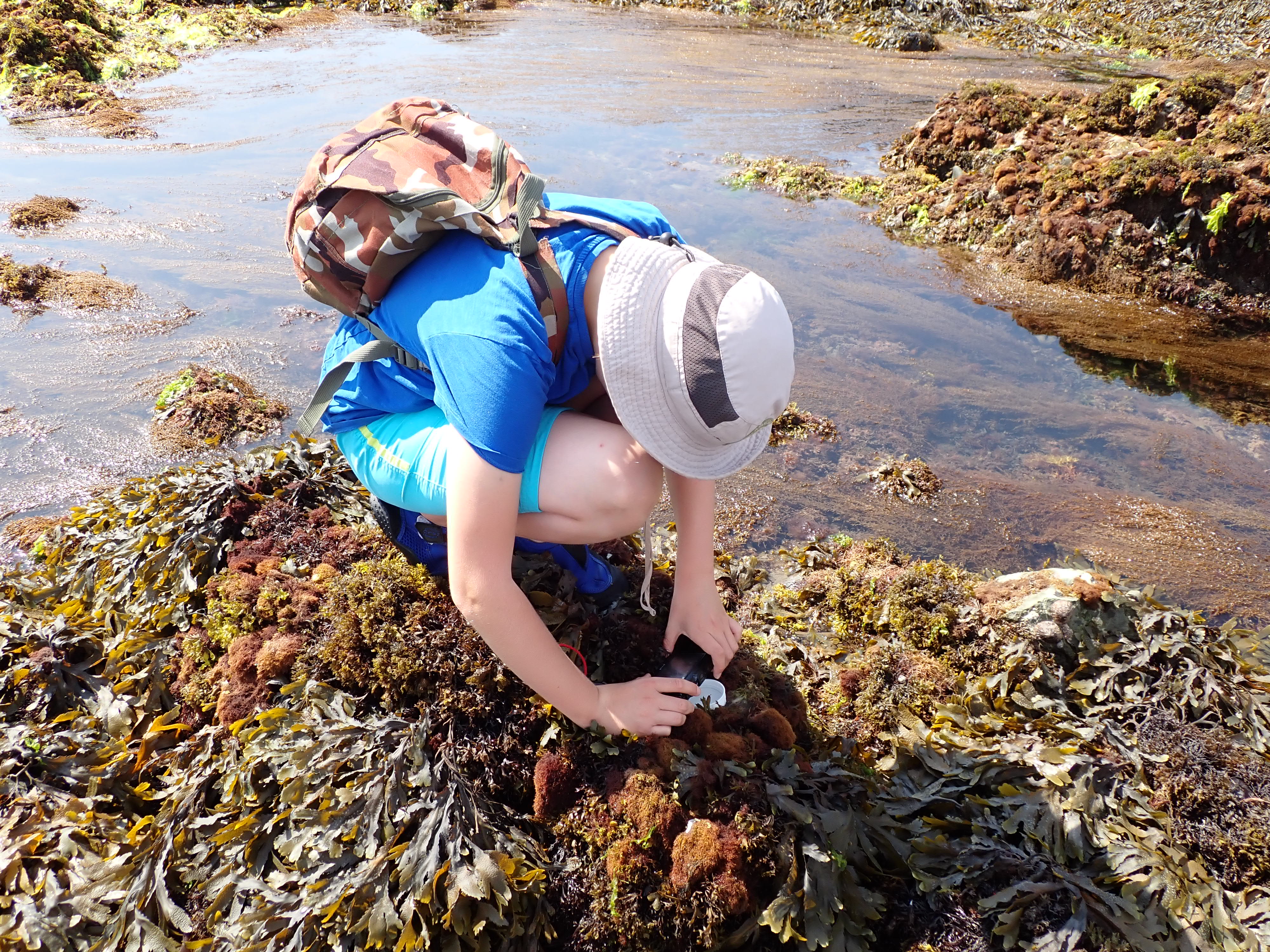
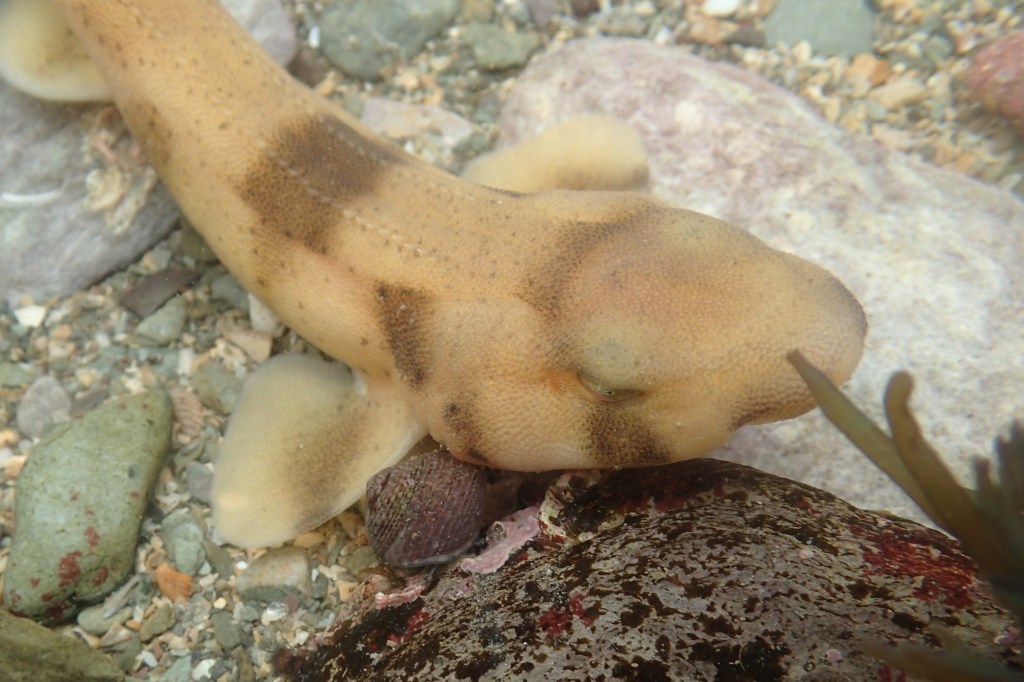
    Fortunately, Junior’s home education group have good form. We have set out several times with a particular mission, most recently to find baby sharks . Each time, they succeed. Therefore, today we are going to find a rainbow slug.

    Conditions on the shore are beautiful. For once, we have sunshine, very light winds and a calm sea. Not only that, but there is a perfect spring low tide forecast. We follow the retreating sea towards an emerging rocky reef, checking everywhere along the way.

    There are lots of fabulous crabs, fish, squat lobsters, anemones and more, but no rainbow slugs.

    Small headed clingfish over pebbles in rock pool
    Small headed clingfish

    As low tide approaches, I am delighted to bump into the legendary (and also very real) Dr Keith Hiscock of the Marine Biological Association in Plymouth, who is enjoying his own marine explorations. We catch up briefly before I am called away to see another exciting find by the children: a catshark egg case that appears to be on the brink of hatching.

    I keep up my increasingly frantic search for a rainbow sea slug without success. There’s a little Jorunna tomentosa slug and a beautiful red Rostanga rubra. I’m also happy to see a young snake pipefish, but there’s no sign of rainbow slugs.
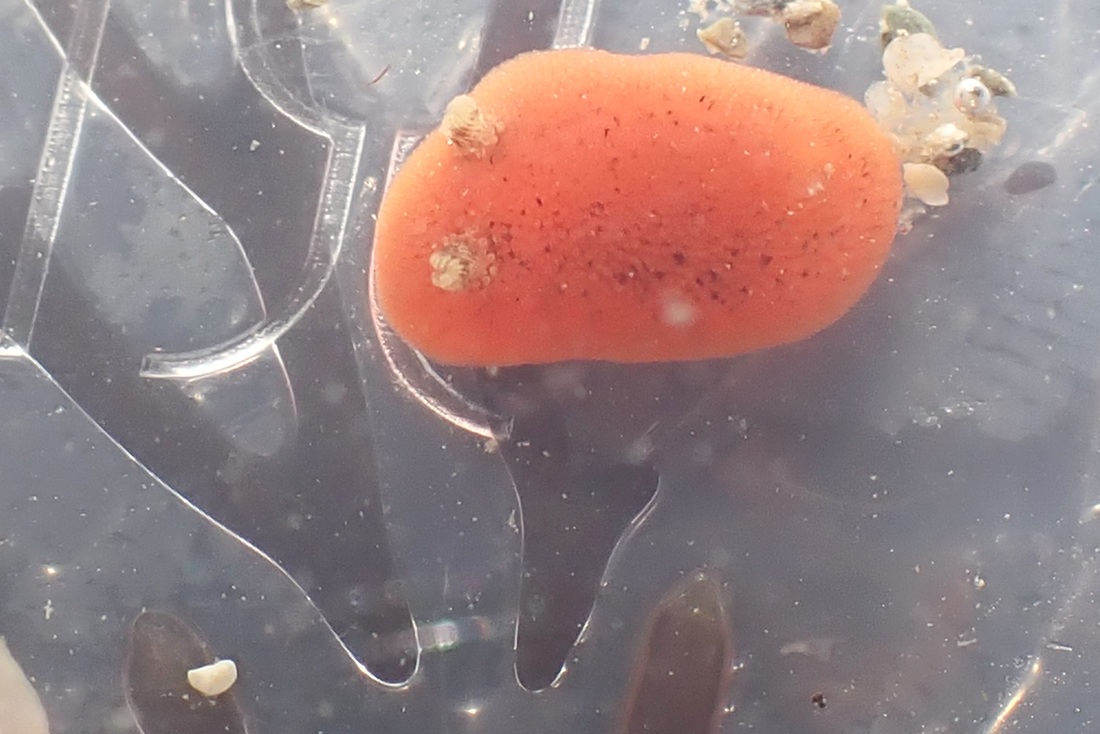
    Rostanga rubra - a bright orange sea slug with light-brown rhinophores
    Rostanga rubra – a slug that feeds on orange and red sponges
    Jorunna tomentosa. A cream coloured sea slug with small brown spots and a furry look. Slug is crossing a rock covered in short green seaweed.
    Jorunna tomentosa – I call these “Dalmatian” slugs as they always have little brown spots.
    Juvenile snake pipefish, showing the long snout and dark mask-like marking over the eye. Fish is in the sea over pebbles.
    Juvenile snake pipefish, showing the long snout and dark mask-like marking over the eye.

    I am taking some photos of a gorgeous little Anapagurus hyndmanni hermit crab, when Junior calls over to say that Keith found a rainbow slug. For a moment I think he’s pulling my leg, but Junior knows that slugs are a serious matter.
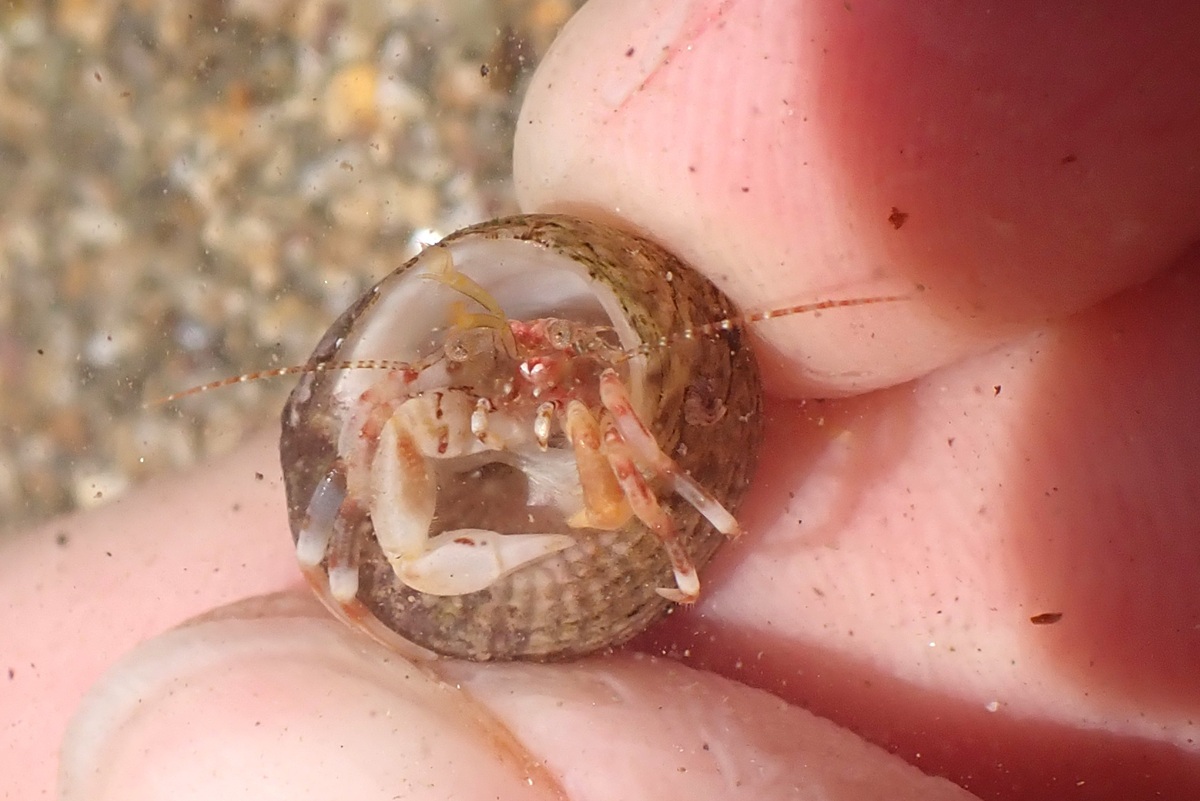
    Anapagurus hyndmanni small hermit crab with large white right claw in topshell.
    Anapagurus hyndmanni. These small hermit crabs have a larger right claw, which looks like a white boxing glove. They also have lovely striped antennae.

    “He found it earlier,” he says. “Over there somewhere.” He points to the opposite side of the lagoon.

    My heart leaps and sinks at the same time. There’s a rainbow slug! However, it’s unlikely to be more than 2cm long and is somewhere among many square metres of rocks and seaweed.

    I slosh through the water to where Keith is exploring and he tells me he has marked the place. Fantastic! I call the kids over and, together, we start hunting for a rock marked with a piece of kelp.

    Inevitably, the tide is already turning and time is against us. We find one rock with kelp on it and search all around to no avail. Then we try another place. Nothing.

    Keith to the rescue! With a little hunting around (rocks and kelp are incredibly plentiful on this part of the shore), he identifies the right area. The first rock we gently turn is slug free and we place it back, glancing nervously at the edge of the sea, which is visibly flowing in our direction.

    When we turn the second rock, the children gasp in excitement. Yes, it’s small, but there is nothing disappointing about this slug. The pinks, purples and yellows are virtually glowing.

    Brightly coloured pink purple and yellow sea slug.
    Rainbow sea slug, Babakina anadoni

    “It’s like a Pokémon!”

    The children have a point. With its bright pink headgear and multicoloured mane of cerata along its back, this creature would not look out of place on a trading card.

    Brightly coloured pink purple and yellow sea slug.
    Rainbow sea slug, Babakina anadoni

    Vivid colours like this often announce to any would-be predators that an animal is toxic. Many sea slugs retain toxins from their food, or even stinging cells, which they keep in their cerata (the sticky-up bits on their backs). My books neither confirm nor deny that Babakina anadoni does this, but I imagine that few creatures would be foolish enough to chance a bite.
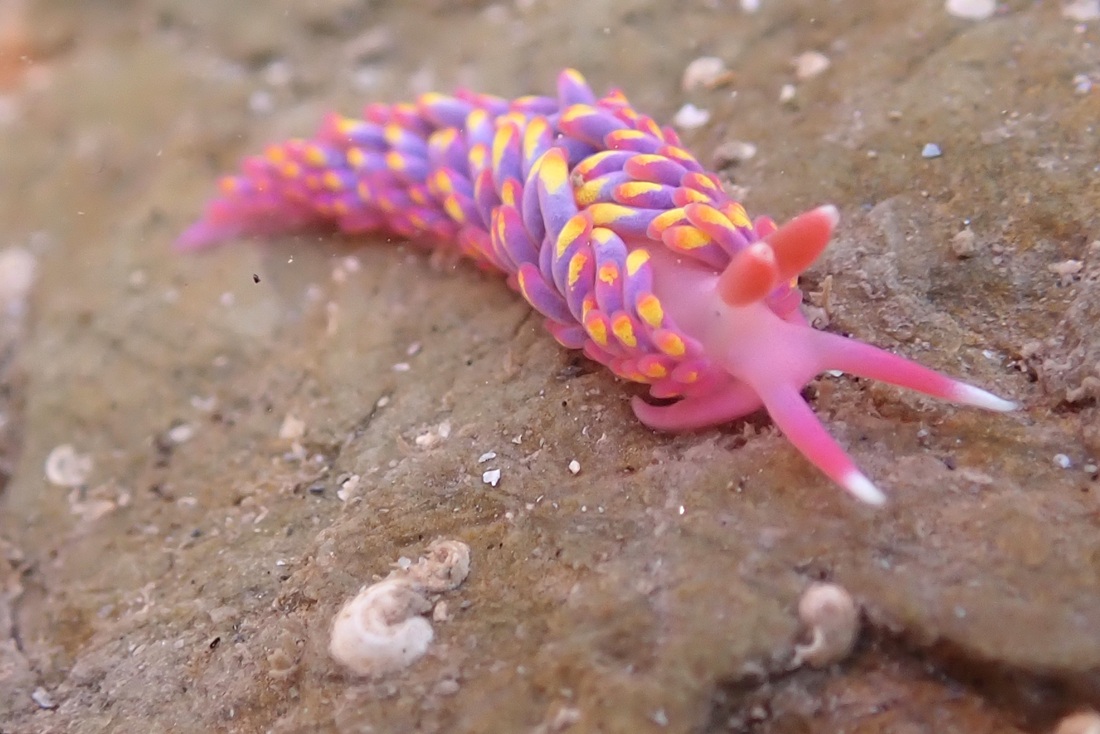
    Brightly coloured pink purple and yellow sea slug.
    Rainbow sea slug, Babakina anadoni

    Excitingly for me, the rainbow slug is not at all camera shy. It keeps changing its pose on the rock, allowing us to take some excellent shots from all of its best sides.

    Amid the appreciative chatter and my own delighted squeals, I do my best to do justice to this slug’s stunning appearance.
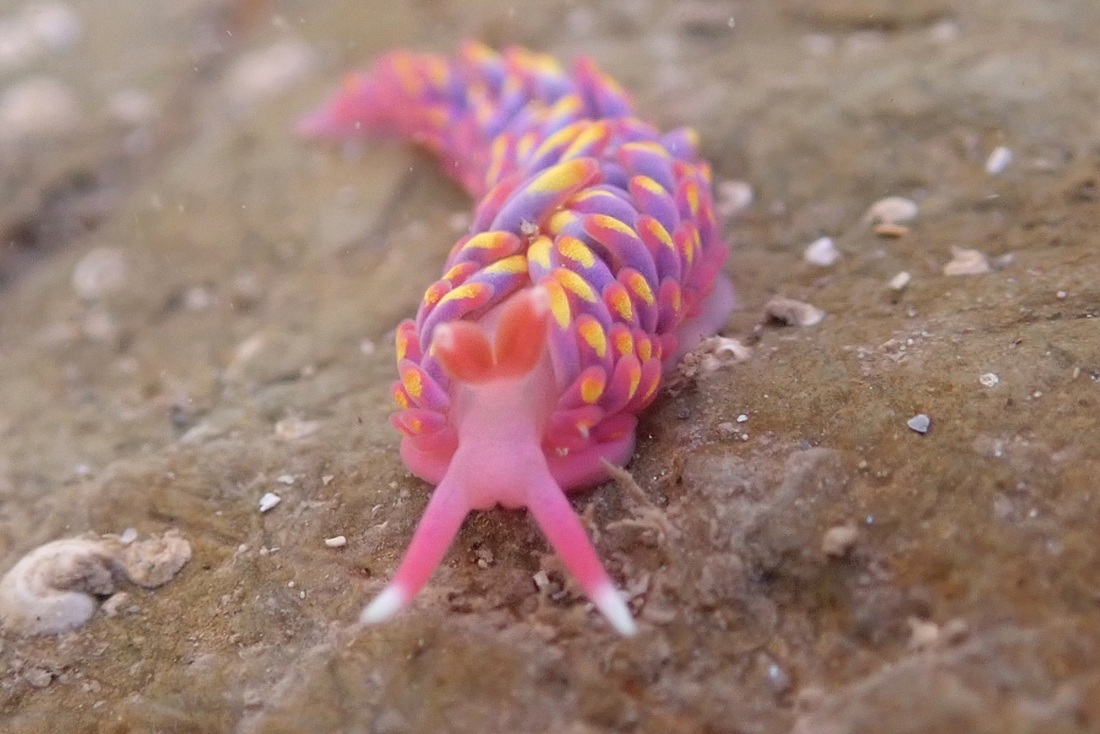
    Brightly coloured pink purple and yellow sea slug.
    Rainbow sea slug, Babakina anadoni

    Also on the rock is a Candelabrum cocksii hydroid – possibly slightly chewed by the slug.
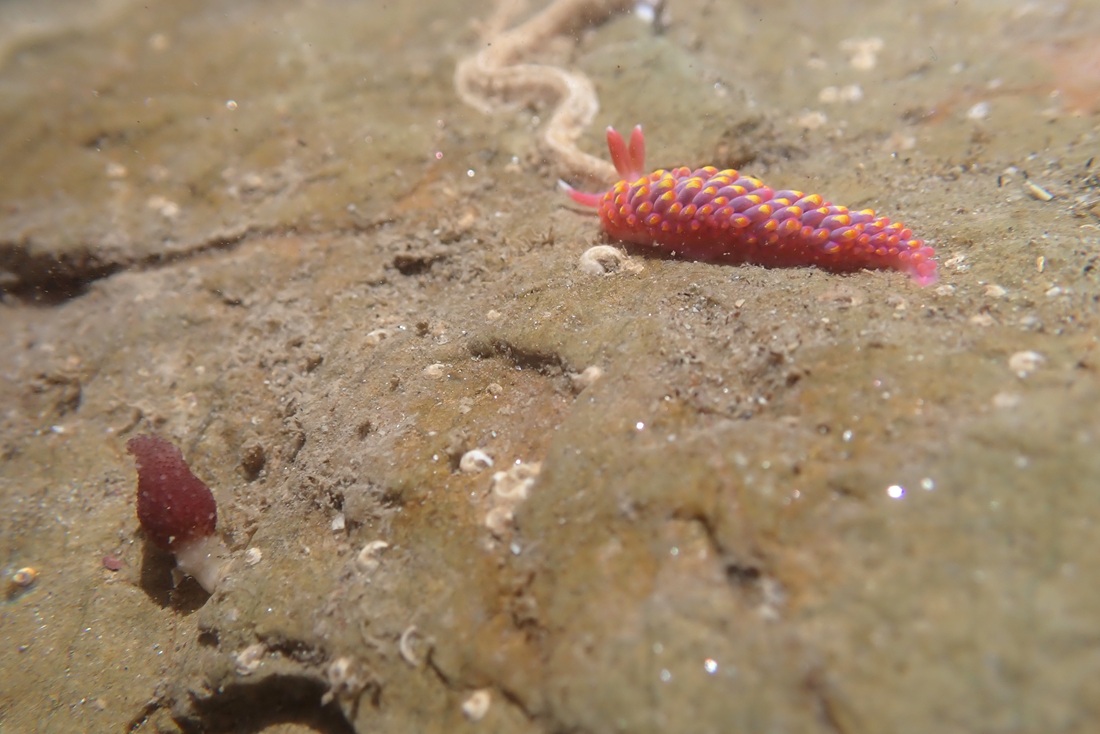
    Brightly coloured pink purple and yellow sea slug.
    Rainbow sea slug, Babakina anadoni with a Candelabrum cocksii hydroid (bottom left) – possibly nibbled!

    I cannot thank Keith enough for sharing his discovery with us all. What an incredible experience for all of us. There may well be some budding marine biologists among the group!

    Brightly coloured pink purple and yellow sea slug.
    Rainbow sea slug, Babakina anadoni

    With the tide pushing at our heels, we retreat to the top of the shore to relax and eat a celebratory ice cream, still buzzing about the beautiful slug and its amazing colours.
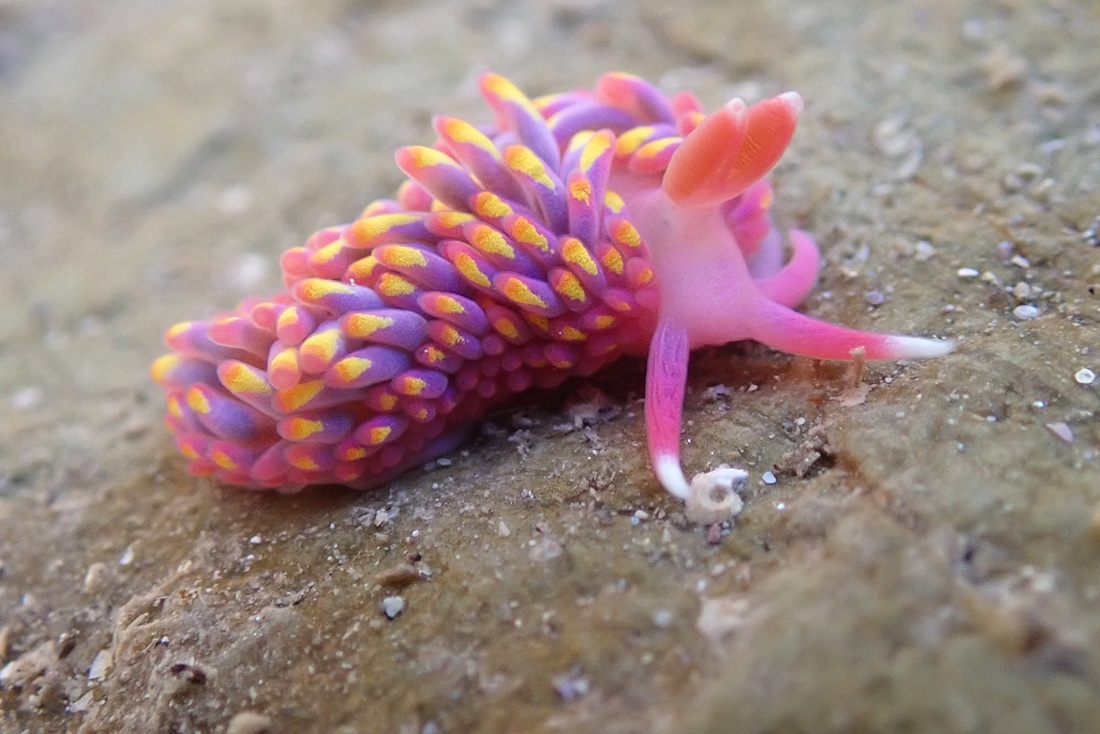
    Brightly coloured pink purple and yellow sea slug.
    Rainbow sea slug, Babakina anadoni… strutting its stuff!

    The intertidal rocky shore is a fragile environment that we can all help to protect. If you are heading out to look at the wildlife, join a local expert-led event if possible and be sure to follow my rock pooling tips to help you to look after the wildlife and stay safe.

    This website is a labour of much love and the content is available for free to everyone. My wonderful readers often ask if there is a way to support my work. You can now ‘buy me a coffee’ through my Ko-fi.uk page. (Just click donate and you can set the amount to pay by PayPal). Thank you!

    Buy Me a Coffee at ko-fi.com

  • Who Needs Mythical Beasts? Rocket Jellies, Snakelocks Anemones and a Dragonet

    Who Needs Mythical Beasts? Rocket Jellies, Snakelocks Anemones and a Dragonet

    When my son was younger he thought he saw a kraken. I returned from releasing a crab after an event for the local Cub pack to find him and a friend staring out over the sea, shading their eyes to better spot tentacle tips or unusual splashes among the waves. They were quite sure it was out there.

    I watched with them for a long time, until the tide was lapping at our boots, because you never know what might be in the sea. A giant squid would be unusual, but our oceans are full of things that are so weird we are only just beginning to understand them. We sometimes see seals, dolphins and fish feeding frenzies, so why not a kraken?

    Since then, my son has grown up a lot and is less sure that there are krakens in Looe. We no longer spend much time hiding in the woods looking for dragons or watching the waves for sea serpents. Junior still loves mythology, Cornish and otherwise, but knows that the real world has as much strangeness as fiction.

    We are two minutes into this week’s rock pool expedition when he calls to me urgently to look at a thing he’s found.

    Junior at work!

    “I think it’s a hydroid medusa,” he says, because there’s not much he doesn’t recognize these days. “Quick, it’s going to get away.”

    I grab a pot and wade over to where he is pointing. Staring into the tangle of colourful seaweeds, at first I see nothing.

    A flicker of movement has me scooping up the water and when I look in my pot there is a tiny creature zipping from side to side, throwing itself against the edges of the pot like a trapped Trogglehumper. Of course, this creature is not a Roald Dahl creation, but an actual, fabulous marine animal. My books call it a ‘root arm jelly’, although Junior and I know it by a different name.

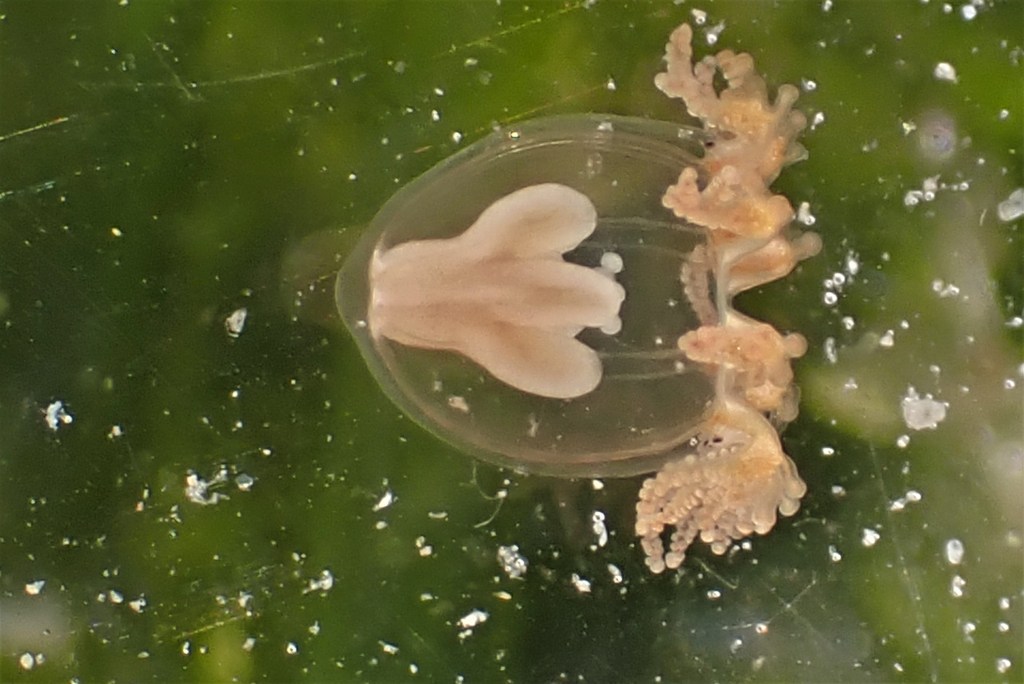
    Whoosh! A rocket jelly. (Cladonema radiatum – aka the root arm jelly).

    “Rocket jelly!” we shriek in delight.

    With great care, we transfer the jelly into the lid of the pot to see it better.

    The underside of the hydroid medusa (Cladonema radiatum – the root arm jelly)

    The main part of its body, measuring less than a centimetre, is a perfectly transparent dome, through which we can see its rocket shaped internal parts. Pointing downwards, a mouth fringed with ball-shaped structures is feeling about, moving left and right.

    The jelly’s transparent body with dark eyespots around the edge. Root arm jelly (Cladonema radiatum).

    At the base of the medusa’s dome there are several dark eyespots. Spreading out at around them, like the fire below a rocket, are the most incredible red tentacles. They are branched, curled and almost feathery. As we watch they expand and contract, feel and reach.

    Every time I focus on the medusa, it fires itself off in a new direction. Zooming from one side of the petri dish to another in an instant.

    I have never seen a medusa with such expanded tentacles before, but I am sure this is the same species of ‘rocket jelly’ we have seen before (Cladonema radiatum).

    Those little tentacles pack a strong sting for their size; it is an efficient little predator. I always find it hard to comprehend is that this free-swimming, speedy jelly is the reproductive stage of a colonial hydroid: an organism which lives attached to rocks or seaweed and doesn’t move from the spot.

    Obelia geniculata - a hydroid known as 'sea fir'.
    Hydroids like this sea fir, Obelia geniculata, live attached to seaweeds.

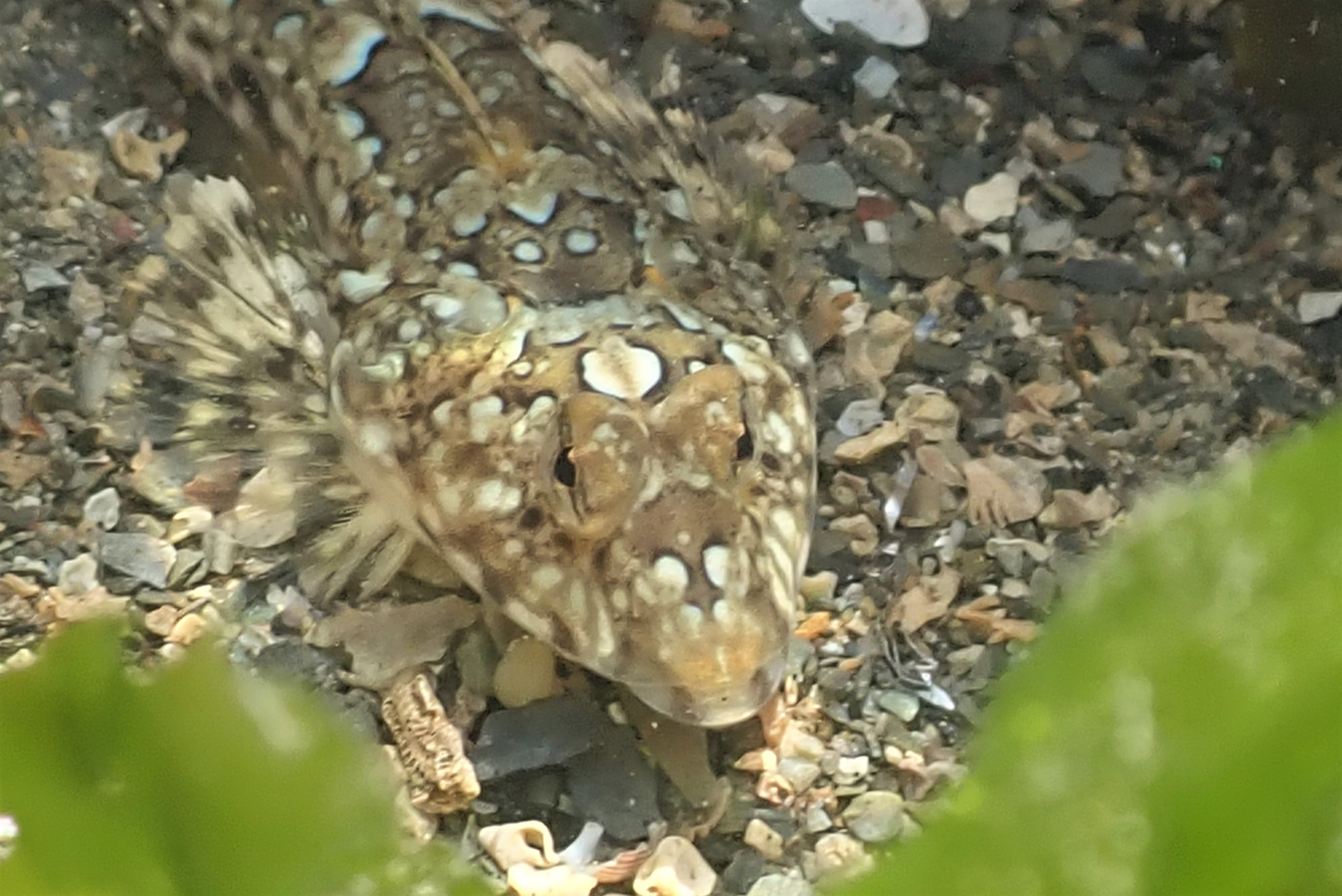
    While Junior takes photos of the rocket jelly, I notice a young fish glide over the sand, stopping near my feet. It has mottled markings in blue, orange and brown, which look colourful and yet provide the fish with an ideal camouflage among the sand, pebbles and shell fragments. Its eyes are mounted high on its head, giving it a wide field of vision. This is the wonderfully-named dragonet.

    Dragonet lying still on the sand. Despite the lovely colours, it is perfectly camouflaged.

    These captivating fish have a distinctive way of swimming in short bursts across the seafloor and they have an exceptionally long first dorsal fin. Male dragonets raise this sail-like fin as part of a mating dance, which I would love to see some day! It is perhaps this display, somehow reminiscent of a frill-neck lizard opening its collar, that gives these fish their fabulous name.

    Dragonet saying hello to my camera!

    The dragonet comes unusually close to my camera before scudding away over the sand, becoming invisible every time it stops.

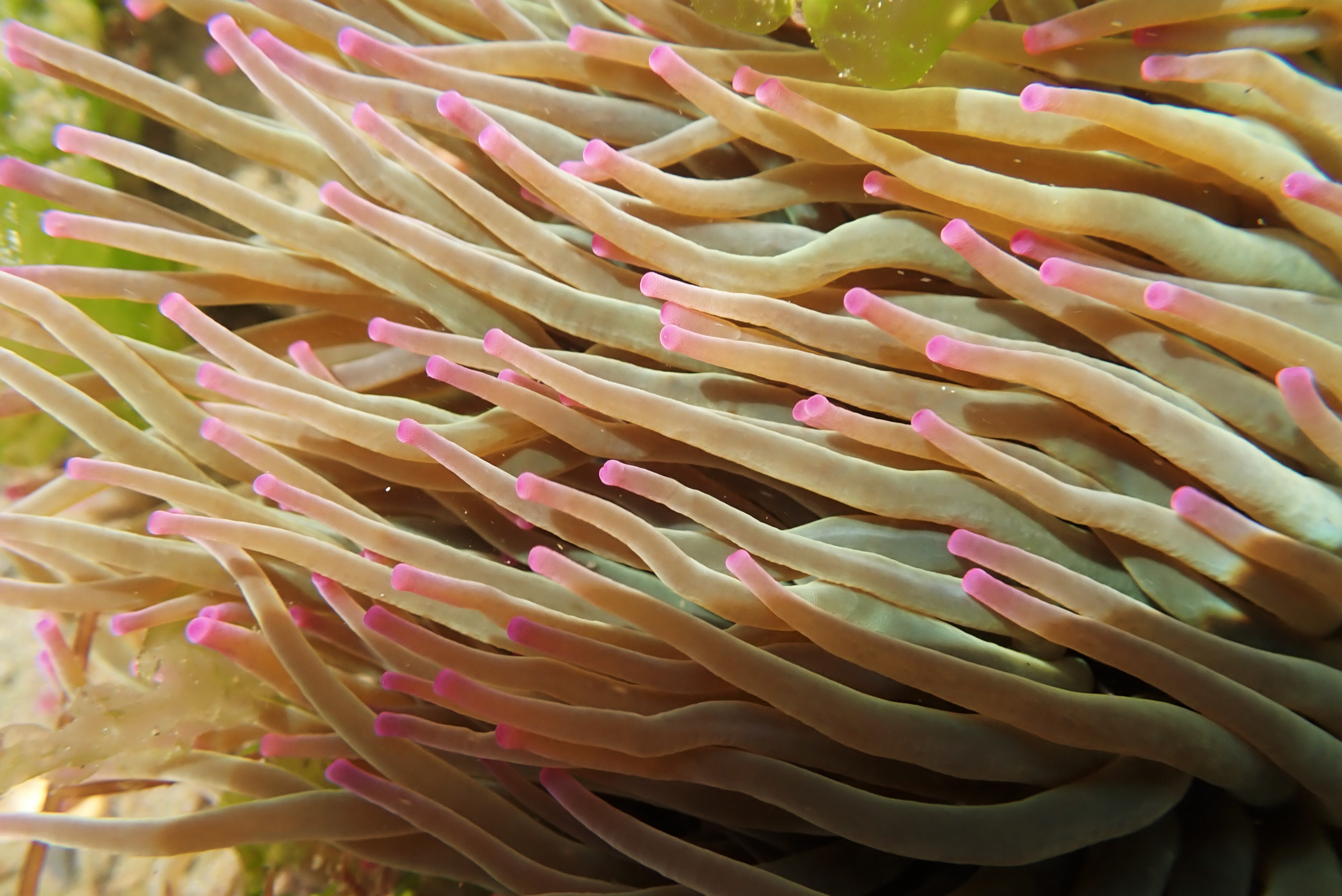
    I take some photos of another striking animal with a mythical name, which seems to abound in this pool: the snakelocks anemone. Just like the Medusa of Roman mythology, this anemone has long, green moving ‘hair’. Instead of being made of snakes, though, the anemone’s locks are its stinging tentacles. They are pretty but deadly, especially if you are a small animal, or even quite a big one. We’ve often seen crab legs hanging out the mouths of these large anemones.

    Snakelocks anemones in the rock pool.

    Some snakelocks anemones are neon green with purple tips, while others are a muted beige colour. Out of the water, they are a sorry squidgy mess of jelly but in the pools their tentacles move and flow, sometimes with the current, sometimes reaching and grabbing for prey they have sensed.

    Snakelocks anemone – some are green and some are beige.

    The chug of a boat makes us look up. Unusually for this area, there is a dive boat close to the rocks. Two-by-two, people in Scuba gear pop up on the surface and clamber aboard. I wonder what they have seen and whether they have noticed the tiny rocket jellies, lurking dragonets or even the medusa-haired snakelocks anemones.

    Dive boat close in to shore.

    Perhaps the divers have seen the kraken as they’ve explored the sea just beyond our reach. Even if they have, we don’t feel we have missed out by being confined to the land. The rock pools are full of truly magical beasts. You just have to look.

    Snakelocks tentacles waving in the current.
  • Discoveries on my Doorstep – Day Two (Hannafore, Looe)

    Discoveries on my Doorstep – Day Two (Hannafore, Looe)

    Fairer conditions set in for the second day of rockpooling with the fabulous David Fenwick and the Coastwise North Devon team. Without the challenges of wind-blown pools and rain-spattered lenses to contend with, the day promises to be even more inspiring.

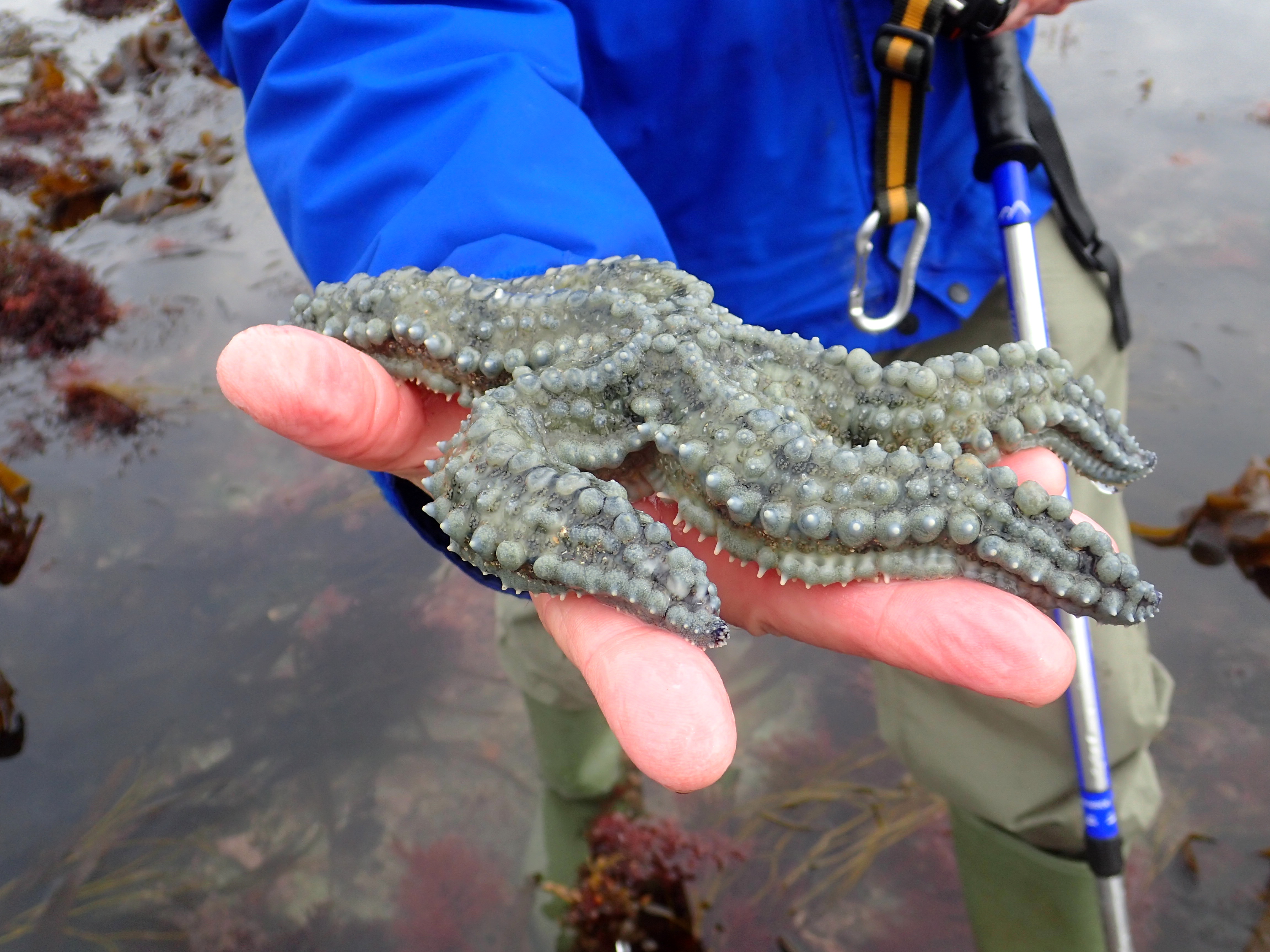
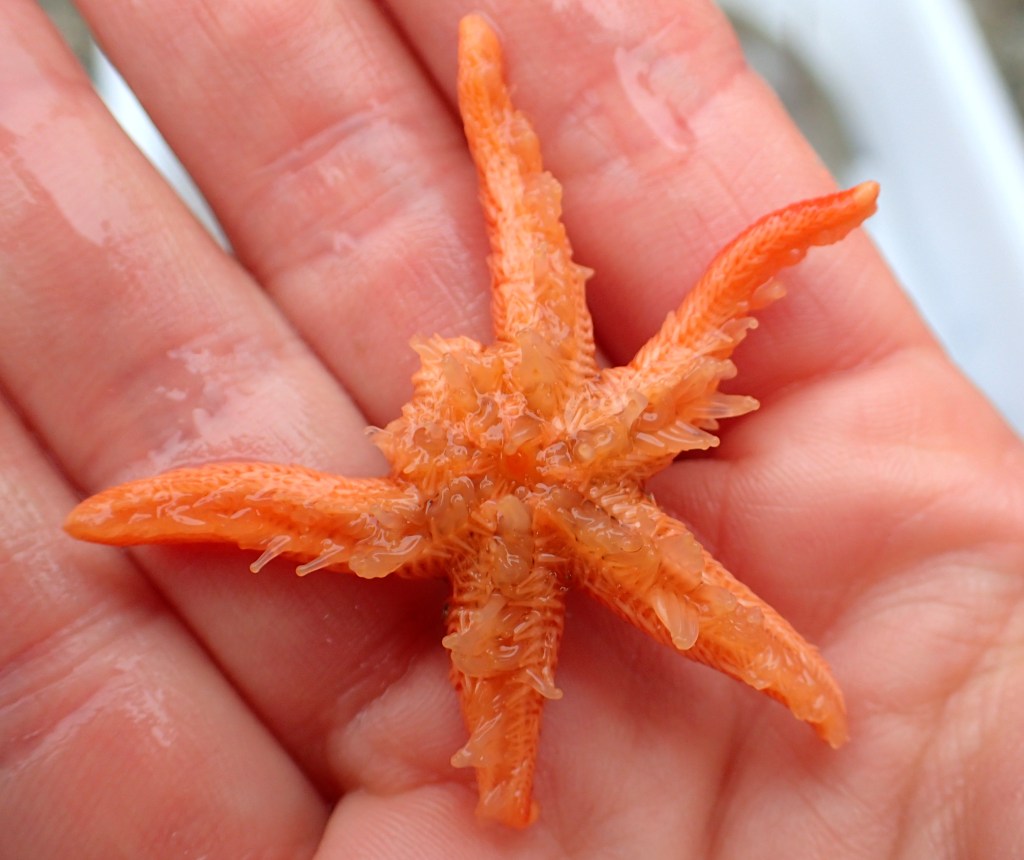
    Martin holds a spiny starfish, Hannafore, Looe
    Martin holds a spiny starfish, Hannafore, Looe

    I’ve managed to replace Cornish Rock Pools Junior’s leaky wellies so he joins us to track down amazing creatures. Today we will focus on the lagoon and seagrass beds at Hannafore and I have no doubt I’ll be seeing something new.

    Junior gets stuck into the task at hand; head down, bottom up, staring into the glassy water. He shrieks and comes wading over to me, taking care not to spill water from his precious tub. In it he has a plump sea slug, a ‘Great grey’ Aeolidia papillosa – or sheep slug as we call them. (more…)

  • The Calm Before the School Holidays

    The Calm Before the School Holidays

    Long sunny days, beaches and ice creams: there’s a lot to love about the school summer holidays in Cornwall. For us though, the influx of visitors makes it a challenge to go anywhere, whether on and off the beach. So, from the end of next week, Cornish Rock Pools junior and I will be adopting our much-loved summer routine of visiting remote local coves on foot. In the meantime, we have fun taking our friends to Hannafore beach to learn about sea creatures.

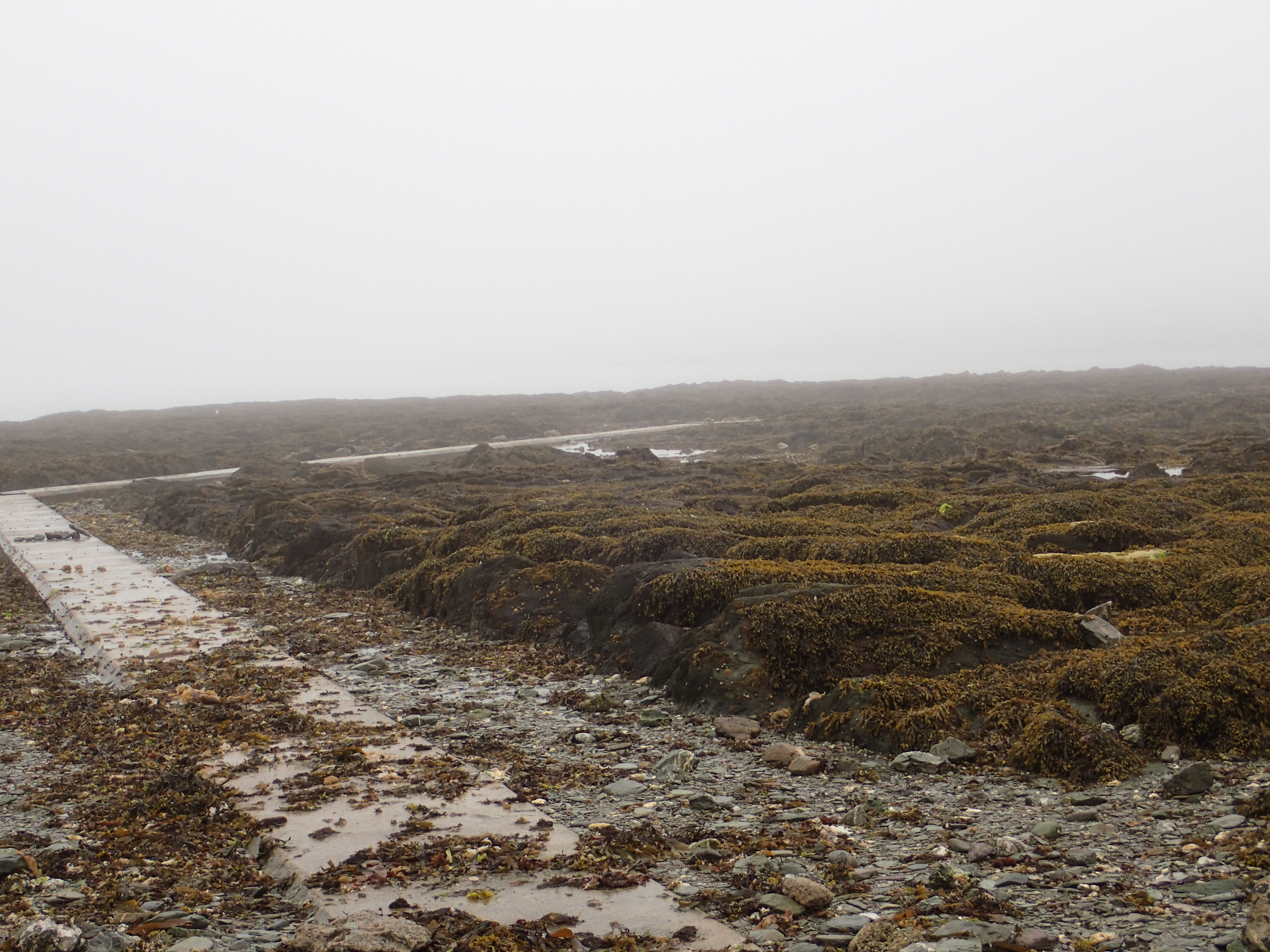
    It feels like the calm before the storm. It’s so calm, in fact, that a thick sea mist has settled over the bay. Looe Island, a few hundred metres away, has disappeared. With no waves and not a ripple on the pools, the conditions are ideal for rockpooling. The damp air also means the animals are active without fear of drying out. As we walk across the shore we see crabs scuttling in every direction.

    The fog has descended at Hannafore - Looe Island is nowhere to be seen.
    The fog has descended at Hannafore – Looe Island is nowhere to be seen.

    I’ve asked Junior to help me. He’s now spent so much time on the shore that he knows the health and safety spiel by heart and can identify crabs, fish and starfish in the blink of an eye. He takes on his role with unstoppable enthusiasm, telling his friends that they should look closely at the hermit crabs.

    “If you’re really lucky you might find a rare one like Anapagurus Hyndmanni,” he explains.

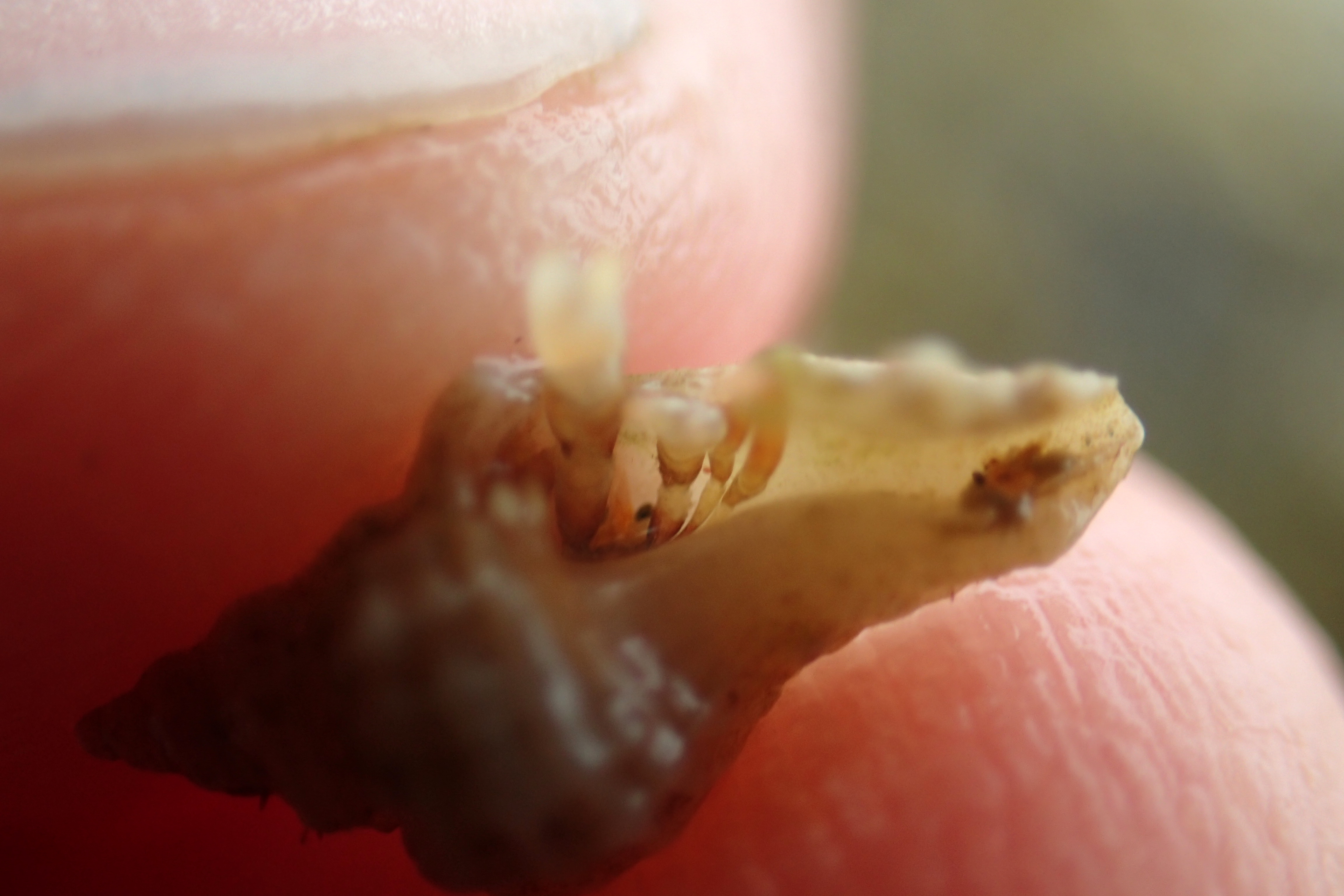
    It so happens that one of the first finds of the day is this very species, occupying a shell so small that my eyes ache from trying to focus on it. Despite its size, the Anapagurus hyndmanni is a feisty little crab, reaching as far out of the shell as it dares to threaten me with its miniscule pincers.

    Anapgurus hyndmanni - this uncommon little hermit crab is often seen at Hannafore.
    Anapgurus hyndmanni – this uncommon little hermit crab is often seen at Hannafore.

    Close-up, its right pincer looks inflated, like it’s wearing a white boxing glove.

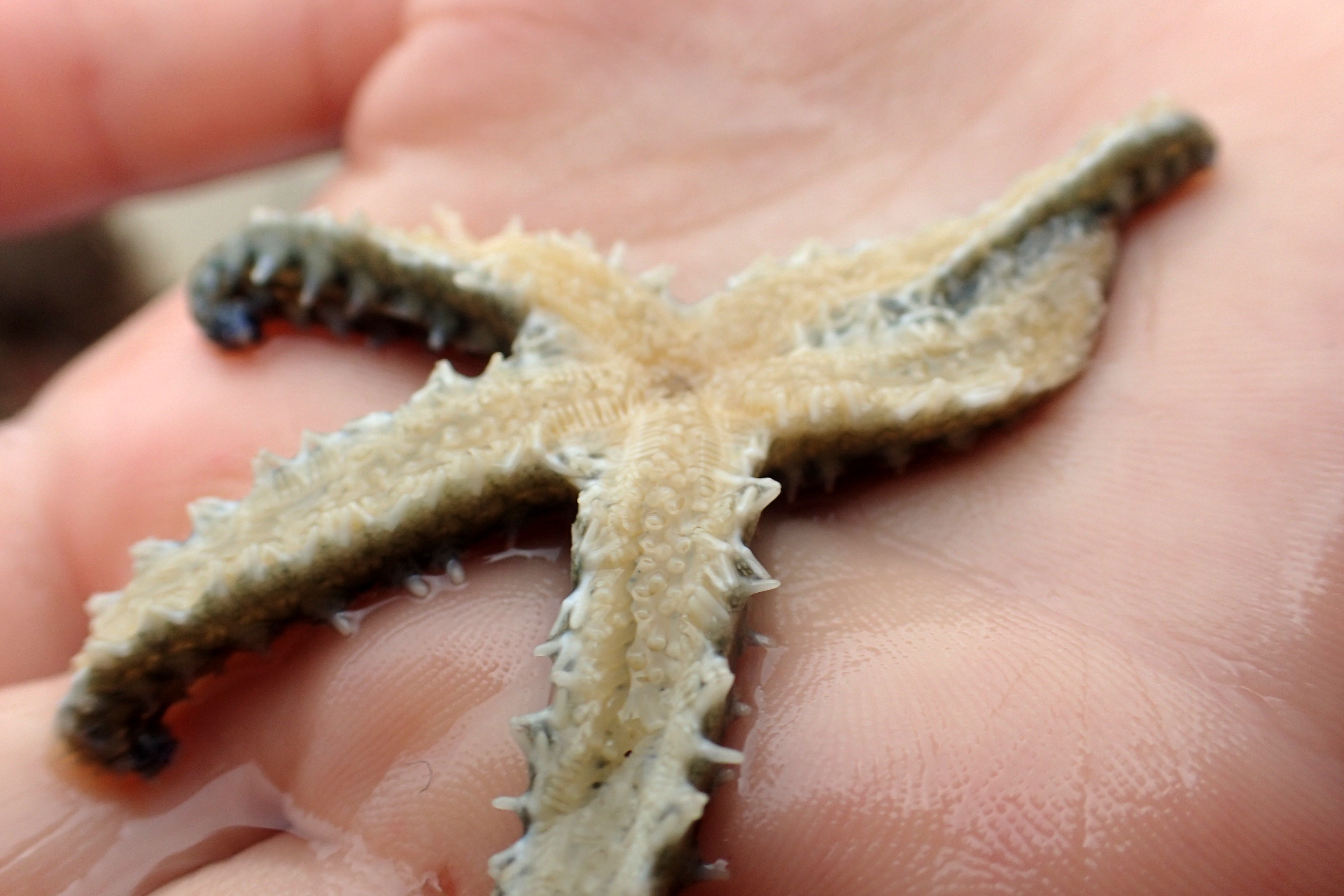
    As always, the starfish are hugely popular with the children. We find cushion stars, brittle stars and a young spiny starfish and watch how they move.

    Children love holding starfish - when you turn them over it's easy to see how they move around on their tentacle feet.
    Children love holding starfish – when you turn them over it’s easy to see how they move around on their tentacle feet.

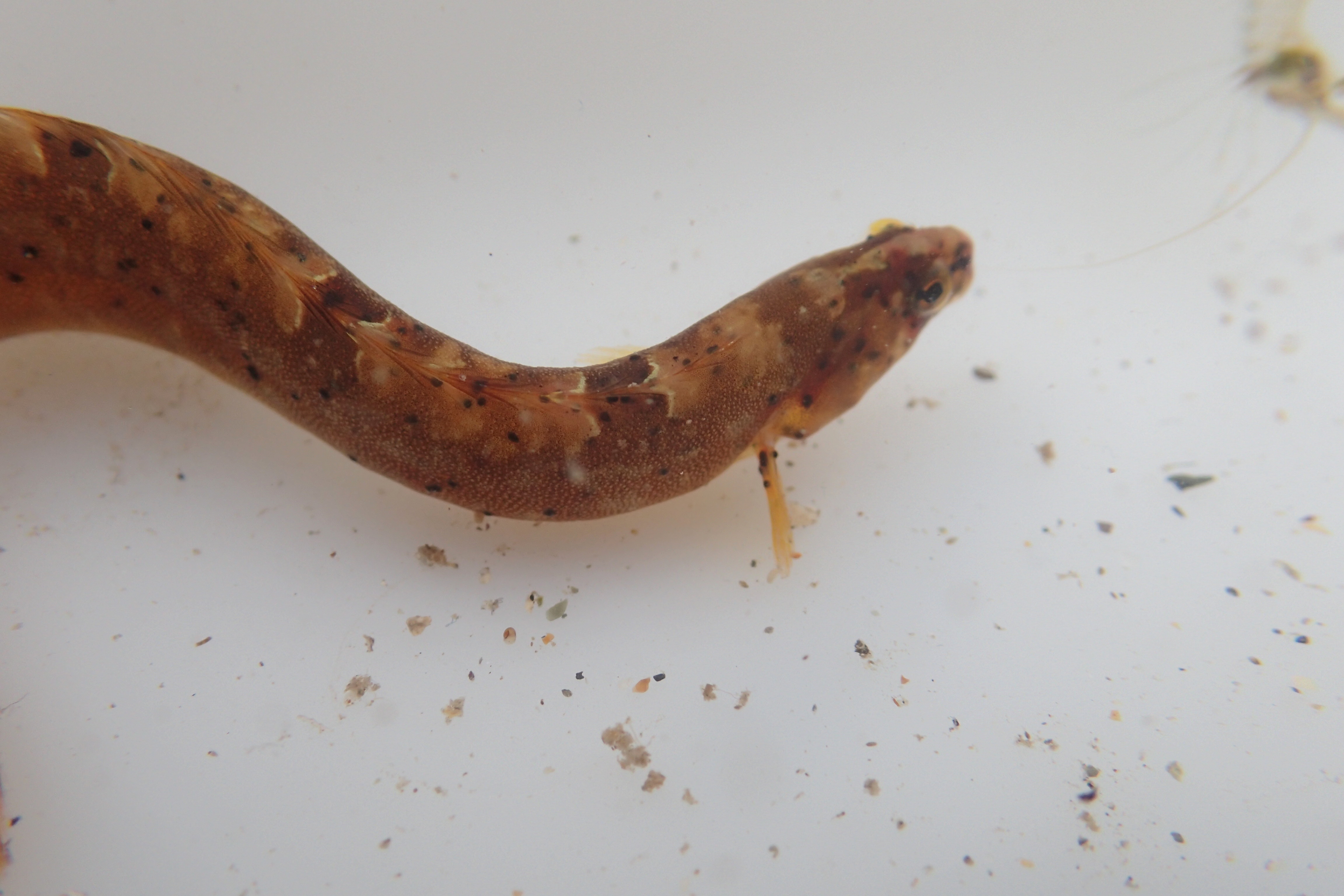
    A friend returns from a distant pool with a fish I don’t often see on the shore here: a butterfish. It’s instantly recognisable from its wonderful marbled patterns and dark spots along its flanks. By gently touching it the children find out that it gets its name from its slippery skin.

    A beautifully patterned young butterfish.
    A beautifully patterned young butterfish.

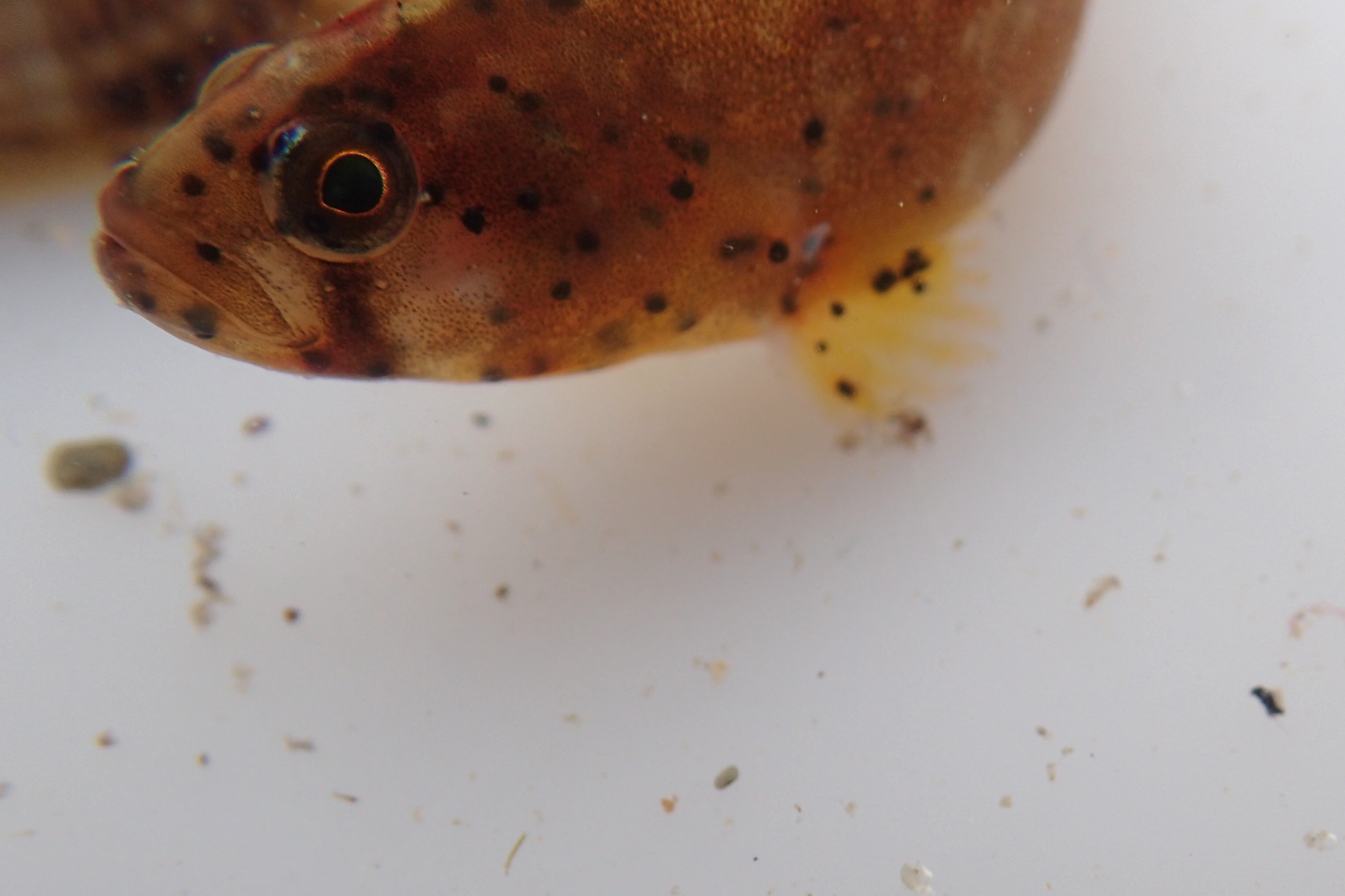
    The butterfish has a downturned mouth with big lips, making it look like it's frowning.
    The butterfish has a downturned mouth with big lips, making it look like it’s frowning.

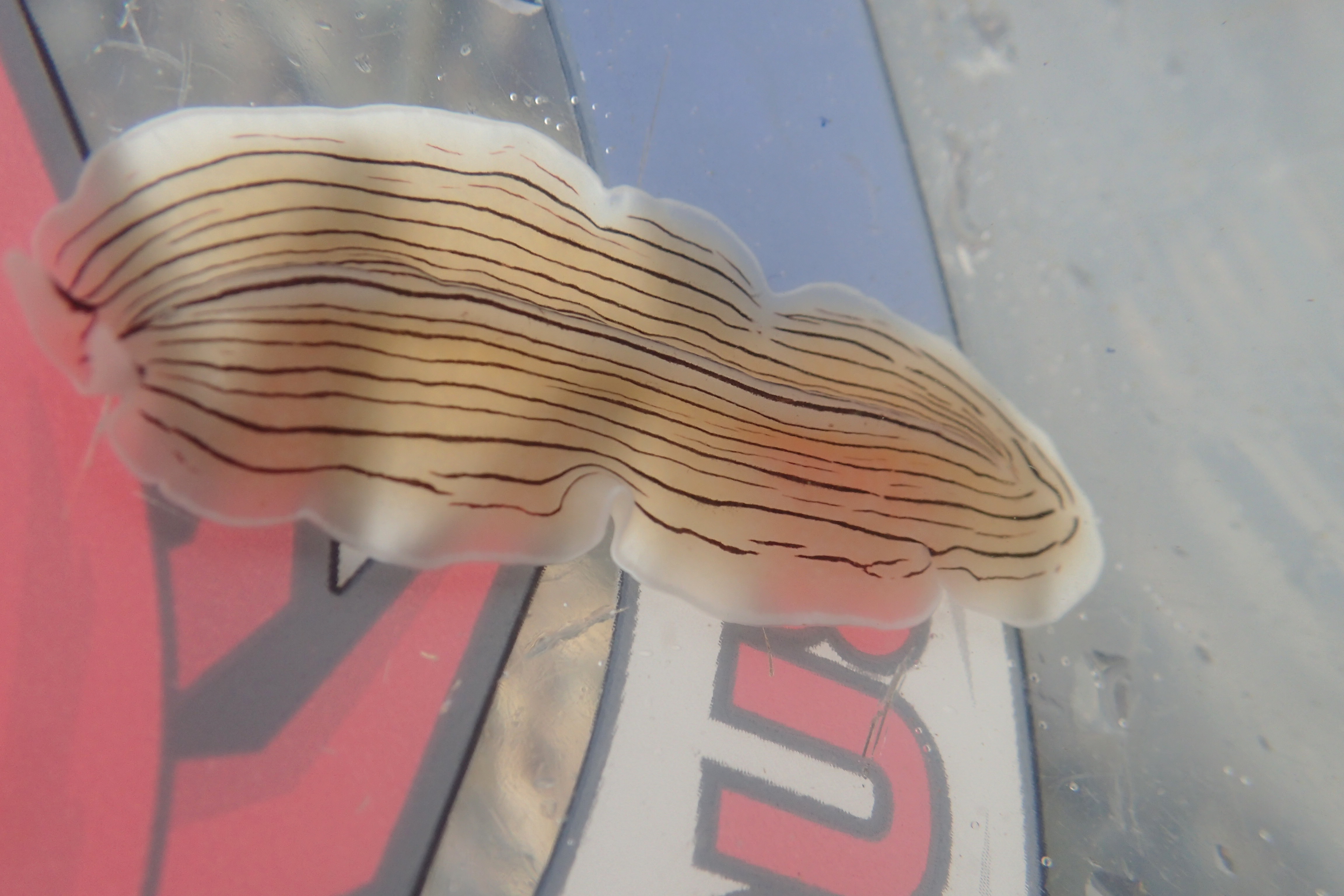
    Among the rainbow weed at the end of the walkway we find a candy-stripe flatworm. It swims into my bucket and we watch it slipping along, feeling its way with its head tentacles.

    The candy stripe flatworm swims straight into my bucket.
    The candy stripe flatworm swims straight into my bucket.

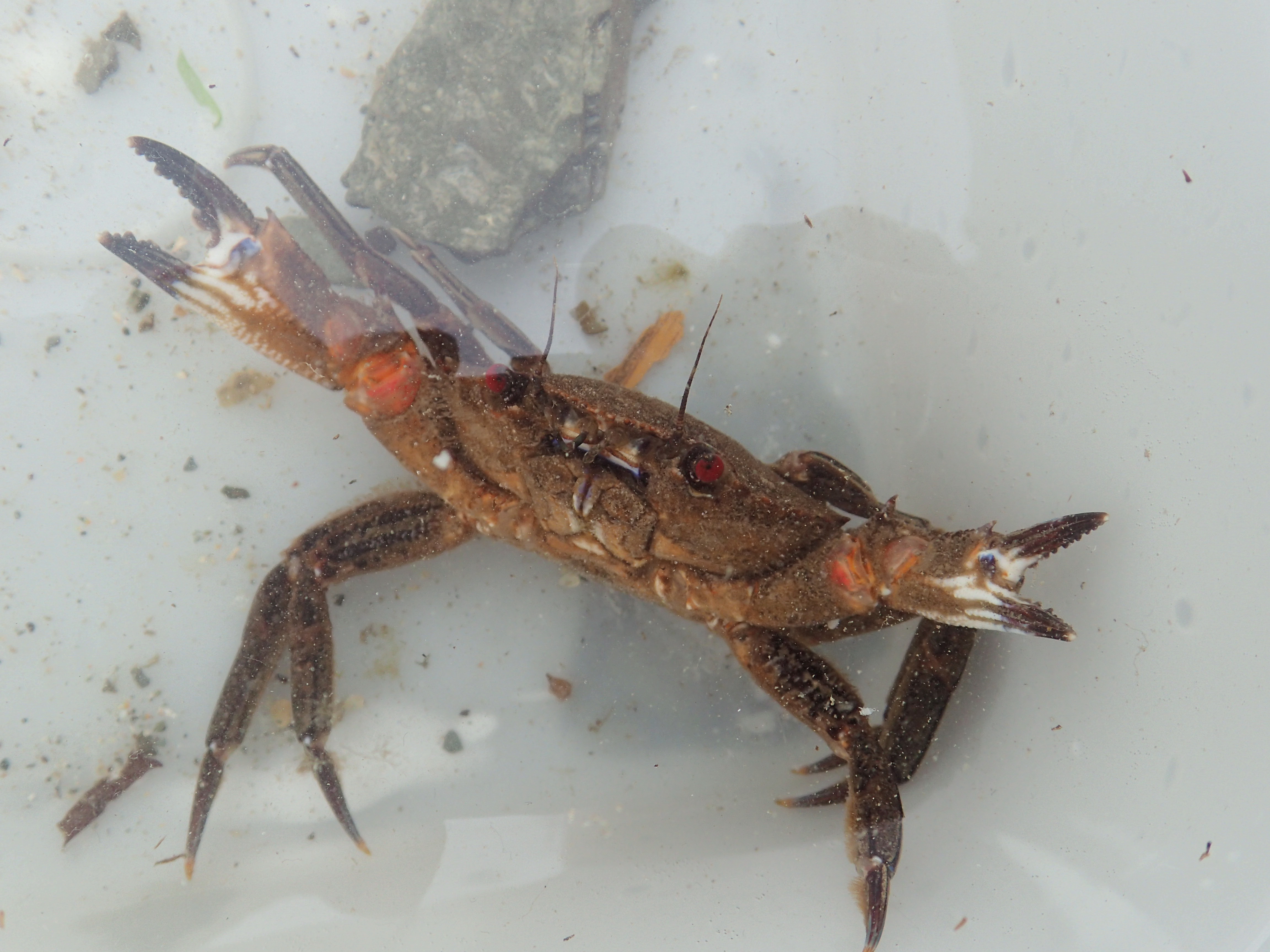
    We find the usual array of crabs, squat lobsters, prawns and anemones. A member of the public donates a large velvet swimming crab to our big bucket. The crab is less than pleased about its capture and draws gasps from the children with its quick pincers and gleaming red eyes.

    Velvet swimming crabs - or devil crabs as Cornish Rock Pools Junior calls them - are impressively aggressive.
    Velvet swimming crabs – or devil crabs as Cornish Rock Pools Junior calls them – are impressively aggressive.

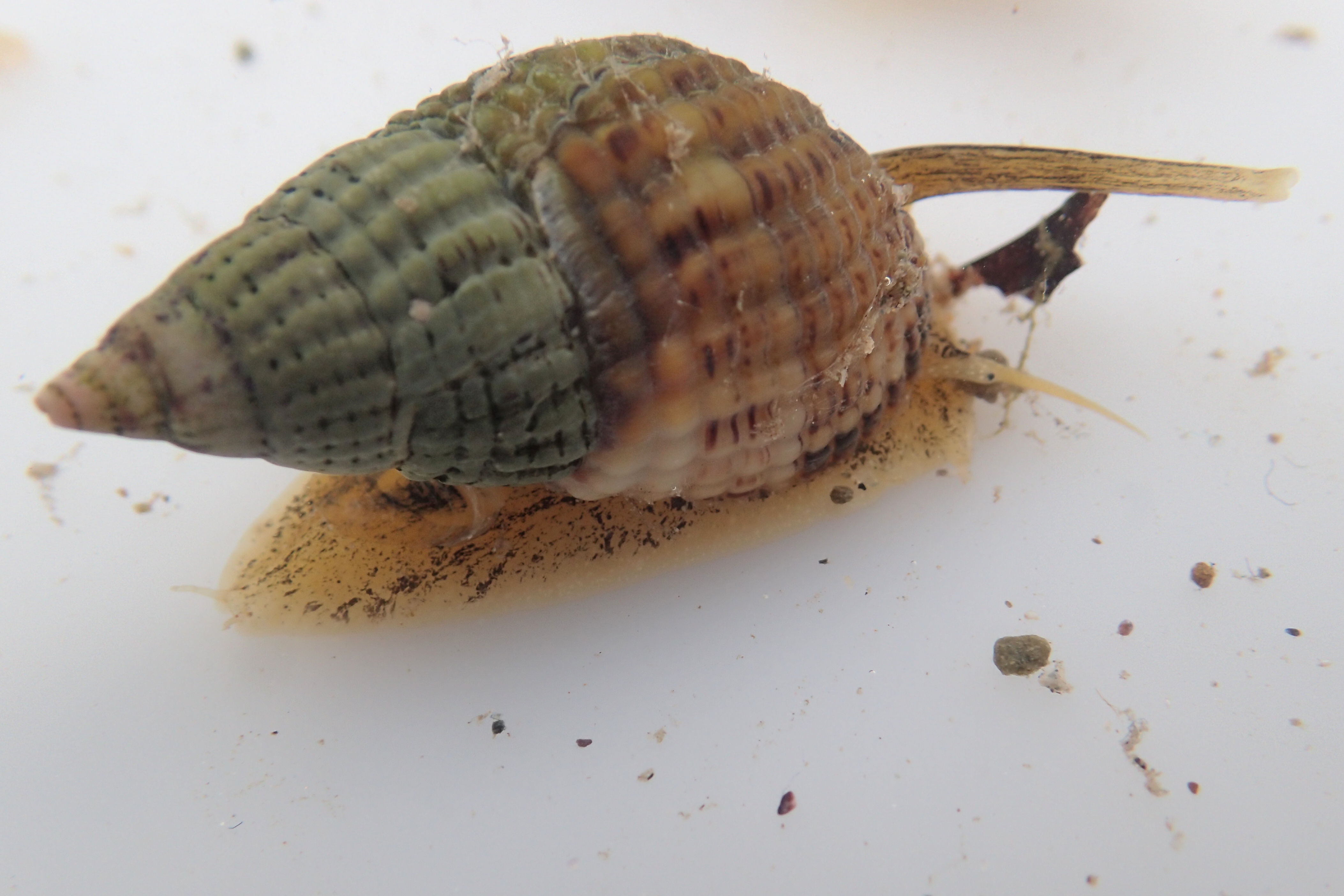
    A netted dog whelk also captures the kids’imaginations; its huge syphon reminds them of an elephant’s trunk.

    Netted dog whelks are common on this silty shore and have an impressively long syphon.
    Netted dog whelks are common on this silty shore and have an impressively long syphon.

    All too soon the tide turns and we slip the creatures back into the still water, watch them swim away and the children disperse to eat their picnics on the beach. It’s hard to imagine how busy the town and beaches will be a week or two from now. I enjoy the calm while I can.

    There will be lots of great family rockpooling events around Cornwall during the summer holidays – it’s the perfect way to find and learn about our fabulous wildlife. Take a look at the Cornwall Wildlife Trust’s events page for more dates of rockpooling and other marine wildlife events.

    Broad-clawed porcelain crab
    Broad-clawed porcelain crab


  • A week of nature photos

    A week of nature photos

    I did my first Facebook challenge this week: #challengeonnaturephotography. One nature photo a day for a week.

    I normally operate a ‘just say no/ pretend I haven’t seen it’ policy when it comes to nominations for social media challenges, but this one caught my eye. It was hard to know what to choose, but, of course, I majored on photos of the Cornish rock pools.

    Given how much I squirm when I’m nominated for anything, I haven’t tagged anyone to carry on the challenge. But, if you’d like to share photos of wild things and places you love with your friends, please do take it up.

    So here’s what I picked… (more…)

  • Halloween in the Cornish Rock Pools

    Halloween in the Cornish Rock Pools

    There’s a chill in the air and the pools are strewn with orange and yellow oak leaves, blown in from the nearby woods, yet there’s a crowd on the beach for the Looe Marine Conservation Group’s half-term rockpool ramble. It’s nearly Halloween and there’s no better way than this to get close to other-worldly creatures with some revolting habits.

    We arrive late and everyone’s already gathered around the shore lab trays, sharing their discoveries. I’m called on straight away to identify a lugworm, its dark slimy body is oozing into a corner of the tray. You’d only have to blow it up to human size to have a classic horror movie monster.

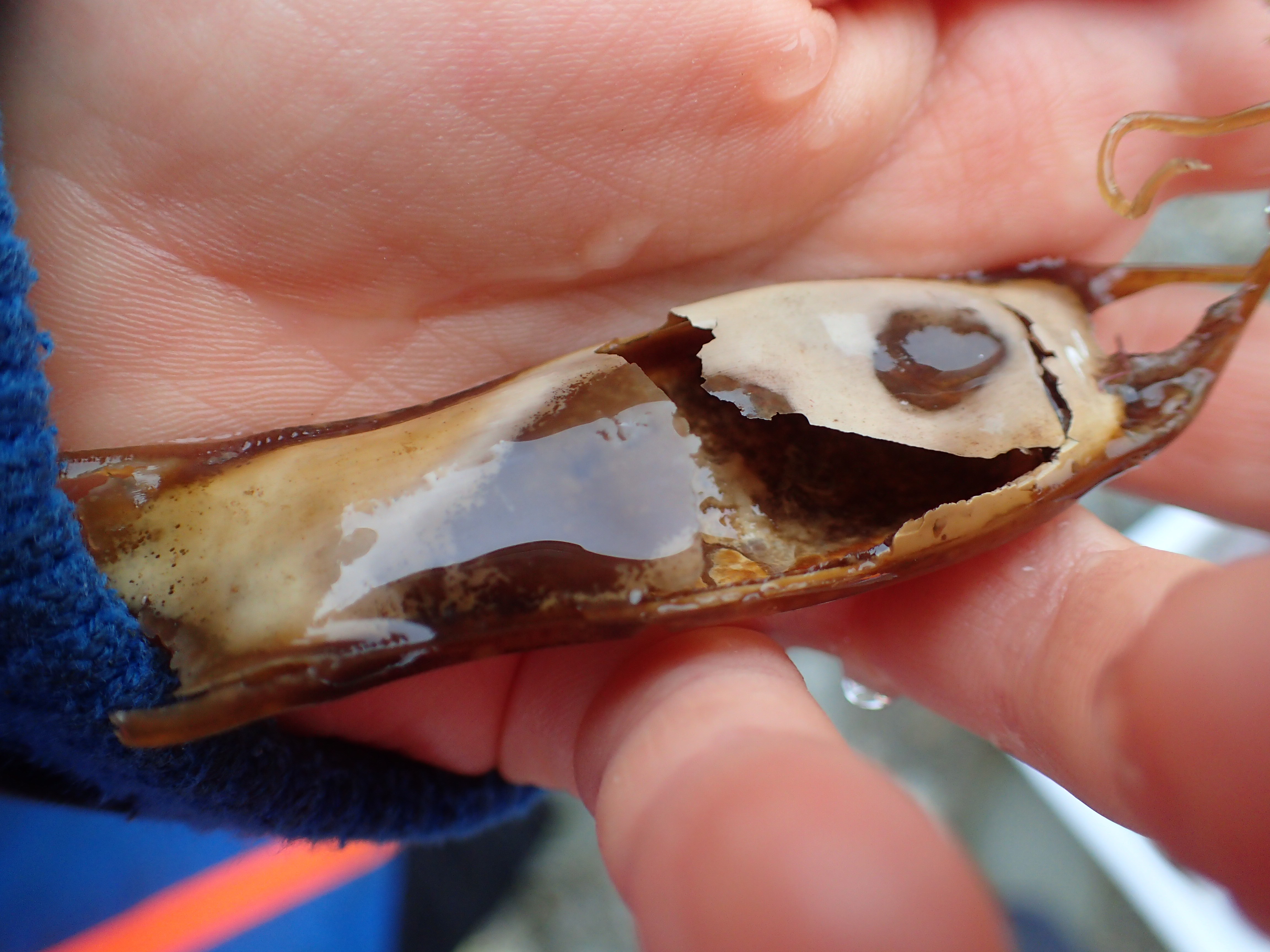
    Next up is an empty egg case and several keen kids at the front shoot their hands up and jump eagerly. “It’s a shark!” they call out. Lots of guesses follow about what species of man-eater might be lurking in the shallows. This case is actually from a lesser-spotted catshark, also known as a dogfish, which has some impressive teeth and grows to around 75cm, but is shy and harmless.

    Egg case of a lesser-spotted catshark (dogfish) - Scyliorhinius canicula
    Egg case of a lesser-spotted catshark (dogfish) – Scyliorhinius canicula

    The rock poolers have gathered an impressive haul of starfish. There are cushion stars, a common starfish, brittle stars and a spiny starfish so large it occupies most of the tray on its own. We look closely and a stunning little starfish with a pumpkin-orange back. At first glance it appears to have five arms like the others, but on closer inspection we see two stumps. (more…)