Category: Beaches

  • Sneaky Rockpooling at Bream Cove

    Sneaky Rockpooling at Bream Cove

    I wasn’t supposed to be rock pooling at all. It was Other Half’s birthday and we were joining my parents for a walk and lunch to also celebrate my dad’s birthday from the day before. To add to the celebration list, my parents were in the middle of their golden wedding anniversary break at the beautiful Meudon Hotel near the Helford river.

    I did well at first, catching up on my parents’ late-night dash across the county to reach the hotel before the snow arrived, while we wandered in the gardens. We stared into the lush ponds and spotted a couple of newts and lots of tadpoles (because it was a family event, nothing like rock pooling).

    As we wound our way down the valley we could see the remnants of the snow nestling among the fronds of the tree ferns. We could also see something else glinting in the distance. The sea.

    Junior and I picked up the pace. We both knew there was a beach at the end of the path. He was clutching his spade ready for action and I had my camera in my pocket, just in case you understand…

    Examining the geology in the cliffs at Bream Cove (I'm already drifting towards the pools).
    Examining the geology in the cliffs at Bream Cove (I’m already drifting towards the pools).

    While I was talking to Mum on the beach, we happened to drift ever-closer to the rock pools and, well… I couldn’t help myself!

    At Bream Cove, like other beaches in this area, the folds and channels in the rocks create lovely gullies and pools. There was no shortage of wildlife to be found on the overhangs and in the sand at the base of the pools.

    Each time we approached a new pool a flicker of movement caught my eye. At first I assumed it to be prawns or perhaps small blennies scooting out of sight, then I spotted the tubes.

    Fanworm tubes built from sand among the topshells at Bream Cove.
    Fanworm tubes built from sand among the topshells at Bream Cove.

    The Acromegalomma vesiculosum fanworms that build these constructions to camouflage and protect themselves are extremely hard to photograph. On the end of each long feathery arm of their fan, they have a dark eyespot. As soon as they sense a change in the light, they retract back into their tubes at lightning speed.

    I treated mum to a Cornish Rock Pools comedy spectacle as I crawled about on the rocks attempting to approach them from all different angles. No matter what I tried, the fan worms nearly always retracted before I could get close enough to focus and then stayed stubbornly inside their tubes.

    Acromegalomma vesiculosum fan worm - my best shot
    Acromegalomma vesiculosum fan worm – my best shot

    This beach has a wonderful collection of anemones; the whole area is great for them. In a single pool I found snakelocks anemones, beadlet anemones, a dahlia anemone and a daisy anemone. Like the fanworms, the daisy anemones do a quick disappearing trick when disturbed.

    Daisy anemone
    Daisy anemone

    My favourite find of the day was this Harbour crab. All the books tell me it’s a common species, but this was the first one I have ever seen.

    Harbour crab (Liocarcinus depurator) at Bream Cove
    Harbour crab (Liocarcinus depurator) at Bream Cove

    Like other swimming crabs they have flattened back legs, which act as paddles. In this crab the paddles are a bright blue or purple. Best of all were the eyes, which bulged out like yellow lamps. As I watched the crab demonstrated how it could swivel each eye separately in all directions . A great party trick.

    The distinctive blue paddle on the back leg of the harbour crab (Liocarcinus depurator).
    The distinctive blue paddle on the back leg of the harbour crab (Liocarcinus depurator).

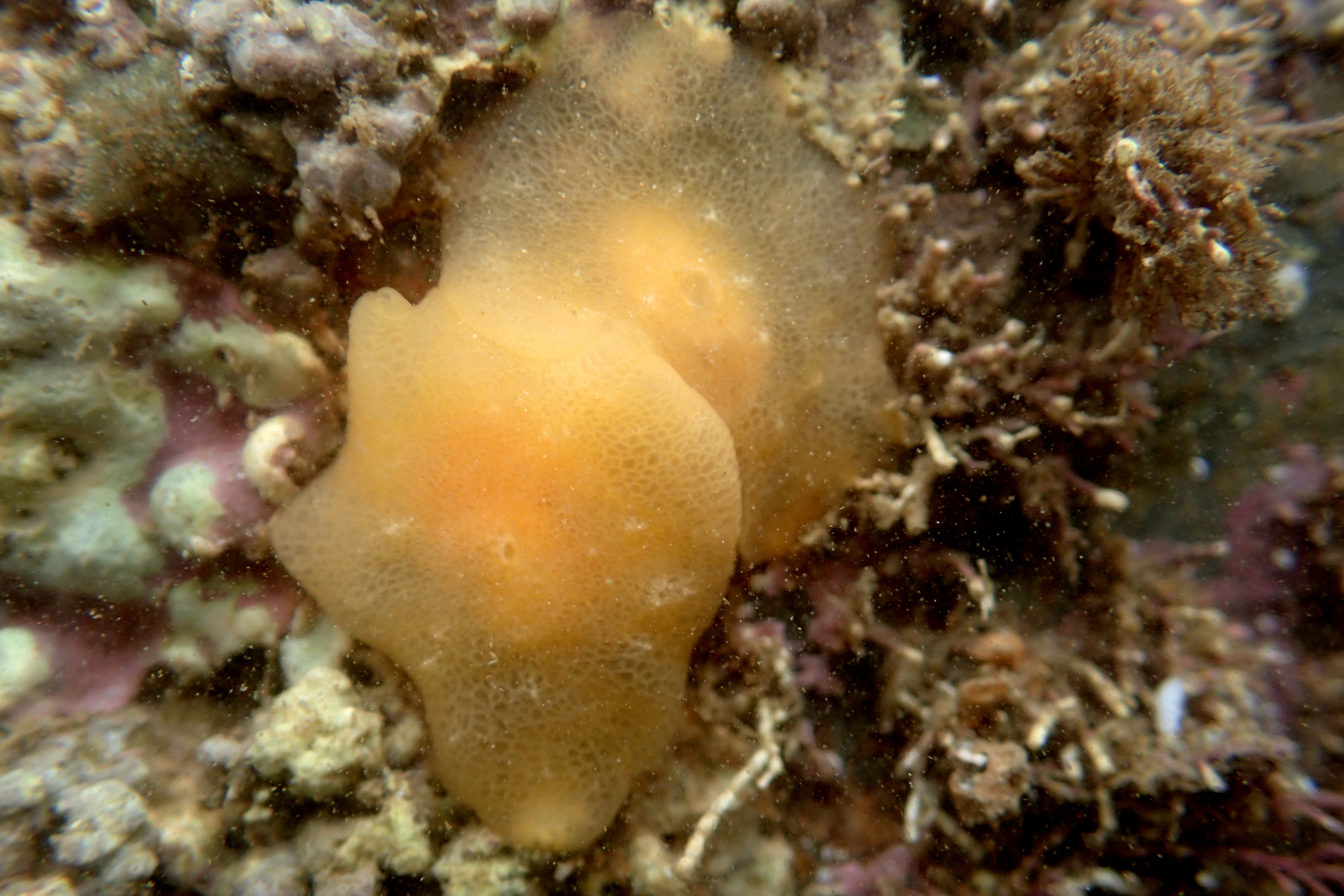
    Nearby, Other Half (who had wisely decided the only way to get my attention on his birthday was to join me in the rock pools) found this mystery blob. It was around 10cm long and seemingly attached to the seaweed.

    The mystery blob
    The mystery blob

    It looked vaguely familiar but I didn’t have a clue why. The only white jelly-like blob as big as this that I could think of was squid eggs, which normally come in big clusters, but it looked all wrong.

    With the miracle of modern technology, I soon had the answer. The amazing Seasearch Identifications Group on Facebook are poised at their keyboards any time of day of night, ready to identify anything that’s found, no matter how obscure.

    Within minutes of posting, I had the answer. Mystery blob was a syphon from a large bivalve mollusc, probably a razor clam or otter shell.

    Solved - this is the syphon of a large clam shell, e.g. Razor shell.
    Solved – this is the syphon of a large clam shell, e.g. Razor shell.

    Quite what it was doing tangled in seaweed halfway up a rock, I’ll never know, but as soon as I saw the answer I knew why it had looked so familiar. Huge thanks to David Fenwick who runs the brilliant Aphotomarine species identification site, which is also well worth a visit any time you’re struggling to identify something.

    Another great little crustacean find was this St Piran’s Crab.

    St Piran's Hermit Crab (Clibanarius erythropus) showing its equal-sized claws
    St Piran’s Hermit Crab (Clibanarius erythropus) showing its equal-sized claws

    Since they reappeared in Cornwall a couple of years back, they’ve been popping up everywhere. I only saw one, but with plenty of empty shells around, I’m sure there must have been others.

    St Piran's Hermit crab on the move with its black and white eyes sticking out.
    St Piran’s Hermit crab on the move with its black and white eyes sticking out.

    The tide was falling beautifully and I could see more pools emerging. I had to accept, though, that if I wanted my family to ever speak to me again, I’d better tear myself away from the rock pools for the birthday lunch.

    Bream Cove, like so many others on this wonderful stretch of coastline between Falmouth and the Helford, is firmly on my return visit list. There aren’t any facilities at the beach, but you can always pop up to the Meudon Hotel for a luxury cream tea!

    I’ll leave you with a few more photos from my sneaky rockpooling excursion.

    A striped venus shell (Chamelea gallina). There were lots of these living in the sand.
    A striped venus shell (Chamelea gallina). There were lots of these living in the sand.
    The moult of a Hairy crab (Pilumnus hirtellus)
    Hairy crab (Pilumnus hirtellus)
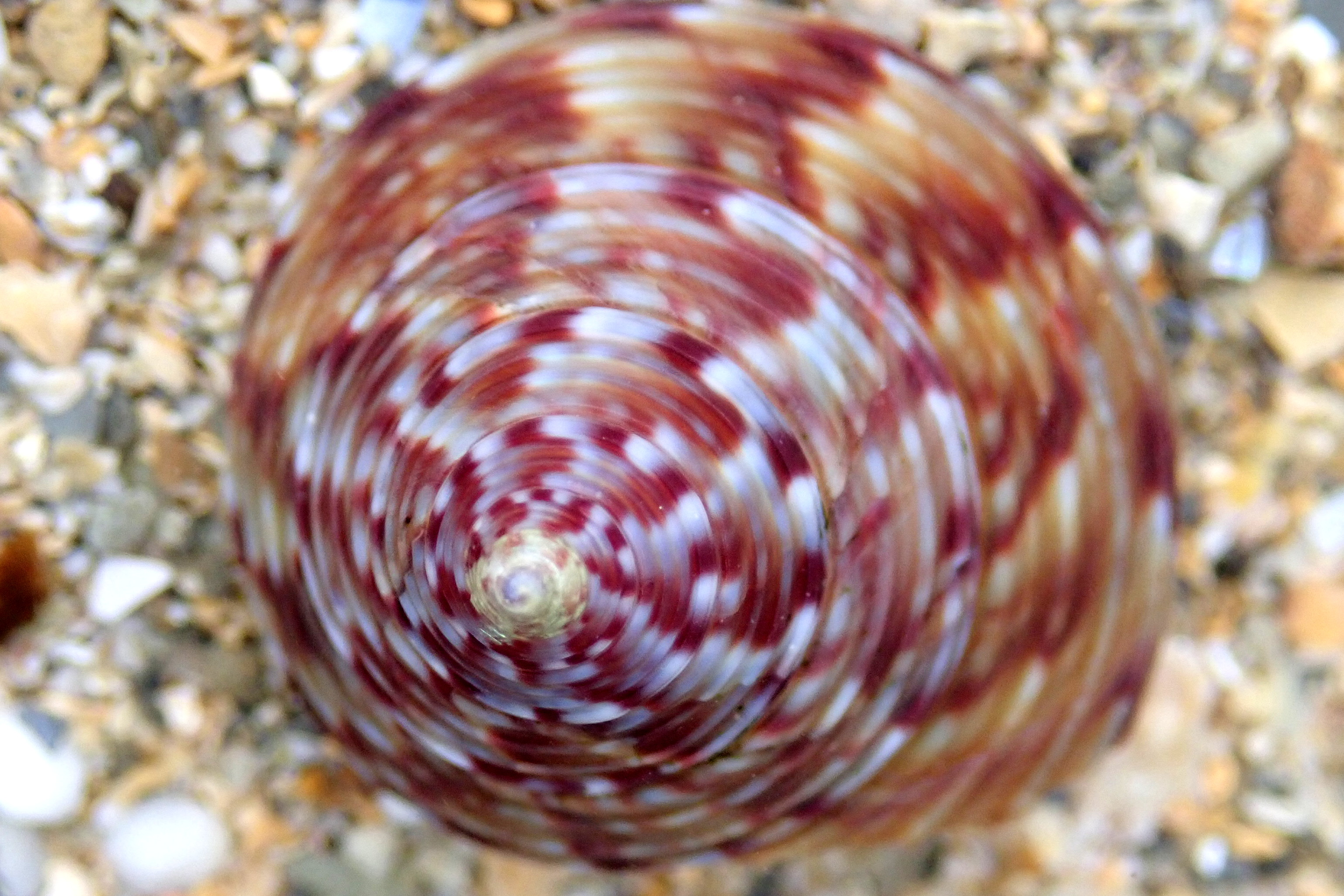
    Painted topshell from above - the patterns make my eyes go funny!
    Painted topshell from above – the patterns make my eyes go funny!
    Dahlia anemone with tentacles partly retracted - the column is sticky so is covered with fragments of shell.
    Dahlia anemone with tentacles partly retracted – the column is sticky so is covered with fragments of shell.
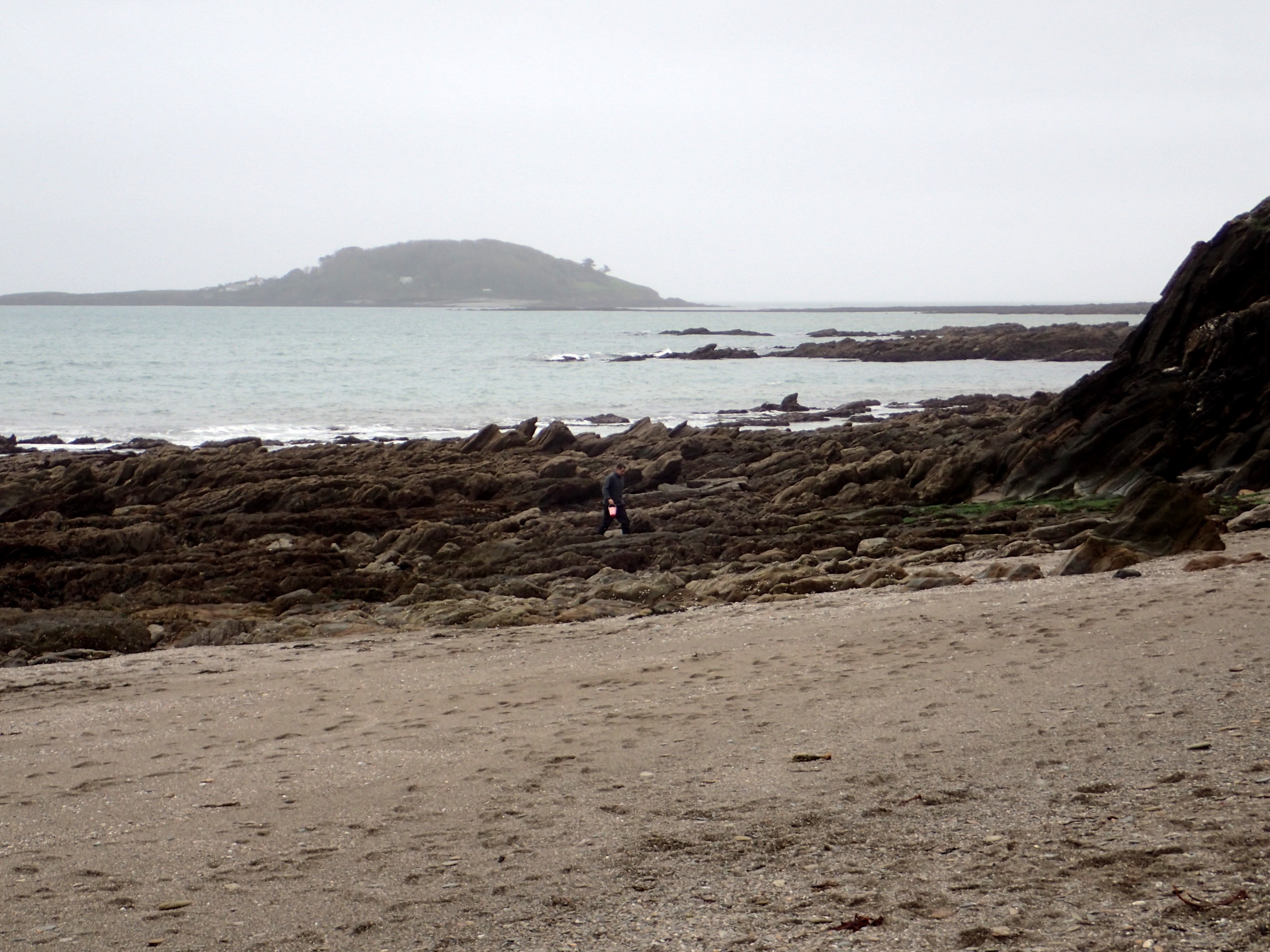
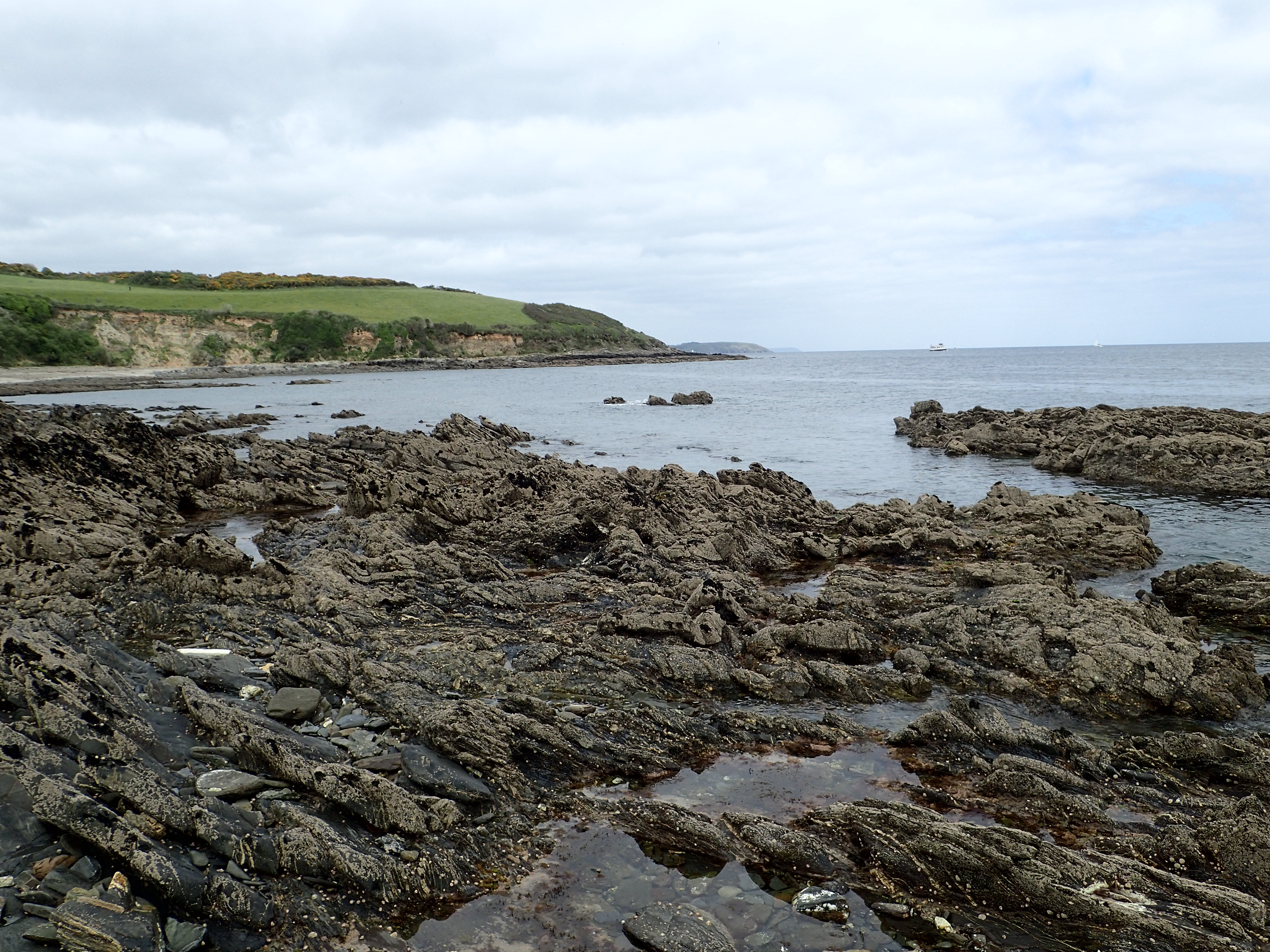
    Bream Cove looking towards Falmouth.
    An overcast Bream Cove looking towards Falmouth.
  • Cross-Border Rockpooling with the Porcupine Marine Natural History Society

    Cross-Border Rockpooling with the Porcupine Marine Natural History Society

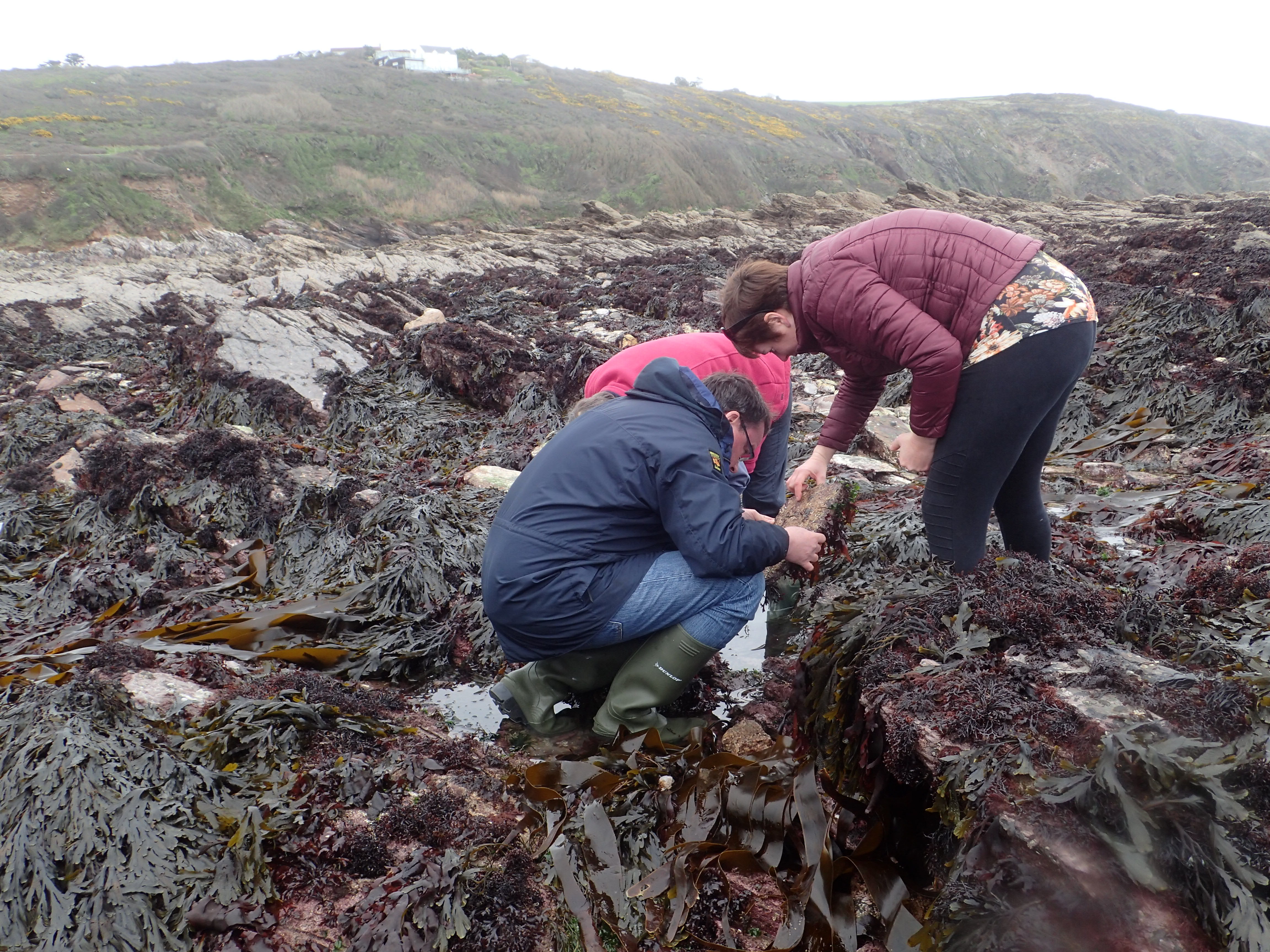
    It sometimes feels like I don’t get out much – either socially or out of the county (Not that it’s a hardship to be in Cornwall!). So, I could barely contain my excitement at having the opportunity to attend the Porcupine Marine Natural History Society Conference in Plymouth. I packed my passport and set forth across the Tamar.

    Not only did I mingle with the most amazing bunch of fellow marine wildlife obsessives and hear their latest findings, but the third day of the conference was spent rockpooling at Wembury in South Devon.


    A prickle of Porcupines at work
    A prickle of Porcupines at work at Wembury, Devon

    While the environment at Wembury is similar to my home patch in South East Cornwall, a major difference is that Wembury has a marine centre, staffed by lovely people from the Devon Wildlife Trust. The centre promotes marine conservation and runs all sorts of public and educational events. It also provided a handy indoor base to set up some microscopes and a refreshment station. Luxury after my recent all-weather forays! (more…)
  • The Stalked Jellyfish World Record (for Portwrinkle)

    The Stalked Jellyfish World Record (for Portwrinkle)

    “So is this a world record?” Cornish Rock Pools Junior has just found 26 stalked jellyfish and is feeling rightly proud of himself.

    “It’s a record for Portwrinkle,” I tell him. “They’ve never been found here before.”

    “But is it a world record?” he insists.

    I take a moment to consider this. Only a moment, because my hands are frozen from holding my camera in the water and another snow flurry is starting.

    “Yes,” I say. “You now have the world record for finding stalked jellyfish in Portwrinkle.”

    From the leaping and cheering, I’d guess he’s satisfied with that.

    Cornish Rock Pools Junior searches for stalked jellyfish at Portwrinkle
    Cornish Rock Pools Junior searches for stalked jellyfish at Portwrinkle

    (more…)

  • A Shell Collecting Bonanza on Looe Beach

    A Shell Collecting Bonanza on Looe Beach

    After a week of ear-numbing northerlies, the low January sunshine is at last winning through. Junior sets to work with his bucket and spade, attempting to create a sand fort that can be seen from space while I take a stroll at the water’s edge.

    Looe Beach - a herring gull is also checking out the pile of shells at the water's edge
    Looe Beach – a herring gull is also checking out the pile of shells at the water’s edge

    The stretch of sand that forms Looe beach is ideal for summer holidaymakers to lounge on, but generally offers little to the rockpooler, unlike the surrounding shores. Today is different; probably due to a combination of large tides and strong winds from an unusual direction.
    Glistening mounds of shells are heaped the length of the shore, and are being nudged onwards by the incoming tide. They crack under my feet despite my efforts not to trample them. 

    Shells on Looe beach
    Shells on Looe beach

    It’s not unusual to see the odd limpet or a few mussel shells here – the harbour is carpeted with them – but this haul of shells is not just large, it’s more diverse than usual. There’s such a kaleidoscope of blues, whites, oranges and pinks that I have to get in close to focus on individual shells. (more…)

  • Fun and fish at the Lundy Bay Bioblitz

    Fun and fish at the Lundy Bay Bioblitz

    Bioblitzes have become a regular thing these last few years and I love them. These time-limited surveys of every living thing in an area are a fantastic way to bring experts and the public together, so I’m excited to join the Lundy Bay 24 hour bioblitz organised by the National Trust.

    Getting started on the beach with at the Lundy Bay bioblitz
    Getting started on the beach with at the Lundy Bay bioblitz

    When I first walk down on the first afternoon to do a pre-survey recce there’s no beach at all. The tide is high and the waves are exploding against the rocks sending up a shower of spray that delights Cornish Rock Pools Junior. Fortunately, some intrepid friends from the Marine Biological Association and Coastwise North Devon arrived early and collected a lovely hydroid medusa (like a tiny jellyfish) and lots of moon jellies – so it seems likely there will be interesting things to find when the tide goes back out.

    One of many moon jellyfish washed up by the strong swell. This species is harmless.
    One of many moon jellyfish washed up by the strong swell. This species is harmless.

    After an exciting evening and early morning of mammal surveying with Junior, I finally get to see the beach at low tide. It’s an exposed shore with sheer rocks and golden sand, which looks wonderful, but is a tricky environment to find creatures. Still, with the number of people we have taking part and the combined resources of lots of different organisations including kick nets and fish traps, we’re sure to find something.

    I spend most my time near the event flags, helping people to identify their finds. Everyone is fascinated by the sea hare. These common sea slugs are easily recognised by the long tentacle ‘ears’ on their heads. Up close, you can see a leopard-like pattern on their bodies. If you upset them (which we don’t) they can squirt out purple ink to confuse predators.

    A small sea hare explores my tray.
    A small sea hare explores my tray.

    The find of the day is a creature none of us expect to find tangled in a discarded fishing net. This slow worm (a legless lizard) probably came down to the beach to hunt at low tide and became caught in the ghost net. It has a lucky escape and is released safely.

    This slow worm was found tangled in discarded fishing gear.
    This slow worm was found tangled in discarded fishing gear.

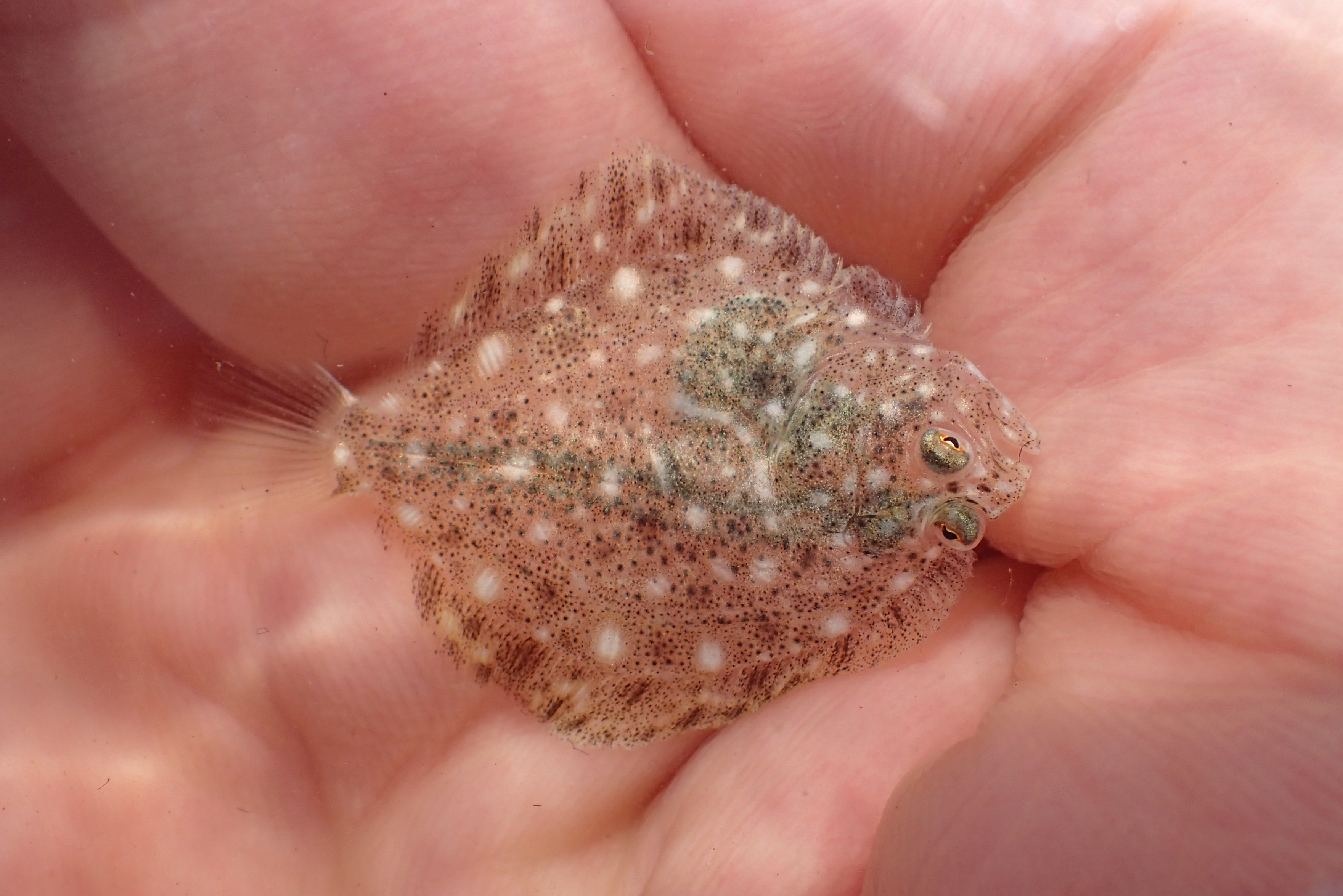
    The nets bring up lots of tiny baby flatfish that were hiding in the sand in the shallows. Most are probably plaice and this one looks like a baby turbot – with a much wider body-shape. I’ve never seen one this small before, it swims onto my hand and rests there, looking around with bulging eyes, opening its lop-sided mouth a little. If it makes it to adulthood it may eventually weigh 10 kilos or more, but it has a way to go yet.

    A tiny young turbot swims into my hand.
    A tiny young turbot swims into my hand.

     Everyone loves a cheeky tompot blenny. There bold fish are unmistakeable with their fat lips, colourful eyes and television aerial style tentacles on their heads.

    A tompot blenny giving its typical toothy smile.
    A tompot blenny giving its typical toothy smile.

    Other highlights include toothed crabs (Primela denticulate), celtic sea slugs, which are present in huge numbers on some large rocks around the point, and a lobster lurking at the back of a deep overhang cave.

    Built like miniature tanks, the Celtic sea slugs cover the rocks in places.
    Built like miniature tanks, the Celtic sea slugs cover the rocks in places.

    After the strong winds and rain of the previous day, the sunshine takes us by surprise. Conditions are perfect and the turnout is good, but before long the tide is racing back in. By the time we make it back to base, the short, intense Bioblitz is coming to an end and the stands are being packed away. Soon this will be a remote empty field again, but I’ll be back sometime soon to explore this wonderful bay some more.
    If you would like to join a Bioblitz there’s another one coming up in North Devon on 17th September at Croyde with the fabulous Coastwise North Devon team – see http://www.coastwisenorthdevon.org.uk/news/summerbioblitz-time.html

  • Kynance Cove: A rock pooling challenge

    Kynance Cove: A rock pooling challenge

    There are many fabulous rock pooling beaches around Cornwall and this isn’t one of them. The smooth serpentinite rocks of Kynance Cove on the Lizard peninsula are colourful and create breathtaking scenery, but they’re mostly devoid of places for creatures to shelter. Realistically there’s not much here, but it’s one of Cornwall’s loveliest places and experience tells me there’s always something if I look hard enough.

    It's easy to see the snake-skin texture that gives serpentine rock its name.
    It’s easy to see the snakeskin texture that gives serpentine rock its name.

    One thing this beach does have is caves. Junior strides ahead of me, clutching a geological hammer and chisel, shining his torch along the smooth, damp walls.

    Cornish rock pools junior explores the serpentinite caves
    Cornish rock pools junior explores the serpentinite caves

    He’s on a mission to explore every centimetre of these rare rocks, forced up millions of years ago from deep under the oceans, exposing the upper layer of Earth’s mantle. While Junior hammers away at history, cave-dwelling periwinkles not much bigger than grape pips are undertaking their own explorations.

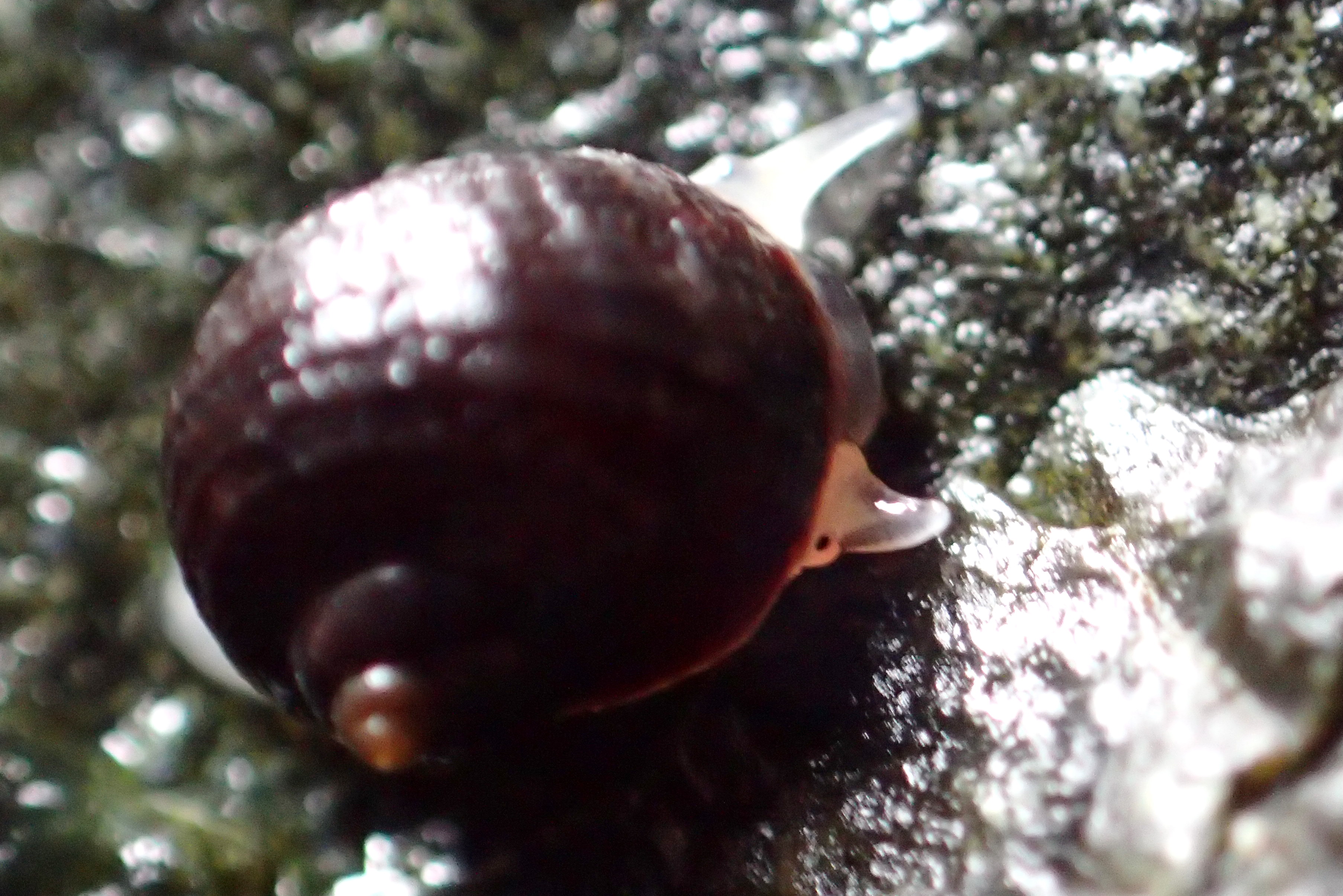
    This tiny periwinkle species lives on the upper shore in dark and damp places such as this cave.
    This tiny periwinkle species lives on the upper shore in dark and damp places such as this cave.

    A steady swell breaks against the island stacks and scattered rocks of the bay. Barnacles cling to imperfections and overhangs, joined by beadlet anemones and black-footed limpets.

    A beadlet anemone next to dog whelk eggs. Barnacles and limpets also cling on to this small overhang in the smooth serpentinite.
    A beadlet anemone next to dog whelk eggs. Barnacles and limpets also cling on to this small overhang in the smooth serpentinite.

    I watch a limpet slamming down its shell on a barnacle’s feeding arms and wonder if it’s if it’s after a more substantial meal than its usual fare of micro-algae?

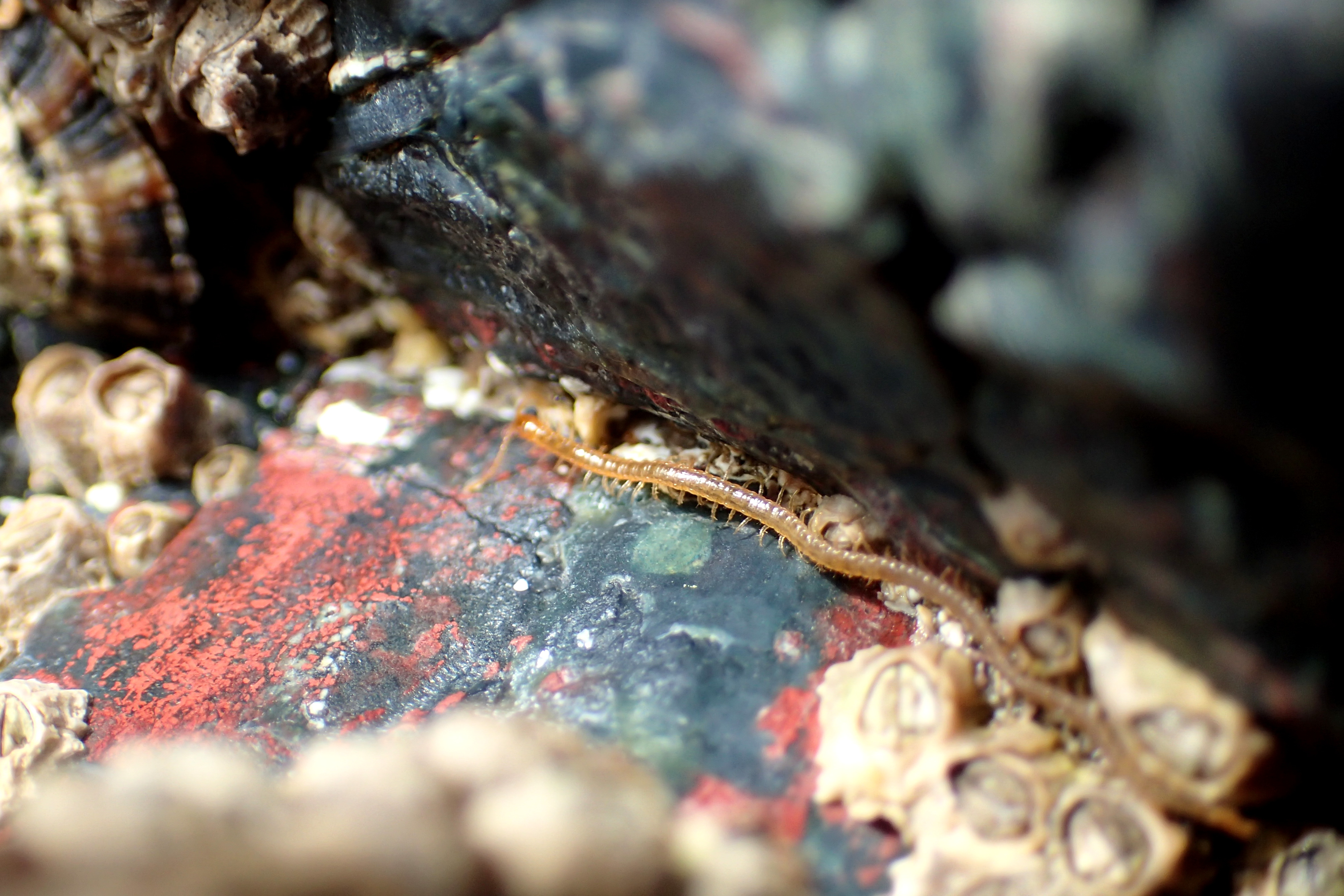
    Sea slaters scuttle among the barnacles together with occasional flies and even a centipede. I assume it has journeyed down from the top of the grassy island to forage at low tide.

    A centipede visiting the shore
    A centipede visiting the shore

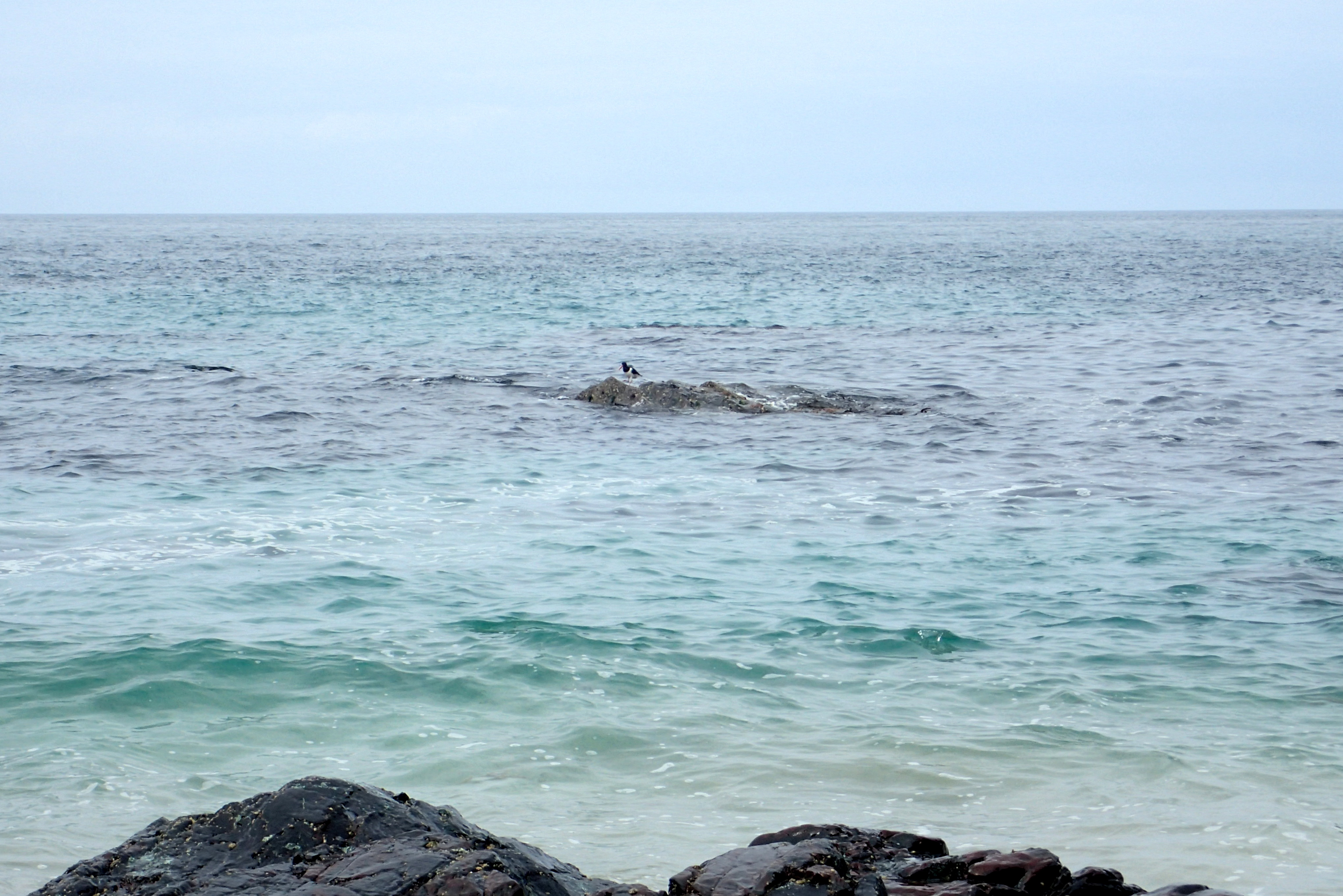
    An oystercatcher watches me cross the beach, preening itself with its orange chopstick bill. It watches as I climb a shelving part of the lower cliffs where several deep bowls have been eroded from the rock.

    A lone oystercatcher on a rock at Kynance Cove.
    A lone oystercatcher on a rock at Kynance Cove.

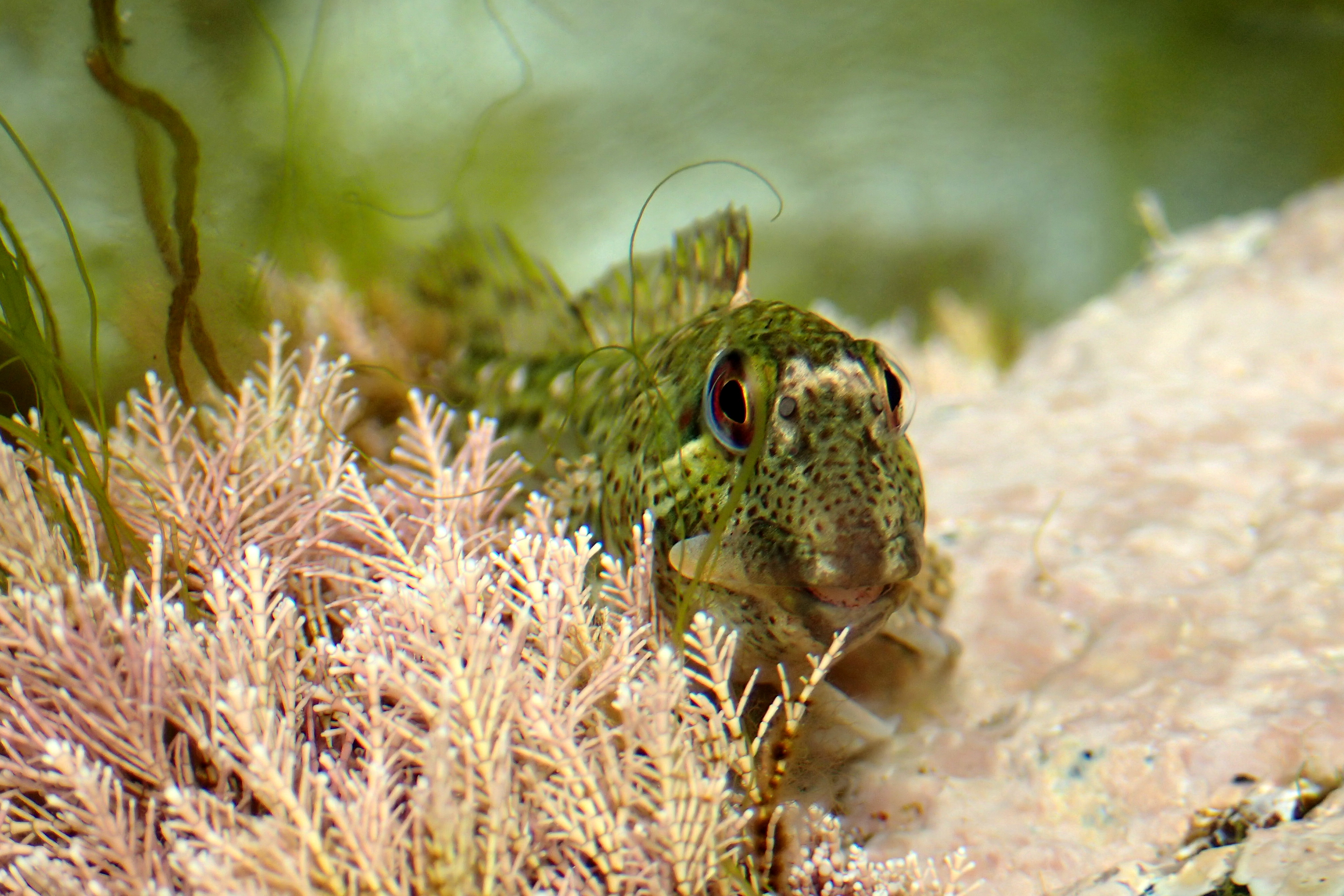
    As I approach the pools, a gaggle of small fish jostles against each other before darting away below a ledge. I take up position beside the pool and wait. Sure enough, after a few minutes, a shanny’s head pops over the ledge, propping itself on its clawed pectoral fins to get a better look. Others soon join it as they return to their basking positions at the shallow edges of the pool.

    A grinning shanny propped on its pectoral fins watches me from a rock pool.
    ‘Say cheese!’ A grinning shanny propped on its pectoral fins watches me from a rock pool.

    I lower my camera bit by bit until it’s almost touching the surface of the water. The fearless shanny stays put. After a few attempts I manage to capture one of my favourite things about these common little rockpool fish: their extraordinary chameleon-like eyes which can swivel independently in all directions.

    Being able to do this must be a huge advantage when looking out for prey and predators.

    I spot a Montagu’s blenny in the pool, easily distinguished from its larger cousins by its radio mast style headgear. It’s too shy to have its photo taken and I’m called away to help with  Junior’s mining exploits, but it’s been a rewarding morning. It shows how much is there if you look.

    Barnacles on a beautiful piece of banded serpentinite.
    Barnacles on a beautiful piece of banded serpentinite.
  • Scarlet and Gold Cup Corals -A Treasure Quest

    Scarlet and Gold Cup Corals -A Treasure Quest

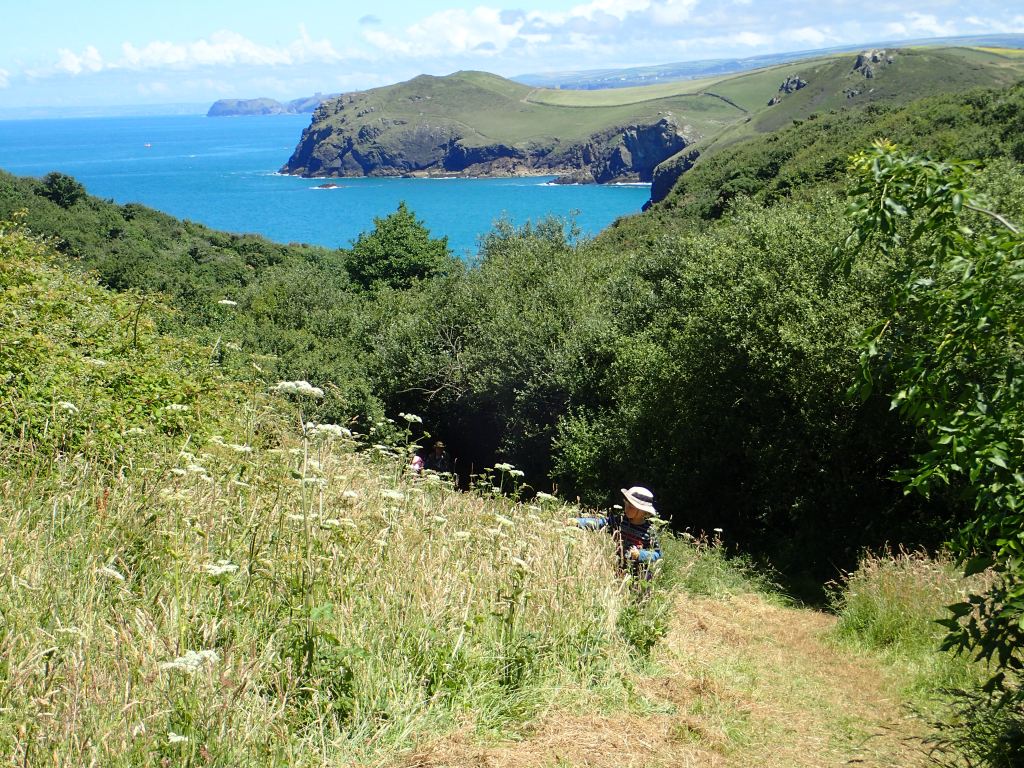
    The sea, viewed from the top of the steep valley, is a distant pool of blue decorated with a scattering of rocky islets. Here ‘my people’ (as my other half puts it) gather, unperturbed by the intense hail shower that sweeps over us. We pull on our wellies and waterproofs in the shelter of our car boots until the storm slinks away, uncovering a cleansed sky.

    A few years back I hosted a Coastwise North Devon field trip to the south Cornish coast. Today I’ve been invited back for a north Cornwall foray with this dedicated group of marine naturalists. There could be no more serious band of rockpoolers. Should there be any unusual species on this shore, they are about to be discovered.

    The walk down the valley to Porth Mear beach never disappoints, even in the muddy aftermath of a hail storm. Our party is accompanied by the trills of the first skylarks of summer and the first swallows dancing over the marshes.

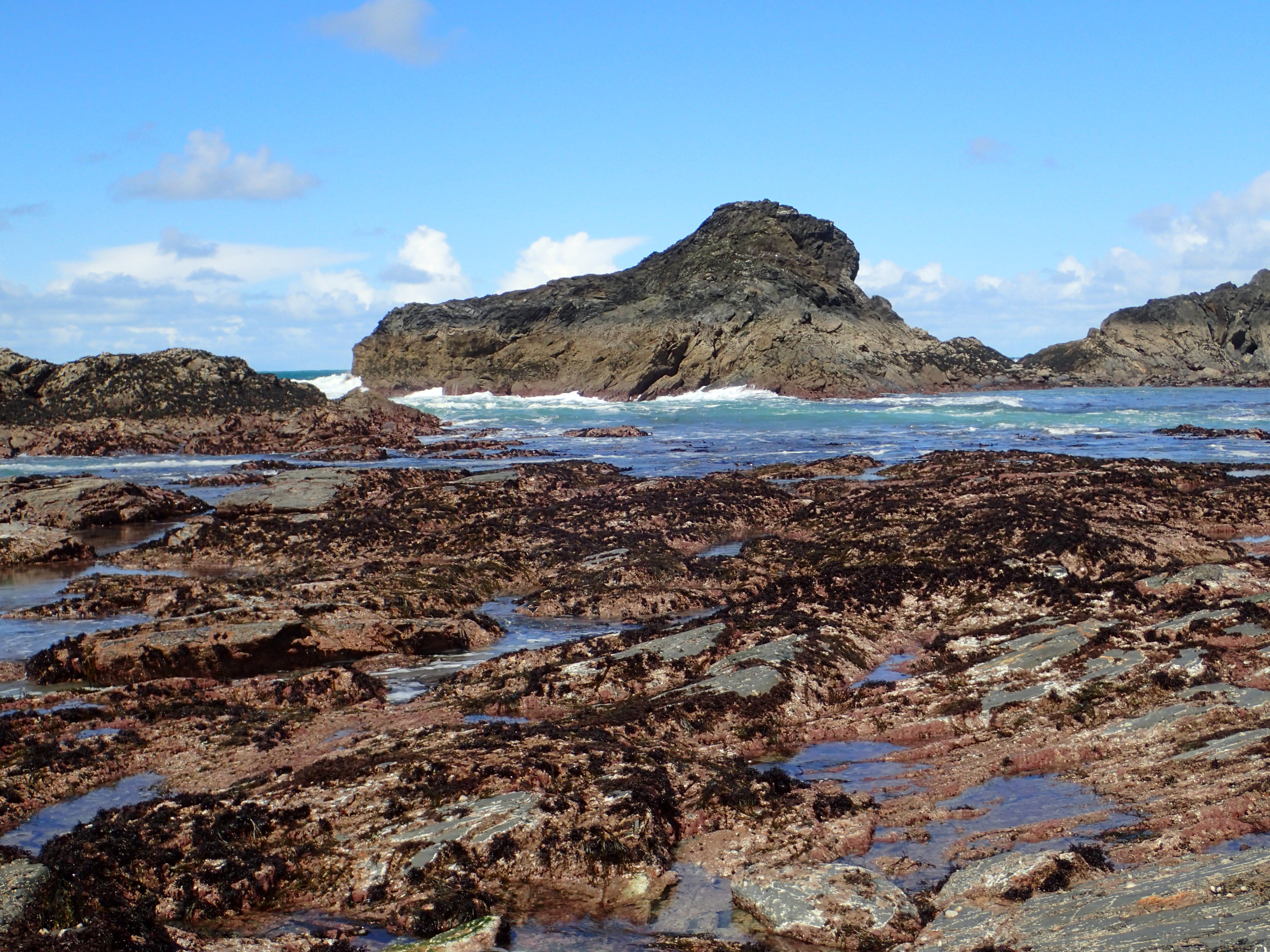
    Porth Mear beach at low tide.
    Porth Mear beach at low tide.

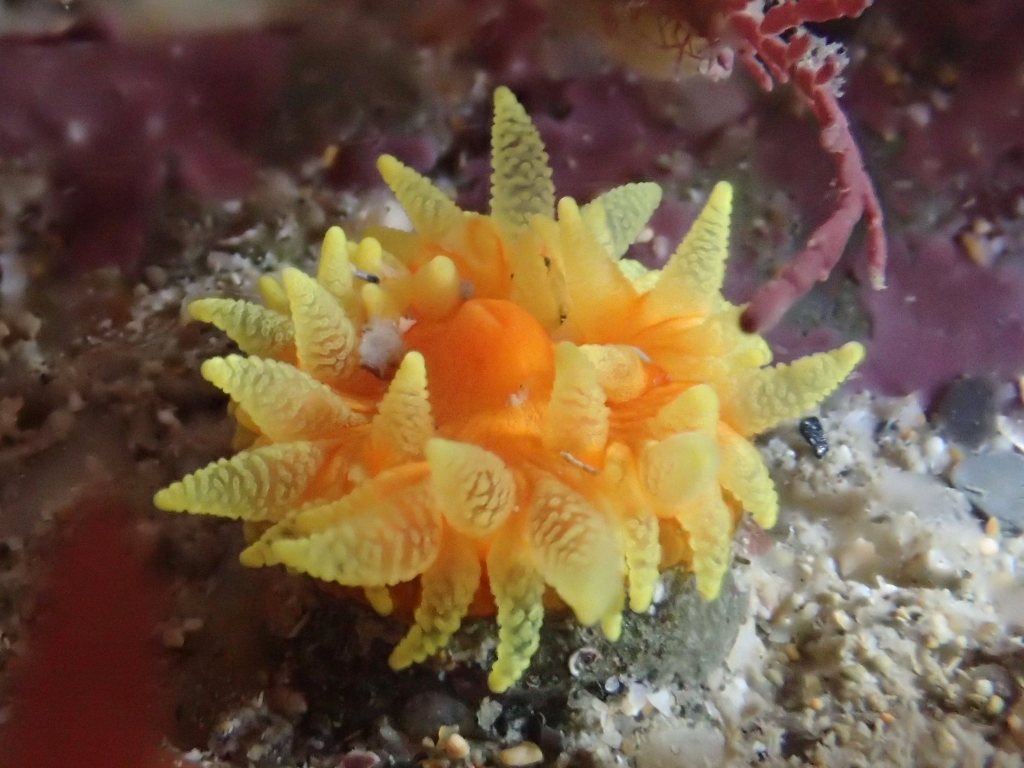
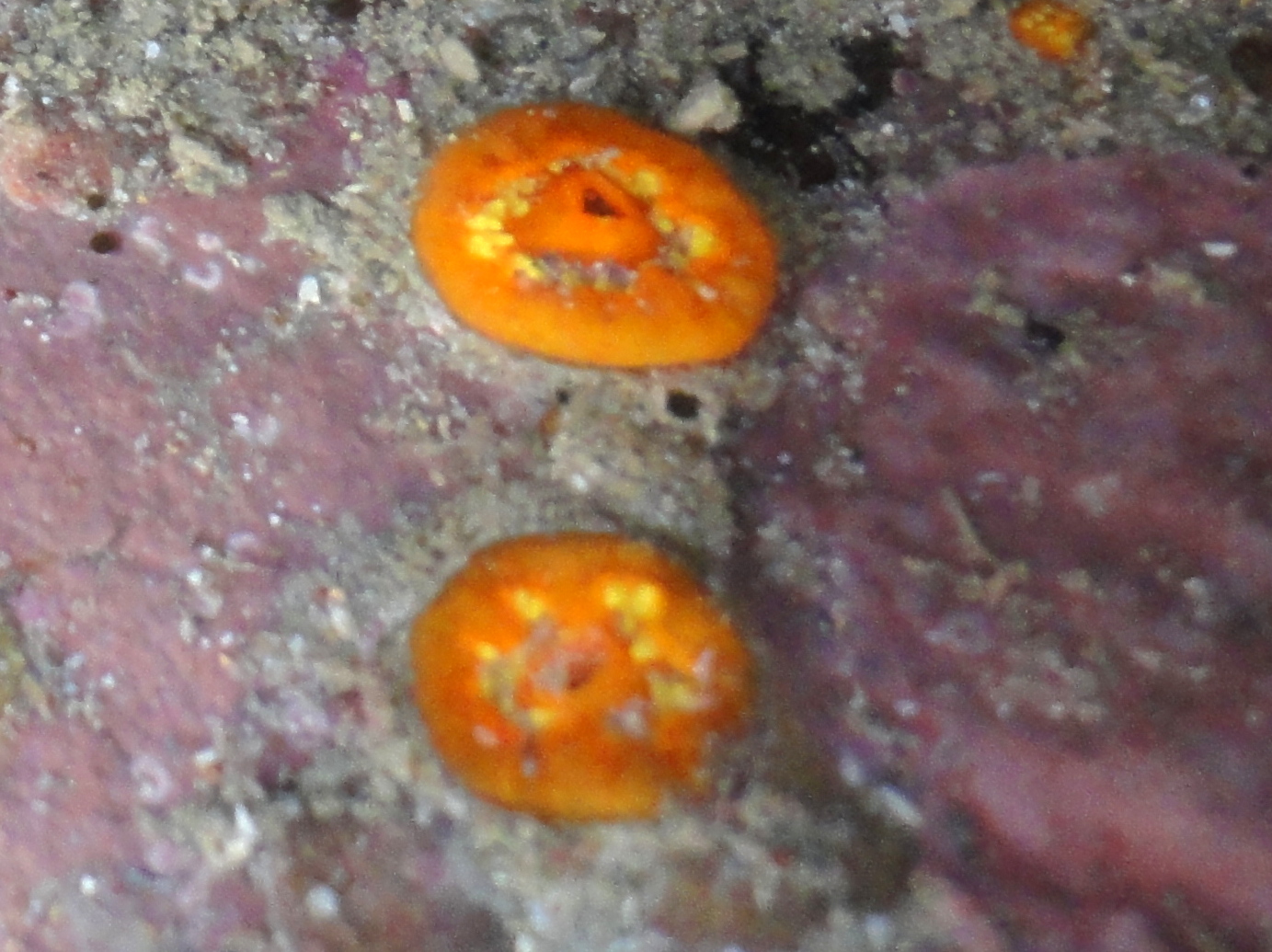
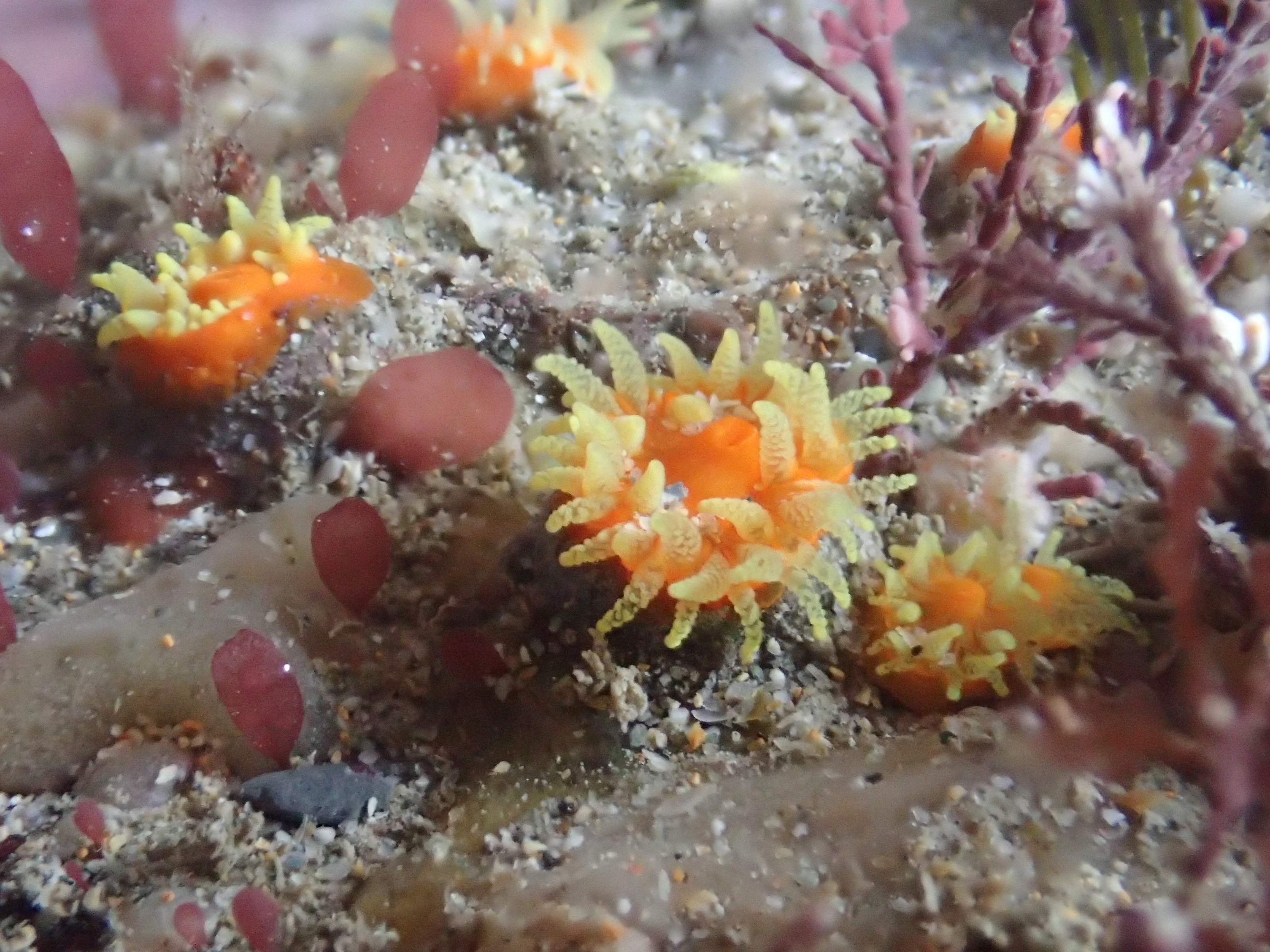
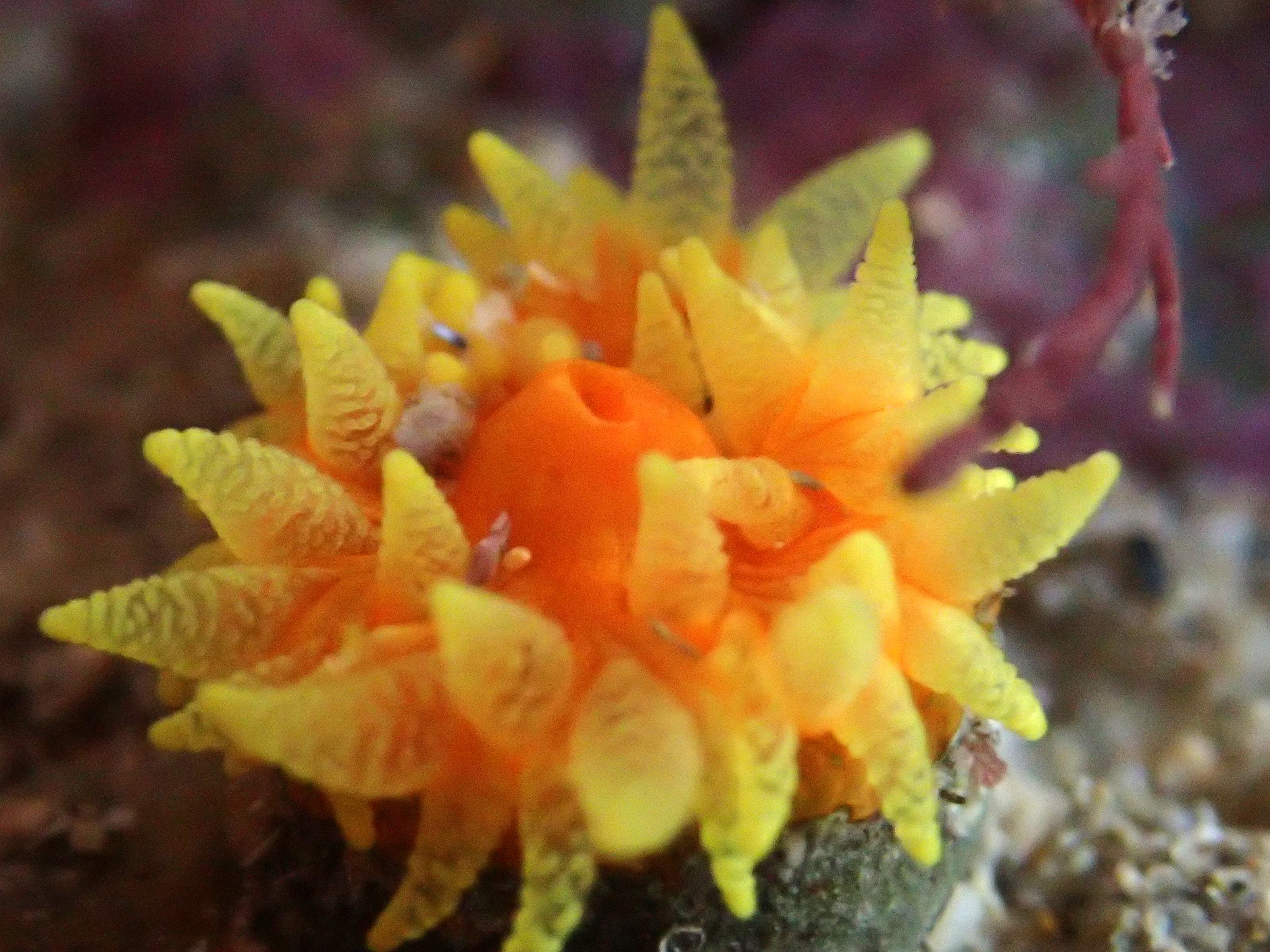
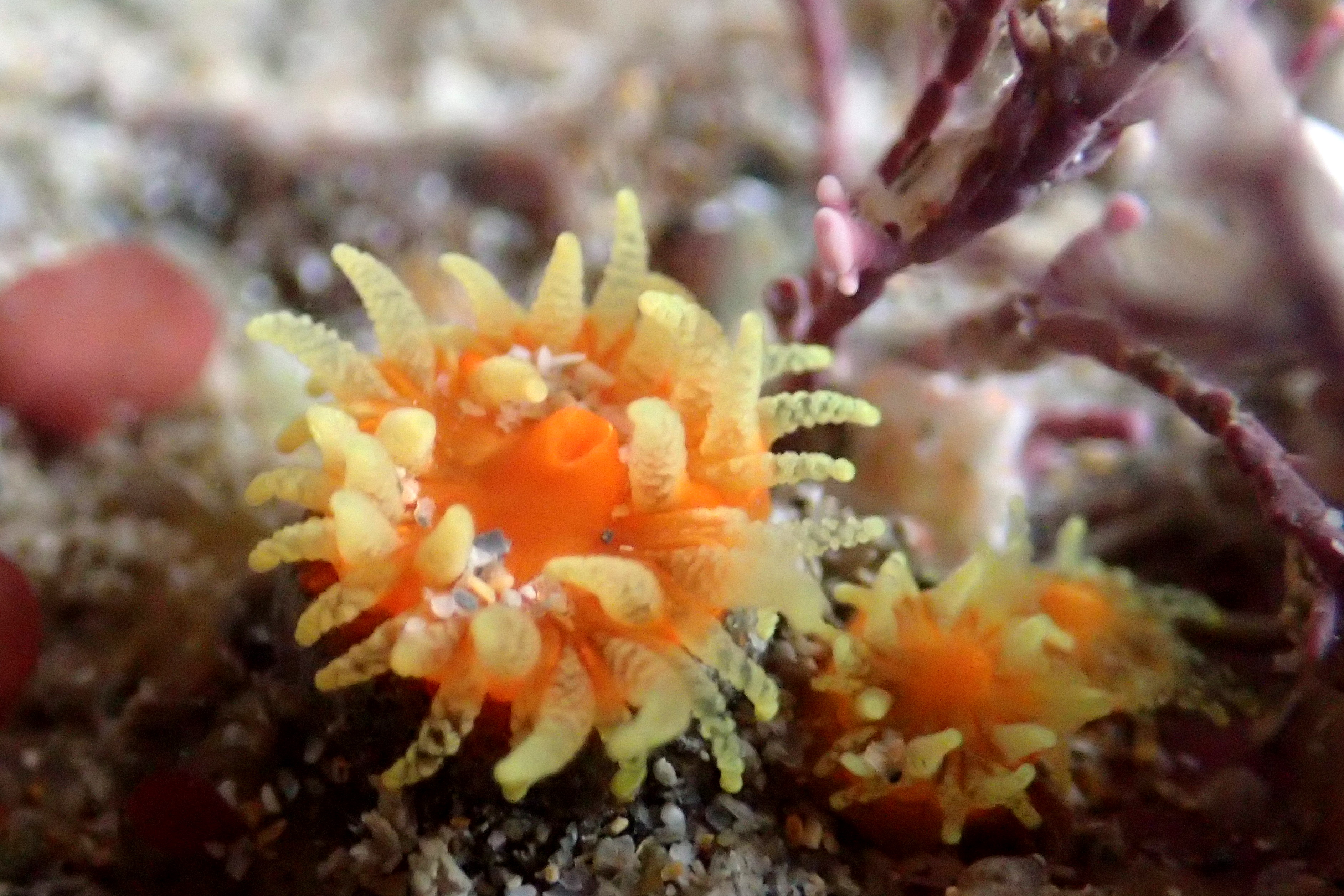
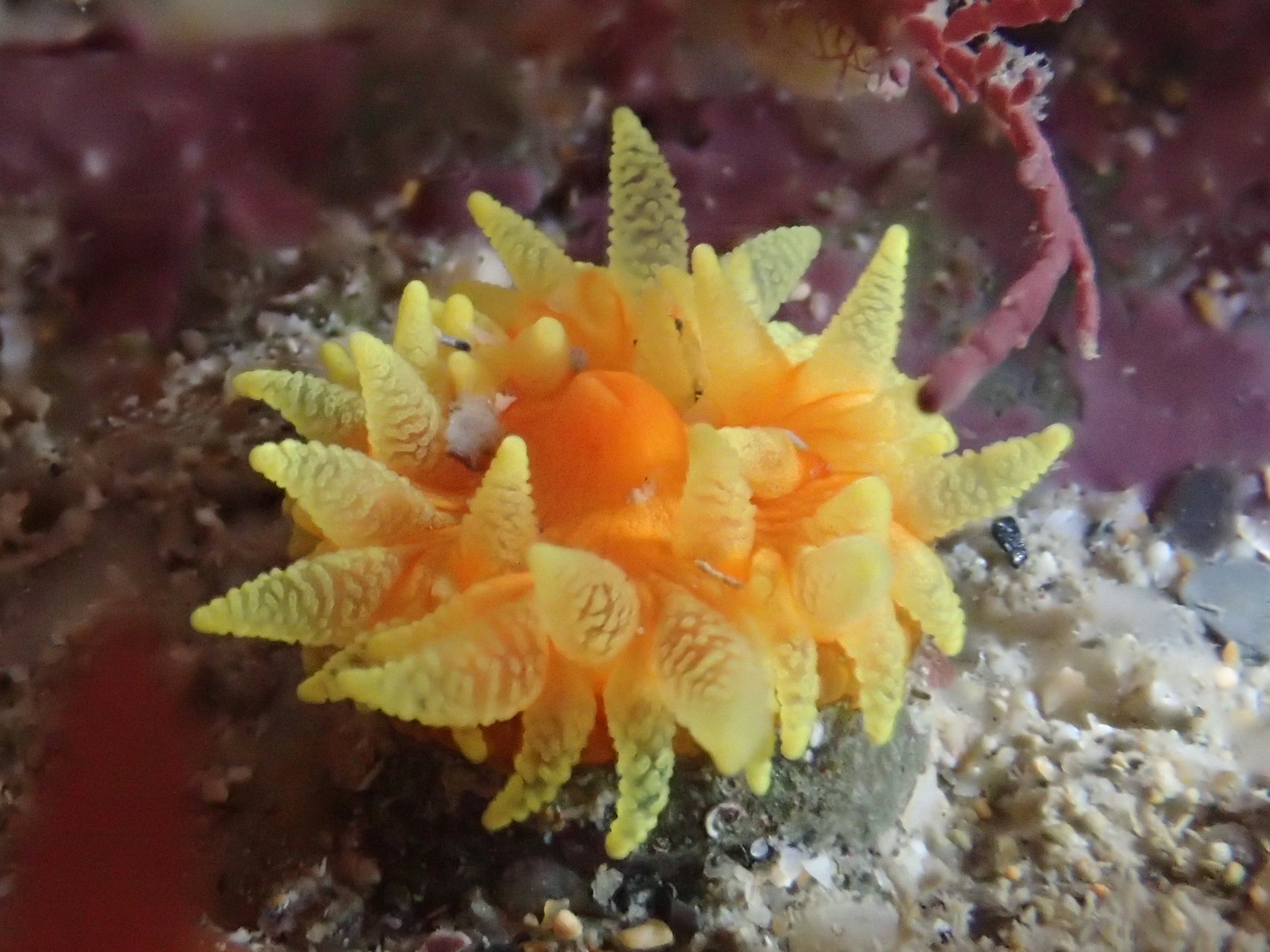
    My main objective today is to photograph the corals. Like so much of our colourful marine life, the scarlet and gold cup coral (Balanophyllia regia) is barely the size of my fingernail and prefers to live in the most awkward spots possible.

    When I last found corals here, I crawled into a damp overhang on my belly, discovered the space was too small for my camera’s waterproof casing and removed it so I could hold my camera at arm’s length into the dripping cave (it died soon afterwards). The resulting photos showed blurred bloblets. The colours were lovely but beyond that you had to use your imagination. I suspect my new camera can do better.

    Scarlet and gold star coral
    My very best blurred bloblet photos from last year…. can I do better?

    The water is slow to run out today. A swell is building in advance of a storm and waves are rushing into the gullies that I was hoping to explore; the ones where I last saw the cup corals. Despite that, it’s one of the best tides of the year, and with so many expert eyes on the case it’s not long before a shout goes up and people gather round. 

    In a shallow pool at the back of a rocky grotto are dozens of scarlet and gold cup corals, spots of colour as bright as a sunset. Each one has a central disc of fiery orange fringed in rays of saffron yellow tentacles. I can only see this by lying down and pulling myself over the rocks until my head is wedged in the overhang  so deeply that salt water dribbles down my forehead. I have a small head, small enough to wear my child’s bike helmet; just occasionally that’s useful.

    Scarlet and gold cup corals growing all along the base of the overhang.
    Scarlet and gold cup corals growing all along the base of the overhang.

    This time my camera fits easily through the slit in the rocks and after a fair amount of wriggling I find a way to position it in the water and focus. A clear shot of the cup coral, translucent spotted tentacles and all, appears on my screen. I bang my head on the rock in my excitement, then take fifty more photos – just in case.

    Scarlet and gold cup coral at Porth Mear
    Scarlet and gold cup coral at Porth Mear

    I could spend all day here, except that the spray is already breaking over my back from the waves pounding the seaward rocks. Soon the tide will swallow this gully once more. The cup corals need these fierce currents to bring them food, but I wouldn’t last two minutes in them.

    More scarlet and gold cup corals
    More scarlet and gold cup corals

    We carry on our explorations, making more discoveries and enjoying the sunshine, so unexpected after the morning’s hail.

    There may be places where the sea shows its treasures more willingly, where large, colourful wildlife swims all around you without having to clamber over slippery rocks, lift boulders or traipse back up a steep hill at the end of the day. But I prefer this. Just as adventure stories would be dull if the quest were over on page one, finding marine treasure would be less fulfilling if you didn’t have to work at it; or so I tell myself.

    Finding and managing a decent photo of a scarlet and gold cup coral has taken me nearly forty years. Even now, I’ve only managed it thanks to having ‘my people’ around me, sharing my fascination with these creatures. I couldn’t ask for more.

    Scarlet and gold cup coral in a Cornish rock pool
    Scarlet and gold cup coral in a Cornish rock pool
  • 30 Days Wild: Cornish Rock Pool Junior’s First Day

    30 Days Wild: Cornish Rock Pool Junior’s First Day

    Cornish Rock Pools Junior has signed up for the Wildlife Trusts’ 30 Days Wild project.  Here’s a video of his first challenge – a walk to Millendreath beach in a raging gale.

    He loved it and wasn’t at all fazed by the rain and wind. He scored 100% in the online ‘test of wildness’ which was no surprise to anyone.

    If you haven’t already done so, get involved and commit to doing something wild every day in June.

  • Baffling jellies, a little shark and a possible giant – A day in the Cornish Rock Pools

    Baffling jellies, a little shark and a possible giant – A day in the Cornish Rock Pools

    Sometimes everything’s just meant to be. This is one of those times.

    It’s a random get-together; my Twitter friend Nanny Pat from Bosinver Farm Cottages has suggested we meet with her family and friends to explore a special beach that her son loves. Sounds good to me!

    The view towards Falmouth, Cornish Rock Pools
    The view towards Falmouth

    The sun is struggling through the clouds as we all descend from Mawnan towards the glittering shore. We are nine adults, six children, one dog, some huge buckets and a promisingly enormous picnic bag that Nanny Pat has packed for us.

    We waste no time and strike out across the slippery rocks. These are serious rock poolers. I am, as other half puts it, “among my people”.

    Just one more rock... exploring the Cornish rock pools
    Just one more rock… exploring the Cornish rock pools

    We set to and the finds flood in. There are fish eggs everywhere, some are just starting to develop like these clingfish eggs.

    Cornish clingfish eggs are a distinctive yellow colour
    Cornish clingfish eggs are a distinctive yellow colour

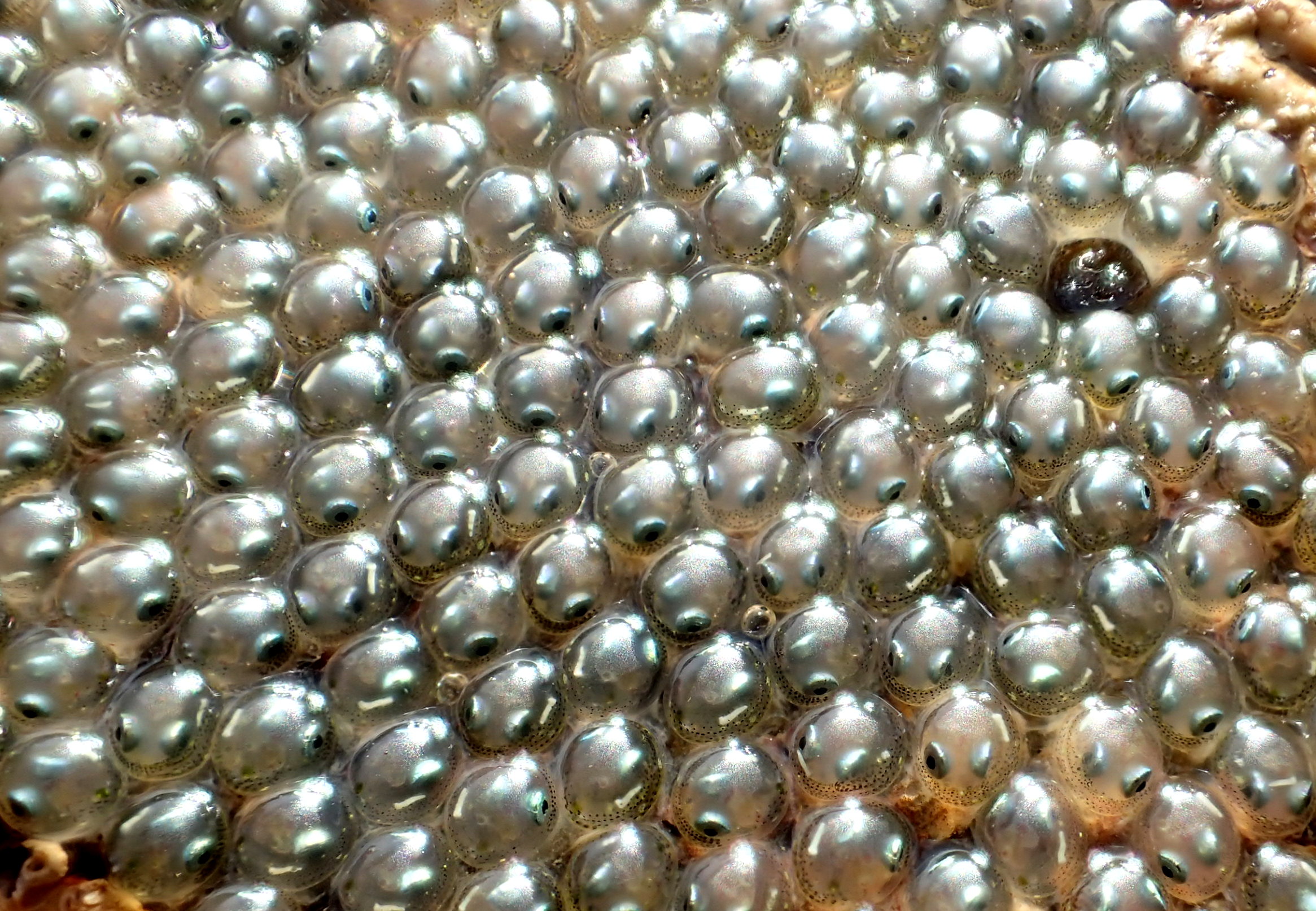
    Others are nearly ready to swim away, eyes jammed against their transparent egg cases, tails squished around them.

    Ever feel like you're being watched? Fish eggs in a rock pool.
    Ever feel like you’re being watched? Fish eggs in a rock pool.

    Best of all, I’m baffled by some of the creatures we find.

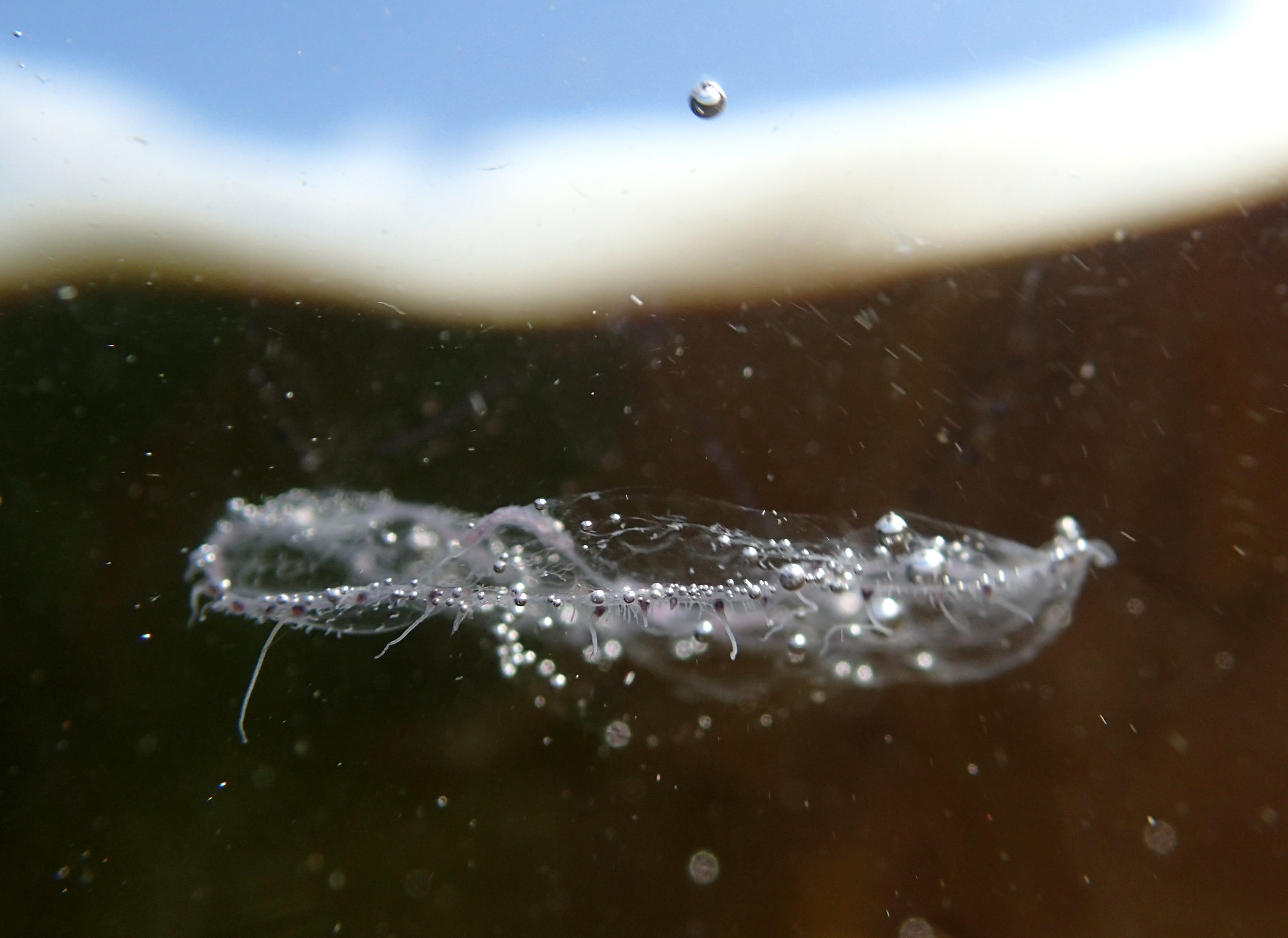
    The medusa (jelly) stage of a hydroid or sea fir - possibly clytia hemisphaerica or similar
    The medusa (jelly) stage of a hydroid or sea fir – possibly clytia hemisphaerica or similar

    First there’s a transparent disk of jelly a centimetre across. I scoop it up in a tub and peer at it until I go cross-eyed. It shows no sign of life, but I’m sure it is an animal. All around its rim are mauve dots and a thin purple cross hangs across its centre.

    The underside of the medusa
    The underside of the medusa

    I rule out all the UK jellyfish and it’s the wrong shape for a sea gooseberry. When I take a photo of it in the water, my camera shows some short tentacles, invisible to the naked eye.

    Having since consulted the experts, it looks to be the medusa (jelly) stage in the lifecycle of some sort of hydroid or sea fir.

    Swimming free - the side view with tentacles showing.
    Swimming free – the side view with tentacles showing.

    I’m distracted from my observations by some excited shouts and squeals. “Quick, we’ve found a shark!” one of the adults calls.

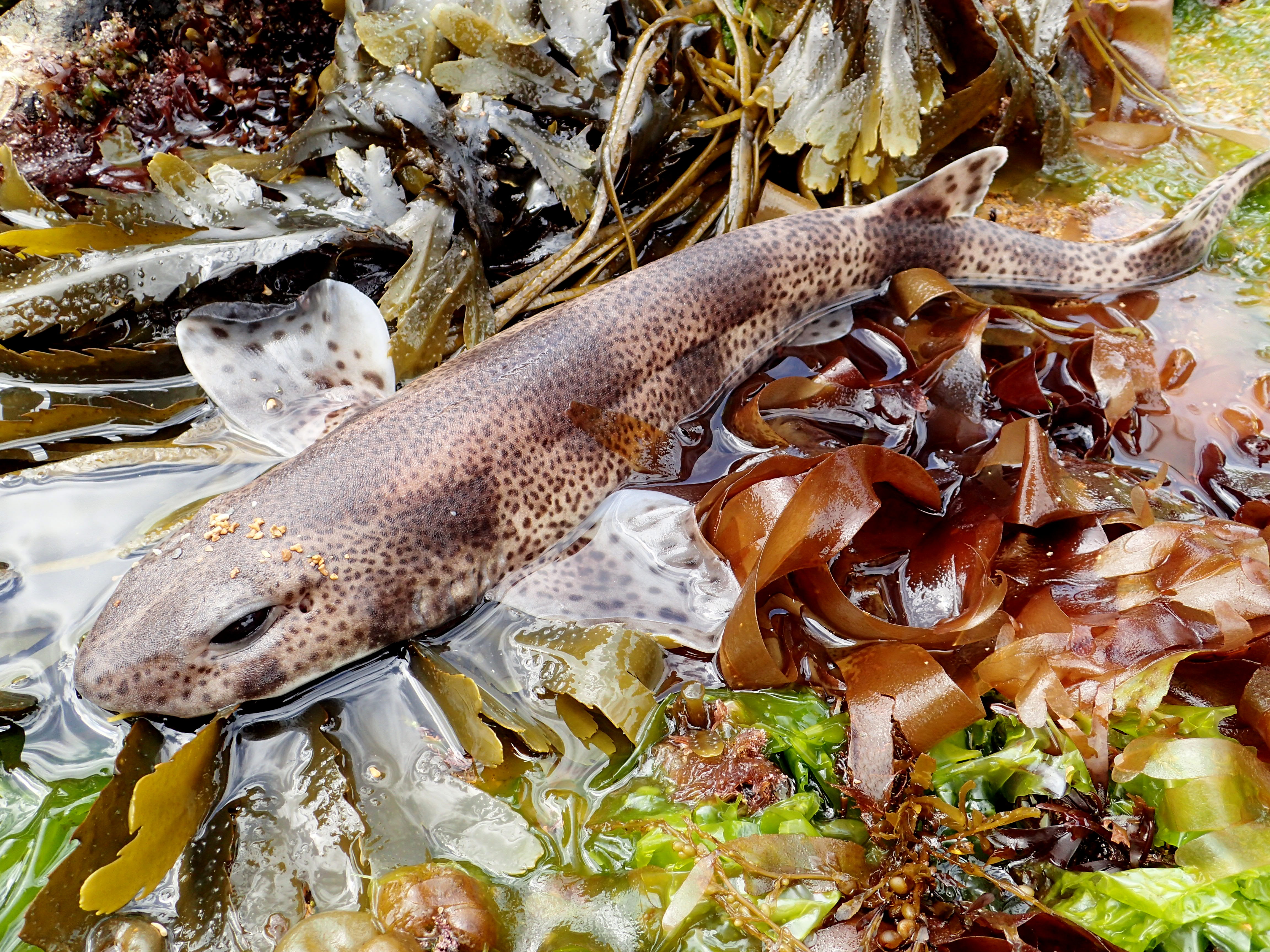
    The children are gathering around the edge of a pool and there in some shallow seaweed, a dogfish (small spotted catshark – scyliorhinus canicula) lies stranded.

    Scyliorhinus canicula - small spotted catshark or dogfish stranded in a Cornish rock pool
    Scyliorhinus canicula – small spotted catshark, also known as dogfish – stranded in a Cornish rock pool

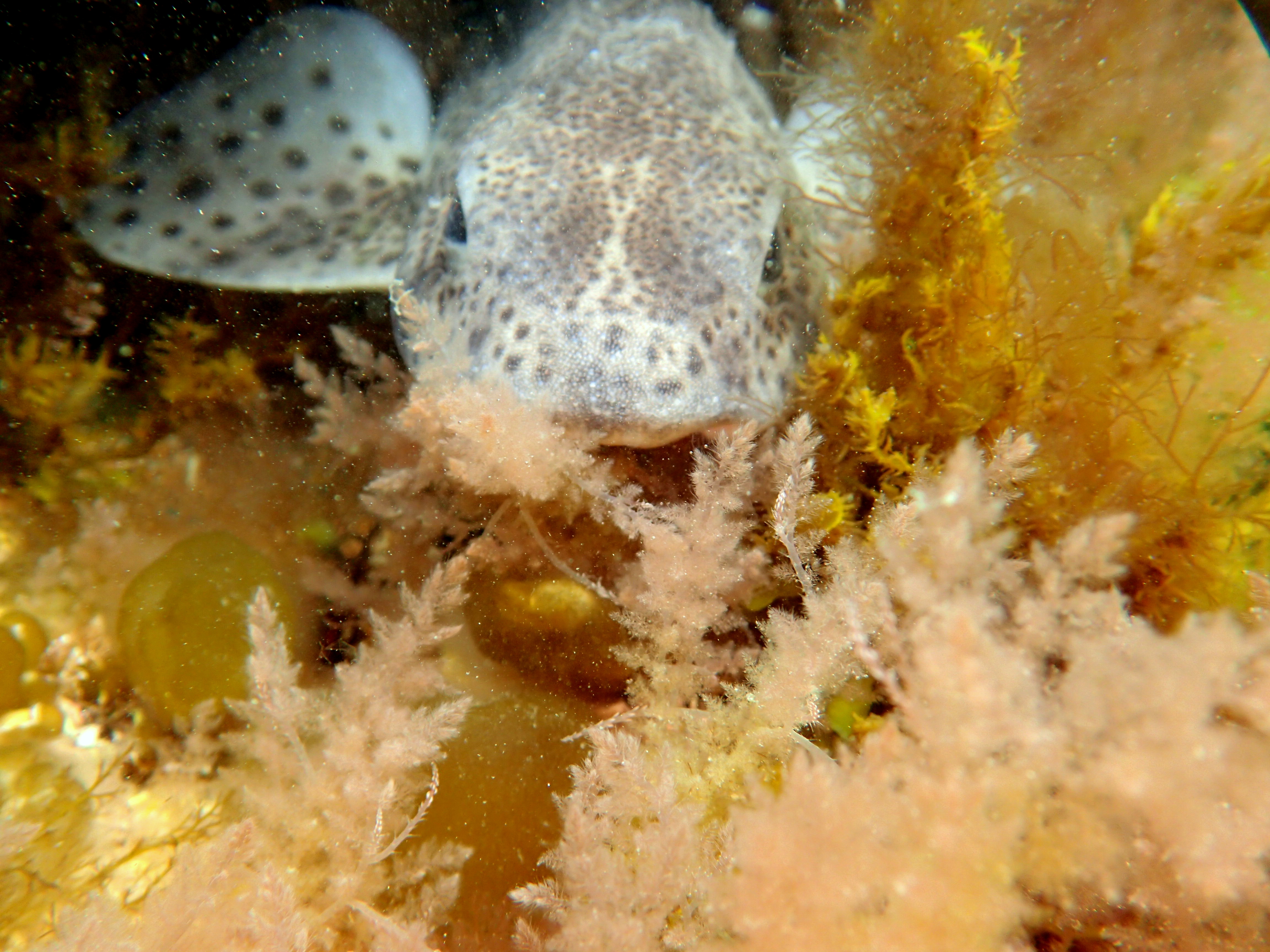
    The animal is calm despite being out of the water and surrounded by eager kids. We take a minute to take photos. Some of the children tentatively touch its sandpaper-rough skin and Cornish Rock Pools junior sluices it with water in an effort to keep it happy.

    Close up you can see the rough skin (that used to get used as sandpaper) and the cat-like eyes
    Close up you can see the rough skin (dogfish skin used to be used as sandpaper) and the cat-like eyes

    The dads rush in for the privilege of relocating our shark to a deeper pool, where it lurks as we carry on our rockpooling.

    The 'rehomed' catshark waiting for the tide to come in. It was so well camouflaged it was hard to spot among the seaweed.
    The ‘rehomed’ catshark waiting for the tide to come in. It’s so well camouflaged it’s tricky to spot among the seaweed.

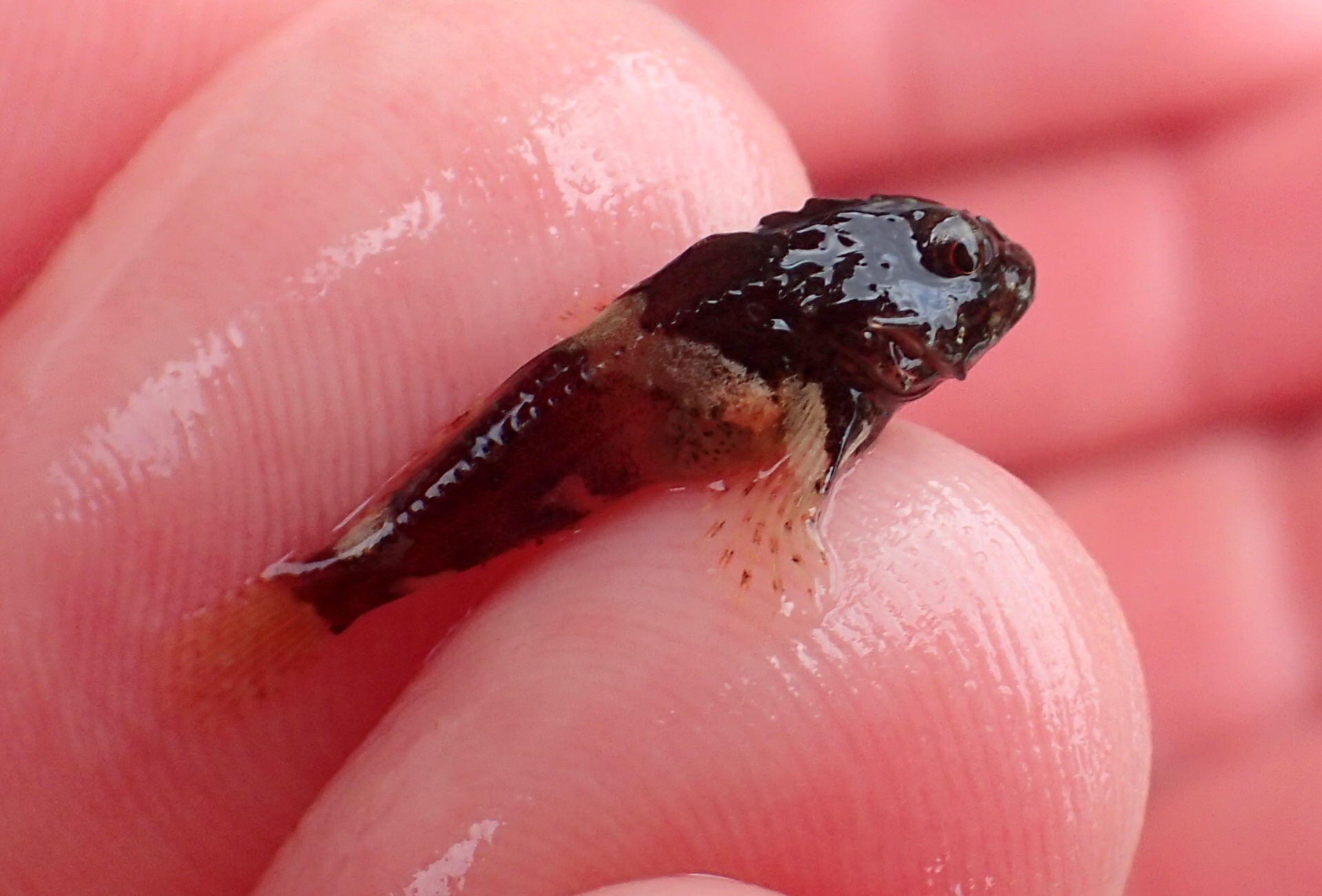
    One of the finds, a little fish catches my eye. When I first see its red body and dark head, I think it could be a black-faced blenny. The shape doesn’t seem right though. After much staring, I conclude it’s probably a scorpion fish. In my photos the spines on its face can be seen more clearly, confirming that it’s the smallest specimen of this species I’ve ever seen.

    A juvenile scorpion fish - the smallest I've ever seen
    A juvenile scorpion fish – the smallest I’ve ever seen.

    The picnic is perfect in every way. Some of the children huddle together with their sandwiches on top of a tall rock. The smaller kids play in the sand and shower some into the olives, but no one cares.

    The tide has moved in but there’s still time for some last-ditch rock pooling to the east of the beach. One of the boys is desperate to find and eel and his determination pays off. He locates a good-sized common eel under a rock, but it slithers into a crevice, evading capture.

    Love is in the air! Berthella plumula sea slugs under a rock.
    Love is in the air! Berthella plumula sea slugs under a rock.

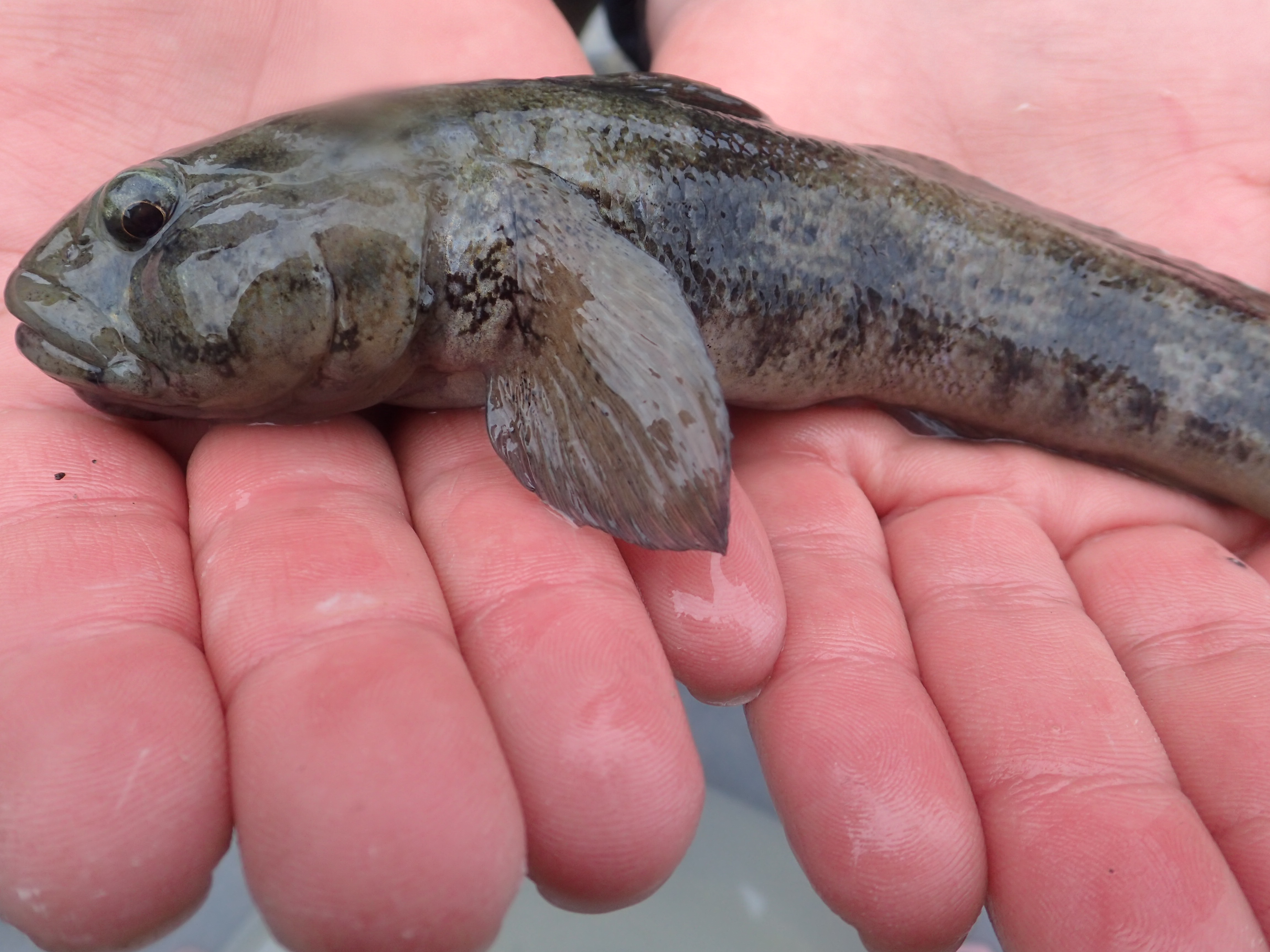
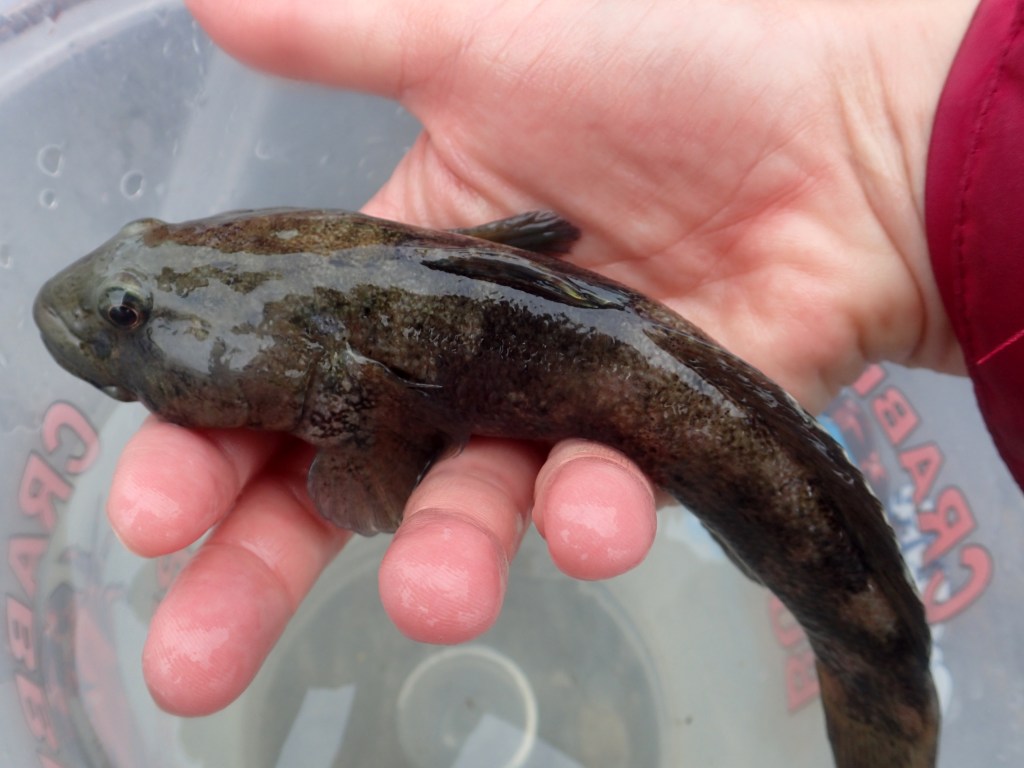
    There is no shortage of crabs here and we find pairs of lemon-yellow berthella plumula sea slugs clinging to the underside of the rocks. I’m told there are giant gobies around and it’s not long before one of the dads sends up a triumphant cry. “It’s a giant.”

    It's a whopper, but is it a giant? Goby found in a mid-shore pool
    It’s a whopper, but is it a giant? Goby found in a mid-shore pool

    We all look closely. I’ve seen some big rock gobies and I know they can be hard to tell apart from the rarer giant goby. This one looks like it could be the real thing. It’s large, at least 17cm, and has the fat-lipped face and salt and pepper colouring of a giant goby.

    The goby's face showing the super-thick lips.
    The goby’s face showing the super-thick lips.

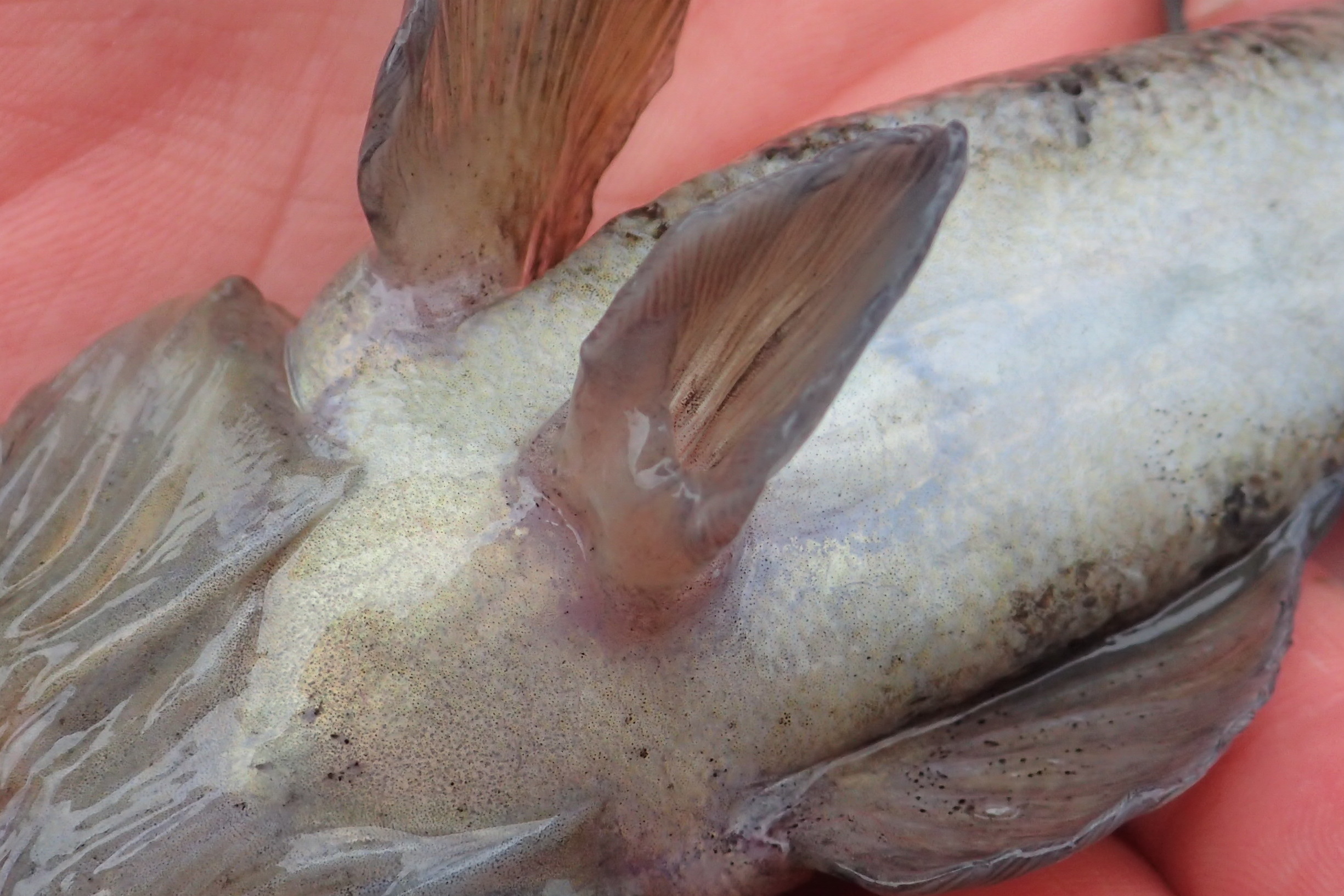
    I take photos of the sucker fin on its belly and hope we’ll be able to get a definitive answer from the experts. The giant goby has a detatched lobe at the front of its sucker fin which the rock goby doesn’t have…apparently.

    The pelvic sucker fin of the goby
    The pelvic sucker fin of the goby

    As we release the goby into the pool where we found it, the children spot their granddad walking onto the beach. He’s arrived just as the tide overtakes the last pools and he invites the kids to join him for a spot of skimming.

    It’s the first time I’ve been to this beach. I think I’ll be back.  Some things are indeed meant to be.

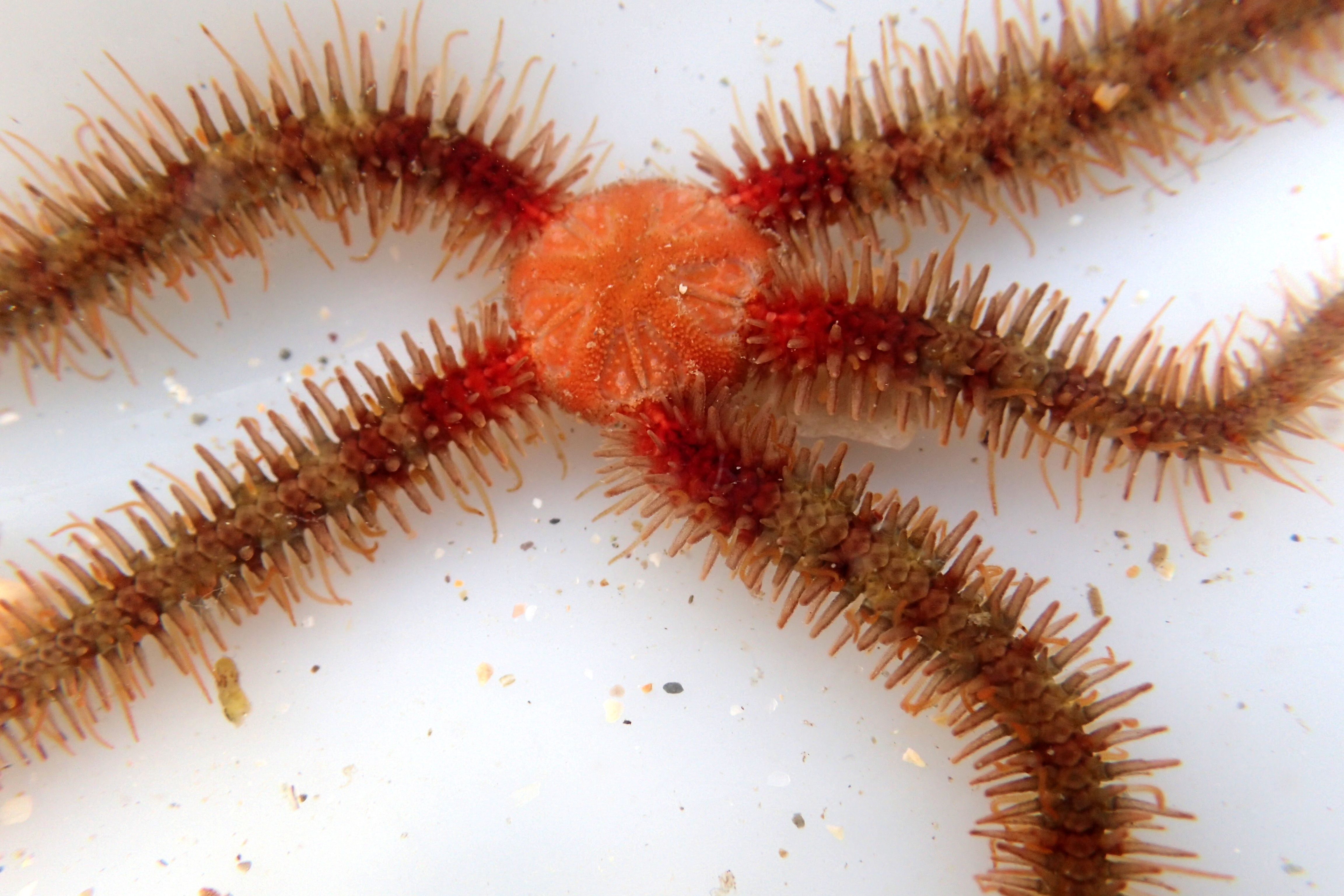
    Brittle star
    Brittle star


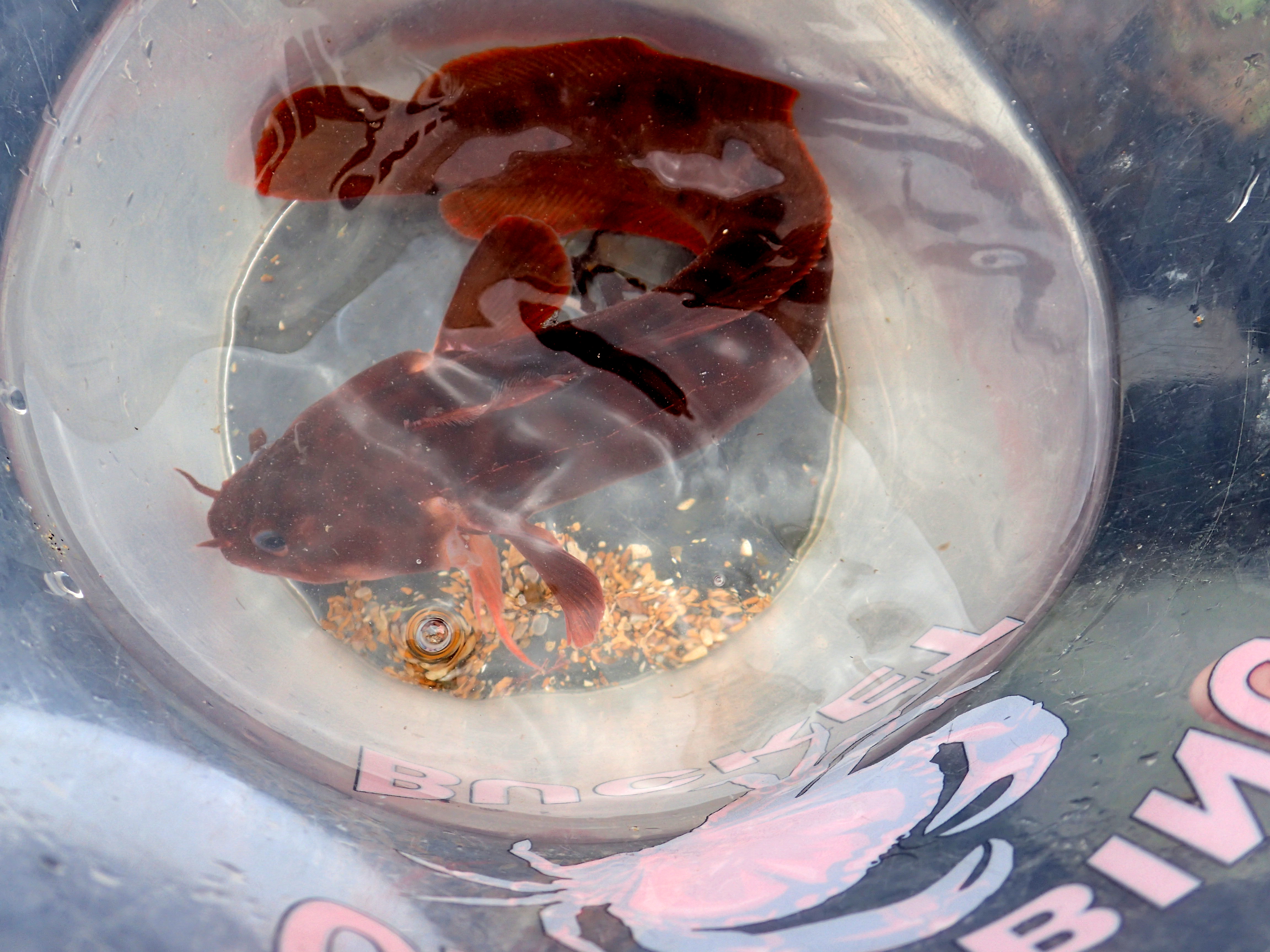
    A good sized three-bearded rockling
    A good sized three-bearded rockling
  • A very British beach picnic.

    A very British beach picnic.

    It’s bank holiday Monday and, by rights, the beaches should be packed with tourists, but this is a British bank holiday complete with the standard issue of drizzle and greyness. We seem to be the only people who’ve come for a picnic today.

    A very un-summery bank holiday at Plaidy beach near Looe
    A very un-summery bank holiday at Plaidy beach near Looe

    Cornish Rock Pools junior and his Dad undertake mega-engineering projects on the stream while I explore the rock pools, eager to put my new camera through its paces.

    Pleased to meet you! A broad-clawed porcelain crab extends a claw. Cornish Rock Pools
    Pleased to meet you! A broad-clawed porcelain crab extends a claw.

    It seems that the wildlife has also gone to ground, as though the animals have moved further out to sea during the heavy rains. The regulars are still here though, lurking in the murky water.

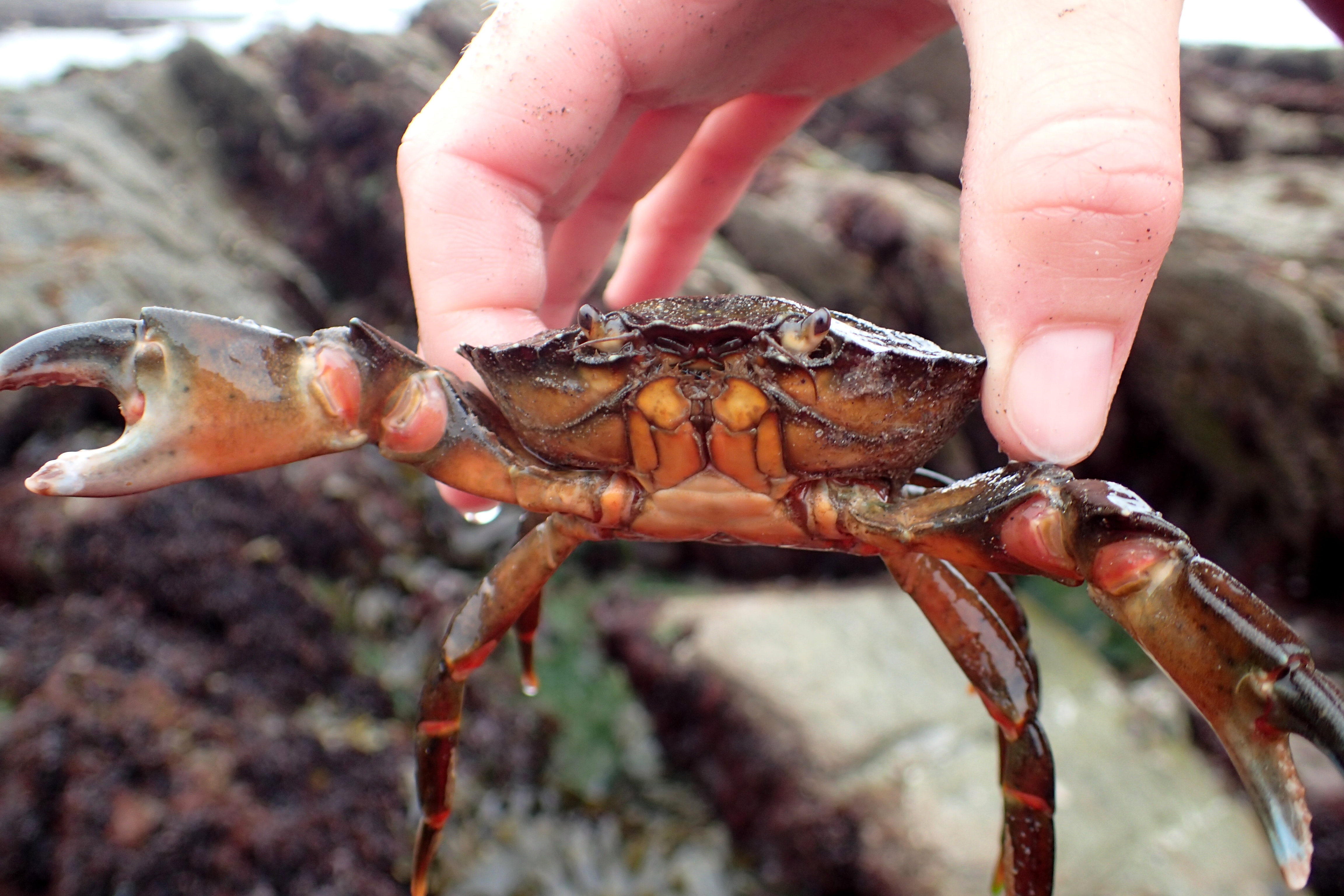
    Green shore crabs abound among the rocks.
    Green shore crabs abound among the rocks.

    Under almost every rock there are young edible crabs shunting sand over themselves while larger green shore crabs run for cover.

    Netted dog whelk egg capsules
    Netted dog whelk egg capsules

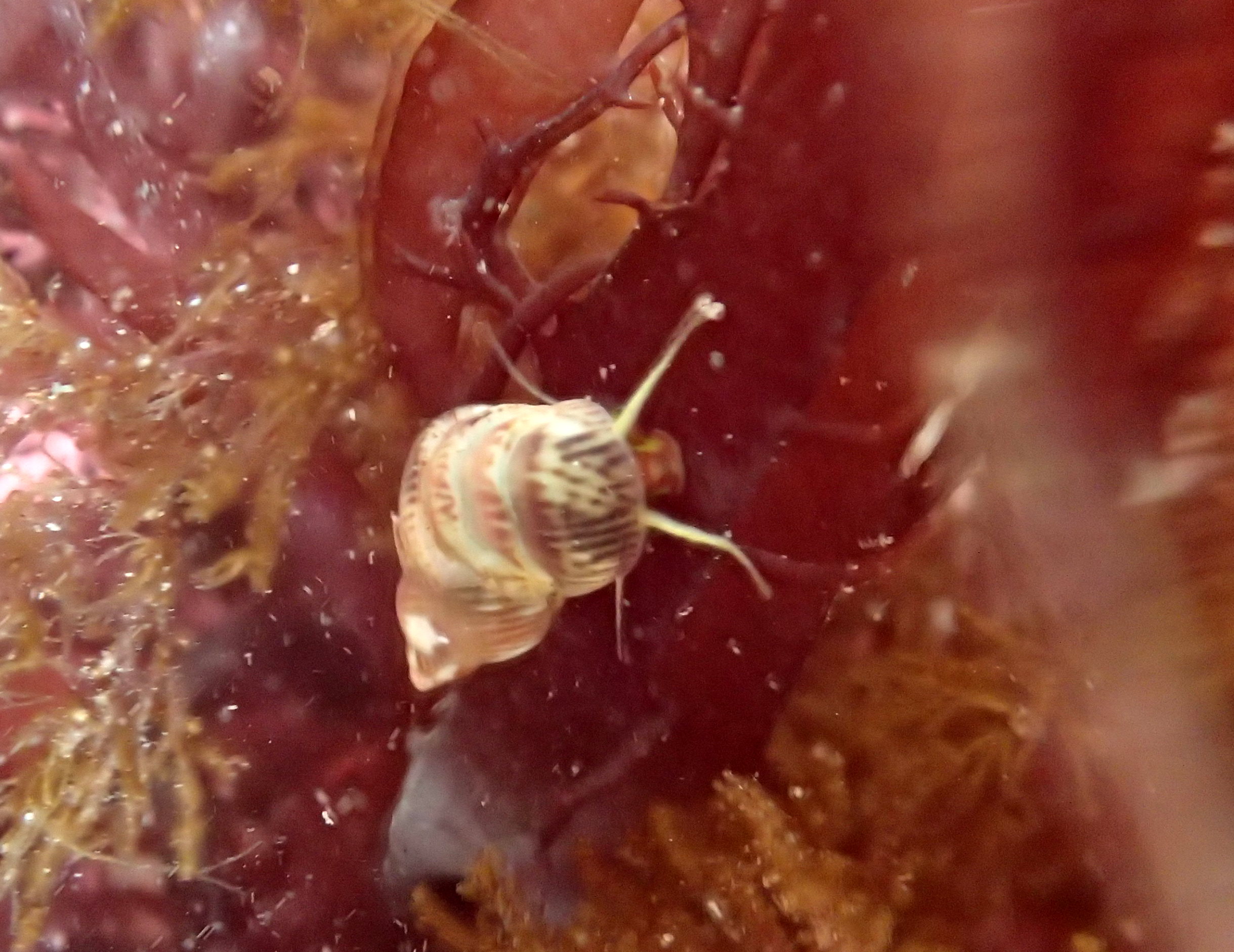
    In a pool that threatens to over-top my wellies, I find a pheasant shell going about its business. I can barely see it in the silty water as it makes its way along the red seaweed. Under the camera, its neat maroon stripes become more visible and I can see its tentacles flopping over the edge of the weed.

    A pheasant shell undeterred by the silty water
    A pheasant shell undeterred by the silty water

    A grey heron is fishing in the farthest pools. As the waves begin to slosh up the gulley, a cormorant flies in and takes up position behind the heron, where it stays for the next half hour. I hunt the mid-shore for the ever illusive starfish, Asterina phylactica.

    The first Asterina phylactica starfish I find is especially tiny.
    The first Asterina phylactica starfish I find is especially tiny.

    The first of these minute starfish I find is so small that I can barely see it among the weed. It moves remarkably quickly, sliding round the branching tuft of pink coralline seaweed and disappearing from view each time I try to focus on it.

    Other half sidles over and asks about the sandwiches. I realise I’ve been staring into this pool for way too long and somehow I’ve managed to soak my fringe and my coat sleeves in my enthusiasm, but I’m not quite ready to give up. Eventually I’m rewarded by finding a larger, brighter specimen, which I photograph with numb fingers.

    A slightly larger, more brightly coloured Asterina phylactica starfish.
    A slightly larger, more brightly coloured Asterina phylactica starfish.


    Asterina phylactica starfish - well worth the time spent searching.
    Asterina phylactica starfish – well worth the time spent searching.

    The drizzle sets in properly as we begin our picnic. Cornish Rock Pools junior builds a shelter under his Dad’s coat and happily munches on sandwiches and biscuits. I flex my fingers and am just beginning to sense the return of some sort of blood flow when I remember the bucket. I definitely had it and now I don’t. Other half and I mount a search party, but he heroically sends me back to the chocolate digestives while he continues the hunt.

    Cornish Rock Pools junior makes his picnic shelter.
    Cornish Rock Pools junior makes his picnic shelter.

    After several long minutes of searching, the tide and mist closing around him, he lifts the bucket aloft and junior and I clap and cheer with our mouths full.

    Red bucket is saved!
    Red bucket is saved!

    Soon the cliffs are disappearing in the fog and the rain sets in properly. As the oystercatchers sweep in, we hastily pack up our very British picnic and leave the beach completely deserted.

    A snakelocks anemone among the sea lettuce.
    A snakelocks anemone among the sea lettuce.