Category: Beaches

  • Rock Pool Bingo – Searching for Southerly Species (Part 2 – North Coast)

    Rock Pool Bingo – Searching for Southerly Species (Part 2 – North Coast)

    With our bingo cards of southerly species part-filled after an exciting day on the south coast, our visitors from Wales still had quite a wish list left to accomplish. To find cup corals and Celtic sea slugs, a trip to a more exposed coast would be needed. Naturally, I suggested my favourite beach: Porth Mear.
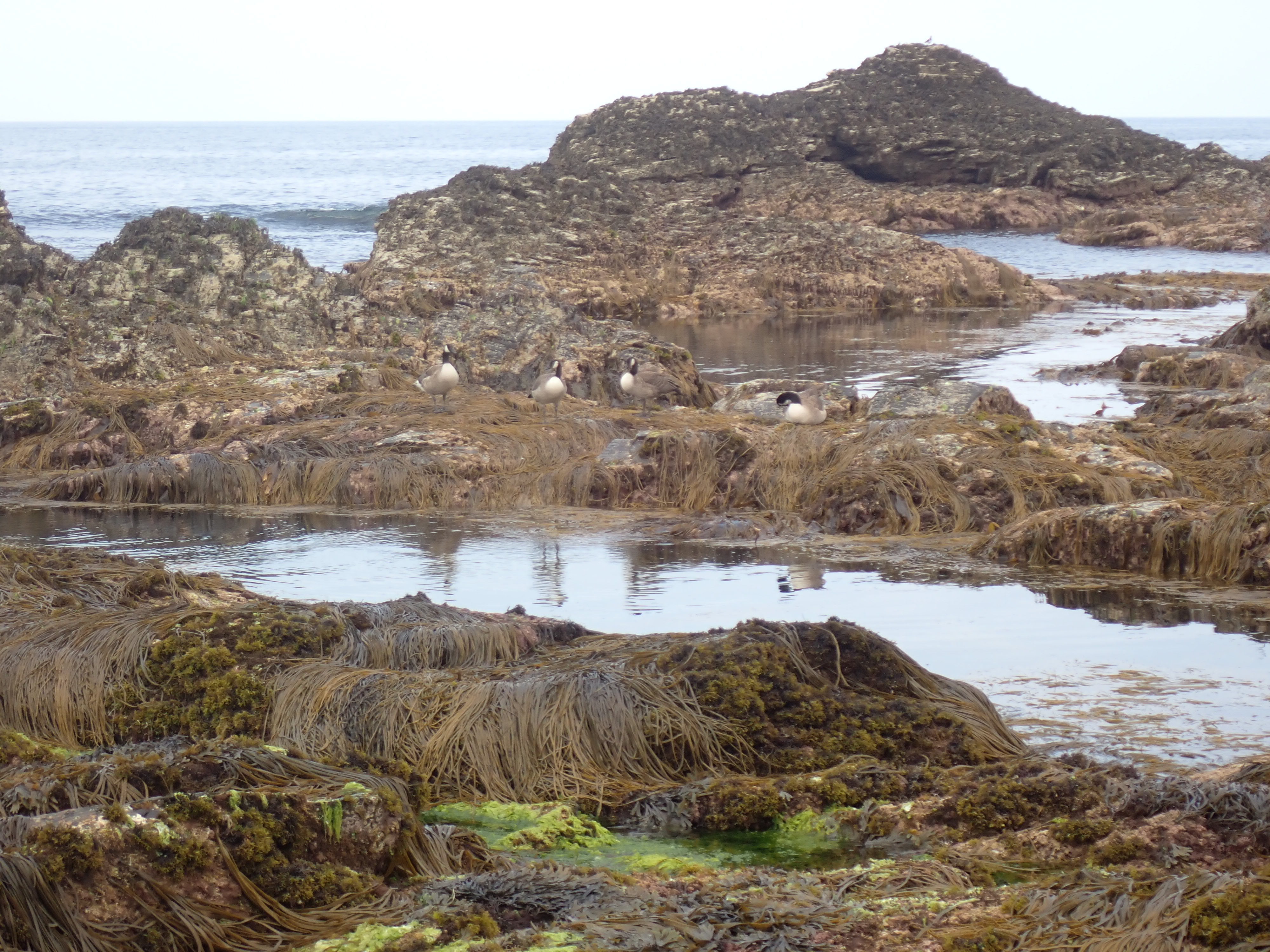
    A flock of geese joined us on the shore at low tide.

    The weather was on our side, taking a break between the endless storms that have characterised the summer holidays. So, with swimmers and beach shoes at the ready, we walked down a valley alive with tortoiseshell butterflies to where the bluest sky met the bluest sea. Even the pools at the top of the beach churned with trapped young mullet, scurrying shore crabs and bright anemones. While one of our friends stayed looking at the upper shore pools and gathering shells, Junior and I led our other friend on a long slip and slide across the rocks to reach our goal.

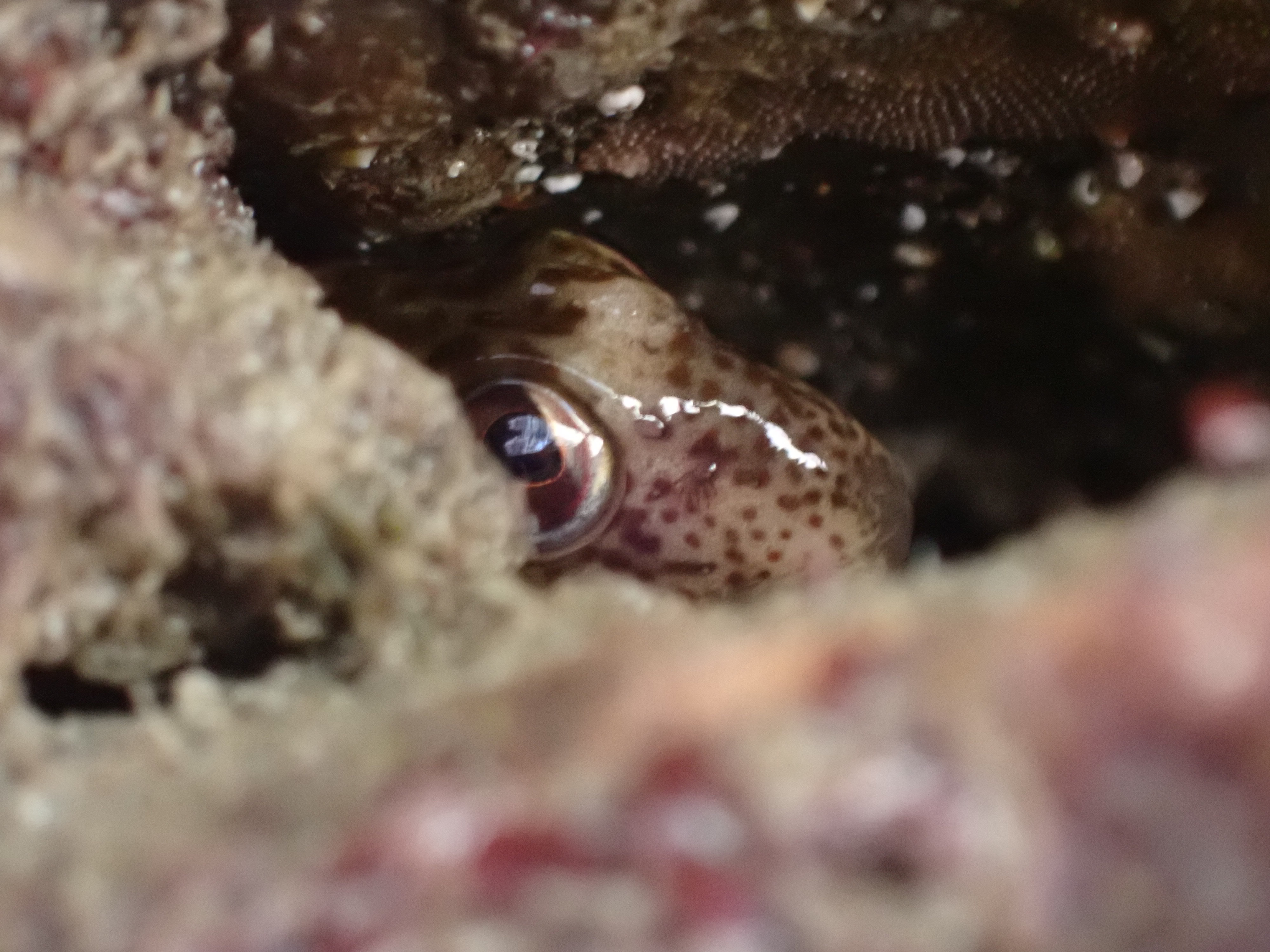
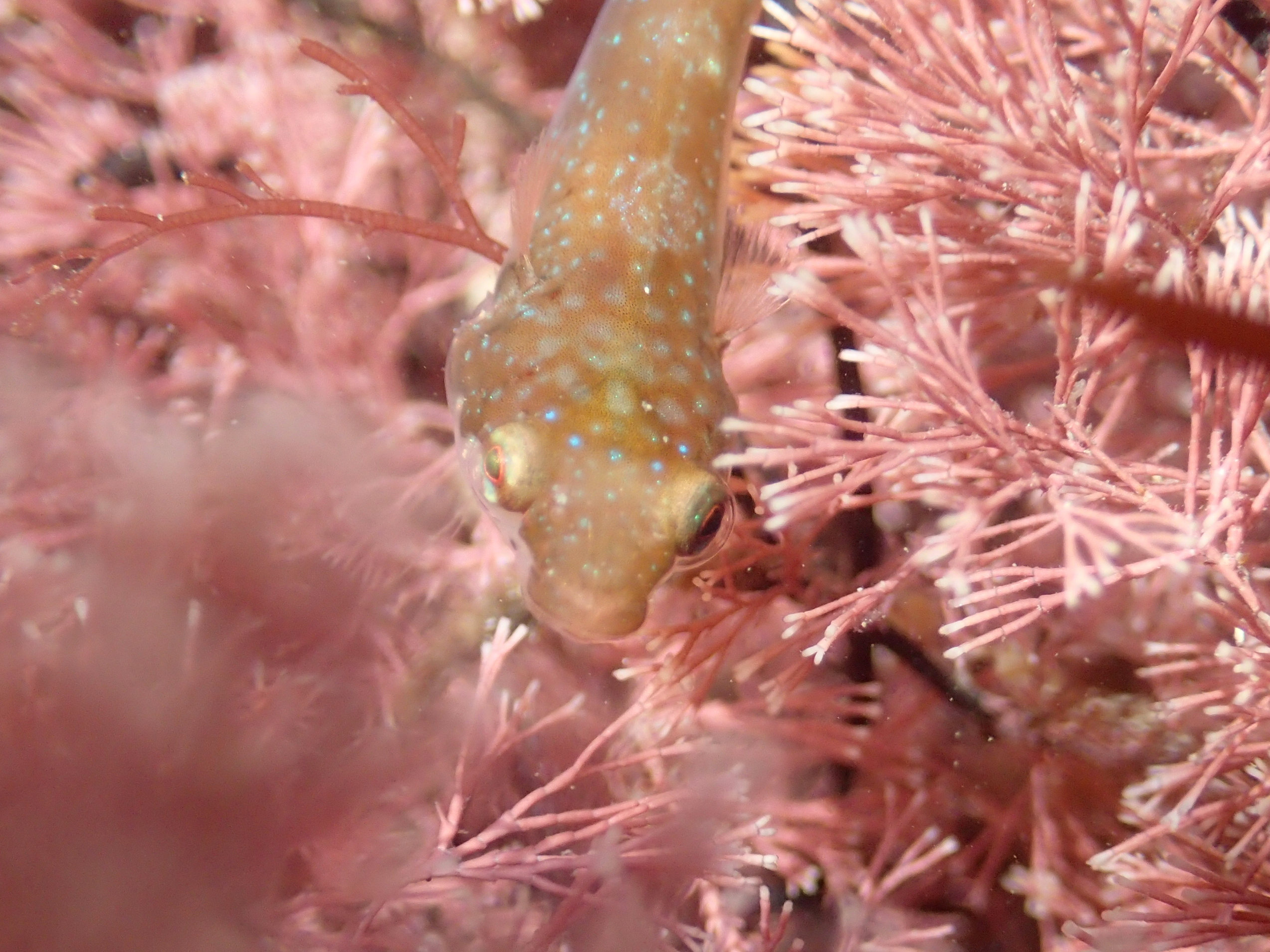
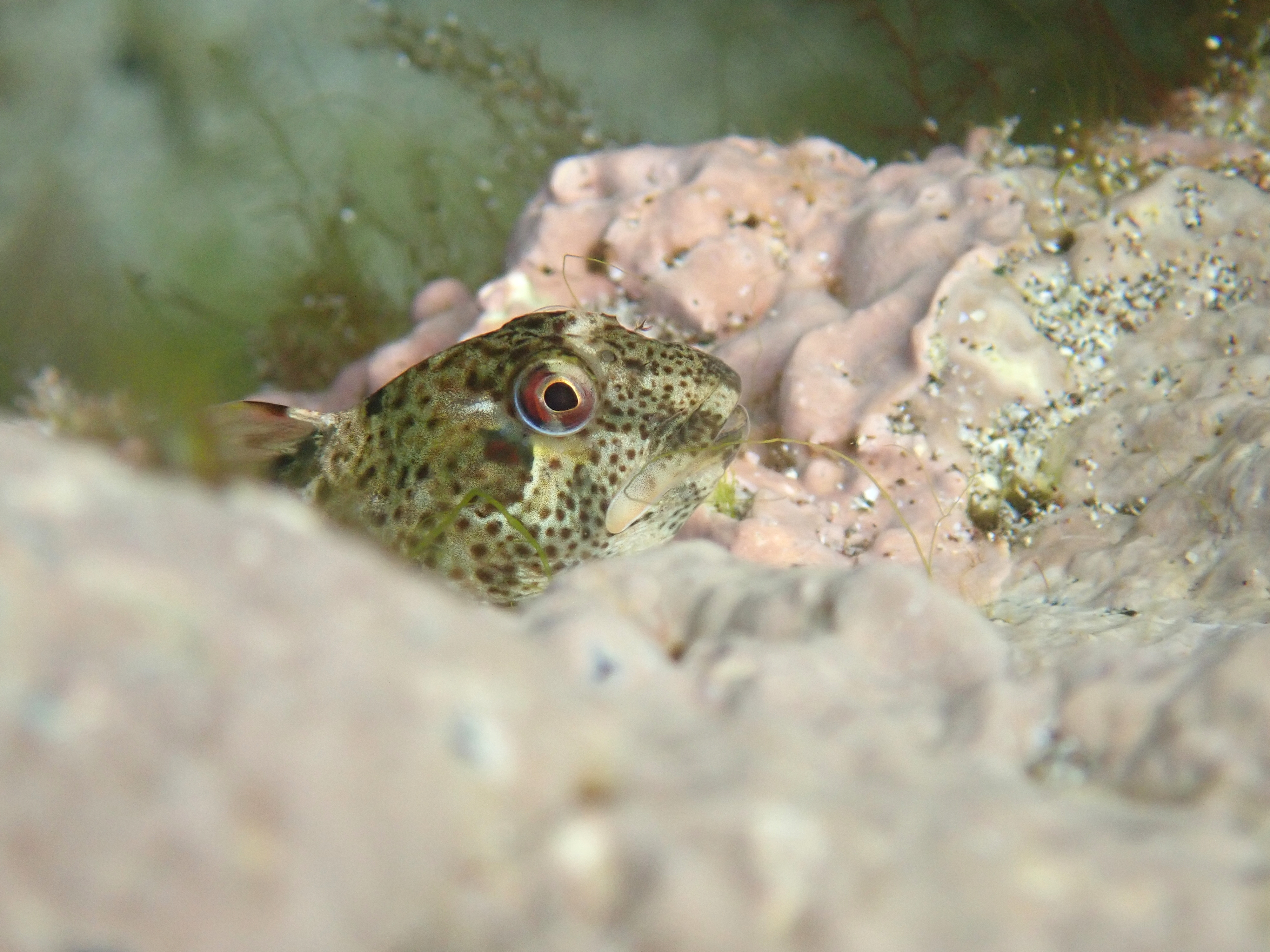
    With two hours to go until low tide, we could safely allow ourselves a few distractions on the way. I couldn’t resist stopping to take photos of this wonderful Montagu’s blenny, which let me creep ever closer with my camera as it sheltered under a limpet shell. Blennies are able to move their eyes independently and this one kept an eye on me while scanning the surface of the pool with the other.

    Montagu’s blenny looking two ways at once. This blenny has a single head tentacle.

    My friend was delighted. Although it hadn’t appeared on our bingo card, the Montagu’s blenny is another southerly species which he had never seen in North Wales. This was too easy!

    We had met some St Piran’s hermit crabs at Hannafore the previous day, but the colony here was well worth a look too. We found scores of these crabs in and around the pools along a couple of rocky overhangs, living in a range of sizes of shell. This species is doing well here, towards the northerly limit of its known range.

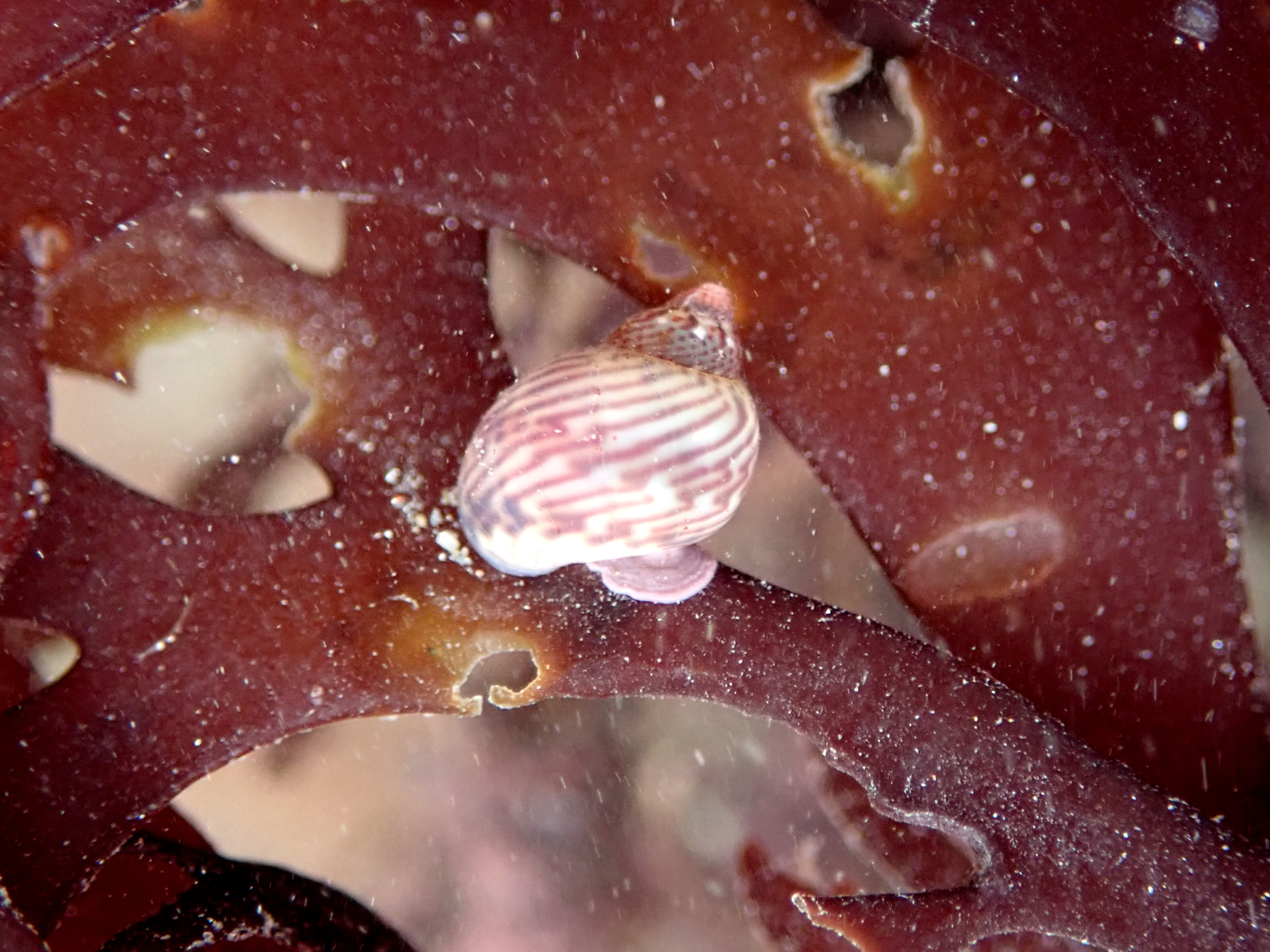
    The painted top shells on this beach are always especially pink and beautiful, perhaps because in this more exposed location, they tend to accumulate less silt and micro-algae on their shells. We stopped to take plenty of photos.

    A typically bright pink painted top shell at Porth Mear.

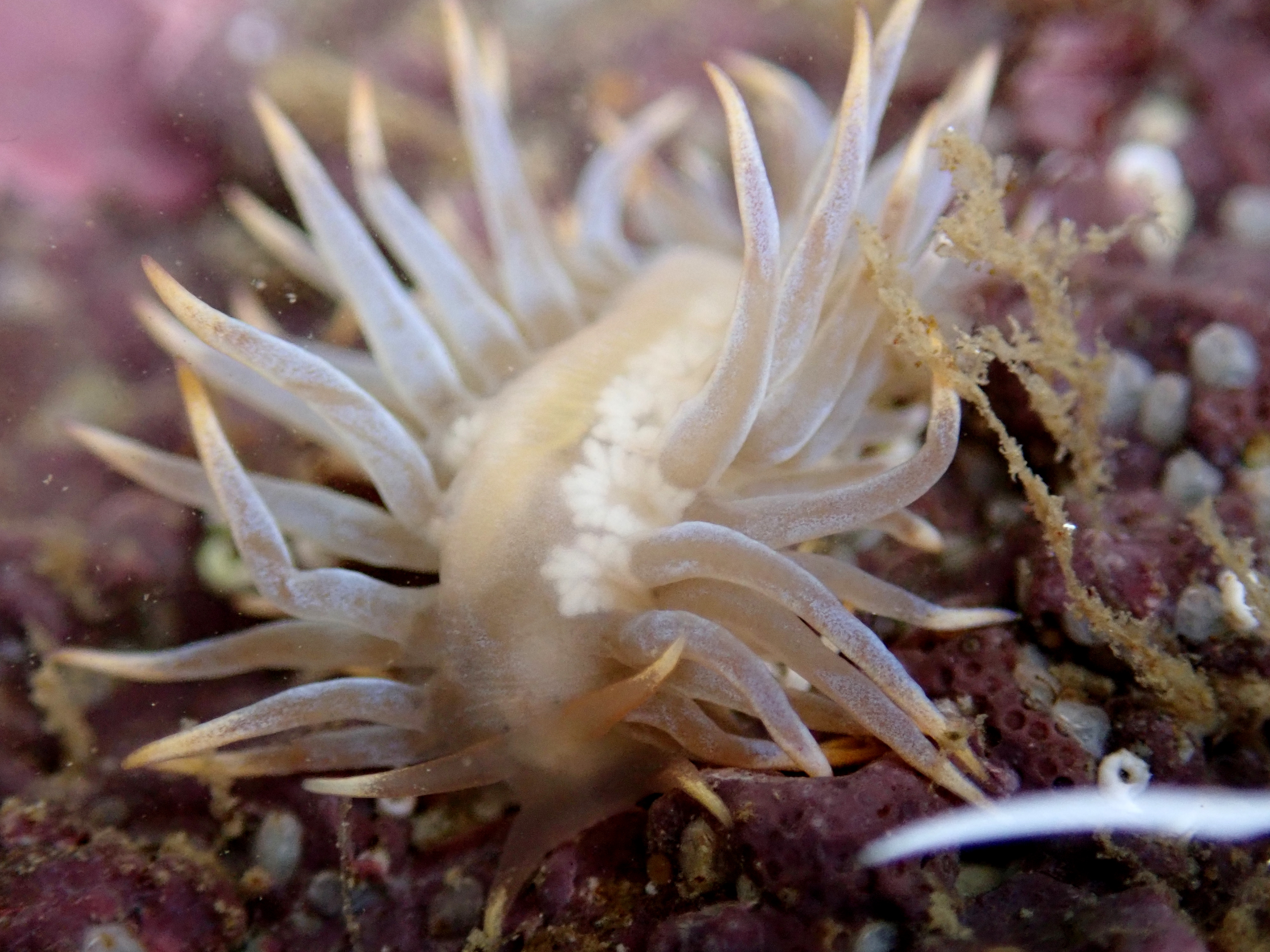
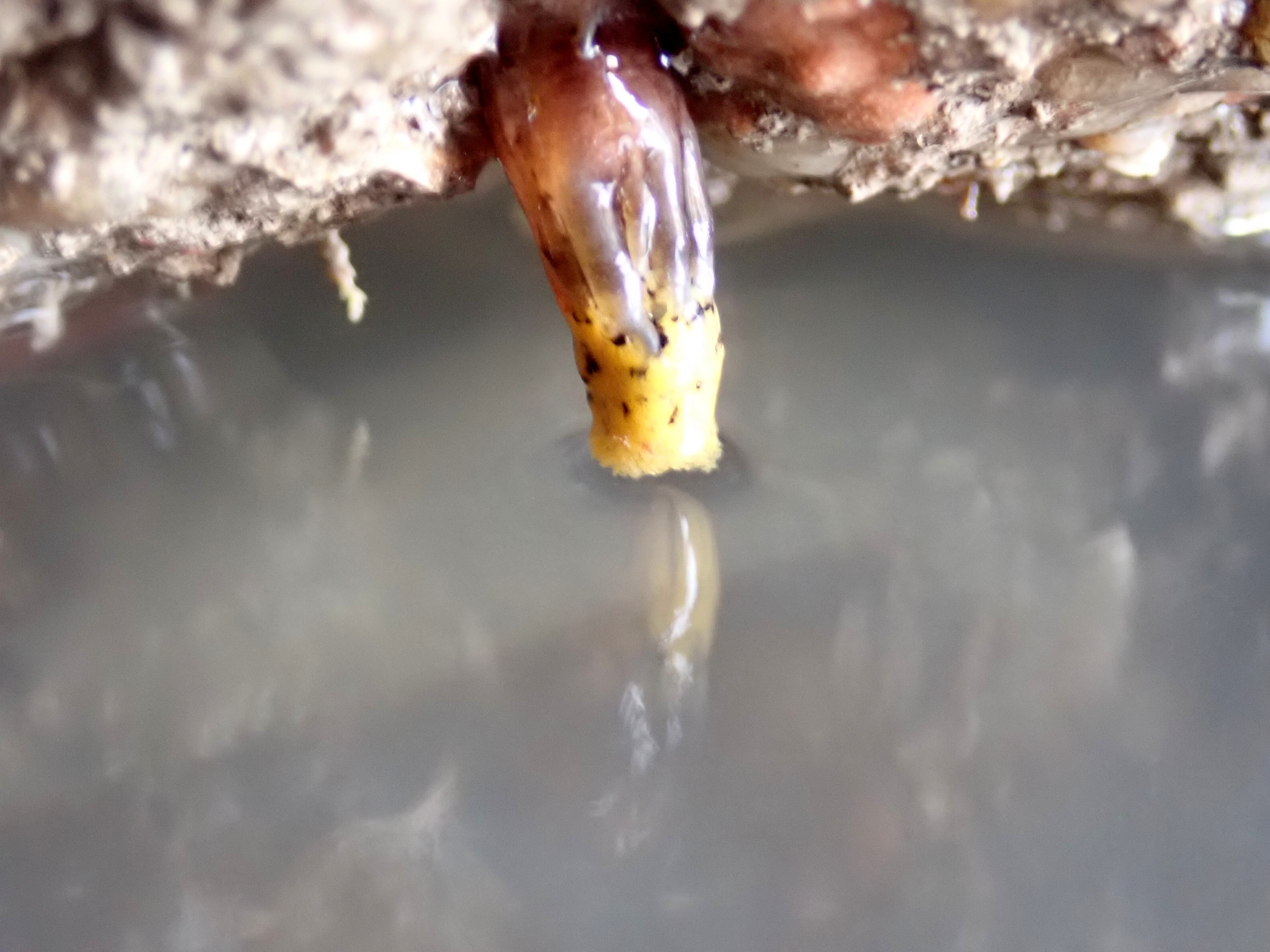
    Although it can be hard to find stalked jellyfish in the summer when the beach is thick with the seaweeds they attach to, we were determined to tick one or two off the list, especially Haliclystus octoradiatus. This may not be a particularly southerly species, but it occurs frequently around Cornish coasts. After much searching we found a very small blob that was probably a juvenile, but I could only confirm that by looking at photos afterwards.

    This tiny juvenile Haliclystus octoradiatus stalked jellyfish was only a few milimetres long, but in the photos, its primary tentacles are visible.

    As the tide dropped further, we picked up our pace and clambered towards a wave-battered gully. This area is only accessible on the lowest tides and, even then, is often out-of-bounds due to the huge swells that pound these rocks for much of the year. Today, the calm conditions were perfect and we could explore in relative safety while keeping an eye on the time.

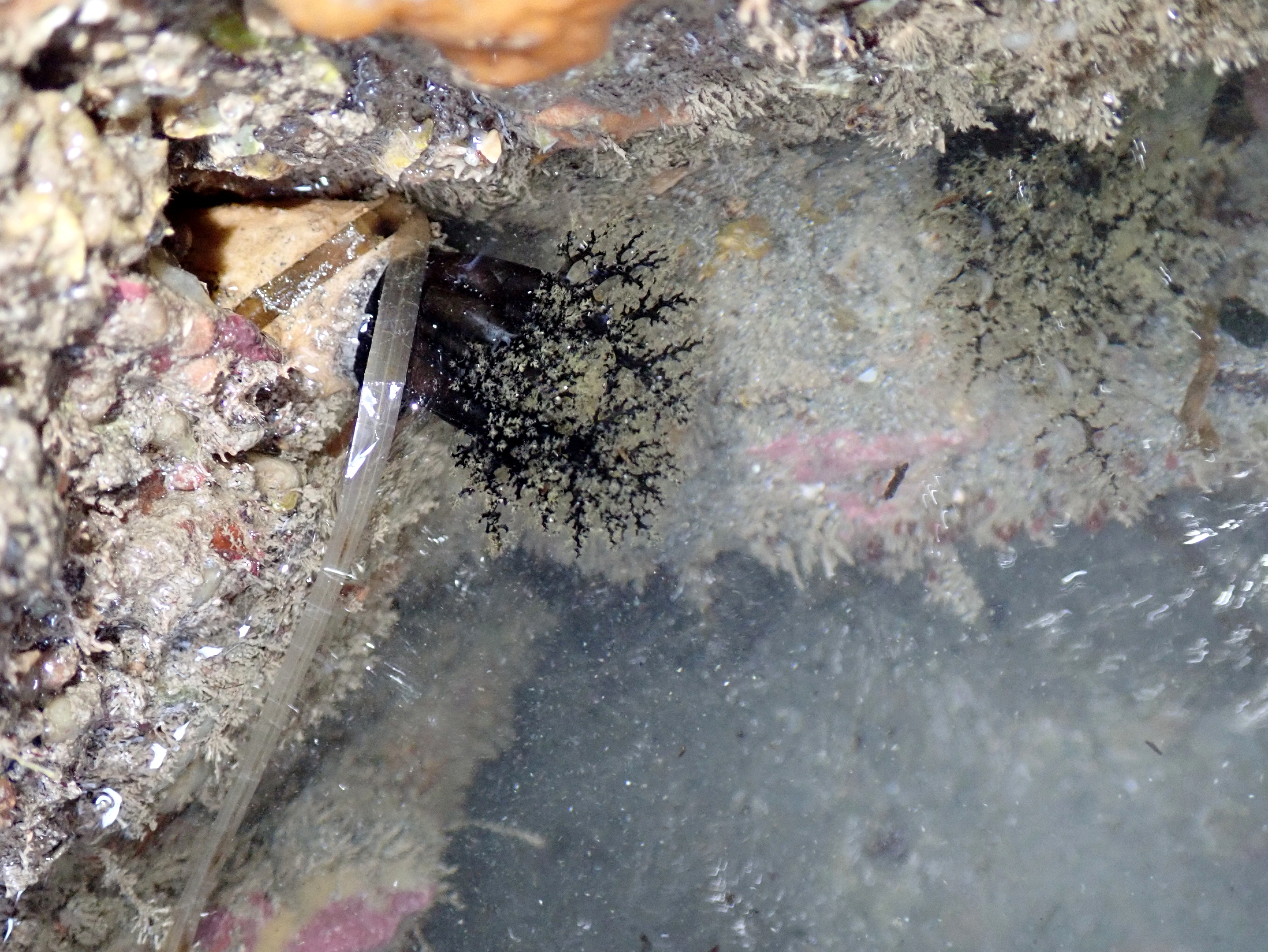
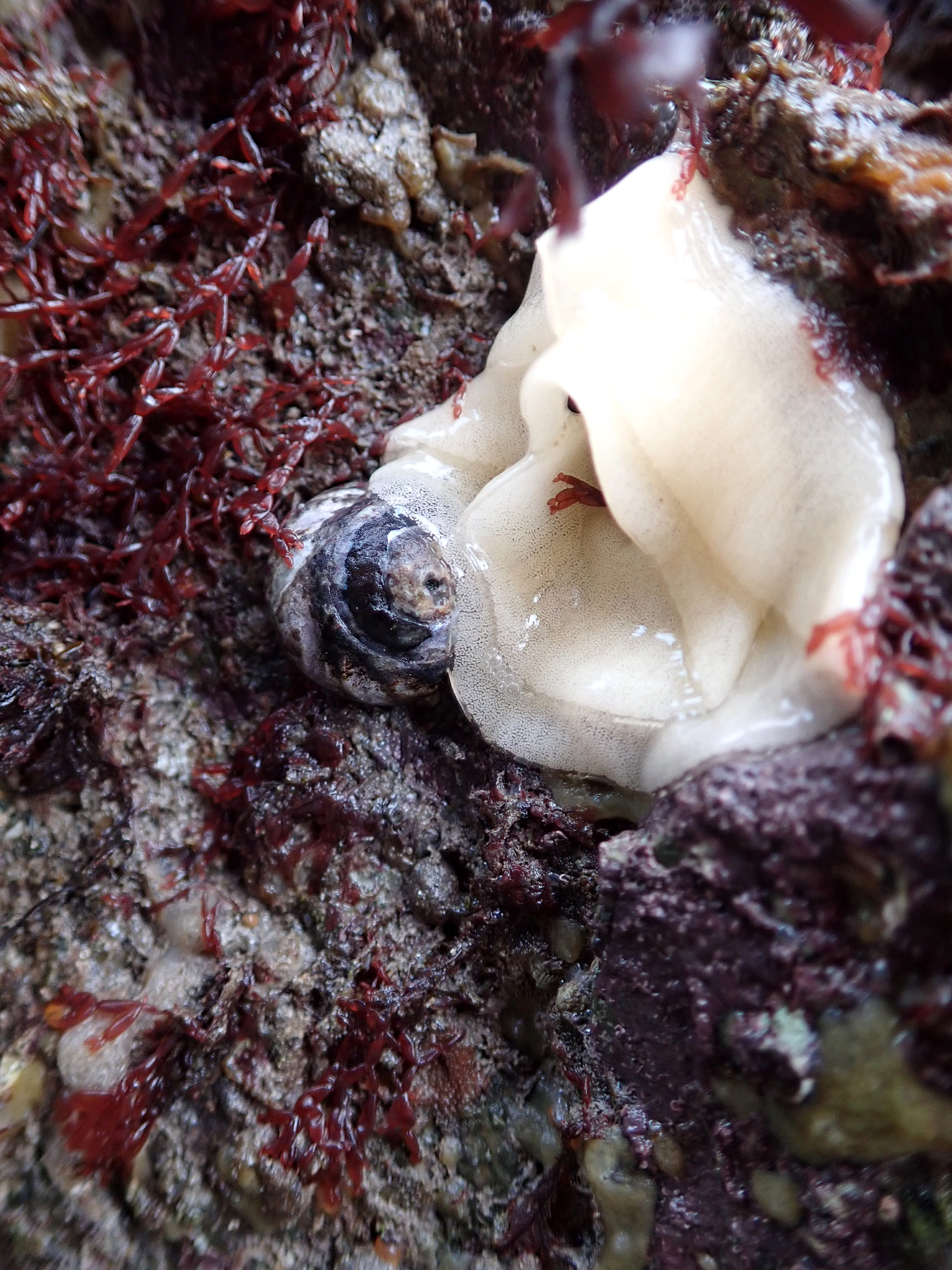
    Junior made straight for the high rocks, where he quickly found the first Celtic sea slug, out in the open among the barnacles and mussels.
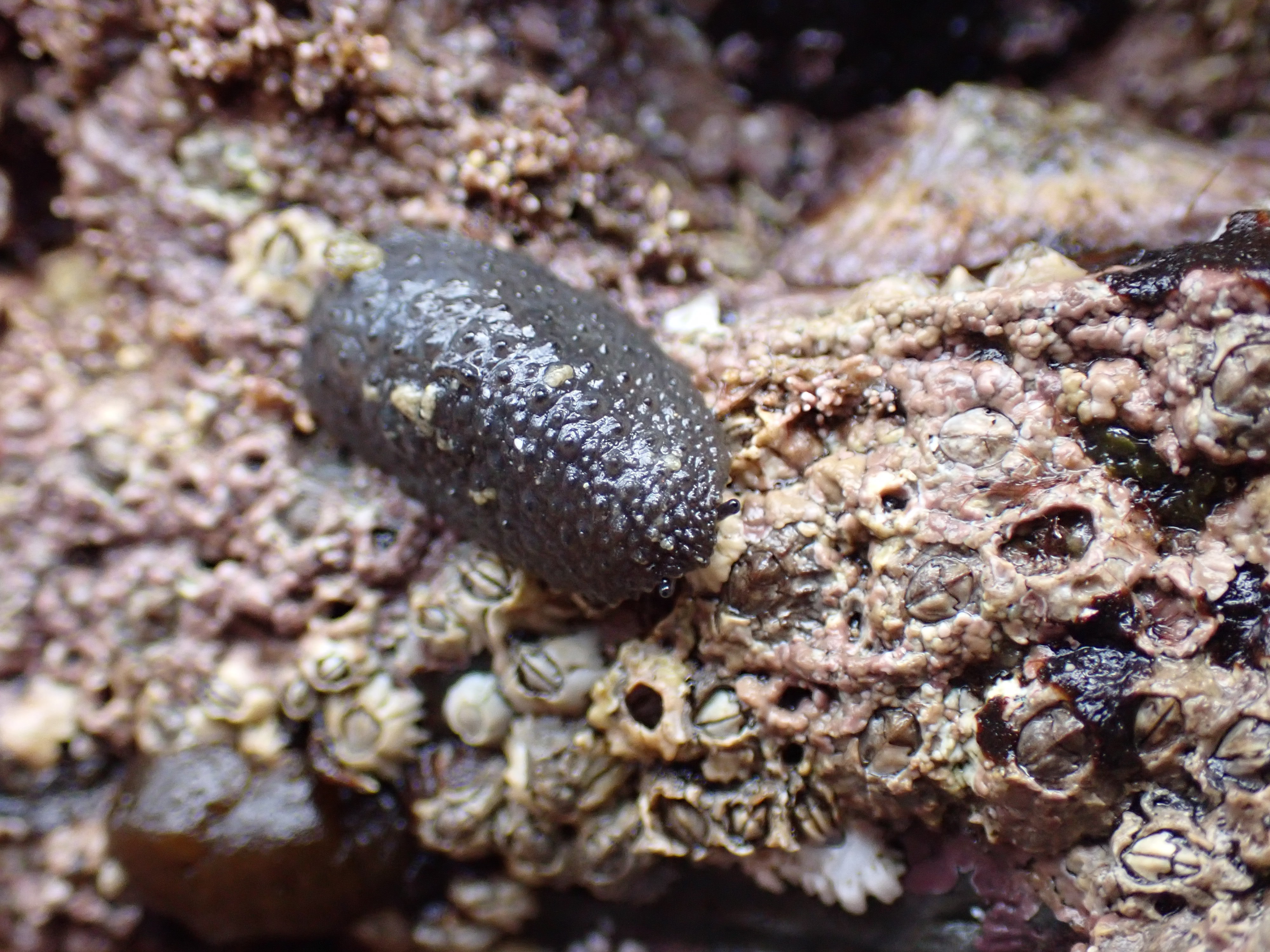
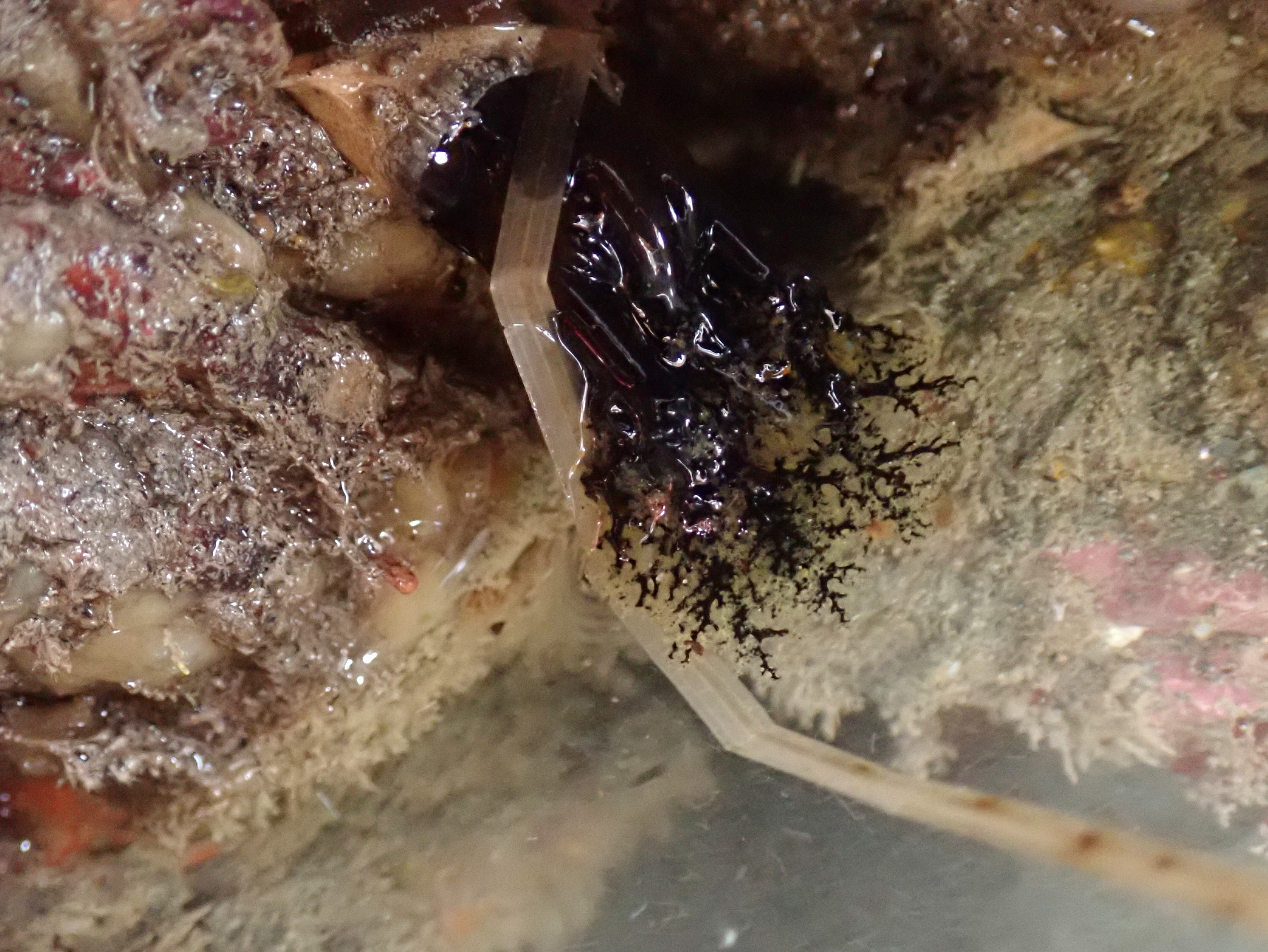
    Celtic sea slug

    These strange black lumps always remind me of armoured cars. This is mainly a very southerly species which is found widely around exposed Cornish coasts, but it has been recorded as far north as the Farne Islands and Scotland.

    Celtic sea slugs may not be the most classically pretty slugs, but they are incredible animals. They are able to survive on these rough shores in terrifying conditions and they don’t even have gills. They breathe air and hide away in cracks in the rock when the tide comes in, staying alive by keeping an air pocket sealed inside their bodies and breathing through their skin when needed.

    If there is one Celtic sea slug, there is usually a whole colony and we found dozens more on the rocks all along the gully.

    Celtic sea slug foraging on tiny micro-algae and other micro-organisms.

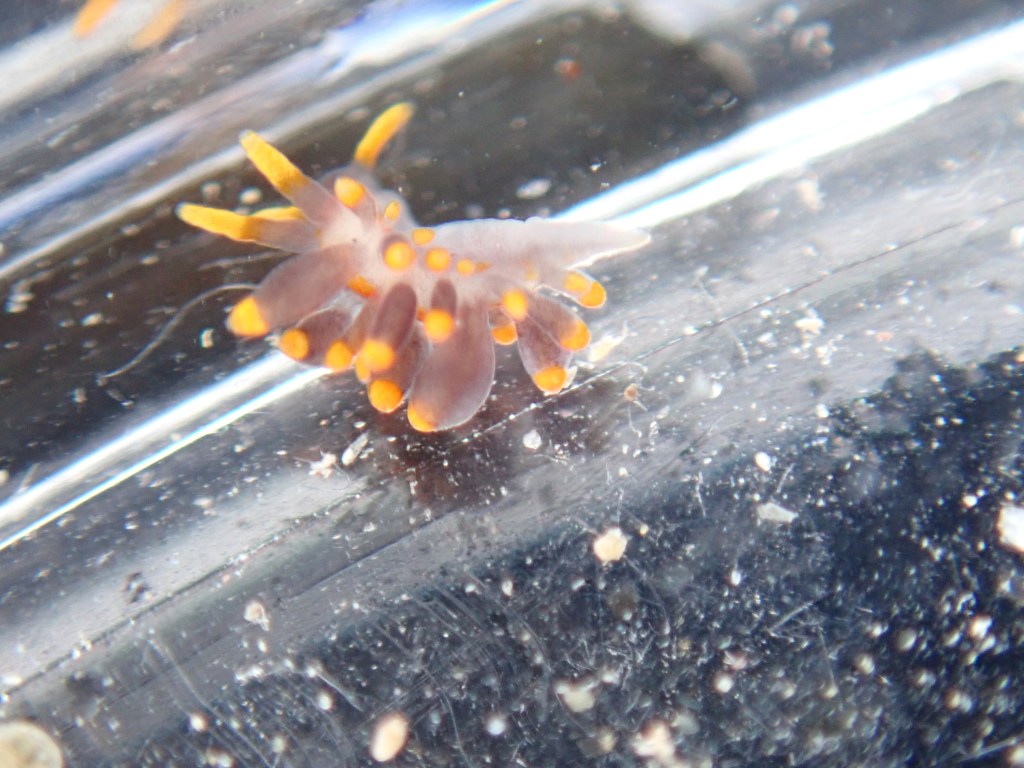
    Our next stop was a deep overhang with a pool at its base where we knew we would be able tick off another species from our bingo card, the scarlet and gold cup coral.

    We had to kneel and lie at strange angles on rocks encrusted with sharp barnacles, but we were soon rewarded with the brilliant glow of many corals.

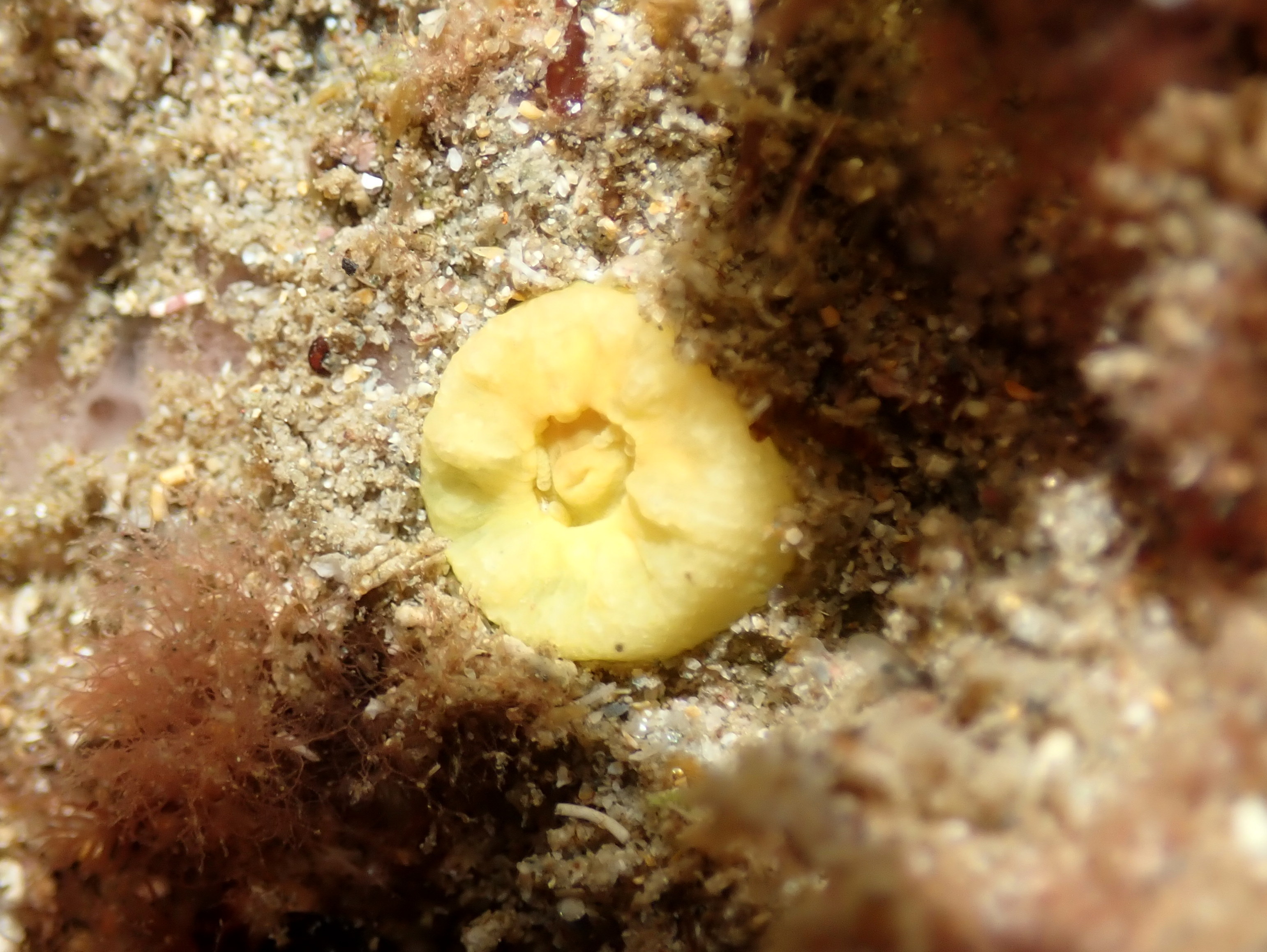
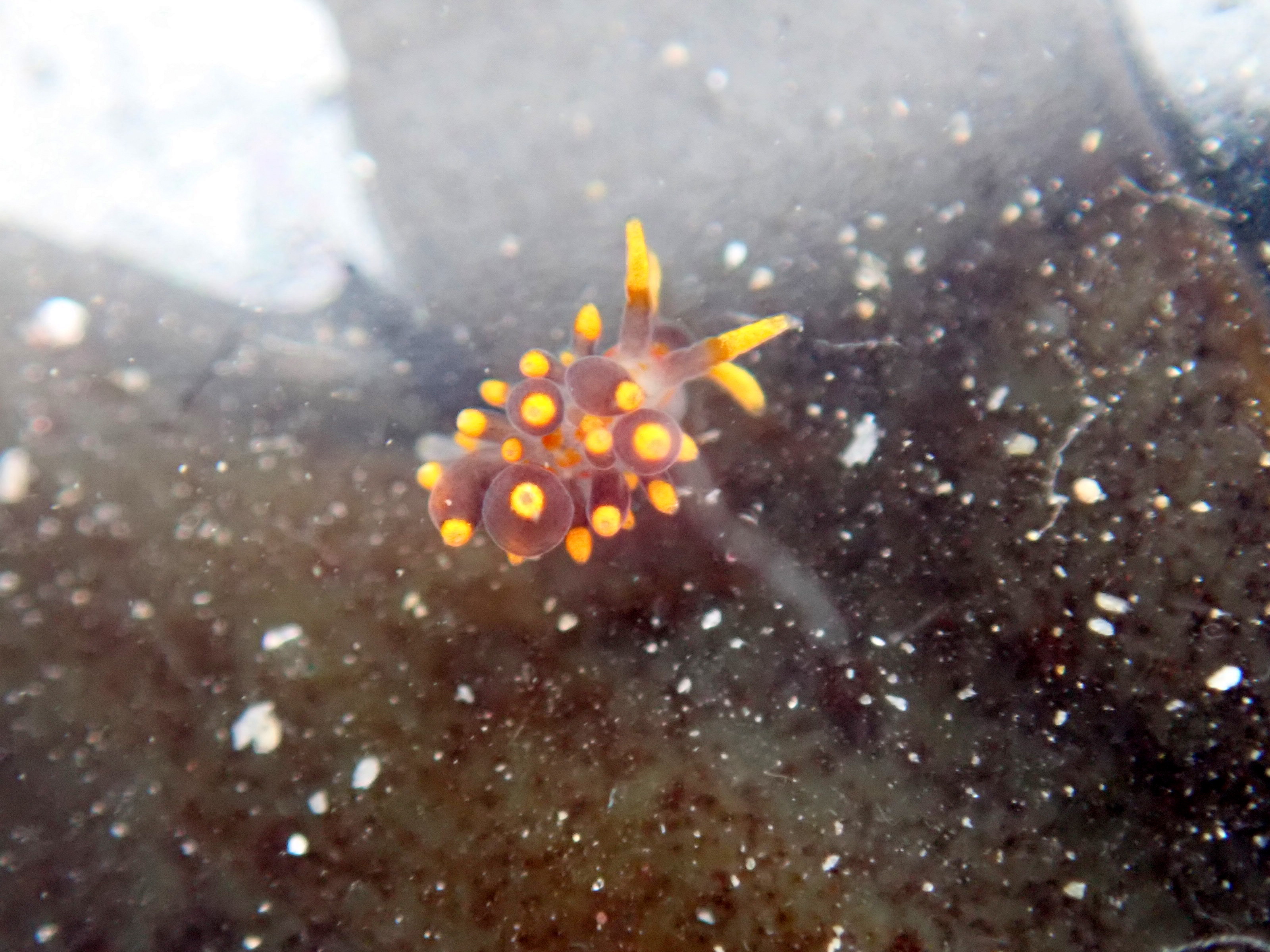
    Scarlet and gold cup corals

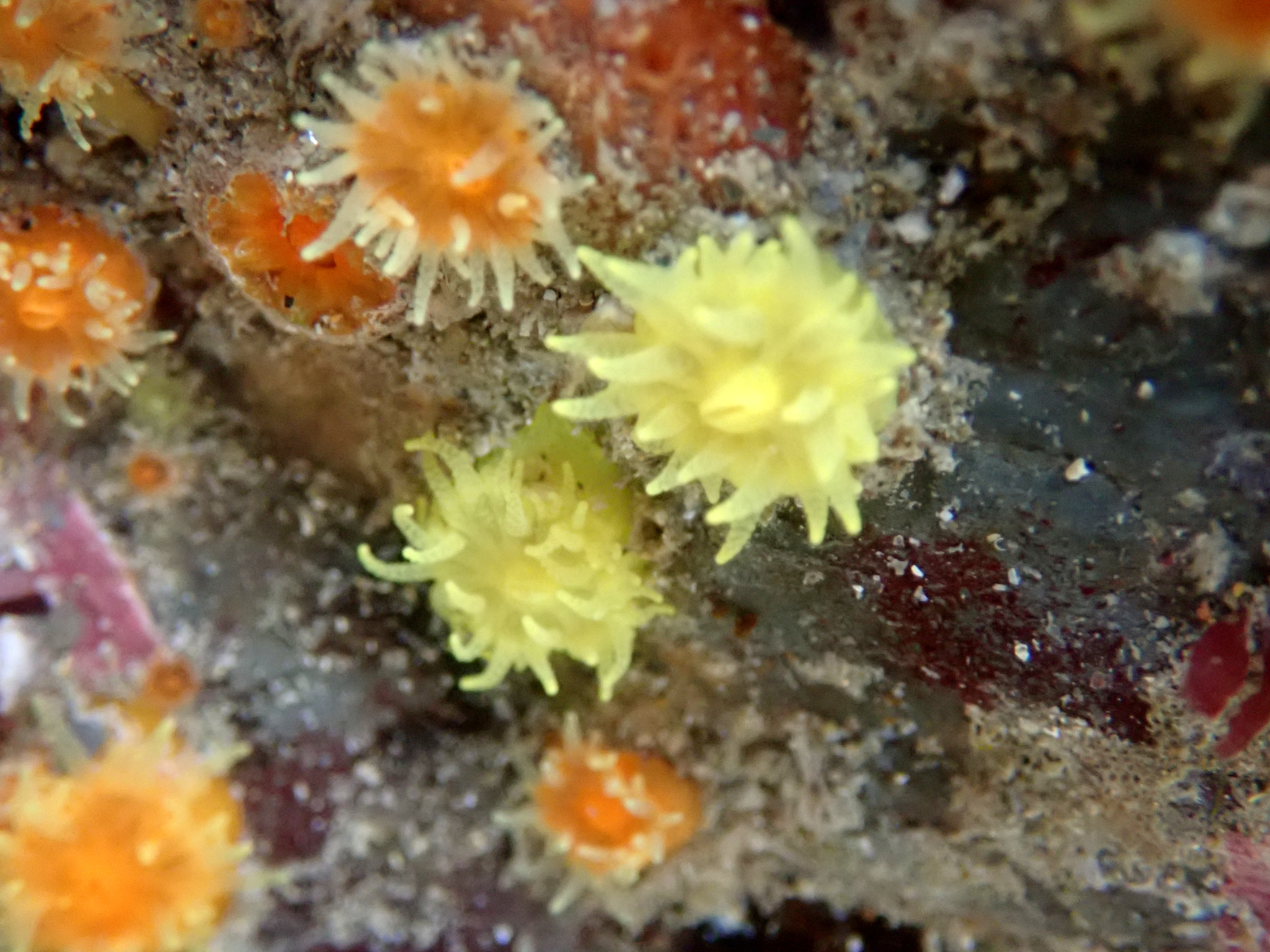
    These tiny orange and yellow corals open their transluscent tentacles in the water here and always astound me. Their delicate soft bodies encase a spongy, fragile exoskeleton, none of which looks like it could stand up to a gust of wind, let alone the fierce, pounding seas that rage through this gully on a daily basis. Despite their soft appearance, scarlet and gold cup corals, like the Celtic sea slugs, thrive in these wild places.

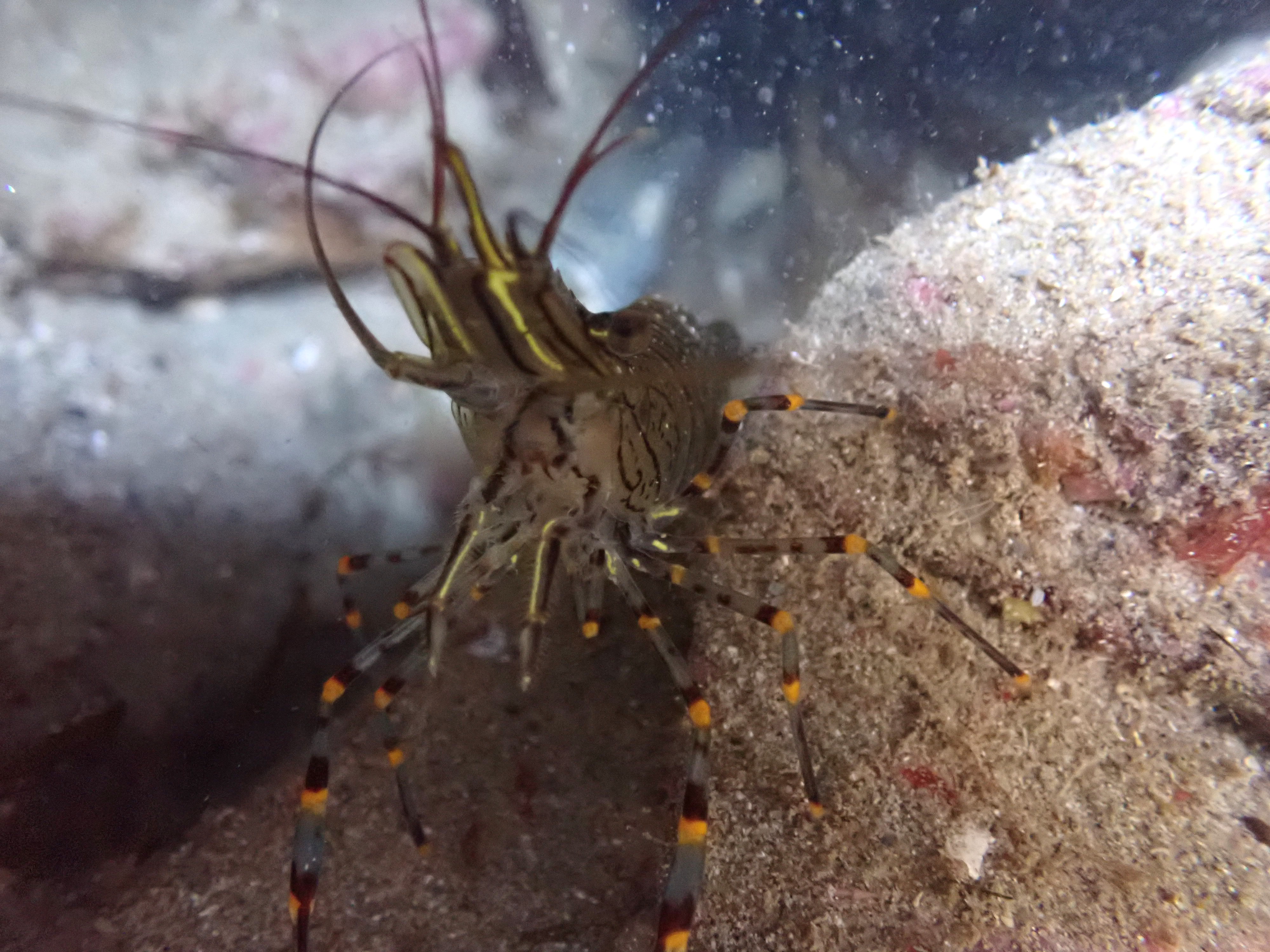
    It was a good thing we had left ourselves plenty of time to explore this rock pooler’s paradise. Between deep pools packed with enormous snakelocks anemones and prawns as big as my hand, we scrambled and stared at the huge diversity of species in front of us. Arctic and three-spot cowries moved across the damp surfaces encrusted with pink seaweeds and colourful sea squirts. Groups of light-bulb sea squirts seemed to shine out from the dark water and so much life abounded on every surface that we moved with great caution for fear of accidentally treading on creatures.
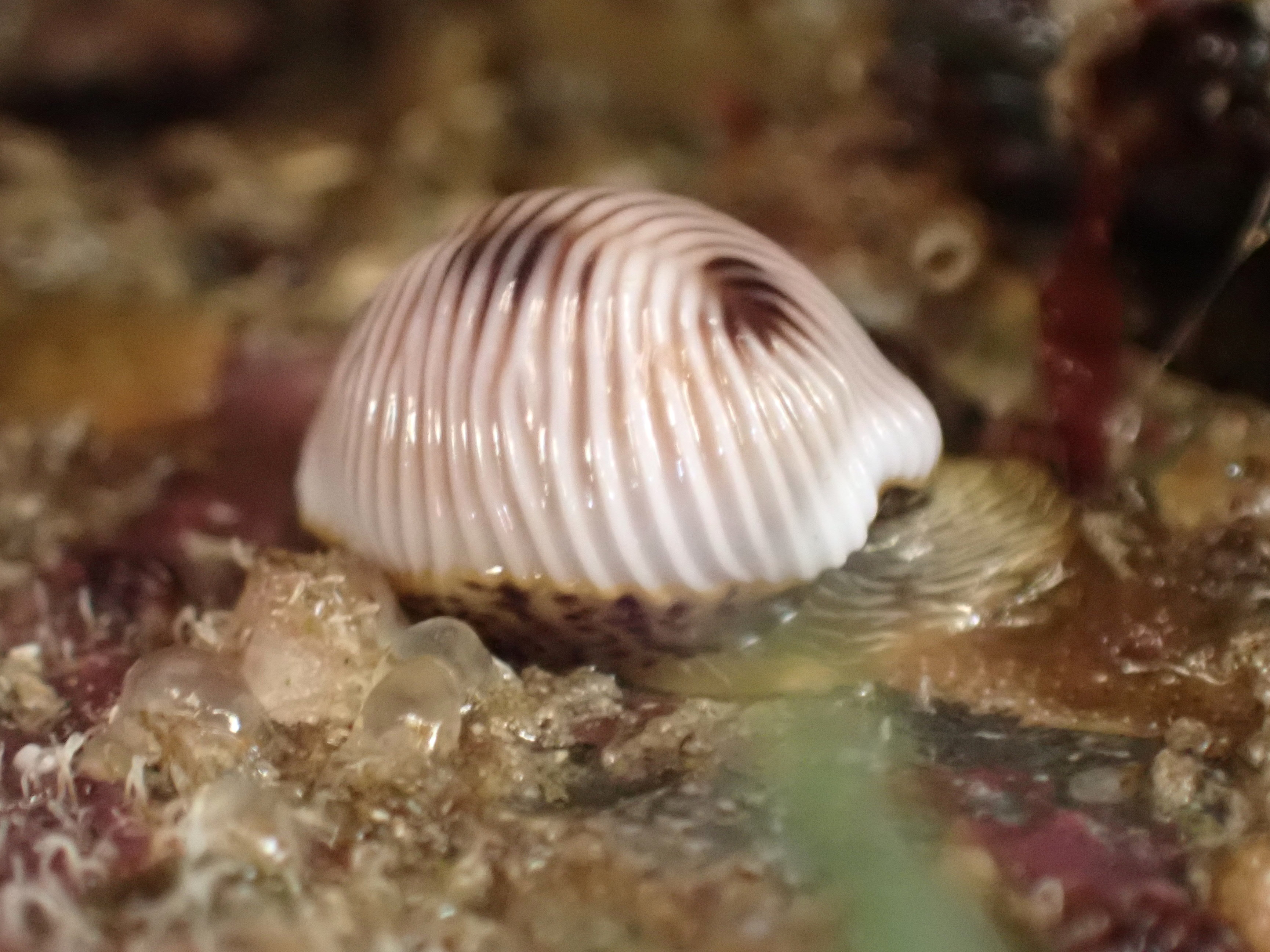
    3-spot cowrie

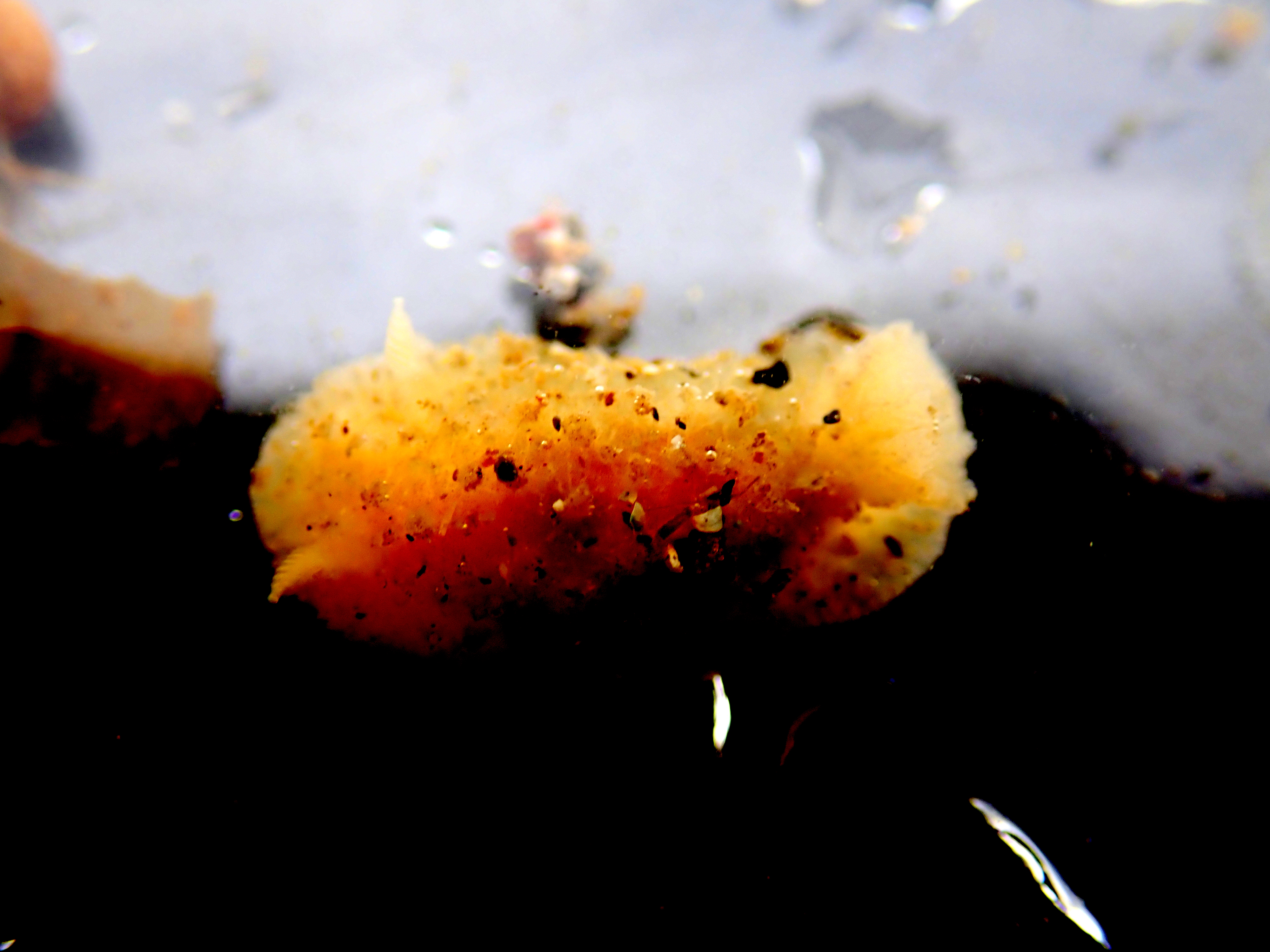
    The underside of a large boulder at the head of the gully was coated in a red sponge. A quick inspection revealed a small white coil of sea slug sponge. It took me longer to find the slug, which matched its background flawlessly. Rostanga rubra are a common find on these sponges but this was another first for my friend who is almost as obsessed with slugs as I am. He was so delighted with this little find that he took some persuading to move away from the gully before the tide turned.
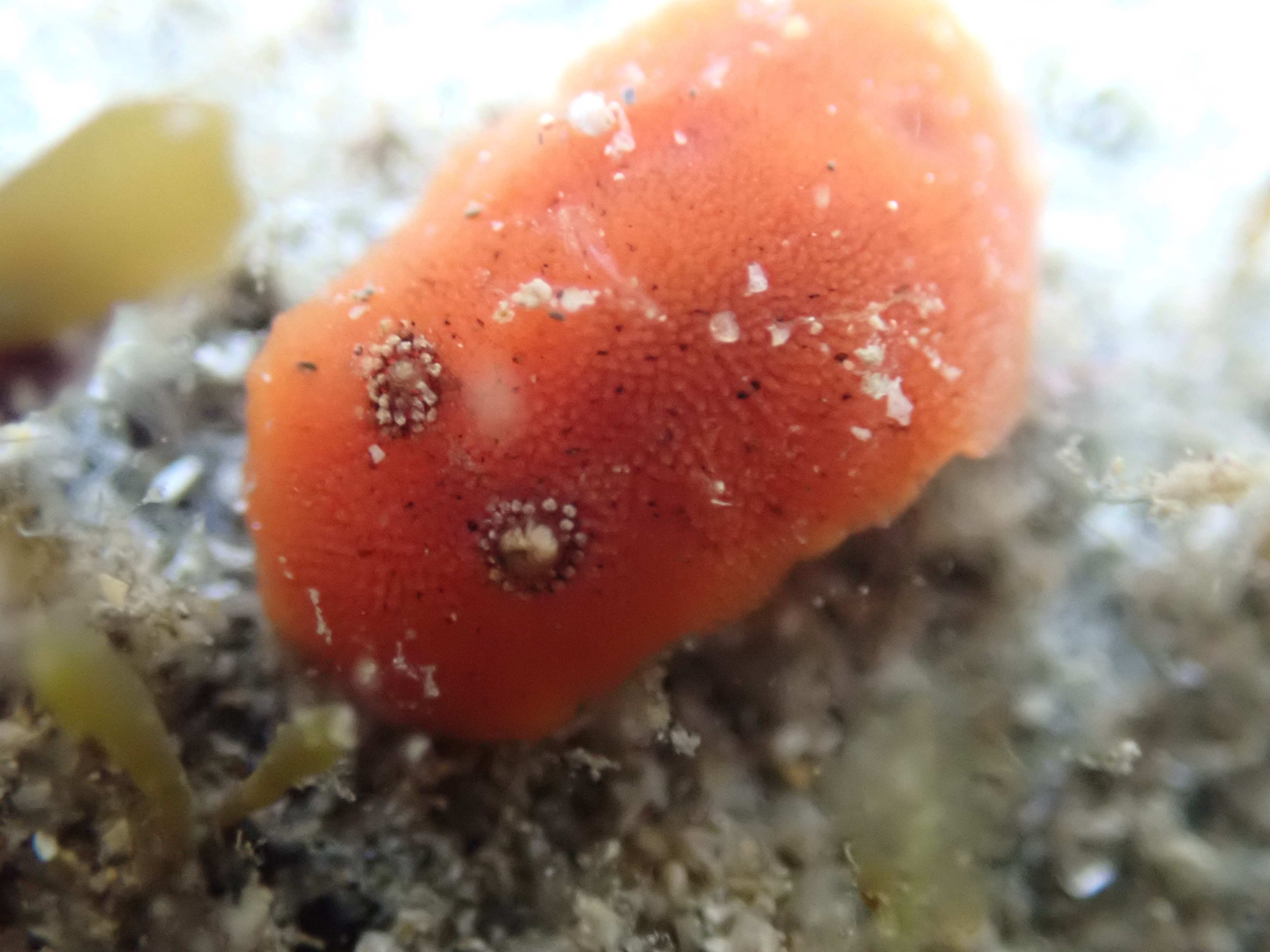
    Rostanga rubra sea slug
    Rostanga rubra sea slugs feed on orange and red sponges such as Ophlitaspongia papilla. As they feed they take in the colour from the sponge, which makes them perfectly camouflaged.

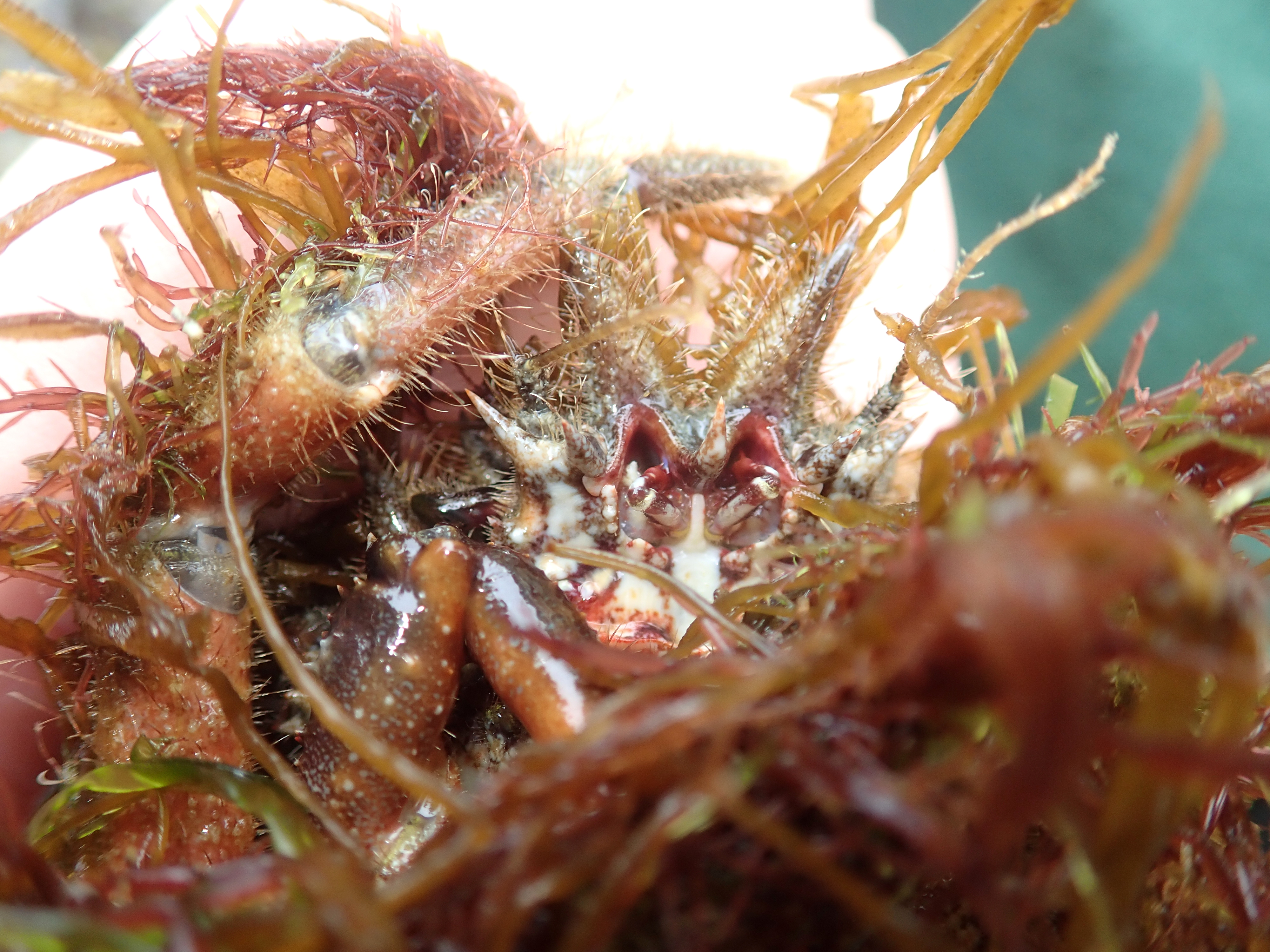
    On our way out of the gully, we waded through a pool, up to our waists in the water and no longer caring how wet we were. Hidden at the back of the pool we discovered a deep hole in the rock that harboured dozens of scarlet and gold cup corals and many large snakelocks anemones. I spotted a leg sticking out from underneath this one and uncovered this Leach’s spider crab (Inachus phalangium) sheltering there.
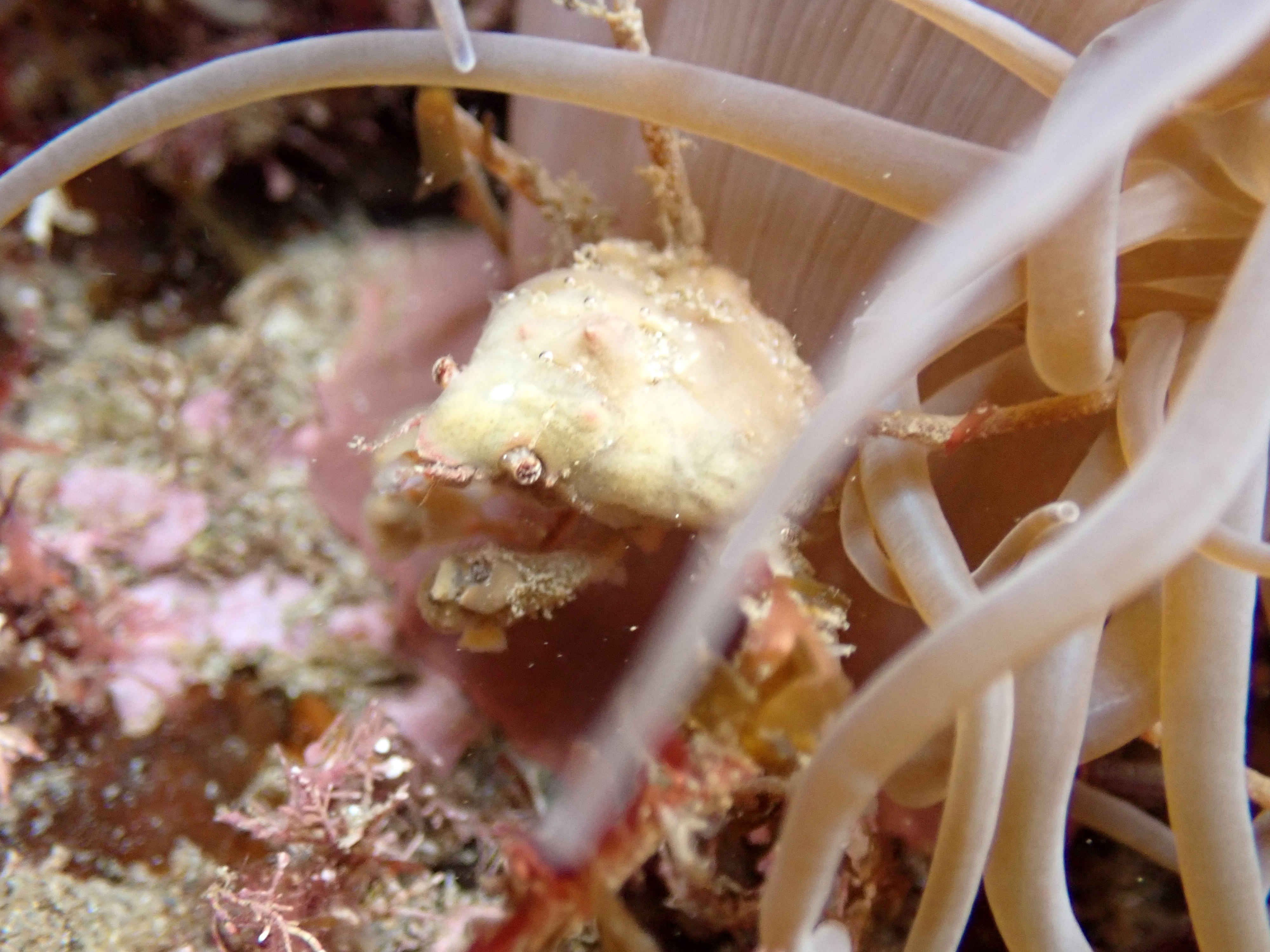
    Inachus phalangium living in the shelter of a snakelocks anemone’s stinging tentacles. This crab also grows sponge on its carapace for camouflage.

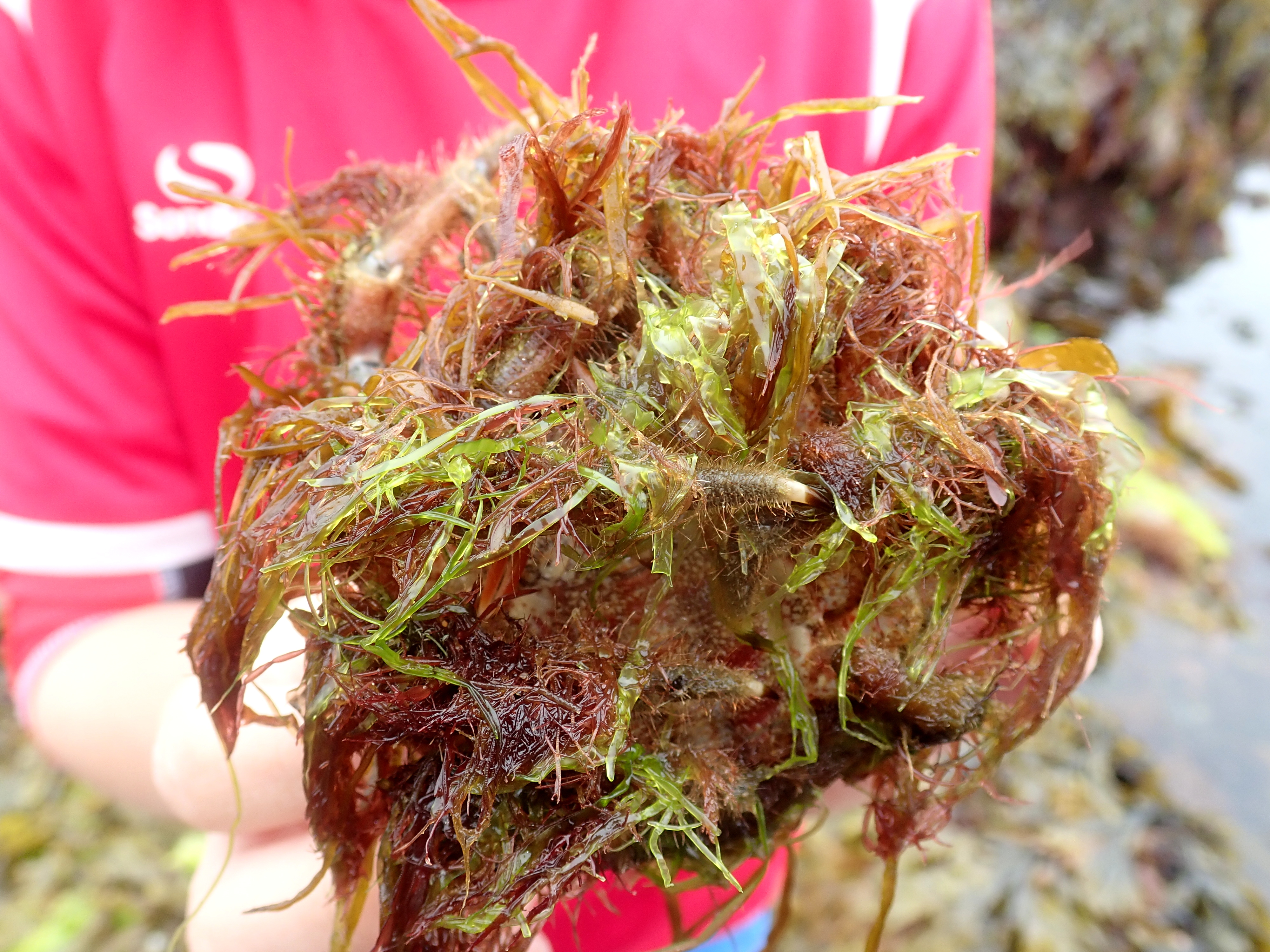
    A shallow pool nearby was dotted with tufts of rainbow weed. To our surprise, these harboured many Asterina phylactica – a small species of starfish. A nearby clump of codium seaweed was also home to several Elysia viridis sea slugs.
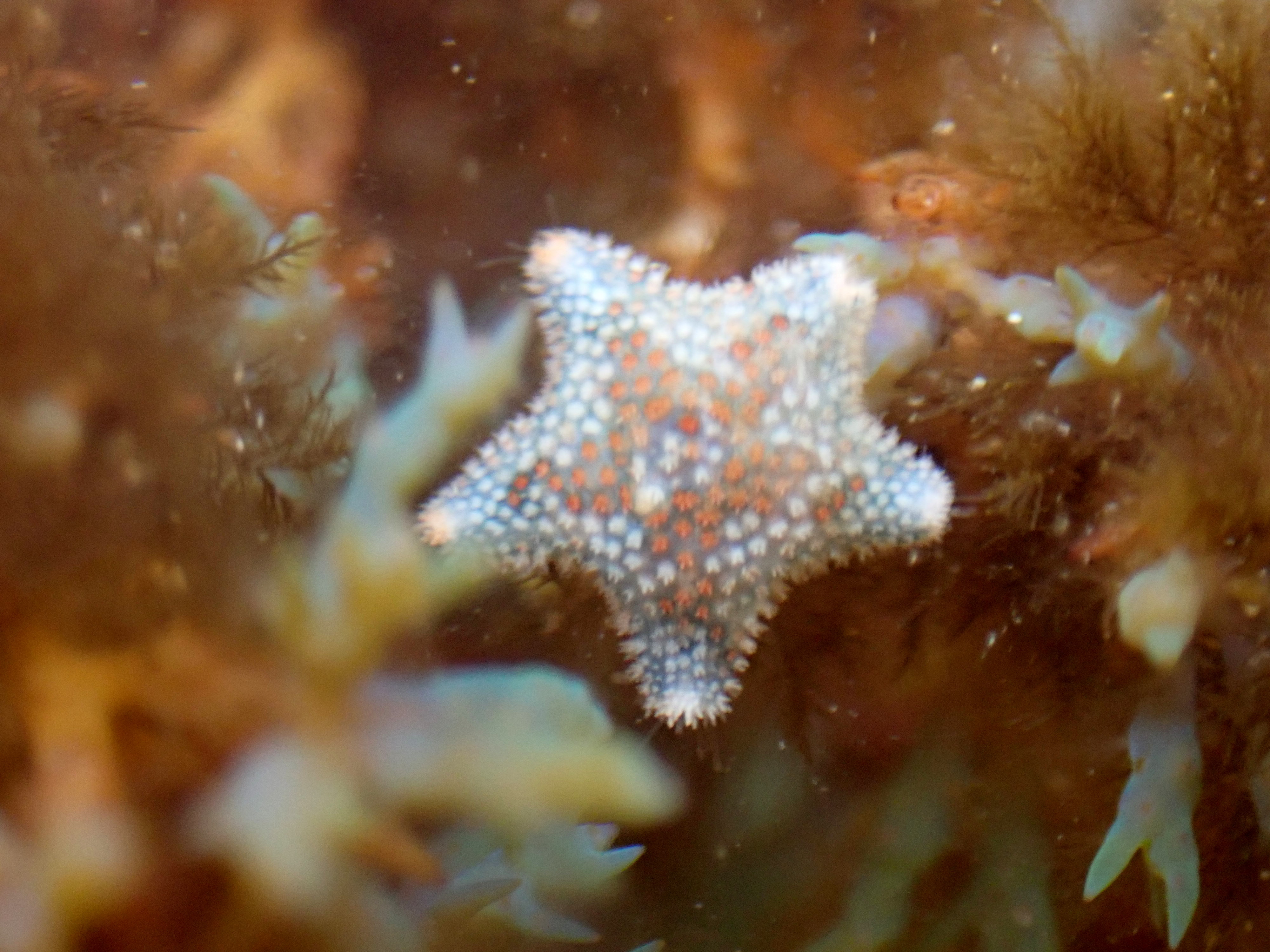
    Asterina phylactica – a small species of cushion star.

    On our way back across the beach, my friend found a clump of seaweed with half a dozen stalked jellyfish growing on it. This time, the blobs of the primary tentacles between the arms were easy to spot and we could be sure that these were Haliclystus octoradiatus.
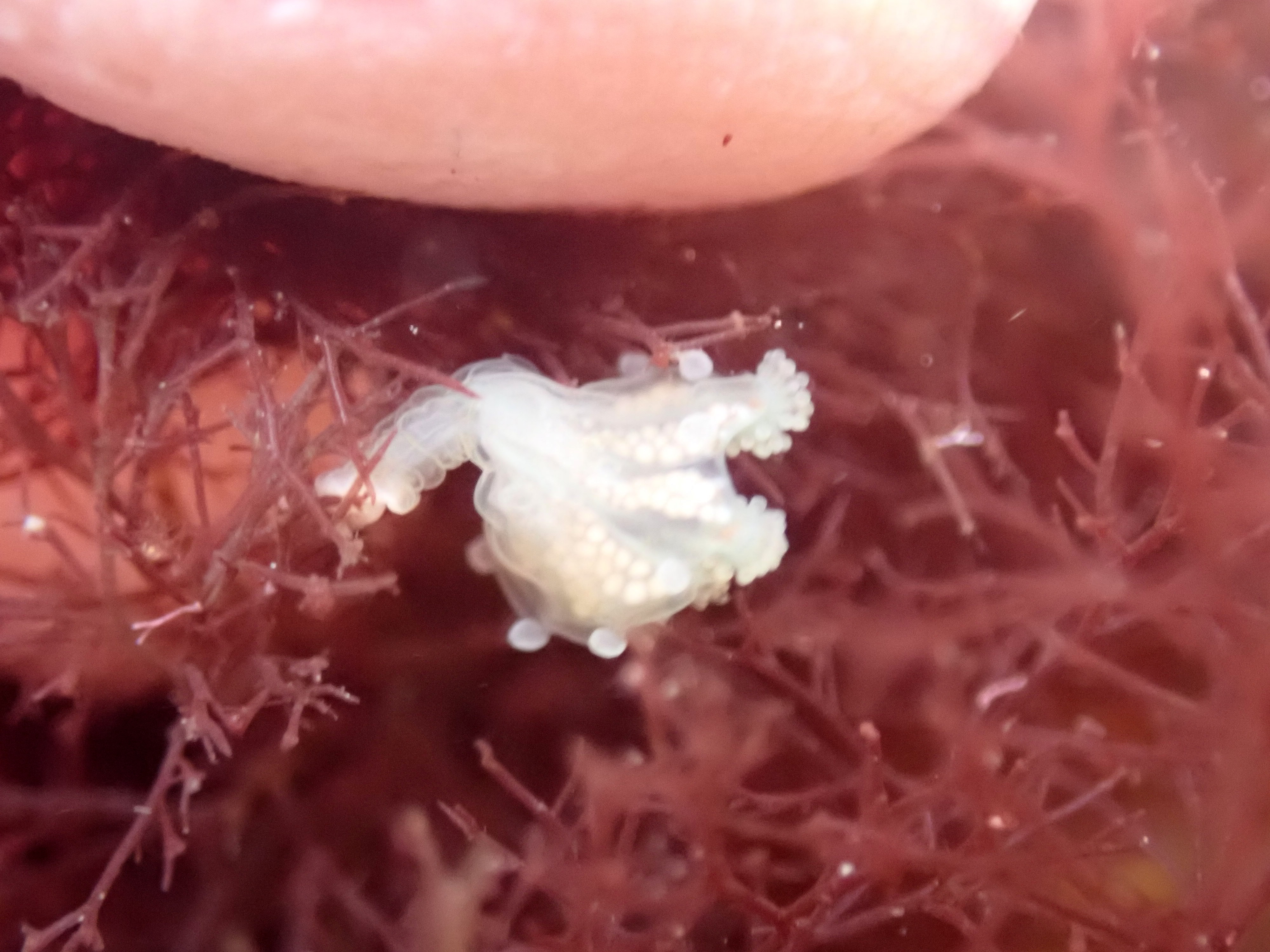
    A white Haliclystus octoradiatus stalked jellyfish

    With most of our bingo card of southerly species complete and with another day of rock pooling to try to find the remaining species, my friend set off up the beach to rest and enjoy a well-earned picnic.

    Junior and I lingered in the sunny pools, exploring further into the slippery masses of thong weed and kelp until the tide turned.

    To celebrate the rare August sunshine, we finished the day with a visit to the vast rock pool where I used to swim as a child. Plunging into the cool waters, I experienced the familiar feelings of wonder and trepidation at the thought of what might lurk in the depths.

    We splashed and floated between the rocky walls, finding starfish, prawns, star ascidians and sponges as we swam, side by side. Time might move on, but this beach never loses its magic.

    Sea hare, Aplysia punctata, at Porth Mear
    A blue-rayed limpet on kelp at Porth Mear
    A yellow form of the Scarlet and gold cup coral.
    A huge prawn checks out my camera!
    A shanny (common blenny) hiding in a crevice waiting for the tide to come in at Porth Mear.
    Light bulb sea squirts at Porth Mear.
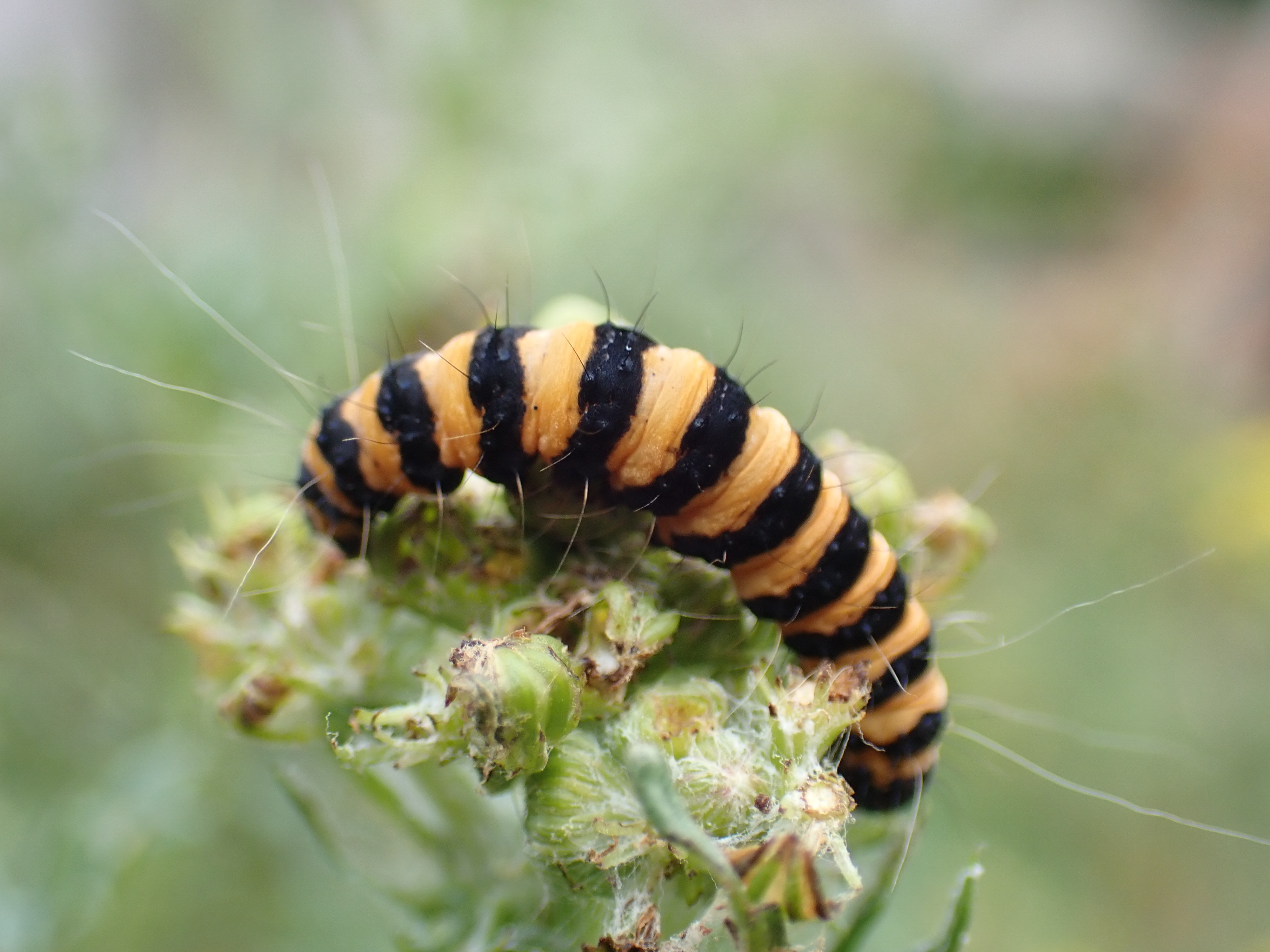
    The walk to and from Porth Mear is always a wonderful part of the adventure – Junior spotted lots of cinnabar moth caterpillars on our way back.
  • An Outbreak of Starfish – Wildlife Watch Explores Readymoney Cove

    An Outbreak of Starfish – Wildlife Watch Explores Readymoney Cove

    Before I’ve found the time to upload all of last year’s records, the rock pooling event season is upon me again. Junior comes along to help at my first Wildlife Watch event of the year for Cornwall Wildlife Trust at Readymoney Cove, undeterred by the bone-chilling wind.

    A crowd of hardy young rock poolers, kitted out from head to toe in weatherproof gear, is gathered at the top of the beach and I am joined by Liz, a lovely volunteer assistant. Half the group have their hands up before I’ve even asked a question and these keen kids are practically bursting with stories and facts about crabs, blennies, pipefish and killer jellyfish. They also have high expectations of what we might find – seahorses and cuttlefish are among the requests – but most of all they want to see starfish.

    Starfish of some sort are almost guaranteed on all our local beaches, especially cushion stars, which like to hide under rocks and overhangs. If we are lucky we might also find brittle stars, that walk on their five feathery arms, or even a gargantuan spiny starfish, so I am hopeful that we will be successful on our mission.

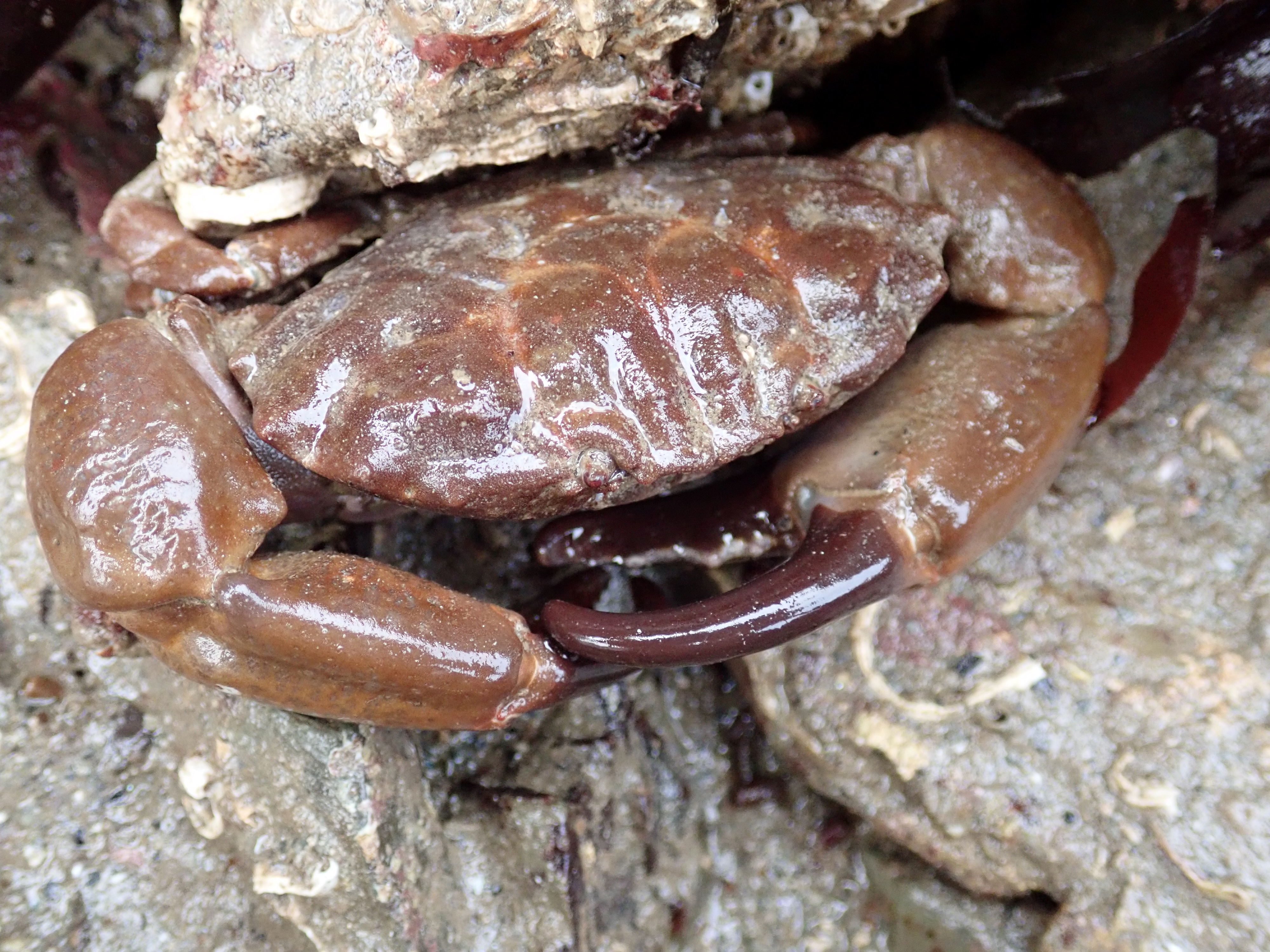
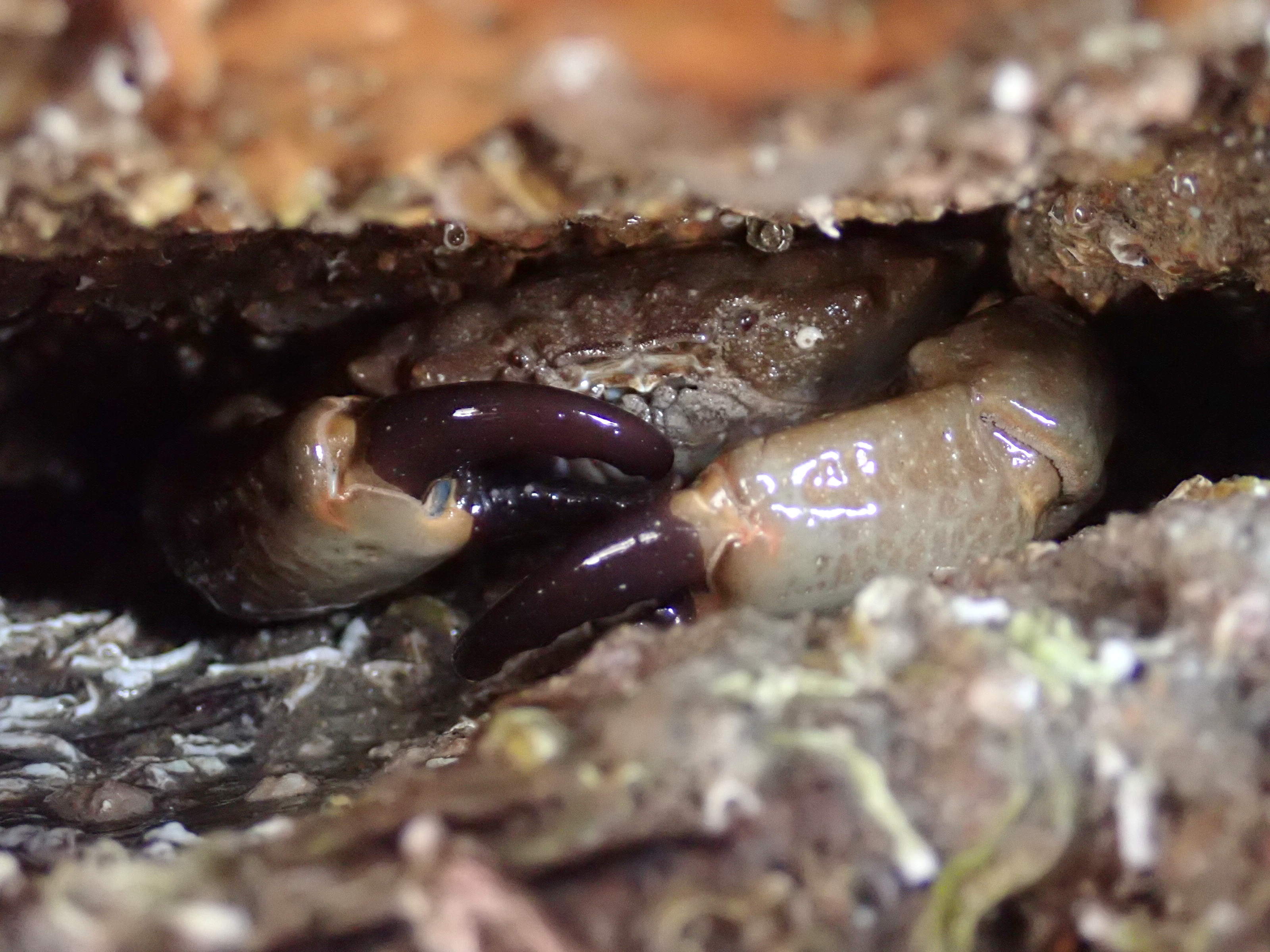
    As the group spreads across the shore, the finds soon rush in. We turn shiny top shells in our fingers, hold chunky-clawed Xantho hydrophilus crabs, and to the immense joy of one young seahorse enthusiast, we find the next best thing to a seahorse: a male worm pipefish with eggs on his belly.

    Xantho hydrophilus - the 'furrowed crab'.
    Xantho hydrophilus – the ‘furrowed crab’.

    Male worm pipefish with eggs
    Male worm pipefish with eggs

    Pipefish are close relatives of the seahorse and the male takes care of the female’s eggs, storing them in a special groove on his belly until they hatch. Coincidentally this pipefish has taken up residence next to an old pipe.

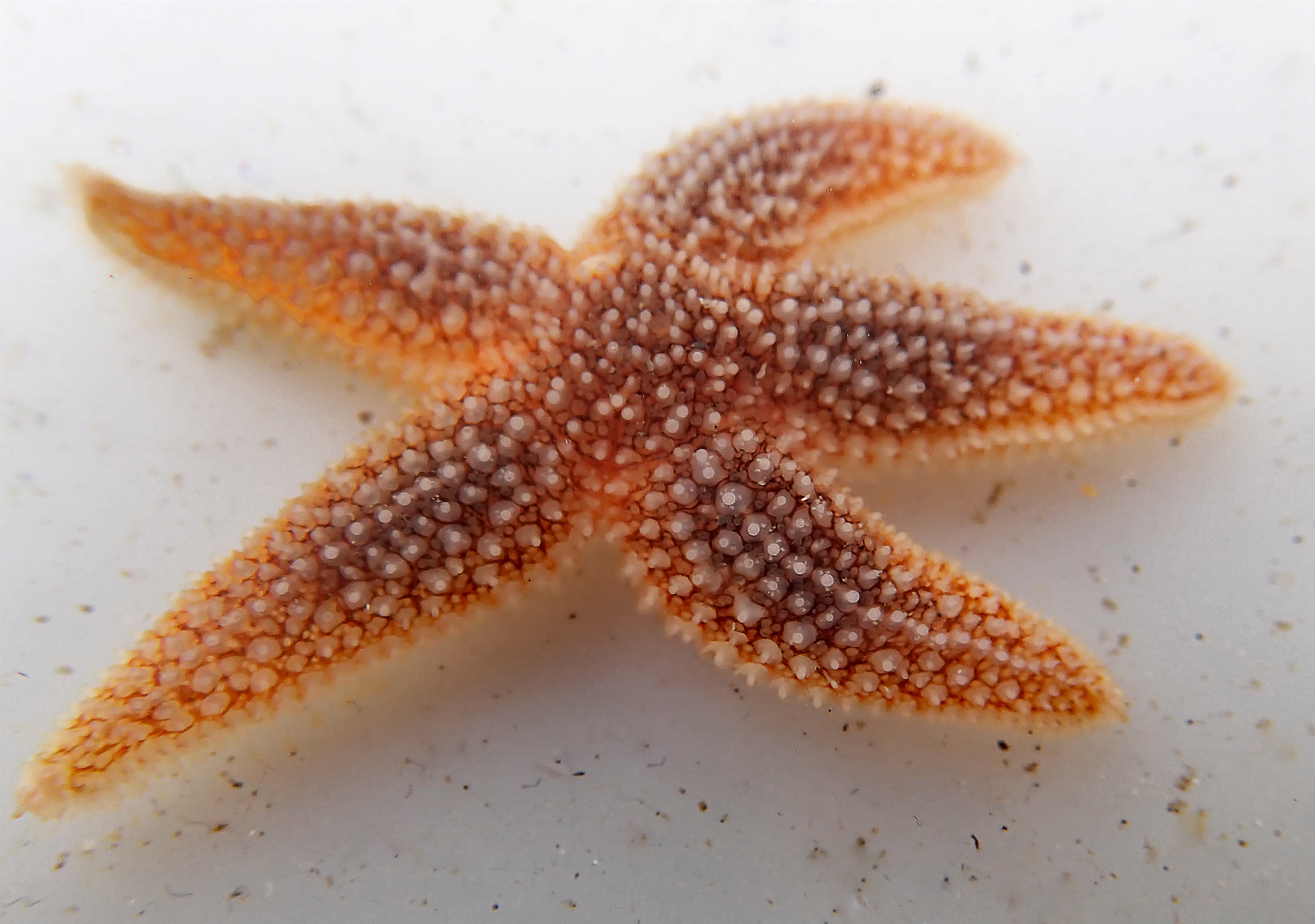
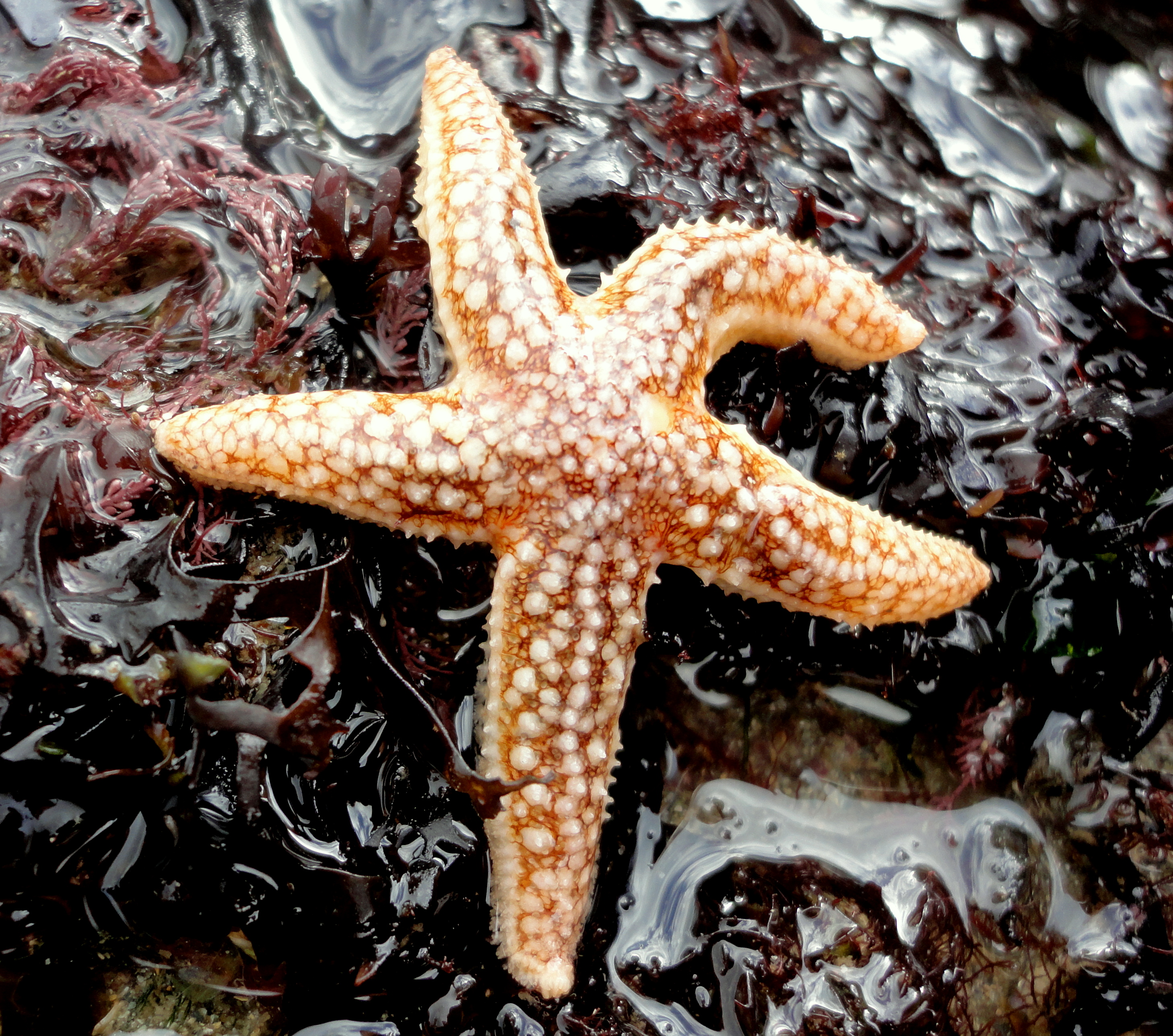
    It only takes a minute for the children to discover a common starfish. I often find one or two on this beach, even though they’re not so common intertidally as offshore. The deep-water harbour alongside this beach is probably packed with them and sometimes young common starfish make their way into these sheltered pools. Today, however, there is something unusual going on.

    One of the common starfish found - photo courtesy of Liz Barker
    One of the common starfish found – photo courtesy of Liz Barker

    Under the first stone I turn, I see two baby common starfish. As I look I notice a third, a fourth and then a fifth. On the side of the rock, there is yet another starfish. The adjacent rock has four more.

    Common starfish at Readymoney Cove near Fowey
    Common starfish at Readymoney Cove near Fowey

    Everywhere on the beach, children are shrieking with excitement as they find more starfish. There are scores of them among the rocks I look at.

    We could easily collect the starfish by the bucket-load, but these children know not to disturb the animals. We keep just a few for our trays so that we can watch them and all those who want to can have a go at holding a starfish before they are returned to their rocky homes.

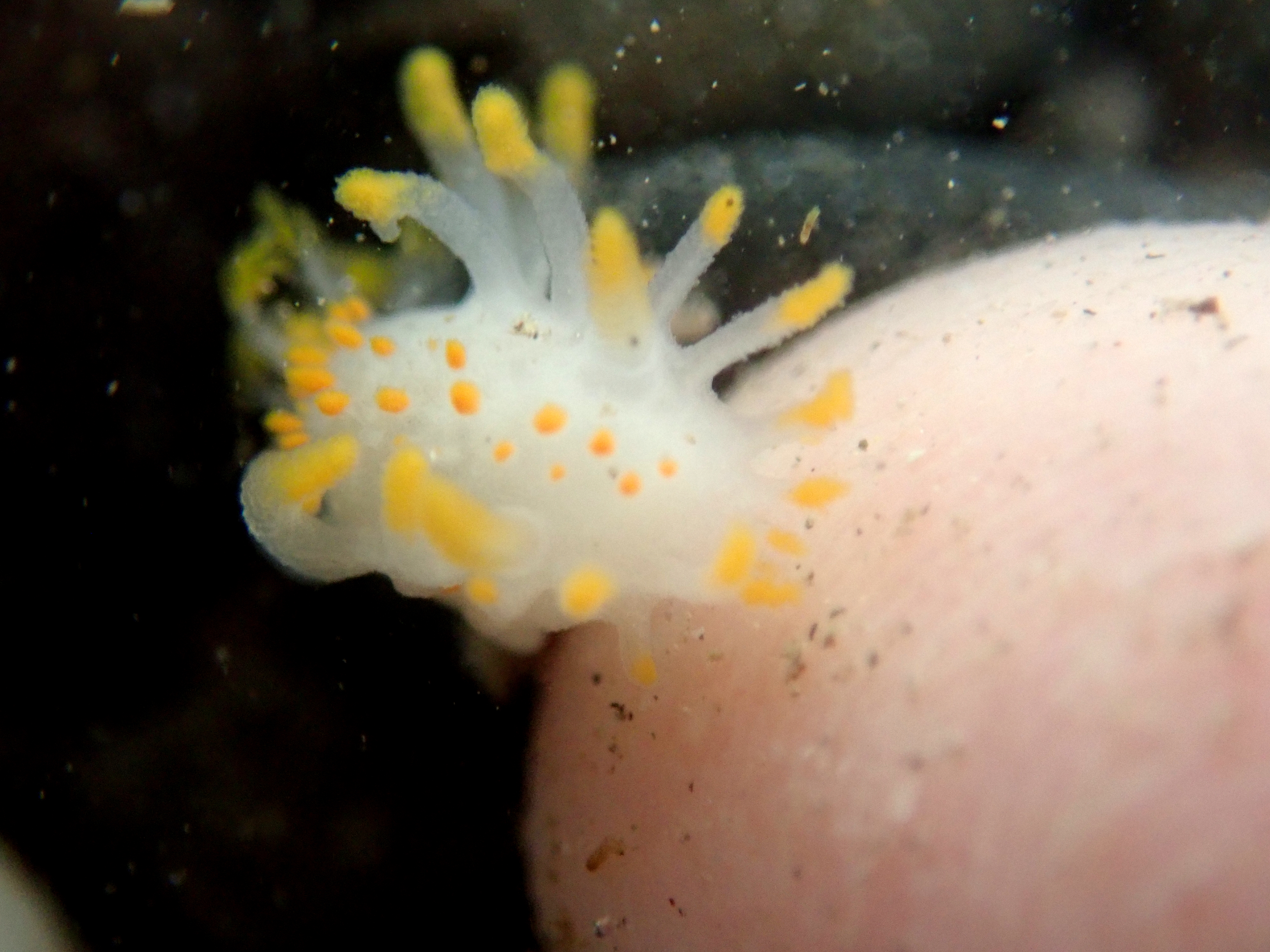
    While the children are caught up in the magic of starfish, I take a moment to explore the rocks at the sea’s edge and discover this wonderful yellow clubbed sea slug, Limacia clavigera.

    Limacia clavigera - the yellow-clubbed sea slug
    Limacia clavigera – the yellow-clubbed sea slug

    There is never enough time to take many photos at these events as I am too caught up in the excitement of identifying finds and helping the children learn more about them. We also have plenty of discussions about the animals’ impressive defences and quirky eating habits.

    The children do a perfect job of looking after the animals, returning them all safe and unharmed to their homes before the incoming tide floods back into the pools. Despite the chilly conditions, the kids are buzzing with happiness at finding so many starfish. A friend tells me her kids talked of nothing else all the way home.

    Even Junior, who has seen most things before, is delighted with today’s finds and even more delighted when he secures the very last cheese and onion pasty from the beach shop for his lunch.

    If you’d like to get involved with Wildlife Watch, book on to my rockpooling sessions or join any other Wildlife Watch events, check out the listings on the Cornwall Wildlife Trust pages.

    Did you know that starfish can regrow their limbs? Find out more about the secrets of these iconic rock pool animals in my book Rock Pool: Extraordinary Encounters Between the Tides out on 2nd May with September Publishing and available through local and national bookshops and online.

  • West Cornwall Adventures

    West Cornwall Adventures

    You’re never far from a beach in Cornwall, but the distances from one end of the county to the other mean I visit some beaches more often than others. I made the most of a recent trip ‘out west’ visiting friends to explore the Penzance area.

    Although Mount’s Bay itself is a protected area and is best left undisturbed, there are plenty of fabulous rock pools to discover near the town and at nearby Mousehole.

    The wealth of colourful seaweeds here makes the clear waters especially enticing. Stepping carefully among them, I found clingfish, shark egg cases and an abundance of stalked jellyfish.

    A small species of clingfish hides among the coral weed near Penzance.
    A small species of clingfish hides among the coral weed near Penzance.

    A Calvadosia cruxmelitensis stalked jellyfish near Penzance. The diverse seaweeds of the Mounts Bay area provide a perfect habitat for a variety of stalked jellyfish species.
    A Calvadosia cruxmelitensis stalked jellyfish near Penzance. The diverse seaweeds of the Mounts Bay area provide a perfect habitat for a variety of stalked jellyfish species.

    Star ascidians formed a psychedelic wallpaper of turquoise and pastel blue petal patterns along some deep overhangs. Close by, another star ascidian colony painted the rocks in saffron yellow. 

    The delicate colours of this star ascidian blew me away. It comes in so many colour morphs, but this one was new to me.
    The delicate colours of this star ascidian blew me away. It comes in so many colour morphs, but this one was new to me.


    More of the wonderful pastel-blue star ascidian, looking like an impressionist flower painting.
    More of the wonderful pastel-blue star ascidian, looking like an impressionist flower painting.

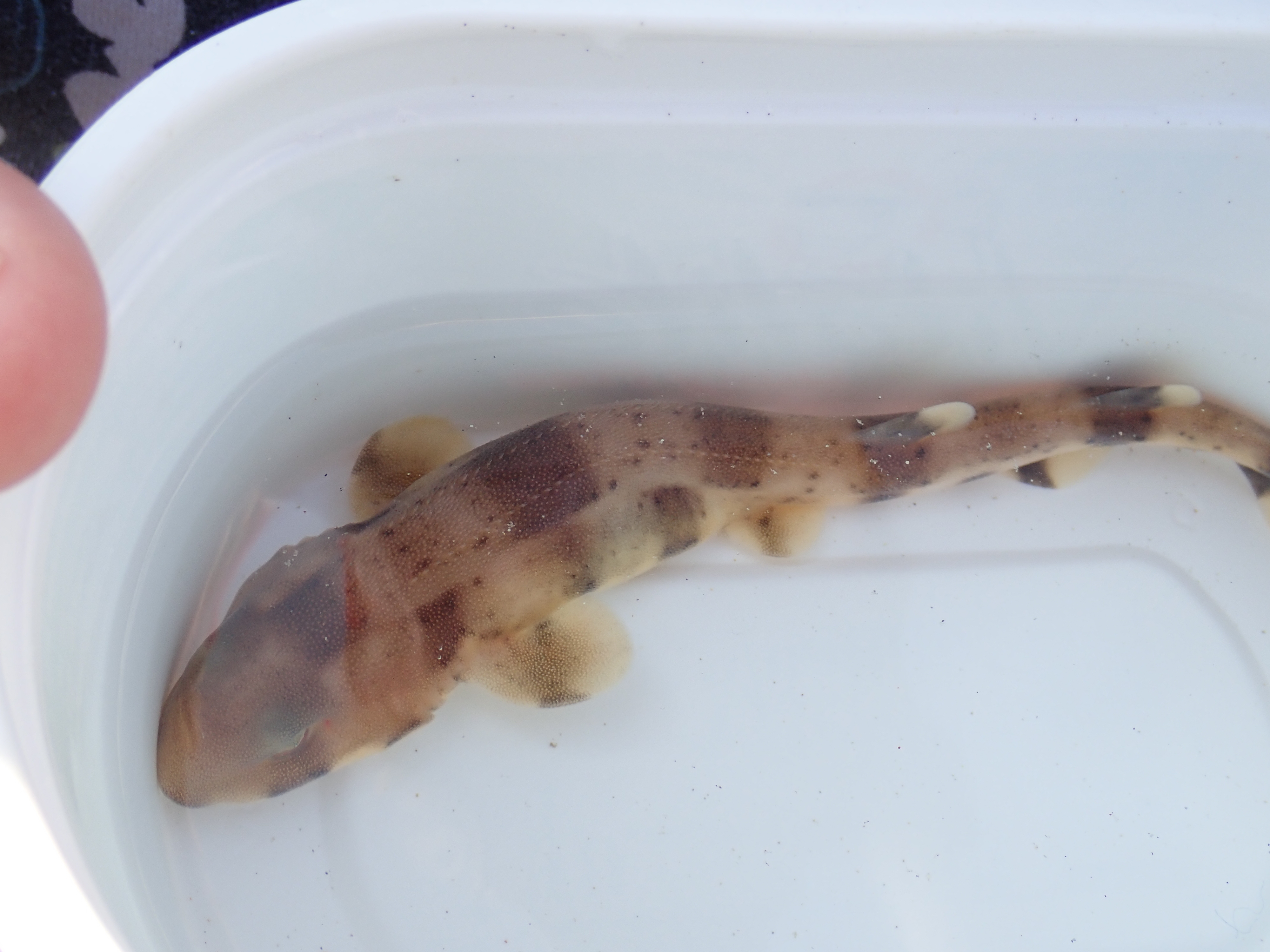
    Shouts carried across the shallow waters. My friends had found something exciting: a newly-hatched baby catshark. This young greater-spotted catshark, also known as a bull huss or nursehound, had spent many months incubating in an egg case before emerging. When fully grown it could be over one-and-a-half metres, but for now it lay quietly in the tub, taking in the world through half-closed eyes. We returned it quickly to the shelter of the dense seaweed where it would soon be covered by the rising tide.

    A cat shark egg case with a young greater-spotted catshark developing inside
    Egg case with a young greater-spotted catshark developing inside

    Hatchling greater-spotted catshark, which we kept for a minute before returning it safely exactly where it was found.
    Hatchling greater-spotted catshark, which we kept for a minute before returning it safely exactly where it was found.

    As the days begin to lenthen noticeably I hope this is the first of many forays to new and more distant beaches over the course of the summer. No matter how many times I visit the rock pools, there is always something new.

    If you’re looking for some summer reading, my book Rock Pool: Extraordinary Adventures Between the Tides is out on 2nd May with September Publishing and is available at local book shops, Waterstones and through NHBS as well as through online retailers.

    Another species of stalked jellyfish - Haliclystus octoradiatus - near Penzance
    Another species of stalked jellyfish – Haliclystus octoradiatus – near Penzance

    A beautifully marked pheasant shell near Penzance, Cornwall
    A beautifully marked pheasant shell near Penzance, Cornwall

  • Blustery Rock Pooling in North Cornwall

    Blustery Rock Pooling in North Cornwall

    When the tides are perfect, I always hope that the weather will be perfect too, but this is Cornwall in late winter and strong southerlies are whipping up the waves. I plan my rock pooling accordingly, choosing Porth Mear, a north-facing beach between Newquay and Padstow to avoid the worst of the storms, accompanied by Junior and a new friend and fellow rock pool enthusiast.

    Whatever the conditions may be, it’s a welcome chance to grab some fresh air after months of writing my new book Rock Pool: Extraordinary Encounters Between the Tides, which is out on 2nd May with September Publishing.

    Junior hones his photography skills
    Junior hones his photography skills

    I give Junior a camera to use and he’s straight on the case, trying out the settings and attempting to capture a blenny at the back of a hole in the rock. He spots some jelly nearby; the eggs of a sea lemon slug and we soon find the animal itself. We place it in water to watch its gills and ringed rhinophores (head tentacles) emerge.

    In the water the sea lemon's rhinophores and frilly gills emerge and we can see its wonderful colours
    In the water the sea lemon’s rhinophores and frilly gills emerge and we can see its wonderful colours

    We edge further down the beach, keeping a nervous watch on the swell that is breaking over the rocks and exploding through the gullies. Junior takes photos of everything and is entranced by the blue-rayed limpets, manoeuvring himself through every possible angle as he tries to capture the iridescent turquoise lines on their tiny shells.

    Blue-rayed limpet. Photo by Cornish Rock Pools Junior
    Blue-rayed limpet. Photo by Cornish Rock Pools Junior

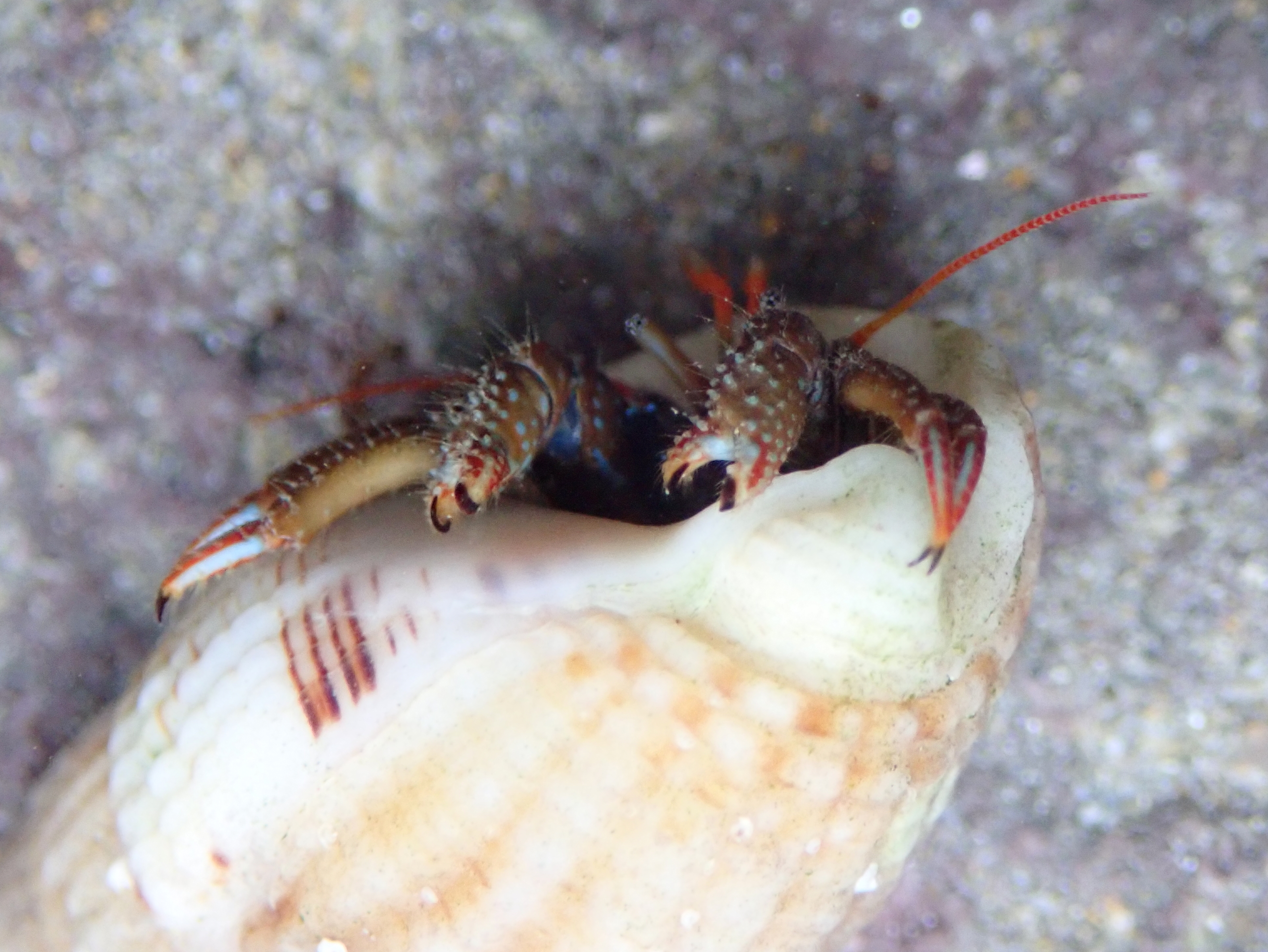
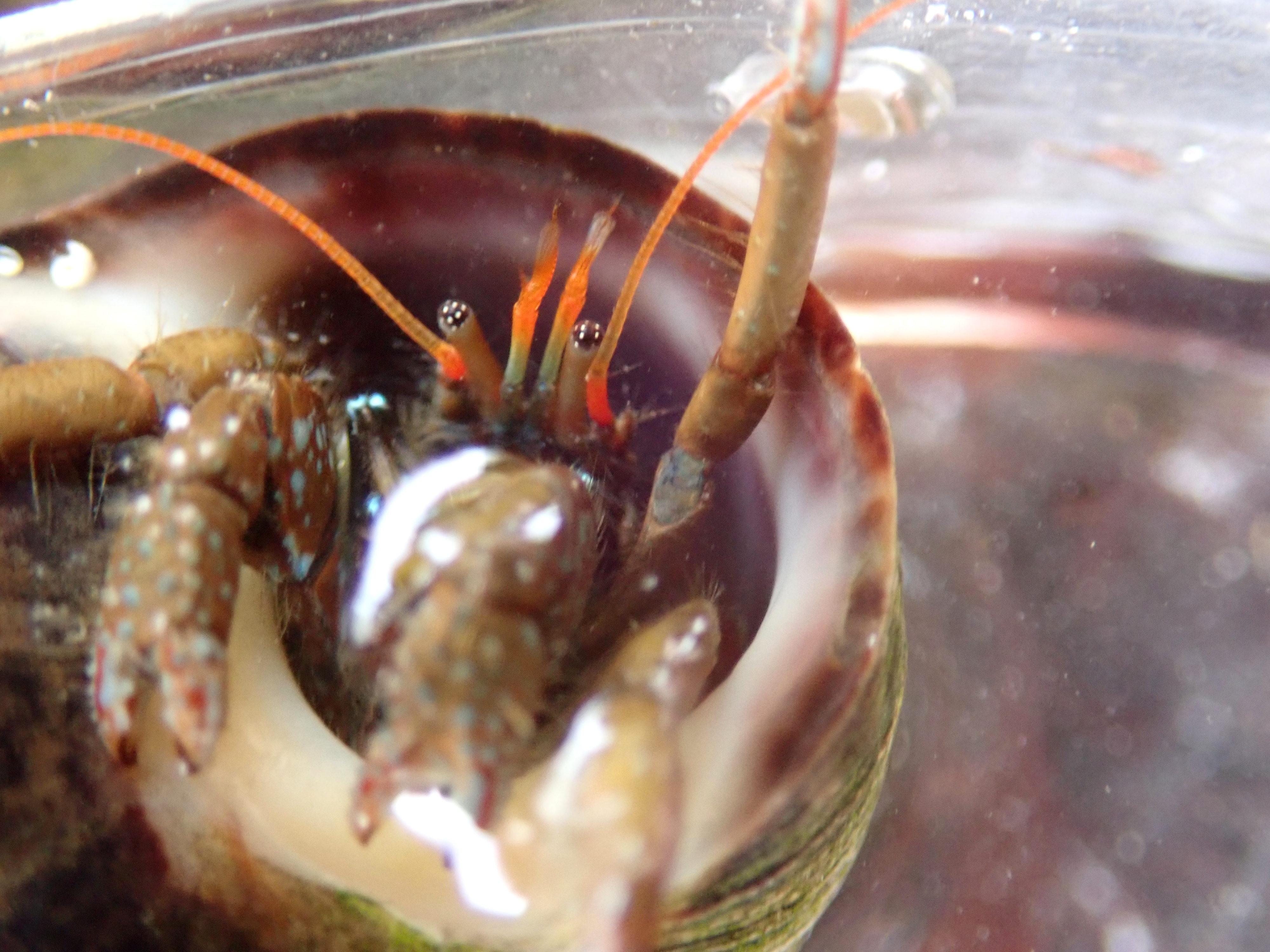
    We find two thriving colonies of St Piran’s hermit crabs, with dozens of shells of all sizes in and around one pool, all occupied by these hermits. They are immediately recognisable by their red antennae and blue-tinged claws, but they stay firmly tucked away in the recesses of their borrowed shells.

    A brief glimpse of a St Piran's hermit crab.
    A brief glimpse of a St Piran’s hermit crab.

    Junior is keen to show our new friend a gully where we often make interesting finds, but even as the tide dips to its lowest point, we are unsure whether it will be accessible. We climb to a high vantage point to look down at our favourite spot, but with foaming waves crashing over the rock face on one side, we admit defeat.

    I lead the way over the rocks to another sheltered inlet and we clamber down into a deep cleft in the blue slates. The wet rocks are so steep and slippery that after sliding to the bottom I briefly wonder if I will be able to haul myself out again, but I am soon distracted by the richness of the rocks here. Three-spot cowries abound and a large edible crab is resting under an overhang.

    The European 3-spot cowrie (Trivia monacha)
    The European 3-spot cowrie (Trivia monacha)

    Our friend carries on over a huge boulder to look at the pool on the other side. We discover cup corals at the same time; there is just a scattering of them on our side, but many dozens in the pool out friend has found.

    Junior and I cross to take a look and balance precariously on the edge of a deep pool, leaning under a steep shelf of rock to try to take photos of the corals that are tucked away there. Most of the scarlet and gold cup corals are a deep, warm orange, but some are bright yellow like tiny suns.

    Scarlet and gold cup corals at Porth Mear - showing both the yellow and the orange varieties.
    Scarlet and gold cup corals at Porth Mear – showing both the yellow and the orange varieties.

    Within a couple of minutes, we can feel a shift in the sea and the waves are breaking harder and closer to us, so we abandon our efforts to take photos and slip and scramble our way out of the gully.

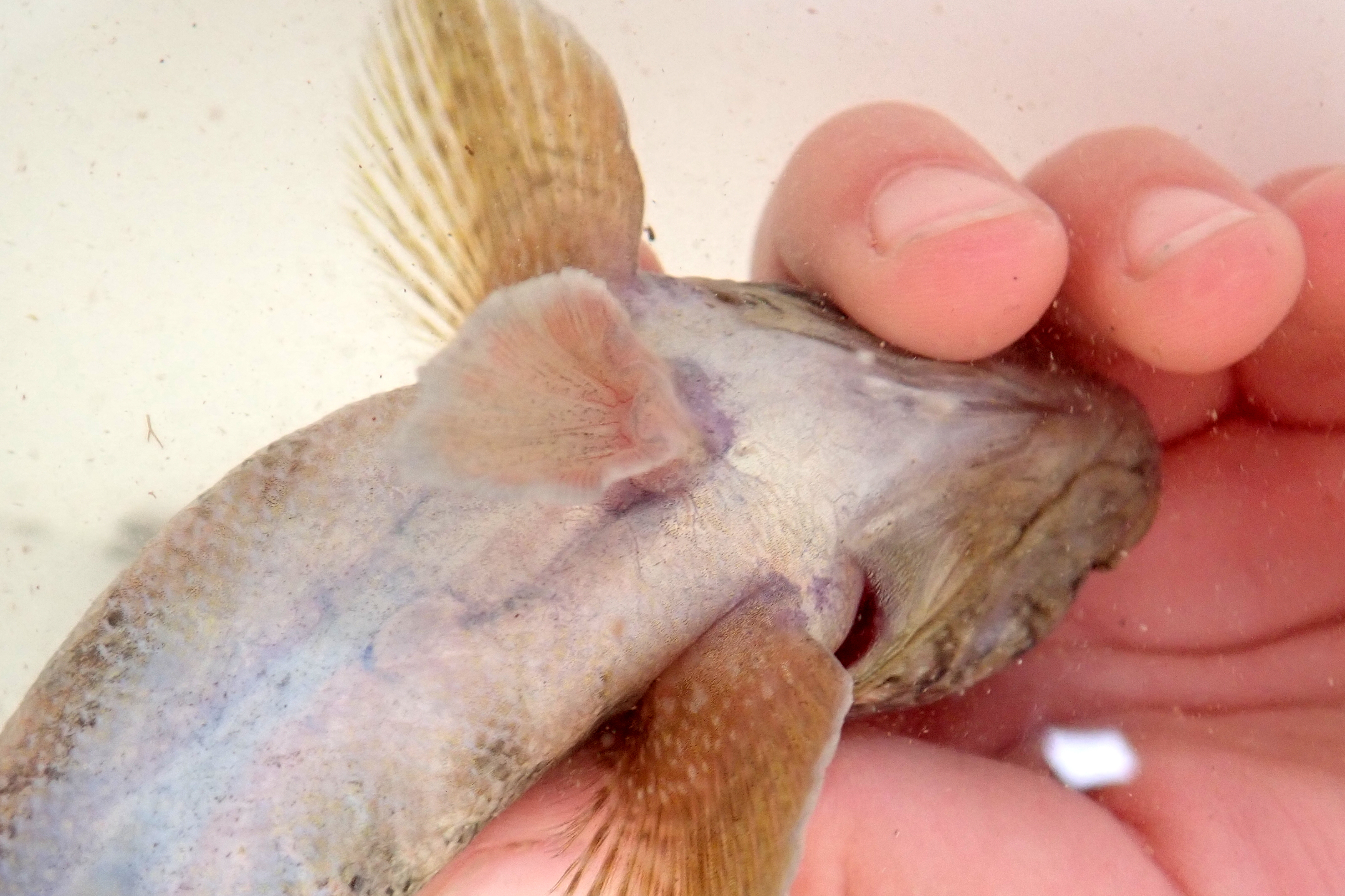
    Back on the beach, all seems calm and fish huddle under many of the rocks, waiting for the tide’s return. As always, this shore abounds with Cornish clingfish and worm pipefish.

    A Cornish clingfish. There was also a Rock goby and a pair of worm pipefish under the same rock.
    A Cornish clingfish. There was also a Rock goby and a pair of worm pipefish under the same rock.

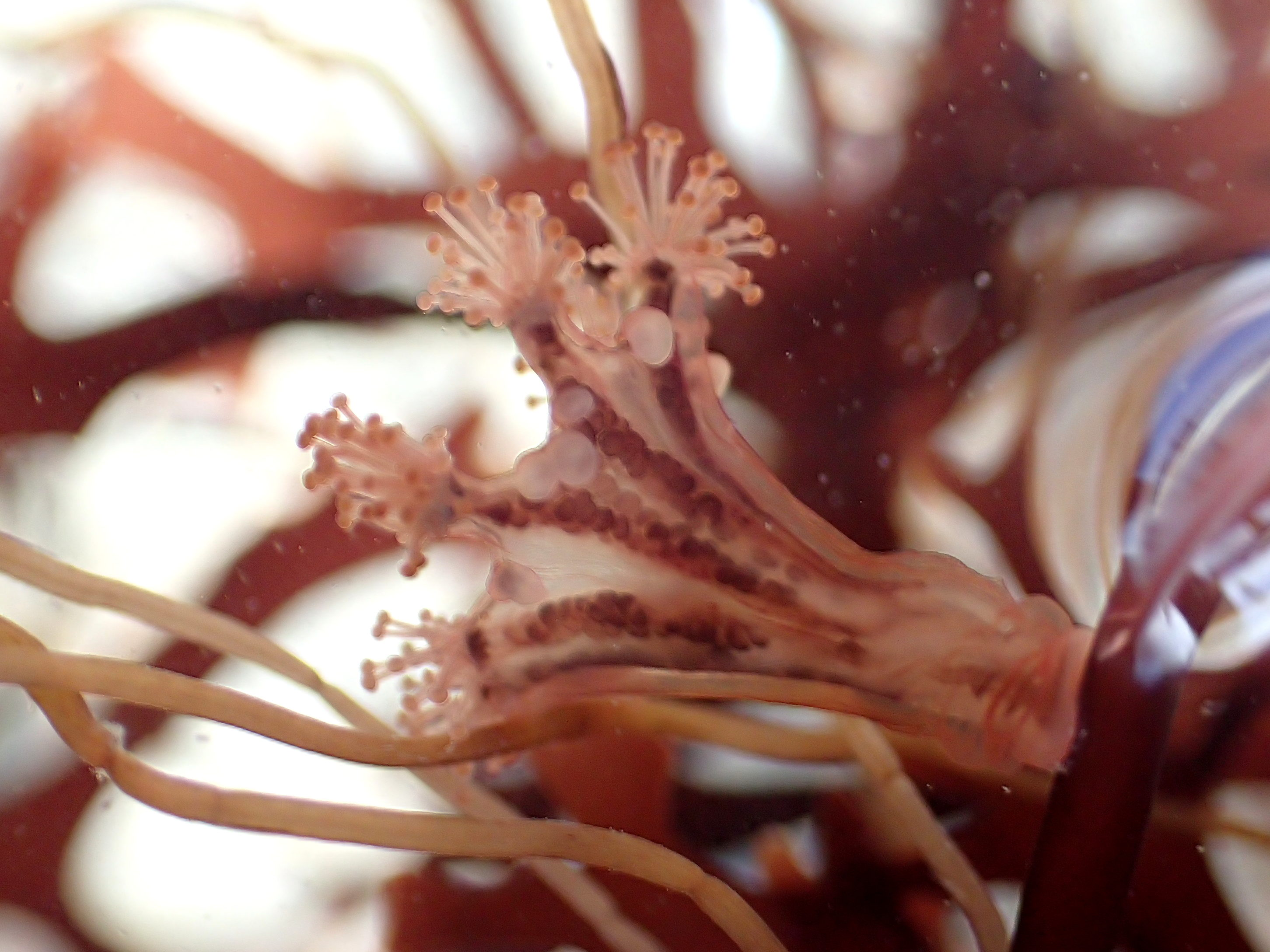
    Under the rocks we find a host of crabs and a few Candelabrum cocksii hydroids, which are fascinatingly variable in colour and shape, extending and contracting their bodies and proboscises.

    Candelabrum cocksii hydroids are limited to the far south west of the UK.
    Candelabrum cocksii hydroids are limited to the far south west of the UK.

    Junior is especially pleased to find a bright orange Lamellaria perspicua (Dalek snail, as he calls it). It looks like a slug, but keeps its shell hidden under its soft body, exploring the rocks with two small antennae and a tubular appendage like a Dalek’s gun held out in front of it.

    Strange and colourful - the Lamellaria perspicua is one of our favourite finds of the day.
    Strange and colourful – the Lamellaria perspicua is one of our favourite finds of the day.

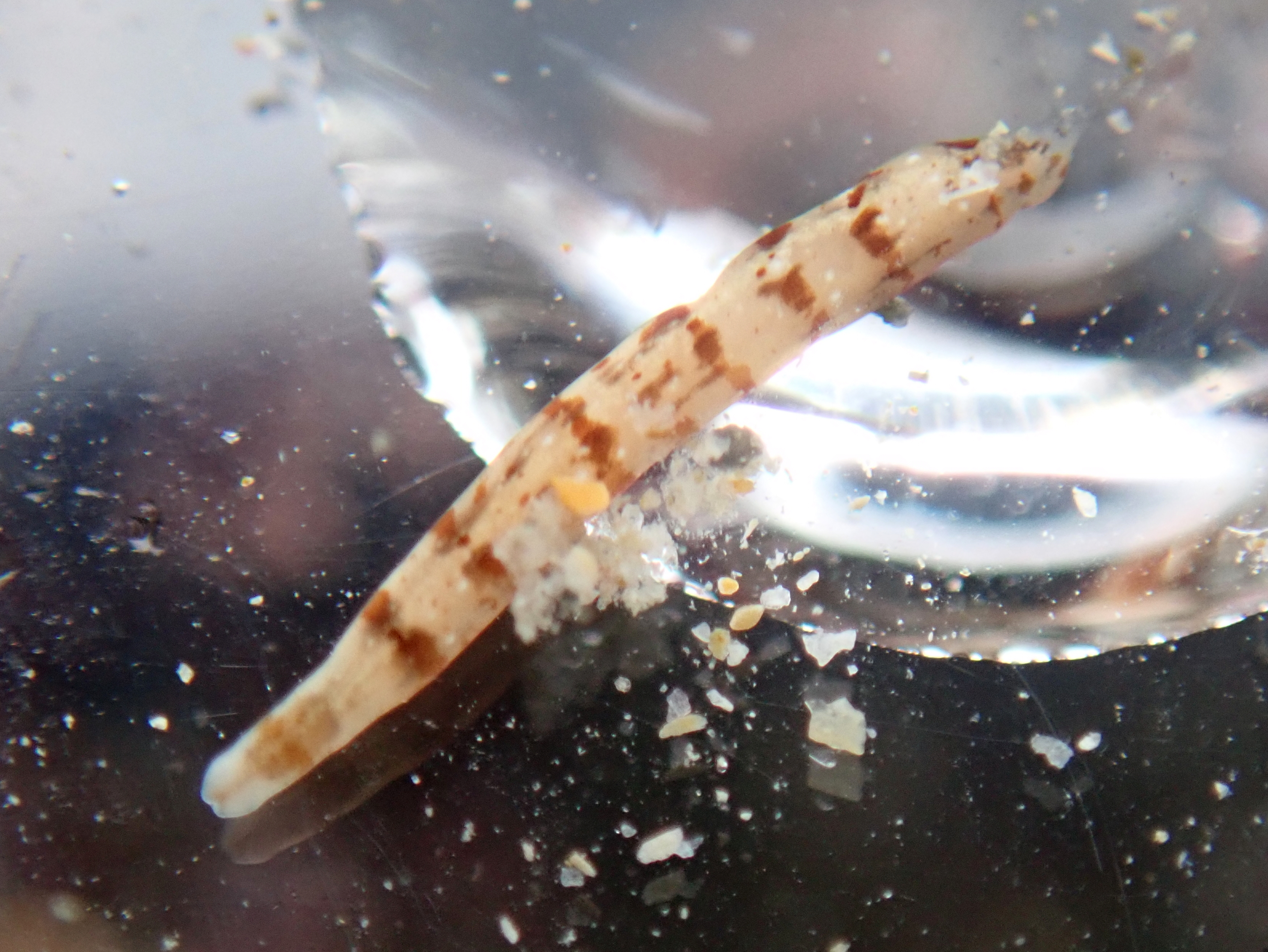
    A short, prettily marked white worm with chestnut banding catches my eye, but I have little time to take photos as the waves are roaring in.

    This colourful worm, which I think is Oerstedia dorsalis, was only around 1cm long
    This colourful worm, which I think is Oerstedia dorsalis, was only around 1cm long

    We watch the sea reclaim the shore from the safety of the tideline while we munch our sandwiches and check through our photos. Beaches can be challenging this time of year, especially when it’s stormy, but the vivid colours and strange lives of the creatures we have seen today, together with the chilly temperatures, send us home with colour in our cheeks.

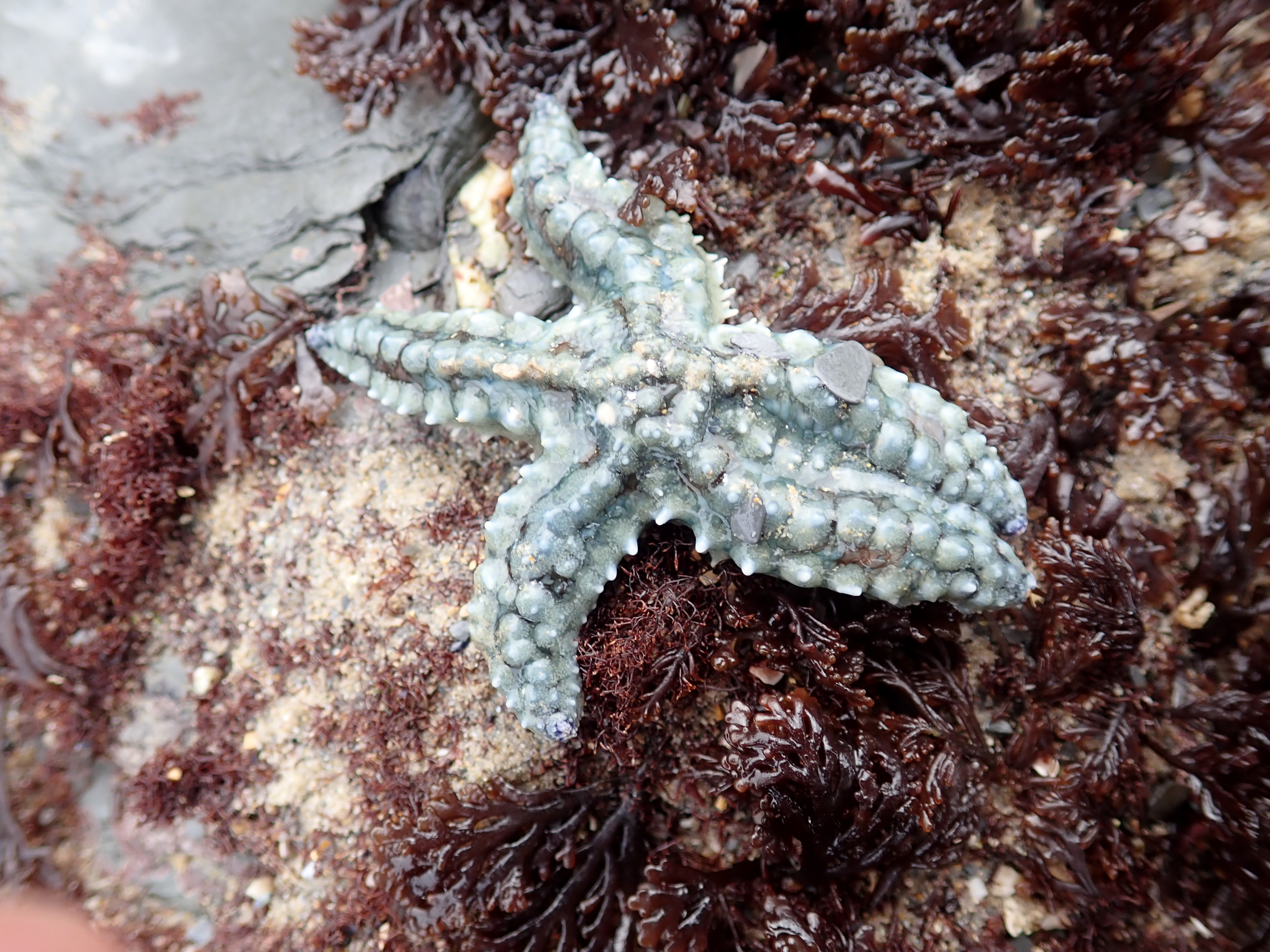
    Spiny starfish at Porth Mear near Porthcothan
    Spiny starfish at Porth Mear near Porthcothan

    A fuzzy-looking Jorunna tomentosa sea slug
    A fuzzy-looking Jorunna tomentosa sea slug

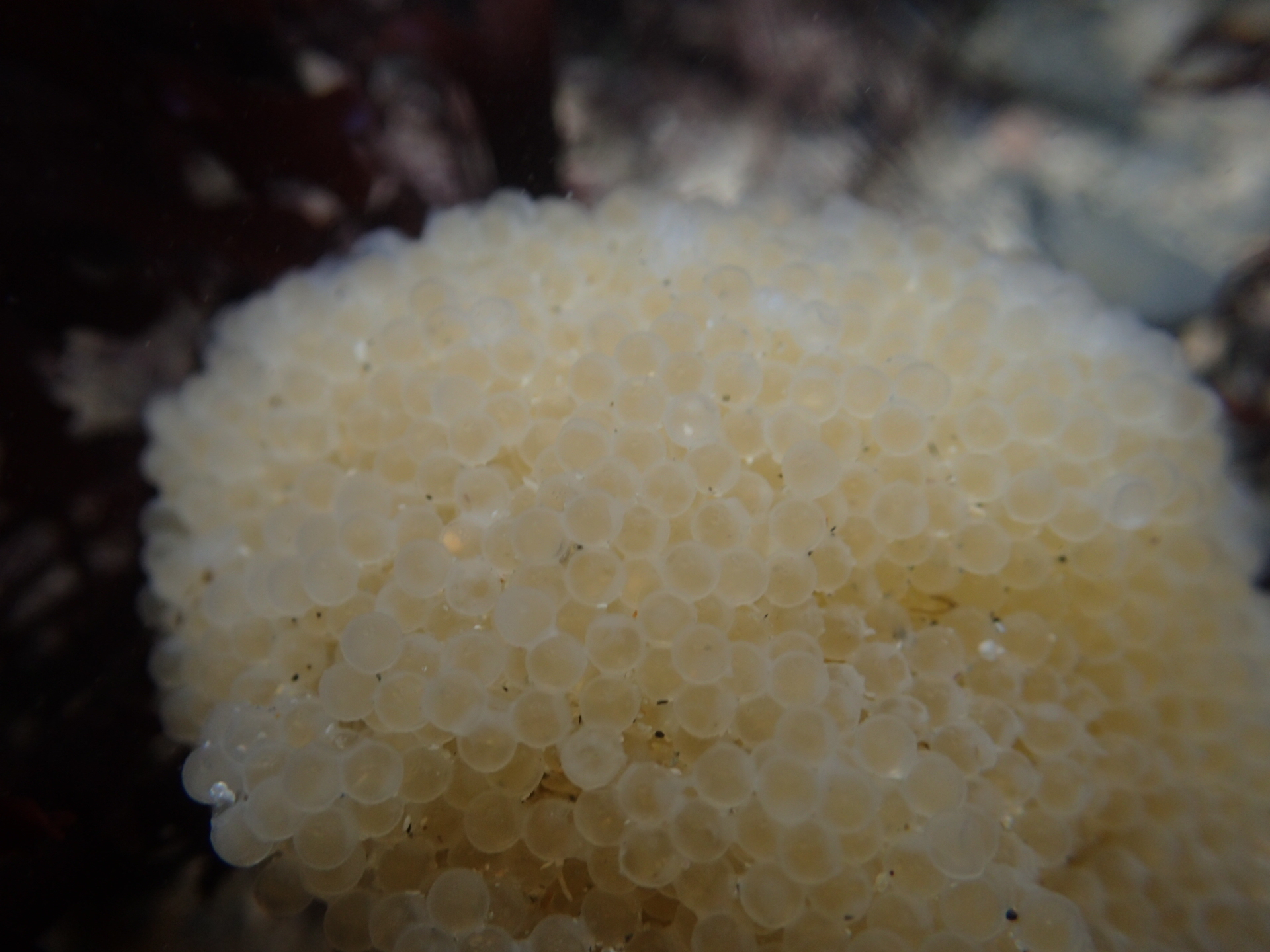
    Fish eggs by Cornish Rock Pool Junior - these were floating in a pool, unattached to anything.
    Fish eggs by Cornish Rock Pool Junior – these were floating in a pool, unattached to anything.

  • A Winter Walk to Millendreath

    A Winter Walk to Millendreath

    There are many advantages to home educating Junior, but one of our favourite things is being free to go outside whenever we like. During the winter months, good weather and daylight coincide so infrequently that we nearly always drop everything to make the most of it. Today, Junior wants to explore our local beach and dig in the sand, so we grab our wellies, spade and camera and set out with the low morning sun glimmering from behind the clouds.

    Spring comes earlier in Cornwall than it does further north, and the signs are there even though the days are still cold. The herring gulls have already moved back onto the roof-tops in our neighbourhood, and some are sitting on empty nests to deter others from moving into their territories. Buds are tightly wrapped on the hedgerow plants, waiting to open and a few hardy wildflowers are already blooming.

    We hear the fulmars honking to each other on the cliffside above Plaidy before we see them. When we stop at a viewspot to look across to the Eddystone lighthouse, a male fulmar glides towards us on stiff wings before circling back to land on a ledge and touch beaks with the female that is resting there.

    In the rock pools, spring is even further ahead and I have been finding sea slug spawn for a few weeks already. ‘Sea mushrooms’, the holdfasts of seaweed are appearing on the rocks and beginning to sprout from their centres. Colourful colonies of star ascidian are budding and spreading across the rocks. On one a flatworm is grazing, while another young colony is being visited by a hungry 3-spot cowrie.

    Star ascidian at Plaidy beach
    Star ascidian at Plaidy beach

    A 3-spot cowrie closes in on a small star ascidian colony.
    A 3-spot cowrie closes in on a small star ascidian colony.

    The tide is wonderfully low so we scramble out to the furthest rocks we can safely reach. Junior discovers anemones and sponges. A tall rocky gully is coated in every colour of sponge, sea squirt and bryozoan, and we peer closely at their strange forms.

    The overhang is coated in animal life including sponges, sea squirts and barnacles.
    The overhang is coated in animal life including sponges, sea squirts and barnacles.

    I spot an overhang that plunges into a pool. Even though I can see it’s too deep for my wellies, I wade in, balancing from one submerged rock to another, feeling a cold trickle down my shin as the water overtops my boots. At the edge of the rock the water is still precariously high, but I have noticed some dark, frilly tentacles in the water. Several sea cucumbers are lodged in cracks in the rock here and are busy feeding with their extended fronds. Junior crawls over the rock to get a better view of this unusual sight.

    Brown sea cucumbers (Aslia lefevrei) feeding in the pool.
    Brown sea cucumbers (Aslia lefevrei) feeding in the pool.

    Brown sea cucumber feeding tentacles
    Brown sea cucumber feeding tentacles

    Edging our way through the narrow rocks, we reach the very edge of the sea. We are sheltered a little from the waves by a rocky reef further out, but the waves are still surging back and forth. In a hollow I can see a young common starfish. I tease it out of its hiding place and Junior holds it on his hand while I take photos.

    One of several young common starfish we find on Plaidy beach.
    One of several young common starfish we find on Plaidy beach.

    Despite its name, this starfish is nothing like as common on our beaches as the other species we see here, preferring the deeper offshore waters. Junior takes a good look at its colours and its tube feet before placing it back where we found it.

    We cross the rocks to the next beach, where Junior begins his sand-mining excavations while I take a walk along an old sea wall in the hope of taking a photo of shanny. These fish hide in holes out of the water while the tide is out and there are usually plenty in this wall. Of course, there are none in accessible places now that I have come to look for them, so I carry on across the beach to take photos of the lugworm casts that litter the muddy sand here.

    The cast and depression in the sand mark the two ends of the lugworm's burrow.
    The cast and depression in the sand mark the two ends of the lugworm’s burrow.

    I am about to go back to see Junior’s work, when I see movement in a shallow pool. It looks as though there’s a tiny geyser beneath the surface throwing the sand up in a constant jet. There are several animals that like to bury themselves here, including some quirky species of prawn, but this sandy pool near the low tide mark makes me think of something else. I crouch by the pool for a few minutes without moving, scanning the sand before I see what I’m looking for. A small, sand-coloured fish is sitting unmoving in the shelter of a rock. I know it will be a weever fish.

    A weever fish lying in the sand at Millendreath.
    A weever fish lying in the sand at Millendreath.

    Trying not to scare the fish away, I cross to the other end of the pool. It sticks its ground, watching me through shining eyes set towards the top of its head. Even as I lower my camera into the pool, it stays perfectly still, so that I can see its gaping mouth and moving gills. The mouth is unlike that of most other fish: the opening is nearly as high as the fish’s eyes and is hinged at the bottom like a tall flap. Inside it, I can see some spindly, crooked teeth.

    The weever fish lies still as I approach, watching me with shining green eyes.
    The weever fish lies still as I approach, watching me with shining green eyes.

    I have no bucket and this fish will bury itself in the sand in an instant if I disturb it, so I just watch, putting my camera as close as I dare to frame the fish’s remarkable metallic-green eyes. Although the dark fin on the fish’s back is folded down now, it is made of venomous spines that cause painful stings to bathers in the summer.

    Weever fish with its spiny fin folded down.
    Weever fish with its spiny fin folded down.

    Junior emerges from the hole he’s dug to look at the photos and do a beach clean before we head for home in the last of the day’s pale sunshine.

    Painted topshells and a sea slug laying eggs - spring arrives early in the Cornish rock pools.
    Painted topshells and a sea slug laying eggs – spring arrives early in the Cornish rock pools.

    Junior's top find of the day. The yellow circles on the rock are boring sponge. This sponge drills into calcareous rocks and mollusc shells making round holes.
    Junior’s top find of the day. The yellow circles on the rock are boring sponge. This sponge drills into the calcareous rocks and mollusc shells making round holes.

  • Secret Beach Day

    Secret Beach Day

    Although no beach in Cornwall is a complete secret, there is no shortage of inaccessible bays, without car parks, cafes and many of these are perfect for rock pooling. The extra effort of walking (in my case sliding) down a steep field and hauling back up it at the end of the day pays off. This secret beach, one of several between Falmouth and the Helford river is a complete gem, just as diverse as I remember it.

    Cornish Rock Pools Junior’s friends who appeared on Countryfile  with us have joined us today. Unlike Portreath, the north coast beach we filmed at, it’s incredibly easy to find creatures on this sheltered shore.

    Our first discovery is that a population of St Piran’s hermit crabs has established here, probably new since my last visit several years back. I spot the tell-tale red antennae poking out of a shell.

    St Piran's hermit crabs reappeared in Cornwall a few years ago after a long absence. The red antennae and chequerboard eyes make it instantly recognisable.
    St Piran’s hermit crabs reappeared in Cornwall a few years ago after a long absence. The red antennae and chequerboard eyes make them instantly recognisable.

    We haven’t gone far before we come across a lovely long pool with plenty of loose boulders to provide protection to sea creatures. As I turn a rock, Junior spots a large fish that shoots out and noses into a clump of seaweed at the edge of the pool to hide. I put Other Half on the case. He skillfully coaxes it into a corner of the pool in the hope it will swim into his big bucket, which it obligingly does.

    The underside of the rock I’ve turned is crowded with life. There are colourful patches of sponges and sea squirts. A clutch of yellow eggs coats part of the surface.

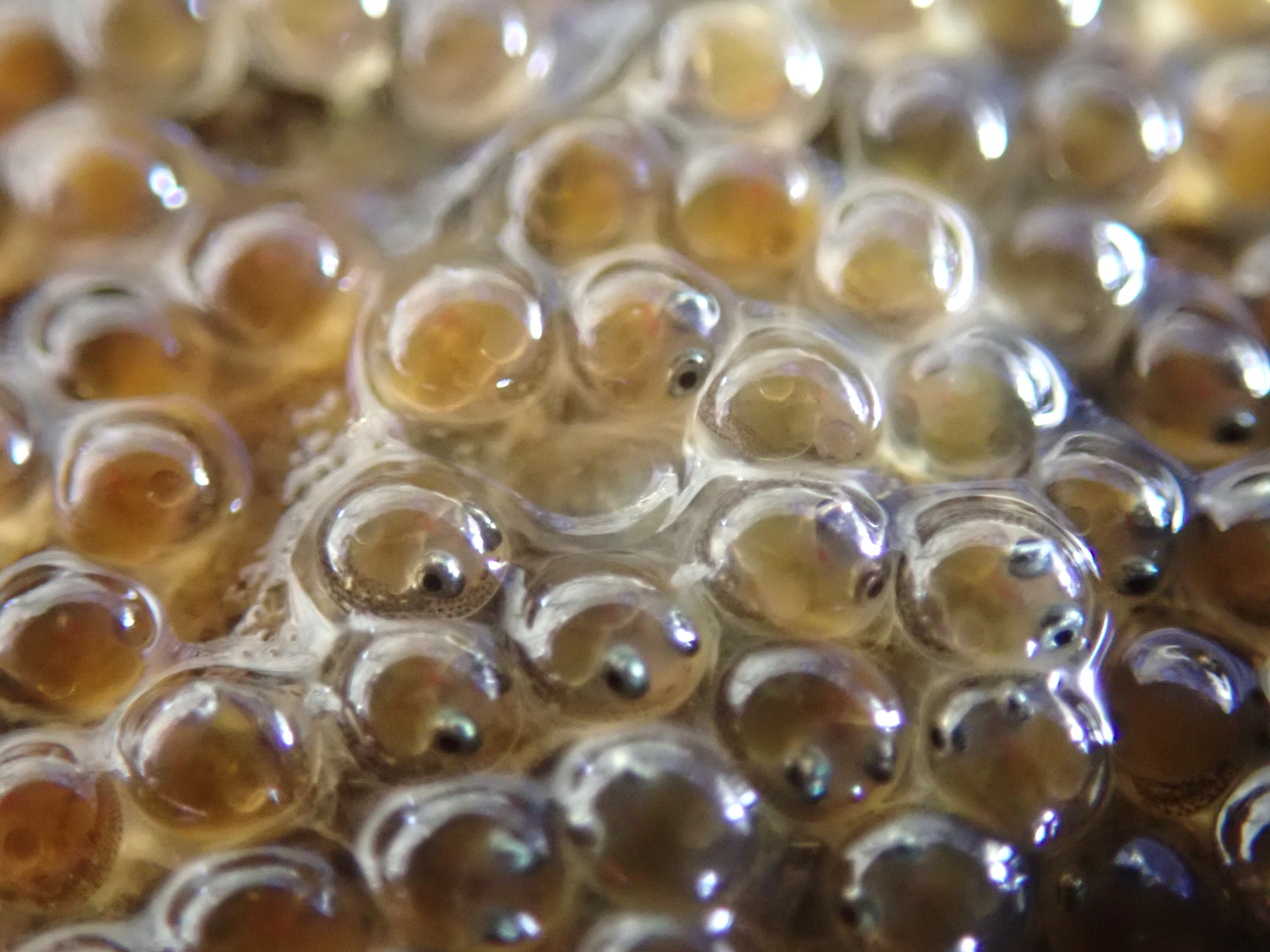
    Close up of Cornish clingfish (Lepadogaster purpurea) eggs showing the eyes and spotty tails
    Close up of Cornish clingfish (Lepadogaster purpurea) eggs showing the eyes and spotty tails

    These are clingfish eggs and the parent will be nearby. Within them, the babies are developing fast. A pair of eyes gazes out of each egg and the tails, wrapped tightly round the little heads are visible too. Something close by catches my attention, a colourful slug.

    Calma glaucoides sea slug
    Calma glaucoides sea slug

    The slug’s long, yellow-tipped cerata sway like hair in the current, giving it a puffed-up appearance. It’s an attractive animal, a pale blue colour when it catches the light. This slug, Calma glaucoides, specialises in eating fish eggs, and especially likes those of the clingfish.

    Calma glaucoides sea slug, found near its favourite prey, clingfish eggs.
    Calma glaucoides sea slug, found near its favourite prey, clingfish eggs.

    Meanwhile, Other Half and Junior are excited about the fish in their bucket. Junior reckons it’s a giant goby and I think he may be right. I try to pick it up to try to confirm the species by taking a look at the fin under its belly, but the fish is very lively.

    Giant goby
    Giant goby

    Junior deploys his best trout tickling skills to persuade the fish to lie still in his hands, which it eventually more or less does. The sucker-fin underneath has a thick, pointed lobe at the front.

    The fleshy sucker fin underneath the giant goby has a point at the front - but the fish isn't keen on staying still for me to get a better photo.
    The fleshy sucker fin underneath the giant goby has a point at the front – but the fish isn’t keen on staying still for me to get a better photo.

    The fish has the small eyes and the salt-and-pepper colouring typical of a giant goby and lacks the yellow band on the top of the first dorsal fin which identified the more common rock goby. Its fins are tipped with grey instead. This fish is highly protected and it’s important not to disturb or trap them without a licence, so, Junior carefully lowers the bucket into the pool allowing his goby friend to swim straight back to its favourite hiding place.

    Other finds come in so fast, it’s hard to keep up with them. We come close to catching a huge mystery fish, which thrashes through the seaweed but escapes without being seen. I find a small yellow slug which I initially assume is Jorunna tomentosa, which I often see on the shore. It’s only when I look at the photos at home that I realise my mistake. This slug has lumpy protrusions all over its body that have a sandy, almost warty appearance.

    Doris ocilligera - a species I've never seen before, but which seems to be having a good year in southern UK and northern France.
    Doris ocelligera – a species I’ve never seen before, but which seems to be having a good year in southern UK and northern France.

    I’ve never seen anything like it, the reason being that this slug has only rarely been recorded in the UK. Doris ocelligera tends to occur further south but seems to be becoming more established in the south of the UK and northern France, with several records coming in over the last few weeks. An exciting find and one I’ll have to look out for more carefully in future.

    Thanks go to David Fenwick of Aphotomarine for confirming this slug’s identity.

    Doris ocelligera
    Doris ocelligera

    One of Louis’s friends finds this fabulous spider crab.

    It's hard to tell that this is a spider crab and not a lump of seaweed!
    It’s hard to tell that this is a spider crab and not a lump of seaweed!

    It’s a female which has decorated herself in so much seaweed that, unless she moves, it’s impossible to tell she’s not just another rock. We have a good look at her amazing stalked eyes and spiny shell before returning her safely into the seaweed.

    Spider crab
    Spider crab

    The children’s mums aren’t to be outdone. They get stuck in and bring me all sorts of lovely things. This Ophiothrix fragilis common brittle star has a wonderful bright orange centre.

    Brittle star with a lovely orange central disk - Ophiothrix fragilis
    Brittle star with a lovely orange central disk – Ophiothrix fragilis

    Another mum finds brilliant yellow Berthella plumula slugs, paired together under a stone ready to spawn.

    Berthella plumula sea slugs
    Berthella plumula sea slugs

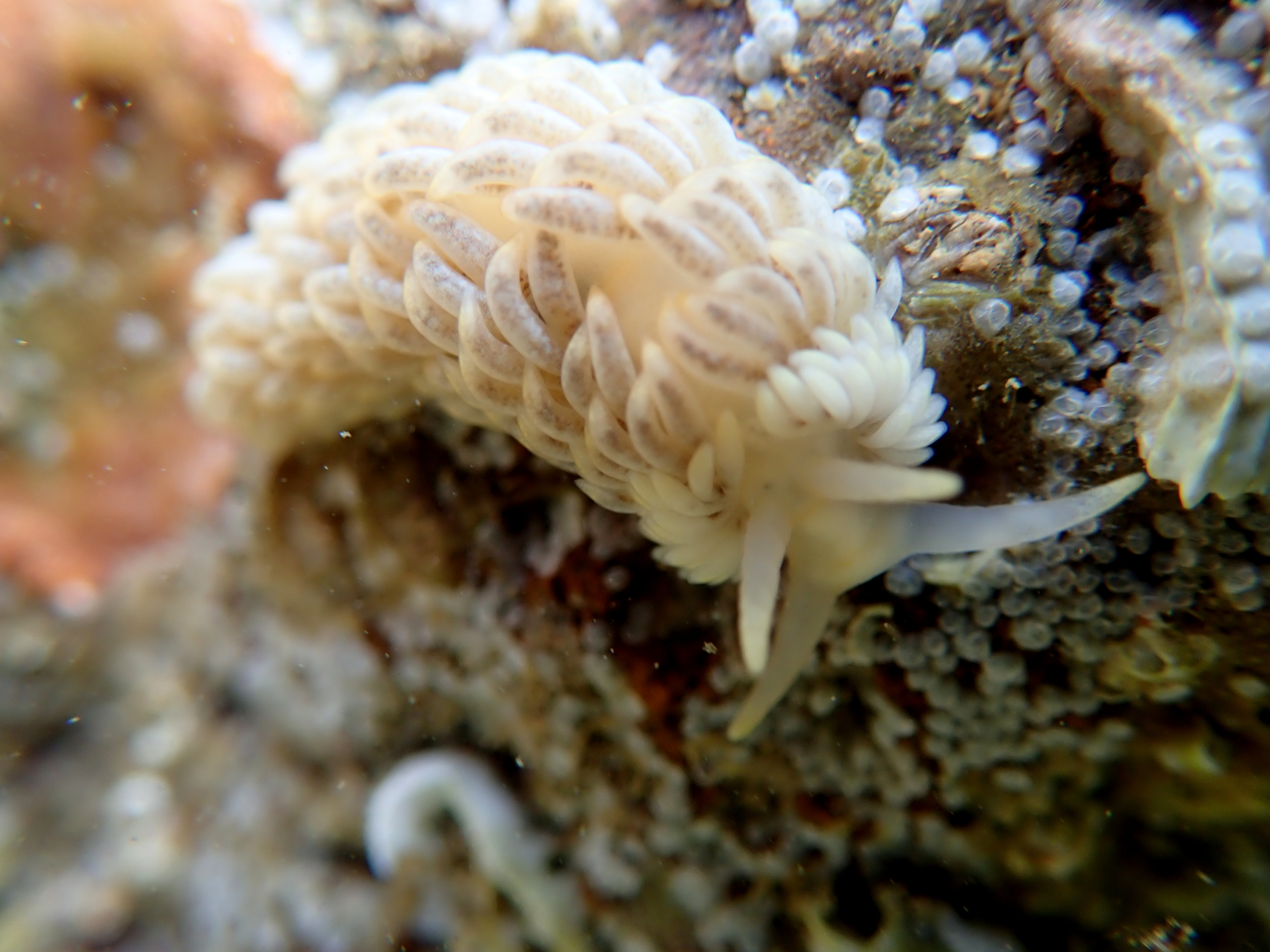
    This white-ruffed sea slug (Aeolidella alderi) was another lovely find.

    Aeolidella alderi - the white-ruffed sea slug
    Aeolidella alderi – the white-ruffed sea slug

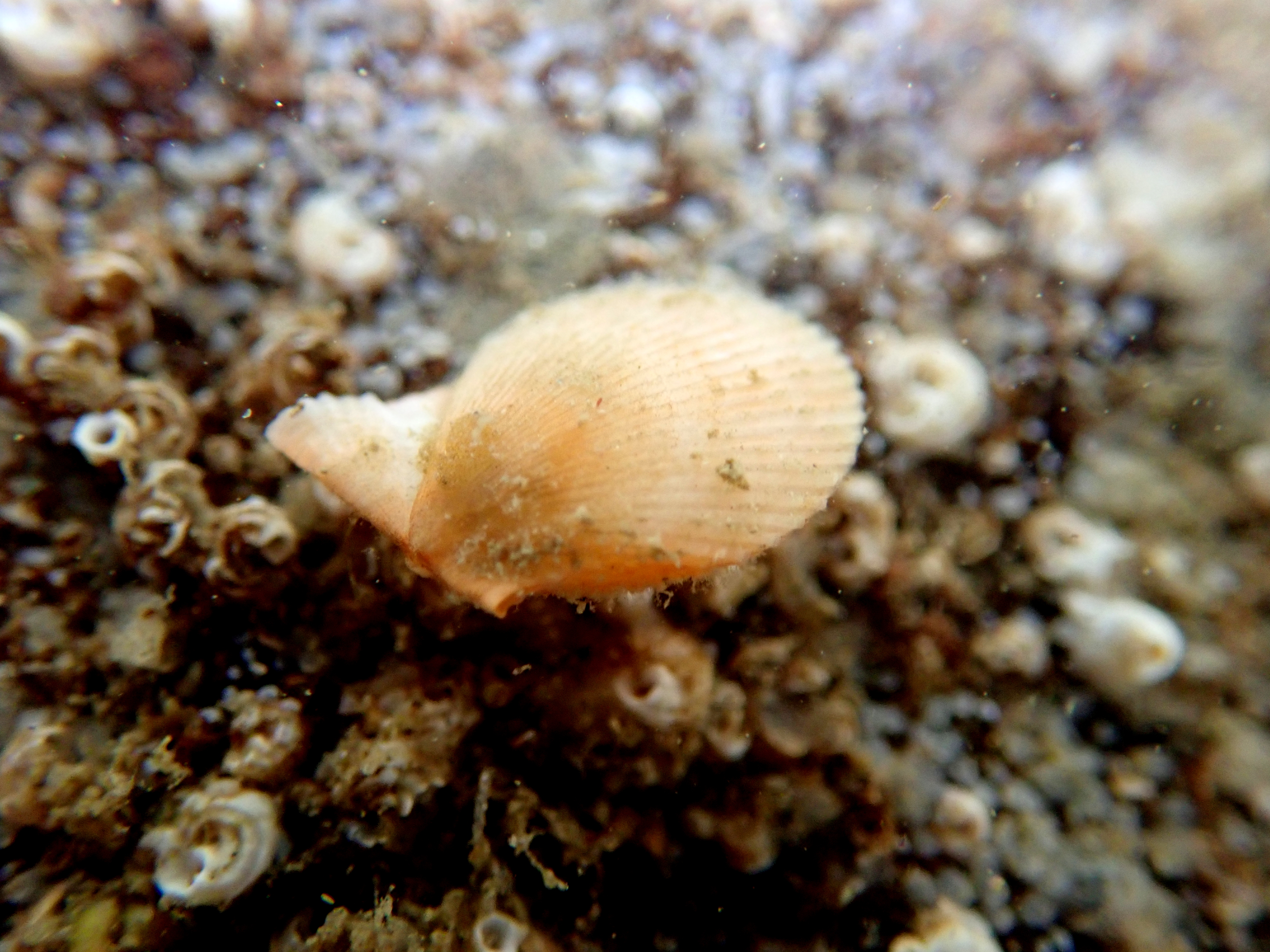
    The rocks of the lower shore are covered in all sorts of colourful wildlife. Ciona intestinalis sea squirts tipped with bright yellow rings, blue star ascidian sea squirts and lots of variegated scallops decked out in marbled patterns of brilliant orange and pink.

    Ciona intestinalis sea squirt
    Ciona intestinalis sea squirt

    One variegated scallop opens its shell and swims away in jerking side to side movements, like a leaf falling from a tree.

    A variegated scallop prepares to swim away
    A variegated scallop prepares to swim away

    Before we know it, the tide is pushing in and we slip and slide our way across the seaweed-covered rocks back to the sand. The time between the tides is short, just enough to give us a glimpse into this extraordinary marine community before the sea rolls in to cover everything once more. We sit and watch oystercatchers, herons and even a pair of swans fly across the sea, while the children set off into the distance with a metal detector, onto new adventures already.

    Visiting a beach like this is an extraordinary privilege. We make sure to leave everything unharmed, to pick up any litter we see and to leave nothing behind. I’m already looking forward to my next visit.

    Light bulb sea squirts - and some mystery orange eggs
    Light bulb sea squirts – and some mystery orange eggs

  • Rock Pooling at Coverack with Wildlife Watch

    Rock Pooling at Coverack with Wildlife Watch

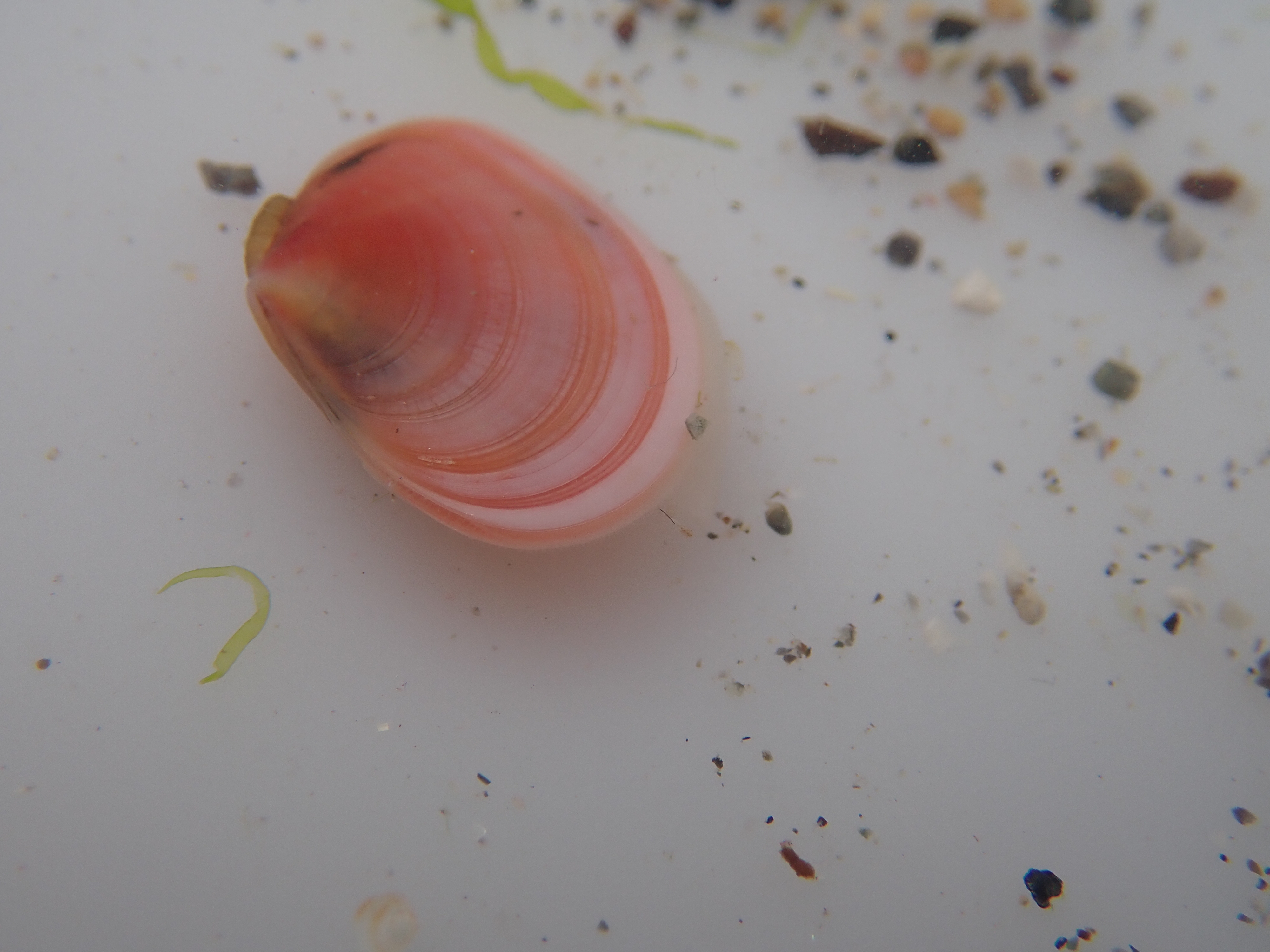
    The sun breaks through the cloud as the first children arrive. It’s a perfect day for a Wildlife Watch expedition and although I don’t know the beach at Coverack well, a quick paddle in the rippling shallows has already yielded sand eels, an attractive pink thin tellin shell and plenty of shore crabs so it’s shaping up well.

    Lesser sand eel - being dark on top and light underneath makes it harder for predators to spot them in the water.
    Lesser sand eel – being dark on top and light underneath makes it harder for predators to spot them in the water.

    I always look forward to meeting my Wildlife Watch groups and this one doesn’t disappoint. My assistant, Vicky, does a fabulous job of welcoming everyone and helping set up and the children are enthusiastic and curious, raring to get stuck in. It’s especially good to see how well the kids care for the animals, making sure they have enough water in their tubs, replacing any stones and seaweed they move and not detaching animals that might get damaged like anemones and limpets.

    One lad is particularly adventurous and knowledgeable, so we have fun investigating a gully between two huge rocks. We find the inner face of one rock is covered in a massive sheet of breadcrumb sponge and there are especially large strawberry anemones in the pool beneath. My new friend stays there trying to catch an elusive fish while I help others identify creatures.

    Soon, the finds are coming in to our makeshift shore laboratory. Glittering sand eels, a feisty velvet swimming crab with devilish red eyes, a whole troop of hermit crabs and colourful brittle stars which we watch walking on their long arms.

    A lovely baby hermit crab with green eyes (Pagurus bernhardus) has a go at pinching my fingers.
    A lovely baby hermit crab with green eyes (Pagurus bernhardus) has a go at pinching my fingers.

    My new friend comes over with a shore crab. He’s learned that they keep their eggs under their tails and is excited to find one he thinks is in berry. He seems disappointed when I reveal that, although she has something under there, it’s not eggs. But this is something far more exciting. It’s a parasitic barnacle, Sacculina carcini, which I’ve been searching for and never seen. The yellow mass under the crab’s tail is the barnacle’s fruiting body, the barnacle’s eggs – not the crab’s.

    This green shore crab has a yellow lump under her tail - the parasitic barnacle Sacculina carcini
    This green shore crab has a yellow lump under her tail – the parasitic barnacle Sacculina carcini

    Unfortunately for the crab, once it is infected it can no longer moult and grow or lay eggs. The barnacle will take a lot of energy from the crab as it spreads through its body. It can even trick male crabs into behaving like females to ensure that they will successfully release the barnacle’s young when the eggs are ready to hatch. It’s amazing to see, even if it’s not good news for the crab.

    The yellow lump under the tail contains the eggs of the parasitic barnacle which has infested the crab.
    The yellow lump under the tail contains the eggs of the parasitic barnacle which has infested the crab.

    As always, I get more than a little distracted doing my own rock pooling. I can’t help myself. I briefly feel guilty that I’m not available enough to the children while I’m crawling about among the slippery boulders, but then I spot a miniscule thing moving on the rock and it has my entire attention.

    The thing looks like a tiny lobster. I scramble to grab a suitable pot and when I look back at the rock I can’t see it any more. I stare at the area where I saw it but it’s just not there. I look all around the surface of the rock in vain, gently tip a little sea water down it to see if anything moves but I’m scared I might wash it off accidentally.

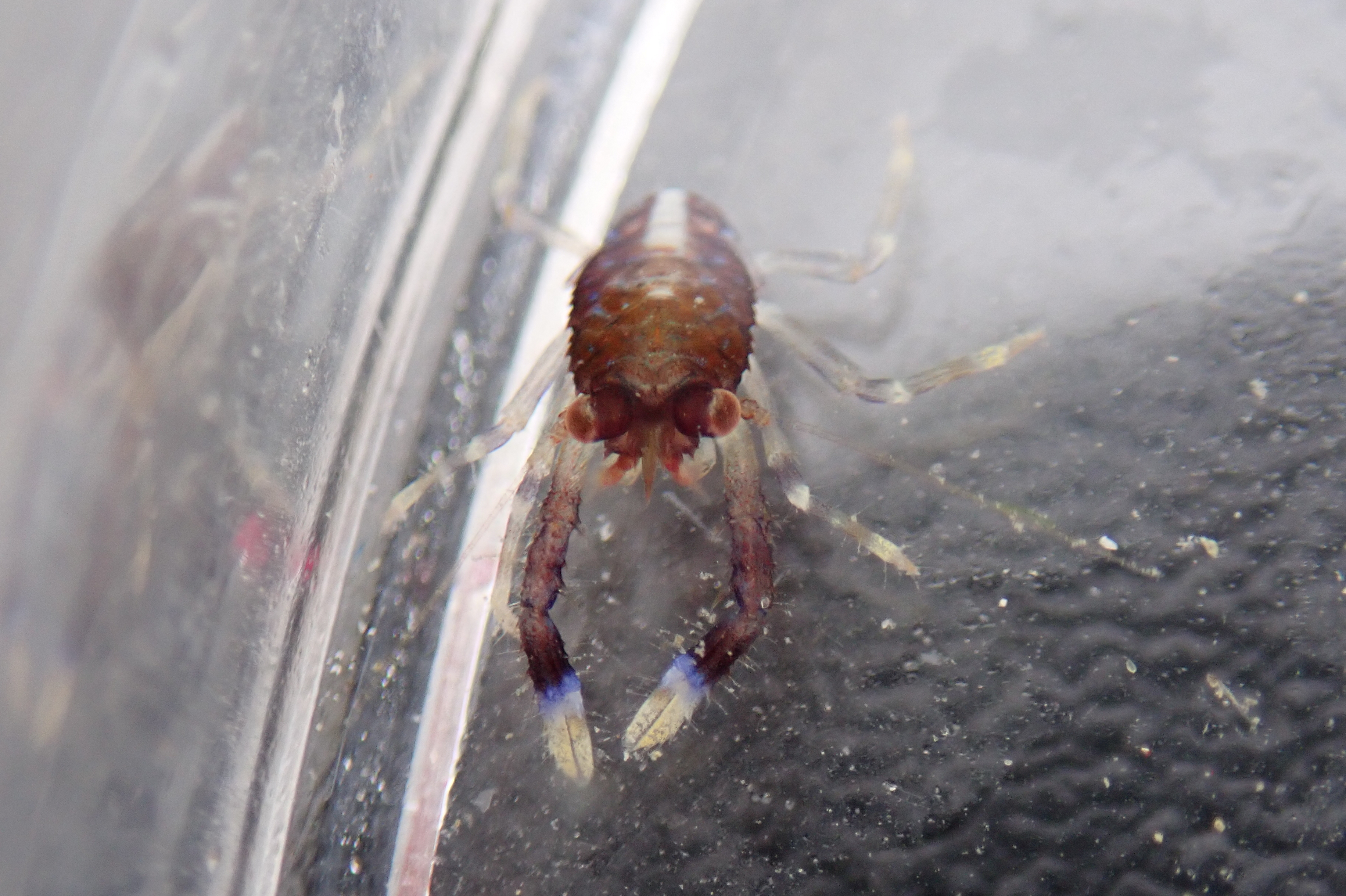
    When I finally relocate my mini crustacean, it is nearly at the edge. With a lot of care and determination, I succeed in catching it in my pot. It’s only about 5mm long, but seems to be a tiny squat lobster, the smallest I’ve ever seen.

    Tiny squat lobster about 5mm long (Galathea sp.) at Coverack, Lizard
    Tiny squat lobster about 5mm long (Galathea sp.) at Coverack, Lizard

    Back at the trays, we all gather round to take a close look at all the animals and learn about their lives and strange habits. We have a fabulous diversity of creatures to watch before they’re returned to the shore.

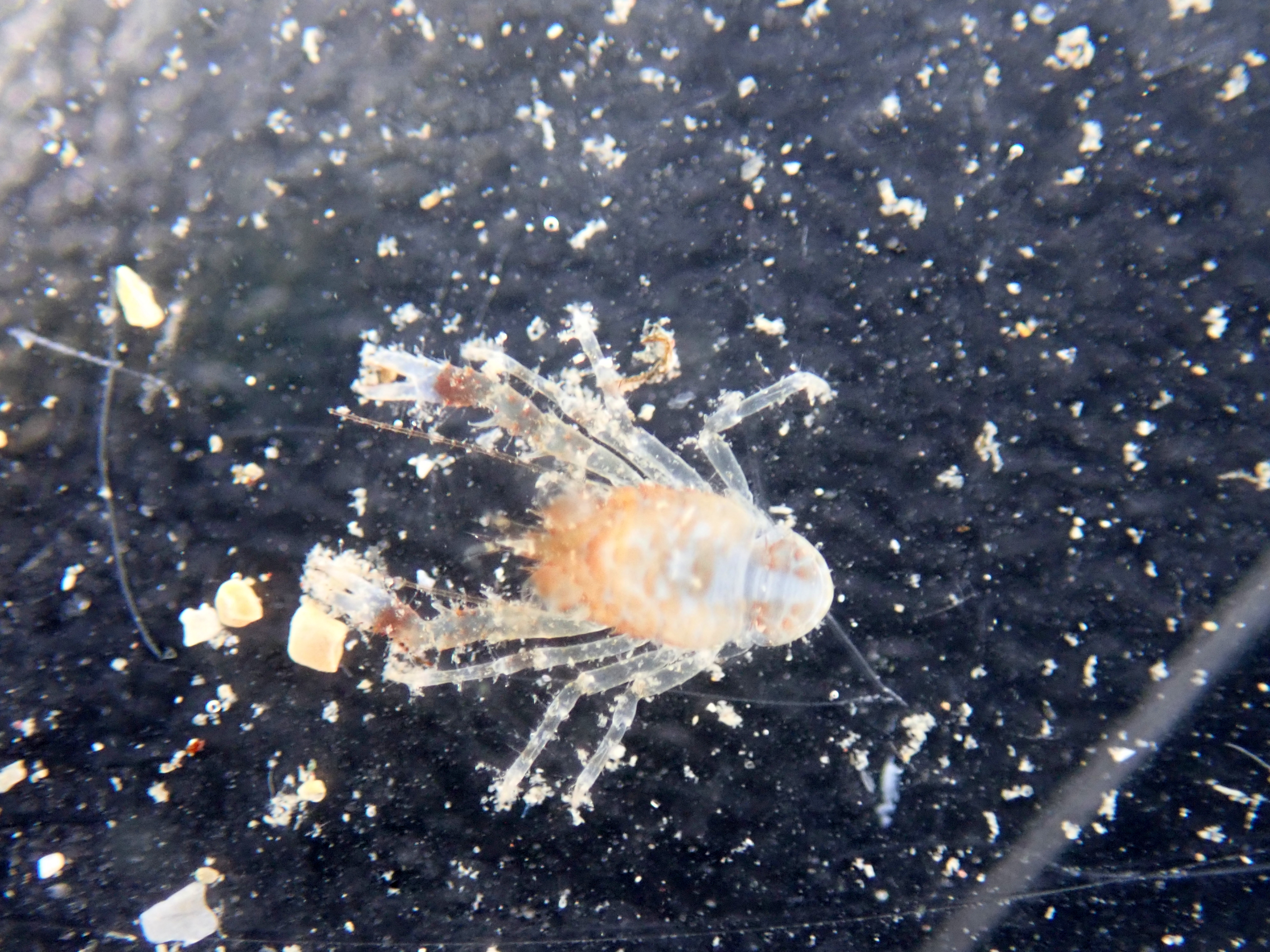
    I slip my baby squat lobster into a petri dish to take some photos. It looks a bit strange, as though something has got caught on its back legs. When I look a couple of minutes later, the thing that’s stuck to it has grown. It’s hard to see as the whole animal is only a few millimetres long, but when the ‘thing’ comes away I’m in no doubt. The squat lobster is growing and has just shed its old skin.

    Moult of the squat lobster - the animal has moved out of its old shell so that it can grow.
    Moult of the squat lobster – the animal has moved out of its old shell so that it can grow.

    The old carapace is an exact replica of the animal, only colourless and transparent. As the new, soft shell of the squat lobster begins to harden it seems to grow before our eyes.

    The freshly moulted squat lobster (Galathea sp.) showing off some very hairy claws. Coverack, Cornwall.
    The freshly moulted squat lobster (Galathea sp.) showing off some very hairy claws. Coverack, Cornwall.

    It’s something I’ve never seen before. It’s what’s so special about events like this. Even though I’m here to help others learn and see new things, I’ve seen something new myself.

    If you’d like to come to a Wildlife Watch event with the Cornwall Wildlife Trust this summer, you’ll need to book quickly as they are filling up. Find the whole list on the Cornwall Wildlife Trust’s website. Maybe I’ll see you there?

    A beautiful live thin tellin shell - one of many lovely finds at Coverack
    A beautiful live thin tellin shell – one of many lovely finds at Coverack

    Necklace shell at Coverack, found by my Wildlife Watch group.
    Necklace shell at Coverack, found by my Wildlife Watch group.

  • Friendly Fish at Kynance Cove

    Friendly Fish at Kynance Cove

    A day at Kynance Cove on the Lizard Peninsula has become a fixture in the Cornish Rock Pools calendar. The smooth, serpentine cliffs don’t create many hiding places for marine life, but Junior loves the geology and caves. There are always creatures to see too if you look carefully enough, so I take the opportunity to relax in the sun, staring at fish through the clear water.

    There’s one pool in particular that I like to visit here. It is more like an aquarium than any other I’ve found; just deep enough to house a whole community of small blennies and always buzzing with life.

    Watching fish at Kynance Cove with Junior (photo by Other Half)
    Watching fish at Kynance Cove with Junior (photo by Other Half)

    The funny thing is that, while I stare in, the fish stare back, creeping closer up the sides, over pink encrusting algae and through fronds of the Corallina seaweed to secure a better view. Bold young shannies, prop themselves up on their two-pronged pectoral fins, swivelling their colourful clown eyes to observe me.

    Being watched... a young shanny (common blenny) edges up the side of the pool to take a look at me. Kynance Cove, Lizard, Cornwall.
    Being watched… a young shanny (common blenny) edges up the side of the pool to take a look at me. Kynance Cove, Lizard, Cornwall.

    In the far corner of the pool, a Montagu’s blenny pops up to say hello. It’s easily recognisable by its pronged head tentacle, which looks like a tiny Christmas tree.

    If you’d like to know how to identify rock pool fish, take a look at ‘What Fish Have I Found?’

    The Montagu's blenny almost gets out of the water to take a look at me. Kynance Cove, Cornwall.
    The Montagu’s blenny almost gets out of the water to take a look at me. Kynance Cove, Cornwall.

    The surrounding rocks are covered in barnacles, which suits these fish well. The Montagu’s blenny likes nothing better than to nibble the feeding legs off barnacles.

    I soon start to doubt that this fish is just curious. Unlike the shannies, which are just juveniles, this Montagu’s blenny is full size and sports a fine pattern of turquoise spots on his body. It is the male blenny’s job to guard the eggs, and this fish is taking no prisoners.

    This bold Montagu's blenny has striking blue spots and a dark stripe through its eye.
    This bold Montagu’s blenny has striking blue spots and a dark stripe through its eye.

    He seems determined to chase me out of his territory, repeatedly headbutting my camera. He may only be 7cm long, but I have a feeling that if I put a finger in the water he won’t hesitate to take me on with his sharp little teeth.

    Blennies' thick lips make them look like they're smiling, but this Montagu's blenny just wants to attack my camera!
    Blennies’ thick lips make them look like they’re smiling, but this Montagu’s blenny just wants to attack my camera!

    The hard rock becomes uncomfortable to lie on after a while, digging into my legs, but I try not to change position. The fish will scatter if I make any sudden movement or noise. Half a dozen shannies are darting around the bottom of the pool, while others are basking in shallow grooves at the edge. The Montagu’s blenny doesn’t take his eye off my camera.

    I watch him until the tide turns and the waves begin to sweep in. This may not be the most diverse rock pooling beach, but the fish are a joy to watch and it’s a wonderful spot to while away a sunny morning before enjoying a pasty in the café. Summer starts here!

    Kynance Cove - always a hit!
    Kynance Cove – always a hit!

  • Cornish Rock Pools on Countryfile

    Cornish Rock Pools on Countryfile

    When the BBC approached me about filming a Countryfile episode with Matt Baker on the signs of spring, I reeled off all the exciting things we might find in the Cornish rock pools. By mid-April there would be male pipefish with eggs on their bellies, scorpion fish babies already hatched, crabs with egg masses under their tails and so much more. No problem.

    Worm pipefish are related to seahorses - it is the male that broods the eggs along a special groove on his underside.
    Worm pipefish are related to seahorses – it is the male that broods the eggs along a special groove on his underside.

    What I hadn’t considered was that the TV crew’s packed schedule would require us to film on an exposed north coast beach on small tide. All I could do was to hope for good weather and some luck.

    The West Cornwall episode of Countryfile is available on BBC iPlayer here. (Available at the time of writing).

    Portreath, near Redruth, has wide, golden sands and magical craggy cliffs. Like many other beaches in Cornwall, it has a fantastic community group working to conserve wildlife and keep it clean – Love Portreath.

    To the east of the bay lies what used to be an important mining port, sheltered by a long harbour wall with a stretch of rocks alongside.

    Portreath in the drizzle as the tide drops
    Portreath in the drizzle as the tide drops

    The pools here are a great habitat, but the fierce waves sweep any small stones away, leaving only large boulders and deep overhangs as hiding places for the rock pool creatures. Great for wildlife, but tricky for rock poolers, especially with a strong swell rolling in.

    Fortunately, I had help in the form of Cornish Rock Pools Junior and two of his friends, Ashley and Rowen. Without their keen eyes and amazing patience, it would have been an impossible task to find as much as we did in just fifteen minutes.  Louis led Matt Baker crashing surf, assuring him there would be more to find on the lower shore, while Ashley plunged waist-deep into pools trying to catch a goby. Rowen spotted a cushion star at the back of a crevice in the rock. Needless to say I was prepared to risk getting my hand stuck to retrieve it (and nearly did).

    Matt Baker and the kids at Portreath
    Matt Baker and the kids at Portreath

    In just a few minutes we managed to assemble a good collection of common rock pool creatures: a green shore crab, a common blenny, some top shells and, of course, the cushion starfish.

    Everyone loves starfish, but now the nation knows that cushion stars and their relatives have some gruesome eating habits. Go me!
    Everyone loves starfish, but now the nation knows that cushion stars and their relatives have some gruesome eating habits. Go me!

    Inevitably, I made my television debut by telling the nation that starfish feed by pushing their stomachs out of their mouths and dissolving their prey. You’re welcome!

    The common blenny (or shanny) is perfectly adapted to shore life and can even breathe through its skin when out of the water. It also has a great smile.
    The common blenny (or shanny) is perfectly adapted to shore life and can even breathe through its skin when out of the water. It also has a great smile.

    Although we failed to find many signs of spring other than the large amounts of seaweed sprouting all around us, the magic of television went to work and the final programme included some fabulous footage of green shore crab eggs hatching out into the plankton.

    Female crabs keep their eggs underneath their tails until they hatch out.
    Female crabs keep their eggs underneath their tails until they hatch out.

    It’s incredible how all the snippets we filmed on the day were woven together into the final programme. Huge thanks go to the all of the Countryfile crew for putting us at ease and doing their TV magic, and to Matt Baker in particular for taking the time to chat and take photos with the children.

    Even though conditions weren’t ideal, it was a wonderful opportunity to showcase the Cornish beaches and the creatures that survive in this extreme environment.

    Junior getting his radio microphone pack installed - his least favourite part!
    Junior getting his radio microphone pack installed – his least favourite part!


  • Warming up for the Weekend

    Warming up for the Weekend

    Spring tides and slightly more spring-like weather might finally coincide this weekend, so I’m preparing for a big weekend of rock pooling. If all goes to plan, I’ll be reporting back next week. In the meantime, I’m readying my waterproofs, planning which beach I’ll go to according to the wind direction and sorting out my photos from the last month. And of course, I’ll be at the Looe Marine Conservation Group Rock Pool Ramble on Monday at Hannafore beach, so maybe I’ll see you there?

    One beach I’m hoping to visit on Saturday is Millendreath. This sheltered south coast beach has an interesting geological history. Somewhere under the sand is a submerged ancient forest. Whether the nutrients come from there, drift along from the Looe river, or both, this beach has a unique fauna and is always full of surprises.

    Pheasant shell at Millendreath
    Pheasant shell at Millendreath

    In the past I’ve found masked crabs, weever fish and unusual swimming crabs here. On my visit last week, it was all about the sea slugs and cucumbers.

    In the chilly breeze it felt less than spring-like, but these things seem not to bother the rock pool creatures. Sea lemons, a type of sea slug with a big circle of feathery gills on their back and pocked citrus-like skin, were everywhere.

    Sea lemons - a type of sea slug - enjoying each other's company.
    Sea lemons – a type of sea slug – enjoying each other’s company.

    And so was their spawn.

    A spiral of sea lemon spawn at Millendreath
    A spiral of sea lemon spawn at Millendreath

    A species that seems to love the conditions here is the brown sea cucumber, Aslia lefevrei, which likes to hide away in holes in the rock with just its retracted tentacles sticking out. When these are fully extended they have a frilly, carrot-top appearance, but at low tide all we see is a yellow and brown blob.

    Brown sea cucumber, Aslia lefevrei, at Millendreath
    Brown sea cucumber, Aslia lefevrei, at Millendreath

    The tip of a brown sea cucumber, Aslia lefevrei
    The tip of a brown sea cucumber, Aslia lefevrei

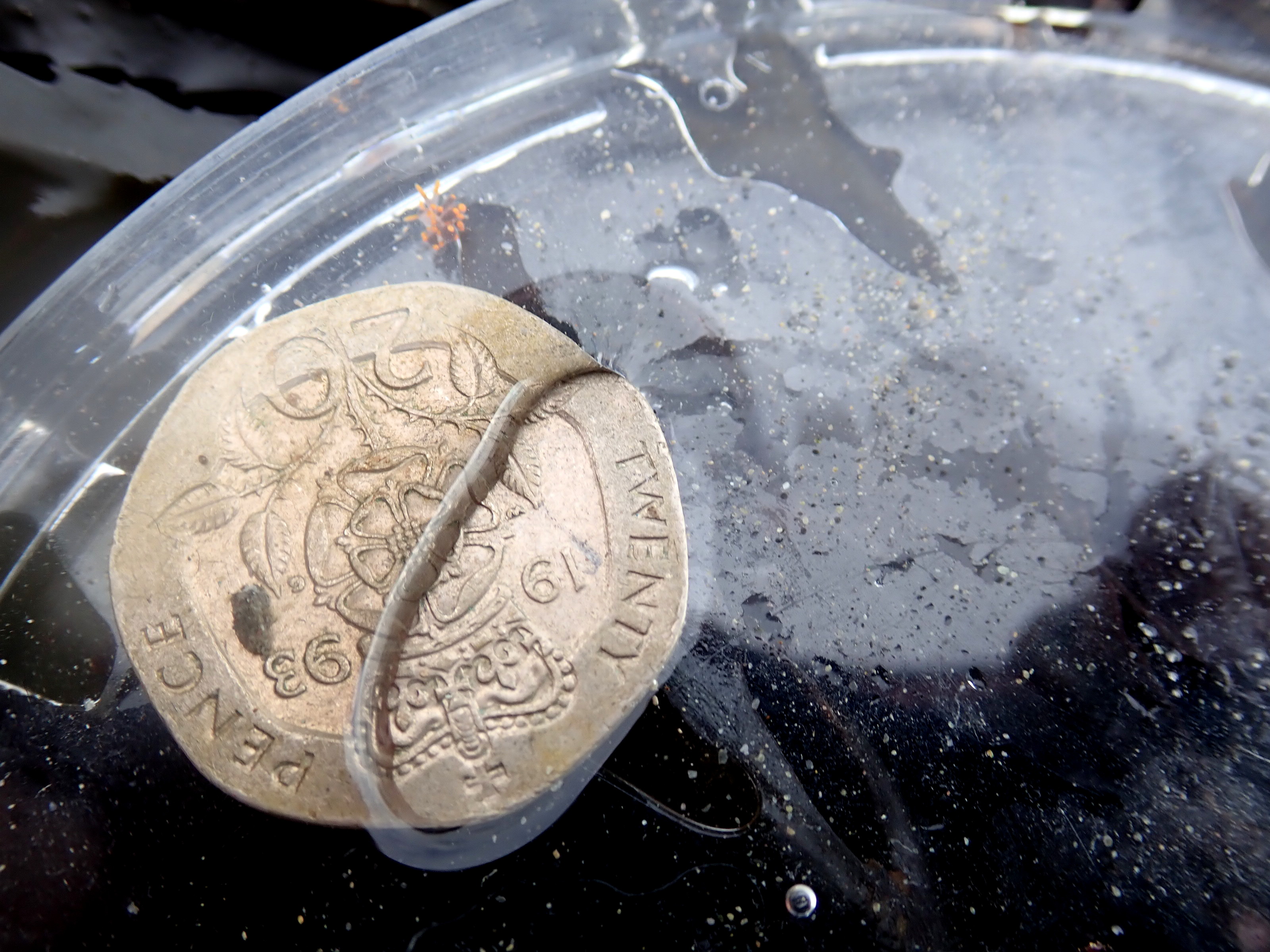
    Among the seaweed at the edge of the shore, I spotted a fleck of orange. Old seaweeds often turn bright colours as they die back, but this fleck wasn’t attached to anything. After fumbling about in the cold water for as long as I could bear, I managed to scoop the fleck up and tip it into a petri dish.

    Much of my time on the shore is spent staring at things, wondering if they’re animals or just tricks of the imagination. Often they’re nothing, but this one was definitely a something.

    My blob - a Eubranchus farrani sea slug with 20p for scale
    My blob – a Eubranchus farrani sea slug with 20p for scale

    As it settled in the water, the blob began to unfurl and then to secure itself to the dish. It was definitely a sea slug, although still quite hard to see as you can tell from its size compared to the 20p piece.

    Eubranchus farrani sea slug - close-up
    Eubranchus farrani sea slug – close-up

    The chunky cerrata on its back and the orange on its body were typical of the species, a Eubranchus farrani. By far the smallest one I’ve ever seen.

    Conditions were too cold to spend any longer with my hands in the water, so I retreated to the upper shore to look for anemones with Junior and to let him dig around the stream. Perhaps one day he’ll dig down to the submerged forest?

    Beadlet anemone in a pool near the top of the shore, Millendreath
    Beadlet anemone in a pool near the top of the shore, Millendreath

    Even on uninviting, cold days, there are always things to find. Millendreath never fails to surprise me. Who knows what will turn up this weekend? Conditions should be easier, but I’m taking no chances. Other half got a big thermos flask for his birthday and I’ll be filling it with hot chocolate before we go out!

    Xantho hydrophilus crab
    Xantho hydrophilus crab