It’s the middle of the night and I’m convinced there’s something wrong with my eyes. I’ve unplugged my phone, tried blinking several times but I’m still seeing flickering lights and flashes. Finally I twig what’s going on and open the curtains to reveal incessant sheet lightning.
My first thought is that it had better stop by the morning, else no-one will turn up to my first rock pooling event at Porth Mear with Fox Club, the junior branch of the Cornwall Wildlife Trust. As a child, I was a keen member myself so I’ve been looking forward to this for months.
By the morning the lightning storm has given way to wind and rain, but conditions are less than inspiring. It’s amazing anyone shows up for rock pooling, but a few hardy well-wrapped-up folk do, as does a lovely volunteer assistant. (more…)
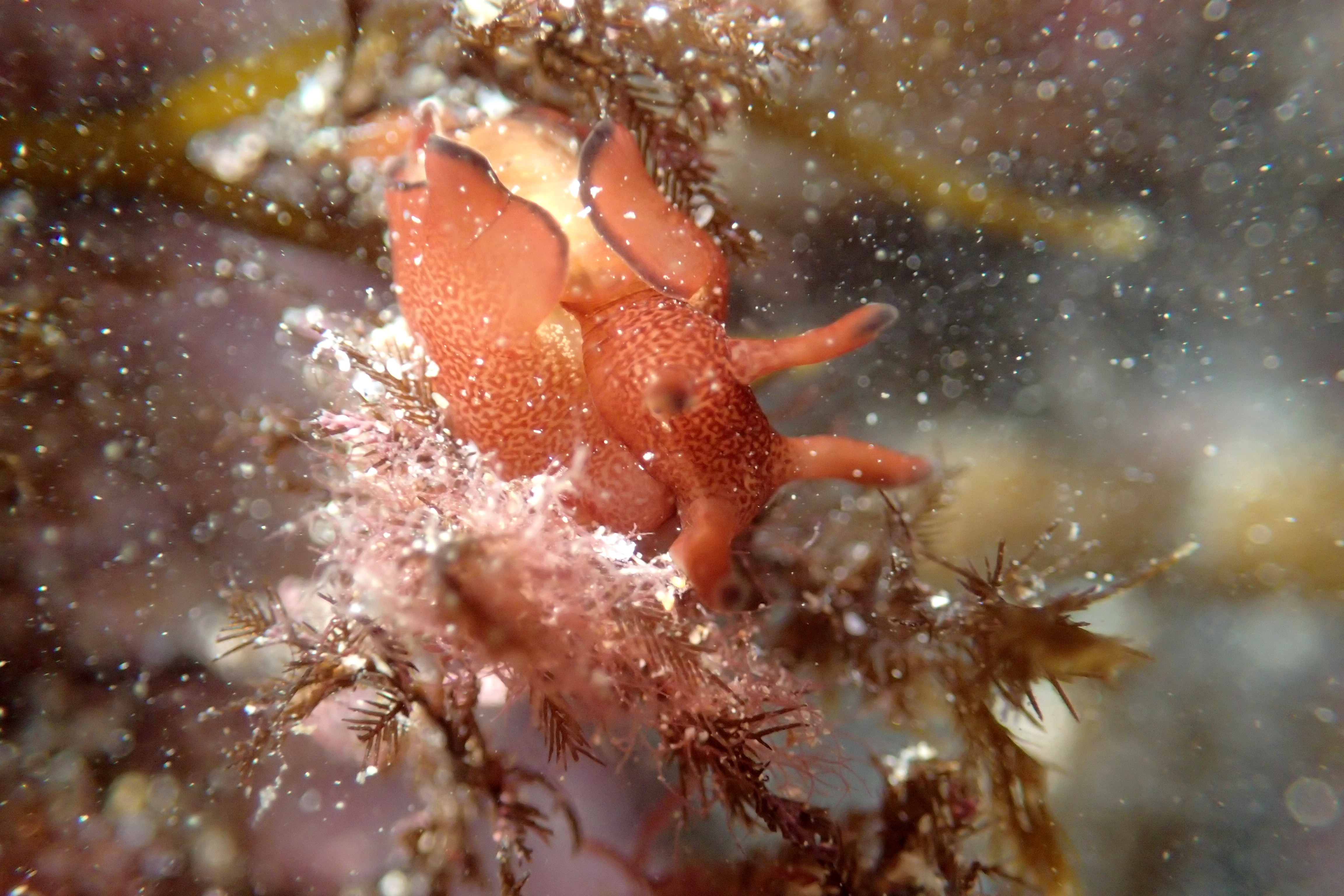
If you read this blog regularly, you’ve probably noticed a pattern: I bimble about the Cornish rock pools looking for an exciting creature, fail completely, then find something unexpected. Well, hopefully you like the format because this week is no exception. I go on a quest to find fish eggs and discover this rare sea slug.
I’ve managed to replace Cornish Rock Pools Junior’s leaky wellies so he joins us to track down amazing creatures. Today we will focus on the lagoon and seagrass beds at Hannafore and I have no doubt I’ll be seeing something new.
Junior gets stuck into the task at hand; head down, bottom up, staring into the glassy water. He shrieks and comes wading over to me, taking care not to spill water from his precious tub. In it he has a plump sea slug, a ‘Great grey’ Aeolidia papillosa – or sheep slug as we call them. (more…)
There’s a questionable theory that 10 000 hours of practice makes you an expert and I may be close to ‘doing my time’ in the Cornish rock pools by now. However, I often feel I’m only scratching the surface of what’s out there. What better then, than to spend a few days on the shore with the genius that is David Fenwick, creator of Aphotomarine together with a fabulous group of fellow rockpool fanatics from Coastwise North Devon?
With layers and waterproofs aplenty, Junior and I joined them at Hannafore Beach, a site I know intimately, to see what new discoveries might await us.
I realised within minutes that I should have brought a notebook. David’s knowledge of marine species is immense and he wasted no time in finding signs of nematode worms living inside seaweed, reeling off their names. It was windy, drizzling and cold and to make matters worse Junior sprung a leak in his wellies, but there was no doubt this is going to be a fascinating day. Leaving Junior playing at reconstructing ancient ruined cities from the rocks of a mid-shore ridge, we waded across the lower shore.
Sea hares (Aplysia punctata) were everywhere munching on the seaweed.
Some species were familiar. The sea hares were everywhere and so abundant that it was impossible to avoid them. This swirling cloud of purple ink in the water was a sign we’d accidentally disturbed one of them.(more…)
It sometimes feels like I don’t get out much – either socially or out of the county (Not that it’s a hardship to be in Cornwall!). So, I could barely contain my excitement at having the opportunity to attend the Porcupine Marine Natural History Society Conference in Plymouth. I packed my passport and set forth across the Tamar.
Not only did I mingle with the most amazing bunch of fellow marine wildlife obsessives and hear their latest findings, but the third day of the conference was spent rockpooling at Wembury in South Devon.
A prickle of Porcupines at work at Wembury, Devon
While the environment at Wembury is similar to my home patch in South East Cornwall, a major difference is that Wembury has a marine centre, staffed by lovely people from the Devon Wildlife Trust. The centre promotes marine conservation and runs all sorts of public and educational events. It also provided a handy indoor base to set up some microscopes and a refreshment station. Luxury after my recent all-weather forays!(more…)
Much as I love the Cornish rock pools, there are times – throughout the year – when the conditions are grim. According to the forecast, today is going to be one of those days. I have reluctantly cancelled a meet-up with Junior’s friends because the charts show the sort of gales and lashing rain that have most little kiddies shivering before they even reach the pools.
I don’t want to make rockpooling a traumatic experience for other people’s children, but I don’t think Junior’s aware that staying in is an option. He’s so well trained to enjoy the misery that at 10am he’s merrily pulling on waterproofs and wellies and grabbing a bucket. We’re off to ‘the gully’ and no amount of buffeting winds or ominous clouds are going to stop him.
Junior’s training in rockpooling in all weathers started early – out with Countryfile age 3
We are climbing across the rocks from Plaidy beach towards our favourite spot when hail starts ricocheting off our buckets. We keep our heads down, turning our attention to the variety of colours in the pebbles. Junior crams his pockets with his favourites, the extra ballast helping to keep him upright against the howling wind.(more…)
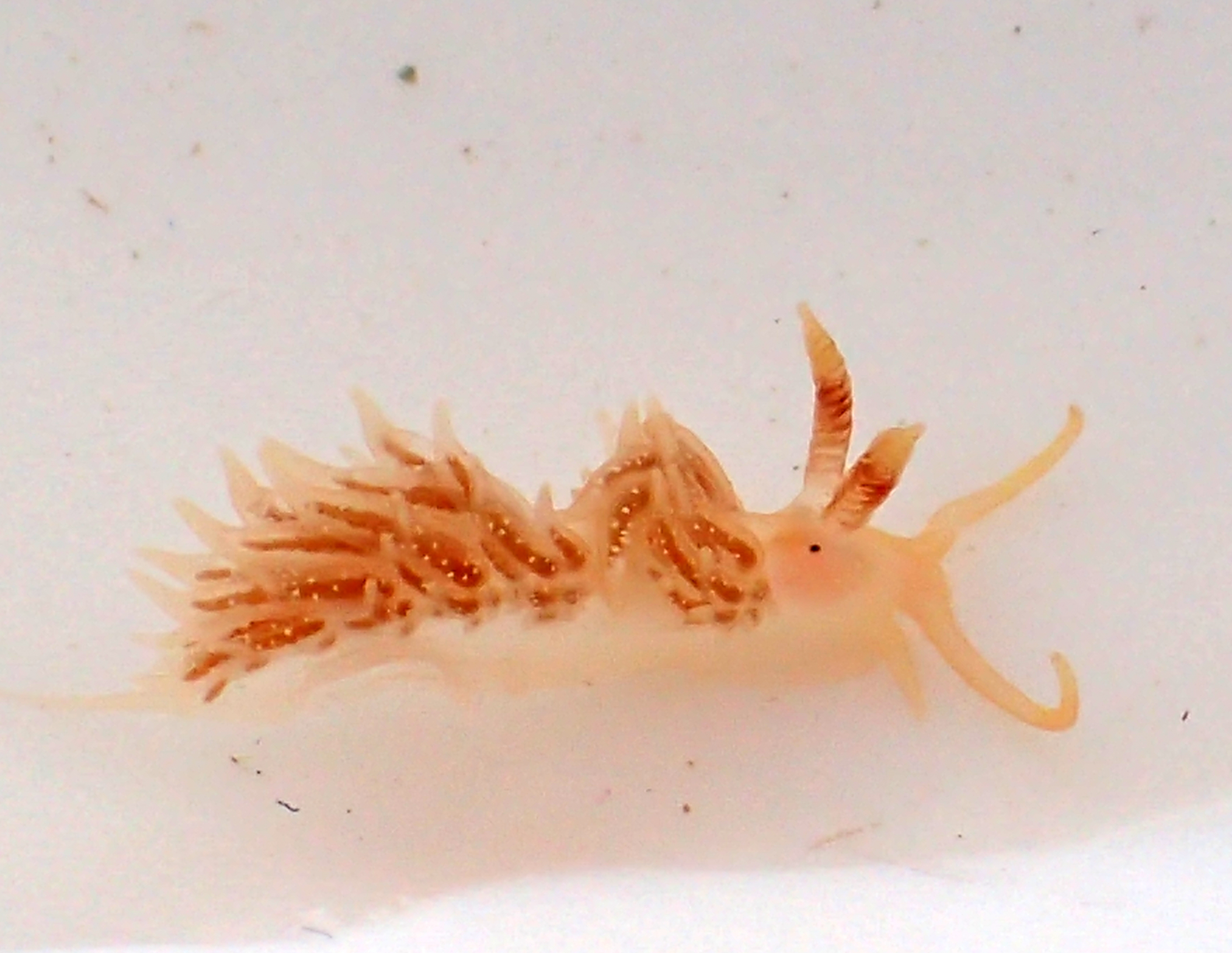
The pools sparkle as the sun finally shoulders its way through the February murk. Beneath the surface, the seaweeds are sprouting up, the first sign of spring in the rock pools, and with them come the sea slugs. Many of these minute molluscs choose to spawn in the shallow waters around the shore, where their favourite foods such as sponges, sea squirts and seaweeds are abundant.
A baby sea hare, Aplysia punctata, grazing on seaweed.
How they travel such distances to find mates and lay their eggs here is something of a mystery to me. They are delicate, squishy little things at best, and mere blobs of jelly out of the water. Once in the water, though, they reveal their colours and shapes, and most rockpoolers delight in finding them. Today, I see mostly pale, blobby ones rather than their spectacular cousins, but they are intriguing nonetheless. (more…)
February is an amazing time in the Cornish rock pools. Spring is coming and all sorts of fish, sea slugs and other creatures are moving onto the shore. Rock pooling is free, fun and exciting for all ages, so why not wrap up warm this half-term and head for the beach?
When?
There are some great low tides on Saturday 11th, Sunday 12th and Monday 13th February around lunch time. Check the tide times for your local area before you go.
Aim to start one to two hours before low tide as it’s safest to rock pool on an outgoing tide. Keep an eye out for the tide and always stay away from surging waves.
Joining a guided event is the very best way to discover marine wildlife. Experts (including me!) will be on hand to help you find and identify the crabs, fish, shells, starfish and more. At the end of the session you’ll be able to meet everyone’s best finds in the ‘Shore Laboratory’ and find out how the animals live and how to conserve them.
(If anyone know of any other rock pooling events on this half-term, please let me know and I’ll list them here).
Cornish Rock Pools – spider crab at Looe rockpool ramble
Where?
Any beach with some sheltered rockpools will do. There are lots all around Cornwall – some of my favourites can be found under the beaches tab at the top of this page.
What to do…
The shore can be very exposed, so make sure you’re well wrapped up and waterproofed. Your feet will get wet so wellies are essential.
Otherwise, all you need is a tub and/or bucket (please don’t use nets as these harm delicate animals). A camera and species guide are useful.
Head for the lower shore (keeping a safe distance from the sea’s edge) and go slowly, looking in shaded, wet areas like pools.
Under rocks and seaweed are great places to look, but move them gently and always return them to how you found them.
Even in the depths of winter the rock pools are full of life. In February spring is just round the corner and lots of animals will be moving in for the breeding season.
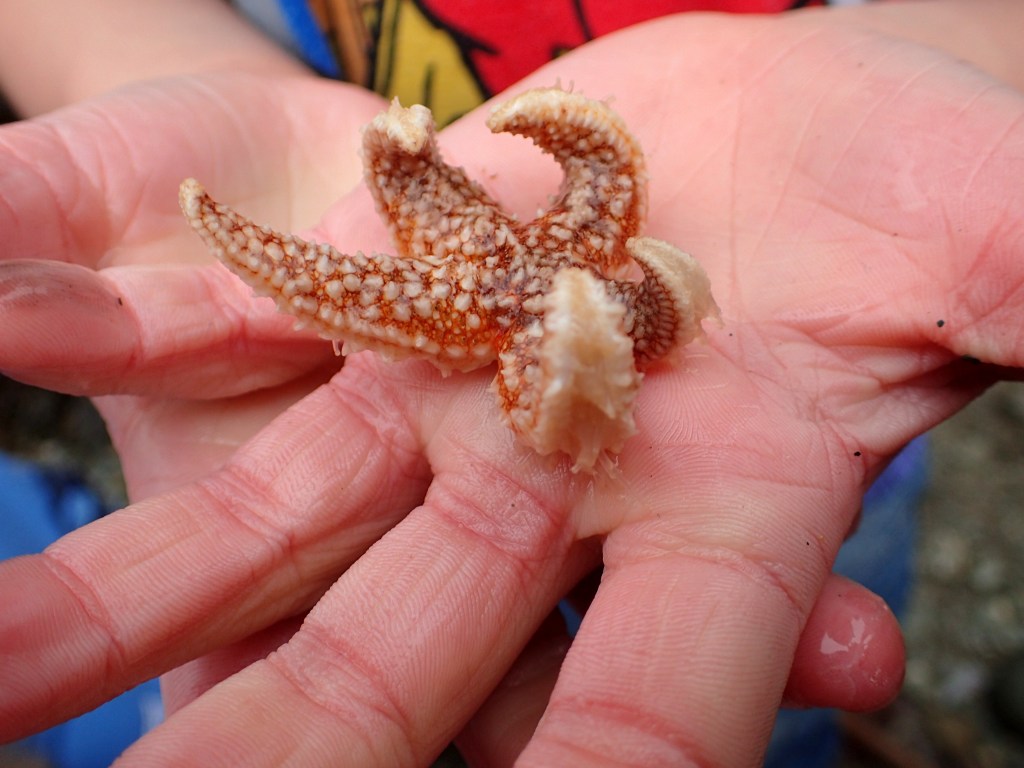
Expect to see crabs, fish, anemones, sea snails, prawns, starfish and perhaps even a sea slug – these little creatures come in an amazing variety of shapes and colours.
If you need help identifying something, take a photo if possible and get in touch through my contact page, Facebook or Twitter. I love seeing your finds.
The other side of the Looe valley has disappeared. Beneath the thick Cornish sea fog, a steady, soaking drizzle is blowing in. Junior, contemplating the scene out of our back window, decides it’s a perfect day to go for a picnic at Port Nadler.
Two and a half miles later, with water running off our noses and mud splashed up our waterproof trousers, we arrive in the deserted bay. We listen to the whistles of oystercatchers, sounding closer than they are in the fog. Junior follows trails of bird footprints across the beach.
The sun doesn’t shine on our picnic, but the rain eases and we begin to catch glimpses of the sea through the mist. After a quick sandwich, we start exploring.
The cool, damp conditions aren’t great for humans, but they’re ideal for rockpool creatures that need to avoid drying out. I’ve barely taken a few steps across the rocks when I spot a decorator crab out for a walk among the seaweed. It’s so well covered with pieces of weed that I have to move it to take a distinguishable photo.
A decorator crab – a small species of spider crab – out for a walk
It’s not a particularly big tide, but it’s low enough to access some wide, shallow pools and an area strewn with loose rocks begging to be turned.(more…)
Privacy & Cookies: This site uses cookies. By continuing to use this website, you agree to their use. To find out more, including how to control cookies, see here: Privacy and Cookies Policy.











 Cornish Rock Pools