Blog

  • We’re going to find… a rainbow sea slug!

    We’re going to find… a rainbow sea slug!

    Back in March, Junior and I had the opportunity, together with our fabulous home education group, to explore the shore in Looe on one of the lowest tides of the year. For these keen rock poolers, searching for rainbow slugs was the perfect challenge.

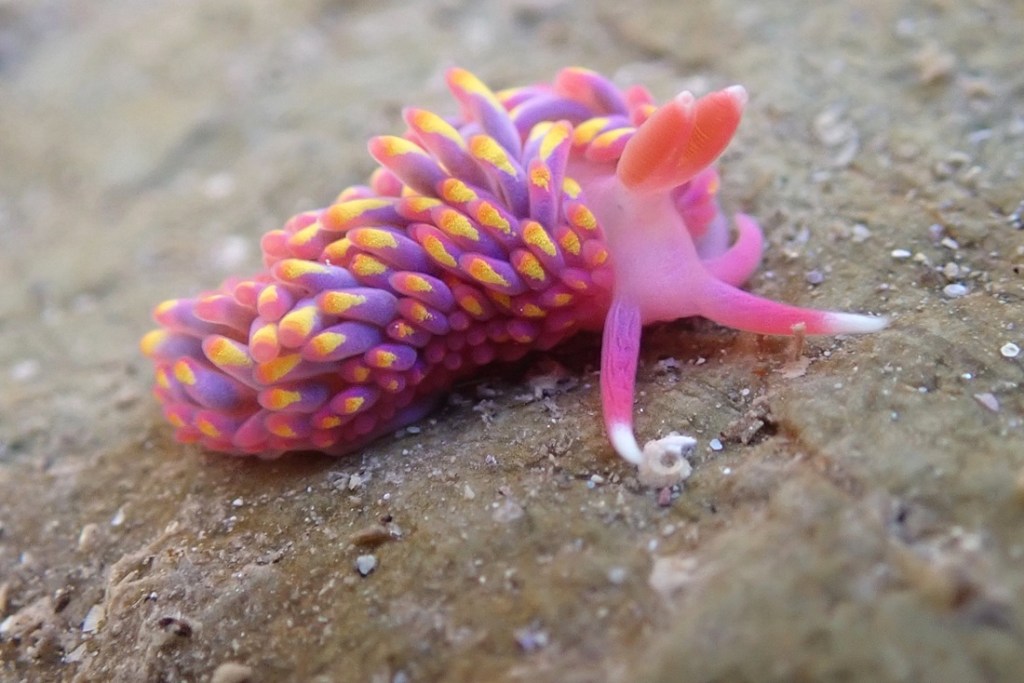
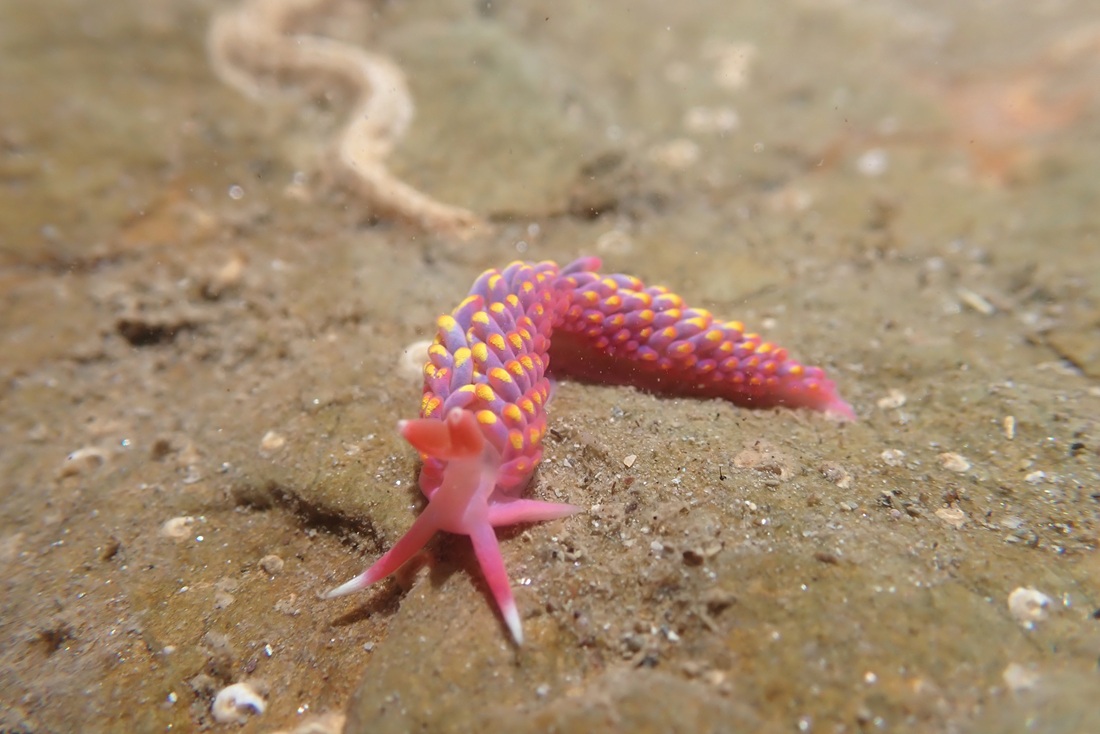
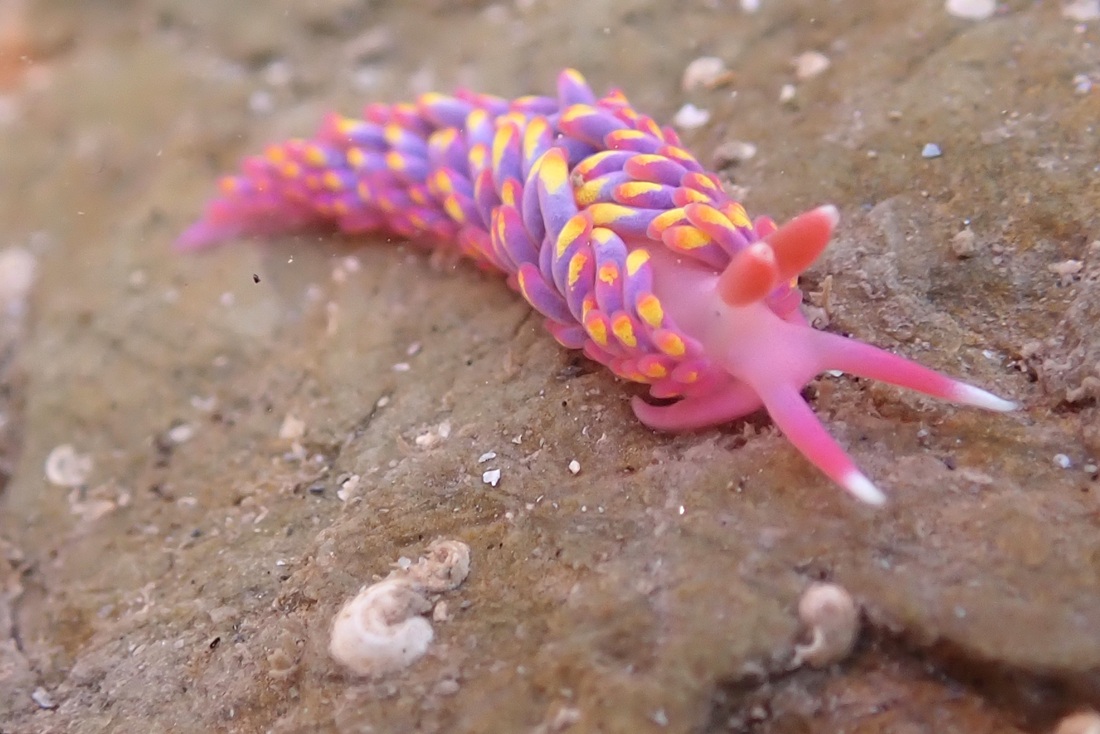
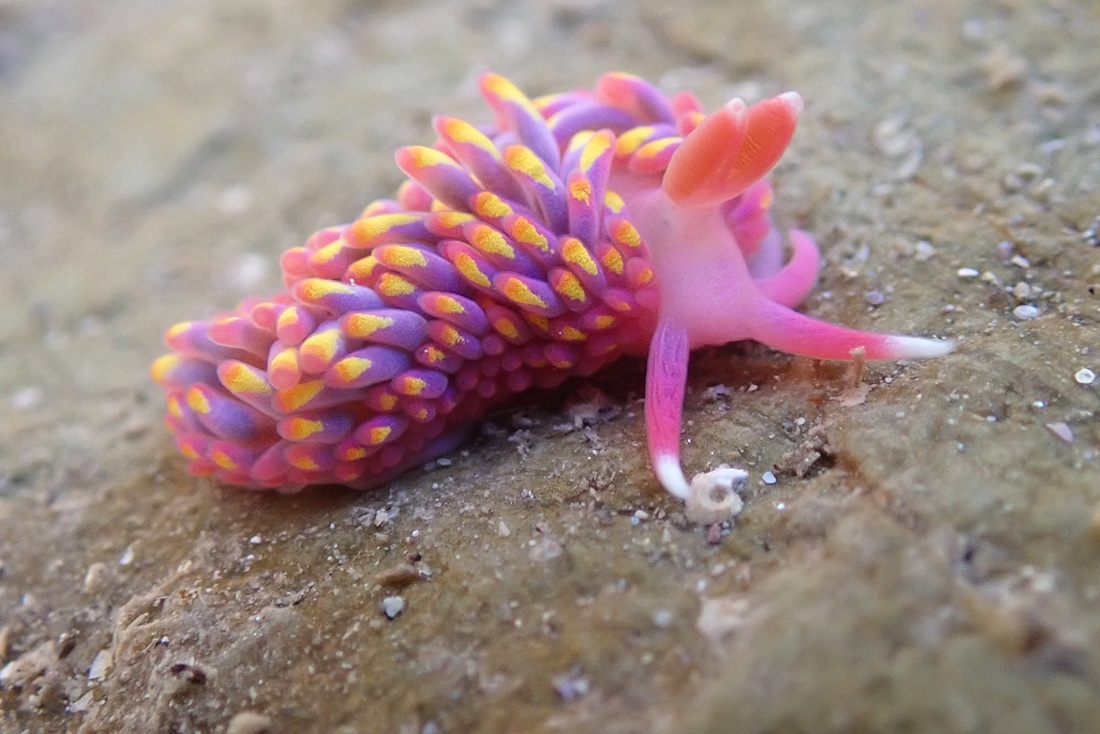
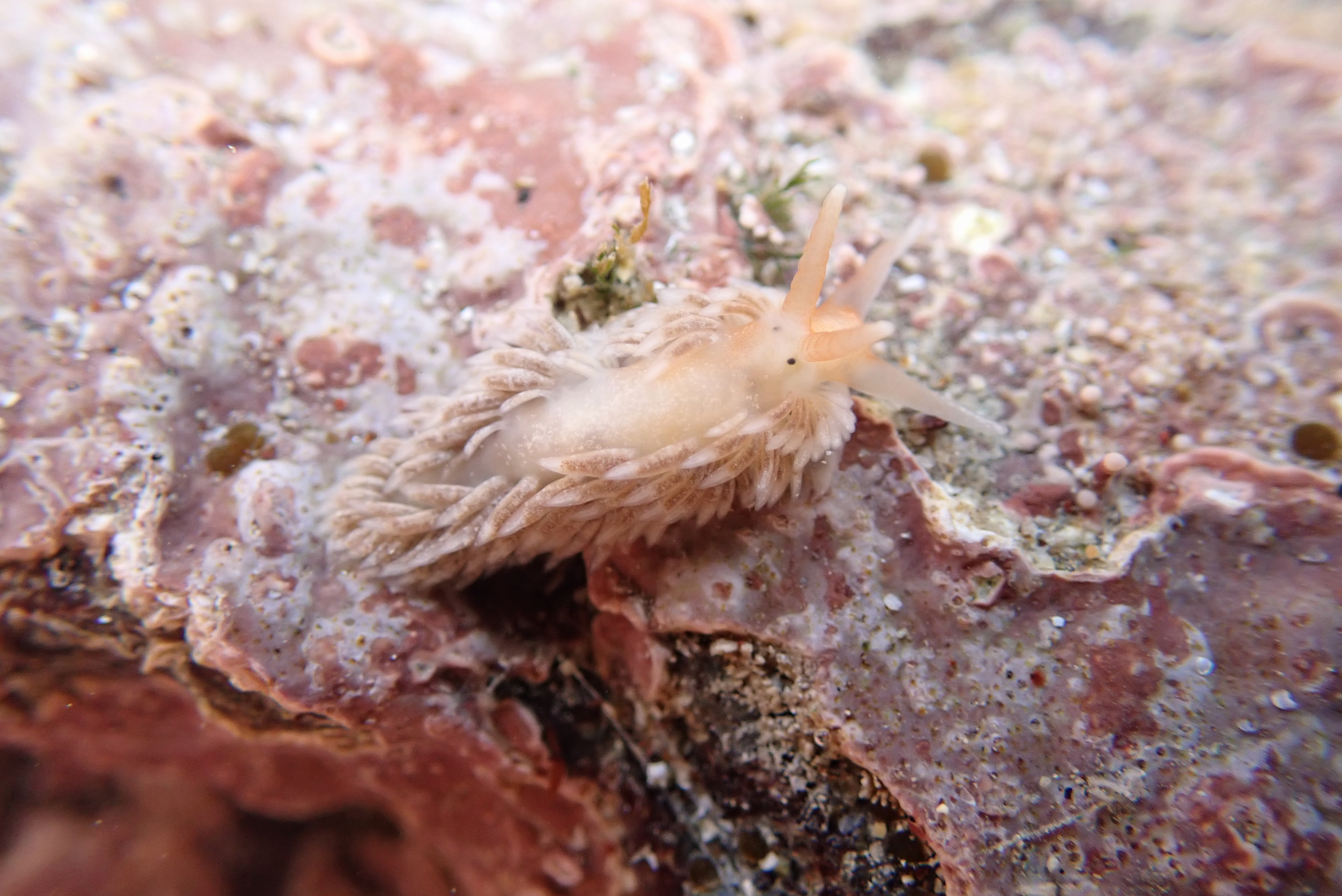
    Brightly coloured pink purple and yellow sea slug.
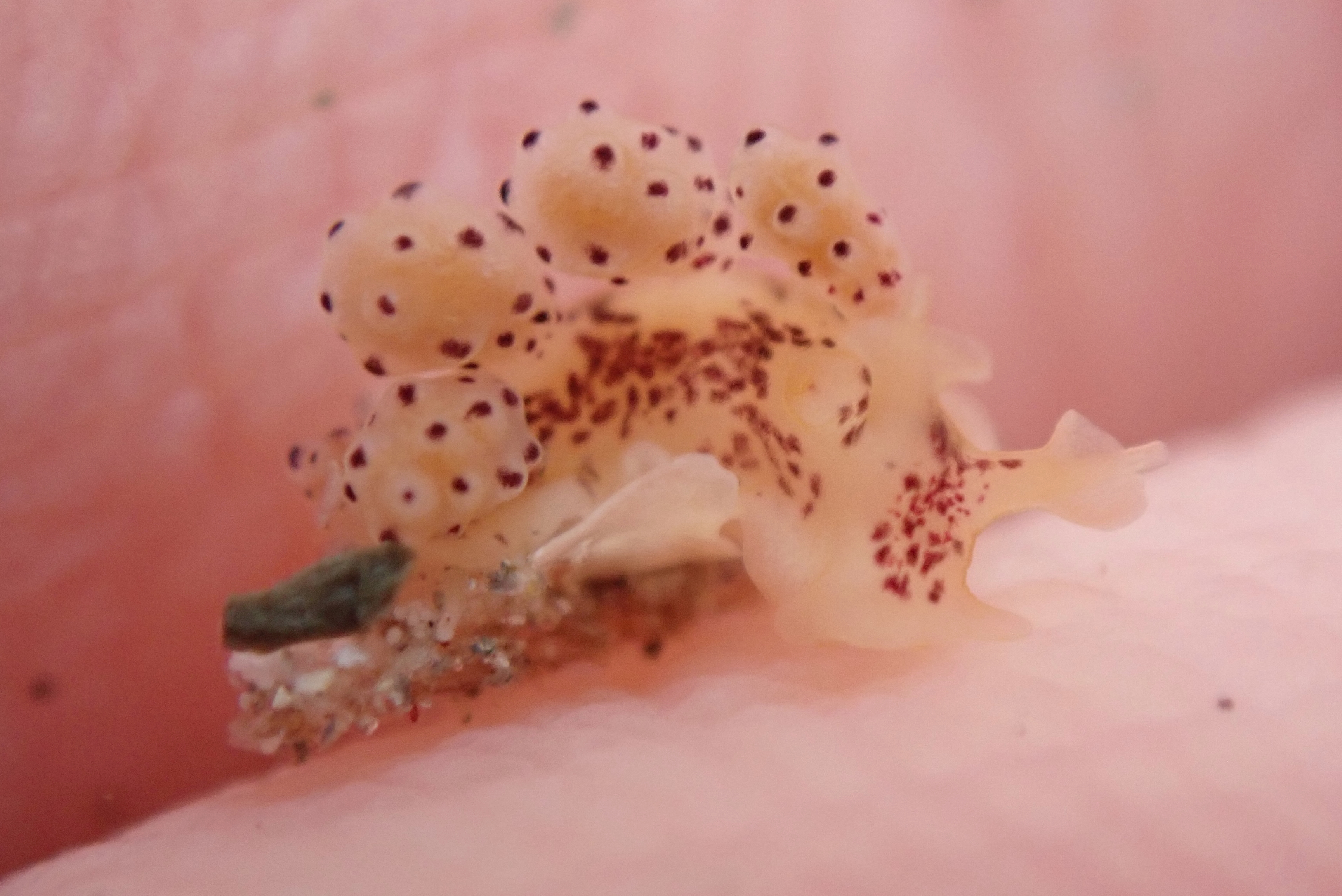
    Rainbow sea slug, Babakina anadoni

    “So, what does a rainbow sea slug look like?” asks one of the children. A good question.

    I admit I have never seen one in real life.

    “It’s tiny, so you’ll have to look closely,” I say. “Maybe the length of my little fingernail?”

     I hold my fingernail out for inspection and the group gathers round.

    “If you find this slug, you’ll know,” I assure them. “It might be tiny, but it’s a fluffy rainbow, with the brightest colours.”

    Since the first UK sighting off the Isles of Scilly in 2002, the rainbow sea slug, Babakina anadoni, has been found increasingly frequently, including in several locations around Cornwall. Needless to say, I have been looking for it. Everywhere. Endlessly.

    The general view is that this species feeds on hydroids, in particular the rather odd looking (and giggle-inducing) Candalabrum cocksii.

    Most hydroids live in delicate, feathery colonies. Described by the naturalist Cocks 1854 (and previously by Gosse in 1853), Candelabrum cocksii looks more like a blobby worm and, to complete the look, it can even wriggle vigorously.

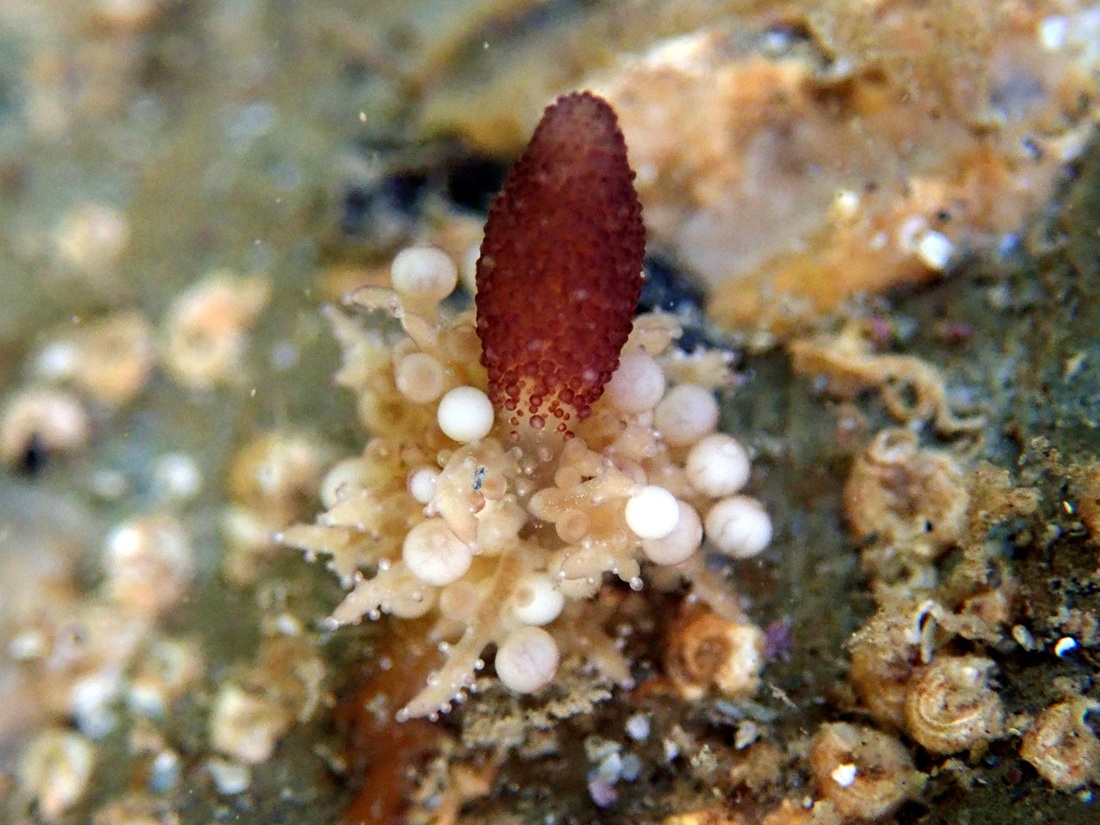
    Candelabrum cocksii hydroid with red body sticking up and a mass of white balls and frilly tentacles at the base. On a rock in the sea.
    Candelabrum cocksii hydroid: believed to be the favoured food of the rainbow sea slug.

    You can just about see why Cocks compared this little animal to a candle-holder. The main, burgundy-red body of the animal often sticks upright like a candle, with the animal’s mouth at the top, and seems to be propped in place by its rounded base, comprising many tiny white balls, and frilled tentacles. Hydroids use stinging cells in their tentacles to fire paralysing toxins into passing prey in the same way as other cnidarians like anemones and jellyfish.

    Underneath the base is a “foot”, which secures the animal to the rock, but can also extend when it wants to move. In fact, the whole animal is highly extendable and transforms in appearance when it puts out its short, round-ended tentacles.

    Candelabrum cocksii hydroid in horseshoe shape on rock, with mass of branched tentacles on right and short tentacles extended all over body.
    Candelabrum cocksii hydroid – showing how it can extend its body and tentacles.

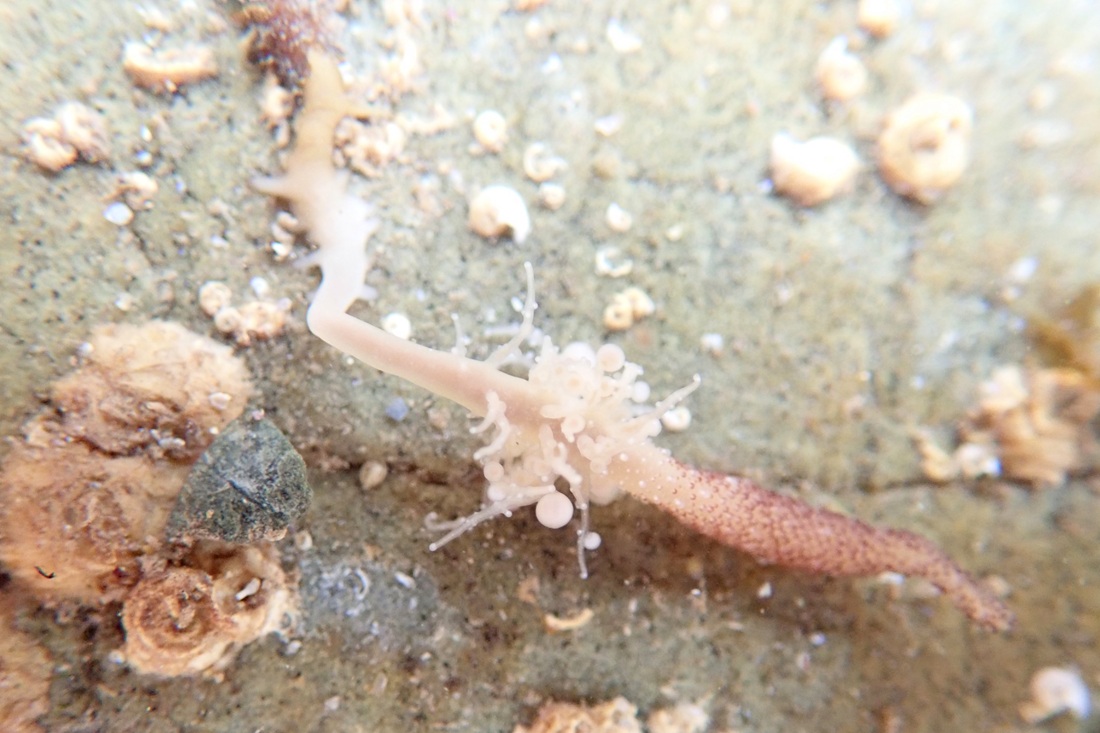
    To make itself seem even longer, it can also connect to other Candelabrum cocksii, forming a pseudo-colony.

    Extended worm-like Candelabrum cocksii hydroid(s) on grey rock.
    A very extended, worm-like Candelabrum cocksii, with another at the other end.

    To my mind, lots of Candalabrum cocksii hydroids should equal lots of well-fed rainbow sea slugs. Sadly, as so often happens, the slugs don’t seem to have read the same articles as me. After many months of looking, I still haven’t found one.

    Fortunately, Junior’s home education group have good form. We have set out several times with a particular mission, most recently to find baby sharks . Each time, they succeed. Therefore, today we are going to find a rainbow slug.

    Conditions on the shore are beautiful. For once, we have sunshine, very light winds and a calm sea. Not only that, but there is a perfect spring low tide forecast. We follow the retreating sea towards an emerging rocky reef, checking everywhere along the way.

    There are lots of fabulous crabs, fish, squat lobsters, anemones and more, but no rainbow slugs.

    Small headed clingfish over pebbles in rock pool
    Small headed clingfish

    As low tide approaches, I am delighted to bump into the legendary (and also very real) Dr Keith Hiscock of the Marine Biological Association in Plymouth, who is enjoying his own marine explorations. We catch up briefly before I am called away to see another exciting find by the children: a catshark egg case that appears to be on the brink of hatching.

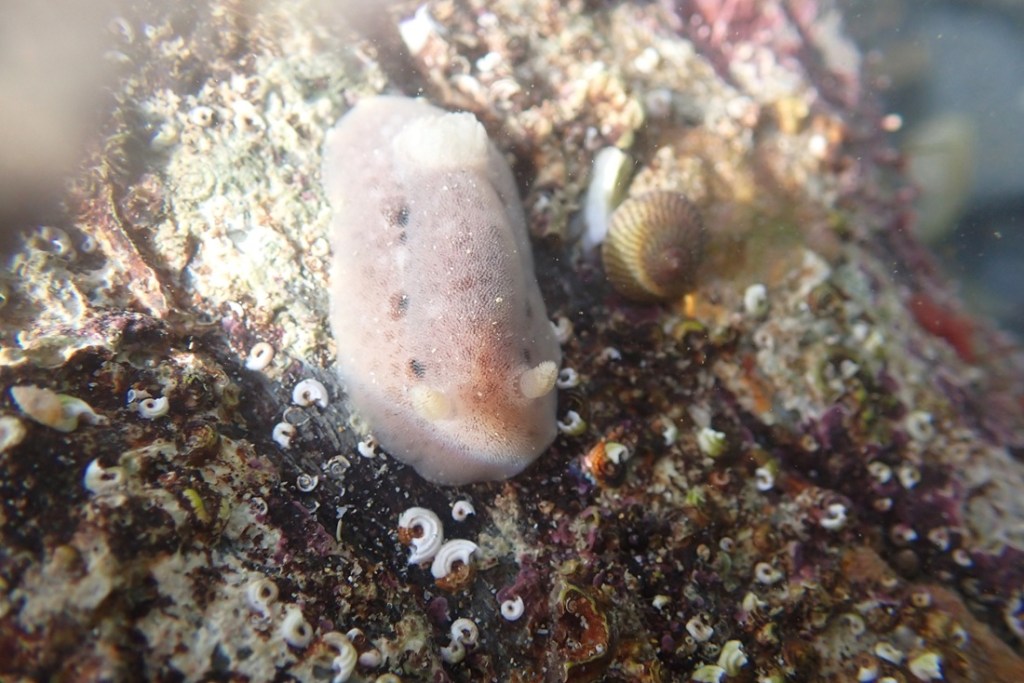
    I keep up my increasingly frantic search for a rainbow sea slug without success. There’s a little Jorunna tomentosa slug and a beautiful red Rostanga rubra. I’m also happy to see a young snake pipefish, but there’s no sign of rainbow slugs.

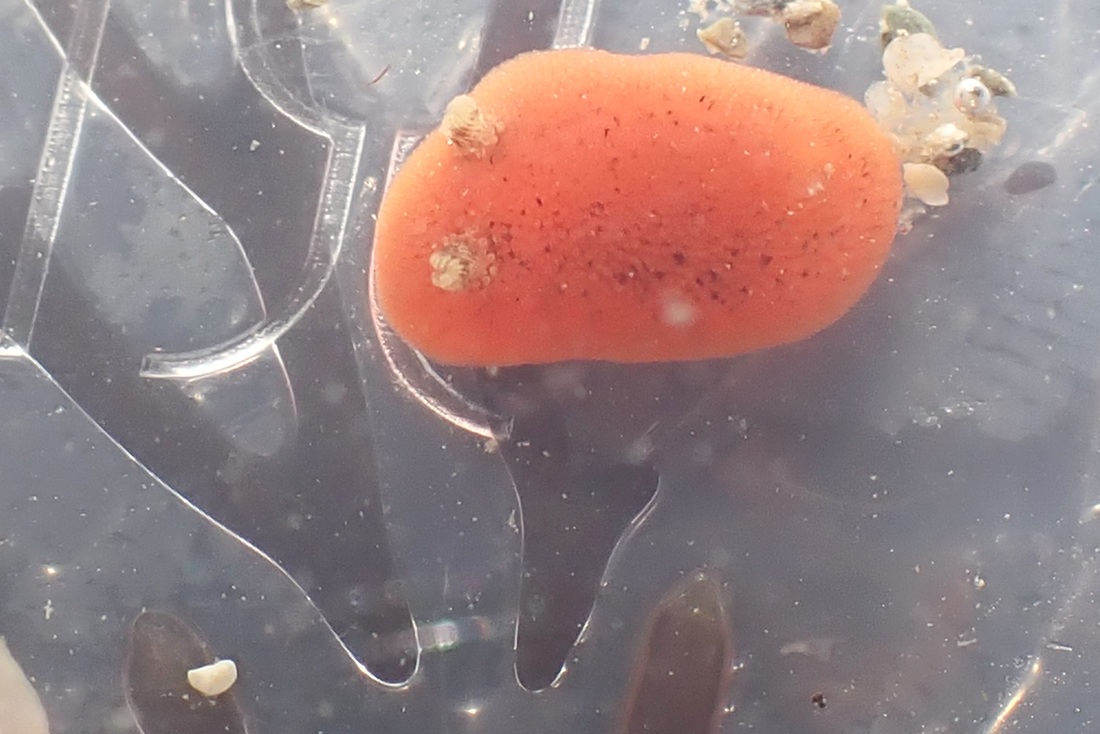
    Rostanga rubra - a bright orange sea slug with light-brown rhinophores
    Rostanga rubra – a slug that feeds on orange and red sponges
    Jorunna tomentosa. A cream coloured sea slug with small brown spots and a furry look. Slug is crossing a rock covered in short green seaweed.
    Jorunna tomentosa – I call these “Dalmatian” slugs as they always have little brown spots.
    Juvenile snake pipefish, showing the long snout and dark mask-like marking over the eye. Fish is in the sea over pebbles.
    Juvenile snake pipefish, showing the long snout and dark mask-like marking over the eye.

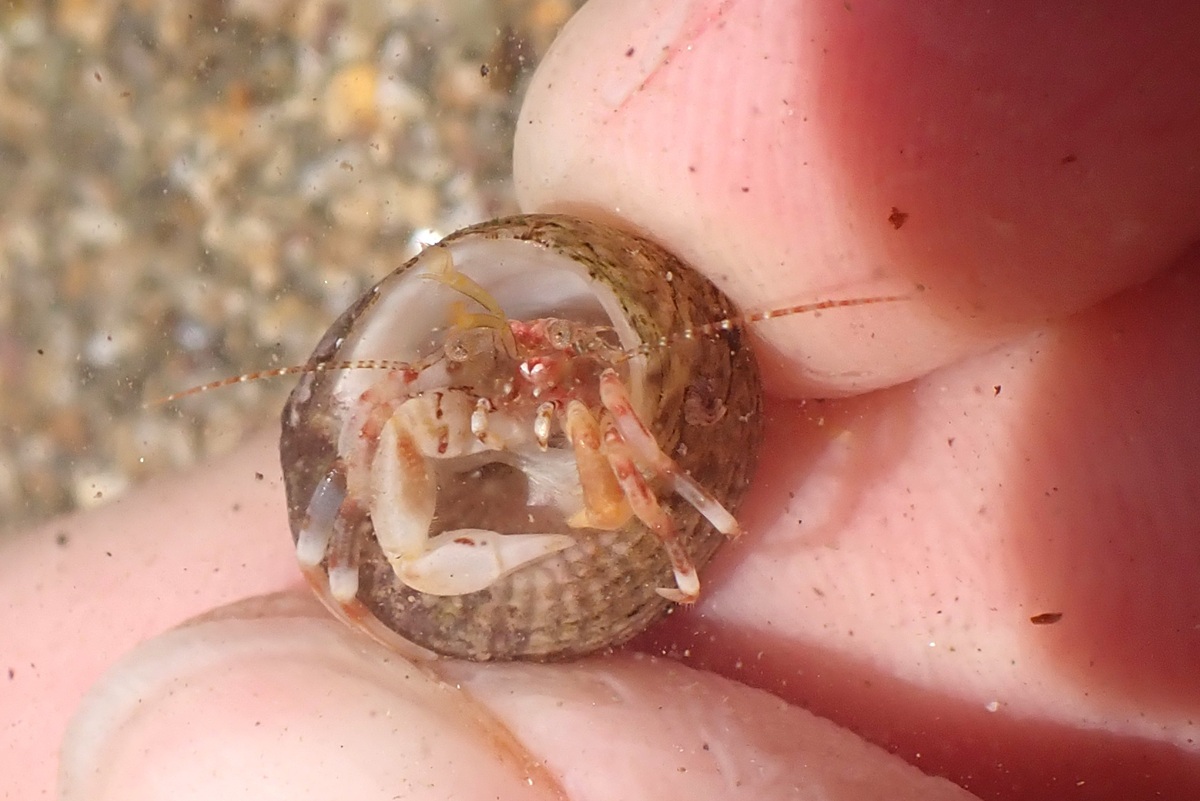
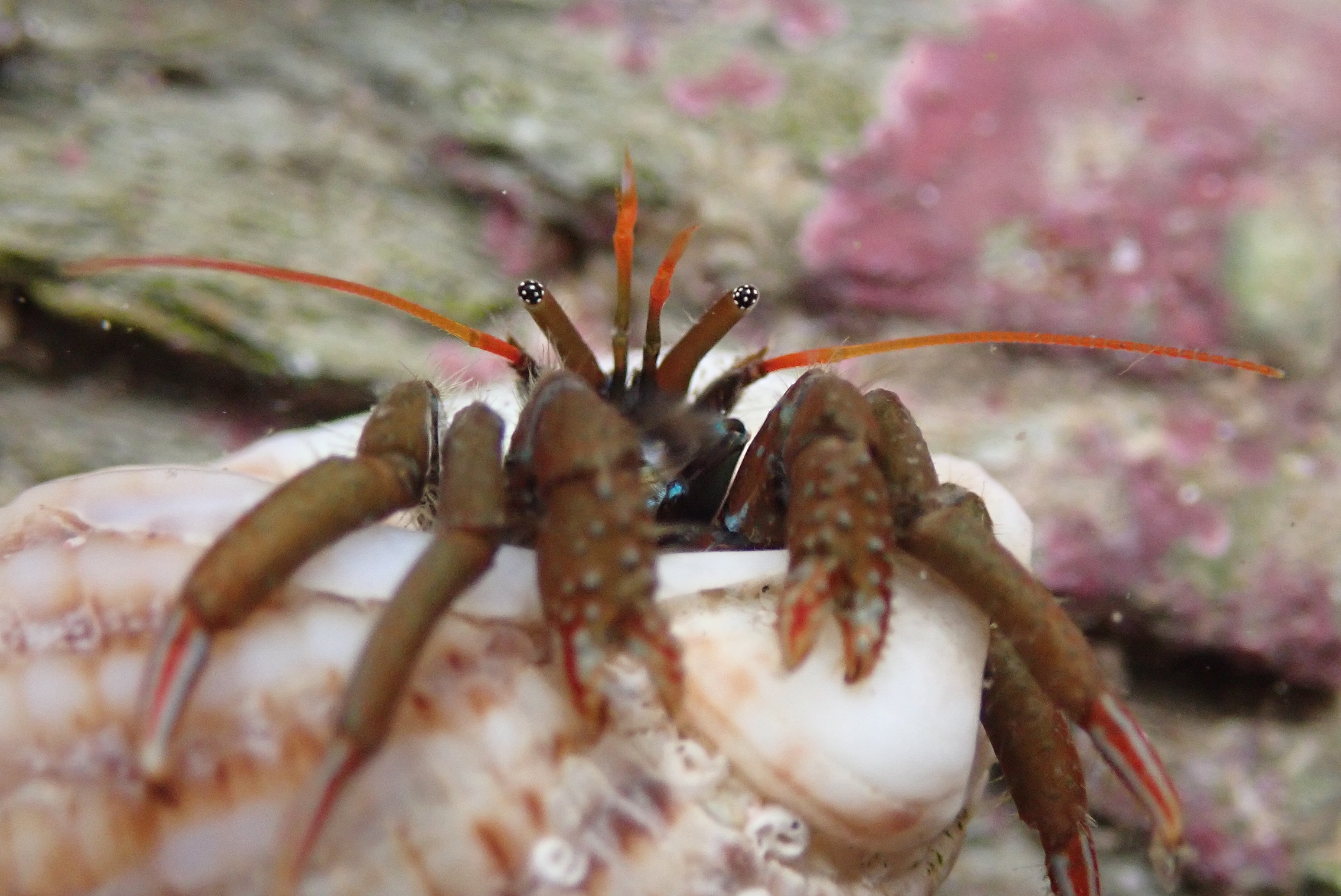
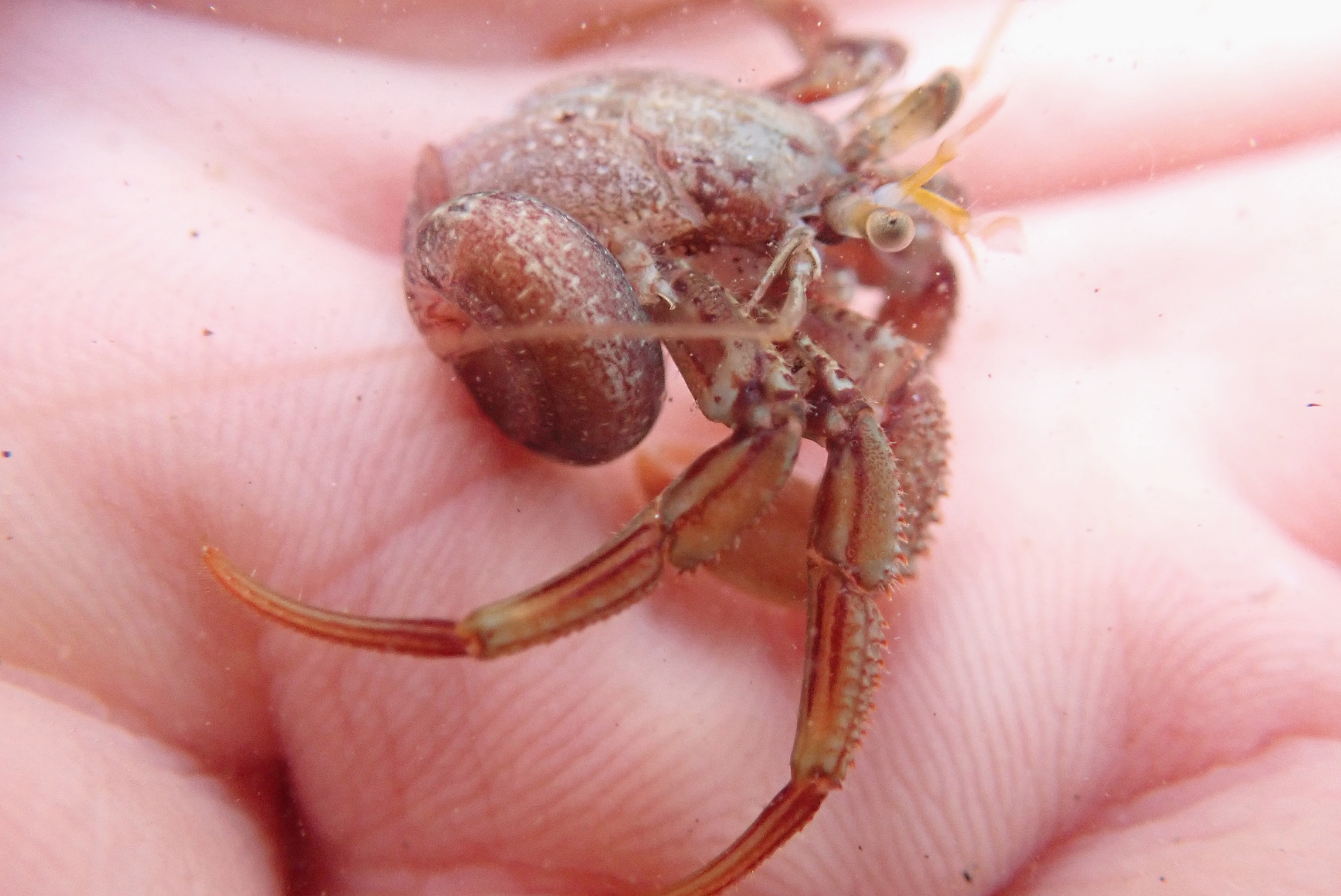
    I am taking some photos of a gorgeous little Anapagurus hyndmanni hermit crab, when Junior calls over to say that Keith found a rainbow slug. For a moment I think he’s pulling my leg, but Junior knows that slugs are a serious matter.

    Anapagurus hyndmanni small hermit crab with large white right claw in topshell.
    Anapagurus hyndmanni. These small hermit crabs have a larger right claw, which looks like a white boxing glove. They also have lovely striped antennae.

    “He found it earlier,” he says. “Over there somewhere.” He points to the opposite side of the lagoon.

    My heart leaps and sinks at the same time. There’s a rainbow slug! However, it’s unlikely to be more than 2cm long and is somewhere among many square metres of rocks and seaweed.

    I slosh through the water to where Keith is exploring and he tells me he has marked the place. Fantastic! I call the kids over and, together, we start hunting for a rock marked with a piece of kelp.

    Inevitably, the tide is already turning and time is against us. We find one rock with kelp on it and search all around to no avail. Then we try another place. Nothing.

    Keith to the rescue! With a little hunting around (rocks and kelp are incredibly plentiful on this part of the shore), he identifies the right area. The first rock we gently turn is slug free and we place it back, glancing nervously at the edge of the sea, which is visibly flowing in our direction.

    When we turn the second rock, the children gasp in excitement. Yes, it’s small, but there is nothing disappointing about this slug. The pinks, purples and yellows are virtually glowing.

    Brightly coloured pink purple and yellow sea slug.
    Rainbow sea slug, Babakina anadoni

    “It’s like a Pokémon!”

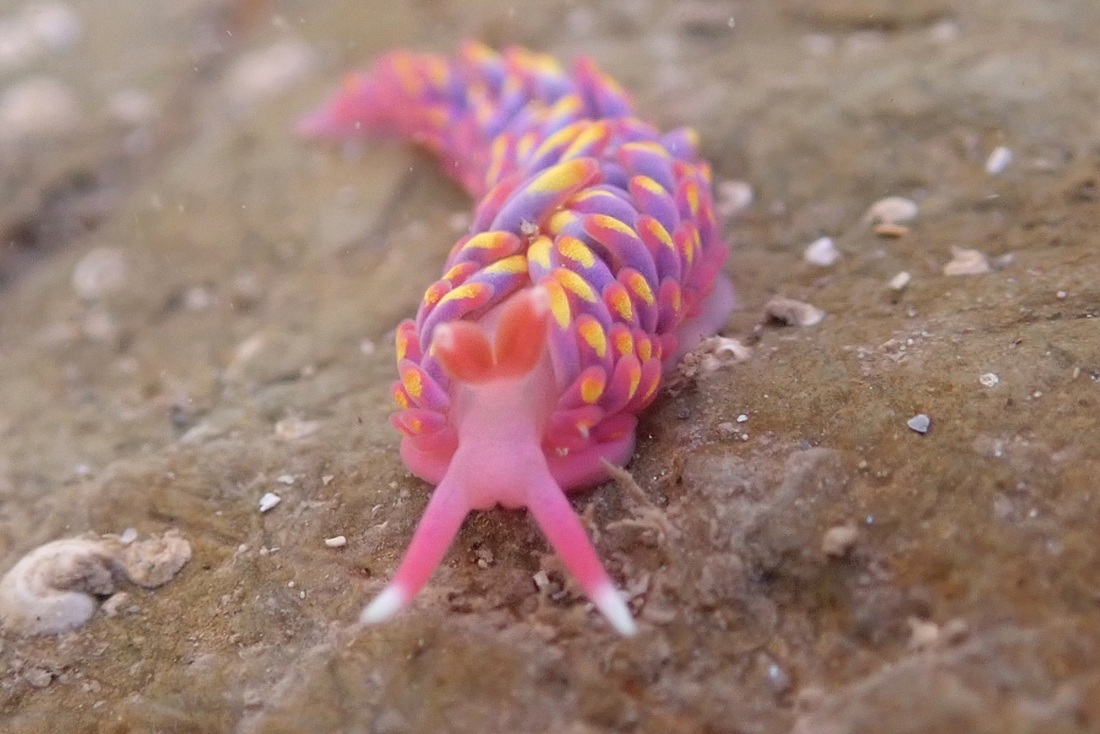
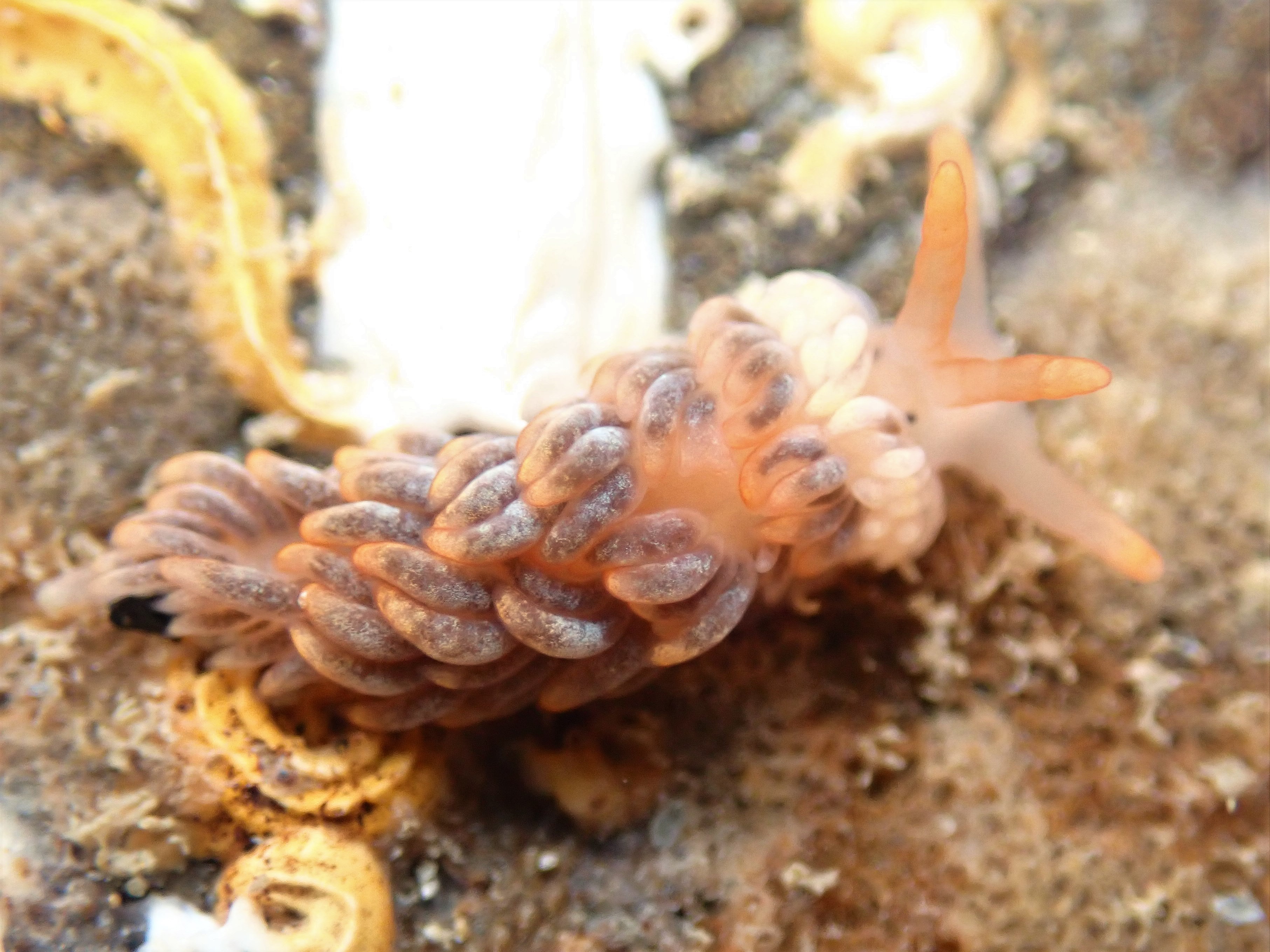
    The children have a point. With its bright pink headgear and multicoloured mane of cerata along its back, this creature would not look out of place on a trading card.

    Brightly coloured pink purple and yellow sea slug.
    Rainbow sea slug, Babakina anadoni

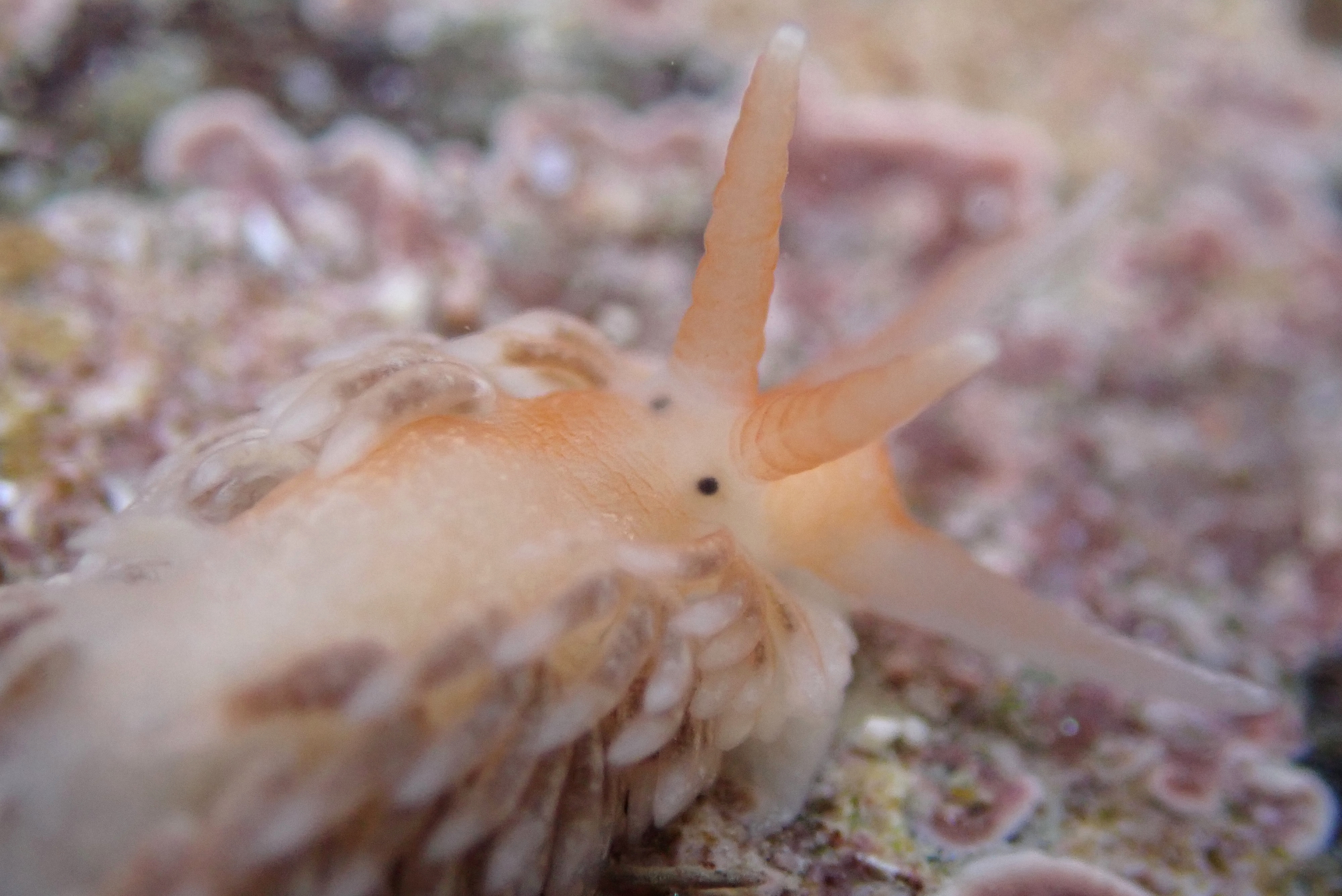
    Vivid colours like this often announce to any would-be predators that an animal is toxic. Many sea slugs retain toxins from their food, or even stinging cells, which they keep in their cerata (the sticky-up bits on their backs). My books neither confirm nor deny that Babakina anadoni does this, but I imagine that few creatures would be foolish enough to chance a bite.

    Brightly coloured pink purple and yellow sea slug.
    Rainbow sea slug, Babakina anadoni

    Excitingly for me, the rainbow slug is not at all camera shy. It keeps changing its pose on the rock, allowing us to take some excellent shots from all of its best sides.

    Amid the appreciative chatter and my own delighted squeals, I do my best to do justice to this slug’s stunning appearance.

    Brightly coloured pink purple and yellow sea slug.
    Rainbow sea slug, Babakina anadoni

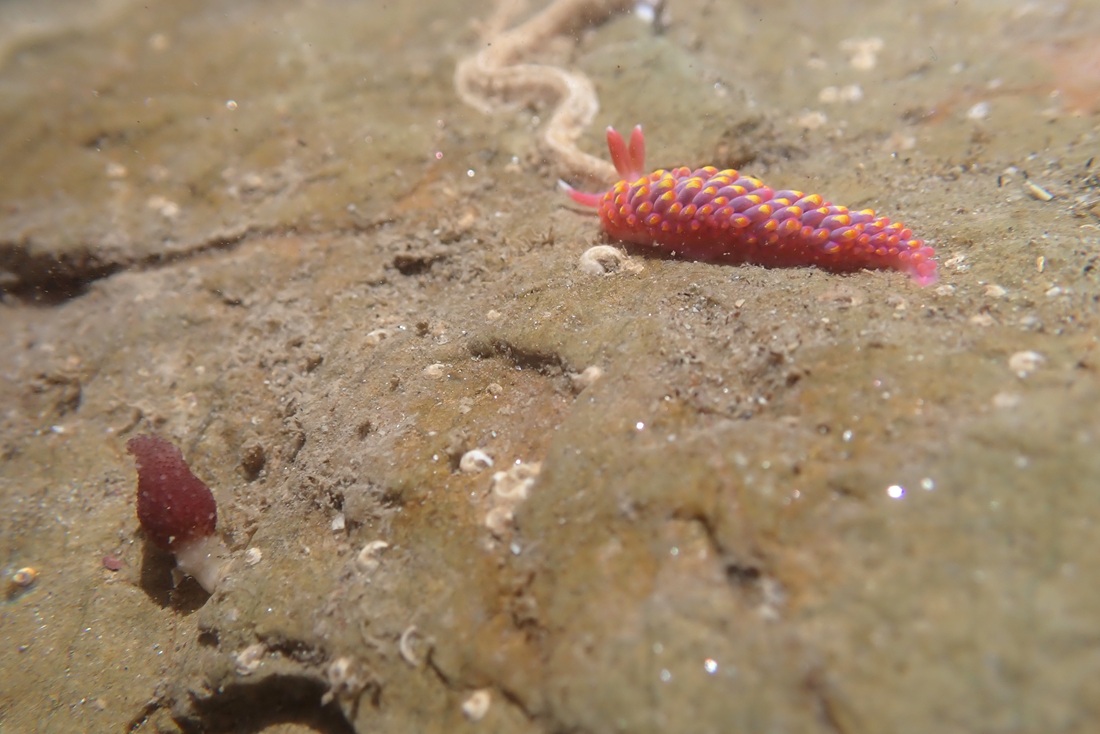
    Also on the rock is a Candelabrum cocksii hydroid – possibly slightly chewed by the slug.

    Brightly coloured pink purple and yellow sea slug.
    Rainbow sea slug, Babakina anadoni with a Candelabrum cocksii hydroid (bottom left) – possibly nibbled!

    I cannot thank Keith enough for sharing his discovery with us all. What an incredible experience for all of us. There may well be some budding marine biologists among the group!

    Brightly coloured pink purple and yellow sea slug.
    Rainbow sea slug, Babakina anadoni

    With the tide pushing at our heels, we retreat to the top of the shore to relax and eat a celebratory ice cream, still buzzing about the beautiful slug and its amazing colours.

    Brightly coloured pink purple and yellow sea slug.
    Rainbow sea slug, Babakina anadoni… strutting its stuff!

    The intertidal rocky shore is a fragile environment that we can all help to protect. If you are heading out to look at the wildlife, join a local expert-led event if possible and be sure to follow my rock pooling tips to help you to look after the wildlife and stay safe.

    This website is a labour of much love and the content is available for free to everyone. My wonderful readers often ask if there is a way to support my work. You can now ‘buy me a coffee’ through my Ko-fi.uk page. (Just click donate and you can set the amount to pay by PayPal). Thank you!

    Buy Me a Coffee at ko-fi.com

  • At Home in the Rock Pools

    At Home in the Rock Pools

    Our home educating days are coming to an end as Junior prepares to try out life at college. With this momentous change approaching, this year has been all about cramming in local, national and international adventures and travels to make the most of this precious time. Our visits to the rock pools – and my posts about them – may have been less frequent than usual in recent months, but it will not surprise you that we have still packed beach trips in between our travels and I have amassed lots of fabulous finds to share with you.

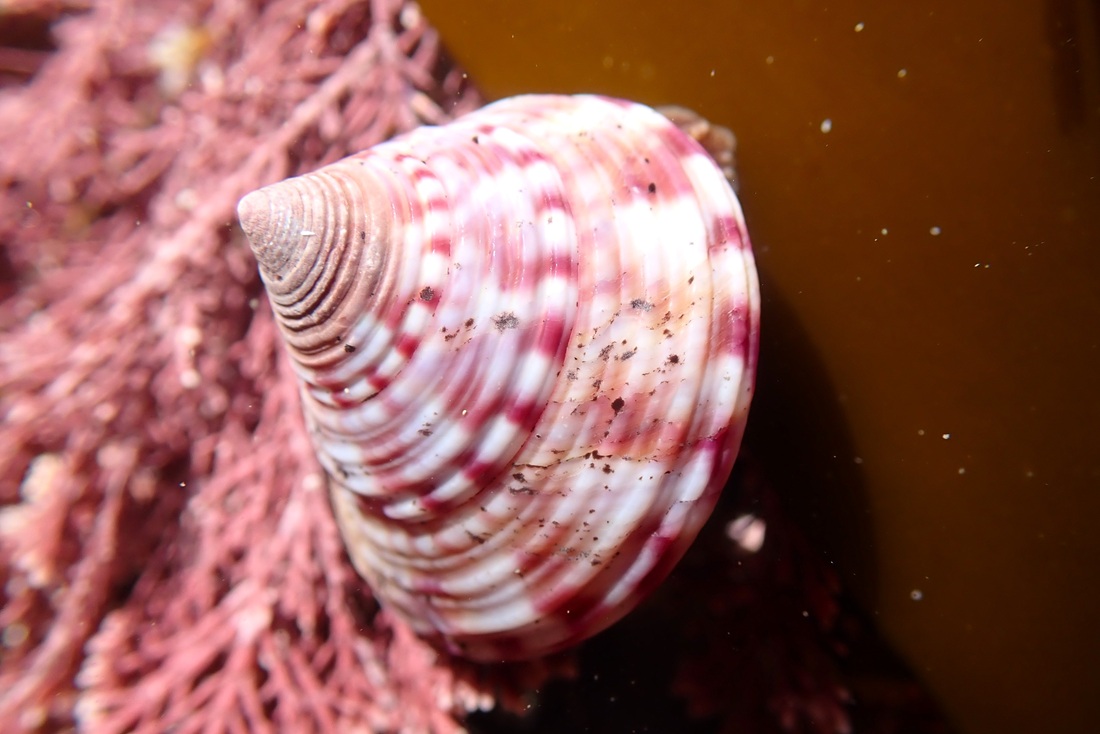
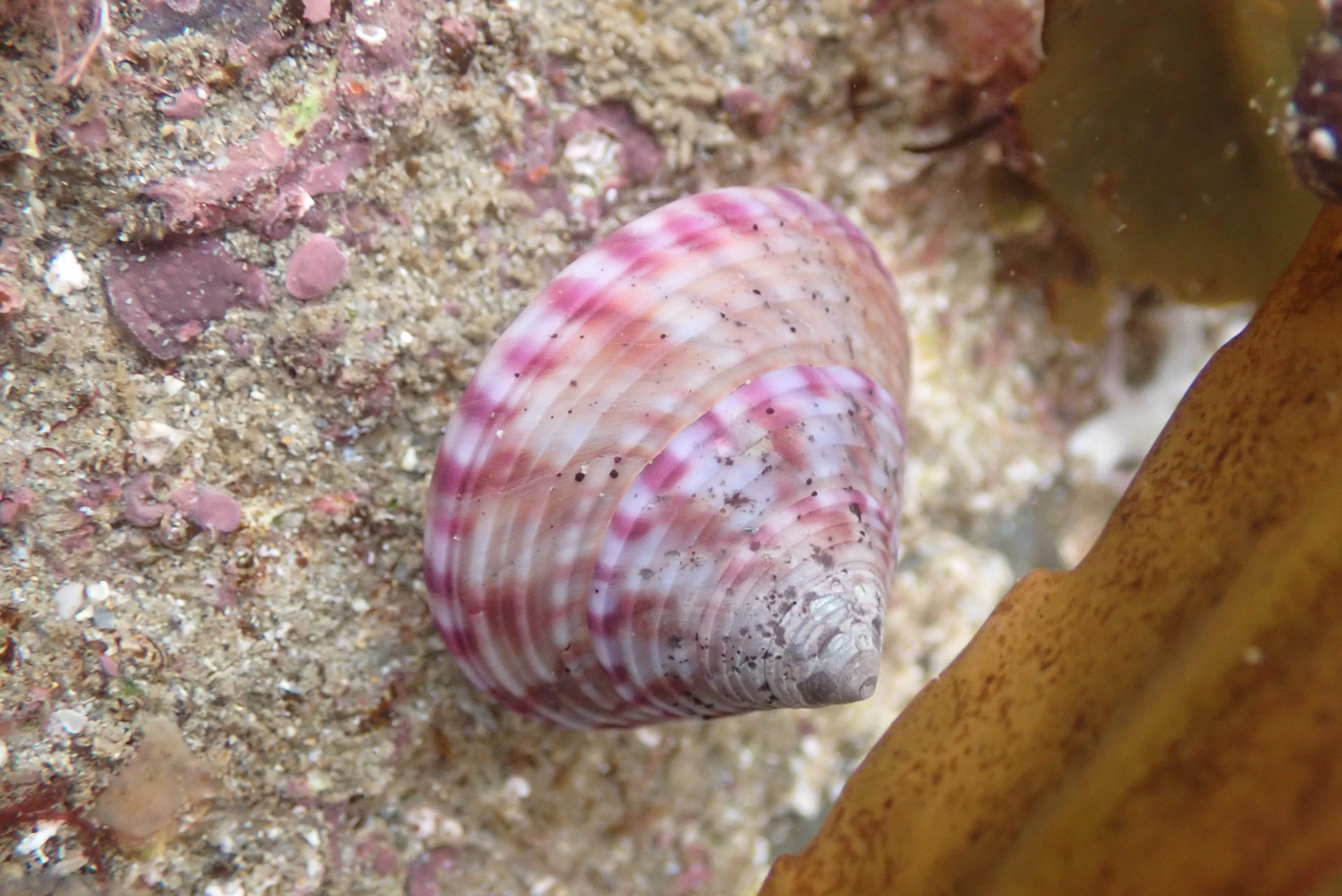
    Painted top shell - conical pink shell with pink coral weed in the background.
    Painted topshell at Porth Mear – the colours at this beach are always especially vivid.

    This trip back to my favourite childhood rock pooling beach at Porth Mear with Junior and Other Half was a reminder of what makes this place so special.

    There’s a hint of blue sky and the waves are only breaking around the edges of the rocky islands offshore, rather than bursting over the top as they so often do. With the tide set to fall to a low of less than 0.1m, this is set to be a perfect day.

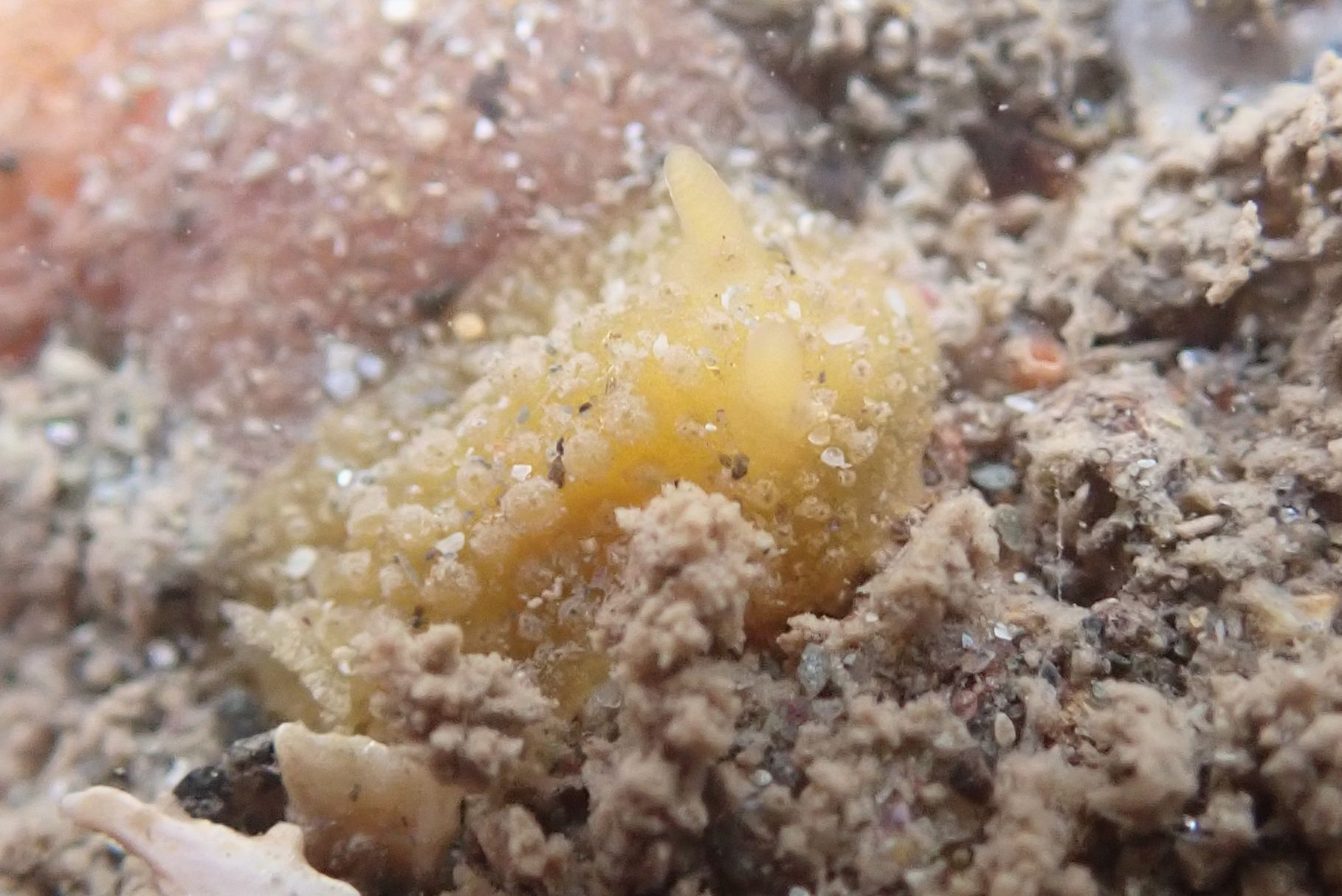
    In my happy rock pooling world, there is nothing more auspicious than finding a nudibranch sea slug in the very first place I look. Admittedly, I know this pool well and have good reason to hope, but this very tiny, citrus-yellow Doris ocelligera is the happiest omen. With its rhinophores held tall and proud, it is such a lemon-burst of joy that I spend many minutes crouched by the water watching it through my camera.

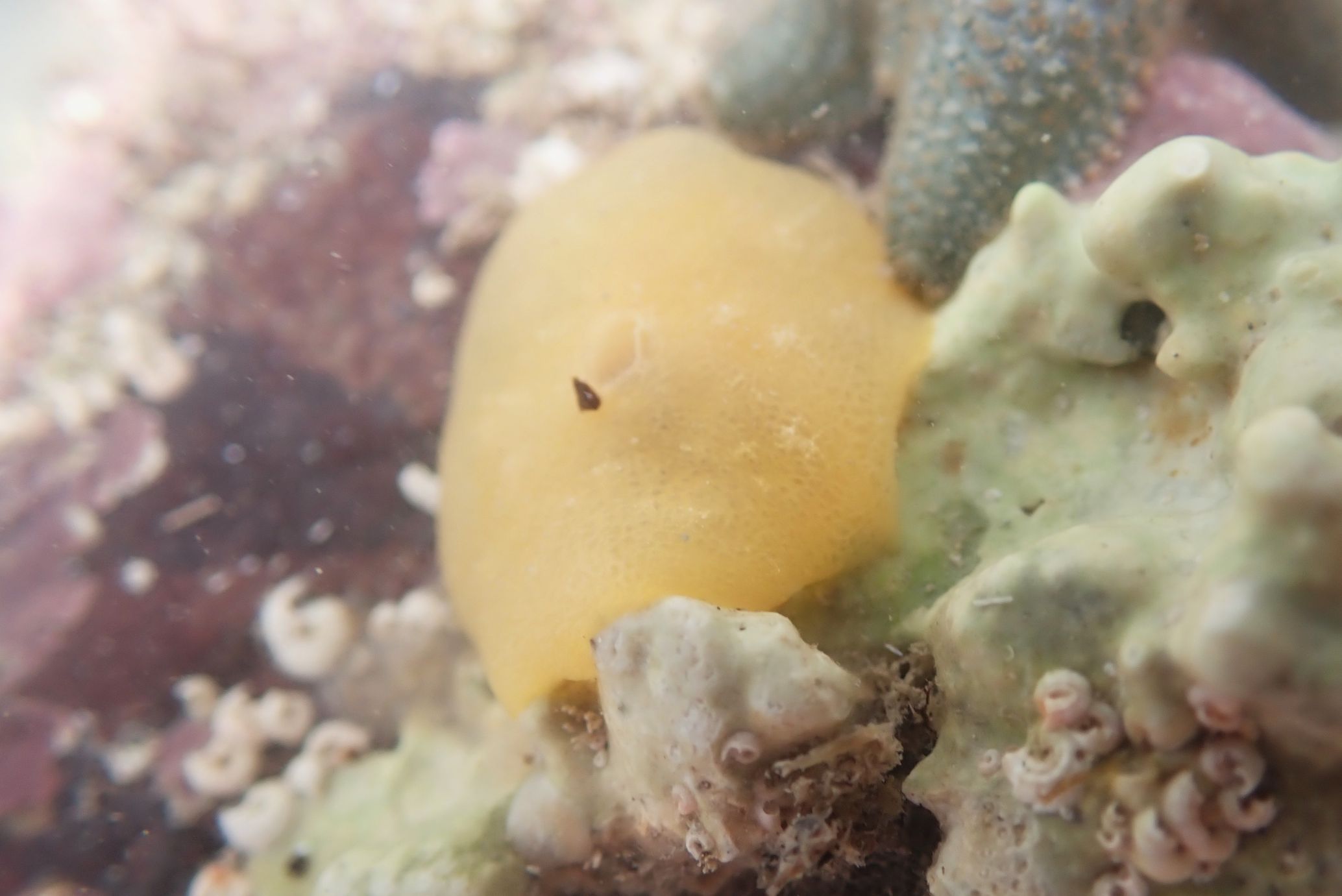
    Doris c.f. ocelligera – a small sea slug, which feeds on sponges. On its favourite sponges, it is perfectly camouflaged, but against the rock it it strikingly bright yellow.

    Since I have lived on the south coast of Cornwall, I have come to appreciate how wonderfully clear and un-silty the water is here on the north coast. Whether it is down to this transparency that allows more light through or something else about the conditions, the colours of the shells and anemones often appear more vivid here.

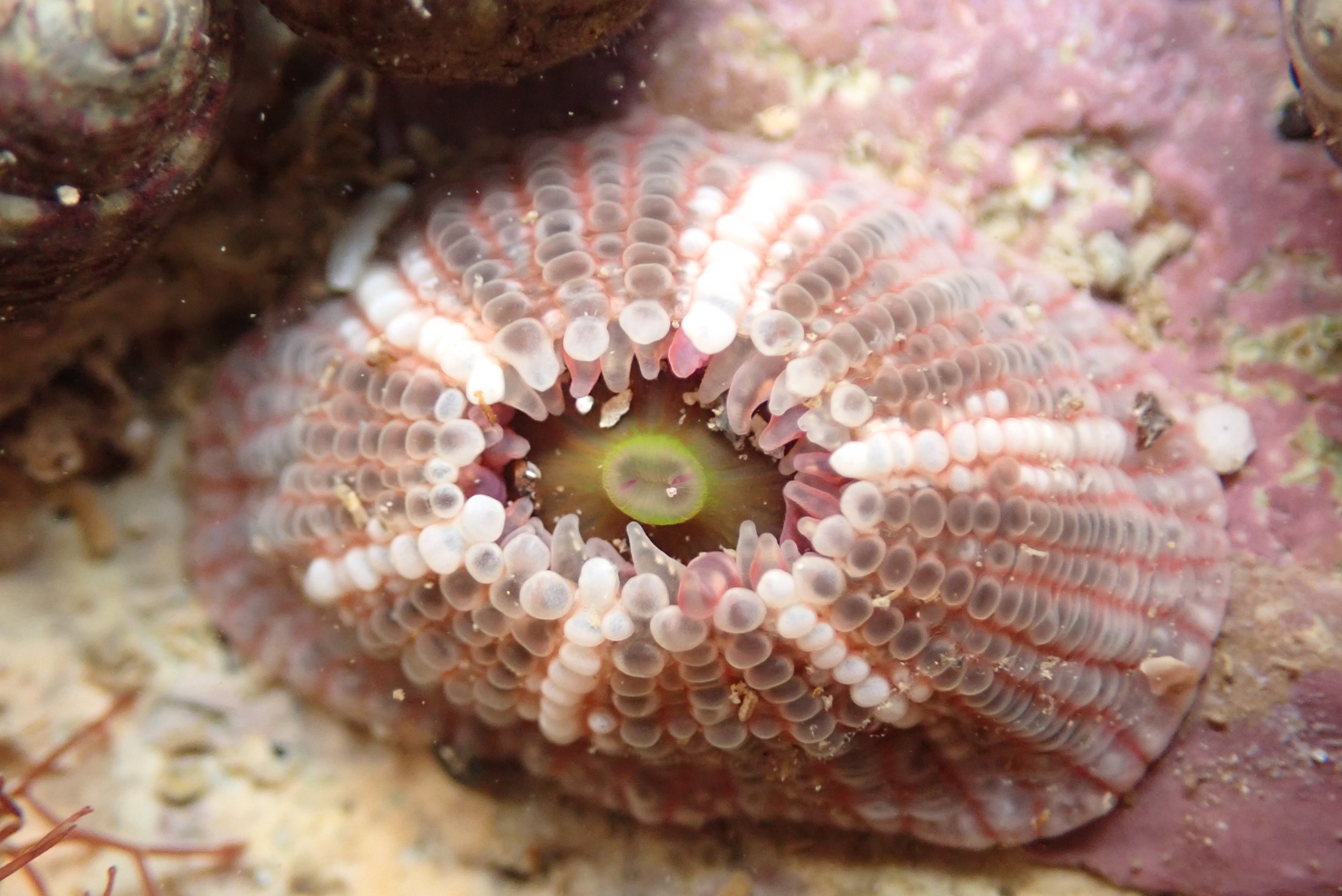
    An open strawberry anemone at Porth Mear.

    Strawberry anemones, which are bigger than beadlets, are especially photogenic whether they are open or closed. The pale red tentacles catch the sun beautifully, but the yellow flecks on the shiny red columns are also stunning.

    As I move down the shore, I come across some less commonly seen species, including some that are harder to idenitfy.

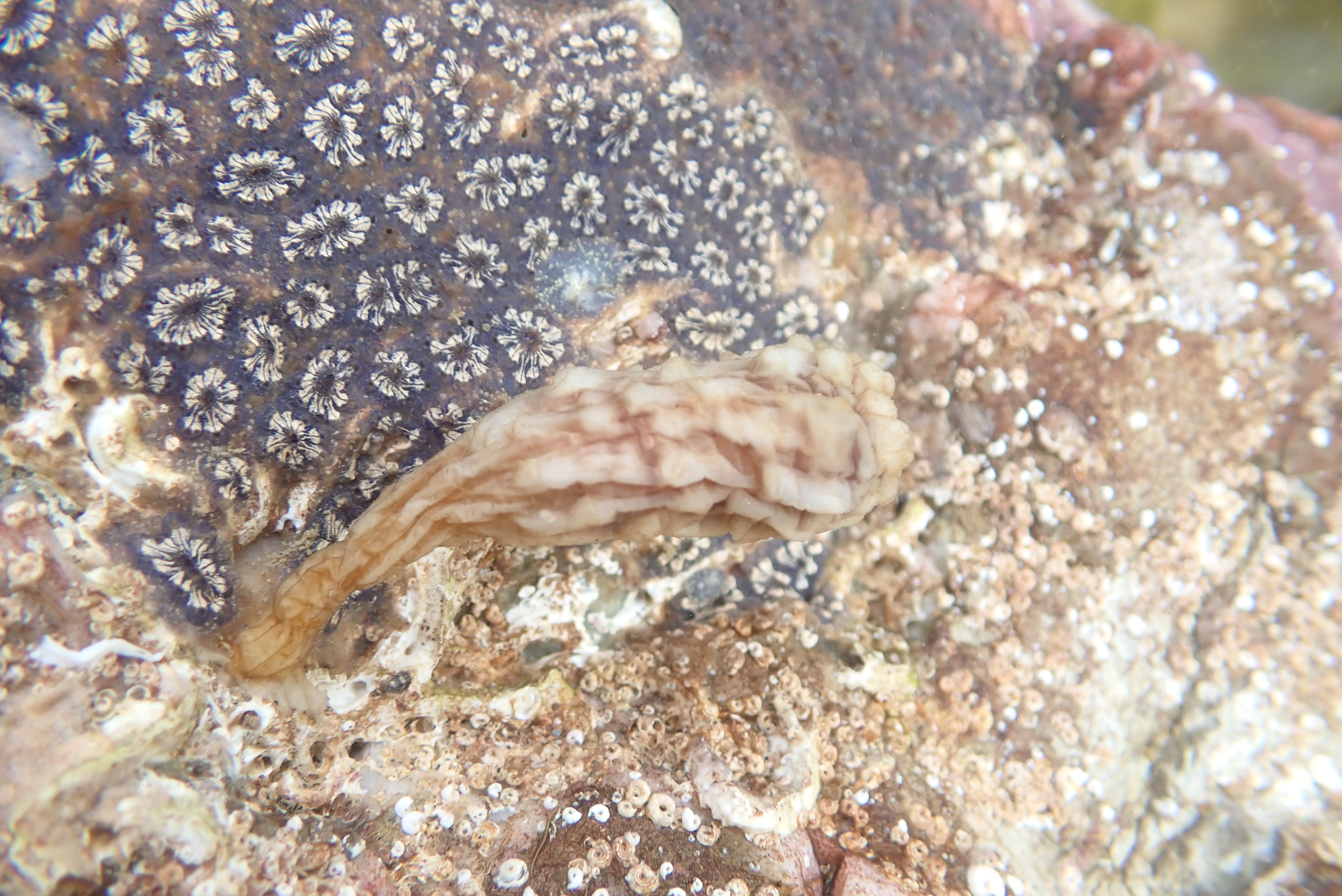
    This anemone is well hidden under an overhang and completely closed up, showing just the tips of white tentacles. The translucent column with pale stripes, but no suckers, suggests that it could be a sandaled anemone (Actinothoe sphydodeta). In my photos, you can see that the column is packed with curly white threads. These are the acontia and are packed with stinging cells. If something attacks the anemone, it can eject large numbers of these in defence.

    This anemone was less than 2cm across and well hidden in a dark gulley. I think it is a sandaled anemone.

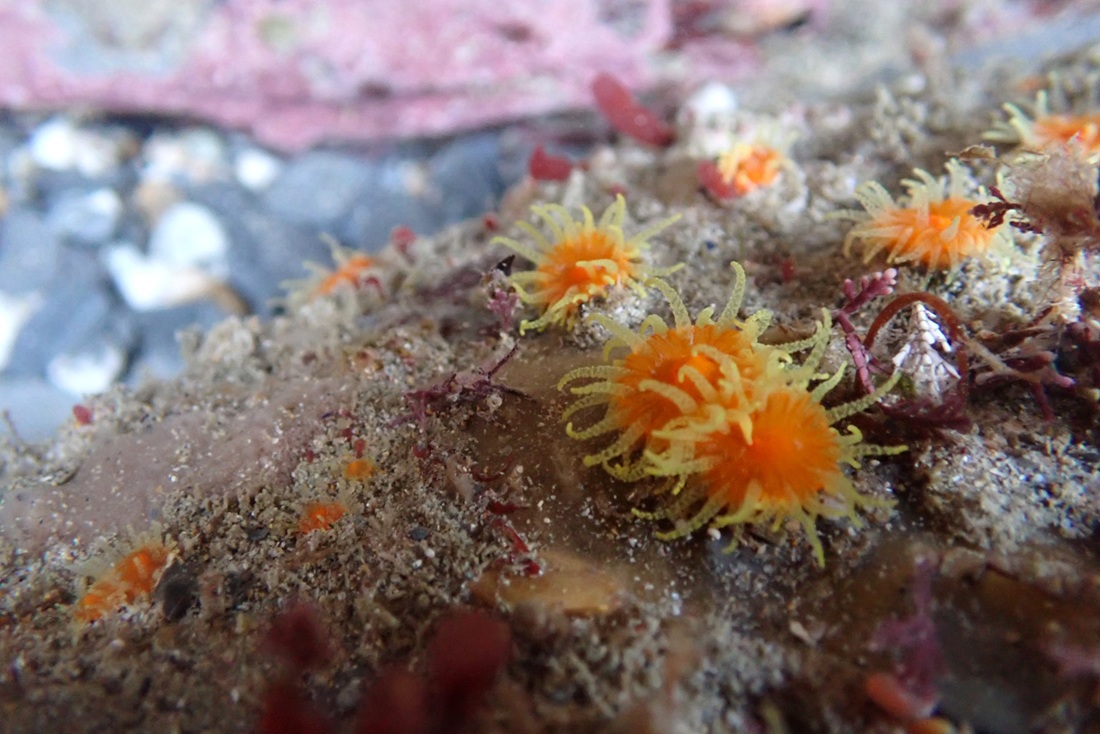
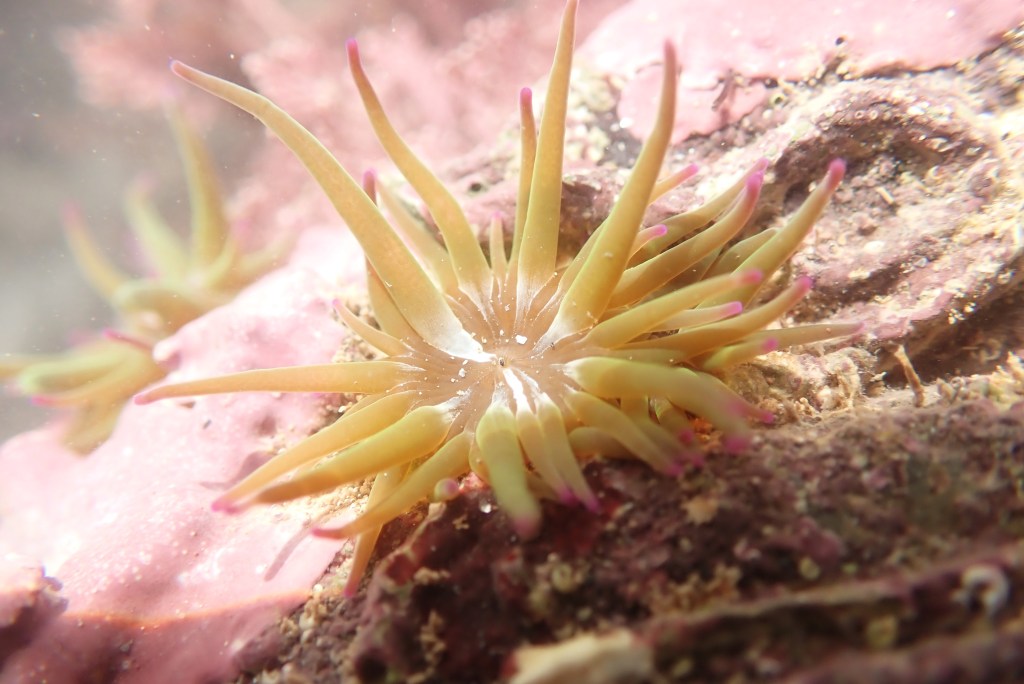
    Nearby, the population of scarlet and gold cup corals is looking radiant. They live on the lower shore in areas of very high current and wave action, so most days they are completely inaccessible. Even on a relatively calm day like today, I keep nervously glancing up at the rocks behind me, expecting the waves to break over the top.

    Scarlet and gold cup corals.

    In another pool, I come across an even more mysterious anemone. It is hugely extended, like a long worm, when I first see it. I am amazed at how transparent it is, its organs clearly visible inside. It quickly retracts into a squat blob, with a few pale yellow striped tentacles. It has nothing stuck to the column and no obvious coloured spots, but there are some brown markings around the base of the tentacles in the disc. There are a few possibilities, but I will need to consult experts to see if anyone can narrow this one down.

    An anemone yet to be identified (centre).
    The same anemone as above – with the column retracted, showing its stripy tentacles.

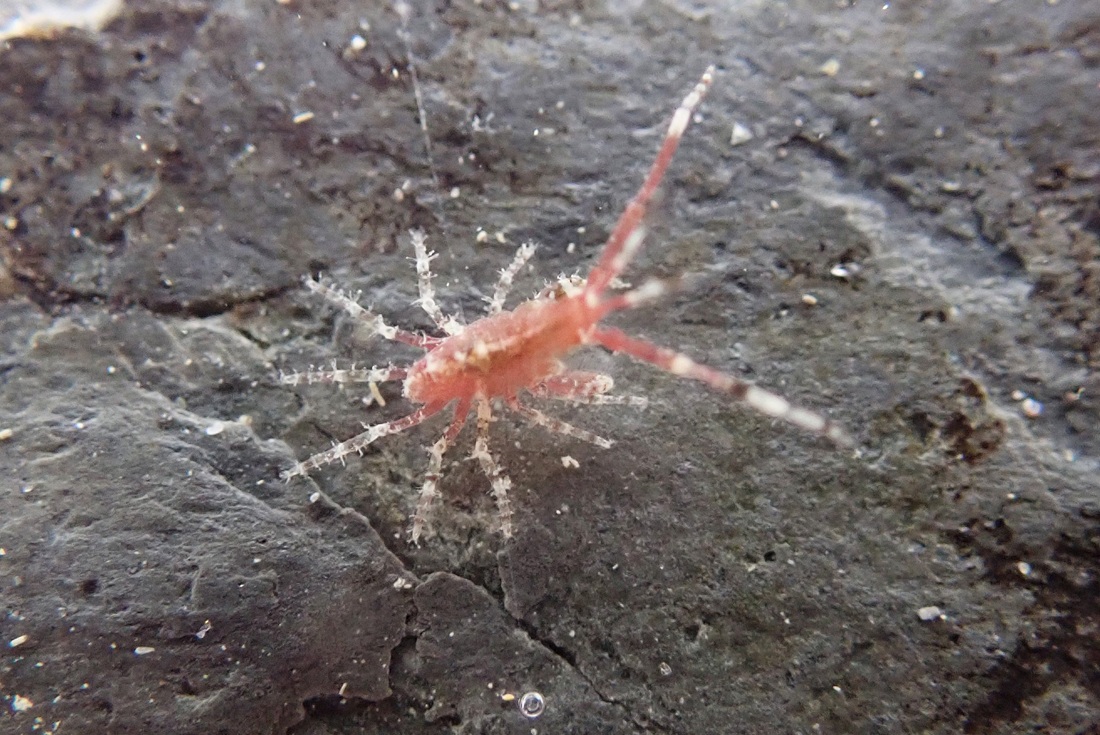
    Another pool, another mystery creature. This time, a minute crustacean is making its way across a stone at the base of the pool. It is almost impossible to make out anything except the bright pink colour and the long antennae with the naked eye, but under my camera, I can see it has fabulously hairy legs.

    A new (to me) amphipod sp. … possibly Podocerus variegatus. Another one to check!

    These animals are often only identifiable under a microscope and are tricky even then… so I take a few photos and carry on enjoying the shore, sharing finds with Junior.

    I am nearly fainting with hunger before I realise I haven’t had lunch yet. Other Half and Junior have long since had their picnic, but I keep going with the tide stalking me as I move up the shore. After all, there are more sea slugs to be found, along with hairy crabs, St Piran’s hermit crabs and plenty of colourful variants of other common rockpool creatures.

    Take a look at all the slugs we see!

    A hairy crab showing off some smart hair tufts on its shell and legs.

    As a family, we have always spent time together on this beach, yet there are still new things to discover. Junior may be growing up, but I hope that we will often return here, to these familiar pools and to the springy-turfed paths of the wild cliffs that always feel like home.

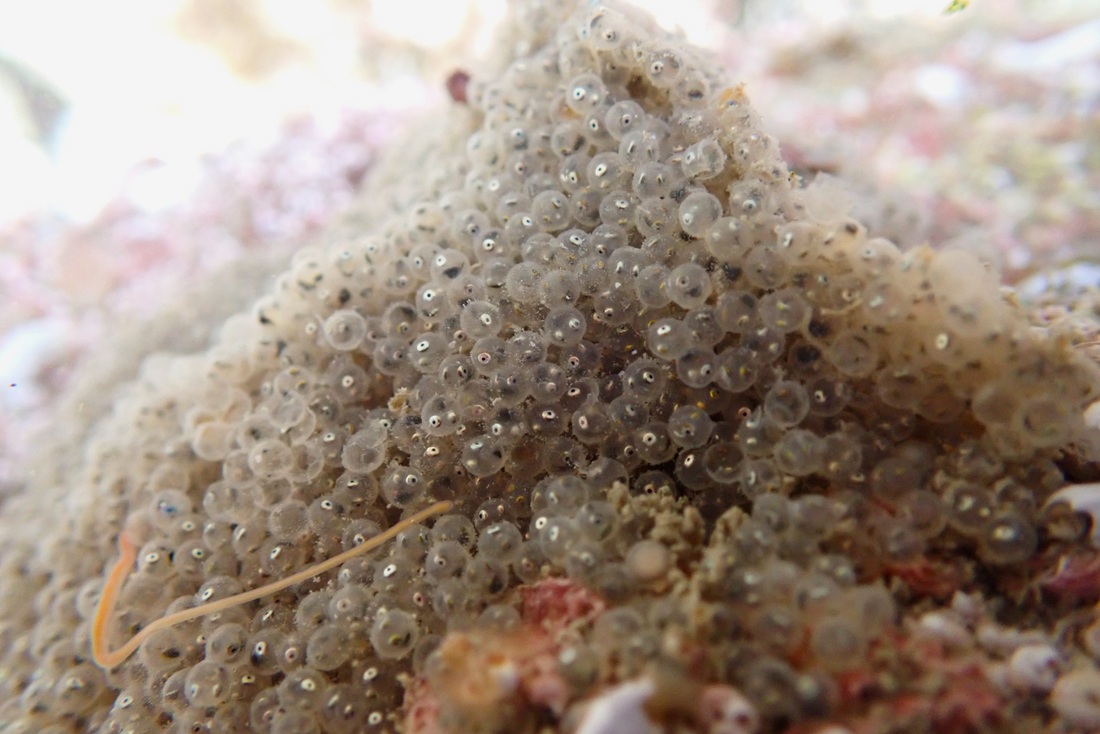
    An impressive pyramid of long-spined sea scorpion fish eggs that are close to hatching (these fish lay their eggs early in the year).
    A very white colony of star ascidian sea squirts – with an invasive non-native red-ripple bryozoan colony on the left.
    Asterina phylactica cushion starfish.

  • Wishing on a Rosy Feather Star

    Wishing on a Rosy Feather Star

    It’s been a while since I posted – thank you for bearing with me. I have so many rock pool adventures to share. I hope you will love this rosy feather star as much as I did.

    “Do you see many feather stars?” Libbie asks. We’re on a favourite north coast beach, where we randomly first met a few months back. This time, she has brought her sister in law, Lynne, whose joyous rockpooling Twitter feed I highly recommend: lynne (@lynne08777205) / Twitter.

    Asterina phylactica cushion star among seaweed
    An Asterina phylactica dwarf cushion star among the seaweeds – one of our first finds of the day.

    I admit that I have never seen one. Neither have Libbie or Lynne. I am convinced feather stars are somewhere here on this very beach, but it feels as though I’m looking in the wrong way. Perhaps between us, we’ll spot one? We all agree that sometimes you find things just because you have decided to. This, we say, will be our lucky day.
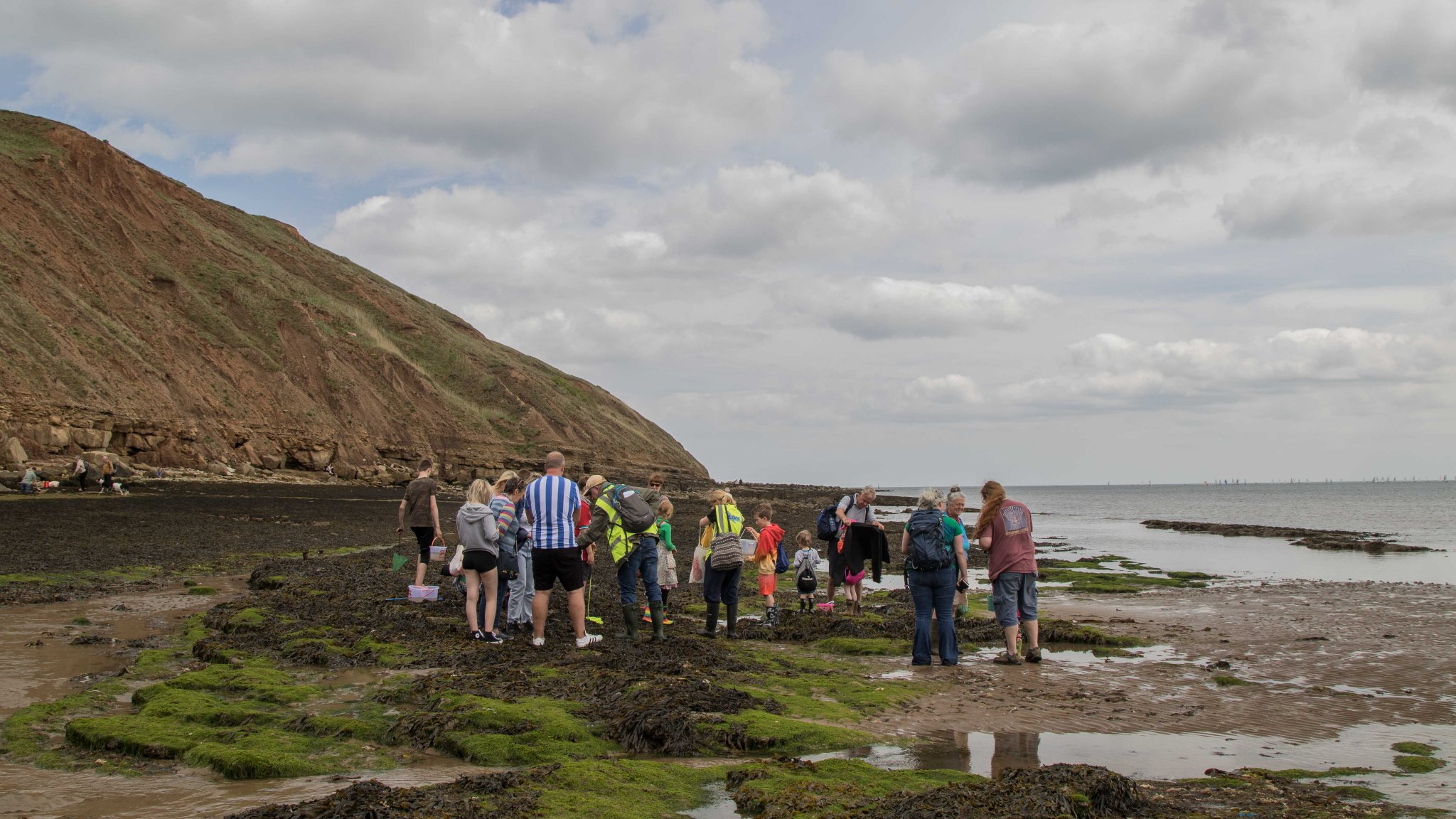
    There is plenty to keep us occupied, including some new life. This is good to see after the heat-bleached seaweeds and poor water quality we have experienced around the coast over the summer. Young Montagu’s blennies flit between the rocks and turn their large eyes to watch us. Libbie discovers a juvenile white-ruffed sea slug (Aeolidiella alderi) under a small slate.

    Juvenile Aeolidiella alderi slug found by Libbie.
    The second slug of the day – another gorgeous white-ruffed sea slug, Aeolidiella alderi.

    Nearby, an even smaller solar powered sea slug, Elysia viridis is out in search of seaweeds to eat. Under my camera, we can see the green and turquoise colours, clues to the presence of chloroplasts from algae it has consumed, which are still photosynthesising – making glucose inside the slug’s body.

    A “solar powered” sea slug – Elysia viridis

    While the tide recedes, we take a leisurely look into pools packed with St Piran’s hermit crabs and discuss Lynne’s wishlist for the day (Celtic sea slugs, Scarlet and gold cup corals and blue-rayed limpets). They are all species that don’t move far or fast and conditions are ideal.

    Excitingly, there are some very small baby St Piran’s hermit crabs like this one in the pools. The next generation is doing well.

    Junior, who now knows these rocks as well as I do, sets a course across the slippery stream bed towards an area where we’re almost sure to find everything we’re looking for.

    The painted top shells come in especially striking colours on this beach.

    As always, progress is slow. There is so much to see and we can’t resist checking every pool. There are vivid pink painted top shells and all sorts of fish and crabs. To my excitement, we find a species I haven’t noticed before, Perophora listeri – a cluster of small bubble-like sea squirts on the red seaweed.

    Perophora listeri sea squirts
    Perophora listeri sea squirts

    In a wide pool near to where Junior is searching for Celtic sea slugs, we settle down to look closely at the rainbow wrack. Not only is this bushy seaweed a brilliant iridescent turquoise color and a favourite place for catsharks to lay their eggcases, it is also teeming with life, like a miniature forest.

    Pheasant shell
    A cowrie moving over an Asterina phylactica cushion star and a turf of other creatures.

    Pheasant shells roam the canopy, young anemones cling on like epiphytes and the dense animal crust of sponges, sea squirts, hydroids and bryozoans around lower ‘branches’ attracts cowries and other small predators. Pretty Asterina phylactica cushion stars are everywhere and as I look down into the base of the seaweed, something else grabs my attention.

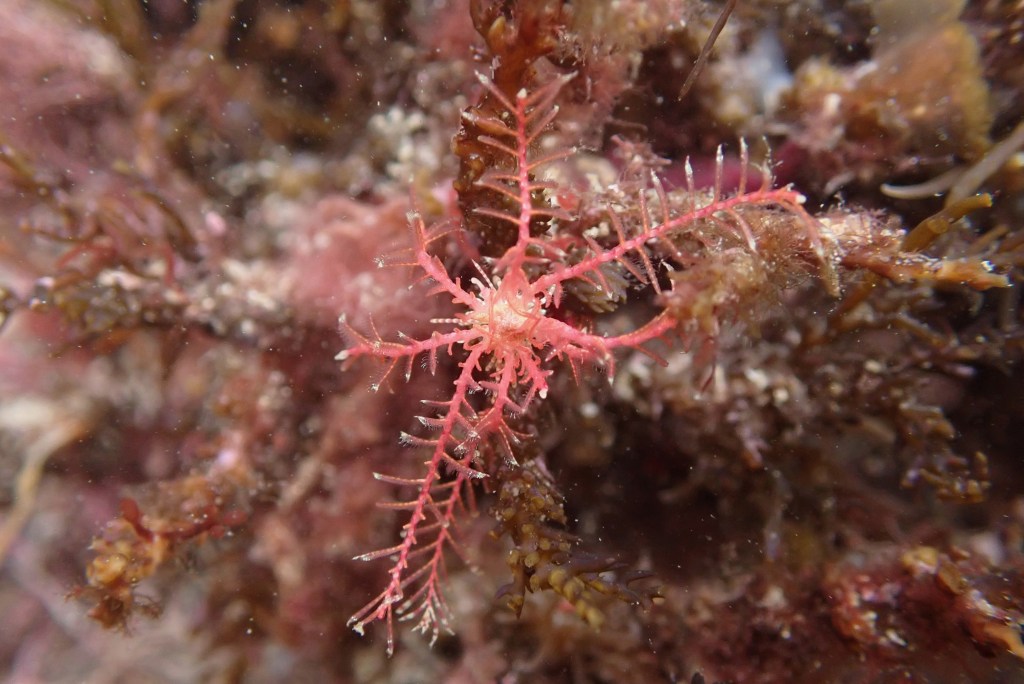
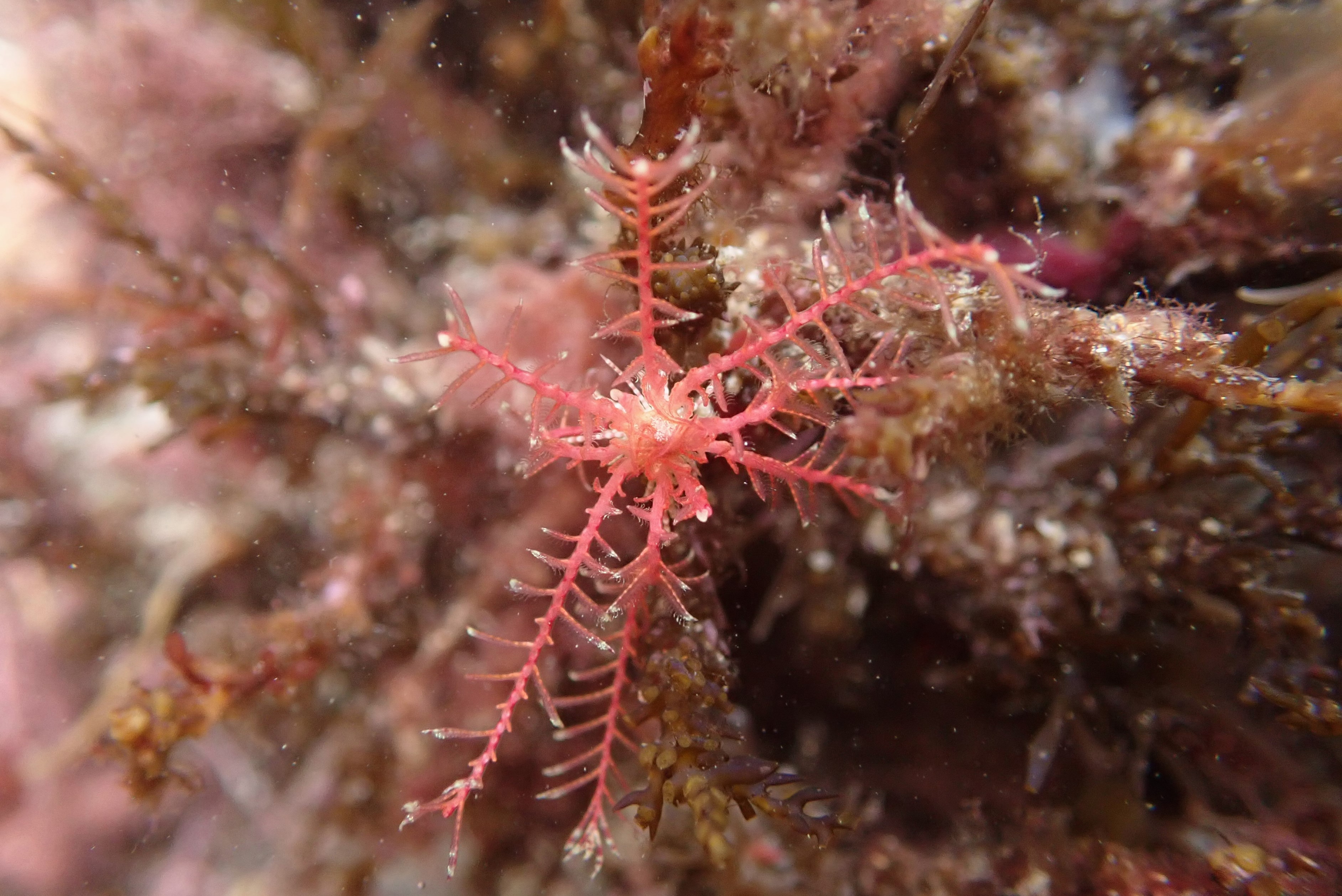
    There is a bright pink, branched shape that doesn’t look like seaweed. I crawl in close to get my camera in position, but I already know what it is. “A feather star!” I gasp. It seems ridiculous to find one just because I’m looking, but there it is.

    Our first rosy feather star!

    As we watch, the rosy feather star extends and retracts its arms, uncurling them to show the alternating twiggy branches along the sides. These are fringed with a little comb-like structure to catch passing food. The animal is clinging onto the seaweed with its hooked pink-striped “cirri”. It is such a shocking coral pink colour that it seems impossible I would overlook one, but it is well hidden under the seaweed and camouflaged against the crust of pink seaweed and the coral weed that lines the whole pool.

    Convinced there must be more feather stars here, I search for a while without success. In the meantime, Junior has found everything on today’s wish list and is keen to show Lynne and Libbie before the tide comes up. Sure enough, we are treated to scarlet and gold cup corals, blue rayed limpets and quite a battalion of Celtic sea slugs!

    Celtic sea slug
    Blue-rayed limpet on seaweed

    Soon the oystercatchers are moving up the shore with the tide and it is time to retreat. We sit at the top of the shore, watching kestrels hovering over the clifftop while we enjoy a much-needed picnic. Buoyed by our success with the feather star, we reckon we should carry on actively looking for unlikely things next time. Soon, we have a whole list. Cuttlefish, octopus and seahorses, here we come!

    A few more bonus creatures from our day’s rock pooling!

    Clingfish sp. – probably small-headed clingfish.
    Candelabrum cocksii hydroid
    Botryllus leachii colonial sea squirt
    A pretty chiton (a type of mollusc). Lepidochitona cinerea

    This website is a labour of much love and the content is available for free to everyone. My wonderful readers often ask if there is a way to support my work. You can now ‘buy me a coffee’ through my Ko-fi.uk page. (Just click donate and you can set the amount to pay by PayPal). Thank you!

  • Rock Pool Highlights in Looe

    Rock Pool Highlights in Looe

    As anyone who takes notice of the natural world knows, nothing stays the same. I visit my local beaches around East Looe so frequently that I know every rock and every pool. Yet, the more time I spend here, the more I notice.

    Sitting by a pool for a long time, I notice more and more detail, like this tiny needle whelk.

    Sometimes I learn something new about a familiar animal, sometimes I am treated to fascinating displays of natural behaviour, and sometimes I find species I never seen before. Here are five recent highlights from my local beach.

    There’s always something new to see… in this case it’s Other Half in his new waders.

    Cushion Star Hatchlings

    It took me many years to realise that cushion stars lay eggs and to finally see my first just-hatched babies. Now I know what to look for, I see their eggs everywhere in the summer rock pools.

    So many baby cushion starfish (Asterina gibbosa), fresh out of their eggs.

    I find a cluster of new, tiny cushion stars and fall in love with their bright orange perfection and impossibly small tube feet.

    Cushion stars – these baby starfish have just hatched and are setting out across the pool on their little tube feet.

    A Hermit Crab Without a Shell

    The thing that everyone knows about hermit crabs is that they live in the empty shell of a sea snail. It’s not entirely true to say that they have no shell of their own though. Hermit crabs have tough claws and shell covering the front part of their body. Just like other crustaceans, they moult their shell each time they grow.

    A St Piran’s hermit crab, East Looe. This hermit crab’s rear end is comfortably housed in a shell.
    Moulted shell of a St Piran’s hermit crab. Hermit crabs have shell covering the front part of their bodies. When they grow, they moult their old shell, leaving it behind.

    Hermit crabs don’t, however, have a shell on their rear end. Instead, they have a long, spiral tail, which is soft and bendy. When the hermit crab finds a suitable shell to live in, it winds its tail up through the internal structure of the shell, clamping its home in place.

    If a hermit crab loses its shell to another crab or a predator, it finds itself in a real predicament. That soft tail is vulnerable to attack.

    Hermit crab out of its shell
    Hermit crab out of its shell, showing its curly tail.

    When Junior and I come across a homeless hermit, we locate a suitable empty shell and watch what the crab does.

    The whole process is astonishingly quick.

    Nudibranch Sea Slug – Eubranchus exiguus

    Regular readers will be well aware of my (entirely justified) obsession with sea slugs. If you aren’t already aware of how exquisite these little animals are, you might like my introductory talk for The Shores of South Devon.

    Most UK sea slugs are small and some are so tiny that you can barely see them with the naked eye. I spot a speck of jelly on some seaweed and spend the next twenty minutes crouching in the water to try to focus my camera on it.

    Eubranchus exiguus – a nudibranch sea slug, Looe, Cornwall.

    The slug is moving, the seaweed is moving and my hands are far from steady, but the photos are good enough. Meet a species of nudibranch sea slug that is new to me: Eubranchus exiguus.

    Eubranchus exiguus sea slug, showing the distinctive shape of the cerata on the slug’s back.

    The long, inflated cerata on the back of this sea slug look like they have been pinched in near the top, giving them a vase-like shape. Scattered white flecks adorn its body. When I can get it in focus, it is a fabulous-looking creature.

    The Eubranchus exiguus slug on seaweed with my finger in the background to give an idea of scale. It was around 2mm long.

    Rock Goby Eggs

    There are few things more mesmerising than fish eggs. They are generally transparent, meaning that you can see the babies’ eyes looking out at you. As the fish grow, they become fidgety, twisting and turning inside the egg. Rock gobies are a very common rock pool fish and their distinctive capsule-shaped eggs are usually well-guarded by the father, who stays close until they hatch.

    Rock goby eggs. Looe, Cornwall.
    Rock goby eggs

    Doto slugs (and a bonus slug)

    Finding sea creatures in the pools is a haphazard business; you can rarely be sure of finding even common species. However, if I want to find a Doto sp. slug, I know just where to look.

    In places around my local rocks, the brown seaweeds (wracks) are so completely covered in hydroids that they look like they have grown beards. Very close-up, these hydroids (Dynamena pumila) look like stacks of pale triangles. Among them, feeding on the hydroids, are the tiniest splodges of jelly – the Doto slugs.

    Doto sp. slug – possibly Doto onusta. Looe.

    Out of the water, they are a sorry, squidgy mess. If, however, I can persuade one off the hydroid, I can put it in the water to reveal its towering jelly-mould structure decorated with charming crimson or black dots. The satellite dish rhinophores (antennae) on the slug’s head are an impressive accessory too.

    Doto sp. slug – possibly Doto onusta. Looe, Cornwall.

    Whether they remind you of cakes or jellies, there’s something gloriously edible-looking about the Doto slugs.

    Warning: Slugs are not dessert. Don’t eat rock pool wildlife.

    The little spots on the slug’s cerata look so much like cherries on a cake. Doto sp. slug, Looe.

    It isn’t clear what species these slugs are; Doto slugs are notoriously difficult to identify. They were initially thought to be Doto coronata. That species isn’t now believed to feed on Dynamena pumila, so they may be a species known as Doto onusta – or something else. Whatever they are, I absolutely love to see them.

    And now for a bonus slug… The orange-clubbed slug, Limacia clavigera, is a frequent find, but is too fabulous to be left out. Enjoy!

    The orange-clubbed sea slug, Limacia clavigera. Looe, Cornwall.

    Have you found anything new on your local beaches? I love to hear what other people have seen and can often help to identify unusual finds if you’d like to get in touch.

    You can also find identification guides to some common rock pool creatures such as crabs, starfish and fish on my Wildlife page.

    Whatever the weather, always stay safe in the rock pools. Follow my rockpooling tips to look after yourself and the wildlife on the shore.

    This website is a labour of much love and the content is available for free to everyone. My wonderful readers often ask if there is a way to support my work. You can now ‘buy me a coffee’ through my Ko-fi.uk page. (Just click donate and you can set the amount to pay by PayPal). Thank you!

  • Rock Pooling at Lizard Point: Cowries, Sea Slugs and a Saffron Bun

    Rock Pooling at Lizard Point: Cowries, Sea Slugs and a Saffron Bun

    It’s not exactly tropical, but we’re as far south as you can go on the UK mainland. The sun is shining and the clear water gives us a perfect view into the pools. After a morning of geological exploration at Kynance Cove, my family are treating me to some low tide rock pooling here at Lizard Point.

    Rock pools at Lizard Point

    Apart from the chatter of seabirds and a distant hum of voices from the cafés perched on the cliffs, the beach is still, expectantly waiting for the tide to turn. Out in the bay, a bull grey seal rests upright in the water. He is ‘bottling’, his broad snout raised to the sun, keeping half a sleepy eye on the female that is snoozing closer to the shore. There are no boats here to disturb the seals, so they nap peacefully on and on, barely moving with the gentle rise of the swell.

    The colours in the pools are as vivid as a royal procession. Neon green snakelocks anemones jostle for space with dusky pink coralline algae, yellow sea squirts and iridescent blue seaweed. Tiny rainbows play across the rocks.

    A colourful pool at Lizard Point – Snakelocks anemone

    Looking closer, we begin to notice other rock pool wildlife that is less keen to stand out, adopting the same bold colours as the seaweeds and encrusting animals to hide from predators. Tiny Elysia viridis sea slugs are everywhere, but they match the deep green of the codium seaweed perfectly.

    Elysia viridis on codium seaweed.

    These are the ‘solar powered’ sea slugs. They retain the seaweed’s chloroplasts, which carry on photosynthesizing in their bodies, making glucose to supplement the slugs’ diet.

    Elysia viridis sea slug stretching out to make the most of the sunlight. Spot the second slug!

    A variety of animals are resplendent in shocking pinks and oranges, which allow them to disappear among rocks adorned in pink paint seaweed and forests of other red seaweeds. A European 3-spot cowrie (Trivia monacha) is roaming the rocks looking for sea squirts to eat.

    Trivia monacha – the European 3-spot cowrie at Lizard Point. It feeds on sea squirts like the blue star ascidian to the left of the photo.

    With its sunset-orange proboscis fully extended and its spotty mantle draped over most of its shell like a (fake) fur cape, it has the air of a glamorous Dalek.

    European 3-spot cowrie (Trivia monacha) doing a Dalek impression

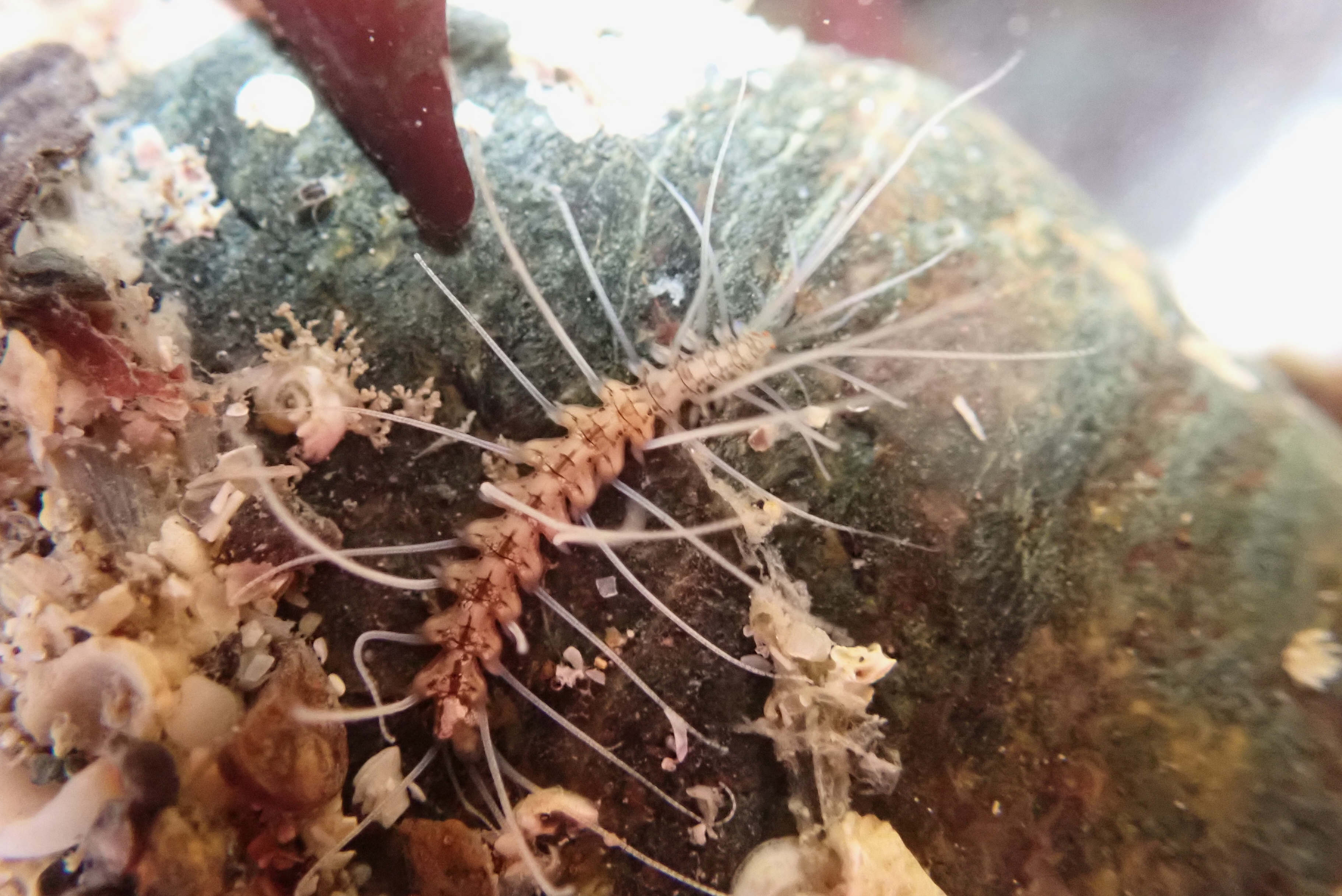
    Not to be outdone by the molluscs, there are some stunning worms in the pools. My favourite is this syllid worm, gliding across the rock with its enormously long, whisker-like appendages stretching and curling in all directions at once.

    Syllid worm. Amblyosyllis sp. looking spectacular. Lizard Point, Cornwall.

    This feels like a spot that sea slugs should like. There is a variety of food on offer and no shortage of hiding places among the pools and boulders. Sure enough, under one rock I find two species hanging out together. They look like friends, but they are on separate missions. The great grey sea slug (Aeolidia filomenae) feeds on anemones, while the Berthella plumula – or feathered Bertha as I like to call it – eats sea squirts or sponges.

    A quick hello in passing – Great grey sea slug (Aeolidia filomenae) and Berthella plumula sea slugs.

    Junior, who excels at gathering people to look at things, has collected up an excited young boy and his grandfather to show them the pools. We all find things to show them – solar powered sea slugs, hermit crabs and a stalked jellyfish. While Junior is explaining barnacles to his fascinated audience, I wander down the shore, thinking I might find a starfish for him to show his new friend.

    Stalked jellyfish (Haliclystus octoradiatus) on codium seaweed at Lizard, Cornwall. Photo by Cornish Rock Pools Junior

    Sheltering under a small stone is a neat five-armed cushion star, but close to it, even more excitingly, there is a slender little Aeolidiella sp. sea slug.

    This slug looked a little different: Aeolidiella glauca

    Aeolid slugs vary in colour depending on what they have eaten, but there is something unusual about this one that I can’t place. It has a bit of a white ruff behind its head, but I’m not convinced it is the white-ruffed sea slug (Aeolidiella alderi) that I frequently see.

    Aelolidiella alderi (pictured near Falmouth) is the more common species locally. It is often white or grey, but can take on bright colours like this after eating anemones.

    I take some photos. Zooming in, I soon ‘spot’ the difference; the difference is the spots! There are tiny white flecks on the slug’s body. I take photos in the pool before ensuring it is returned safely back under its stone.

    Aeolidiella glauca sea slug, Lizard, Cornwall

    Despite my rush to identify the slug (which I suspect is an Aeolidiella glauca) there are even more important things to do on the way home: like stopping for a saffron bun and ice creams at Roskilly’s, and visiting friends in Gweek.

    Thanks to the wonders of expert Facebook groups and also the brilliantly helpful David Fenwick of Aphotomarine, I have confirmation the same day. Aeolidiella glauca has occasionally been recorded in this area before, but it’s a first for me. It may be more common in northern waters, but marine creatures rarely follow the rules.  There are surprises everywhere and that is exactly what makes rock pooling so fabulous.

    Another lovely little find: Lamellaria latens (gastropod mollusc) at Lizard Point
    Dahlia anemone at Lizard Point, Cornwall
    Gem anemone. Lizard Point, Cornwall.

    Whatever the weather, always stay safe in the rock pools. Follow my rockpooling tips to look after yourself and the wildlife on the shore.

    This website is a labour of much love and the content is available for free to everyone. My wonderful readers often ask if there is a way to support my work. You can now ‘buy me a coffee’ through my Ko-fi.uk page. (Just click donate and you can set the amount to pay by PayPal). Thank you!

  • Beach Explorers at Filey Literature Festival

    Beach Explorers at Filey Literature Festival

    The empty shells of sea potatoes, masked crabs, swimming crabs, razor clams and limpets fill my arms, along with a rather battered piece of seaweed. We haven’t reached the rock pools yet, but the sharp-eyed kids at my Beach Explorer book event have done as instructed and brought me all of the strandline treasures they can find. That, it turns out, is a lot!

    Spotting signs of life in the sand at Filey: Photo by Filey Literature Festival

    The long, sandy beach here at Filey in Yorkshire provides a perfect environment for sea creatures that like to bury themselves in the sediment and the evidence is everywhere. The beach is covered in the tiny tubes of sand mason worms and we have no difficulty finding the coiled casts of lugworms that live in burrows beneath our feet.

    The habitat is perfect for sand mason worms.

    The cliffs of the headland at Filey Brigg are a fascinating mix of rock types, but look ominously unstable, so we trace a path along the sea’s edge, well clear of any danger. Fish, crabs, anemones and starfish are the top things the kids tell me they hope to see. The silty water among the boulders and pools at the base of the Brigg will make our search challenging, but the children are in good spirits and full of enthusiasm.

    Beach Explorer rock pooling event at Filey Brigg. Photo by Filey Literature Festival.

    On the rocks ahead of us, kittiwakes are swooping down and gathering clumpy beakfuls of seaweed to line their nests. On my walkover of the area yesterday before my evening book talk, I melted with joy at the unmistakeable calls of these pretty little gulls. Sadly, it’s a sound I rarely hear back in Cornwall these days.

    The clear limestone pools at the end of the Brigg also took me by surprise yesterday. The distance across slippery boulders made them unsuitable for today’s family event, but I couldn’t resist exploring and delighting in finding fat sea hares, oaten pipe hydroids and lots of busy hermit crabs.

    The rocky shore at Filey Brigg
    Sea hare, Filey, Yorkshire
    Tubularia hydroid. Filey.
    Elysia viridis – the solar powered sea slug. Filey, Yorkshire.

    Despite the challenges of our muddy site, the finds come rolling in to our ‘shore laboratory’ tray. We soon have a baby sea scorpion fish, tiny brittle stars, shore crabs, a hermit crab and more.

    A beautiful beadlet anemone with its tentacles out. Filey. Yorkshire.

    We even find a great grey sea slug and a large female shore crab with a spongey mass of eggs under her tail. With a bit of help and perseverance, everyone finds sea creatures and the children (and their adults) do a perfect job of looking after their finds – keeping them in plenty of sea water, handling them gently and returning them to their homes.

    An empty clotted cream pot is perfect for making a mini-aquarium for our sea snails so we can see their tentacles emerge. Photo by Filey Literature Festival.

    It’s a long way from Looe to Filey but seeing the faces of the children as they find their first crab moults, see their first open anemone and hold their first hermit crab, makes it all worth it.

    Hermit crab (Pagurus bernhardus) at Filey, Yorkshre

    My children’s book, Beach Explorer, is all about discovering the beach for yourself through hands-on activities and I couldn’t have asked for a better group of explorers. If these families are anything to go by, Yorkshire has some fine young naturalists in the making!

    Beach Explorer is available from your local bookshop and online.

    A huge thank you to Filey Literature Festival for hosting me, Hylands Care Home for kindly sponsoring the events and to everyone who came along for your warm welcome and enthusiasm. Also, thank you to the Hull University Marine Biology Department students and lecturer who generously shared their knowledge of the beach and to the pod of dolphins who treated me to a swim-past on my last morning walk in Filey.

    Filey Literature Festival – off to a great start!
    The rather wonderful crazy golf course on Filey seafront!

    Whatever the weather, always stay safe in the rock pools. Follow my rockpooling tips to look after yourself and the wildlife on the shore.

    This website is a labour of much love and the content is available for free to everyone. My wonderful readers often ask if there is a way to support my work. You can now ‘buy me a coffee’ through my Ko-fi.uk page. (Just click donate and you can set the amount to pay by PayPal). Thank you!

  • It’s Conger Time! Low Tide Rock Pooling Surprises.

    It’s Conger Time! Low Tide Rock Pooling Surprises.

    No matter how many times I go rock pooling, something always takes me by surprise. It helps that I’m constantly awestruck by simple things: the blue flash of a kingfisher zipping over the pools; the unfurling tentacles of a fanworm; a seaweed-covered stone that turns into spider crab – sprouting legs and walking off.

    Today, Junior and I are looking for little cuttlefish because that’s what we always do in shallow, sandy pools. We won’t find any, but that never matters. Whatever turns up will be the best thing ever.

    It can take a while to get your eye in, but seemingly empty rock pools are full of life.

    Although the pools look deserted, I know they’re not. I stand still in the water and am reminded of games of ‘Grandmother’s Footsteps’ in the playground. There are flickers of movement at the edges of my vision, yet each time I look towards them there is nothing but clear water covering smooth sand.

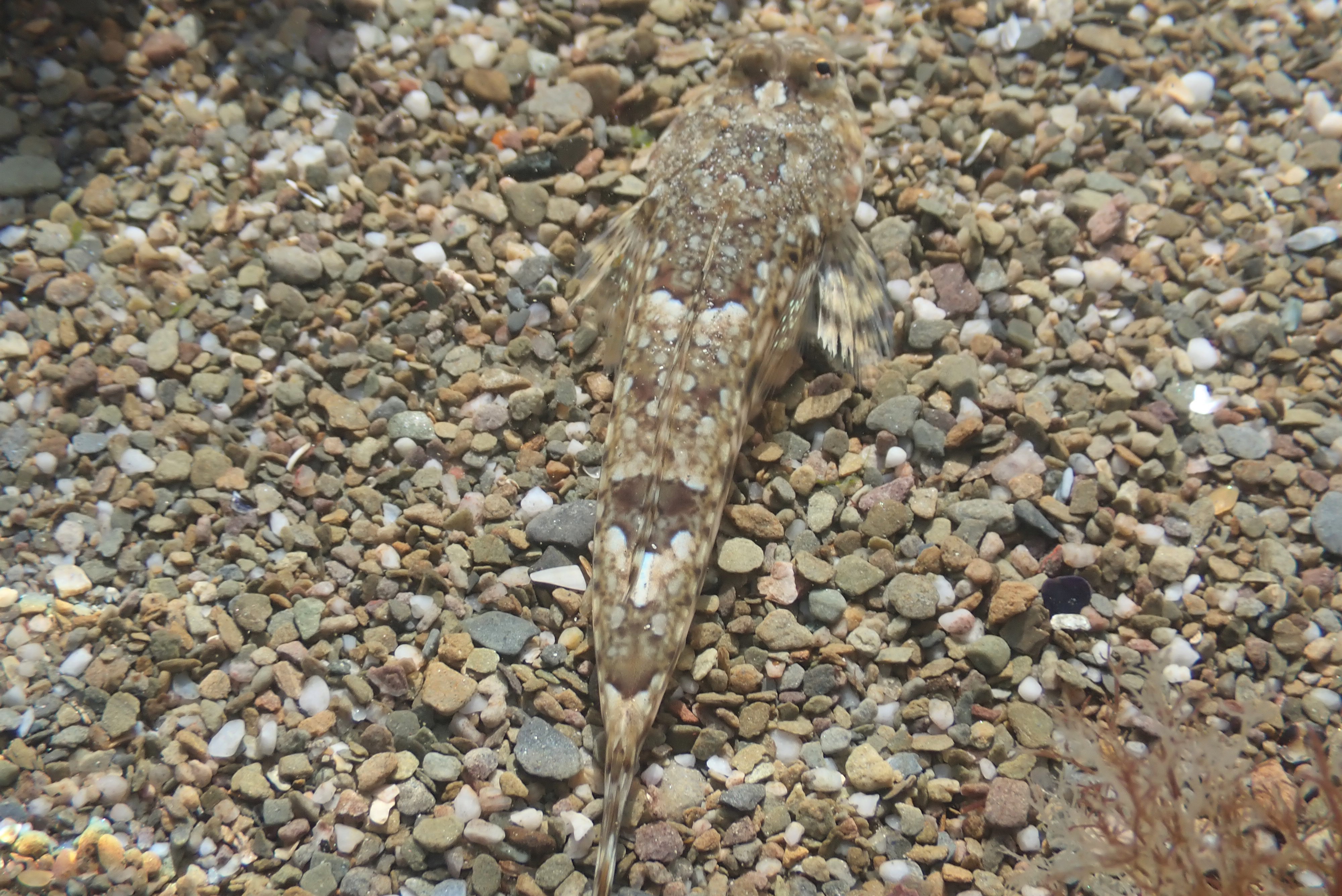
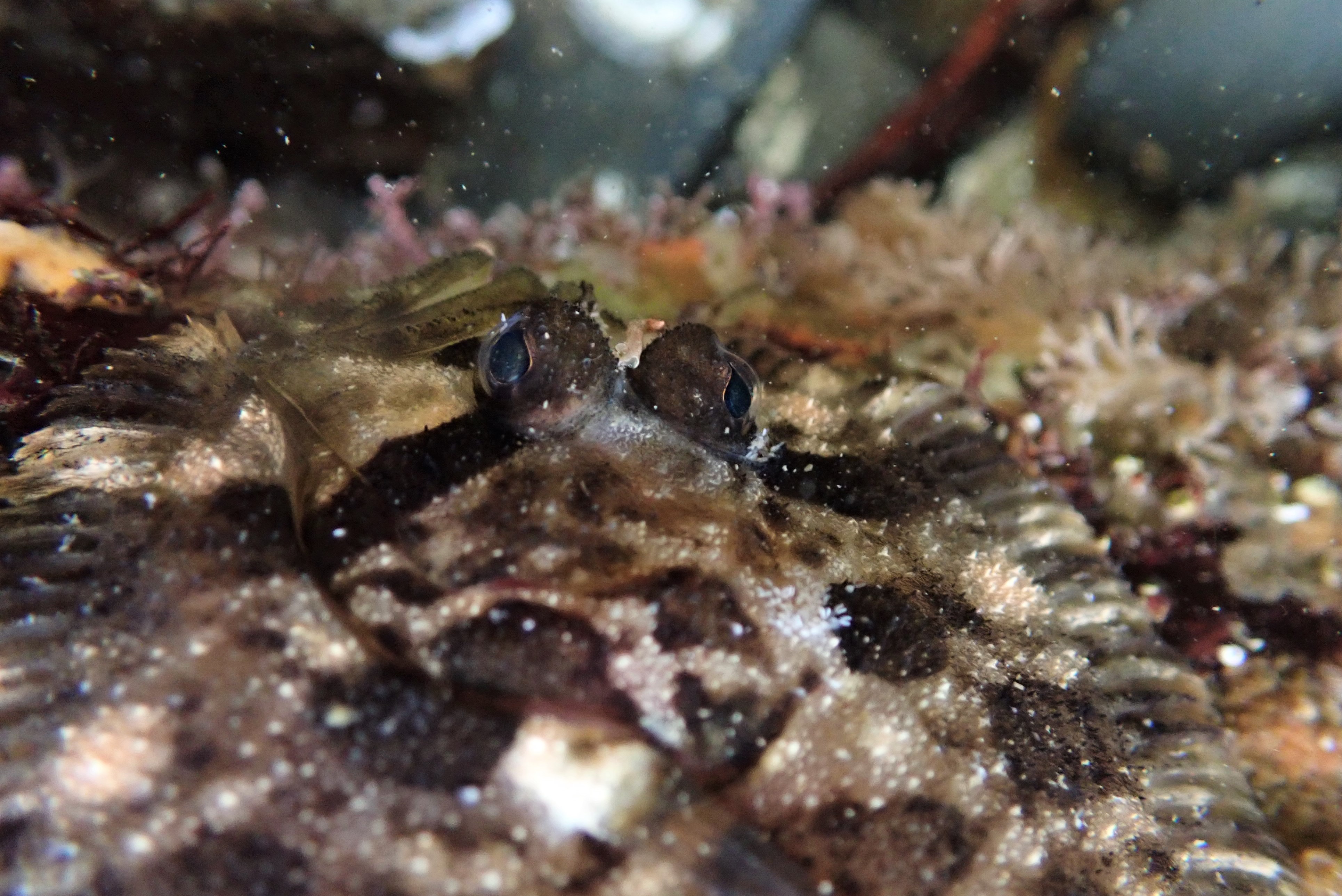
    A dragonet is the first creature to break cover, gliding noiselessly in short bursts. Every time the fish stops swimming, my eyes struggle to make out its triangular, small-mouthed head or slender tail against the sand. Only the orange glint of its eyes, which protrude from the top of its head like a cartoon drawing, give the dragonet away.

    Dragonet resting on gravelly sand. Having eyes on top of its head gives it great vision of what is going on all around.

    It takes me several attempts to lower my camera into the water. The fish darts away at the slightest disturbance. Even close-up, the wavy blue patches and dark saddle patterns on the fish’s back blend with the colours of the sand. Sometimes I take a photo and realise afterwards that the fish isn’t in it.

    Dragonet in a sandy pool

    The sand in the pool is pock-marked with tiny craters. Keeping my camera in the water I wait for the creators of this miniature battlefield to reveal themselves. After a few moments, I am rewarded with a frantic jet of sand shooting out of the bed of the pool to my left. Another erupts to my right.

    Zooming in to the source of the sand-flinging I can see a solitary common shrimp, digging like an eager puppy, throwing sand out in every direction as it sinks deeper into the pit it has made.

    Brown shrimp digging

    A minute later, it moves on to another spot and resumes its endeavours. All around me, other shrimps are digging in earnest to find food. If I move at all, they fling sand over themselves until only their googly eyes are still visible.

    Digging brown shrimp

    Small, brilliantly camouflaged, gobies also flit about the pool, occasionally photo-bombing my attempts to photograph the shrimps. These may be sand gobies or common gobies; it takes close examination to separate the two species and they have no plans to stay still for long enough.

    Brown shrimp – and a young green shore crab (bottom right)

    We follow the tide, pulled ever further out through the pools by our curiosity, exploring under rocks and among the seaweed until we are at the seaward edge of the rocks. In the summer we snorkelled just a few metres from here at mid-tide, seeing small spotted catsharks, wrasse and comb jellies over the seagrass and kelp.

    Kelp provides a wonderful habitat for other species, including this sea mat bryozoan (Membranipora membranacea).
    Membranipora membranacea – even closer-up showing the rectangular autozooids and feeding tentacles extended.

    Junior finds a south-clawed hermit crab (Diogenes pugilator) that has been washed in by a wave. We place it in a more sheltered spot and it has disappeared in seconds, burrowing into the soft sand.

    Diogenes pugilator hermit crabs have a very long left claw.

    By this point my hair is soaked from putting my head close to the dripping-wet seaweed that hangs over the rock faces, looking into every nook and cranny. I can see that Junior is plastered head to toe in sand from building a huge tide fort. It’s a happy sort of look. In any case, there’s nobody here to judge us apart from some whistling oystercatchers and they are too busy impaling limpets to worry about us.

    Short video of brown shrimp, sea spider and hermit crab in action.

    Crawling up to a small overhang with my chin almost touching the sand, I lift the fringe of sea lettuce aside and meet today’s surprise. A large, amber eye, as big as my own, is looking back at me.

    Conger eel
    Conger eel

    It belongs to a sharp-nosed brown fish whose body is hidden by the deep, dark hollow beneath the rock. I move my own nose back a little from its long, sharp jaw.

    If this is what I think it is, that body will be long and the jaws contain a powerful set of teeth that make it an efficient predator.

    Junior knows I only call him away from his work when there’s something truly exciting to see and I am massively excited. I’m pretty sure this is the first conger eel we have ever found on the shore.

    Do-do-do…. Conger eel under an overhang exposed by the low tide.

    For a moment, we wonder if it is alive. There is hardly any water under the overhang and the fish doesn’t move. I sloosh some water from the pool through the gap in the rock and the fish repositions its head to take in the oxygen. The tide is already on the turn so it will be fine.

    I take a couple of photos, pour some more water into the overhang and leave our fish-friend in peace.

    It’s a good thing there is no-one to see the pair of us, covered in sand, dripping wet, dancing and singing our way back off the beach with the waves at our heels. It isn’t most people’s idea of a beach party and the pun is terrible, but we couldn’t care less.

    “Do-do-do. Come on and do the conger!”

    Happy New Year! Here’s to all of you who have done your bit to help wildlife and make the world a better place in 2021.

    With thanks to the experts on Facebook groups who confirmed I was correct in my feeling that the fish looked ‘congerish’.

    Some other finds from this expedition…

    Blue-rayed limpets
    Sea slug! The first time I have found Palio nothus in this location. This nudibranch slug has wonderful tall helter-skelter rhinophores on its head and a circlet of fluffy gills on its back.
    ‘Kelp fir’. Obelia geniculata hydroids on the kelp, looking like a wintery forest.
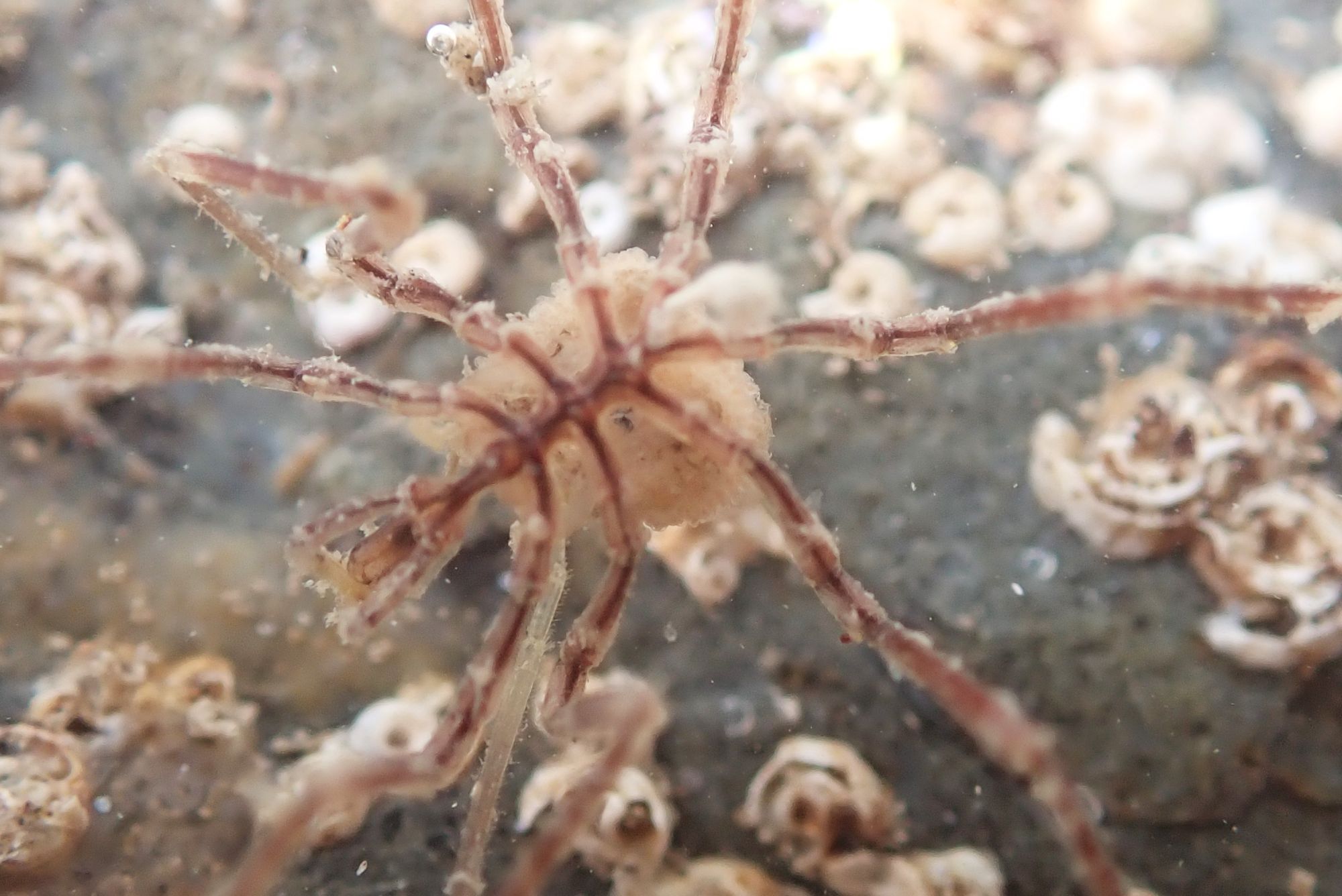
    A sea spider – probably Nymphon sp. Look at the little spidery shadow it’s casting on my hand.
    Crouching rockpooler, hidden dragonets

    Whatever the weather, always stay safe in the rock pools. Follow my rockpooling tips to look after yourself and the wildlife on the shore.

    This website is a labour of much love and the content is available for free to everyone. My wonderful readers often ask if there is a way to support my work. You can now ‘buy me a coffee’ through my Ko-fi.uk page. (Just click donate and you can set the amount to pay by PayPal). Thank you!

  • Christmas Rock Pool Catch-up

    Christmas Rock Pool Catch-up

    As you may have noticed, blog writing has been relegated to my ‘to do dreckly’ list for a couple of months now. In September, I unexpectedly started a job that I didn’t know I’d applied for and my photos of rock pooling trips, including this day at Prisk Cove, have been piling up ever since. It’s time for a catch-up!

    A swimming variegated scallop was one of the highlights of this short video I put together at Prisk Cove this autumn.

    For once, the gales and mizzle held off for our visit to Prisk Cove, making it an ideal day for sitting by the pools and staring. The longer I looked the more I discovered.

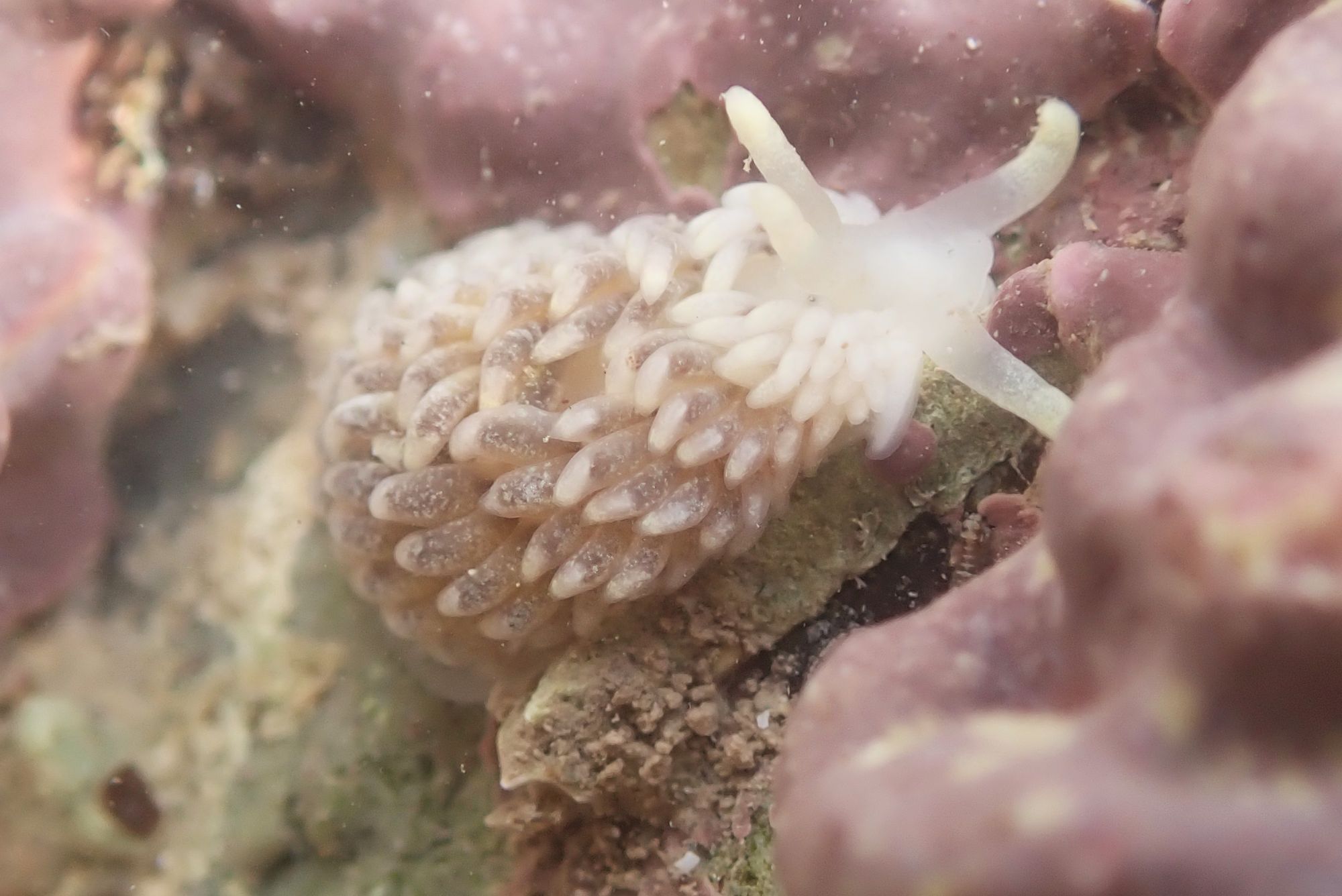
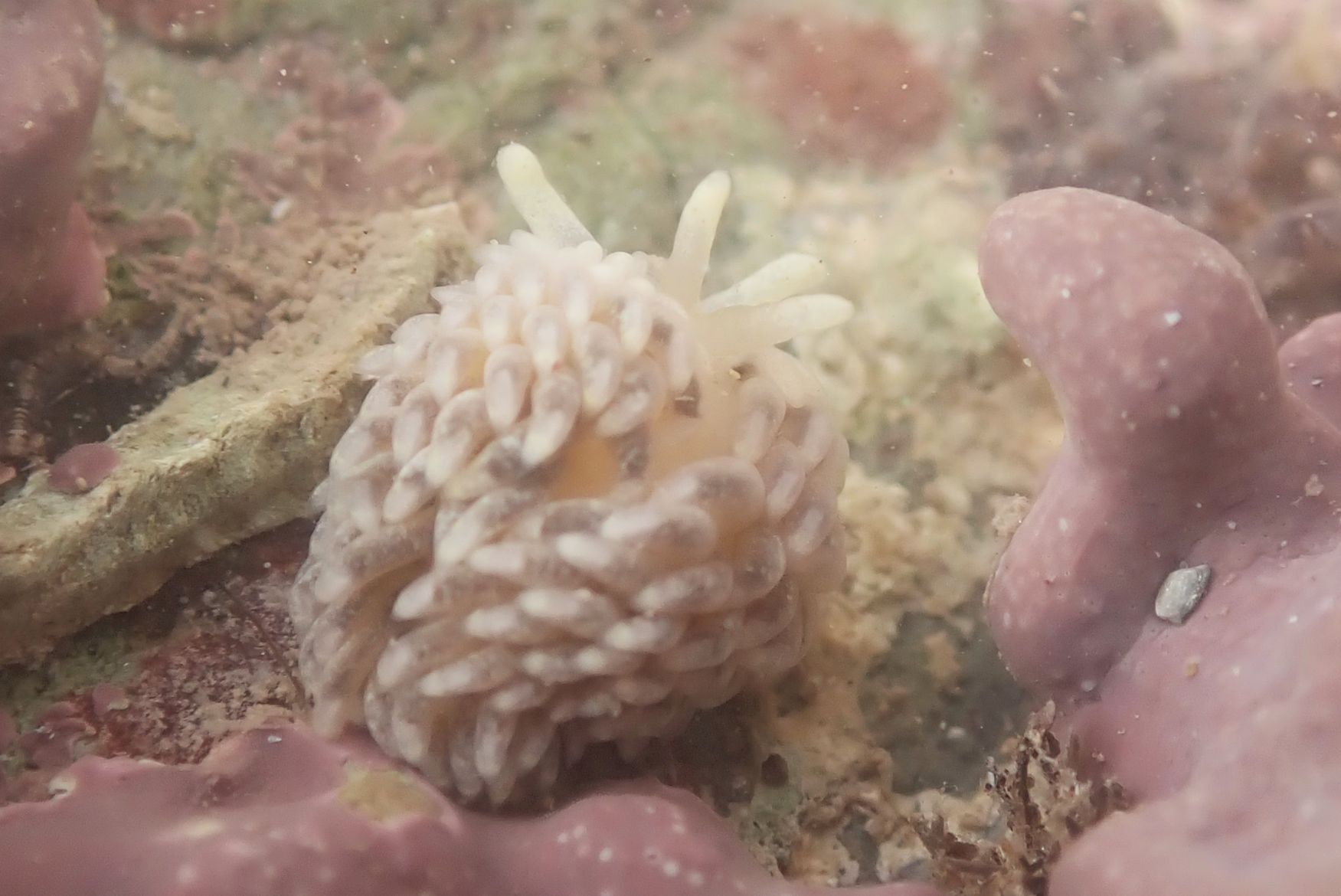
    This Aeolidiella alderi sea slug had recently munched its way through a Daisy anemone, turning the cerata on its back from white to a deep, speckled brown. It is sometimes called the ‘white-ruffed’ slug due to the paler cerata that form a smart collar behind its head.

    Aeolidiella alderi – the white-ruffed sea slug

    Finding a nudibranch sea slug made an auspicious start to the day, and there were plenty more discoveries in store. Many of the tunicate sea squirts I find on the shore are dull brown, but this Ascidia mentula was an explosion of colour.

    Ascidia mentula
    Up close, the Ascidia mentula sea squirt looks like a riotous display of tiny red fireworks

    Nearby, a chiton nestled among the barnacles, moving very slightly as I watched. These unassuming little molluscs have changed very little since the Devonian period. You have to look closely to appreciate their varied patterns. There are several species commonly found on our shores and some – like this one – have clusters of bristles fringing their armoured plates.

    Bristly chiton
    Bristly chiton

    Flatworms are far more exciting to watch than chitons. They are speedy for their size, flowing seamlessly over rock and engulfing any obstacles they meet.

    This remarkably bright flatworm is a Cycloporus papillosus. I mostly see them in shades of star-studded blue, but this one has other ideas. They vary in colour to match their equally resplendent prey, the star ascidian sea squirt.

    Caught crossing the rock in search of new food supplies, this flatworm was easy to spot. Once it is on a sea squirt, it will become almost invisible.

    Cycloporus paplillosus flatworm, normally found on star ascidian sea squirts.
    The colourful Cycloporus papillosus flatworm lives on star ascidian sea squirts like these.

    Rocky overhangs are my happy place. They’re a kind of lucky dip with fascinating creatures hiding in every single one. I wouldn’t advise putting a hand in an overhang as there’s almost always a crab lurking at the back, but it’s worth going through the contortions required to obtain a good view of what lies within. This spiny starfish, however, wouldn’t win any games of hide-and-seek.

    Spiny starfish
    Always watch your fingers when there are velvet swimming crabs about. This one had especially blue claws.

    Unlike the starfish, my next find was a master of disguise, hugging the rock and changing colour to match it. Only the googly eyes and a tiny fluttering fin gave this topknot flatfish away.

    Topknot checking out my camera
    Pressed against the rock, the topknot is almost invisible.
    Topknot flatfish swimming.

    Among boulders encrusted in colourful sponges, I was delighted to find my favourite slug: “Discodoris” – the Geitodoris planata. This one was busy tucking into the sponges and sported plenty of acid glands to ward off any would-be predators, visible as white patches on the slug’s back.

    Geitodoris planata enjoying a feast of sponges.

    Tortoiseshell limpets can go unnoticed due to their diminutive size, but they have one of the prettiest shells on our shores. This one, nestling among the pink seaweeds, was a perfect burst of pink and blue.

    Tortoiseshell limpet Tectura virginea

    I always tell people that they should go slowly and look closely to see and appreciate wildlife. It works every time and is good advice for life in general, yet it’s advice I sometimes forget myself. In my haste to find the next thing, I can easily miss what is in front of me.

    This quiet, meandering day at Prisk Cove, was a rare chance to truly stop and look, to watch animals doing their own thing. From the mysid prawns flocking around the snakelocks anemones to the way the green shore urchins had arranged their shelters of seaweed, pebbles and shells, there were endless insights into rockpool life. If the tide hadn’t come in, I would happily have stayed for many hours, staring into those perfect pools.

    Nadelik lowen! Merry Christmas! Wishing you a happy and restful time.

    Mysid prawn hovering over a snakelocks anemone
    “The urchin’s got his hat on…” – Green shore urchin using a limpet shell for shelter.

    Whatever the weather, always stay safe in the rock pools. Follow my rockpooling tips to look after yourself and the wildlife on the shore.

    This website is a labour of much love and the content is available for free to everyone. My wonderful readers often ask if there is a way to support my work. You can now ‘buy me a coffee’ through my Ko-fi.uk page. (Just click donate and you can set the amount to pay by PayPal). Thank you!

  • Wonderful Worms and Other Squidgy Things at Prisk Cove

    Wonderful Worms and Other Squidgy Things at Prisk Cove

    After the summer rush, Cornwall is starting to breathe again. Our usual autumn trip to Brittany was cancelled months ago, but we’re making up for that with an exotic adventure to visit friends on the Lizard. Junior disappears off to play leaving some of us adults to our own devices. Rockpooling it is then!

    We’re unsure how productive this session will be; there is a definite change in the air this week. Huge ships are still lurking in the shelter of the bay after the recent storms and kelp is starting to pile up on the strandline. The stiff breeze makes it hard to see into the pools at times and I’m glad of my waders to keep me warm and dry.

    Prisk Cove at low tide

    In the distance there is a small group, perhaps from Falmouth University or the Rock Pool Project. It’s an unusual sight this year. So many events have been cancelled. It makes me think of how my Wildlife Watch groups and how much the children have missed out on. I’m not ready for close contact with groups just yet, but perhaps it won’t be long now.

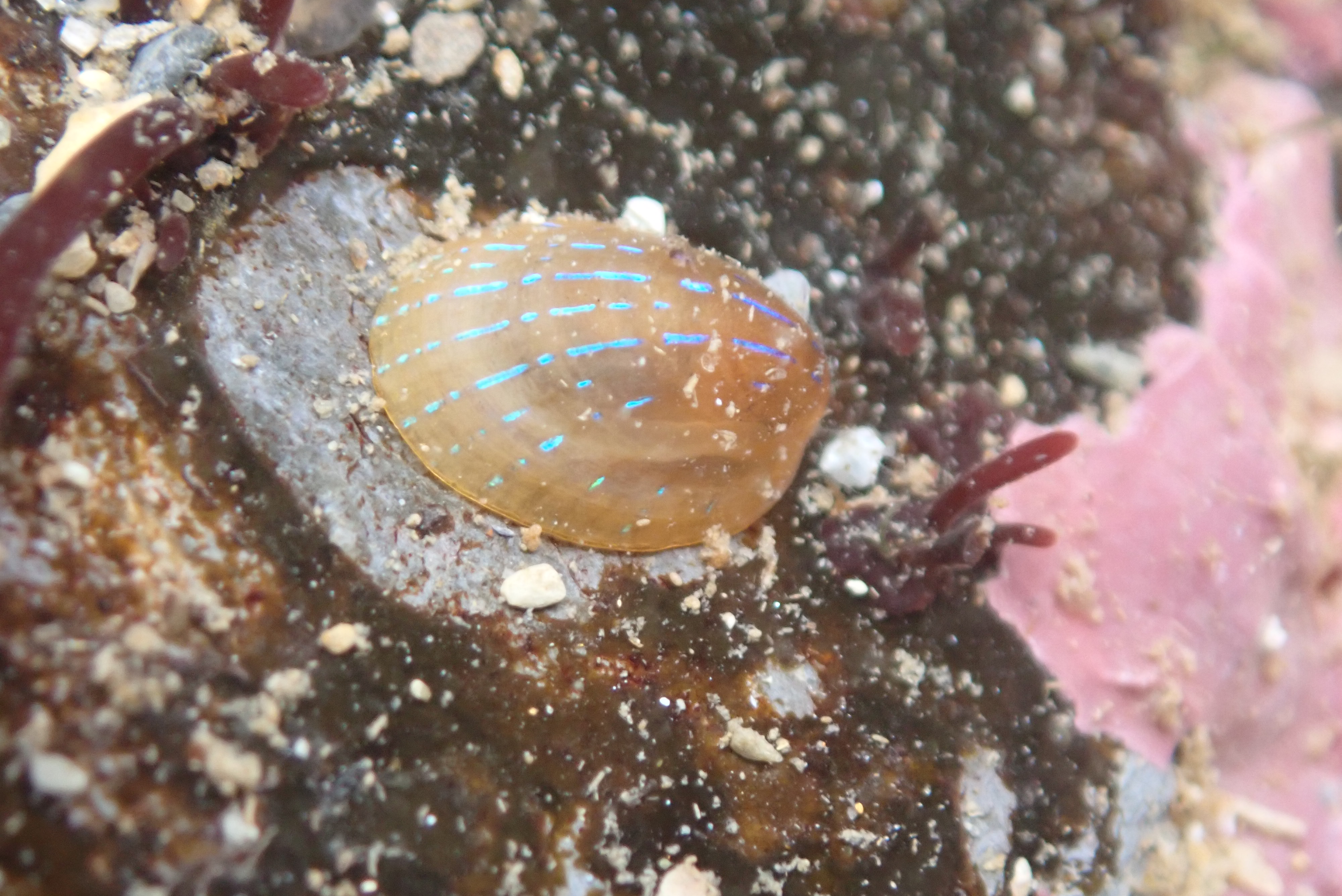
    This is the season of blue-rayed limpets. They will soon grow and move down into the holdfasts of the kelp but for now they glitter against the seaweed on which they feed. Some fronds of kelp are pockmarked with holes that these tiny molluscs have carved out.

    Not all the blue-rayed limpets are on kelp. This one is tucking into seaweed on a rock.

    Things may be winding down for the winter but the intensity of colours on the shore is as strong as ever. Even the sand is a treasure trove, a kaleidoscope of shell fragments interspersed with pieces of the knobbly skeletons of calcareous algae. The closer I look the more I see.

    ‘Maerl’ sand at Prisk Cove – made from the skeletons of dead calcareous algae.

    There are three species of red seaweed that form beds of these loose pieces, collectively known as maerl. The top layer of live algae exposed to the light is a deep pink, while underneath the dead layers bleach to look like pale pretzel fragments. Offshore, these seaweed can form deep beds, which provide endless hiding places for small marine creatures.

    Deep pink ‘maerl’ type calcareous algae.

    This beach is always rich in brightly coloured worms, sea squirts, sponges and other animals that I tend to unscientifically group together as squidgy things. They aren’t all easy to identify – especially the sponges, which often require a microscope – but some creatures, like this strawberry worm (Eupolymnia nebulosa), are easy to recognise.

    Strawberry worm (Eupolymnia nebulosa)

    Unafraid to mix spots and stripes, this lipstick pink terebellid is one of the most glamorous worms on the shore. It sports a fringe of stylish bristles and crowns its unique look with an expansive mop of tentacles and bushy red gills.

    Strawberry worm (and friends).

    Elsewhere, some of the rocks and seaweeds are covered in a layer of squidgy things.

    The eye-catching collage of flower shapes created by colonies of star ascidian sea squirts seem like they have been painted onto every surface. I can’t help taking photos of each new colour scheme.

    Scroll through this slideshow to see some of the different star ascidian colours…

    Looking at one thing leads to another. Next to a patch of star ascidian, my friend notices an odd-looking brown blob. It is plant-like: brown, stumpy and gnarled like an old stem.

    Styela clava sea squirt with star ascidian in the background – spot the flatworm!

    Despite appearances, this is a distant cousin of the star ascidian. Styela clava, sometimes known as the leathery sea squirt or the clubbed tunicate, is a single animal rather than a colony of zooids. It arrived in the UK 1950s. Originally from the North West Pacific region, it is known to sometimes cause problems by growing in huge numbers on mussel farming ropes.

    A movement draws my attention back to the star ascidian.

    I sometimes spot the sea squirts opening and closing their siphons, but this is a larger shift. There is another squidgy animal at work here.

    A flatworm is flowing across the surface of the sea squirt, moulding its body to the ridges and slopes as it goes. The worm is a fabulous midnight blue, flecked with yellow, yet it blends so perfectly with the colours of the star ascidian that I can’t make out its edges.

    There are several flatworms on the sea squirt, but it is only when one ventures onto the rock that I can see it properly.

    Cycloporus papillosus flatworm.

    More blobby treasures abound on this shore: gem anemones, red speckled anemones, yellow-ringed sea squirts, golf ball sponges and more.

    Gem anemone
    Anthopleura ballii – the red-speckled anemone
    Yellow-ringed sea squirt (Ciona intestinalis) with a photo-bombing brittle star.

    There is never enough time to see everything before the tide returns, so I focus on looking for all my favourite squidgy creatures of all – sea slugs.

    Elysia viridis, the solar powered sea slug chomping on green seaweed.

    The autumn isn’t the best time of year for sea slugs, however my friend, Other Half and I are the most dedicated little gang of slug-finders you could hope to meet. With great shrieks of delight, we uncover a few in the course of our explorations.

    Berthella plumula sea slug.

    Slugs don’t have an especially cuddly reputation, but the Jorunna tomentosa is covered in tiny hair-like structures that make it look like a teddy bear to my eye. Even its rhinophores have a fuzzy look about them. There is a good reason for this sea slug’s appearance: all that fluffiness is perfect for hiding on the sponges that it eats.

    Jorunna tomentosa – a fluffy sea slug.
    Jorunna tomentosa’s rhinophores close-up… looking like teddy bear ears!

    It’s clearly a good day for ‘hairy’ slugs because my next find is a bright-white fluffy sheep of a slug, the Acanthodoris Pilosa. Nudibranch slugs are a likeable bunch, but this one is especially appealing with its floofed-up gills and those towering rhinophores balancing on its head like two leaning helter-skelters.

    Acanthadoris pilosa
    Acanthodoris pilosa sea slug.

    It won’t be long before the autumn gales rage through, bringing the darker winter days behind them. It is strange to think of these tiny squidgy things clinging on here through everything the Atlantic will throw at them. By the time the spring sunshine returns, I may be able to start leading Wildlife Watch groups again. It will be exciting to make up for lost time.

    Bonus sea slug…. Polycera sp. with my fingertip for scale
    Polycera sp. sea slug moving surprisingly quickly towards its bryozoan meal. The yellow speck on the right may be a second, even tinier slug.
    And another squishy thing! Calvadosia campanulata stalked jellyfish.
    Sponge – Aplysilla sulfurea

    Whatever the weather, always stay safe in the rock pools. Follow my rockpooling tips to look after yourself and the wildlife on the shore.

    This website is a labour of much love and the content is available for free to everyone. My wonderful readers often ask if there is a way to support my work. You can now ‘buy me a coffee’ through my Ko-fi.uk page. (Just click donate and you can set the amount to pay by PayPal). Thank you!

  • A Summer Splash with a New Friend

    A Summer Splash with a New Friend

    I know there are good reasons not to meet people you only know from the internet, but I often do. It has been brilliant every time because people who love the rock pools are the best! When an online acquaintance who is part of the Shores of South Devon group messaged me about meeting up, I knew we would have a great time.

    Junior and I grabbed our beach shoes and headed to the local rocks to meet her. The tide might not have been the lowest ever, but with three keen pairs of eyes on the job and warm water (by Cornish standards) to splash around in, we couldn’t fail to have fun.

    Our new friend especially wanted to see cowries and sea slugs, so we had fun looking.

    The summer seaweed was starting to die back and the water was cloudy with plankton and silt, but the sun breaking through the water made it easy to see. There are always plenty of interesting molluscs; the dusky-pink cowries and chitons caught our eye.

    A pretty chiton – Lepidochitona cinerea

    The mid-shore pools are extensive around Looe and are crammed with rock pool species, all jostling for space and food. This cushion star was out exploring a shallow pool.

    Cushion starfish in the rock pools

    Anemones know their place as the star of the show! They love plankton-rich water and come in every possible colour. The brightest of the day was this gorgeous dahlia anemone.

    Dahlia anemone
    This daisy anemone had a fabulous purple mouth
    Waving tentacles of snakelocks anemones catching the sunlight (and some plankton).

    One of the great benefits of summer rockpooling is that we can go as deep as we like in the pools. Junior was excited to show our new friend his favourite swimming pool. It’s unusual to find seagrass in the rock pools, but there are usually a few clumps of it here. Sure enough, Junior spotted it straight away.

    This deep pool often has some seagrass growing in it.

    Our new friend was wonderfully excited by everything we saw and the time flew by as we met urchins, crabs, variegated scallops and other incredible little creatures.

    A green shore urchin wearing a selection of this season’s seaweed.
    A St Piran’s hermit crab pops out to say hello.

    Many of the rocky overhangs and boulders were coated in animal life. Thick sponges, gelatinous sea squirts and mossy bryozoans crowded together with tube worms and spiral worms in a jumble of colours and shapes.

    This distinctive sea squirt has four crimson spots at the tip of each zooid.
    A collage of sponges and sea squirts.

    It almost goes without saying that we were looking for sea slugs. Our friend had found a few on other beaches and was keen to discover more. There are generally fewer about on the shore at the end of the summer, when the spawning season is coming to a close, but there was still a chance of seeing some.

    On a loose piece of seaweed floating in with the tide, I found the unmistakable pink spaghetti coils of sea hare spawn. Looking through my camera, I could see the developing eggs inside. These ones probably would not survive, but many others will have hatched successfully.

    Pink spaghetti! Sea hare spawn.
    Lots of baby sea hares developing!

    As we searched among the rocks in a shallow pool, an eel slid past my feet and promptly disappeared, tunneling effortlessly down among the pebbles.

    Common eel slinking away to hide under the stones.

    Just when we are leaving the pools, I checked under a stone and found a nudibranch sea slug. It was a beauty with long pink cerata and striking brown rhinophores. The slug might only have been a centimetre or two long, but it was speedy; every time I thought I had it in focus, it went gliding away across the rock. It didn’t matter. We were all happy just to enjoy watching it for a minute before returning the stone exactly as we found it.

    We found a sea slug! Favorinus branchialis.
    The brown rhinophores with a bulge near the top are typical of Favorinus branchialis.
    Favorinus branchialis. This little nudibranch likes to eat the eggs of other sea slugs.
    Look closely – the shining blue dots are the eyes of tiny baby fish!

    As always, it was great fun to explore the shore with someone else who takes delight in the little things. In a fast-moving world, it’s important to take the time to connect with nature and with each other.

    Social media certainly has its downsides, but I love how easy it is to find others who care about the natural world and to build real-world social connections with them. If we are going to find solutions to the problems facing our environment, those connections will be essential.

    Whatever the tide, always stay safe in the rock pools. Follow my rockpooling tips to look after yourself and the wildlife on the shore.

    This website is a labour of much love and the content is available for free to everyone. My wonderful readers often ask if there is a way to support my work. You can now ‘buy me a coffee’ through my Ko-fi.uk page. (Just click donate and you can set the amount to pay by PayPal). Thank you!