Author: Heather Buttivant

  • Spooky Rock Pool Spells

    Spooky Rock Pool Spells

    Cornish Rock Pools Junior loves Harry Potter. A while back he noticed that a lot of rock pool creatures have scientific names that sound like spells straight from a Hogwarts classroom.

    Rock pool animals have many amazing (and disgusting) tricks up their sleeves. Some are simply fearsome looking like the Devil crab in the photo above. Others have weapons and disguises.

    What better way to learn their names than by chanting them spell-style to unleash their freaky abilities?

    So, wands at the ready – swish and flick – here are some top spooky rock pool spells.

    Sepia officinalis – Invisibility spell

    A cuttlefish shows off its camouflage skills in the IFREMER visitor centre, Concarneau, Brittany.
    A cuttlefish shows off its camouflage skills in the IFREMER visitor centre, Concarneau, Brittany.

    Nothing can hide better than a Common cuttlefish. Sepia officianalis can change colour and texture in an instant to make it invisible to both its predators and its prey.

    Marthasterias glacialis – Regrow-an-arm spell

    This Spiny starfish (Marthasterias glacialis) is regrowing two of its arms.
    This Spiny starfish (Marthasterias glacialis) is regrowing two of its arms.

    Many sea creatures like crabs and starfish can re-grow a lost limb. Starfish like this Spiny starfish can regenerate several arms at once, so it’s not uncommon to find one with just a couple of arms and three stumps.

    Here’s a spooky story for you… Some say that fishermen in the North Sea used to hack starfish in half when they found them in their nets. Starfish attacked their catch so they were determined to get rid of them. They slaughtered all the starfish they could get their hands on, certain they were reducing the population. Instead, each half of the severed starfish began to regenerate, slowly regrowing its arms. So, every time the fishermen cut one in half, they created two starfish. Soon the area was swarming with starfish.

    I’m not convinced this story’s true, but it makes a great Halloween tale!

    Berthella plumula – Acid squirting spell

    More dangerous than it looks - the Berthella plumula sea slug
    More dangerous than it looks – the Berthella plumula sea slug

    Lots of sea slugs use poisons from their prey to defend themselves and some produce acid. The Berthella plumula can squirt out sulphuric acid from a special gland when it’s attacked. If you pick one up, it’ll make your skin blister and fall off (so best not to!).

    Anemonia viridis – Harpoon stinging spell

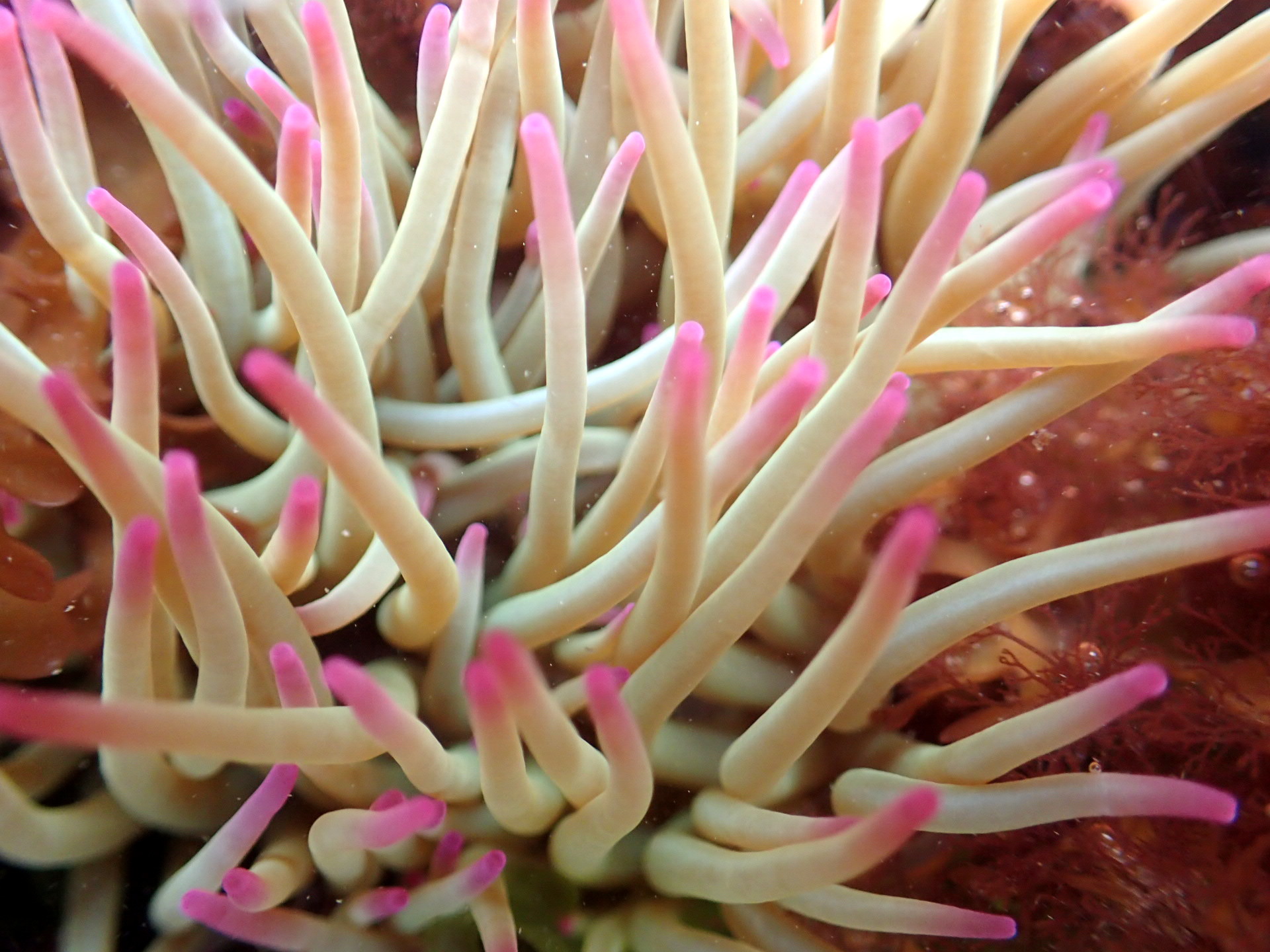
    The tentacles of the Snakelocks anemone are packed with harpoon-like stinging cells
    The tentacles of the Snakelocks anemone are packed with harpoon-like stinging cells

    Use this spell to unleash a secret weapon – the nematocysts. All jellyfish, anemones and other related animals have special stinging cells called nematocysts. Inside each cell is a coiled harpoon, which is fired out into anything that touches the tentacles.

    Here’s a video of a pool full of Anemonia viridis eating an unfortunate fly.

    Lineus longissimus – Smelly slime spell

    Part of a Bootlace worm on a rock - if you pick it up you'll get stinky slime on your hands.
    A Bootlace worm on a rock – if you pick it up you’ll get stinky slime on your hands.

    The bootlace worm is in the Guinness Book of Records as the world’s longest animal. When fully unravelled it often stretches 7 or 8 metres but the longest ever recorded was an incredible 55 metres long. More importantly, though, its special power is giving out a stinky slime. A perfect spell to use against your enemies!

    Elysia viridis – Energy-making spell

    The photosynthesising sea slug - Elysia viridis, grazing on Codium tomentosum seaweed.
    The photosynthesising sea slug – Elysia viridis, grazing on Codium tomentosum seaweed.

    Feeling worn out? Try the Elysia viridis spell instead of over-doing the trick-or-treat sweets. This amazing little sea slug retains energy-making chloroplasts from the seaweed it eats. The chloroplasts carry on making food for the slug through photosynthesis, giving the slug an ideal energy boost.

    Aplysia punctata – Smoke screen spell

    We must have accidentally disturbed a sea hare (Aplysia punctata), making it release a cloud of purple ink.
    We must have accidentally disturbed a sea hare (Aplysia punctata), making it release a cloud of purple ink.

    Werewolves, zombies and vampires on your tail? Don’t panic – use the smoke screen spell!

    Sea hares (Aplysia punctata) may look like dull brown blobs, but they are as strange as rock pool creatures get. Not only do they lay eggs in the form of pink silly-string, but they have the ability to shoot out a cloud of purple ink when attacked, providing a perfect smoke screen.

    These are just a few of the bizarre things our rock-pool creatures can do. There’s plenty more rock pool magic to learn.

    If you’d like to know more about the gruesome habits of the animals on our shore, have a read of my guide to revolting rockpools. You can also take part in organised events to meet the creatures for yourself. Happy Halloween!

  • Citizen Science in action with Shoresearch

    Citizen Science in action with Shoresearch

    Every year, the Cornwall Wildlife Trust’s Shoresearch project undertakes the ultimate rockpooling challenge with a week of beach surveys. I’d love to survey all five locations, but Junior has other plans, including a midnight rockpooling session. Watching hermit crabs bombing about the pools at 1am is great fun, but isn’t conducive to being the other side of the county bright and early.

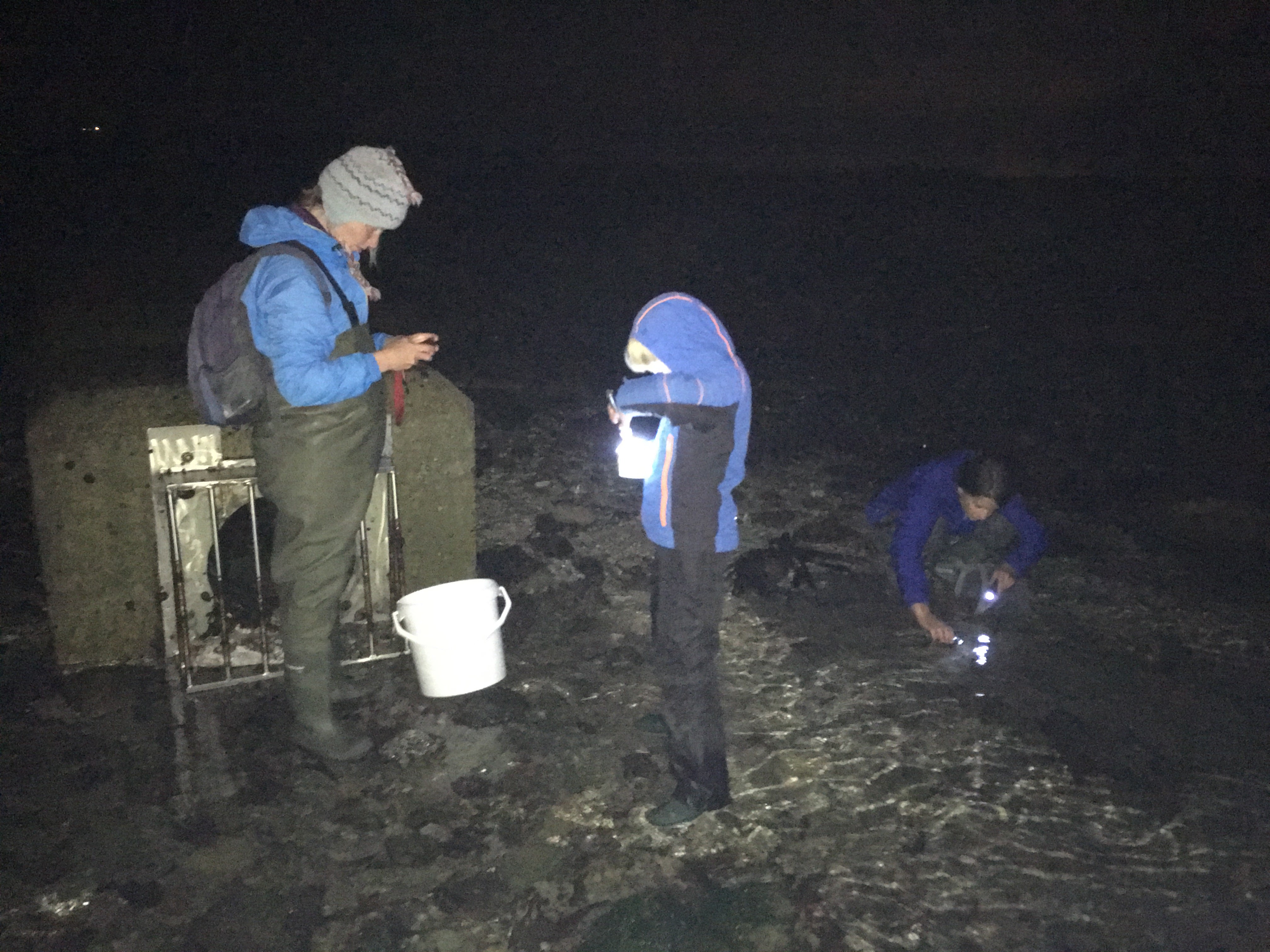
    Night-pooling at Hannafore. Many rock pool animals are more active at night.
    Night-pooling at Hannafore. Many rock pool animals are more active at night.

    We catch up with the indefatigable Matt and Adele from the Cornwall Wildlife Trust on days three and four of their Shoresearch survey marathon. Together with a team of enthusiastic volunteers, we complete a randomised quadrant transect and a general search at Readymoney Cove in Fowey and Hannafore beach in Looe.

    Shoresearch crew in action at Readymoney
    Shoresearch crew in action at Readymoney

    It’s lovely to hang out with like-minded people and whether you’re experienced or completely new to rockpooling, there are always new things to find and learn by exploring the shore in a group.

    At Readymoney Cove, we soon discover that there are lots of Common starfish about. These are the classic orange five-armed sea stars that are always represented on children’s seaside books, but are more common in deeper water than on the shore.

    Common starfish are less common on the shore than Spiny starfish and Cushion stars.
    Common starfish are less common on the shore than Spiny starfish and Cushion stars.

    In fact, it’s an echinoderm-rich sort of day, with loads of representatives of this family of animals on the shore. There’s a whole collection of echinoderms together on one rock: a green shore urchin; sea gherkin (a type of sea cucumber); brittle stars and cushion stars.

    Sea gherkin - these small sea cucumbers are often found on rocks on the shore. They're related to starfish and urchins.
    Sea gherkin – these small sea cucumbers are often found on rocks on the shore. They’re related to starfish and urchins.
    A spiny starfish
    A spiny starfish

    It feels like interrupting a family meeting so I replace the stone and leave them to it.

    Later in the day we find another echinoderm, the Kaleidoscope starfish (Asterina phylactica) which is very small and lives among the pink coral weeds in sheltered pools. Its back is covered in colourful circles of orange and white, forming a dark star in its centre. The dots are made by the little pincers (pedicillerae) which the starfish uses to keep its back clean, as you can see in the photo.

    Asterina phylactica - the kaleidoscope starfish in a rock pool at Readymoney, Fowey.
    Asterina phylactica – the kaleidoscope starfish in a rock pool at Readymoney, Fowey.

    Other great finds were numerous Devonshire cup corals.

    Devonshire cup coral at Readymoney. This species has a squashed oval shape to the cup and is a pale creamy-yellow colour.
    Devonshire cup coral at Readymoney. This species has a squashed oval shape to the cup and is a pale creamy-yellow colour.

    When these are underwater they extend their translucent tentacles, but on the shore you tend to only see the calcerous cup shapes.

    There were several Devonshire cup corals in this dark overhang
    There are several Devonshire cup corals in this dark overhang
    This coral was submerged and you can just see some of its tentacles coming out at the bottom. As is often the case it was in an awkward position so I couldn't see to focus!
    This coral is submerged and you can just see some of its tentacles coming out at the bottom. As is often the case it is in an awkward position so I can’t focus!

    There are several Calvadosia campanulata stalked jellyfish in the pools. They seem to grow large this time of year and are easier to spot as the seaweed begins to die back.

    Trying to take a photo of a Calvadosia campanulata stalked jelly, but being photo-bombed by a common prawn!
    Trying to take a photo of a Calvadosia campanulata stalked jelly, but being photo-bombed by a common prawn!

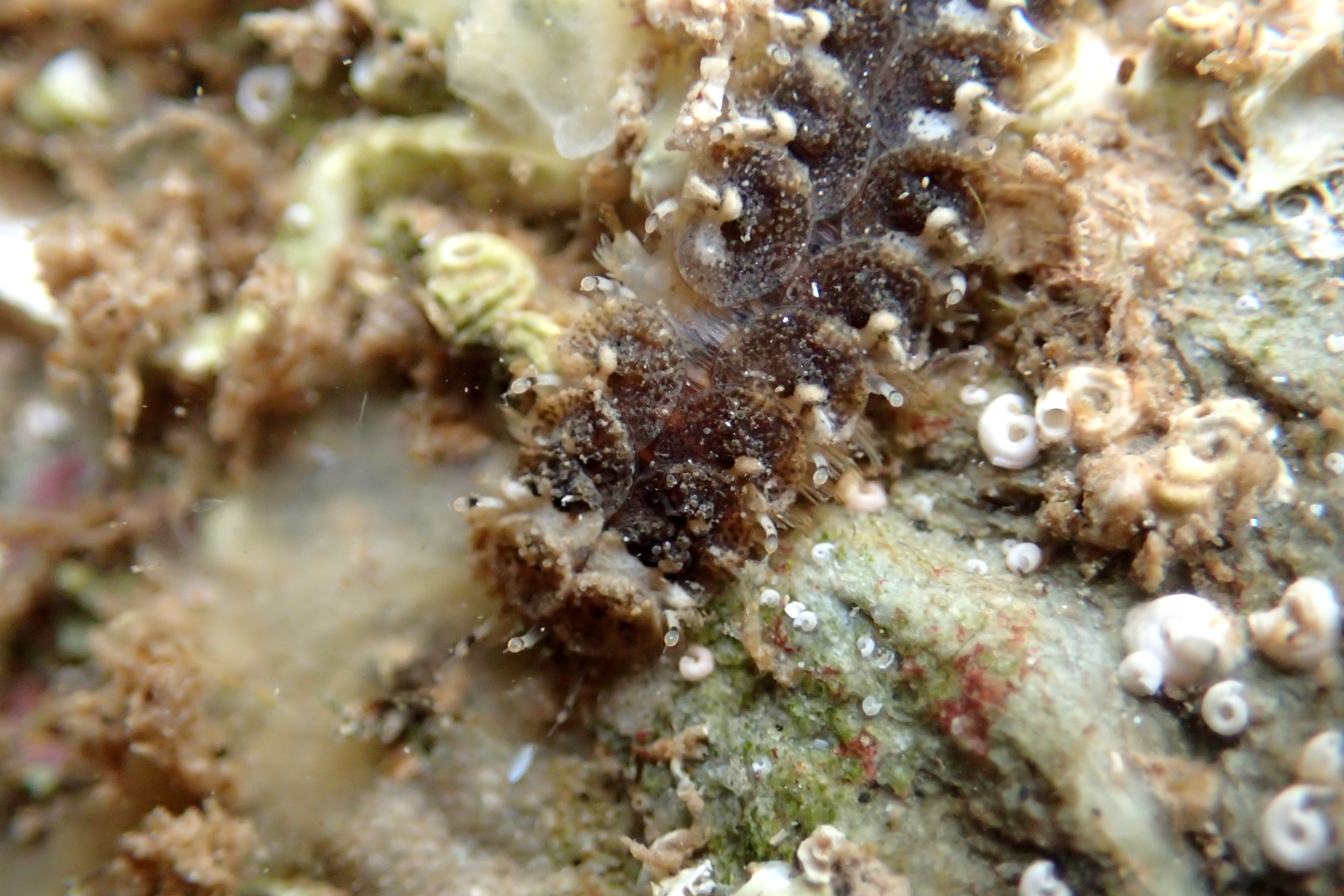
    After a lot of looking, I finally turn up some sea slugs too. There are several Sea lemons under one rock and next to a coil of spawn I also find a Jorunna tomentosa slug.

    Jorunna tomentosa sea slug
    Jorunna tomentosa sea slug

    On the next day we survey Hannafore, which has a vast are of rocky shore. We spread out looking for interesting creatures and have no problem finding them.

    The bizarre-looking echiuran worm Thalassema thalassemum
    The bizarre-looking echiuran worm Thalassema thalassemum
    Exterminate! Junior loved the shape of this Lamellaria perspicua mollusc - the hollow syphon does look like a gun!
    Exterminate! Junior loves the shape of this Lamellaria perspicua mollusc – the hollow syphon does look like a gun!

    We spend a lot of time failing to re-find the very rare Lucernaria quadricornis stalked jellyfish which was recorded on this beach a few months back. We do, however, find many other fabulous creatures while we are looking.

    Close-up of a Sea lemon sea slug
    Close-up of a Sea lemon sea slug
    An interesting creature congregation: A Scyon ciliatum sponge (left) and a Candelabrum cocksii (right), which is a hyrozoan animal related to jellyfish and anemones.
    An interesting creature congregation: A Scyon ciliatum sponge (left) and a Candelabrum cocksii (right), which is a hyrozoan animal related to jellyfish and anemones.

    Junior and I decide to leave a bit early as he’s been wading in deep water and is completely sodden, so we miss the find of the day, a Giant goby.

    Shoresearch has been going for a good few years now and is a perfect opportunity to learn about wildlife, contribute to conservation and connect with others. I’m hoping I’ll get to do all five days of Shoresearch Week next year as well as other surveys and events during the year. Perhaps I’ll see you there?

    In the meantime here are some more of the week’s finds…

    A tortoiseshell limpet (Tectura virginea) living on kelp, Hannafore
    A tortoiseshell limpet (Tectura virginea) living on kelp, Hannafore
    Tethya aurantium - a 'golf ball' sponge at Hannafore
    Tethya aurantium – a ‘golf ball’ sponge at Hannafore
    A white Painted top shell (Calliostoma zizyphinum) - usually pink
    A white Painted top shell (Calliostoma zizyphinum) – usually pink
    Scorpion fish (Taurulus bubalis) - the white barbel at the corner of the mouth is a good way to identify this species.
    Scorpion fish (Taurulus bubalis) – the white barbel at the corner of the mouth is a good way to identify this species.
  • Finally! Portuguese Man O’ War in Looe

    Finally! Portuguese Man O’ War in Looe

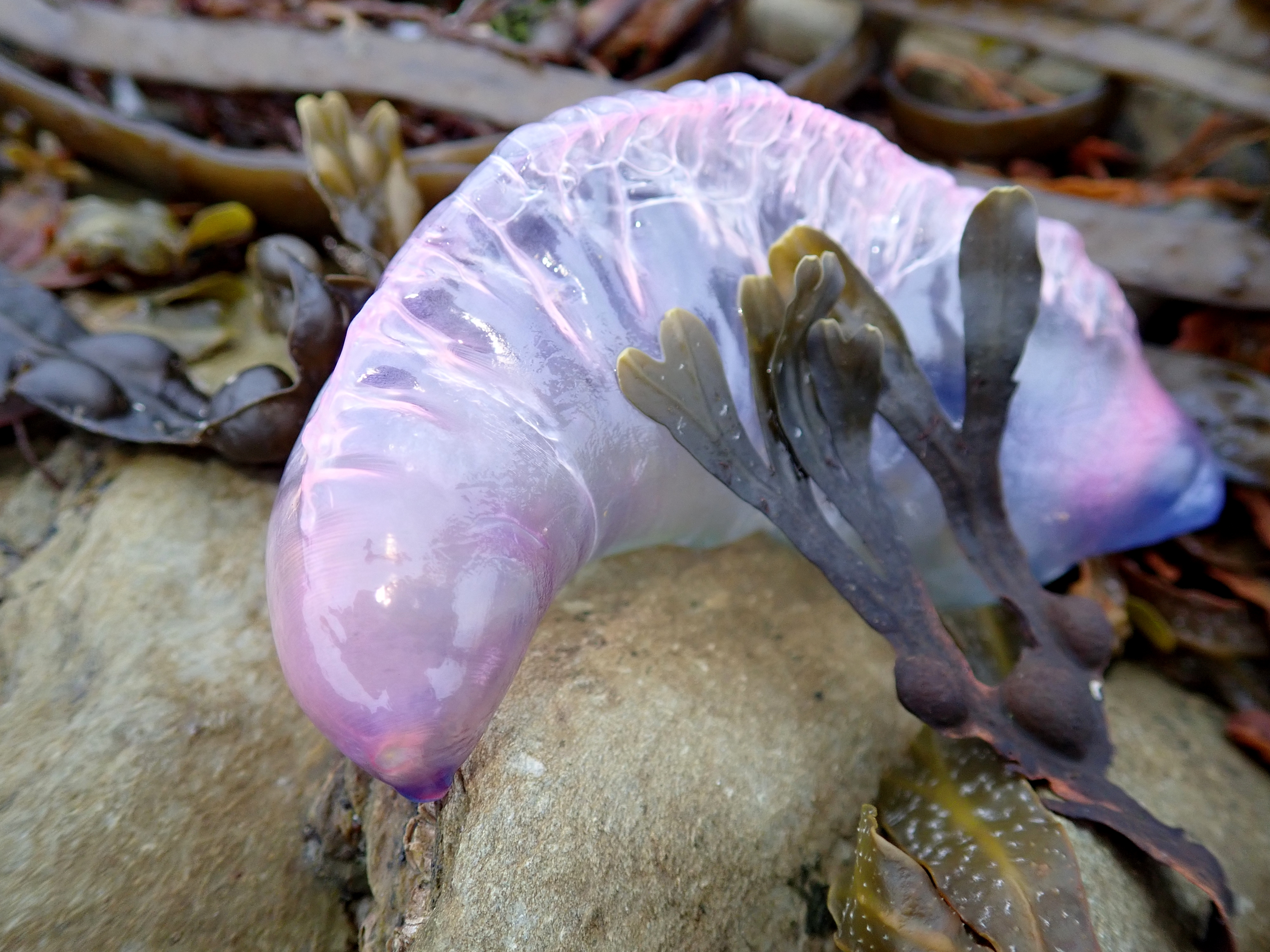
    I’m always pleased to hear about interesting things other people have found around Cornwall especially from readers of this blog. I’ve been more than a touch jealous these last few weeks, however, of all the people finding Portuguese man o’war. They turn up occasionally in Cornwall but I’ve never seen one before and I feel like I’m missing my chance.

    According to other people’s messages, Portuguese man o’war are everywhere and have been for weeks, covering strand lines, floating in pools, strewn on rocks everywhere from Penzance to Wales. And for weeks I’ve been searching and searching my local beaches and finding none. Until today.

    It’s low tide and there are posts bouncing around social media saying that there are Portuguese man o’war around Looe. I have a house to clean, scones to make and blogs to write, so of course I drop everything and drag my other half and Junior to Hannafore beach.

    I know they’ll be lifted off with each tide and battered and probably blown away with the next storm, so I’m not going to let this opportunity pass. Junior thinks I’ve gone mad though. He knows how powerful their sting is and insists, at first, that he’s not going near one.

    His reluctance evaporates within a minute of arriving at the beach, when I find the first one. We all huddle round. The colours take me by surprise. In photos they always look a striking blue, but in real life they’re iridescent and seem to glow in the sun.

    My first Portuguese man o'war
    My first Portuguese man o’war

    (more…)

  • A close (enough) encounter with Weever fish.

    A close (enough) encounter with Weever fish.

    We’re on a stomp about the beaches between Looe and Seaton, enjoying a patch of sunshine.  “Watch out for Portuguese Man O’War jellies,” I warn Junior as we cross the muddy sand at Millendreath. I know there have been reports of them washing up all around the south west coast over the last few weeks, but there are none today. Inevitably, it’s something else that nearly gets me.

    In a sandy pool at the sea’s edge, a flicker of movement catches my eye. It happens so quickly I can’t be sure there’s anything there but the sand is settling, suggesting something has just buried itself.

    I call Junior over to look and I crouch low, reaching a hand to the water’s surface. If I can scoop the sand up from underneath I might be able to gently lift out the creature. Having seen plenty of well-camouflaged dragonets scooting about the pools today, I expect this to be another one. I stop short and stare into the shimmering pool.

    Dragonets, especially the females, are perfectly camouflaged on sand.
    Dragonets, especially the females, are perfectly camouflaged on sand.

    It’s a good call. You never know what might be lurking in the rock pools. Near where I saw the movement is a sandy coloured lump. I think I recognise the shape, but it’s only when I lower my camera into the water and zoom right in that I can be sure. A Lesser weever-fish is staring down my lens, its frog-mouth gaping slightly, the rest of its body buried in the sand. Before I can take a shot it’s gone. (more…)

  • Giants of the Cornish rock pools

    Giants of the Cornish rock pools

    Last week I shared with you the miniature world of the sea slugs, so this week I’ll super-size things and bring you some big fish. Silly-season reports of Great-white sharks often hit the headlines in Cornwall, but I prefer rock-pool giants; they’re not made up, and you can get close to them without having your leg bitten off!

    Cornwall is brilliant in all sorts of ways, our network of local, grassroots marine conservation groups being just one of them. The public launch, last week, of the new Three Bays Wildlife Group brought experts and volunteers together and gave me a chance to explore some new beaches in the St Austell area.

    Judging by the squeals of excitement from the children and adults alike, the crabs, pipefish, prawns and anemones we found at the main rockpool ramble on Portmellon beach near Mevagissey went down well. By the end of the day, the local group had recruited lots of potential new volunteers.

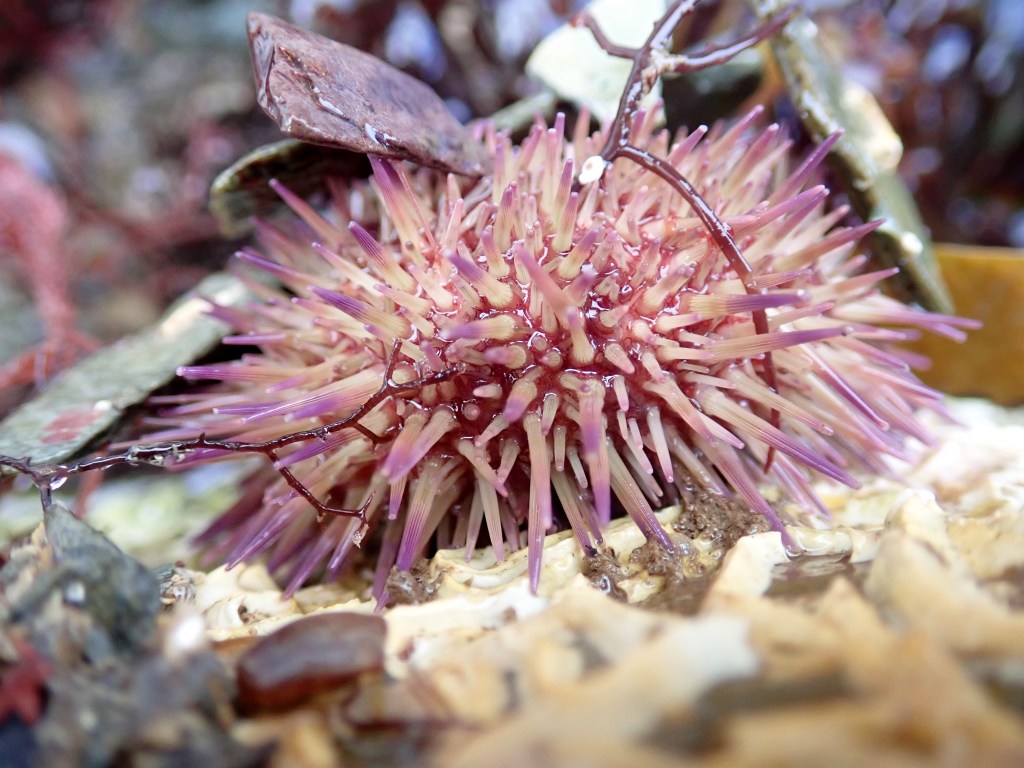
    Green shore urchin at Portmellon beach - adorned in seaweed
    Green shore urchin adorned in seaweed. Portmellon beach.

    (more…)

  • For the love of sea slugs…

    For the love of sea slugs…

    I love sea slugs a bit more than is probably usual. My other half even made sure I have the t-shirt, which I wear with pride in the Cornish rock pools despite the odd looks it gets me.

    Trend setting in my waterlogged wellies and 'I love sea slugs' t-shirt.
    Trend setting in my waterlogged wellies and ‘I love sea slugs’ t-shirt. Hannafore beach, Looe.

    If you don’t already have your own t-shirt, it might be that you haven’t yet met these amazing little creatures. Unlike land slugs, sea slugs come in a mind-boggling variety of colours and shapes and have cool super-powers.

    So, this week I’ve been braving the traditional British summer-holiday weather to find top slugs to convert you to the cause. My lucky t-shirt worked its wonders… (more…)

  • The One That Got Away… Cuttlefish in a Cornish Rock Pool

    The One That Got Away… Cuttlefish in a Cornish Rock Pool

    If you’ve ever been rockpooling, you’ll know the feeling: you’re in the zone, bottom high, head down, lifting a rock or staring into the water when a movement catches your eye. While you’re registering that it’s some interesting creature you’ve never found before, said creature is darting away under an overhang or boulder never to be seen again.

    My camera is full of “things that were there only a millisecond before”.

    Not the most accomplished photo of a Greater pipefish as long as my arm!
    Not the most accomplished photo of a Greater pipefish as long as my arm!

    So, you’ll have to take my word for it that I finally encountered an animal I’ve been longing to find in a pool. After four decades of failure, my big moment came while I was taking some friends rock pooling this week. (more…)

  • Summer Holiday Rock Pooling Events in Cornwall – The Full List

    Summer Holiday Rock Pooling Events in Cornwall – The Full List

    Here it is… the 2017 list of summer rockpooling events in Cornwall during the holidays. It’s the best ever, with events to suit all the family!

    Take a look below to see what’s on near you. There’s no better way to make the most of your rock pooling than to join the experts to find amazing marine creatures and learn all about them.

    All you need are: some sturdy rockpooling shoes like wellies, neoprene beach shoes or wetsuit boot (not flip flops or crocs); a bucket, and sun protection.

    Please check the organiser’s page carefully for the exact details and any alterations. You will need to book in advance for some of these events.

     Happy rockpooling! Maybe see you there?

    FRIDAY 28TH JULY, 14.00-16.00, St Michael’s Mount. Rockpool Explorer with the National Trust https://www.nationaltrust.org.uk/events/795f56c8-54f5-4205-acde-482402421940/pages/details

    SUNDAY 6TH AUGUST, 10.00 – 12.00, St Michael’s Mount. Rockpool Explorer with the National Trust (Scroll to the bottom of the following web page for this date) https://www.nationaltrust.org.uk/events/795f56c8-54f5-4205-acde-482402421940/pages/details

    MONDAY 7TH AUGUST, 12.00 – 13.30, Northcott, Bude. Hurray for Honeycomb with Cornwall Wildlife Trust. Meet at Northcott Mouth National Trust car park, Bude http://www.cornwallwildlifetrust.org.uk/events/2017/01/06/hurray-honeycomb?instance=0

    TUESDAY 8TH AUGUST, 11.30 – 13.30. Polzeath. Rockpool Ramble with Polzeath Marine Conservation Group and the National Trust, BOOKING ESSENTIAL https://www.nationaltrust.org.uk/events/4d6bf7a6-558b-4e53-b1c1-3929cec9591e/pages/details

    WEDNESDAY 9TH AUGUST, 11.00 – 13.00. Mousehole. St Piran’s Crab Search with Cornwall Wildlife Trust, Mousehole (Meet in Car Park, The Parade, by The Rock Pool Café) http://www.cornwallwildlifetrust.org.uk/events/2017/01/06/st-pirans-crab-search?instance=0

    THURSDAY 10TH AUGUST, 13.00 – 15.00. Falmouth Harbour. Horrible Beasts Up the Creek. With Cornwall Wildlife Trust. BOOKING ESSENTIAL – Falmouth – location provided on booking. http://www.cornwallwildlifetrust.org.uk/events/2017/01/06/horrible-beasts-creek?instance=0

    THURSDAY 10TH AUGUST, 13.00 – 15.00 Lantivet Bay. Rockpooling with the National Trust. Free no booking required https://www.nationaltrust.org.uk/events/0916c2da-8026-4e5e-a507-5d6c413e46a0/pages/details

    FRIDAY 11TH AUGUST, 13.00 – 15.00. Marazion. Strandline Scramble – looking for creatures washed up by the tide. With Cornwall Wildlife Trust. BOOKING ESSENTIAL http://www.cornwallwildlifetrust.org.uk/events/2017/01/06/strandline-scramble?instance=0

    FRIDAY 11TH AUGUST, 14.00-16.00. St Michael’s Mount Causeway. Rockpool Explorer with the National Trust. (Scroll to the bottom of the following web page for this date) https://www.nationaltrust.org.uk/events/795f56c8-54f5-4205-acde-482402421940/pages/details

    SATURDAY 12TH AUGUST, 14.30 – 16.00. Hannafore, Looe. Rock Pool Ramble with Looe Marine Conservation Group http://www.cornwallwildlifetrust.org.uk/events/2016/12/23/summer-holiday-rockpool-ramble?instance=0

    MONDAY 14TH AUGUST, 15.00 – 17.00 Polzeath, Rock Pooling and Beach Games with Wild Thymes. BOOKING ESSENTIAL http://www.cornwallwildlifetrust.org.uk/events/2017/01/26/rock-pooling-and-beach-fun-wild-thymes?instance=0

    SATURDAY 19TH AUGUST, 21.30 – 23.30. Durgan. Night Time Rock Pooling with Cornwall Wildlife Trust. BOOKING ESSENTIAL – No children under 12. http://www.cornwallwildlifetrust.org.uk/events/2017/01/06/night-rockpooling?instance=0

    SUNDAY 20TH AUGUST, 10.00-12.00. St Michael’s Mount Causeway. Rockpool Explorer with the National Trust. (Scroll to the bottom of the following web page for this date) https://www.nationaltrust.org.uk/events/795f56c8-54f5-4205-acde-482402421940/pages/details

    MONDAY 21ST AUGUST, 11.00-13.00. Polzeath. Rockpool Ramble with Polzeath Marine Conservation Group and National Trust. BOOKING ESSENTIAL (Scroll to the bottom of the page for this date) https://www.nationaltrust.org.uk/events/4d6bf7a6-558b-4e53-b1c1-3929cec9591e/pages/details

    TUESDAY 22ND AUGUST, 11.00 – 13.00. Polzeath. Radical Rockpooling with the Cornwall Wildlife Trust and the Polzeath Marine Conservation Group. BOOKING ESSENTIAL – Children over 11 only. http://www.cornwallwildlifetrust.org.uk/events/2017/01/26/radical-rock-pooling?instance=0

    WEDNESDAY 23RD AUGUST, 11.00 – 13.00. Hannafore, Looe. Rockpool Safari Time with Fox Club, Junior branch of Cornwall Wildlife Trust. BOOKING ESSENTIAL http://www.cornwallwildlifetrust.org.uk/events/2017/01/05/rockpool-safari-time?instance=0

    WEDNESDAY 23RD AUGUST, 12.30 – 14.30. Camel (Location available on booking). Rockpool Ramble with Fox Club, Junior branch of Cornwall Wildlife Trust. BOOKING ESSENTIAL http://www.cornwallwildlifetrust.org.uk/events/2017/04/20/rockpool-ramble?instance=0

    THURSDAY 24TH AUGUST, 13.00 – 15.00. Polzeath. Rock Pool Ramble with Polzeath Marine Conservation Group BOOKING ESSENTIAL  http://www.cornwallwildlifetrust.org.uk/events/2017/01/26/rock-pool-ramble?instance=4

    FRIDAY 25TH AUGUST, 14.00-16.00. St Michael’s Mount Causeway. Rockpool Explorer with the National Trust. (Scroll to the bottom of the following web page for this date) https://www.nationaltrust.org.uk/events/795f56c8-54f5-4205-acde-482402421940/pages/details

    Can’t see your event? Please let me know of any additions or alterations to this list and I’ll be delighted to share them.

  • Wrasse and wrack

    Wrasse and wrack

    The Cornish summers are anything but predictable. One day I’m sweltering in shorts and beach shoes and the next I’m shivering in waders and a thick jumper. Although the showers are back with a vengeance, there’s always something to be found if I can make it across the rocks without breaking an ankle.

    Painted top shell, East Looe
    Painted top shell, East Looe

    My first outing is to the rocks beyond East Looe beach and I’m pleased to come across a new colony of St Piran’s hermit crabs on the mid-shore.

    A St Piran's hermit crab starting to emerge from its shell.
    A St Piran’s hermit crab starting to emerge from its shell.

    They’re becoming a familiar sight around Cornwall and I’m starting to recognise them from the tips of their red legs, before their chequerboard eyes and equal-sized claws emerge from their shells. (more…)

  • My First Fox Club Expedition To Porth Mear

    My First Fox Club Expedition To Porth Mear

    It’s the middle of the night and I’m convinced there’s something wrong with my eyes. I’ve unplugged my phone, tried blinking several times but I’m still seeing flickering lights and flashes. Finally I twig what’s going on and open the curtains to reveal incessant sheet lightning.

    My first thought is that it had better stop by the morning, else no-one will turn up to my first rock pooling event at Porth Mear with Fox Club, the junior branch of the Cornwall Wildlife Trust. As a child, I was a keen member myself so I’ve been looking forward to this for months.

    By the morning the lightning storm has given way to wind and rain, but conditions are less than inspiring. It’s amazing anyone shows up for rock pooling, but a few hardy well-wrapped-up folk do, as does a lovely volunteer assistant. (more…)