There are many fabulous rock pooling beaches around Cornwall and this isn’t one of them. The smooth serpentinite rocks of Kynance Cove on the Lizard peninsula are colourful and create breathtaking scenery, but they’re mostly devoid of places for creatures to shelter. Realistically there’s not much here, but it’s one of Cornwall’s loveliest places and experience tells me there’s always something if I look hard enough.
It’s easy to see the snakeskin texture that gives serpentine rock its name.
One thing this beach does have is caves. Junior strides ahead of me, clutching a geological hammer and chisel, shining his torch along the smooth, damp walls.
Cornish rock pools junior explores the serpentinite caves
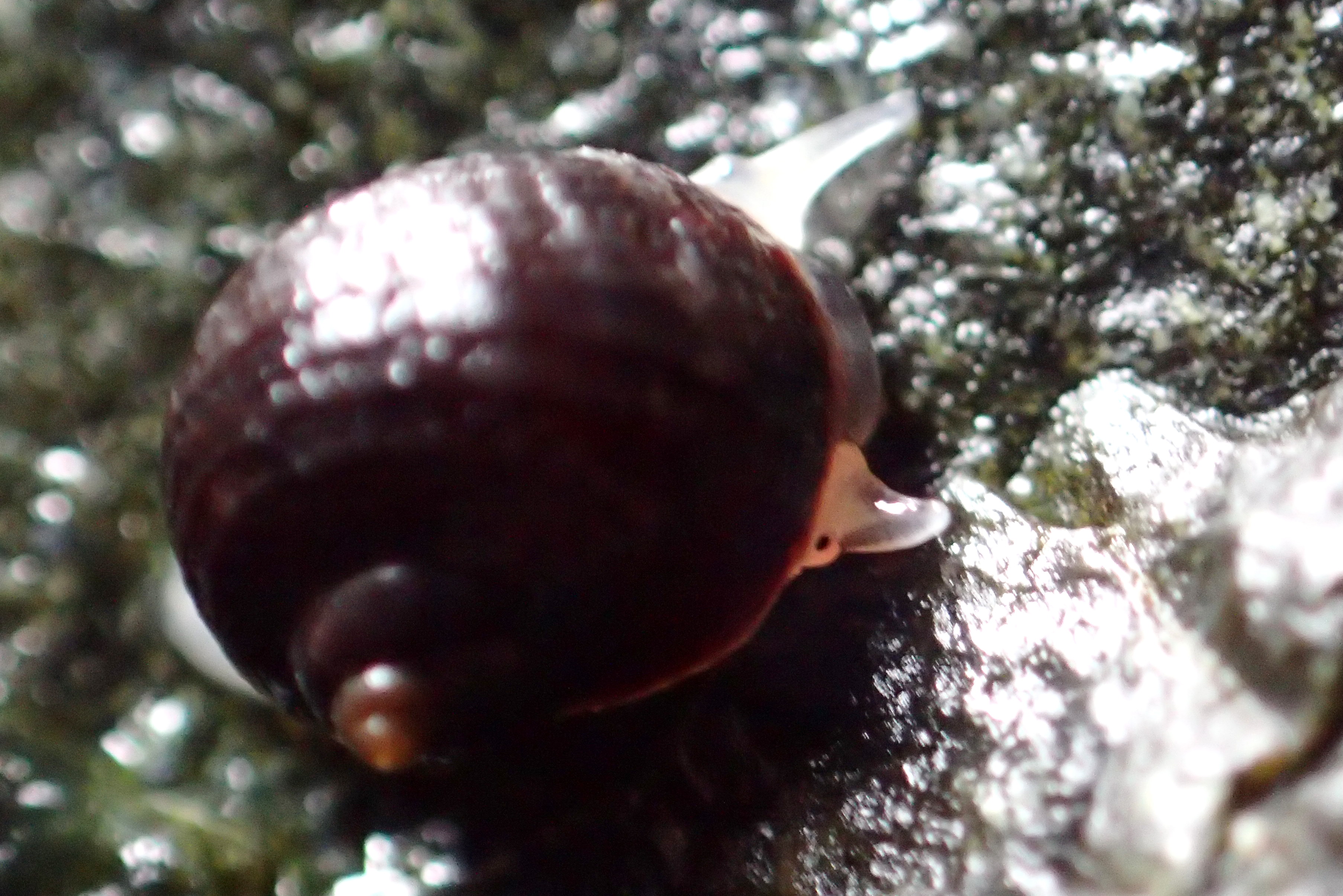
He’s on a mission to explore every centimetre of these rare rocks, forced up millions of years ago from deep under the oceans, exposing the upper layer of Earth’s mantle. While Junior hammers away at history, cave-dwelling periwinkles not much bigger than grape pips are undertaking their own explorations.
This tiny periwinkle species lives on the upper shore in dark and damp places such as this cave.
A steady swell breaks against the island stacks and scattered rocks of the bay. Barnacles cling to imperfections and overhangs, joined by beadlet anemones and black-footed limpets.
A beadlet anemone next to dog whelk eggs. Barnacles and limpets also cling on to this small overhang in the smooth serpentinite.
I watch a limpet slamming down its shell on a barnacle’s feeding arms and wonder if it’s if it’s after a more substantial meal than its usual fare of micro-algae?
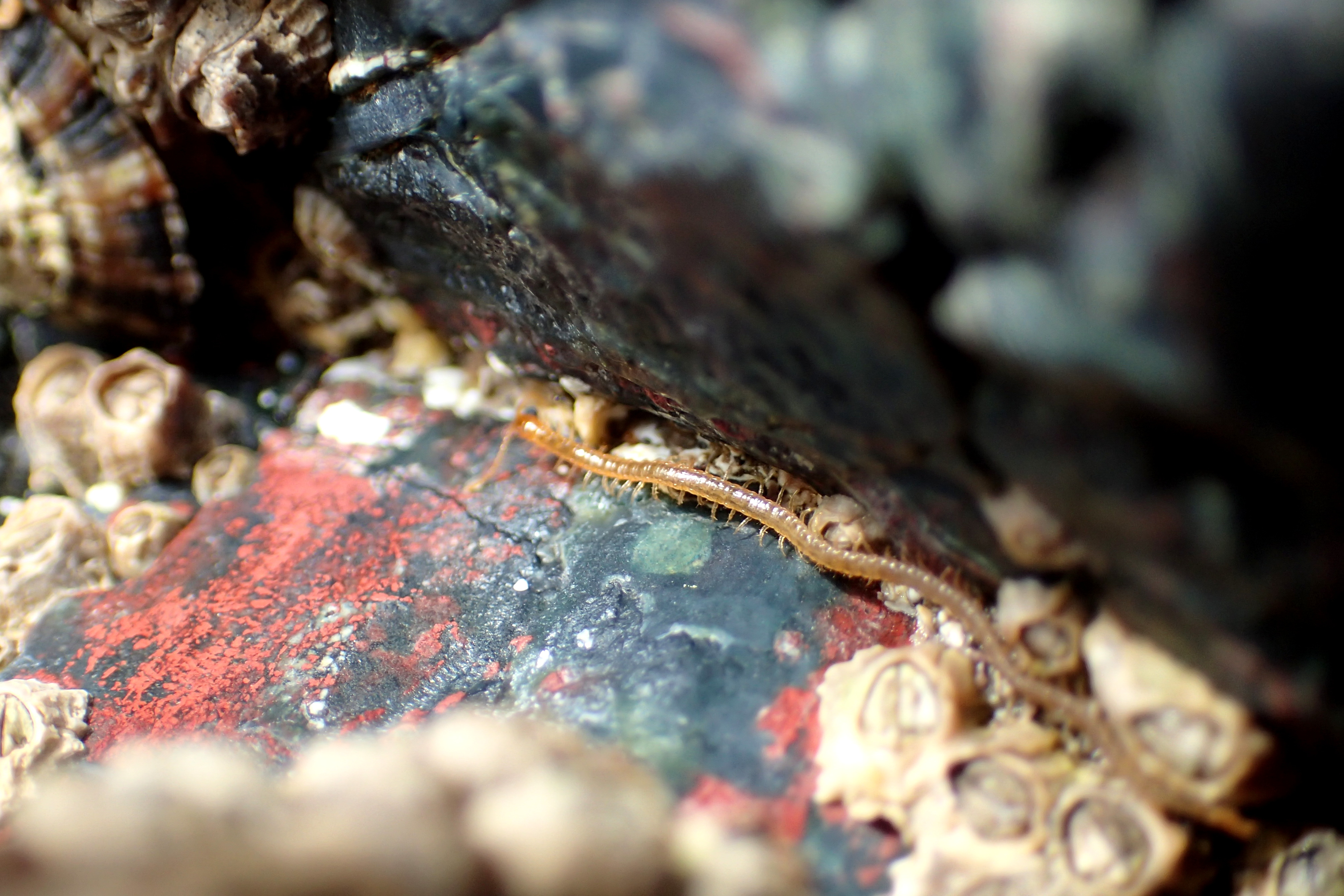
Sea slaters scuttle among the barnacles together with occasional flies and even a centipede. I assume it has journeyed down from the top of the grassy island to forage at low tide.
A centipede visiting the shore
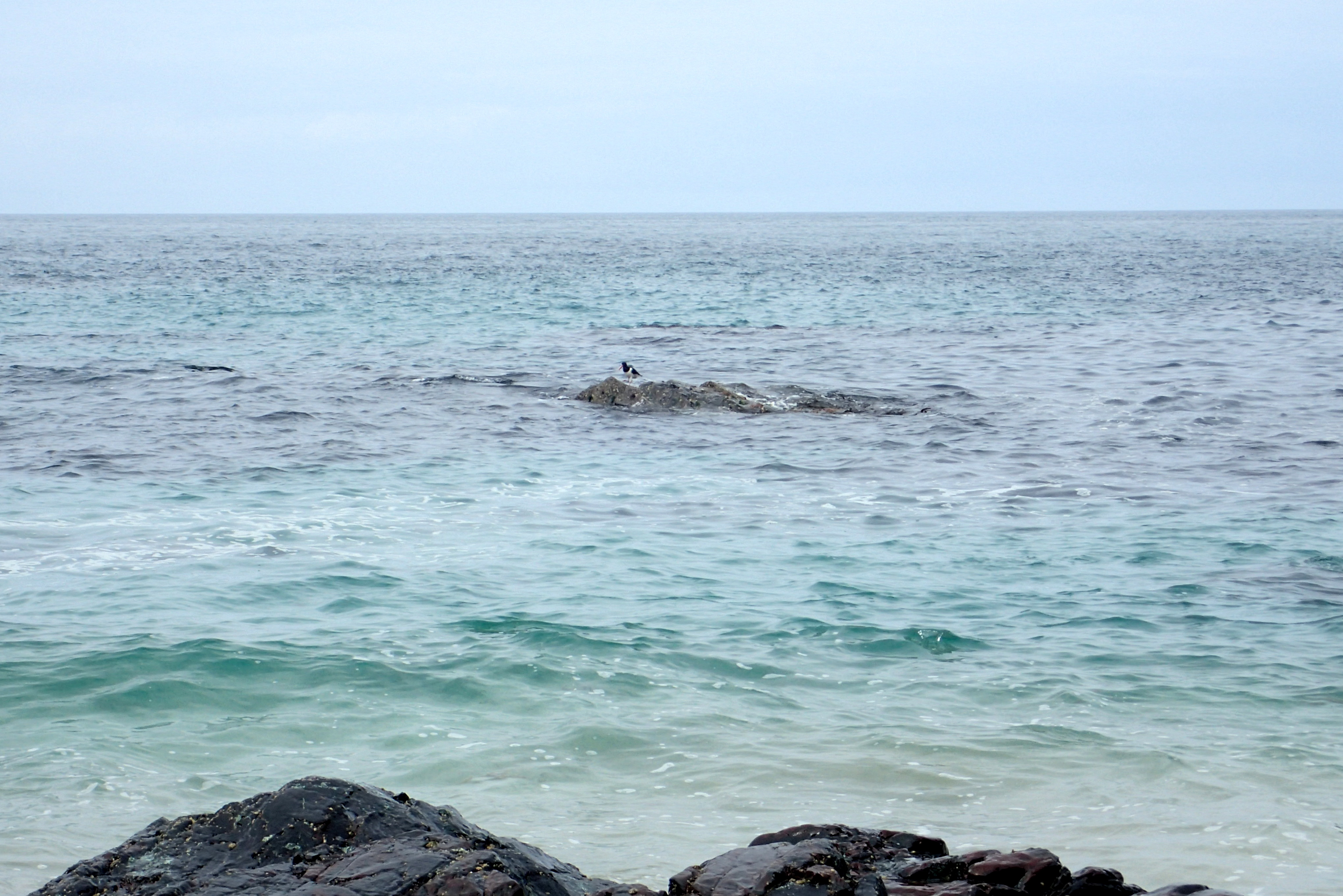
An oystercatcher watches me cross the beach, preening itself with its orange chopstick bill. It watches as I climb a shelving part of the lower cliffs where several deep bowls have been eroded from the rock.
A lone oystercatcher on a rock at Kynance Cove.
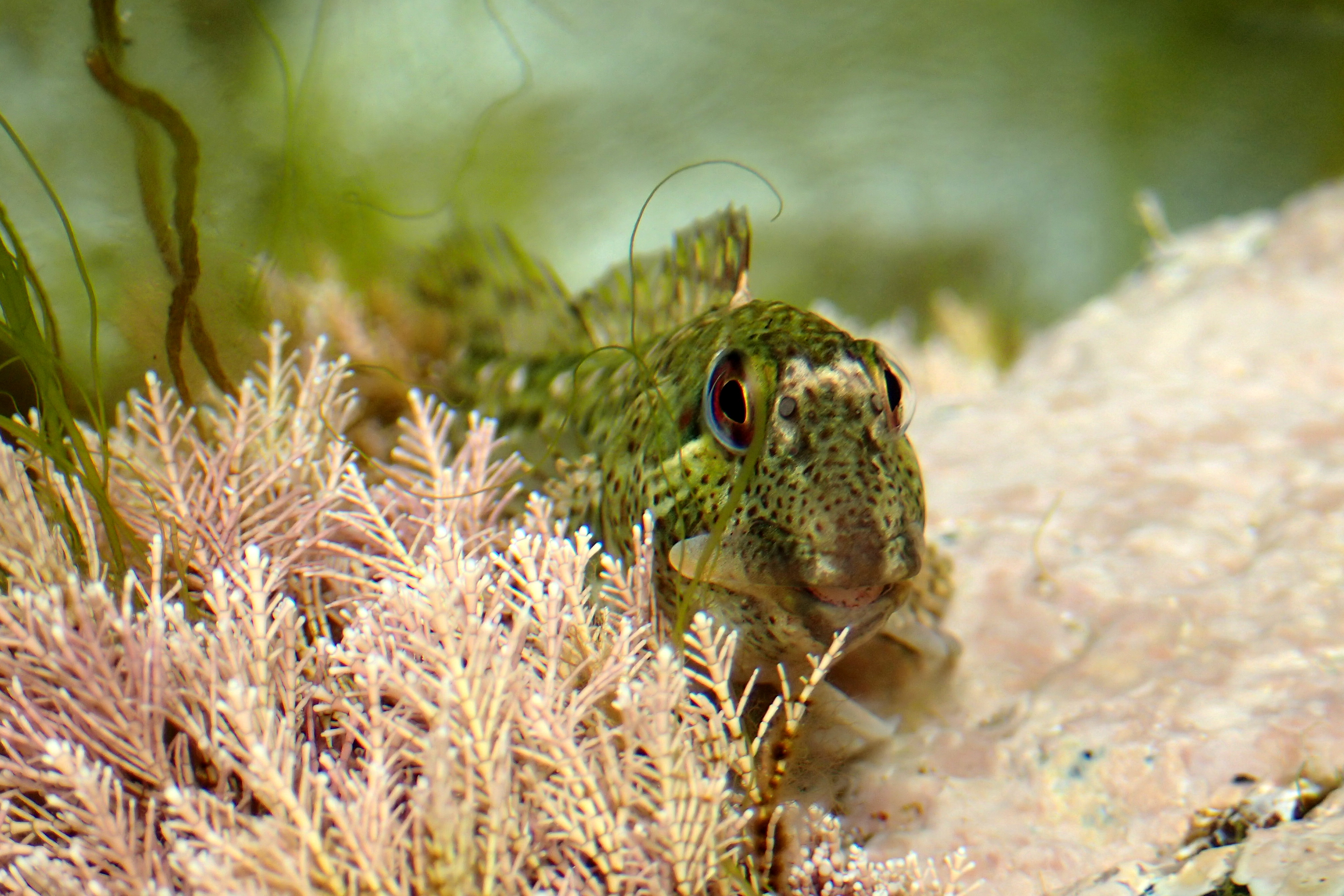
As I approach the pools, a gaggle of small fish jostles against each other before darting away below a ledge. I take up position beside the pool and wait. Sure enough, after a few minutes, a shanny’s head pops over the ledge, propping itself on its clawed pectoral fins to get a better look. Others soon join it as they return to their basking positions at the shallow edges of the pool.
‘Say cheese!’ A grinning shanny propped on its pectoral fins watches me from a rock pool.
I lower my camera bit by bit until it’s almost touching the surface of the water. The fearless shanny stays put. After a few attempts I manage to capture one of my favourite things about these common little rockpool fish: their extraordinary chameleon-like eyes which can swivel independently in all directions.
Being able to do this must be a huge advantage when looking out for prey and predators.
I spot a Montagu’s blenny in the pool, easily distinguished from its larger cousins by its radio mast style headgear. It’s too shy to have its photo taken and I’m called away to help with Junior’s mining exploits, but it’s been a rewarding morning. It shows how much is there if you look.
Barnacles on a beautiful piece of banded serpentinite.
A sunny bank holiday weekend followed by a sunny half-term week is nothing short of a miracle. That the second weekend also coincided with some big spring tides is more amazing still.
I’ve seen some wonderful photos this week of rockpooling finds all around Cornwall. Some fabulous creatures. And if you haven’t been able to explore the shore yourself, Springwatch tonight (8th June) are going to be showing footage of the remarkable comeback of the Clybanarius ethryropus (nope, still can’t pronounce it) hermit crab, filmed with Cornwall Wildlife Trust at Castle Beach, Falmouth.
The stars of my pretty perfect day of wading through pools in the blazing sunshine at Port Nadler, near Looe, were the baby fish.
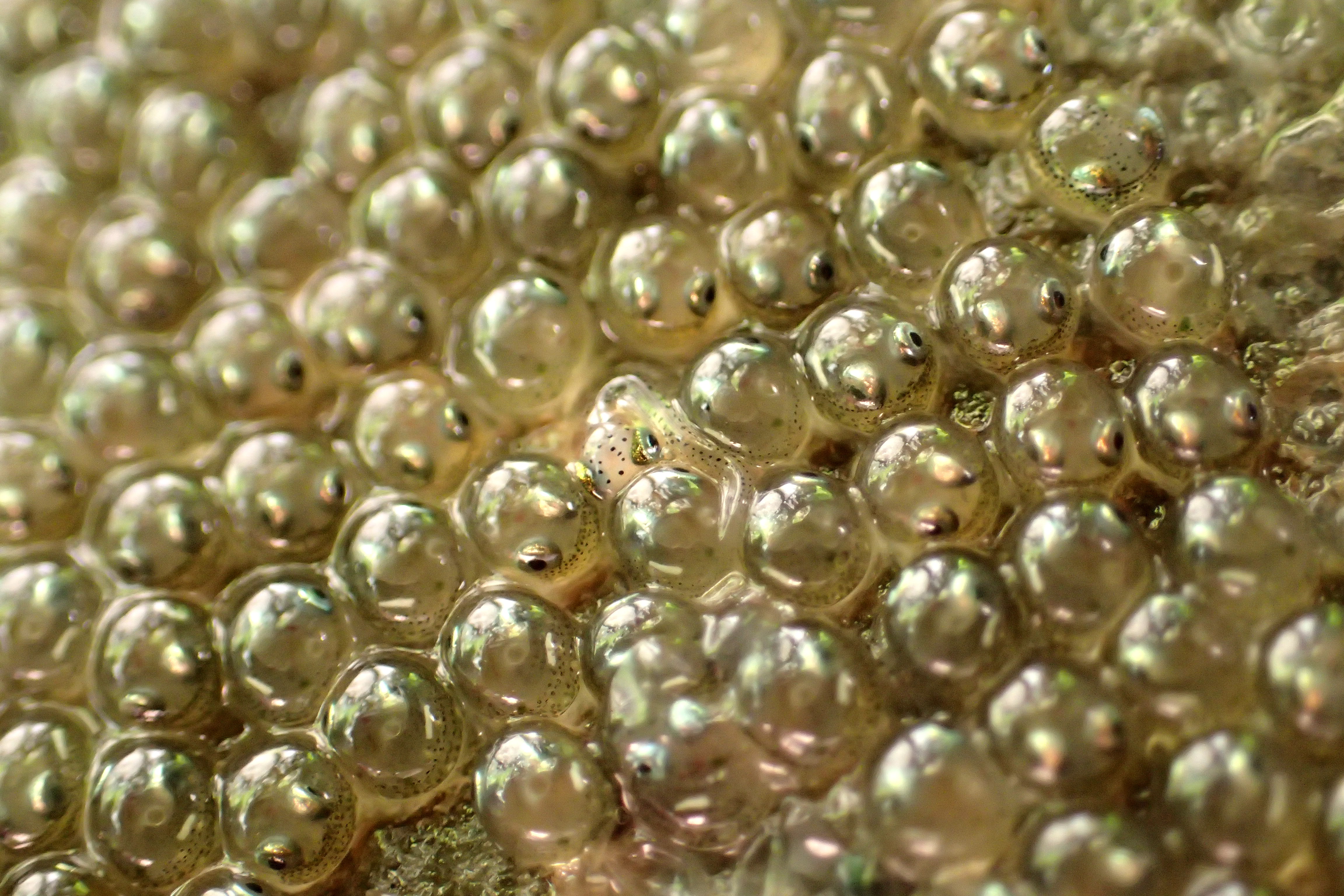
There are plenty of young fish around at the moment but the new hatchlings can hard to spot. I took this photo of clingfish eggs to capture the eyes staring out of each eggs and the little spotty tails curled round them.
Clingfish eggs hatching in a Cornish rock pool.
It was only when I uploaded photo to my laptop that I realised I’d managed to capture my first hatchling (in the centre of the picture). I can’t get enough of those golden eyes.
A recently hatched Cornish clingfish among its egg-bound siblings
Fish often stick around to guard their eggs and sure enough there was a proud parent next to this rock.
An adult Cornish clingfish showing the typical beaky nose, antenna by the eyes and blue patches on the head.
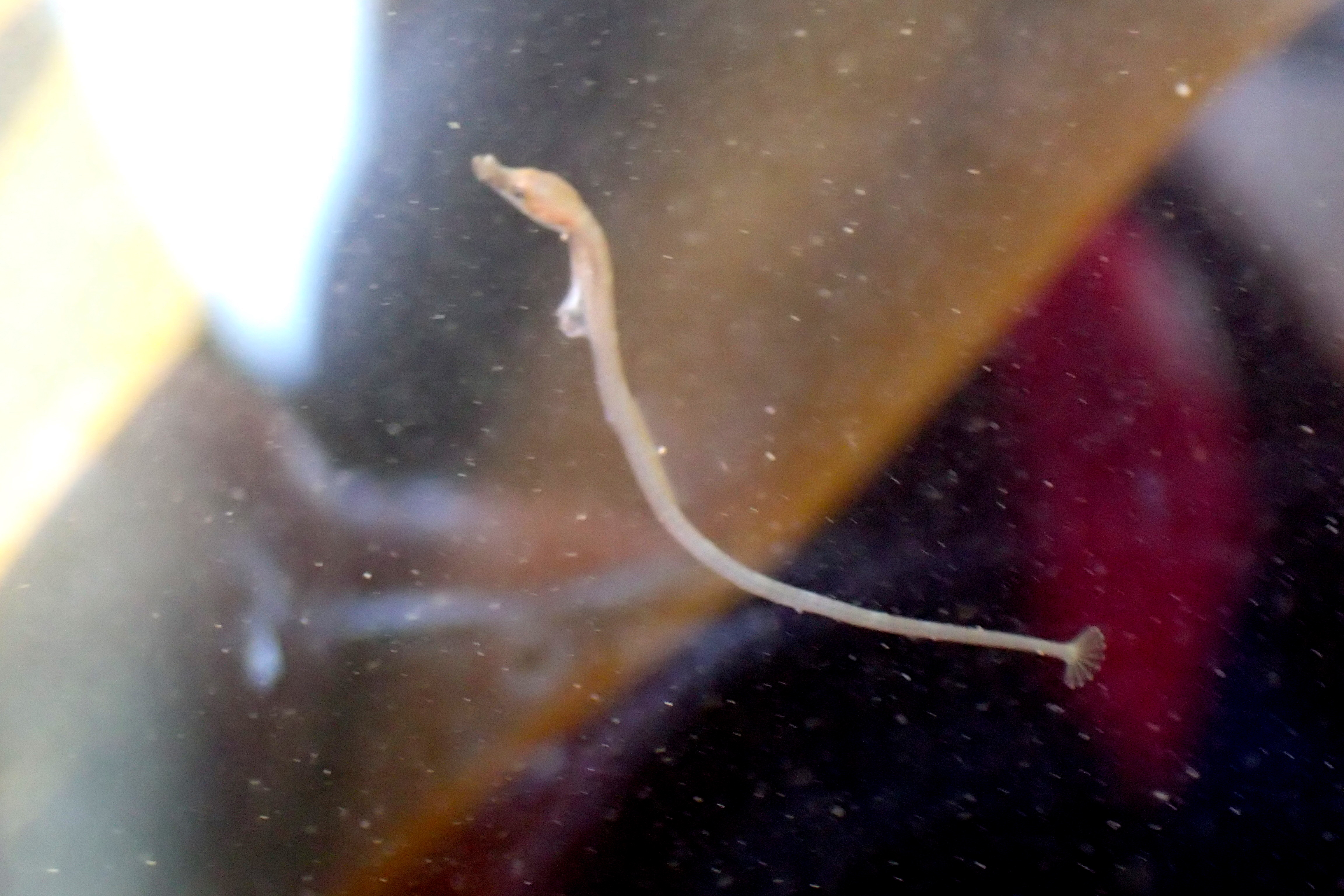
I was up to my waist between rocks leading to the open sea when I saw this pale creature, about 4cm long, wriggling amongst the darker kelp. From its elongated, looping form I expected a worm.
A recently-hatched Greater pipefish baby.
On closer inspection the large eyes and fins were clear. This is the first time I’ve ever seen a baby pipefish.
A baby Greater pipefish with yolk sac still attached. The large eyes and long snout are reminiscent of its cousins, the seahorses.
Judging by the yolk sac still attached to its belly, this little fish hatched very recently. I saw several more in the water, their curling movements reminding me of their cousins the seahorses. I wondered if the dad was close by – like seahorses, the male pipefish looks after the gestating eggs in his pouch until they hatch – but he’d be too well camouflaged to spot in this seaweed.
The rocks were crawling with crabs and the pools were busy with the fry of larger fish that use these sheltered waters as nurseries. My camera battery was low, but this Limacia clavigera sea slug was worth draining my battery for.
A Limacia clavigera sea slug on the move.
The water was so warm after a week of sun that I put on my snorkel for the first time this year and enjoyed a leisurely float across the bay, watching wrasse skirting the rocks and snakelocks anemones waving in the current.
If this weather carries on, I can see myself returning to Port Nadler regularly this summer to watch the baby fish growing up.
Cornish Rock Pools junior drying off in the sunshine at Port Nadler, near Looe.
It’s a while since we did evening rockpooling, but the days are lengthening again and there’s something satisfying about reaching the beach just as the daytime crowds are melting away. We meet friends in Looe and explore rocks just beyond the main beach.
East Looe rocks in the evening.
The tide’s not especially low so we have no expectation of finding much. Cornish Rock Pools junior and his friends scale rocks and leap across gullies, stopping occasionally to examine anemones and watch hermit crabs emerging.
I sit and stare into a deep pool that’s lined with pink coral weed, running my fingers through to see what lives there. Below the surface the water temperature drops away, providing a constant cool environment for the pool’s inhabitants.
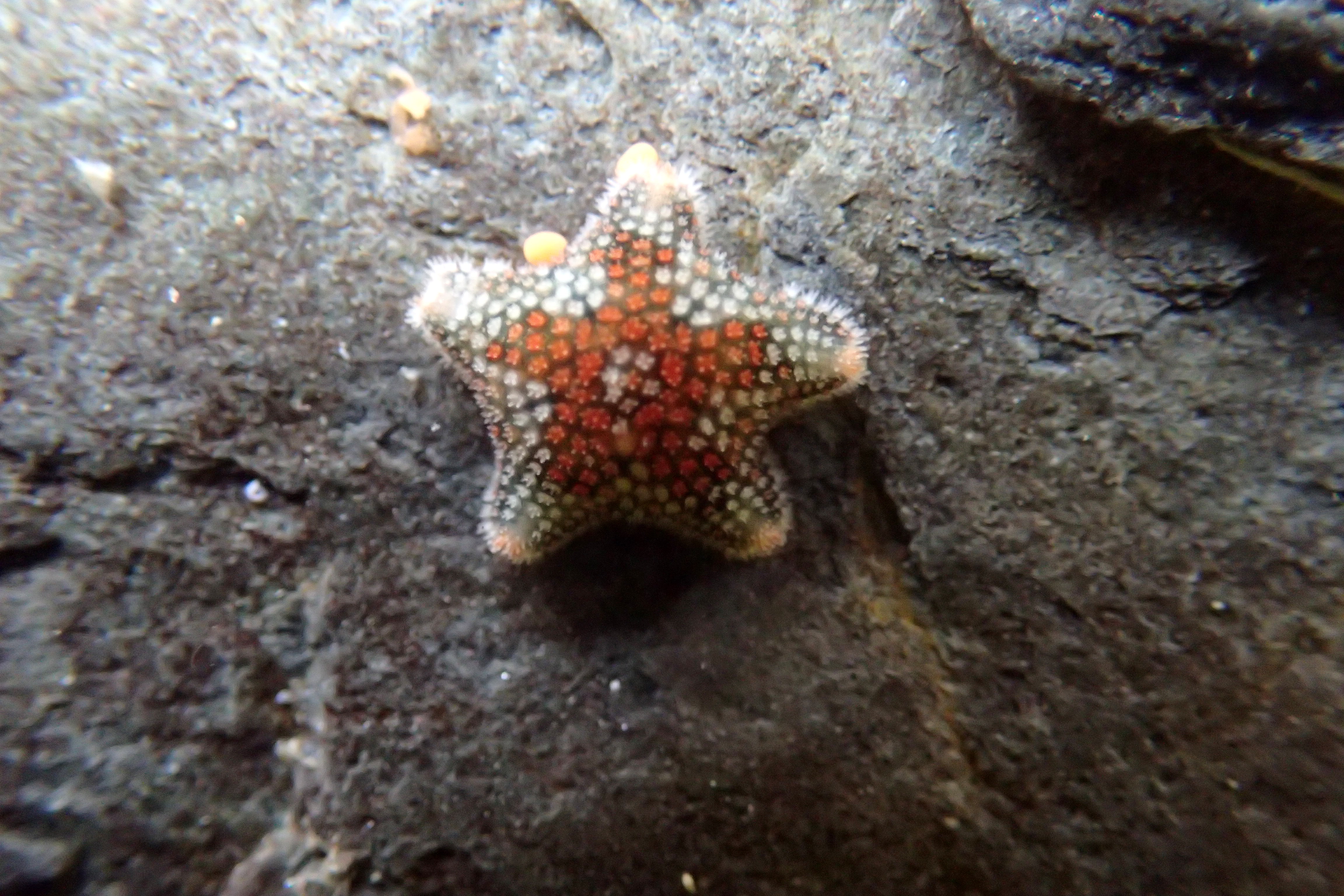
It’s hard to make out if it’s really there or not, but my eyes think they see a minute star shape among the coralline weed. I trawl my fingers through the weed a couple of times before I think I’ve honed in. Sure enough, I lift an Asterina phylactica starfish from the water. It looks like a baby next to the cushion star in my bucket, but it’s a fully grown adult.
Asterina phylactica, East Looe rocks
I’ve only found this species in a few pools around the south coast before. This is a new location. Small species like this are often under-recorded and may be more common than they seem. I tend to find them in these cool pools with plenty of pink weed to hide in, so I’m going to make a point of looking for them on all my rockpooling forays this year.
My sharp-eyed other half announces he’s found a flat fish at the same instant that Junior announces he needs the toilet. I grab the big bucket and offer to catch the fish while Junior goes for a walk with his dad.
Flat fish have near-perfect camouflage against the sand, rocks and weed. They also like to part-bury themselves in the sea bed to maximise the effect. I creep forwards from the seaward end of the rocky gully, treading slowly and lifting seaweed, hoping that if I disturb the fish, I’ll flush it into shallower water where it’s easier to catch. Flat fish are nippy swimmers so I have little chance of finding or catching the thing, but it’s fun to try.
As I look into some kelp, I see a change in the texture of the sand. I move the seaweed a fraction and there it is. The fish is facing up the gully, so I place the bucket ahead of it, scooping it forwards at the same time as stroking the fish’s tail.
For the first time ever, the technique works and the fish swims straight into the bucket.
Young plaice looking a bit cramped in my big bucket.
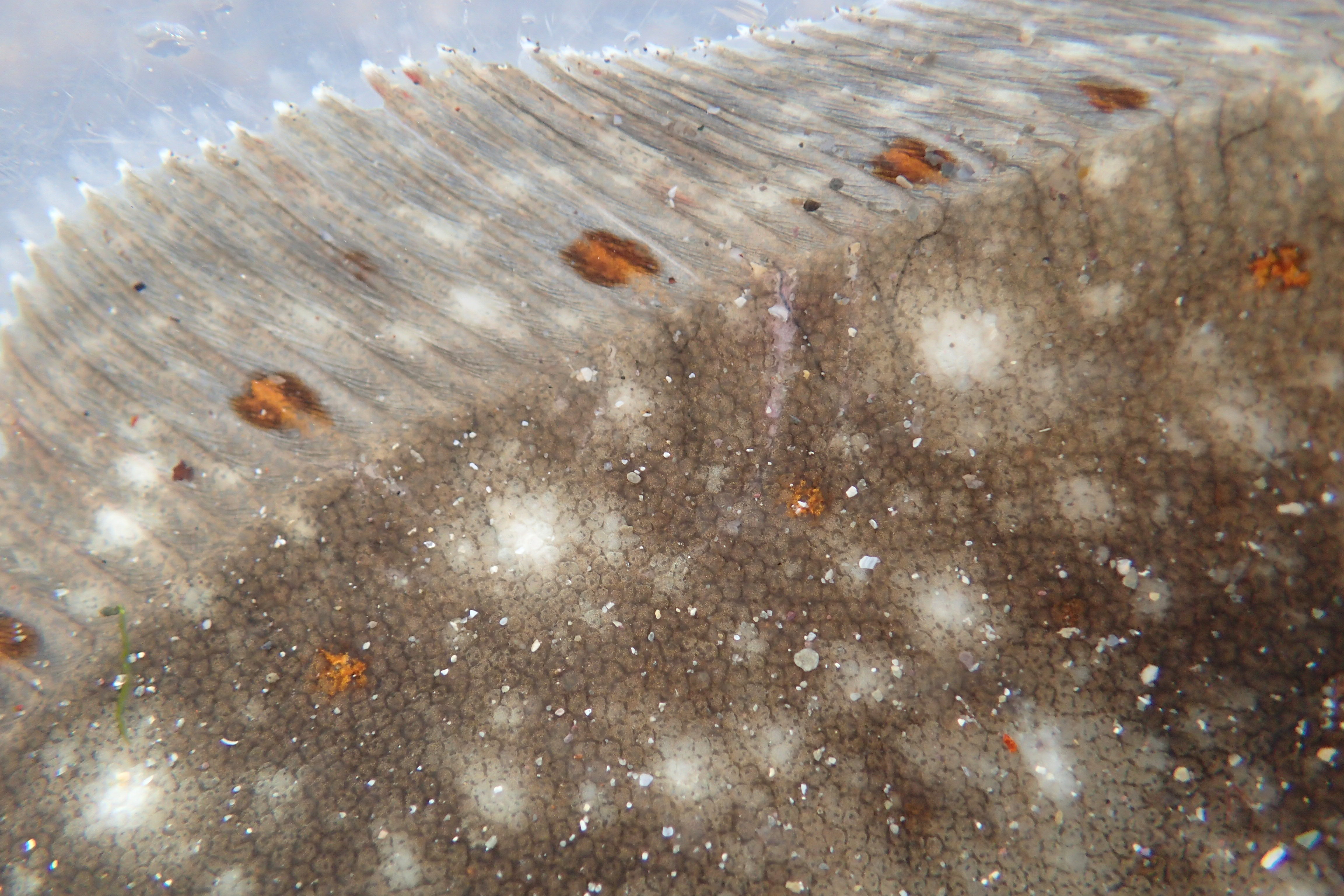
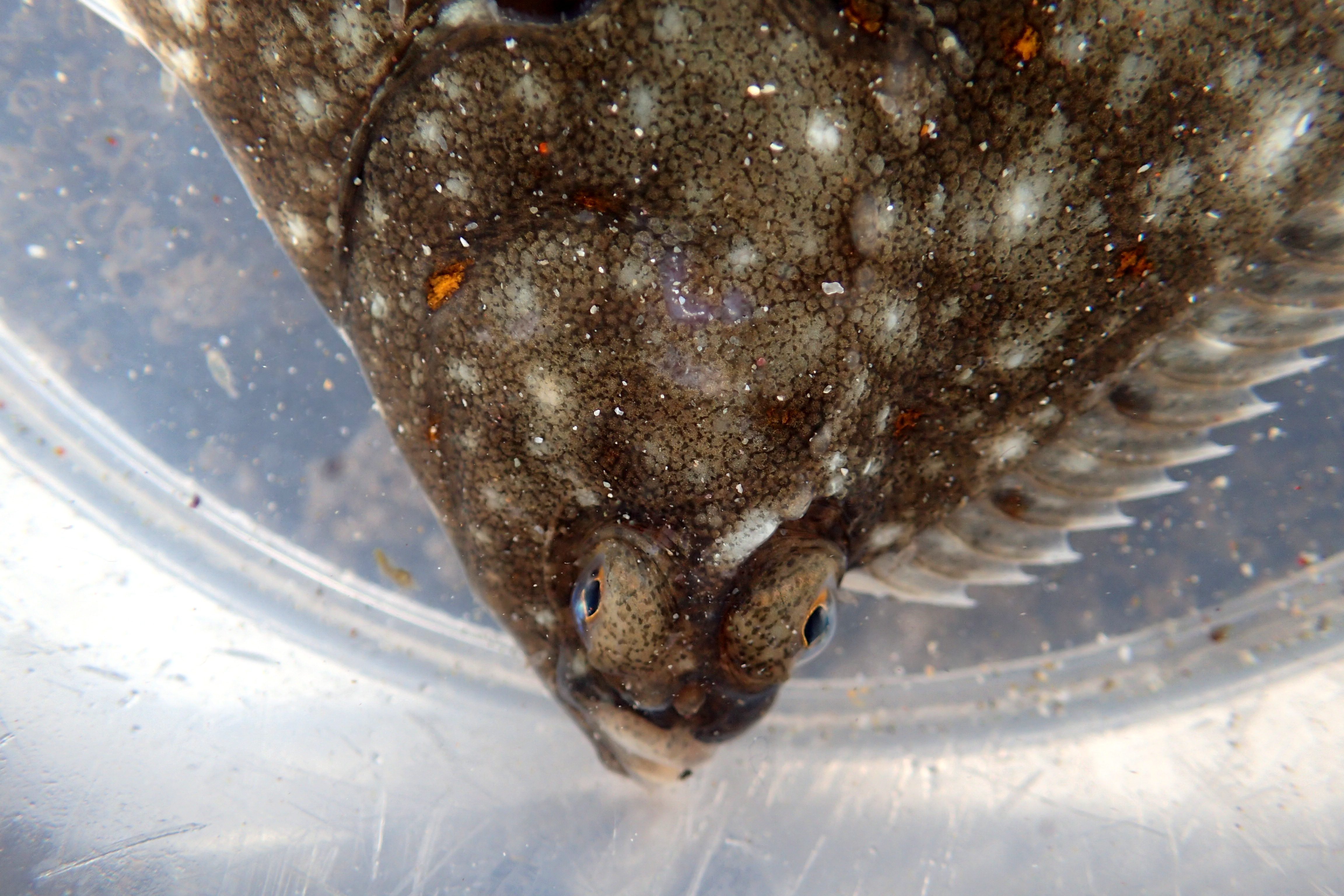
I expect it to be a topknot, the most common flatfish on the shore, which can cling to the underside of rocks, but this fish has bright orange spots. It’s a plaice (Pleuronectes platessa); only a small one, but it doesn’t have much room to move in the bucket.
Flat fish can be tricky to identify, but the plaice is easily recognised by its orange spots.
We keep it until the boys come back from their walk. The children take turns to touch the plaice’s back, discovering it to be smooth and a little slimy. The older boy walks down to the gully with me and releases the fish into the rising tide. It slides out and is gone in an instant, invisible once more among the weed and sand.
Close up of the plaice’s skin shows its scales and the characteristic spot of bright orange pigment.
For a mediocre tide, it’s a productive evening and with the summer still young, there should be plenty more evening forays to come this year.
Plaice, like all flatfish have evolved asymmetric features. The eye position on top of the head is perfect to enable good vision while lurking on the sea bed.
Is there anywhere better in the UK to get up close to an array of wild animals than the rock pools? When the tides and weather come together, as they did this weekend, the rockpool creatures are hard to miss. There are eyes staring back at you from every shimmering pool.
This clump of fish eggs was dangling among some red Lomentaria seaweed. Through my camera lens the dark, metallic specks in the eggs were magnified and I could see hundreds of fish eyes staring out at me.
Fish eggs, each one a nearly-developed animal with colourful eyes.
As Cornish Rock Pools junior and I moved a rock, he shrieked with excitement. He knows better than to get close to a ‘devil’ crab – velvet swimming crab – but we watched it sculling through the shallow water. It buried itself there with just its eyes showing.
The unmistakeable red eyes of the velvet swimming crab.This shot of the velvet swimming crab’s back leg shows why it’s such a great swimmer. The flat paddle and side hairs propel it through the water at great speed.
It was hard to see the eyes on the next creature we found – or even to tell if it was anything at all. Still, if a shell or some seaweed starts running off, it’s a good sign there’s an animal in it. This wriggling piece of seaweed turned out to be a small species of spider crab – a decorator crab. This one was beautifully adorned with seaweed it had collected. The left claw is clearly visible in this photo and the eyestalks are just behind it (honest!).
A decorator spider crab (macropodia sp.) well-covered in seaweed.
A highlight of this weekend’s rockpooling was the range of sea slugs. Some species were so small they looked like nothing more than a spot of jelly on a rock. Out of the water they lose all of their structure so we always put them in a shallow tray of water to watch them fluff up into their true selves.
An Aeolidiella alderi sea slug. This slug has a distinctive white ruff of short cerrata (tentacles) behind its head.Limacia clavigera sea slug. This slug has striking orange-tipped clubs all around its semi-transparent body, with matching feathery gills on its back and ridged rhinophores (like antennae).This plump sheep slug (Aeolidia papillosa) was so fluffy and soft that one of Cornish Rock Pools junior’s friends fell in love with it.Out of the water, sea slugs appear to be blobs of jelly. In the water they are transformed.
The rockpools were so full of life in the spring sunshine that we could hardly move for crabs running around our feet and anemones nestling in the sand.
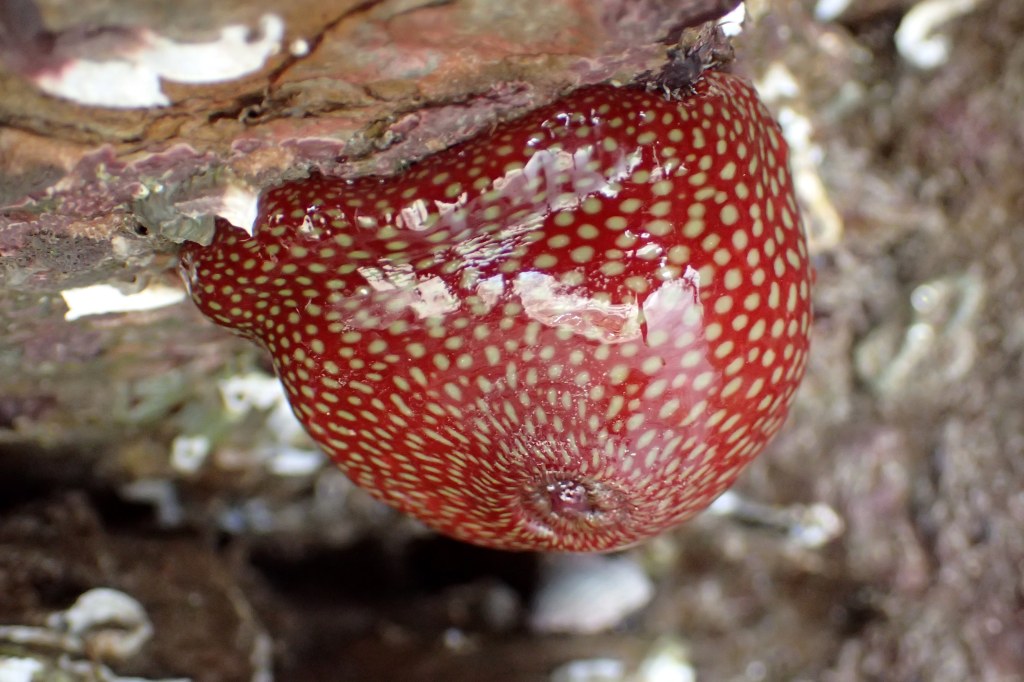
An especially red dahlia anemone buried in the sand.
Right at the end of our rockpooling session I pulled back some seaweed and moved in close to the rock, looking for tiny sea slugs. It took me several seconds to realise how close my nose was to this hefty crab (at which point I gave an unprofessional shriek and nearly fell over backwards).
A large edible crab in a crevice.
Fortunately it was just an edible crab. This species is generally placid and has calm green eyes, unlike the red-eyed devil crab which would probably have taken my nose and run off with it!
There were more eyes looking at us out of the pools than I can write about here, from huge spider crabs to the tiny sea spiders – as well as some creatures that had no visible eyes at all. This is a wonderful time of year in the rock pools and we’re already looking forward to the next spring tides so we can see who we meet next.
Cornish rock pools junior found this lively ragworm that swam so vigorously it almost jumped out of the pot.
As you might imagine, we’re fans of nature documentaries in this house and we’re all looking forward to watching Steve Backshall’s new series, Fierce. It’s got me and Cornish Rockpools Junior thinking about opportunities to meet ‘fierce’ wild creatures closer to home.
Of course, these animals aren’t exactly fierce, they’re just equipped to survive the evolutionary arms race with attitudes, weapons and chemicals that aren’t very human-friendly.
You don’t need a plane, a film crew and a ton of equipment to seek out an encounter with a well-armed rockpool ninja. This weekend’s massive low tides are the perfect opportunity to head out onto the shore and check out our top 5 fierce(ish) rockpool creatures.
So, check the tide times, grab a bucket, put on your wellies and take a look…
5. Small spotted catshark
Scyliorhinus canicula – small spotted catshark, also known as dogfish – stranded in a Cornish rock pool
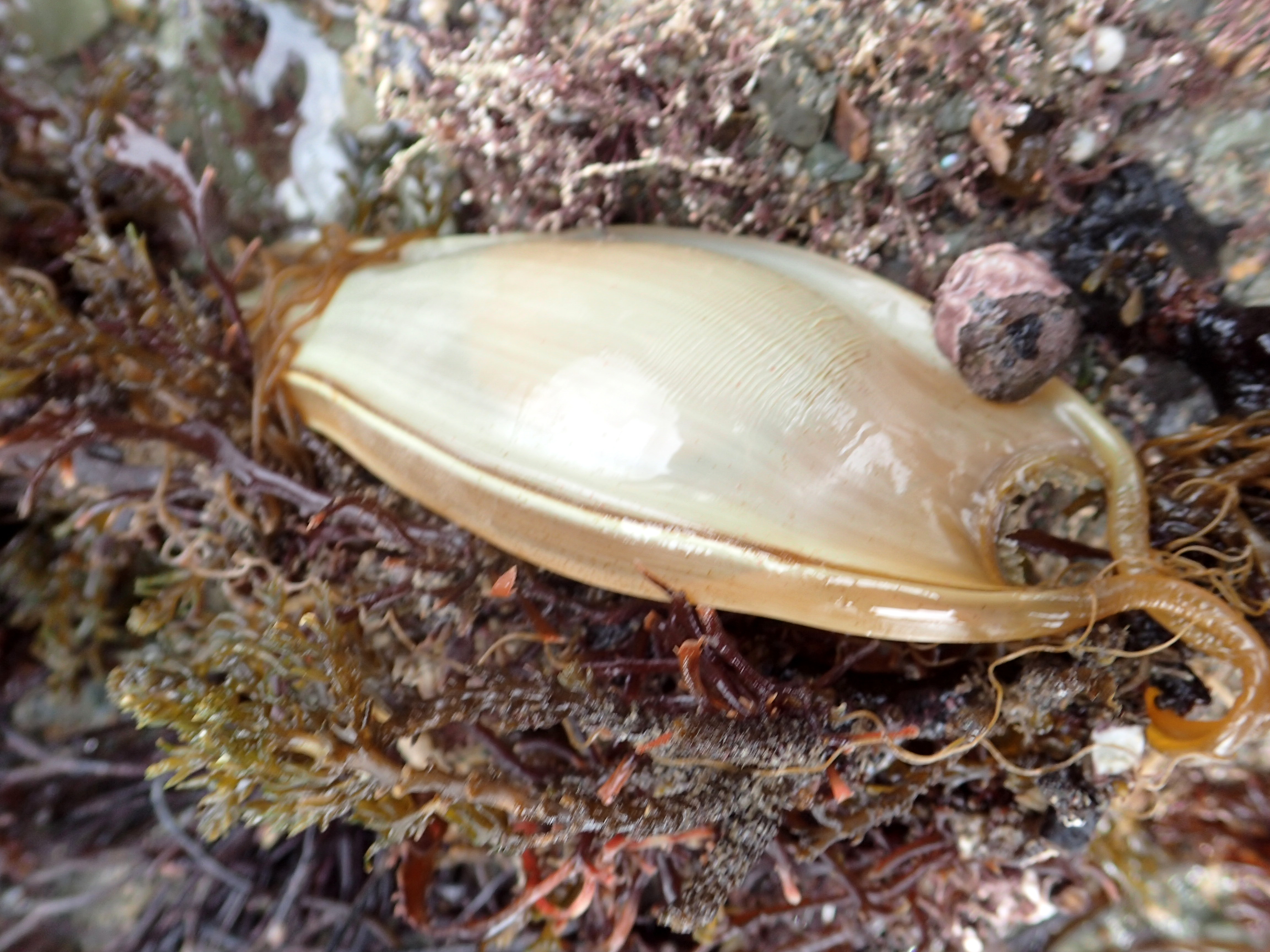
These small sharks, often known as dogfish, sometimes become stranded in pools during the very lowest of tides. They’re not at all aggressive, but it’ll sound impressive that you’ve met one. They have incredibly rough skin that used to be used as sandpaper. In some places you can also find their egg cases and those of their larger cousin, the nursehound, attached to seaweed. They take around 7-9 months to hatch out so never detach the egg case from the weed.
The developing greater spotted catshark can be seen at the bottom of this eggcase
4. Snakelocks anemone
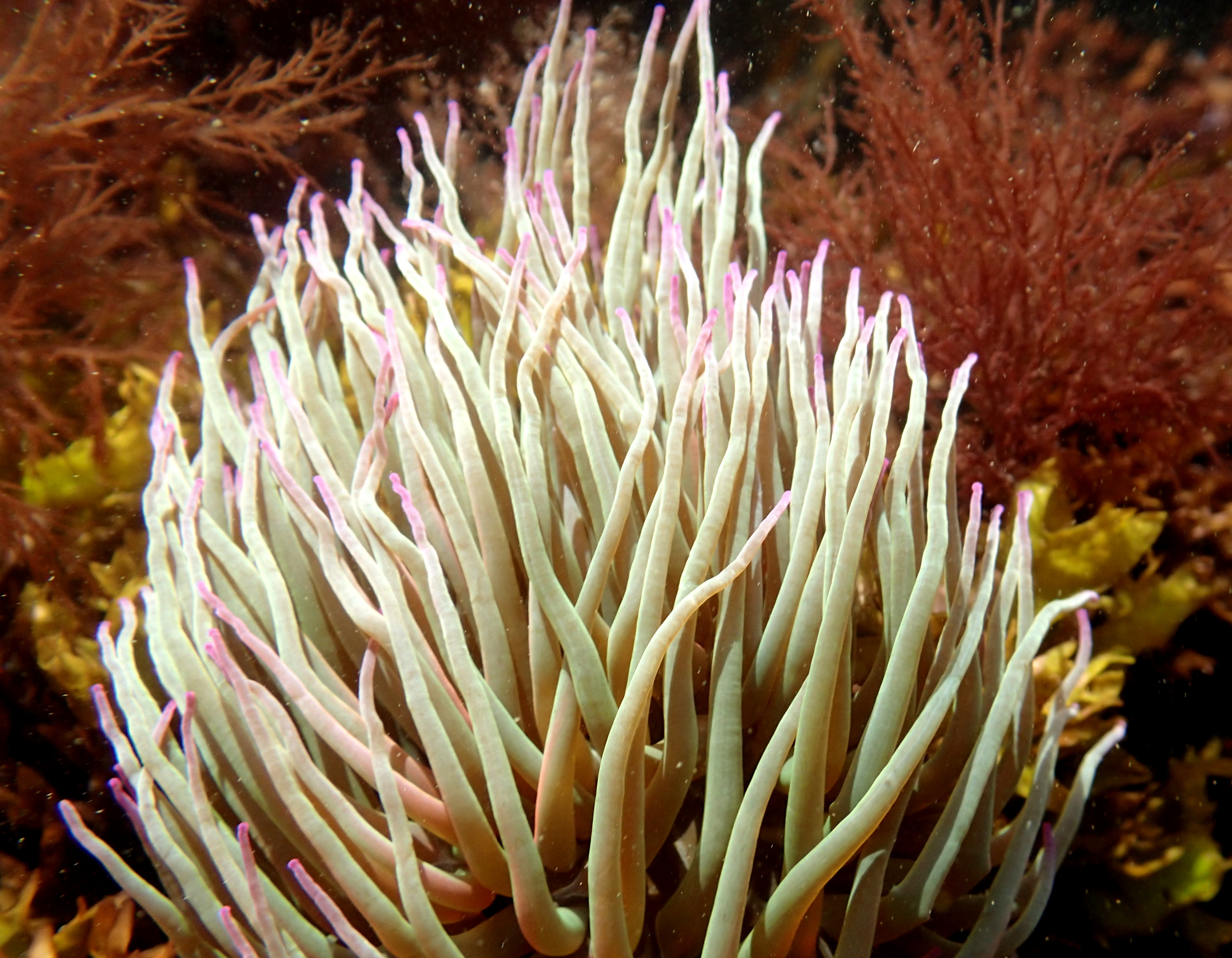
This snakelocks anemone looks like it’s had a fright – the tentacles are being picked up by the current
This anemone is common in rockpools all around Cornwall. It’s easy to see how it gets its name from its long snake-like tentacles, which are usually green with purple tips, but sometimes a dull-brown. They’re from the same family as jellyfish and have stinging cells which shoot poisonous harpoons into anything that touches their tentacles. It’s best not to touch this anemone as some people have a reaction to the sting. If you do touch one be sure not to rub your eyes because stinging cells can attach to your skin – wash your hands as soon as you can.
Cornish Rock Pools Junior is convinced snakelocks anemones can eat your foot. That’s unlikely, but watch what they do to this fly…
3. Worms
Worms like this ragworm are often buried in sand and mud burrows – if disturbed they can shoot out their jaws and give a nasty nip.
An unlikely contender, but there are several species of worm on the shore that can be pretty fearsome, especially the larger ragworms. These animals have an extendible jaw that can shoot out and deliver a painful bite. Others, like the bootlace worm secrete a toxic mucus. Handle with care!
A bootlace worm. These worms are many metres long when fully extended, but are usually found in a tangled ball like this.
2. Compass jellyfish
Compass jellyfish – showing its distinctive markings
Like the anemone, this jellyfish is armed with lots of nematocysts (stinging cells), but far more powerful. These jellies with their distinctive V-shape compass markings can give you a painful sting. Jellyfish don’t live in the rockpools but are often washed in by the winds and tides, especially in the summer and autumn months. They’re beautiful creatures and well worth a look, but remember not to get close or to put your hands in the water – their tentacles can be hard to see, very long and can become detatched from the main jellyfish, so it’s not worth the risk (yes, that’s talking from experience… I’m a slow learner). There are lots of different species of jellyfish and some, including the massive barrel jellyfish, are harmless, but if you’re not sure, stay clear!
Jellyfish tentacles can be hard to see. It’s best not to put your hands in a pool that has a jellyfish in it (e.g. to take underwater photos of tentacles like this one!)
1. Devil crab (Velvet Swimming Crab)
A velvet swimming crab (devil crab) shows off its red eyes.
The top fierce creature award, as voted by Cornish Rock Pools Junior who will not go near them, is [insert fanfare of your choice here]… the velvet swimming crab. This crab, known by Junior and many others who’ve met it as the ‘devil crab’, is afraid of nothing and is always quick to use its pincers. Their dark shells and gleaming red eyes give these crabs a sinister look to match their temperament. They’re brilliantly suited to hunting in the rockpools and shallow seas. If you dare to look closely at one (see ‘How to pick up a crab’), you’ll see that their stripy back legs are flattened into paddles, making them excellent swimmers. Watch out for them lurking buried in the sand, with only those red eyes showing.
As soon as you approach a velvet swimming crab will stand on its back legs, its claws raised, ready for battle.
There are plenty more dangerous creatures, such as the weever fish and the Portuguese man o’ war, that didn’t make our list because we so rarely see them in the rock pools.
It almost goes without saying that by far the most dangerous creature on the shore is us humans. Marine litter, warming seas, pollutants, overfishing and habitat destruction all threaten our amazing marine life. Please do your bit every time you visit the shore:
If you turn any rocks replace them gently, the right way up.
Avoid using nets that can harm creatures and tread carefully.
If you catch any creatures, keep them in plenty of sea water and return them quickly to where you found them.
Don’t leave any litter behind and be aware that sun cream isn’t good for wildlife.
Every time you visit a beach take 2 minutes to pick up any rubbish you see.
Have fun and please do let me know what creatures you meet (fierce or otherwise) in the Cornish rock pools.
As soon as I heard the yell of excitement, I guessed what it might be. This is the species that everyone recording rockpool wildlife in Cornwall has been watching out for. For me, it was especially exciting that this one, found by Jan of Coastwise North Devon, had just turned up in one of my favourite coves, Porth Mear.
Meet Clibanarius erythropus. Nope, none of us could remember that name either, though we knew it certainly was one. Jan decided to name little hermit crab Sydney to make things easier.
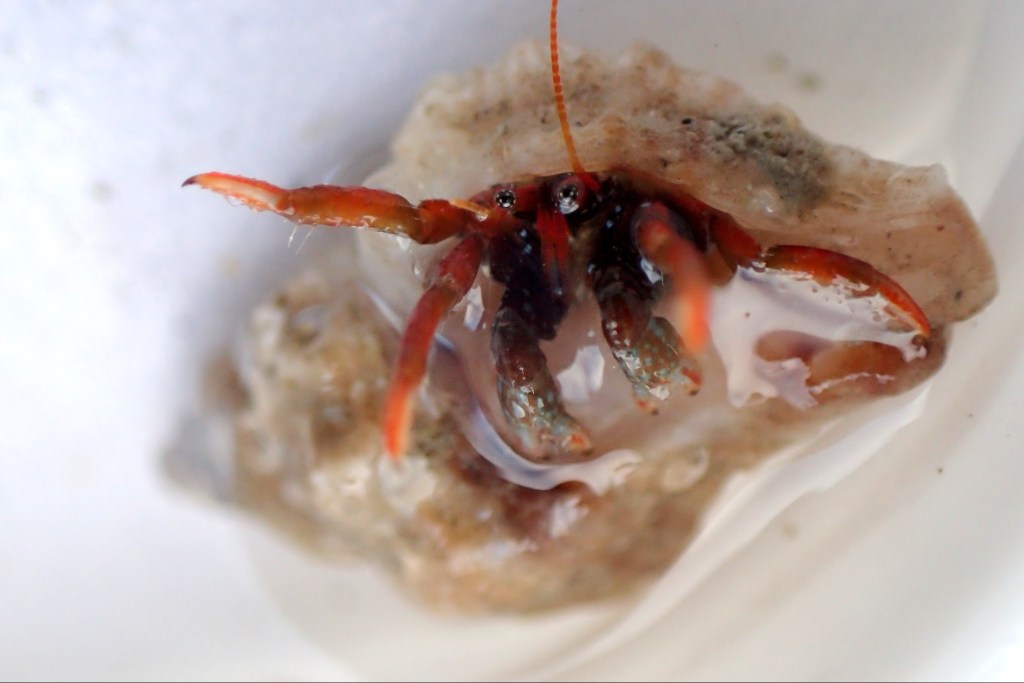
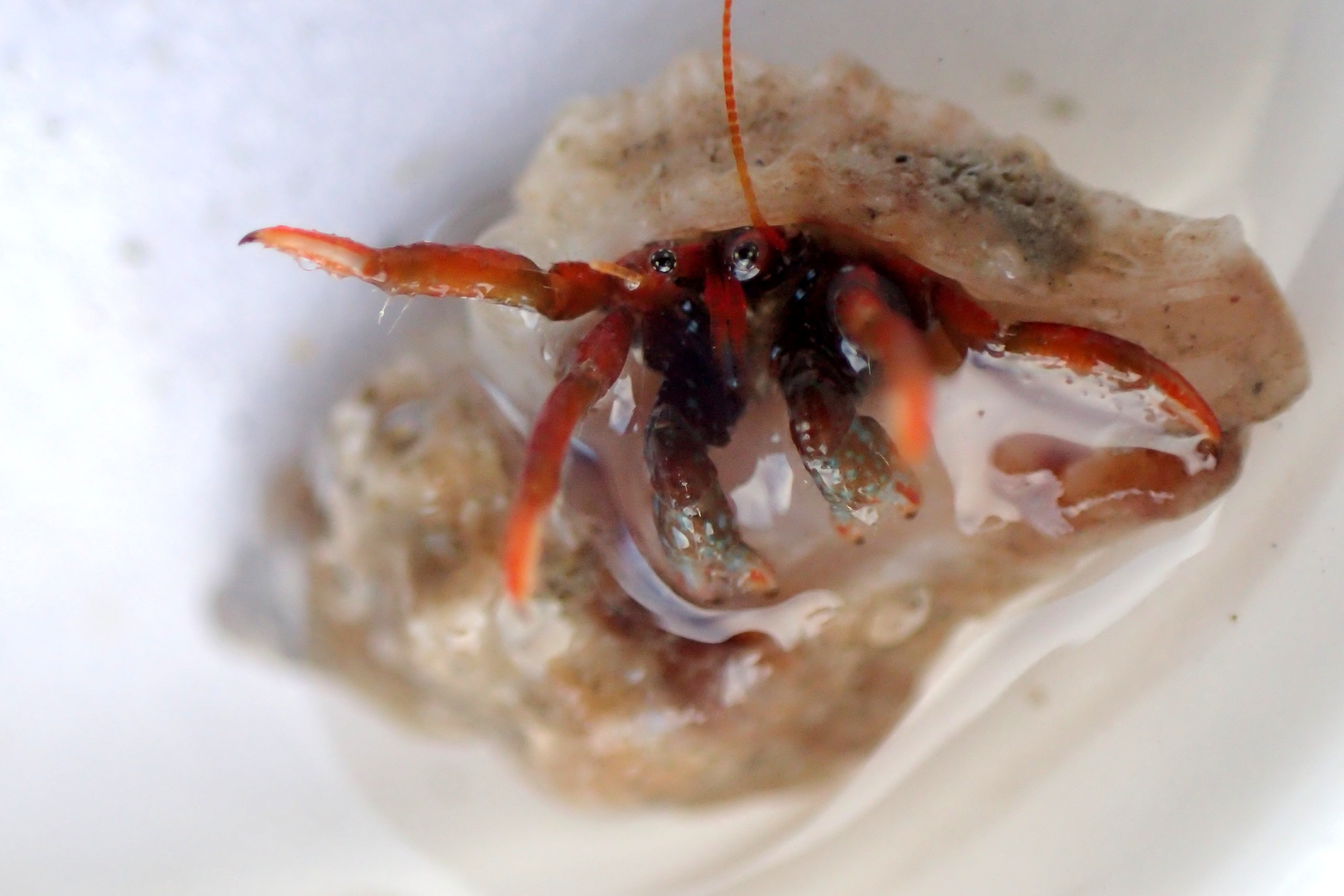
Clibanarius erythropus is a distinctive (if unpronounceable) crab. Most species of hermit crab have one claw that is considerably larger than the other – most are ‘right clawed’. This species is almost unique in having two fairly equal sized claws.
The white spots on its eyes and its striking red legs are also a good aid to identification.
Clibanarius erythropus – A red legged hermit crab making a comeback in the Cornish rock pools this year.
If you find one, please take a photo and send your record to ORKS, the Cornwall and Isles of Scilly online recording system -it’s quick and easy to do.
This warm-water species, relatively common in the Channel Islands and around the French coast, is at its northerly limit in Cornwall. It used to be found occasionally on our shores, but has rarely been recorded here since the 1967 Torrey Canyon oil spill in 1967. The last recorded sighting was in 1985.
But this year it has reappeared. There have already been at least three records from various locations around Cornwall in 2016. Could these hermit crabs be making a comeback?
One explanation for the reappearance is the high water temperatures of the last couple of years. In 2015 warm currents arrived early in the year bringing a massive bloom of the giant barrel jellyfish. These conditions could have been right for the hermit crab plankton to survive and settle on our shores.
So now we have to wait and find out whether the conditions remain favourable for this little hermit crab to become a long-term resident in our rock pools.
The sea, viewed from the top of the steep valley, is a distant pool of blue decorated with a scattering of rocky islets. Here ‘my people’ (as my other half puts it) gather, unperturbed by the intense hail shower that sweeps over us. We pull on our wellies and waterproofs in the shelter of our car boots until the storm slinks away, uncovering a cleansed sky.
A few years back I hosted a Coastwise North Devon field trip to the south Cornish coast. Today I’ve been invited back for a north Cornwall foray with this dedicated group of marine naturalists. There could be no more serious band of rockpoolers. Should there be any unusual species on this shore, they are about to be discovered.
The walk down the valley to Porth Mear beach never disappoints, even in the muddy aftermath of a hail storm. Our party is accompanied by the trills of the first skylarks of summer and the first swallows dancing over the marshes.
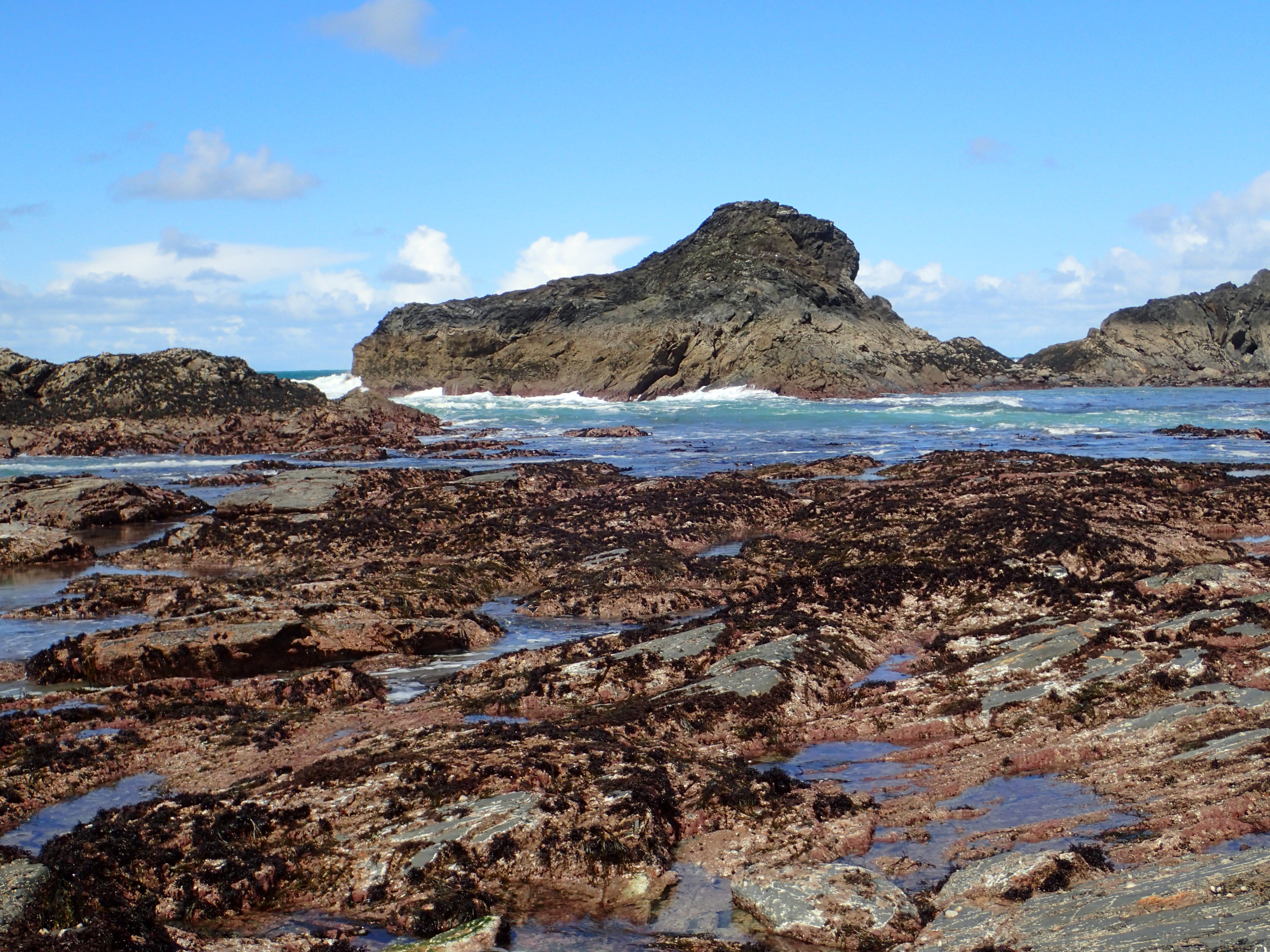
Porth Mear beach at low tide.
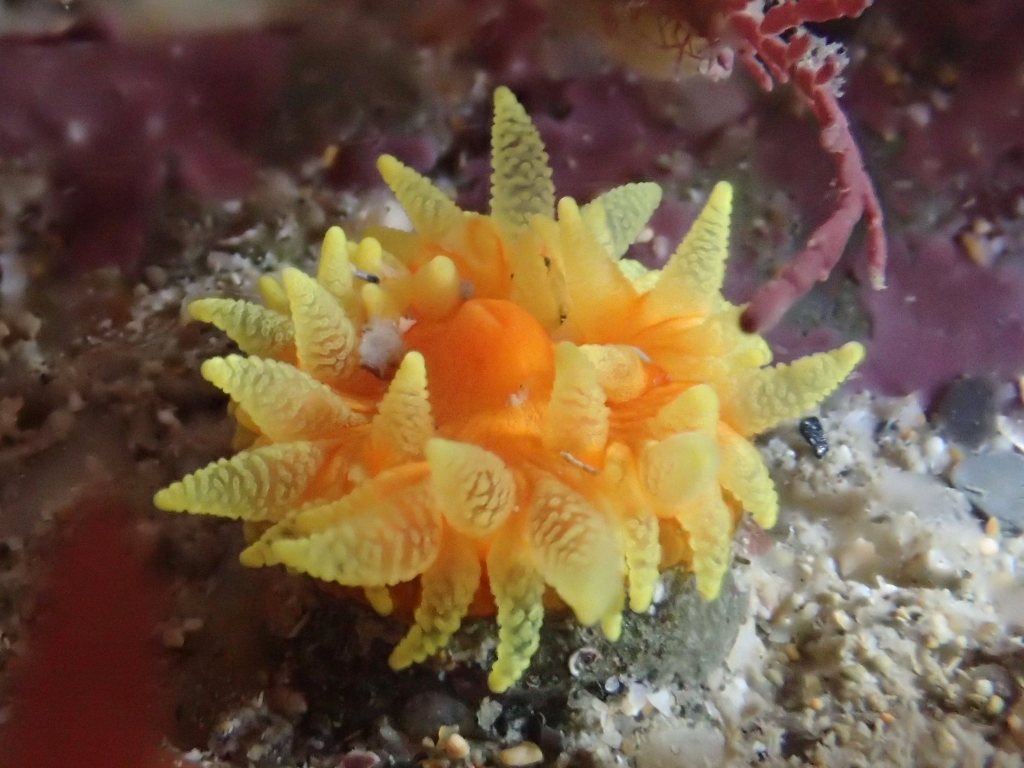
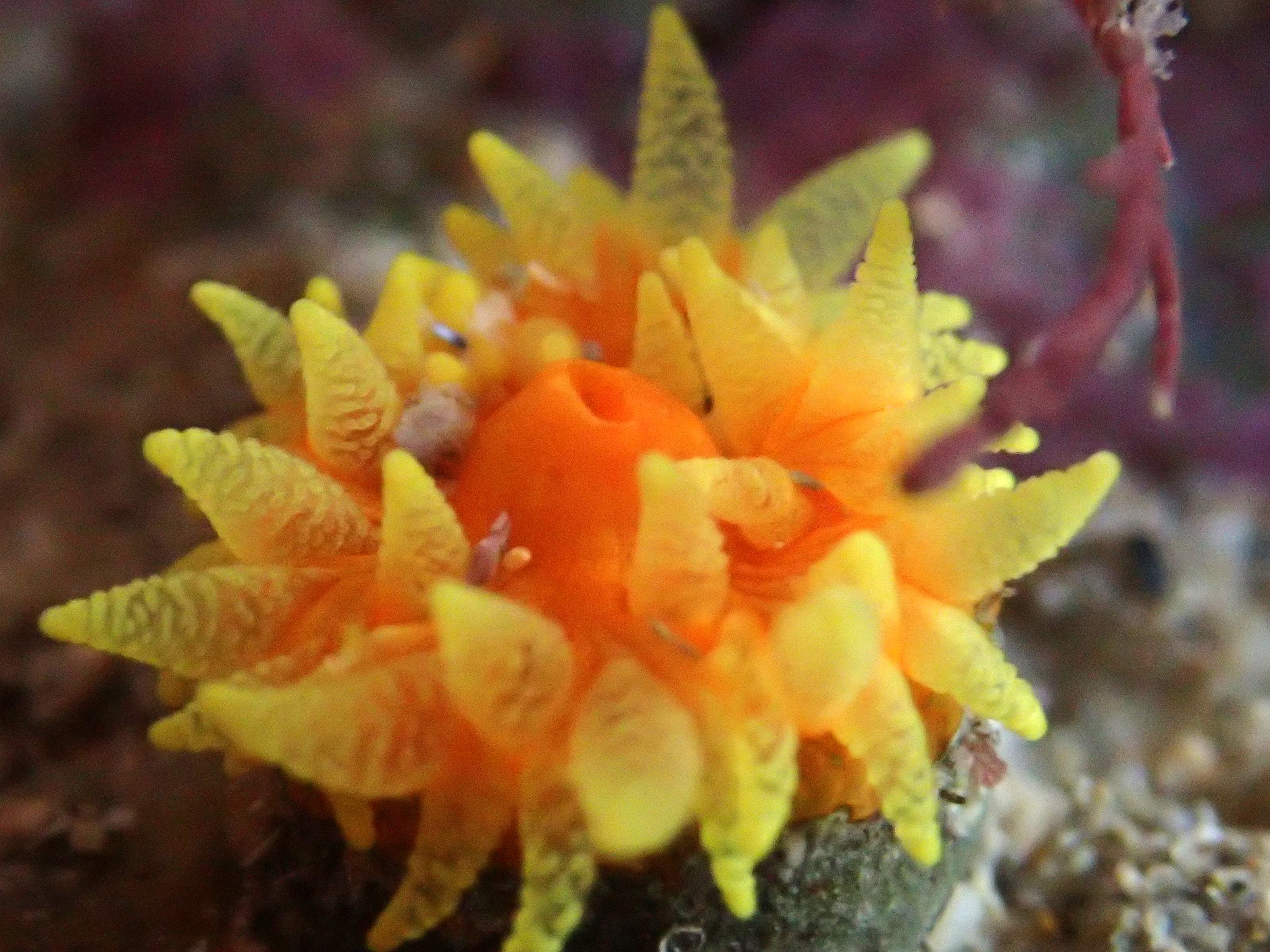
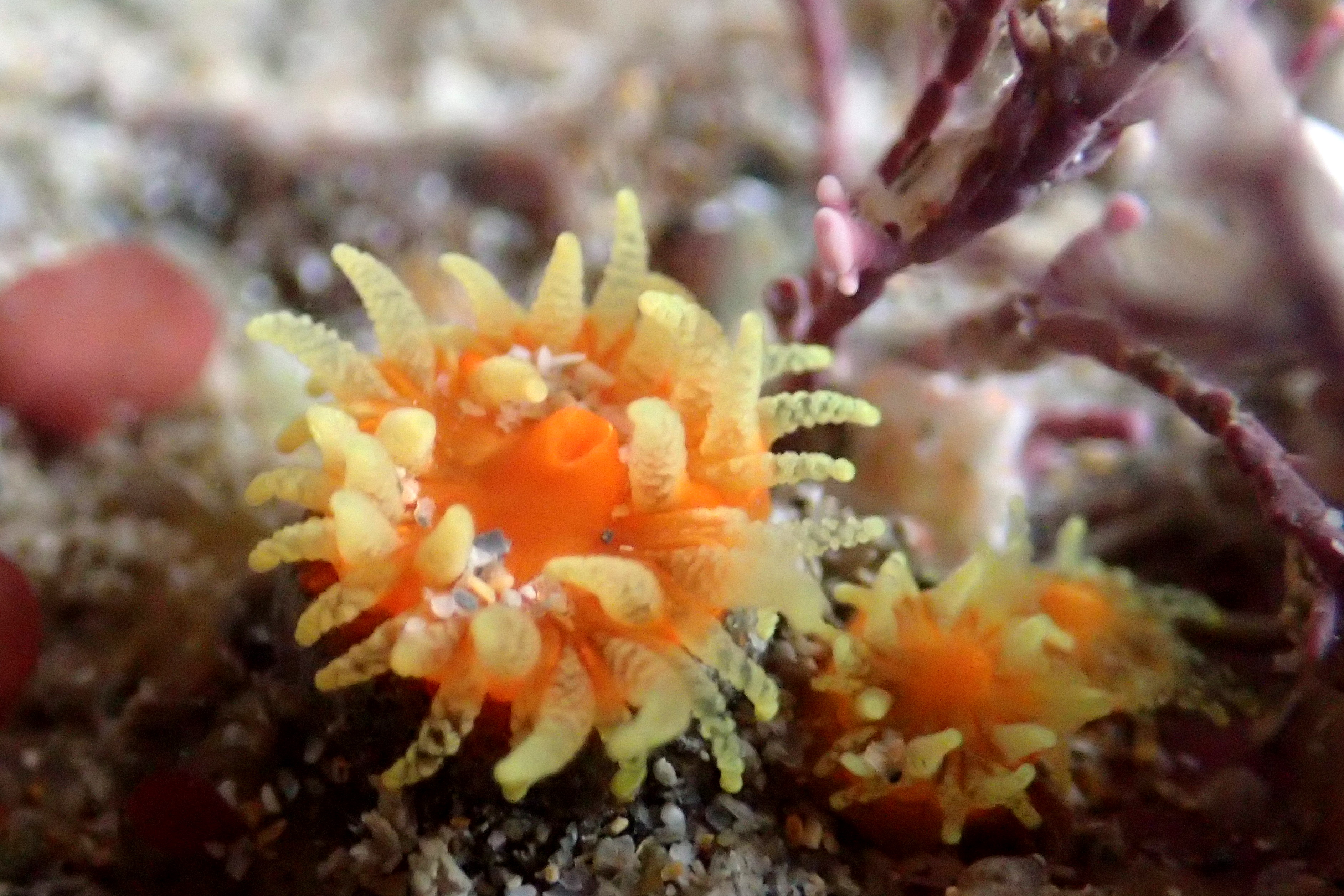
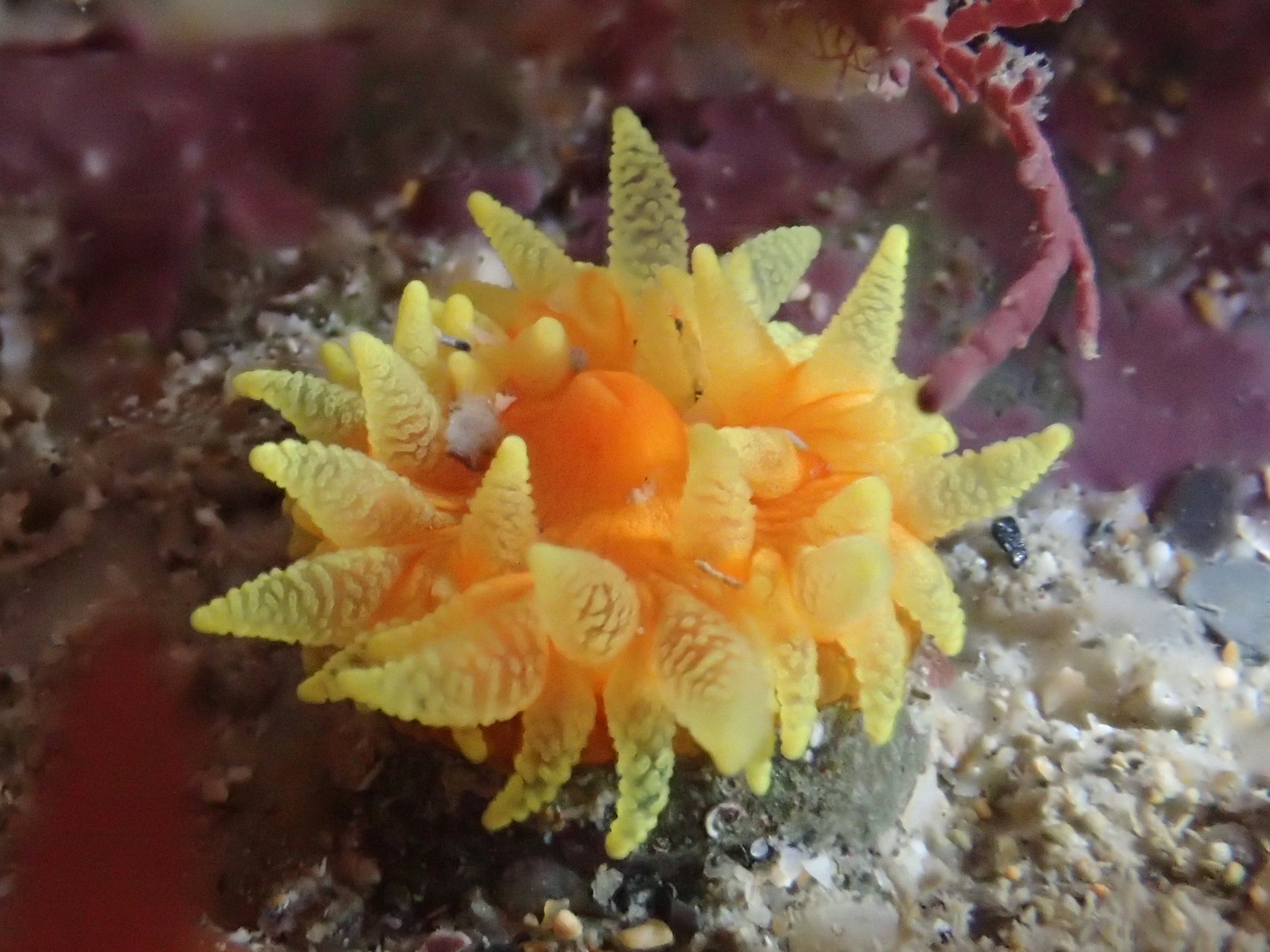
My main objective today is to photograph the corals. Like so much of our colourful marine life, the scarlet and gold cup coral (Balanophyllia regia) is barely the size of my fingernail and prefers to live in the most awkward spots possible.
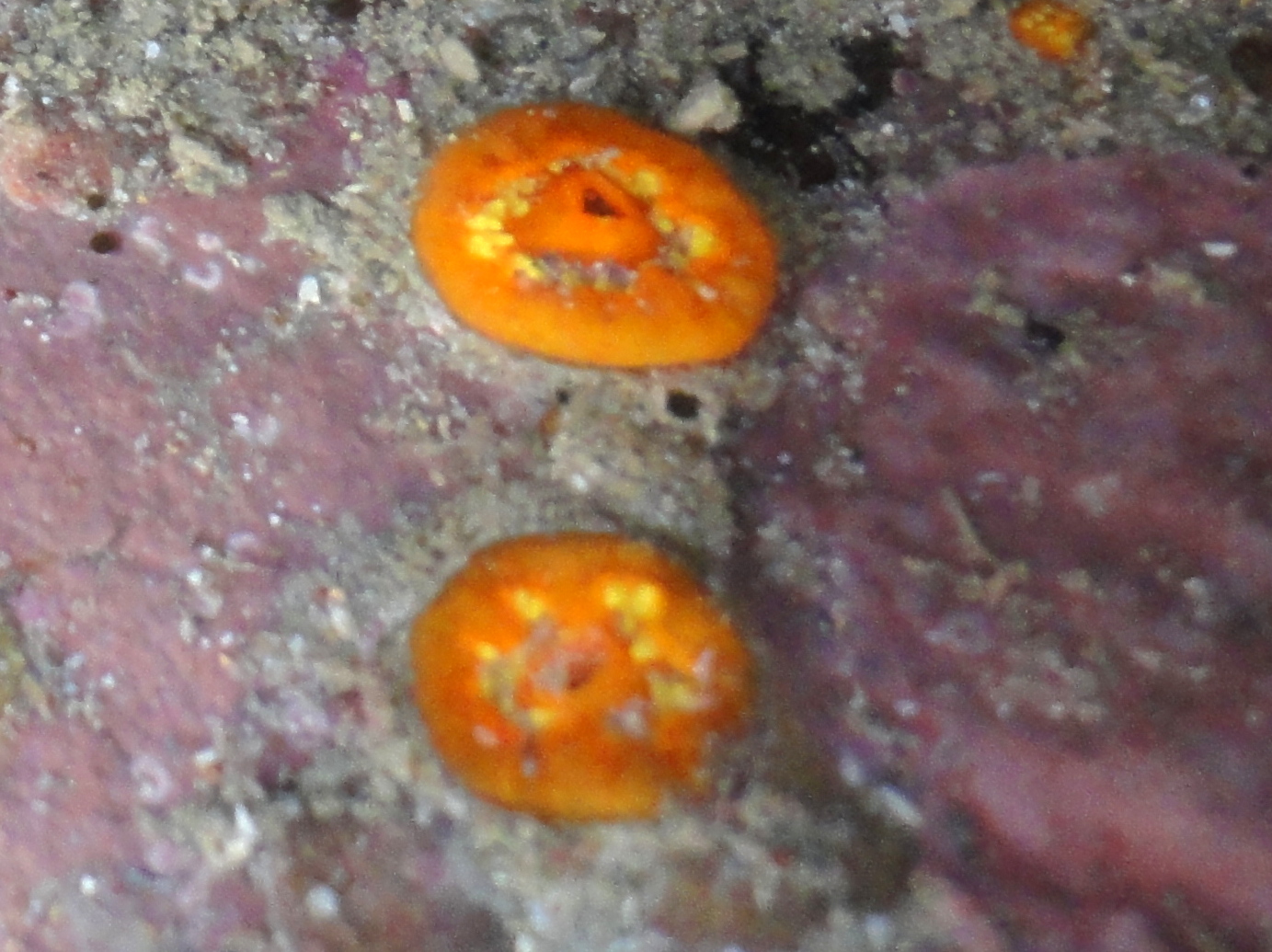
When I last found corals here, I crawled into a damp overhang on my belly, discovered the space was too small for my camera’s waterproof casing and removed it so I could hold my camera at arm’s length into the dripping cave (it died soon afterwards). The resulting photos showed blurred bloblets. The colours were lovely but beyond that you had to use your imagination. I suspect my new camera can do better.
My very best blurred bloblet photos from last year…. can I do better?
The water is slow to run out today. A swell is building in advance of a storm and waves are rushing into the gullies that I was hoping to explore; the ones where I last saw the cup corals. Despite that, it’s one of the best tides of the year, and with so many expert eyes on the case it’s not long before a shout goes up and people gather round.
In a shallow pool at the back of a rocky grotto are dozens of scarlet and gold cup corals, spots of colour as bright as a sunset. Each one has a central disc of fiery orange fringed in rays of saffron yellow tentacles. I can only see this by lying down and pulling myself over the rocks until my head is wedged in the overhang so deeply that salt water dribbles down my forehead. I have a small head, small enough to wear my child’s bike helmet; just occasionally that’s useful.
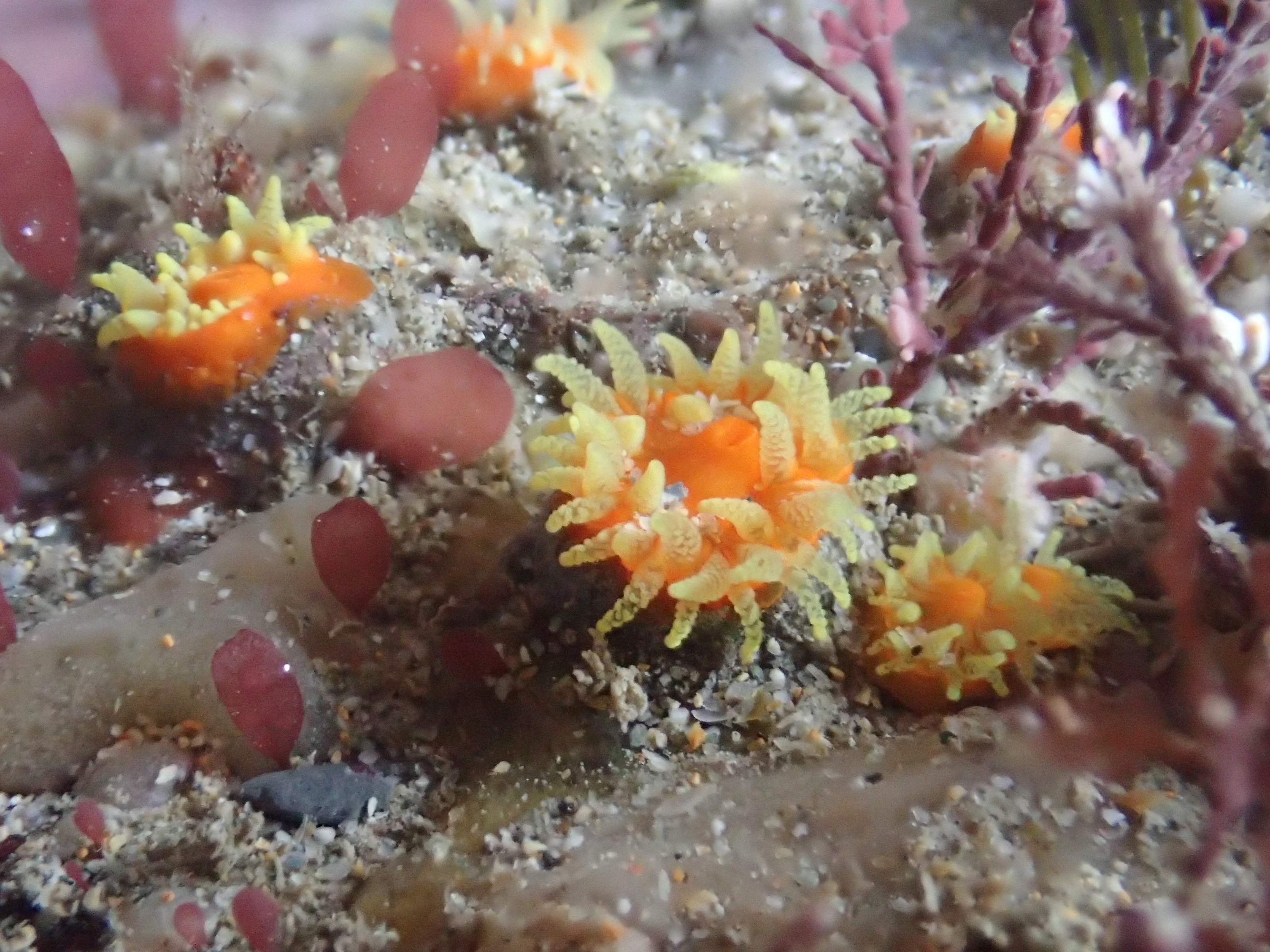
Scarlet and gold cup corals growing all along the base of the overhang.
This time my camera fits easily through the slit in the rocks and after a fair amount of wriggling I find a way to position it in the water and focus. A clear shot of the cup coral, translucent spotted tentacles and all, appears on my screen. I bang my head on the rock in my excitement, then take fifty more photos – just in case.
Scarlet and gold cup coral at Porth Mear
I could spend all day here, except that the spray is already breaking over my back from the waves pounding the seaward rocks. Soon the tide will swallow this gully once more. The cup corals need these fierce currents to bring them food, but I wouldn’t last two minutes in them.
More scarlet and gold cup corals
We carry on our explorations, making more discoveries and enjoying the sunshine, so unexpected after the morning’s hail.
There may be places where the sea shows its treasures more willingly, where large, colourful wildlife swims all around you without having to clamber over slippery rocks, lift boulders or traipse back up a steep hill at the end of the day. But I prefer this. Just as adventure stories would be dull if the quest were over on page one, finding marine treasure would be less fulfilling if you didn’t have to work at it; or so I tell myself.
Finding and managing a decent photo of a scarlet and gold cup coral has taken me nearly forty years. Even now, I’ve only managed it thanks to having ‘my people’ around me, sharing my fascination with these creatures. I couldn’t ask for more.
Have I mentioned that I don’t like the cold? Well I don’t, and worse than that I don’t function well in it; my fingers seize up, my brain goes fuzzy and my grumpiness level soars. Not ideal when I’ve agreed to meet up with a small army of children on a freezing, windswept beach. Fortunately I’m prepared and have no shame.
Full thermals + three layers of jumpers + coat + scarf + green waders equals = a toasty-warm fashion disaster.
Junior’s still young enough not to notice or care about anything except whether I’ve brought his enormous metal spade. The other kids don’t seem worried either as I waddle over to them. They call me ‘the shark lady’. I think they mean that in a good way.
It’s amazing how fast children learn. A few minutes after he’s shown his first catshark egg case, a friend’s child is spotting them everywhere, his sharp eyes picking them out faster than me. We’ve soon clocked a couple of dozen of them. The parents find some too.
A variegated scallop opens up showing its multiple eyes then snaps shut. A topknot flatfish skimming along the sand. Just some of the creatures I saw in the rockpools at Hannafore, Looe today on the low spring tide.
I was a too busy taking kids ‘shark hunting’ to take more video today. It was a successful mission; we found more than twenty live egg cases of the Nursehound (Scyliorhinus stellaris) and one live Smallspotted catshark (Scyliorhinus canicula) egg case. There were all sorts of other treasures too.
I’m already looking forward to doing it all again tomorrow.
You might not think that rockpooling is the sort of activity that requires a warm up, but there’s nothing like practice for getting your ‘eye in’. The more and closer you look, the more you’ll see. What better excuse to get out on Cornwall’s beaches before, during and after this week’s massive tides?
I’ve been out on a few family rambles on the local shores the last couple of weeks to make sure I’m ready for some serious rockpooling this weekend (like most weeks, but they don’t complain).
If you’re wondering what you might see if you head down to the shore in the next few days, here are some of the things I’ve been finding…
Go slowly and look closely – this little ring of jelly contains thousands of eggs from a sea lemon (a type of slug).
Privacy & Cookies: This site uses cookies. By continuing to use this website, you agree to their use. To find out more, including how to control cookies, see here: Privacy and Cookies Policy.


















 Cornish Rock Pools