You might not think that rockpooling is the sort of activity that requires a warm up, but there’s nothing like practice for getting your ‘eye in’. The more and closer you look, the more you’ll see. What better excuse to get out on Cornwall’s beaches before, during and after this week’s massive tides?
I’ve been out on a few family rambles on the local shores the last couple of weeks to make sure I’m ready for some serious rockpooling this weekend (like most weeks, but they don’t complain).
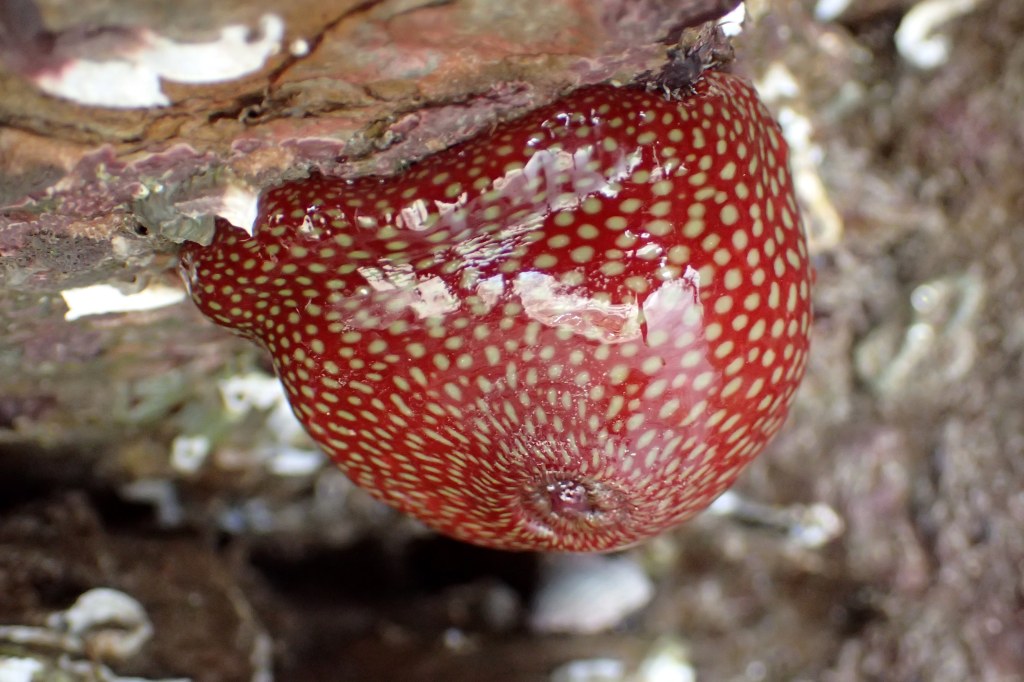
If you’re wondering what you might see if you head down to the shore in the next few days, here are some of the things I’ve been finding…
Go slowly and look closely – this little ring of jelly contains thousands of eggs from a sea lemon (a type of slug).
If you find eggs, take a look around. The animal that laid them may well be close. This sea lemon was hiding a couple of metres from the eggs.Tiny things can look amazing close too. This is a spiny chiton (a type of mollusc).Most shore animals, like these three-spot cowries stay hidden in crevices, overhangs and under rocks. It’s worth stopping and staring for a while.Look closely at seaweed to find out what’s living on it, like this colourful pheasant shell.This stalked jellyfish (Lucernariopsis campanulata) is surprisingly well camouflaged among the red and brown seaweeds.Some animals hide in the stones themselves and in the sediment. This ragworm has made its burrow between the layers of the sedimentary rock.It’s easy to miss things that are right in front of you. I didn’t notice the sea spider (bottom left) when taking a photo of the chiton (centre). More practice required!
Stay safe if you’re going rockpooling this week. When the tides go out a long way, they also come in fast.
My tips:
Check the tide times before you go, stay away from waves at the sea-edge and head back to shore by a safe route before or as soon as the tide turns. Look out for organised events which are the perfect way to find and learn more. Have fun!
Thank you Sean. My rock pooling obsession started with shell collecting as a child and I still can’t resist – there are so many different colours and forms. I picked up a lovely blue-rayed limpet today.
Thank you! It’s lovely to know that you’re enjoying my posts. If it’s any consolation it’s been utterly freezing on the shore each time I’ve been out recently. It’s always worth it though.
Privacy & Cookies: This site uses cookies. By continuing to use this website, you agree to their use. To find out more, including how to control cookies, see here: Privacy and Cookies Policy.


 Cornish Rock Pools
Leave a comment