To me, there can be nothing closer to heaven than the cliff tops around Mawgan Porth in late spring. The explosion of colours can be seen from afar and will reach its peak over the next few weeks.
The thick, warm, honey-laden scents of the gorse and the delicate smell of the opening thrift provides the perfect accompaniment to the view of taut lines of swell stretching across a wide indigo horizon.
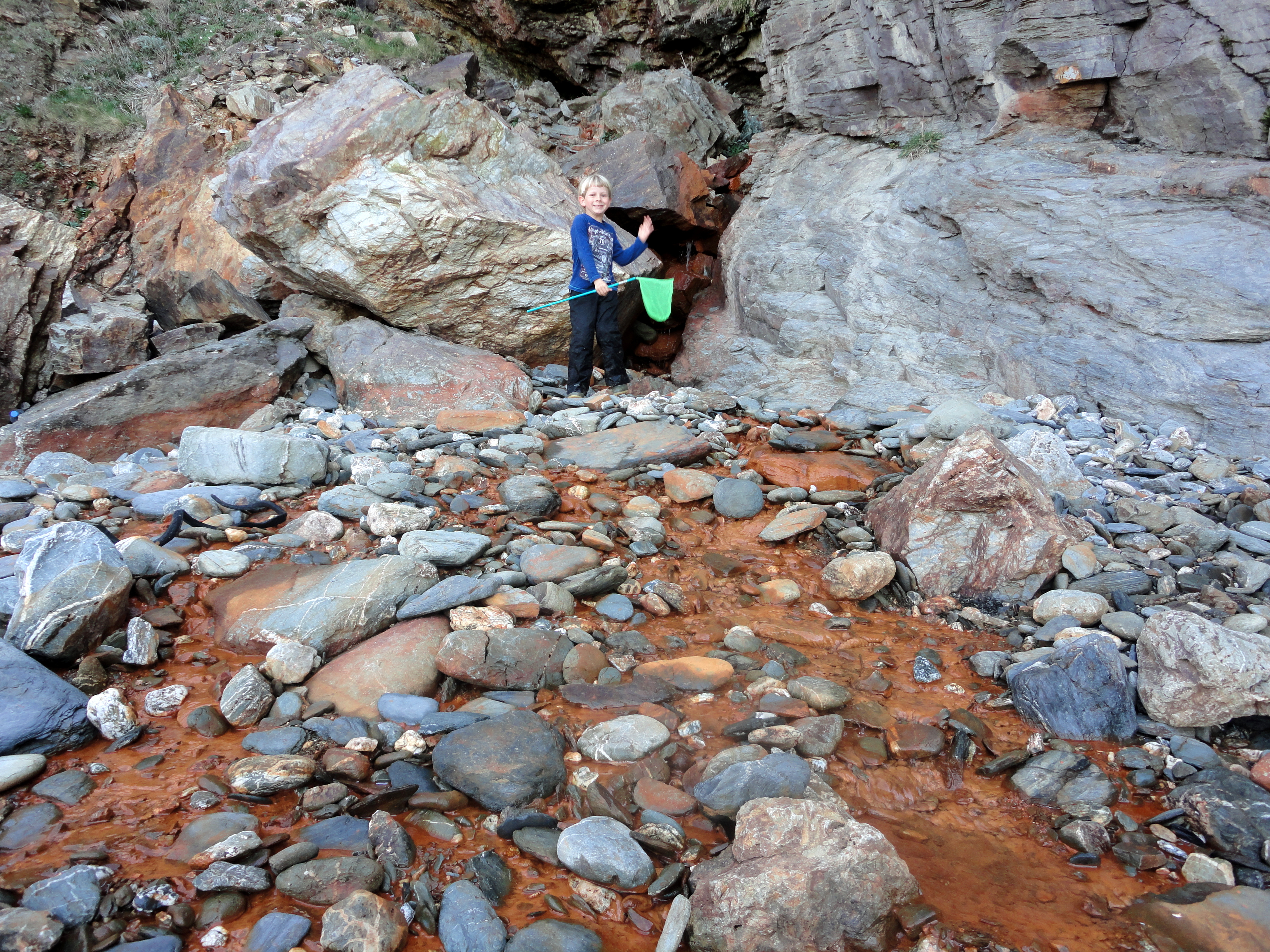
It comes as more of a surprise that so many flowers are blooming near the base of the cliffs, in the shadow of the old mine workings that are set deep into the northern cliff face.
Cornish Rock Pools junior approaching the mine entrance optimistically equipped with a fishing net.
At first glance it seems that nothing could survive among the stark rockfall boulders and the red metallic ooze from the flooded and blocked shaft. As we clamber closer across the rocks, we see plants poking out. Scurvy grass – so named because it’s rich in vitamin C – more beautiful than the name suggests. Thrift, sea plantain and more are pushing up between the red stones and flowering happily.(more…)
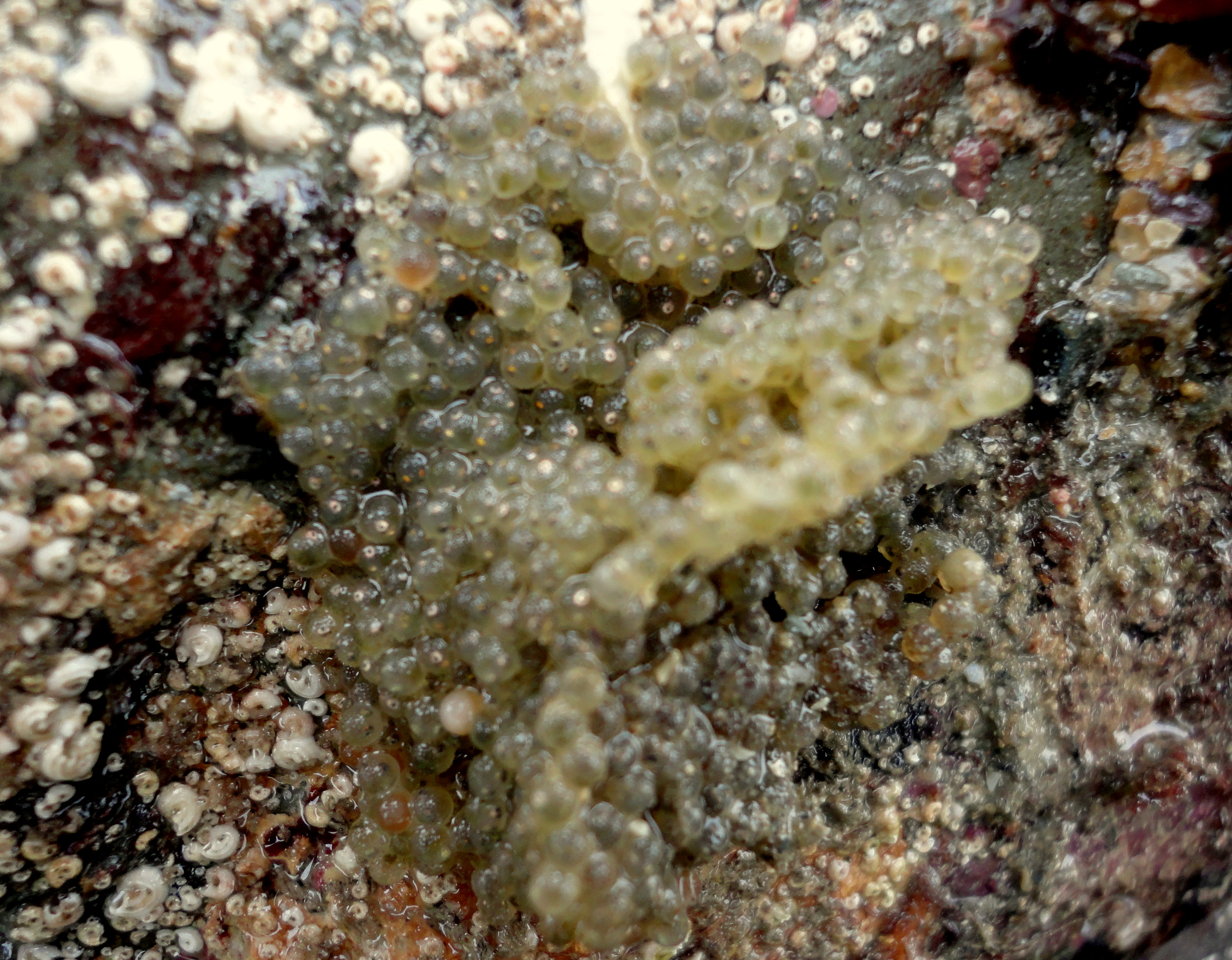
There are eggs everywhere in the Cornish rock pools this time of year and the warm weather and high pressure have provided perfect conditions for finding them.
Fish eggs among the rocks – when you look closely you can see the little eyes staring back at you.
Fish have moved inshore to protect their broods, crabs are carrying great mounds of eggs under their tails and sea slugs have started to lay their distinctive neat egg coils.(more…)
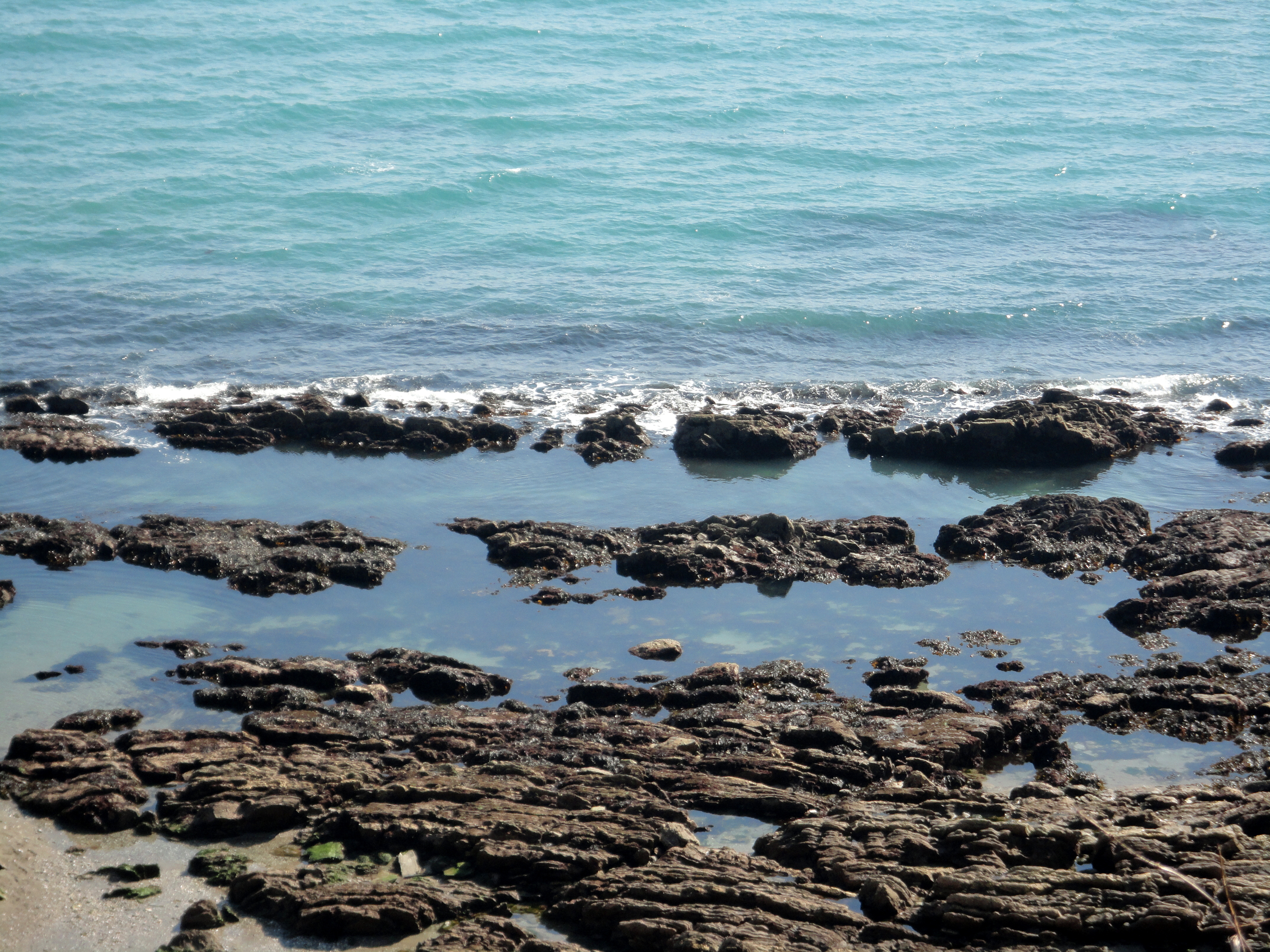
The lack of time before the sea laps back in can sometimes make the hunt for sea creatures a bit of a frantic affair. Add eager small children to the mix and the clock is ticking. After a busy week, I took the time to stop and stare and it paid off.
Enticing Cornish rock pools in the sunshine
The wide blue skies gave us perfect conditions for taking our Easter visitors and their children rock pooling this week and I’m pretty sure they weren’t disappointed. A quick search was enough to find starfish, blennies, crabs and shells to wow our guests.
Inevitably a child fell in a rock pool – but fortunately it was fearless Cornish Rock Pools junior. He was already shouting, ‘I’m all right,” as I hooked him out and he ran off to climb rocks as soon as I’d wrung out his coat.
A female Xantho incisus crab carrying her eggs
On Monday, another set of visitors arrived with their teenage boy, so the pace was suddenly less urgent.
As I clambered over the rocks with my friend’s son, I pointed out shallow pools packed with snakelocks anemones and we sat awhile entranced by the tangle of moving tentacles.
Watching tentacles moving in a pool packed with snakelocks anemones
“Sometimes,” I said, “if you sit and stare at a pool for long enough, you begin to notice things you didn’t realise were there.”
We were looking into a clear rock-top pool lined with pink corraline seaweed. “You might even spot rare creatures, you just have to make time to look,” I explained.
I trailed my finger gently through the seaweed a few times. Then a few times more, and a tiny star shape came into view. I reached in and lifted it on the tip of my finger, realising it might just be… yes, it was… an Asterina phylactica.
The tiny Asterina phylactica starfish
I’m probably not meant to have favourites, but Asterina phylactica are absolutely, without a doubt, my favourite sea stars. They are decorated with dots of bright colour, like little gems. I don’t often see them and had no idea they lived here at my local beach.
Of course, I was there without my camera so I went back today for some more staring.
After half an hour of gazing into pools and browsing the seaweed, I finally found this little fellow.
Asterina phylactica are easily recognised by the little circles of colour which often form a dark central star shape
I walked out to the lower shore and stood in a welly-deep pool staring and staring some more. I’m not sure how long I was there before this little stalked jellyfish caught my eye. The Lucernariopsis cruxmelitensis is another beautiful little animal that I don’t often see.
A stalked jelly – Lucernariopsis cruxmelitensis
Sometimes it pays to stop and stare.
If I looked away for a second, it was almost impossible to spot this stalked jellyfish again.
It’s always exciting when you find something new, something different, but did you know how easy it is to record your finds? Sending in your sightings can help conserve our fantastic wildlife.
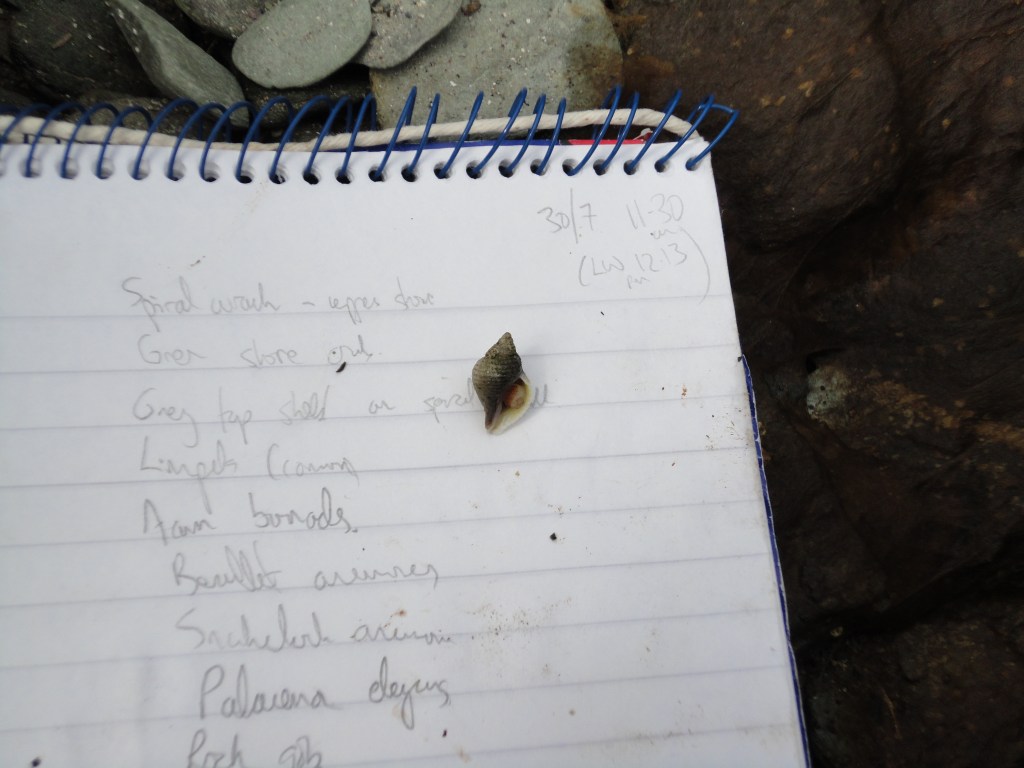
“Rob’s rock” – Compiling a species list on a Cornwall Wildlife Trust Shoresearch survey
After the recent huge spring tides, I had a long list of species spotted at various beaches, and I was dreading writing everything up.
The Environmental Records Centre for Cornwall and the Isles of Scilly (ERCCIS) at the Cornwall Wildlife Trust now offers three ways to send in your seashore records. (more…)
Privacy & Cookies: This site uses cookies. By continuing to use this website, you agree to their use. To find out more, including how to control cookies, see here: Privacy and Cookies Policy.






 Cornish Rock Pools